8 Plants In Ohio That Help Bees Thrive In Backyards
What is a flower without its bee? It is like a porch without a rocking chair or a summer evening without the sound of crickets.
Those small, steady visitors bring the garden to life. Many of us grew up watching bees move from bloom to bloom while parents or grandparents tended rows of vegetables nearby.
In Ohio backyards, bees do far more than add a pleasant buzz. They help tomatoes set fruit, keep berry patches productive, and support the health of the whole yard.
The good news is that certain plants make their job easier and keep them coming back season after season.
A few thoughtful choices can turn an ordinary backyard into a place that hums with activity by mid summer, and some of these plants might already be closer than you think.
1. Wild Bergamot That Keeps Backyards Buzzing
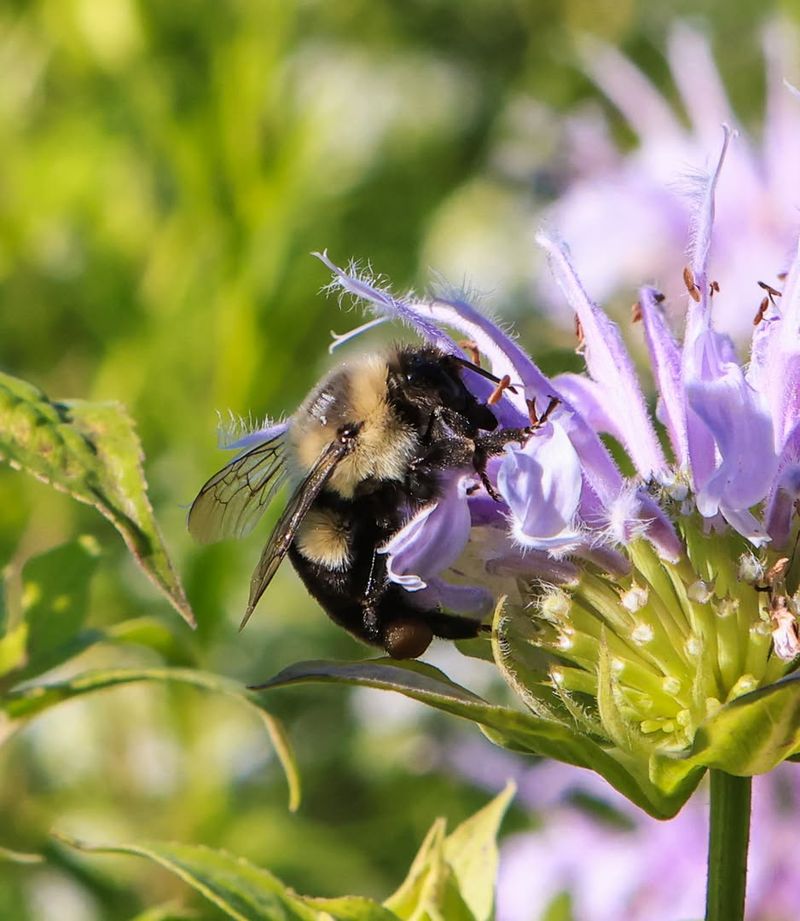
From July through September, Ohio gardens can turn into a true bee haven with the right blooms in place. Lavender purple flower clusters rise above the foliage and seem to glow in the summer sunlight, acting like a landing pad for pollinators.
As the blooms begin to open, bees start arriving steadily to gather nectar and pollen. Each bloom cluster contains dozens of tubular flowers packed with nectar that bumblebees especially love to access with their long tongues.
This native perennial grows between two and four feet tall, making it visible and accessible to flying pollinators. The square stems and minty-scented leaves identify it as a member of the mint family, though it spreads far less aggressively than typical garden mints.
Ohio gardeners appreciate how well it tolerates both clay soils and occasional dry spells once established.
Planting wild bergamot in full sun produces the most abundant blooms and attracts the greatest number of bees. Space plants about 18 inches apart to allow good air circulation and reduce powdery mildew issues.
The flowers continue opening for weeks, providing consistent food when many other plants have finished blooming.
Bees work these flowers intensely during peak bloom, often with multiple species visiting the same plant simultaneously. Native specialist bees, honeybees, and various bumblebee species all gather nectar and pollen here.
After flowering ends, goldfinches arrive to feast on the seeds, extending the wildlife value well into autumn across Ohio backyards.
2. Spotted Bee Balm Bees Cannot Resist
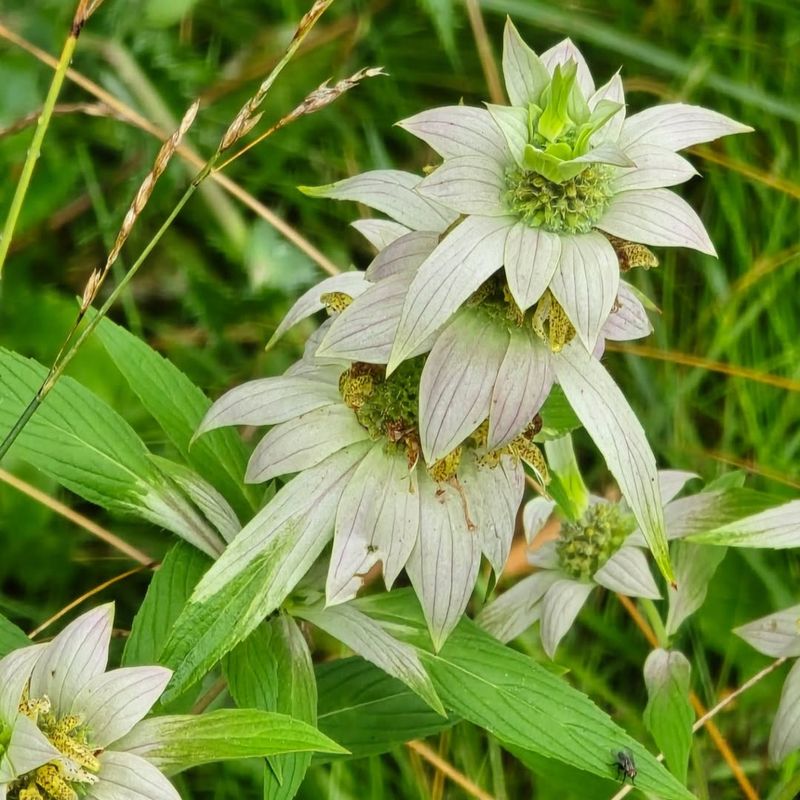
Unusual pale yellow flowers dotted with purple spots give this native perennial an almost hand-painted look in late summer. Bees are drawn to the blooms just as other nectar sources begin tapering off, often visiting steadily into early autumn.
The tubular blossoms suit long-tongued pollinators especially well, while their lower bracts create landing areas that allow smaller bee species to feed comfortably too.
Found growing along woodland edges and open woods across Ohio, it adapts easily to partially shaded backyards. Mature plants reach roughly three feet tall and develop a relaxed, slightly sprawling habit that fills open pockets without overtaking neighboring plants.
Brushing past the foliage releases a light, pleasant fragrance that adds another layer of garden interest beyond the flowers themselves.
Afternoon shade and evenly moist soil tend to bring out its best performance, particularly in spaces where full-sun perennials struggle. Gardeners dealing with heavier clay often find it more accommodating than many ornamental species.
A layer of mulch around the base helps maintain soil moisture during dry August stretches while the plant remains in active bloom. This adaptable woodland native is commonly known as spotted bee balm.
Long-tongued bumblebees work spotted bee balm flowers with remarkable efficiency, hovering and probing each tube methodically. Smaller native bees also visit regularly, approaching from different angles to access nectar.
The extended bloom period provides crucial late-season nutrition when bee colonies are preparing for winter throughout Ohio.
3. Virginia Mountain Mint The Pollinator Magnet
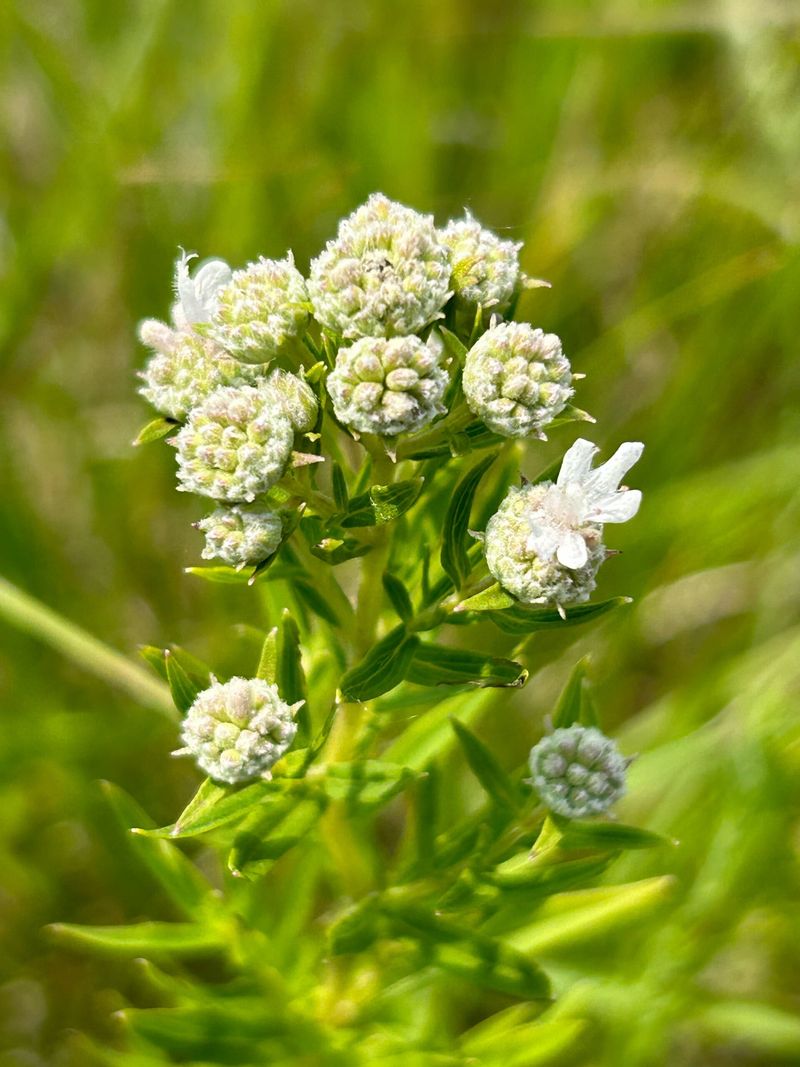
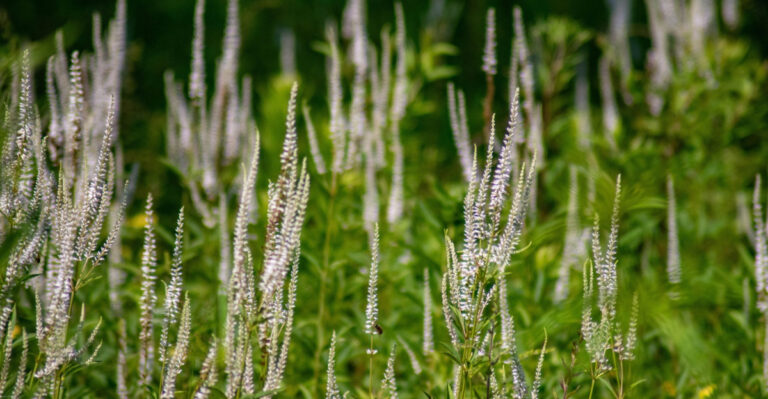
Few plants earn a reputation as one of the very best pollinator magnets for Ohio backyards quite like Virginia mountain mint. At first glance, the small white flowers seem almost modest, but they produce generous amounts of nectar that draw bees in remarkable numbers once they begin to bloom.
During peak bloom in July and August, a single mature plant can host dozens of bees simultaneously, creating an impressive buzzing symphony.
The silvery-green foliage provides year-round interest even before flowering begins. Plants grow about two to three feet tall with a bushy form that fills garden spaces effectively.
The minty fragrance intensifies on hot days, though this species spreads less aggressively than culinary mints, making it manageable in cultivated beds.
Full sun and average soil produce the best results, though Virginia mountain mint tolerates partial shade reasonably well. Ohio gardeners appreciate its drought tolerance once established and its resistance to deer browsing.
The plant requires virtually no maintenance beyond occasional watering during extreme dry spells.
Tiny native sweat bees, large carpenter bees, honeybees, and multiple bumblebee species all visit these flowers enthusiastically. The flat-topped flower clusters provide easy landing platforms for insects of all sizes.
Beneficial wasps and predatory flies also frequent the blooms, adding natural pest control benefits. Watching the diverse pollinator activity on Virginia mountain mint provides endless entertainment throughout summer in Ohio gardens.
4. Butterfly Weed That Brings The Nectar Crowd
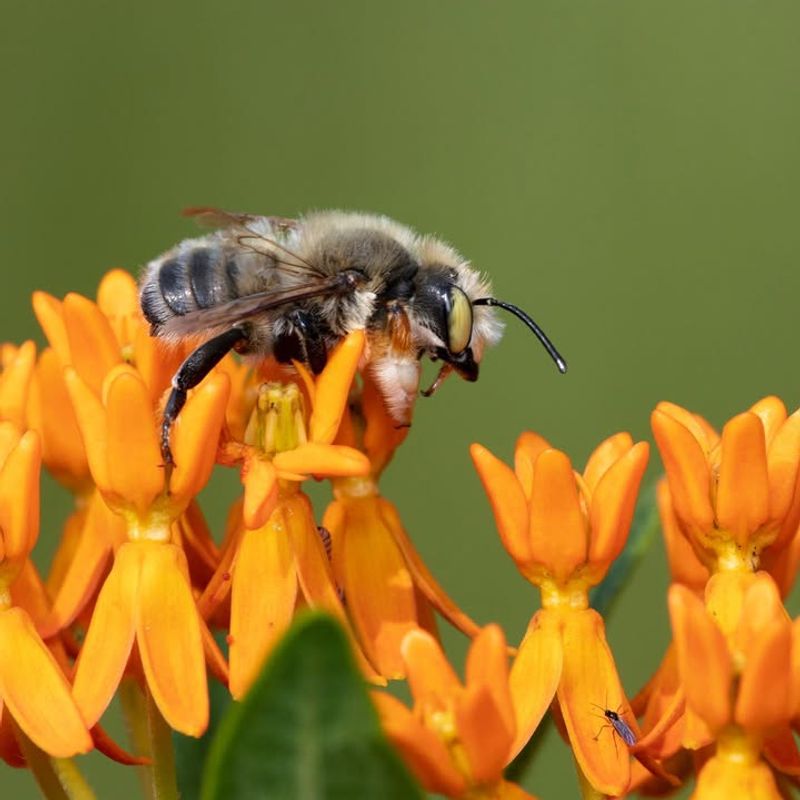
Brilliant orange flowers can light up Ohio gardens from June through August, adding a bold splash of color right when summer hits its stride. Despite the name, butterfly weed is not just for butterflies.
Bees visit these nectar-rich blooms steadily throughout the day, moving from cluster to cluster as long as the flowers remain open. The flat-topped flower clusters provide perfect landing platforms where multiple bees can feed simultaneously without competing for space.
This native milkweed grows about one to two feet tall with a clumping habit that never becomes weedy or invasive. The deep taproot makes established plants incredibly drought-tolerant, surviving Ohio summers without supplemental watering.
Young plants take time to establish that taproot, so patience during the first year pays dividends for decades afterward.
Full sun and well-drained soil create ideal conditions, though butterfly weed adapts to various soil types except constantly wet locations. Ohio gardeners with sandy or gravelly soil find this plant thrives where others struggle.
Avoid disturbing the roots once planted, as the taproot dislikes transplanting.
Bumblebees work butterfly weed flowers methodically, moving from bloom to bloom across each cluster. Smaller native bees also visit regularly, gathering both nectar and pollen.
The flowers produce abundant nectar that refills quickly, allowing continuous bee activity throughout sunny days. As a bonus, monarch caterpillars feed on the foliage while adult monarchs and swallowtails sip nectar, creating a complete pollinator haven in Ohio backyards.
5. Swamp Milkweed That Feeds Bees All Summer
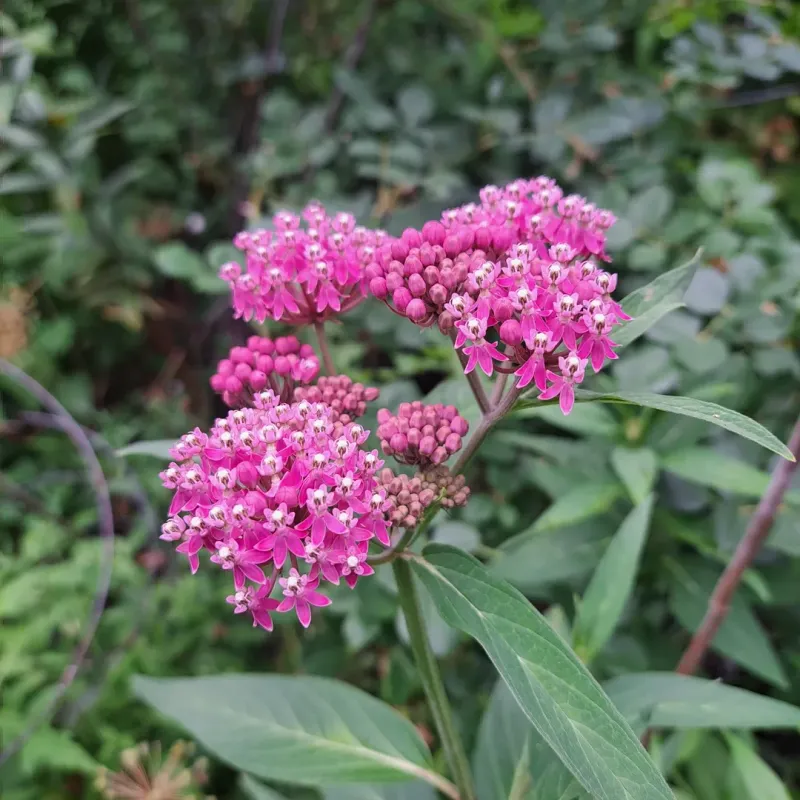
Flower clusters begin appearing in late June and continue supporting bees through much of the Ohio summer. Swamp milkweed provides a steady nectar source during peak growing months when pollinator activity is high.
Each rounded flower head contains dozens of individual blossoms arranged in tight groups that bees can move across efficiently. Growing about three to five feet tall, swamp milkweed adds height and structure to borders and rain gardens while contributing to a consistent food supply for backyard pollinators.
Despite its name, this species adapts well to average garden soil as long as moisture remains consistent. It performs particularly well in rain gardens or areas that receive periodic moisture but does not require standing water to thrive.
Full sun encourages strong flowering and steady pollinator visits. The plant tolerates clay soil reasonably well, which makes it suitable for many Ohio landscapes.
Honeybees, bumblebees, and smaller native bees frequently gather nectar from the blooms. Milkweed flowers contain specialized pollen structures called pollinia that attach to visiting insects.
In most cases, bees carry these pollen packets without issue, though very small insects may occasionally struggle.
Monarch butterflies lay eggs on the foliage, and adults nectar at the flowers, making swamp milkweed an important component of broader pollinator habitat.
With proper placement and consistent moisture, this native plant supports a diverse range of beneficial insects throughout the Ohio growing season.
6. Purple Coneflower That Packs A Pollen Punch
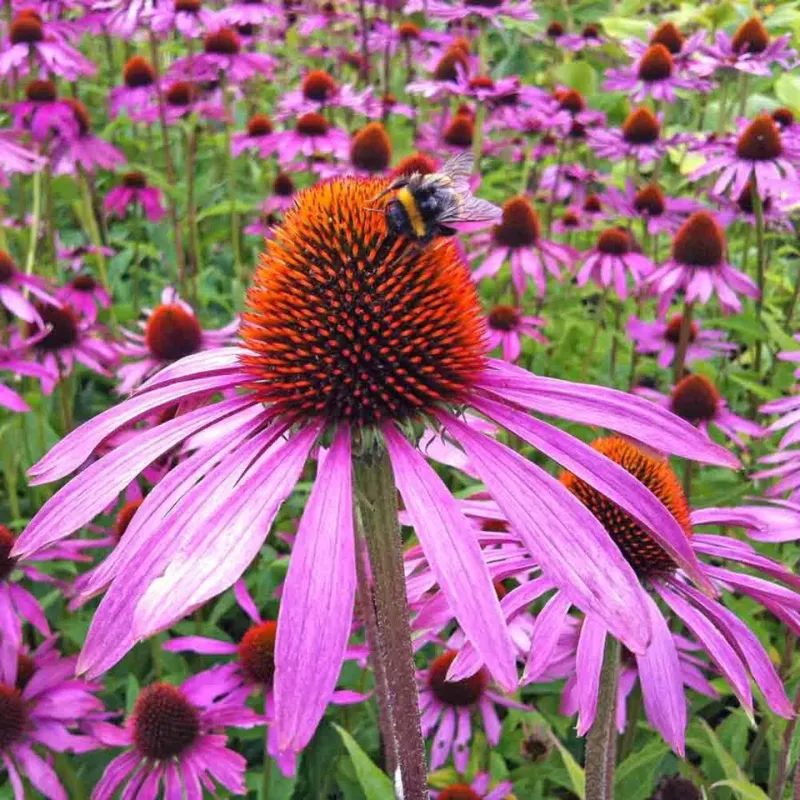
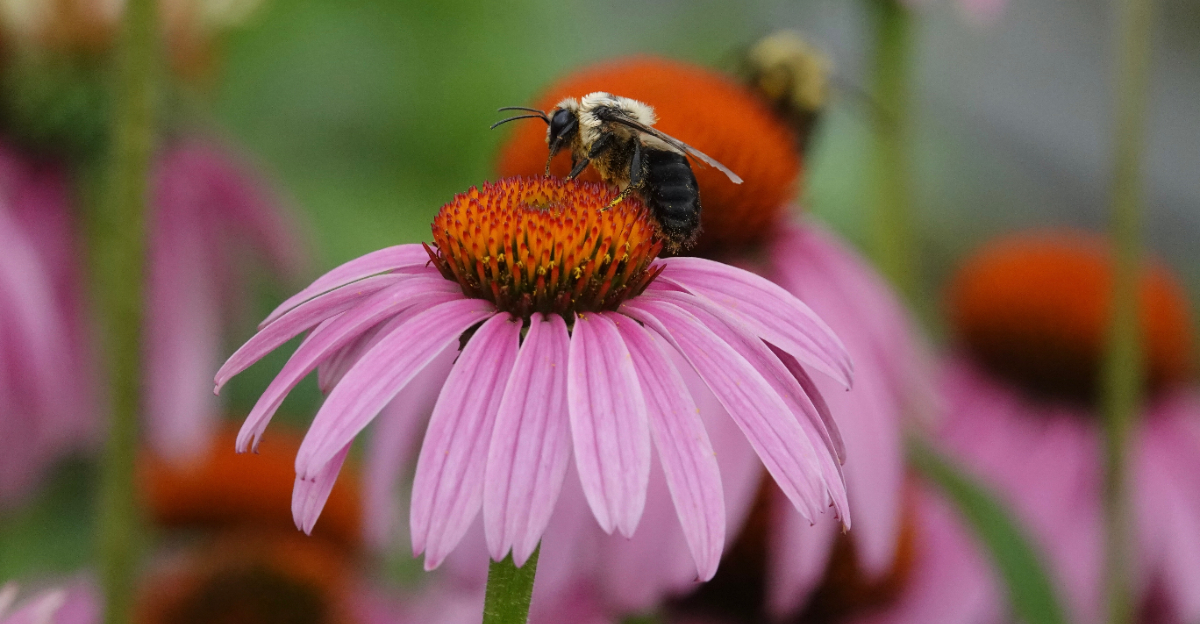
Few native plants are as recognizable or as valuable to Ohio bees as purple coneflower. Its wide petals surround a raised central cone that holds a generous supply of pollen, which bees gather steadily throughout the day.
From July through September, this long-blooming perennial offers both nectar and abundant pollen, supporting colonies when they need consistent, protein-rich food for developing larvae.
Mature plants reach two to four feet tall with sturdy stems that rarely need staking. The flowers last for weeks, with new blooms opening as older ones fade, extending the feeding opportunity.
Ohio gardeners love how purple coneflower tolerates heat, humidity, and occasional drought once established, requiring minimal care beyond occasional deadheading.
Full sun produces the most flowers, though plants tolerate light shade reasonably well. Average to dry soil suits this prairie native perfectly, and it actually performs better without rich, heavily amended soil.
Space plants about 18 inches apart for good air circulation and to accommodate their mature spread.
Bumblebees land directly on the center cone, gripping the spiky surface while collecting pollen on their leg baskets. Smaller native bees work around the cone edges, gathering pollen systematically.
The flowers provide food from morning until evening as different bee species visit throughout the day. After flowering ends, goldfinches perch on the seed heads, extending wildlife value well into winter across Ohio.
7. Stiff Goldenrod The Late Season Lifesaver
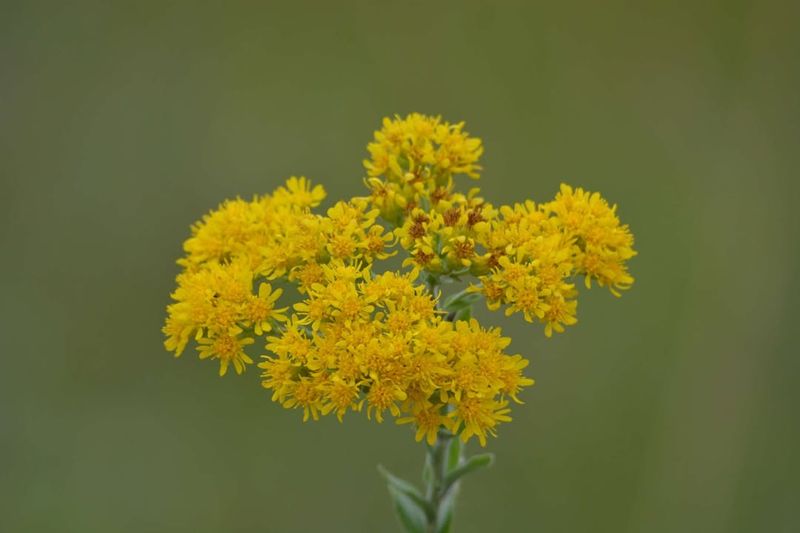
Stiff goldenrod plays an important role in late-season gardens when many other flowers have faded across Ohio. The bright yellow flower plumes begin appearing in August and often continue blooming into October, offering nectar and pollen during a time when food sources become more limited.
Each flowering stem carries hundreds of tiny blooms, creating dense clusters that attract steady bee activity throughout early autumn. Late-season forage is especially valuable as bee colonies shift toward winter preparation and solitary bees complete their life cycles.
Growing two to five feet tall with rigid upright stems, stiff goldenrod adds vertical structure to fall garden beds. Its flat-topped flower clusters differ from the arching plumes of other goldenrod species, making it easy to distinguish in mixed plantings.
This native species tolerates a range of soil conditions and generally experiences few pest or disease issues in Ohio landscapes.
Full sun supports the most consistent flowering, though plants will grow in partial shade with somewhat reduced bloom production. Average soil conditions suit this prairie native well without heavy fertilization.
Honeybees gather nectar and pollen on warm autumn days, while bumblebee queens often visit before entering winter dormancy. Smaller native bees also take advantage of the abundant late blooms.
Beyond its ecological value, stiff goldenrod contributes rich autumn color and extends seasonal interest in Ohio gardens.
8. Nodding Onion The Underrated Bee Favorite
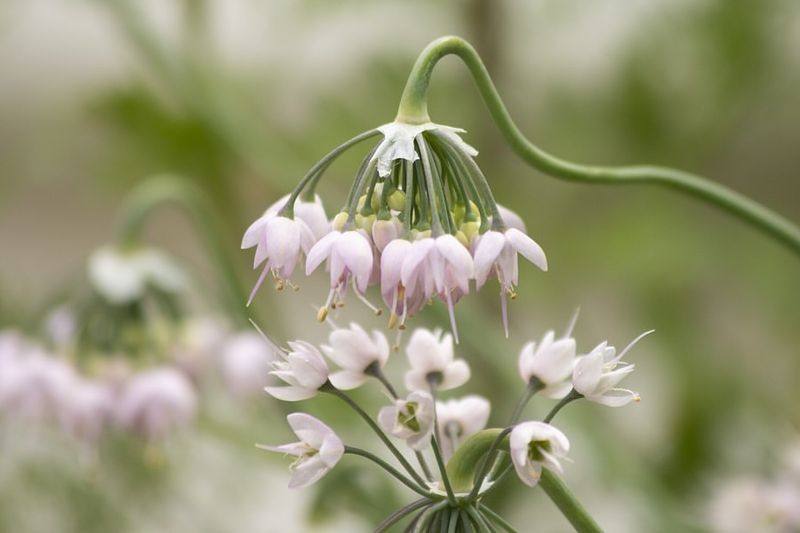
Despite its understated look, few plants draw as much steady bee activity in midsummer as nodding onion. The drooping pink-white flower clusters hang from slender stems between July and August, and bees move across them continuously while they are in bloom.
Each rounded flower head holds dozens of small blossoms that pollinators visit methodically, making efficient use of every available flower.
Growing about one to two feet tall, nodding onion fits beautifully into smaller garden spaces or the front of larger beds. The grass-like foliage remains tidy throughout the growing season and disappears cleanly after frost.
This native onion relative tolerates various soil types and handles both full sun and partial shade across Ohio landscapes.
Plant nodding onion in well-drained soil where water does not stand after heavy rains. It performs especially well in rocky or sandy soils where other plants struggle.
Ohio gardeners appreciate that deer and rabbits avoid the onion-scented foliage, leaving the flowers intact for pollinators.
Small native bees particularly favor nodding onion flowers, working them persistently throughout sunny days. Honeybees and bumblebees also visit regularly, attracted by the generous nectar production.
The flowers continue producing nectar throughout their bloom period, supporting repeated bee visits during favorable weather.. After blooming ends, the seed heads provide food for small birds, and the bulbs naturalize slowly to create larger displays over time in Ohio gardens.