Plants That Actually Thrive In North Carolina Heat And Humidity, Not Just One Or The Other
North Carolina summers have a way of humbling even experienced gardeners. It is not just the heat or just the humidity that causes problems, it is both of them hitting at the same time, day after day, for months.
A plant that handles dry desert heat will not necessarily survive muggy Carolina afternoons, and something bred for tropical moisture can still buckle when the temperature climbs past 95 degrees with no breeze in sight.
That specific combination is what makes plant selection in this state genuinely tricky. A lot of popular plants that look great in spring catalogs are quietly miserable by July in North Carolina, and that leads to a cycle of replanting, disappointment, and wasted money.
The plants worth growing here are the ones built for exactly this climate, tough enough to take the full force of a Carolina summer without skipping a beat.
These are the varieties that stay healthy, keep their color, and actually perform better the hotter and stickier things get.
1. Swamp Milkweed (Asclepias incarnata)
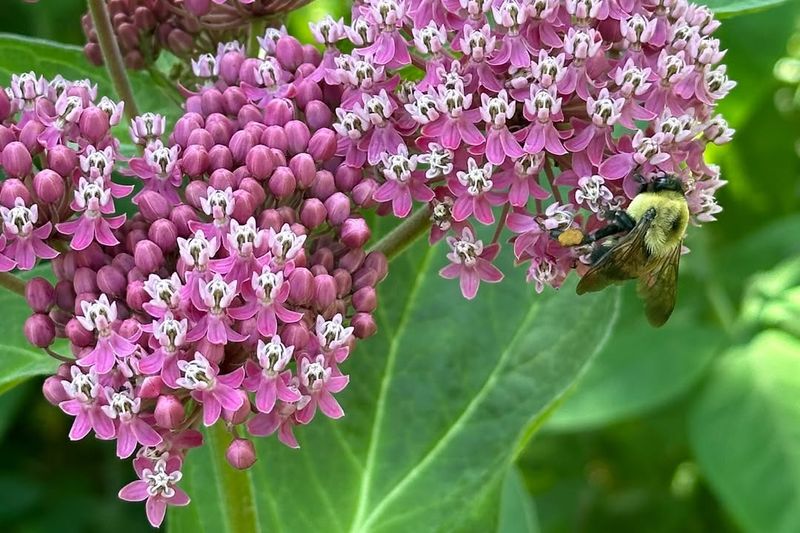
Swamp milkweed is one of those plants that seems to get stronger as the North Carolina summer gets hotter and wetter.
Its clusters of rosy pink flowers open in midsummer and keep going for weeks, drawing in monarch butterflies, bees, and all kinds of other pollinators. If your yard has a low spot that stays moist after rain, this plant will absolutely love it there.
Unlike many garden plants that sulk in wet soil, swamp milkweed actually prefers it. It handles full sun with ease and does not need much attention once it gets established.
Planting it in a rain garden or near a downspout makes great use of both the plant and the space.
North Carolina gardeners who grow swamp milkweed often notice that monarch caterpillars find it quickly. The plant serves as a host for monarch larvae, so you are supporting the full butterfly life cycle just by including it in your yard.
It grows to about three to four feet tall, giving the garden a solid vertical element. Give it room to spread slightly over time, and it will reward you with more blooms every single year.
2. Joe-Pye Weed (Eutrochium purpureum)
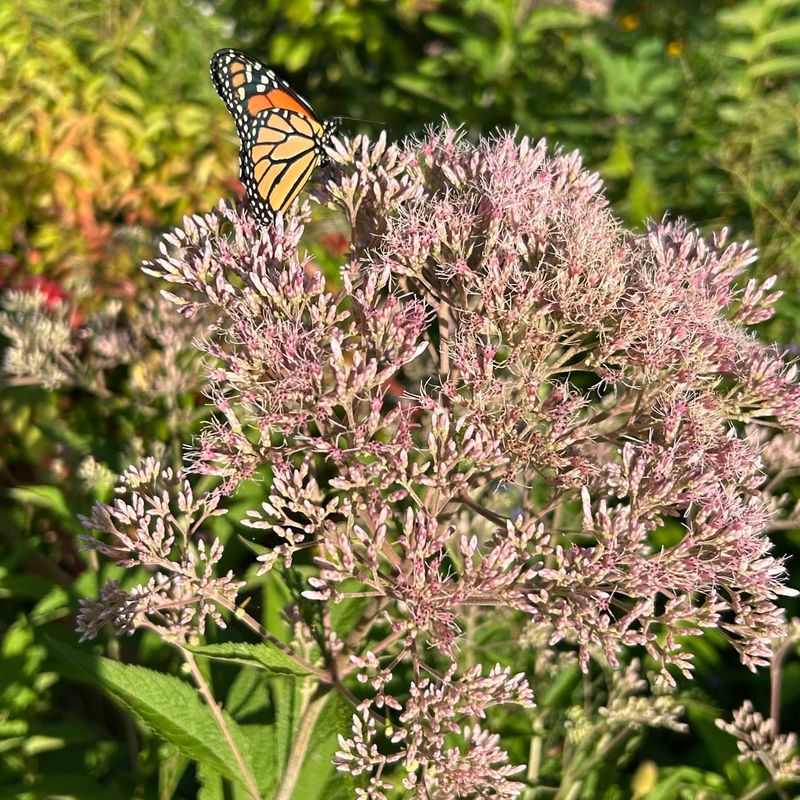
Tall, bold, and absolutely packed with pollinators by late summer, Joe-Pye weed is one of the most impressive native plants you can grow in North Carolina.
It rises anywhere from four to seven feet tall, and its dusty mauve flower clusters become a landing pad for swallowtails, fritillaries, and bumblebees from August onward.
Few plants offer that kind of late-season energy when so many others are starting to fade.
What makes Joe-Pye weed such a great fit for North Carolina is its love of warmth and moisture. It thrives in the kind of humid, sticky conditions that other perennials struggle through.
Moist, rich soil in full to partial sun is its sweet spot, and it handles summer heat without skipping a beat.
Joe-Pye weed has an interesting history too. It was traditionally used by Native American communities for various herbal purposes, and its name is often attributed to a colonial-era healer.
Your North Carolina Garden Changes Every Week. Your Plan Should Too.
Gardening in North Carolina changes quickly throughout the season. Every Friday you’ll receive a simple weekly plan showing exactly what to plant, prune, fertilize, harvest, and protect so you never miss the right timing.
Beyond the history, this plant simply performs. It brings height and structure to the back of a border, and pairing it with shorter natives creates a layered, naturalistic look.
North Carolina gardeners who want a plant that practically takes care of itself through the hottest months will find Joe-Pye weed to be an outstanding choice.
3. Blue Mistflower (Conoclinium coelestinum)
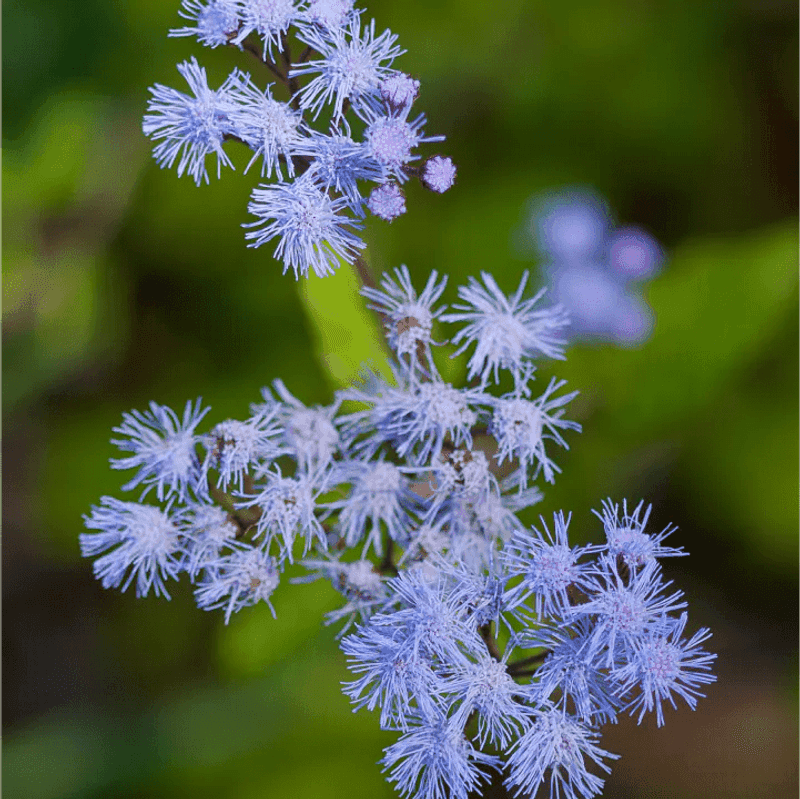
Blue mistflower brings a color that is genuinely rare in the late-summer native garden. That soft, hazy blue-purple is almost unexpected when it starts blooming in August and September, right when most other plants are winding down.
North Carolina gardeners who want end-of-season color without any fuss will find this plant surprisingly easy to love.
It spreads by rhizomes, forming dense, low colonies that fill in bare spots and crowd out weeds naturally. The foliage stays lush and green through the heat and humidity of a North Carolina summer, which is more than you can say for plenty of other ground-level plants.
Full sun to light shade both work well, and average to moist soil suits it perfectly.
Bees and butterflies, especially the cloudless sulphur and various skippers, flock to blue mistflower when it blooms. The flowers look a bit like ageratum, which makes sense since the two plants are related.
One thing to keep in mind is that it can spread enthusiastically, so giving it a defined area where it can roam freely works better than trying to keep it strictly contained.
In North Carolina rain gardens, pollinator borders, and naturalized edges, blue mistflower fills space beautifully while asking for almost nothing in return from the gardener.
4. Scarlet Bee Balm (Monarda didyma)
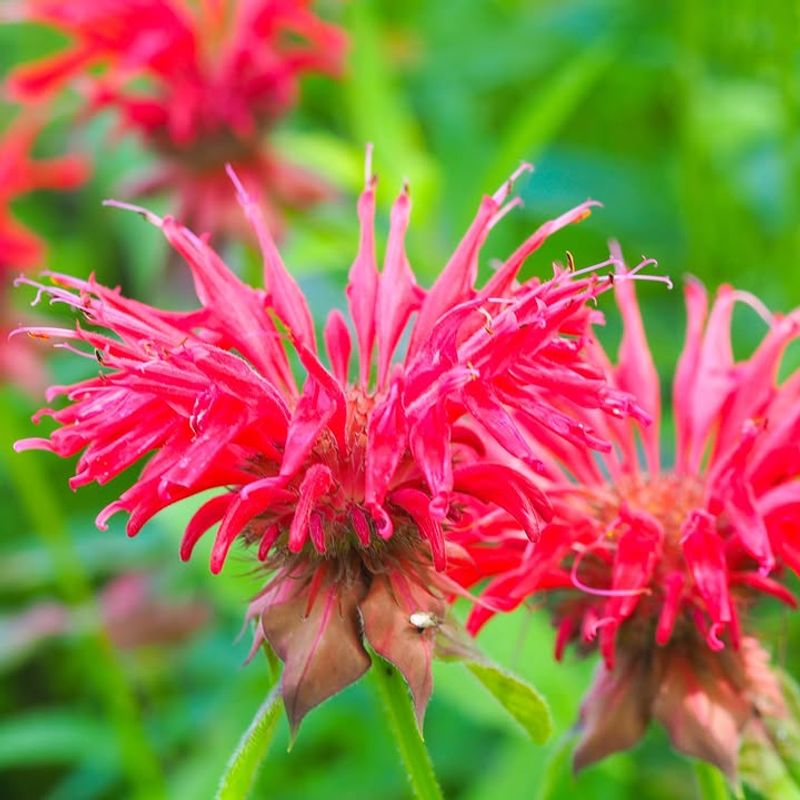
Few plants stop people in their tracks the way scarlet bee balm does when it is in full bloom. Those wild, spidery red flowers look almost tropical, and they pull hummingbirds in from surprisingly far away.
North Carolina gardeners who want to watch hummingbirds up close should absolutely add this one to a sunny border or pollinator bed.
Bee balm does need a bit of thoughtful placement in humid North Carolina gardens. Powdery mildew can be an issue if plants are crowded with poor airflow, so choosing mildew-resistant cultivars like Jacob Cline or Raspberry Wine makes a real difference.
Giving plants enough space between them and avoiding overhead watering keeps them looking their best through the summer.
Beyond hummingbirds, bee balm attracts ruby-throated hummingbirds, bumblebees, and clearwing sphinx moths, making it one of the most wildlife-friendly perennials you can grow.
It prefers consistently moist soil, so low spots in the garden or areas near irrigation work well. The plant spreads slowly over time, forming wider clumps that can be divided every few years to keep them vigorous.
With the right cultivar and good spacing, scarlet bee balm handles North Carolina heat and humidity with confidence, delivering bold color and serious pollinator action from June through July every single year.
5. Narrowleaf Mountain Mint (Pycnanthemum tenuifolium)
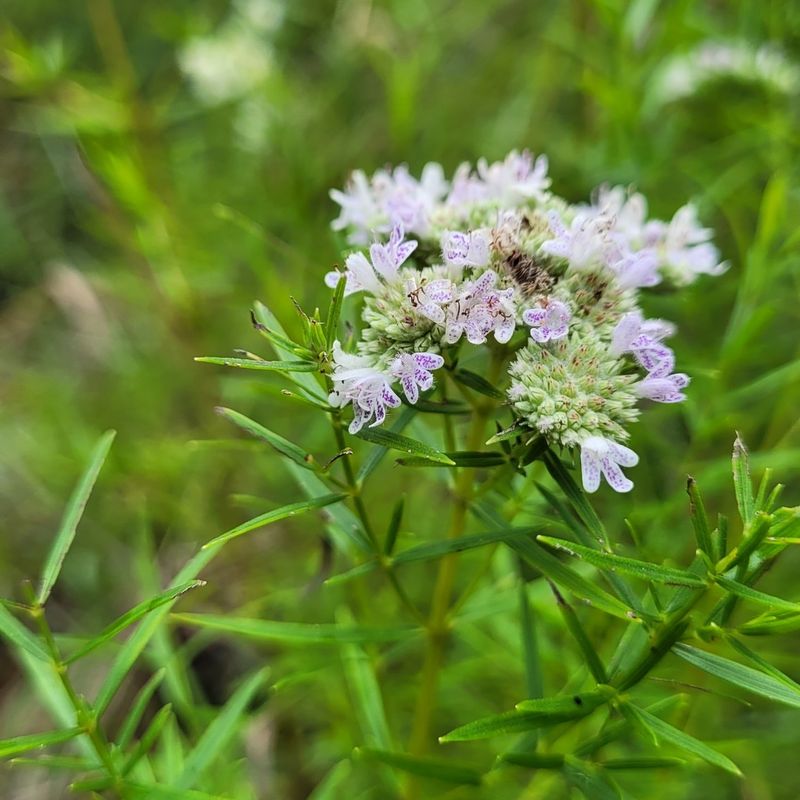
Walk past narrowleaf mountain mint on a warm North Carolina afternoon and the minty fragrance hits you immediately. It is one of those sensory surprises that makes gardening feel genuinely rewarding.
But beyond the scent, this plant is a powerhouse for native bees, small wasps, and beetles, often hosting dozens of insects at once when it is in peak bloom.
Mountain mint is remarkably tough. It handles the full intensity of North Carolina summers without complaint, tolerating heat, humidity, and even occasional dry spells once it gets established.
Full sun and average to dry soil actually bring out the best in it, which makes it useful in spots where more moisture-loving plants would struggle.
The fine, silvery-tipped foliage gives the plant a delicate look that contrasts nicely with bolder natives like Joe-Pye weed or cardinal flower. It grows to about two to three feet tall and spreads gradually by rhizomes, slowly filling in an area over several seasons.
Native bee researchers consistently rank mountain mint among the top plants for supporting native bee diversity, and North Carolina has plenty of native bee species that benefit from it.
For a plant that asks for almost nothing and gives back so much in terms of wildlife value and visual texture, narrowleaf mountain mint belongs in nearly every North Carolina pollinator garden.
6. Garden Phlox (Phlox paniculata)
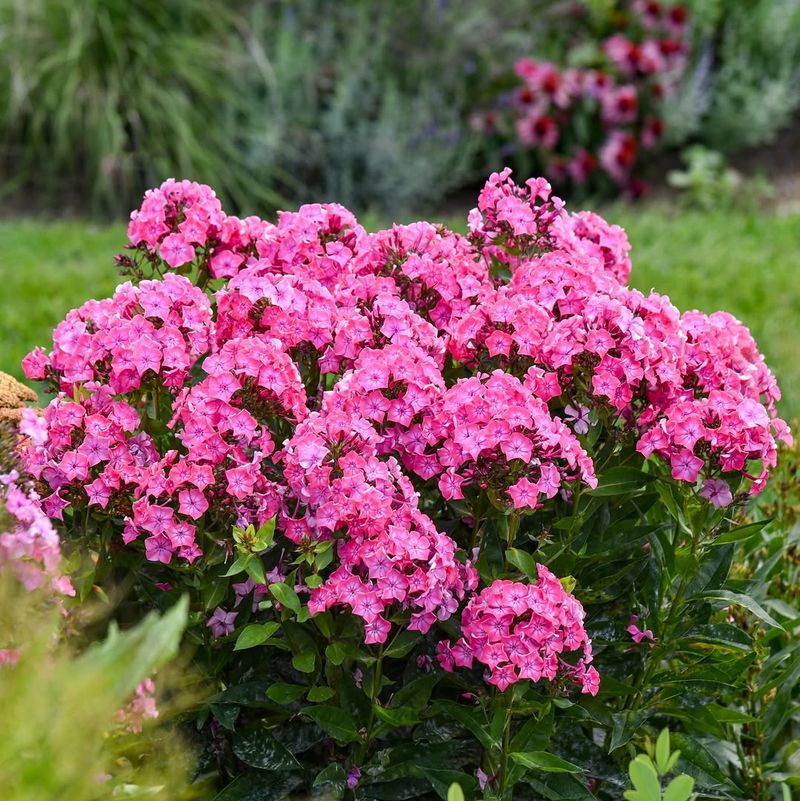
Garden phlox in full bloom is one of the most classic summer sights in North Carolina gardens. The tall, fragrant flower heads come in shades of pink, lavender, white, and deep magenta, and they fill the air with a sweet scent that is hard to match.
Planted in a sunny border with good spacing, it brings cottage-garden charm that lasts for weeks through the hottest part of summer.
Choosing the right cultivar matters a lot in North Carolina, where summer humidity can encourage powdery mildew on older varieties.
Modern selections like David, a white-flowered cultivar, and Jeana, which is especially attractive to butterflies, offer strong mildew resistance without sacrificing flower quality.
Giving plants at least eighteen inches of space between them and avoiding wetting the foliage when watering goes a long way toward keeping them healthy.
Garden phlox is native to eastern North America, which means it already has a relationship with the climate conditions that North Carolina gardeners deal with every summer. It prefers moist, rich soil and performs best with consistent moisture during dry stretches.
Deadheading spent blooms encourages a second flush of flowers in some cultivars. Butterflies, especially swallowtails, visit the flowers regularly, adding movement and life to the garden.
For sheer summer color and fragrance, garden phlox is genuinely hard to beat in a North Carolina garden.
7. Cardinal Flower (Lobelia cardinalis)
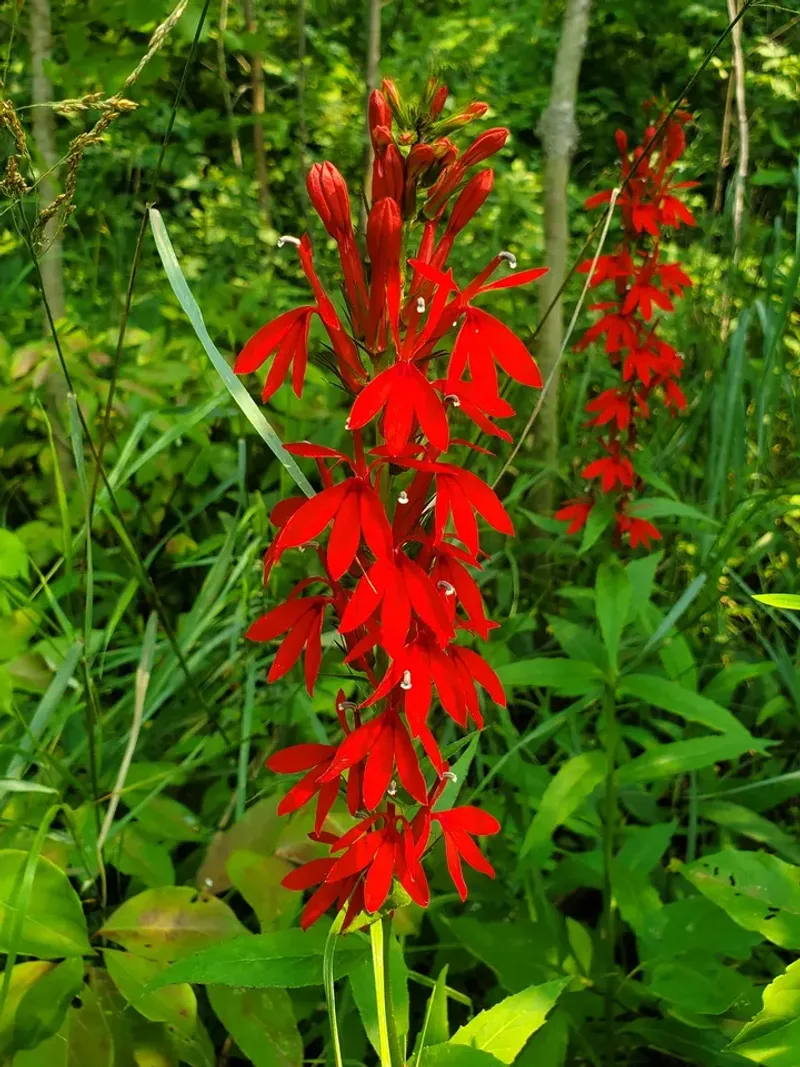
Cardinal flower produces one of the most intense shades of red found anywhere in the native plant world.
The tall spikes of scarlet blooms rise up in midsummer and keep going through early fall, and ruby-throated hummingbirds treat them like a fast-food drive-through.
If you have ever wanted hummingbirds visiting your garden daily, cardinal flower is one of the most reliable ways to make that happen in North Carolina.
This plant thrives in moist to wet conditions, which makes it a natural fit for rain gardens, stream banks, pond edges, and low spots that collect water after heavy summer rains. It handles North Carolina heat well as long as the soil does not get too dry.
A layer of mulch around the base helps retain moisture and keeps roots cooler during the most intense summer stretches.
Cardinal flower is a short-lived perennial, but it self-seeds reliably, so a colony tends to maintain itself over time without much intervention.
The plants grow two to four feet tall, and their upright form pairs nicely with the spreading habit of blue mistflower or the bold foliage of swamp milkweed.
North Carolina gardeners who set up a rain garden or wet border with cardinal flower as an anchor plant often find that the whole design comes together beautifully, with pollinators and hummingbirds visiting from summer into fall.
8. Black-Eyed Susan (Rudbeckia hirta)
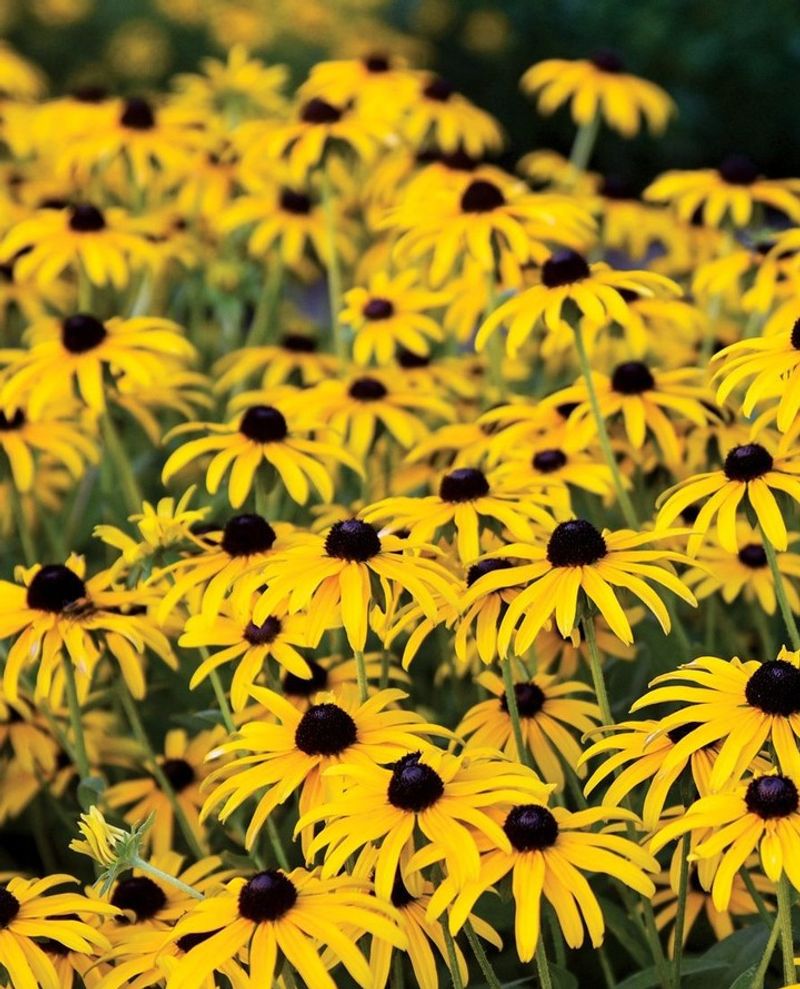
Black-eyed Susan might be the most cheerful plant in the entire North Carolina native garden. Those bright yellow petals surrounding a dark brown center have a sunny, upbeat quality that lifts the mood of any space they occupy.
From June through September, they keep producing flowers steadily, even during the kind of hot and humid stretches that make other plants look miserable.
One of the best things about black-eyed Susan is how forgiving it is. Average soil, full sun, and normal rainfall are all it really needs to put on a strong show.
It does not demand rich soil or extra fertilizer, and established plants handle short dry spells without much trouble. In fact, overly rich soil can cause the plants to flop over, so lean conditions actually suit them better.
Goldfinches are big fans of the seed heads that form after the flowers fade, so leaving them standing through fall and winter brings extra wildlife value. Black-eyed Susan works beautifully in meadow-style plantings, sunny borders, and naturalized areas throughout North Carolina.
It self-seeds readily, so a small planting can expand into a larger colony over a few seasons without any effort. For beginning gardeners or anyone who wants reliable summer color with minimal maintenance, black-eyed Susan is one of the most rewarding native plants available in North Carolina.
9. Purple Coneflower (Echinacea purpurea)
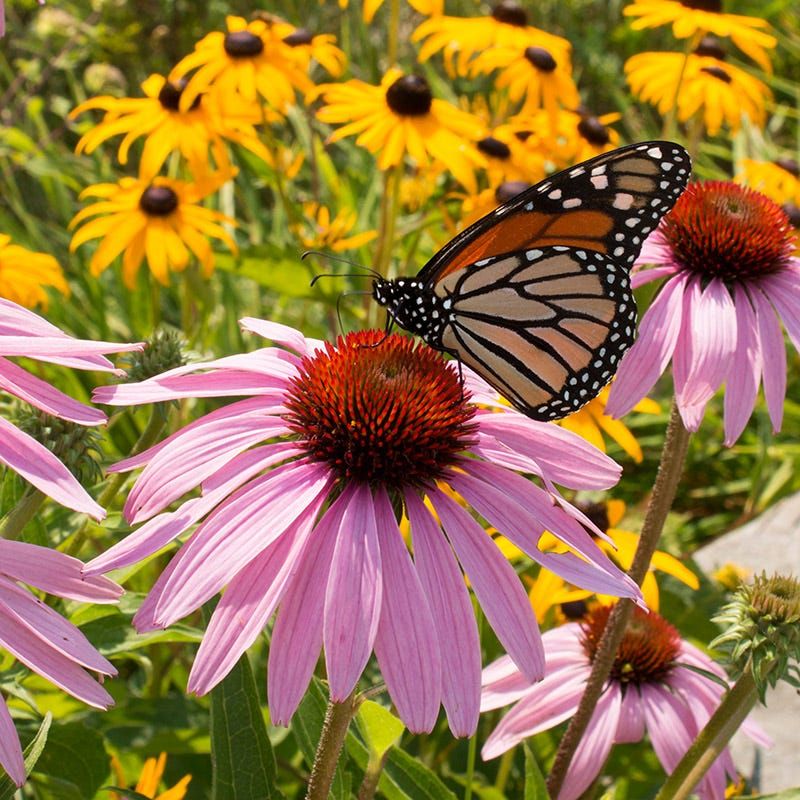
Purple coneflower has earned its place as one of the most beloved native perennials in North Carolina, and for very good reason. The rosy purple petals sweep back from a raised, coppery-orange center in a way that looks almost architectural.
Bees work the flowers constantly from the moment they open, and goldfinches return in fall to pick apart the seed heads with obvious enthusiasm.
What makes echinacea especially valuable in North Carolina is its tolerance for both heat and humidity when planted in well-drained soil.
Heavy clay that stays wet can cause root issues, so amending the planting area with compost or choosing a raised bed helps a lot in areas with heavier soils.
Full sun brings out the best bloom production, though plants can handle a bit of afternoon shade in hotter parts of the state.
Purple coneflower has a long history of use in traditional herbal medicine, and it remains one of the top-selling herbal supplements in the country today. In the garden, though, its value is purely visual and ecological.
It blooms for six to eight weeks in summer and returns reliably year after year once established.
Pairing it with black-eyed Susan, mountain mint, or garden phlox creates a pollinator border that looks great and works hard for North Carolina wildlife throughout the entire growing season.
10. Oakleaf Hydrangea (Hydrangea quercifolia)
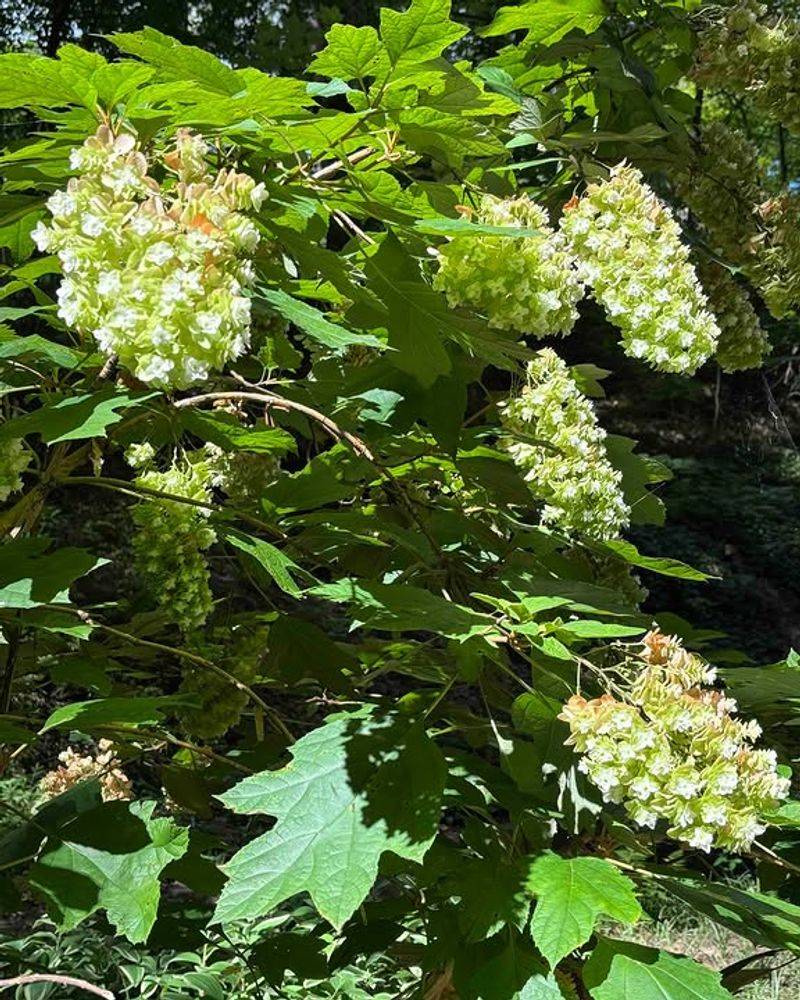
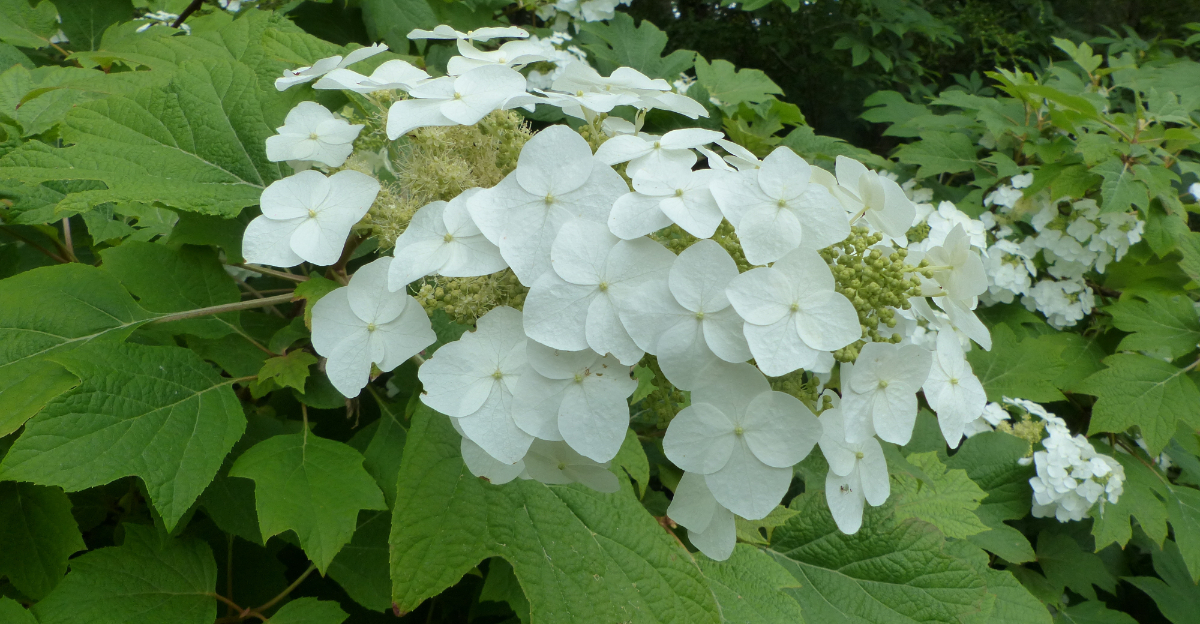
Oakleaf hydrangea is the kind of plant that earns its keep in the garden across every single season. In summer, large cone-shaped clusters of white flowers stand above deeply lobed, oak-shaped leaves that give the shrub its name.
By fall, those flowers turn a papery pinkish-bronze, the leaves shift to burgundy and orange, and the peeling cinnamon-colored bark becomes visible as winter arrives. That is four seasons of genuine interest from one plant.
For North Carolina gardeners dealing with shaded spots that feel too hot and humid for most flowering shrubs, oakleaf hydrangea is a real solution.
It handles part shade very well and actually prefers it in the hotter parts of the state, where afternoon sun can scorch the large leaves.
Moist, well-drained soil rich in organic matter gives it the best start, and a thick layer of mulch helps maintain soil moisture through dry stretches.
Unlike the popular smooth hydrangea or bigleaf hydrangea, the oakleaf species is a true North Carolina native with strong natural ties to the southeastern United States.
It grows six to eight feet tall and wide at maturity, making it a solid choice for foundation plantings, woodland garden edges, and naturalized slopes.
Birds use the dense branching for cover, and the plant supports native insects as well. Oakleaf hydrangea rewards patient gardeners with decades of beauty and almost no fuss once established.
11. Beautyberry (Callicarpa americana)
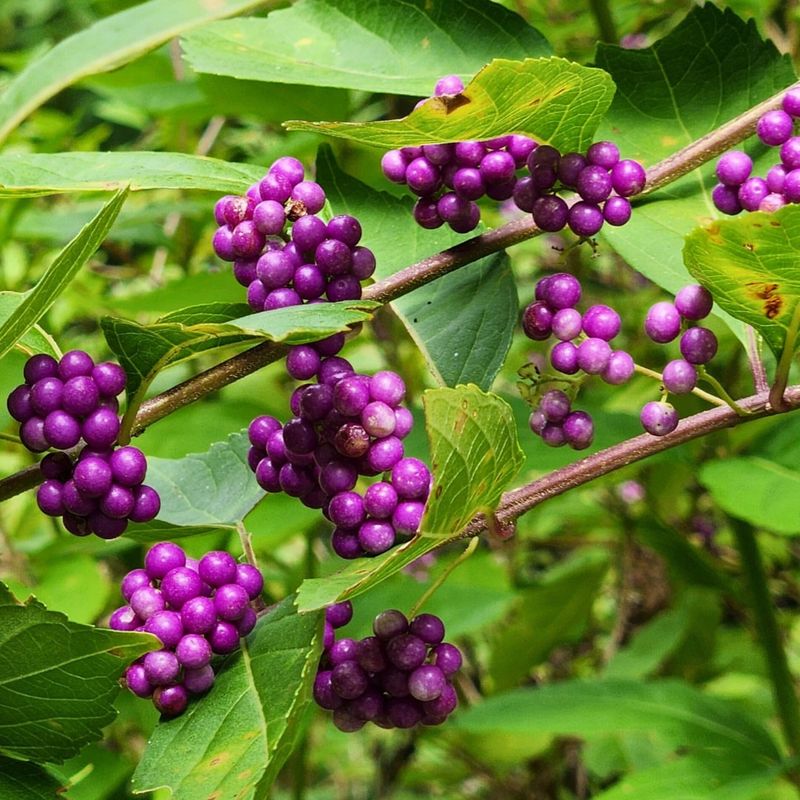
American beautyberry has a secret that it saves for fall, but the setup happens all summer long in North Carolina gardens.
Through the heat and humidity of July and August, it grows into a loose, arching shrub with broad green leaves and small clusters of tiny pink flowers tucked along the stems.
Then, as temperatures start to drop, those flower clusters transform into the most vivid, almost neon-purple berries you have ever seen on a native plant.
The summer performance of beautyberry is understated but solid. It handles North Carolina heat and humidity with ease, growing happily in full sun to part shade without demanding much attention.
Average to moist soil works well, and the plant is surprisingly tolerant of clay soils that stay a bit wet after rain. Once established, it rarely needs supplemental watering except during extended dry spells.
Beautyberry grows quickly, reaching four to six feet tall and wide in just a few seasons. Pruning it hard in late winter or early spring encourages vigorous new growth and better berry production on fresh stems.
Birds, including mockingbirds and brown thrashers, feed heavily on the berries once they ripen.
For North Carolina gardeners who want a low-maintenance native shrub that delivers real visual drama without requiring constant care, American beautyberry is one of the smartest choices available for sunny to lightly shaded spots in the landscape.
12. Yaupon Holly (Ilex vomitoria)
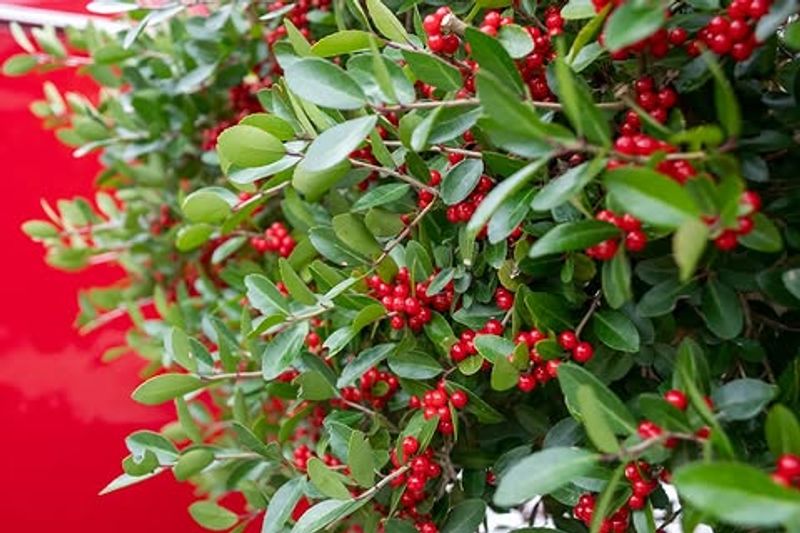
Yaupon holly might have the most unfortunate scientific name in the entire plant world, but do not let that stop you from growing it.
This tough native evergreen is one of the most adaptable shrubs available to North Carolina gardeners, handling heat, humidity, salt spray, drought, and wet soil with equal composure.
Very few plants can claim that kind of versatility across such a wide range of conditions. In North Carolina, yaupon holly works beautifully as a foundation plant, a privacy screen, a clipped hedge, or a loose naturalistic shrub depending on the cultivar and how you manage it.
Dwarf forms like Nana stay compact and tidy without heavy pruning, while larger selections can grow into small multi-stemmed trees that provide real structure and screening.
Female plants produce small red berries in fall and winter that birds absolutely love, especially cedar waxwings and American robins.
Yaupon is the only plant native to North America that contains caffeine, and indigenous peoples across the Southeast brewed it as a ceremonial and daily beverage long before European settlement.
Today, a small but growing number of artisan producers are reviving yaupon as a tea crop in North Carolina and across the South.
In the garden, though, its greatest value is its sheer toughness and year-round good looks. For structure, wildlife value, and reliable evergreen presence through every season, yaupon holly is genuinely one of the best native plants North Carolina has to offer.