10 Plants That Actually Thrive In North Carolina Piedmont Clay Soil
If you garden in North Carolina’s Piedmont, you already know the moment your shovel hits that thick red clay. It clings, it compacts, and after a heavy rain it can feel more like pottery than soil.
Many plants struggle to establish in these dense conditions, leaving gardeners wondering if success is even possible.
Here is the twist: that same clay holds nutrients exceptionally well and retains moisture longer than sandy soils. When you choose plants that are naturally suited to it, the results can be impressive.
Across the Piedmont, certain tough perennials, shrubs, and natives thrive in heavy ground, sending down strong roots and delivering reliable color through heat and humidity.
Instead of fighting your soil, you can design with it. The right selections turn frustration into confidence and transform your yard into a vibrant, wildlife friendly landscape.
These ten standout plants prove that Piedmont clay is not a limitation, it is an opportunity.
1. Switchgrass
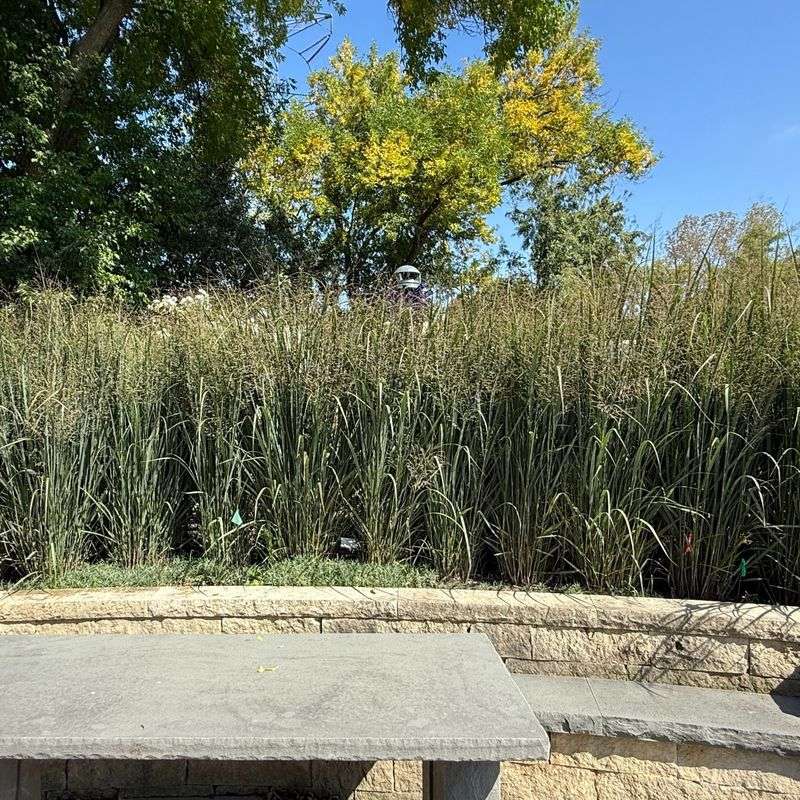
Switchgrass is one of those plants that makes you stop and stare, especially when a breeze moves through its feathery seed heads in late summer.
Panicum virgatum is a true North Carolina native, found naturally across the Piedmont long before anyone thought about planting it intentionally.
That deep native history means it’s perfectly suited to the region’s climate, soil, and seasonal rhythms.
What makes Switchgrass especially valuable for Piedmont gardeners is its remarkable tolerance for compacted clay soil.
Most ornamental grasses struggle when roots can’t penetrate dense ground, but Switchgrass pushes through and establishes itself with minimal help.
It also handles summer heat and humidity without missing a beat, staying upright and attractive all season long.
The visual interest this grass provides changes throughout the year in the most satisfying way.
Spring brings fresh green growth, summer adds billowing pink or red-tinged plumes, and fall transforms the foliage into warm shades of gold and copper.
Even in winter, the dried stems and seed heads add structure and movement to an otherwise bare garden.
Switchgrass grows from two to six feet tall depending on the variety, so choose your cultivar based on your space.
Popular options like ‘Shenandoah’ and ‘Heavy Metal’ perform exceptionally well across the Piedmont.
Plant it in full sun to light shade, water regularly the first season, and then step back and let this tough native grass do what it does best.
2. Black Eyed Susan
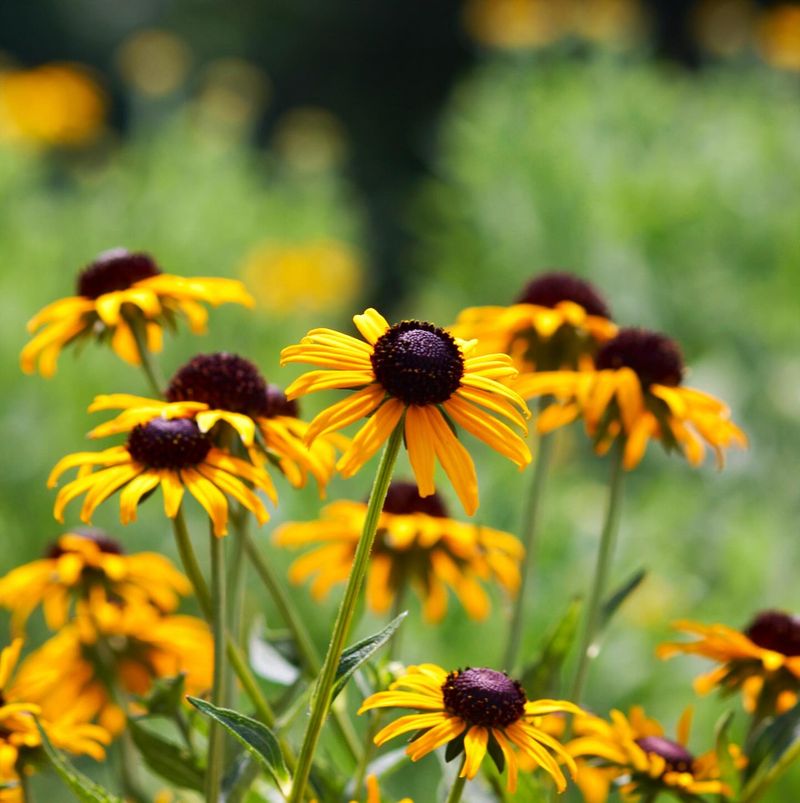
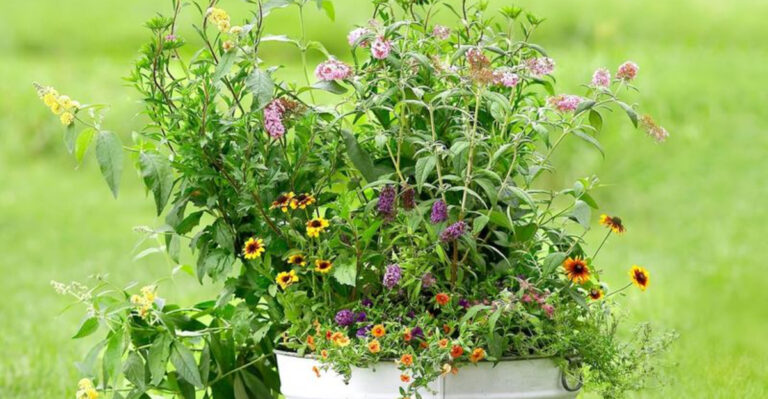
Few flowers bring as much cheerful energy to a summer garden as the Black Eyed Susan. Rudbeckia hirta is one of those plants that seems almost designed for the Piedmont’s challenging conditions, handling heavy clay soil with impressive ease.
Bright golden-yellow petals surrounding a rich brown center make it one of the most recognizable wildflowers across North Carolina.
In the Piedmont, this plant thrives in full sun and tolerates the moderate drainage that clay soil provides.
Once established, it handles summer heat and humidity without flinching, which is saying a lot during a typical Carolina July.
You won’t need to fuss over it much, because it’s naturally adapted to tougher growing conditions than most ornamentals.
Black Eyed Susans bloom from early summer through fall, giving your garden months of continuous color.
They attract pollinators like bees and butterflies, making your yard a buzzing, lively space throughout the warm season.
Songbirds also love the seed heads in late fall, so leaving them standing adds bonus wildlife value. Plant them in groups for maximum visual impact, or mix them with other clay-tolerant natives for a low-maintenance garden bed.
They spread gradually through self-seeding, which means your planting gets better and fuller every year.
For Piedmont gardeners tired of fighting their soil, Black Eyed Susans are a genuinely satisfying, rewarding choice.
3. Daylilies
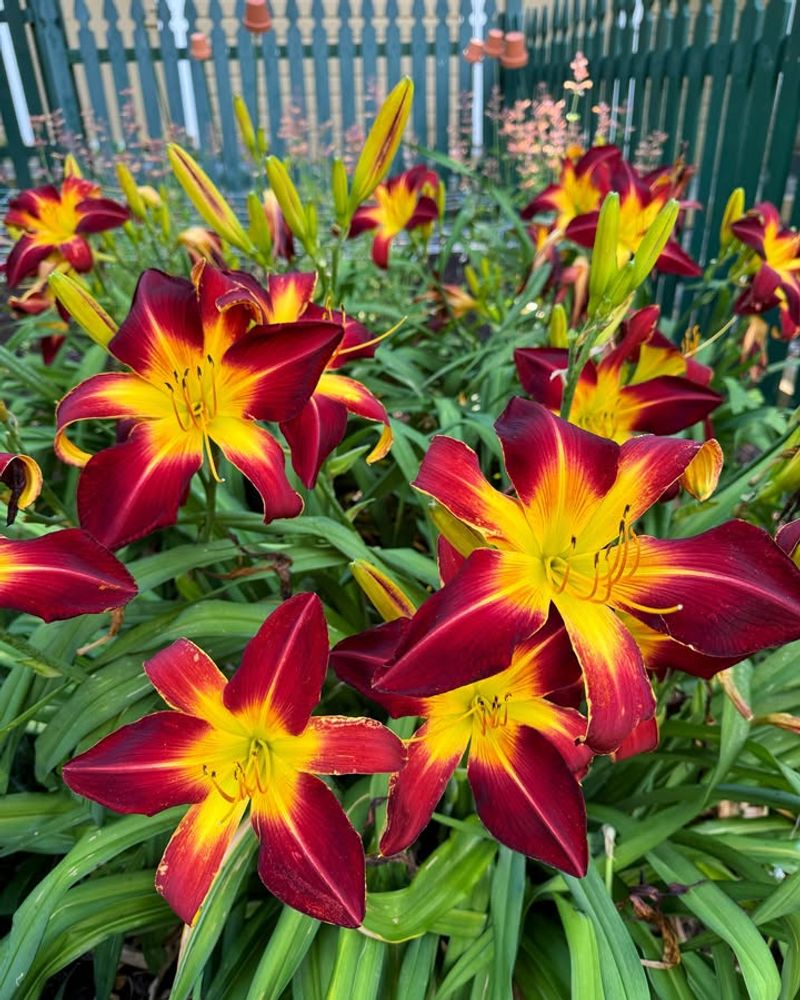
Daylilies are the kind of plant that experienced gardeners recommend to beginners and experts alike, and for good reason.
Hemerocallis varieties are among the most adaptable flowering perennials available, and they handle the heavy clay soil of the North Carolina Piedmont remarkably well.
Their thick, fleshy roots push through dense soil with surprising determination. The Piedmont’s combination of heat, humidity, and slow-draining clay doesn’t slow Daylilies down one bit.
In fact, once established, they seem to thrive on a bit of neglect, which makes them perfect for busy homeowners who want a beautiful yard without constant maintenance.
Each individual flower lasts only one day, but plants produce so many buds that the show goes on for weeks.
Color options are almost endless, ranging from classic orange and yellow to deep burgundy, lavender, and creamy white.
Modern hybrid varieties often rebloom in late summer after their initial flush, giving Piedmont gardens a second wave of color right when many other plants start to fade. Pairing different varieties together extends your bloom season even further.
Daylilies spread gradually through clumping, and dividing them every three to four years keeps them vigorous and blooming at their best.
They grow well in full sun to partial shade, though full sun produces the most flowers. For Piedmont clay gardeners looking for maximum reward with minimum fuss, Daylilies are an absolutely reliable, colorful solution worth planting in abundance.
4. Purple Coneflower
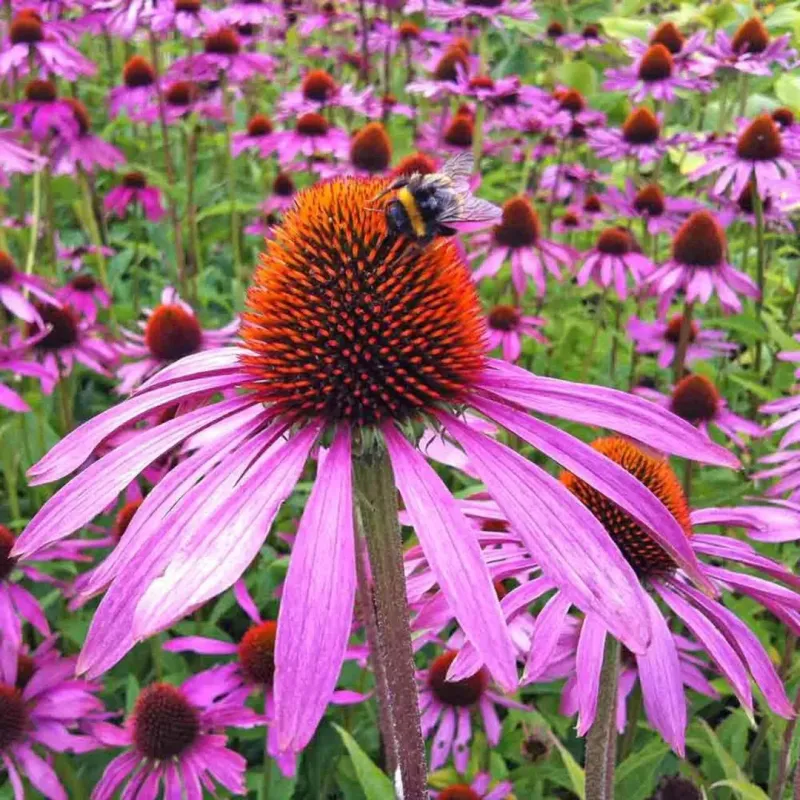
Purple Coneflower has earned its reputation as one of the hardest-working perennials in the Southeast, and Piedmont gardeners have every reason to love it.
Echinacea purpurea produces bold, rosy-purple blooms with distinctive spiky orange-brown centers that rise above the foliage on sturdy stems.
It’s eye-catching, tough, and genuinely built for North Carolina summers. One of its most impressive qualities is how well it adapts to clay soil once it gets established.
During the first growing season, give it consistent watering to help roots settle in, and after that, it largely takes care of itself.
The plant handles the Piedmont’s heat and humidity with ease, continuing to bloom even when other flowers start to struggle. Beyond its good looks, Purple Coneflower is a powerhouse for pollinators.
Bees, butterflies, and even hummingbirds visit the blooms regularly throughout summer. When flowering wraps up in late summer, the seed heads attract goldfinches and other songbirds, extending the plant’s value well into autumn.
Echinacea purpurea spreads slowly through both seeds and root division, so over time your planting fills in beautifully without becoming aggressive.
It pairs wonderfully with Black Eyed Susans and ornamental grasses for a layered, naturalistic look.
If you want a perennial that pulls double duty as both a showstopper and a wildlife magnet in Piedmont clay, this one delivers every single time.
5. Oakleaf Hydrangea
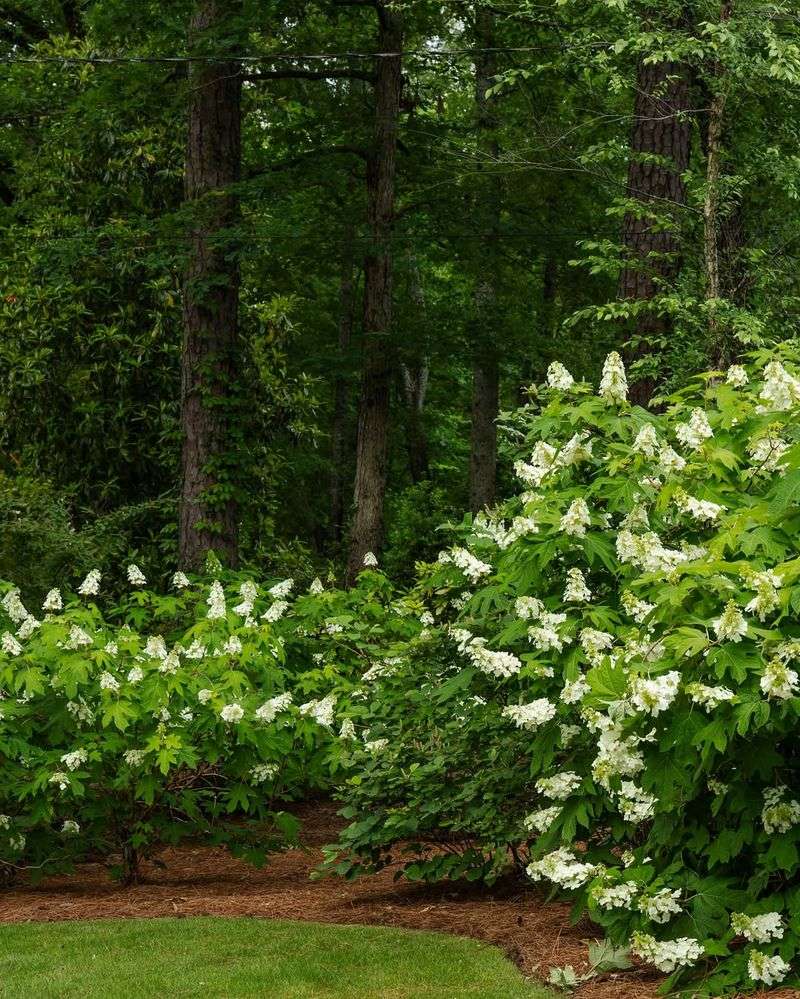
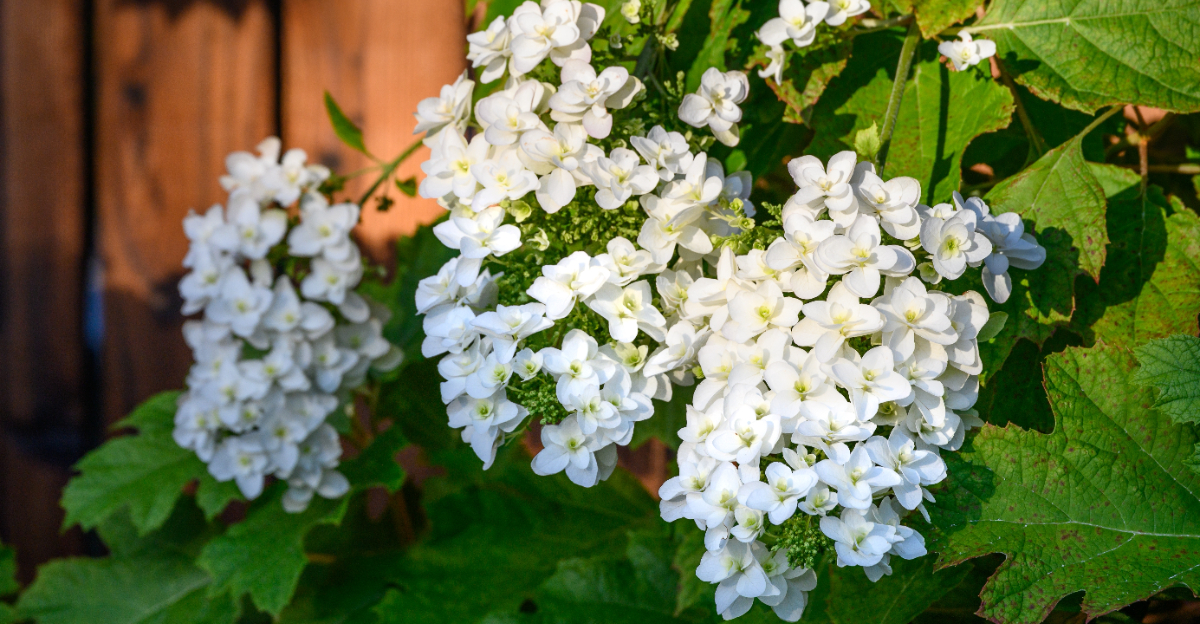
If you have a shady spot in your Piedmont yard and clay soil that never seems to improve, Oakleaf Hydrangea might just become your favorite shrub.
Hydrangea quercifolia is native to the southeastern United States, which means it evolved alongside the exact conditions that challenge so many non-native plants in North Carolina.
That native advantage shows in how confidently it grows. This hydrangea produces spectacular cone-shaped white flower clusters in early summer that can reach a foot long or more.
As summer progresses, those blooms age to a soft pinkish-tan, and by fall they turn papery and russet-colored.
Few shrubs offer this much seasonal drama, and the large, distinctively lobed leaves add bold texture to shaded garden spaces throughout the growing season.
Clay soil suits Oakleaf Hydrangea well, particularly in partly shaded locations where evaporation is slower and the soil stays consistently moist without becoming waterlogged.
It handles the Piedmont’s humid summers better than many other hydrangea species and rarely shows the wilting stress that plagues other varieties during hot spells.
Mature plants can reach six to eight feet tall and wide, so give them room to spread naturally without crowding.
The peeling cinnamon-colored bark adds winter interest after the leaves fall, keeping the shrub attractive year-round. Wildlife benefit too, as birds use the dense branching for shelter.
For a truly four-season native shrub that handles Piedmont clay beautifully, Oakleaf Hydrangea is hard to beat.
6. Beautyberry
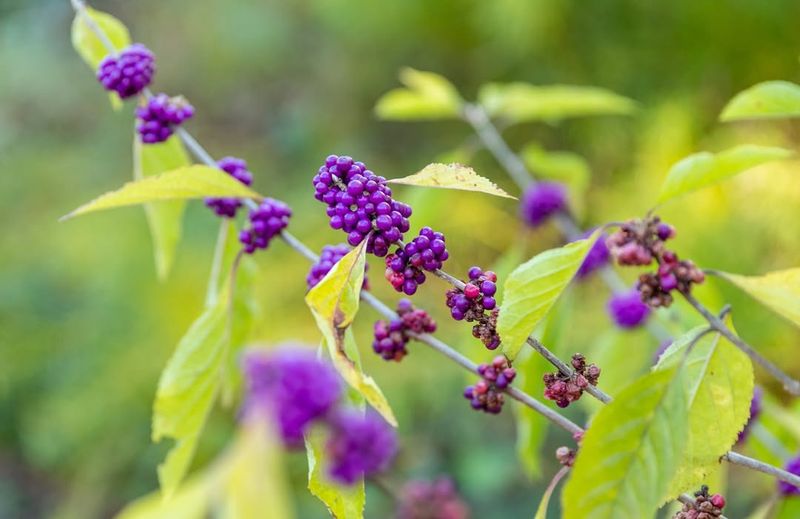
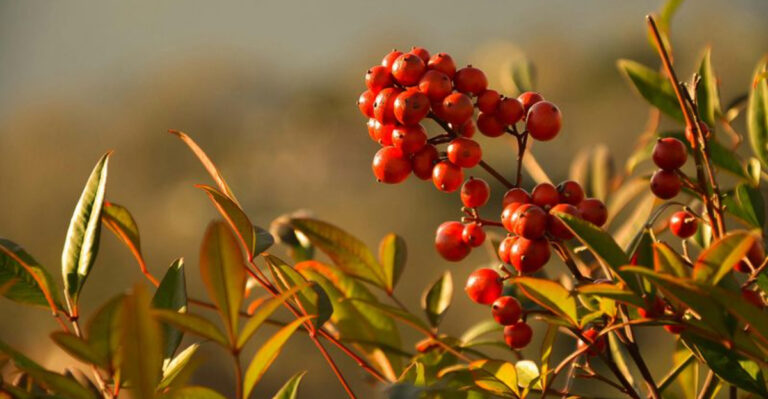
Nothing in the fall garden stops visitors in their tracks quite like Beautyberry loaded with its impossibly vivid clusters of purple berries.
Callicarpa americana is a native shrub that grows with enthusiasm across the Piedmont, and it handles clay soil and humid summer conditions without any drama. It’s the kind of plant that looks like it requires expert care but actually asks for very little.
Throughout spring and summer, Beautyberry stays relatively low-key, producing small pinkish-white flowers that attract pollinators without demanding attention.
Then fall arrives, and the transformation is stunning. Clusters of metallic purple berries line every stem in tight, jewel-like bunches that are unlike anything else in the landscape.
The color is so bold and unusual that it almost looks artificial. Birds absolutely adore the berries, including mockingbirds, robins, and cedar waxwings, making Beautyberry a fantastic addition to any wildlife-friendly Piedmont yard.
The berries also have a long history of use by Indigenous peoples across the Southeast, including as a natural insect repellent.
That connection to regional culture and ecology adds an extra layer of interest to an already remarkable plant.
Beautyberry grows best in full sun to partial shade and typically reaches four to six feet in height and spread.
Cutting it back hard in late winter encourages vigorous new growth and the best berry production.
For North Carolina Piedmont gardeners who want maximum fall impact with minimal effort, this native shrub consistently delivers spectacular results.
7. Eastern Red Cedar
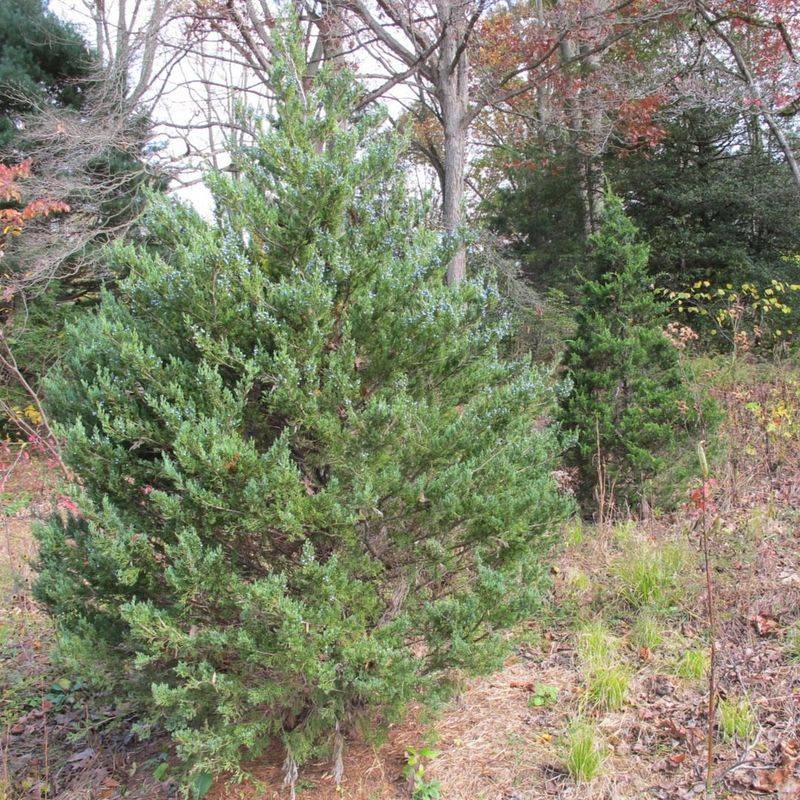
Eastern Red Cedar has been anchoring North Carolina landscapes for centuries, and there’s a very good reason it’s still going strong.
Juniperus virginiana is one of the toughest native trees in the Piedmont, tolerating poor clay soil, summer drought, and challenging growing conditions that would stress most other trees.
It’s a plant that earns its place by being genuinely, impressively resilient. Unlike many ornamental trees that need rich, well-drained soil to perform well, Eastern Red Cedar actually thrives in the compacted, heavy clay that covers much of the Piedmont.
Its deep root system pushes through dense soil layers, anchoring the tree firmly while seeking out moisture.
Once established, it requires almost no supplemental watering even during the hottest and driest stretches of a Carolina summer. The ecological value of this tree is remarkable.
More than 50 species of birds eat the small, waxy blue berries that appear in fall and winter, with Cedar Waxwings being among the most devoted fans.
The dense evergreen foliage provides year-round shelter for birds and small mammals, making it one of the most wildlife-friendly trees you can plant in a Piedmont yard.
Eastern Red Cedar grows in a naturally columnar or pyramidal shape, making it useful as a windbreak, privacy screen, or specimen tree.
It tolerates full sun beautifully and grows at a steady pace without becoming problematic. For Piedmont homeowners who want a low-maintenance, high-value native tree that genuinely thrives in clay, this cedar is an outstanding long-term investment.
8. Coreopsis
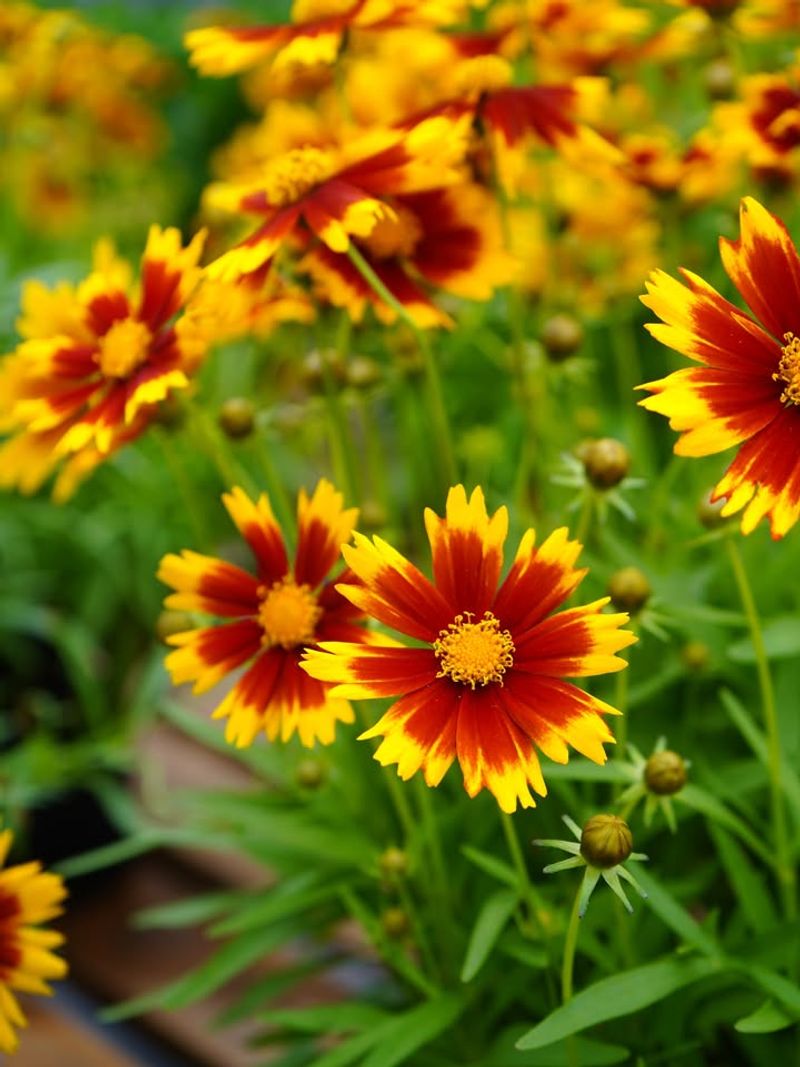
Cheerful, bright, and wonderfully tough, Coreopsis is one of those plants that makes a Piedmont garden feel like it’s celebrating all summer long.
Several species within this genus tolerate clay soil and full sun conditions across North Carolina’s Piedmont region, and they do it while producing an almost nonstop display of golden-yellow daisy-like flowers.
It’s hard not to smile when Coreopsis is in full bloom. Coreopsis lanceolata and Coreopsis verticillata are two species that perform particularly well in Piedmont conditions.
Both handle the combination of dense clay soil and intense summer sun without fading or flopping over.
They’re also drought-tolerant once established, which is a real bonus during those stretches in July and August when rain becomes scarce across the region.
Deadheading spent blooms encourages continuous flowering from late spring all the way through fall, giving your garden remarkable staying power.
If deadheading sounds like too much work, don’t worry, many Coreopsis varieties rebloom reliably even without it.
The flowers attract butterflies and bees consistently, adding lively movement to your garden beds throughout the warmest months.
Most Coreopsis varieties stay compact, reaching one to three feet tall, which makes them easy to fit into borders, raised beds, or mixed plantings alongside taller native plants.
They spread gradually through clumping and light self-seeding, slowly filling in garden spaces over time.
For Piedmont gardeners who want bright, reliable color in tough clay conditions, Coreopsis is one of the smartest choices you can make.
9. Yarrow
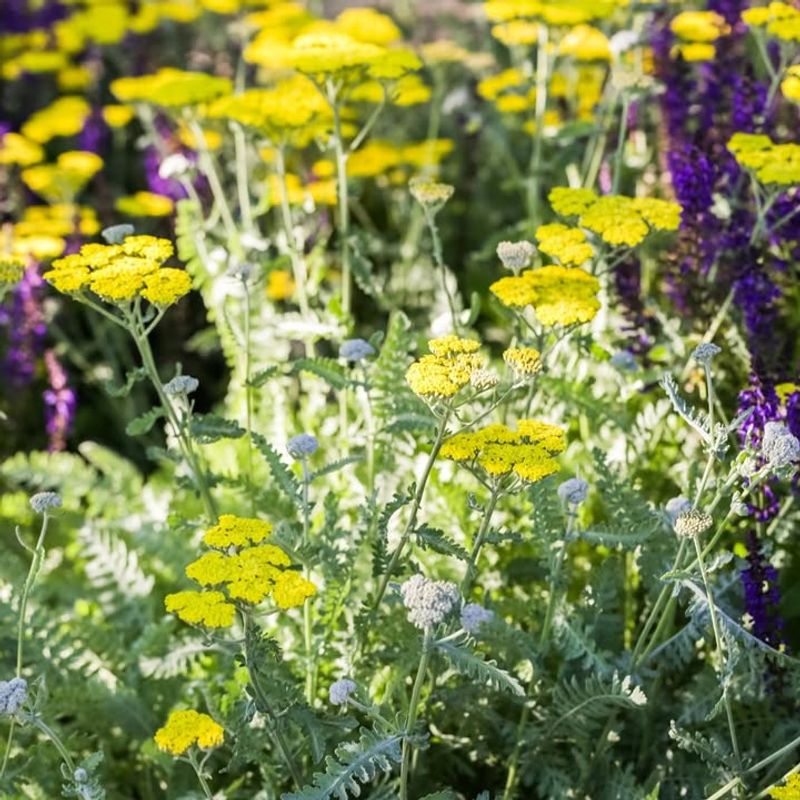
Yarrow has been growing in tough conditions around the world for thousands of years, and it brings that same ancient toughness to North Carolina Piedmont gardens.
Achillea millefolium tolerates clay soil remarkably well as long as the site has at least moderate drainage, which prevents the crown from sitting in standing water during heavy Piedmont rainstorms.
A slightly raised bed or a gentle slope works perfectly for this adaptable plant. The flat-topped flower clusters of Yarrow come in white, yellow, pink, and red depending on the variety, and they bloom prolifically from late spring through summer.
Hot Piedmont summers don’t slow it down at all. In fact, Yarrow seems to revel in heat and full sun, producing some of its best blooms during the most intense weeks of the growing season when other perennials start looking tired.
Beyond its visual appeal, Yarrow is a magnet for beneficial insects. Predatory wasps, hoverflies, and native bees visit the flowers constantly, helping to manage pest populations naturally in your garden.
That ecological service adds real value beyond the plant’s good looks, making it a smart choice for gardeners interested in creating a balanced, healthy outdoor space.
Yarrow spreads through rhizomes and self-seeding, so dividing clumps every two to three years keeps it tidy and vigorous.
Cut stems back after the first flush of blooms to encourage a second wave of flowering in late summer.
For Piedmont gardeners working with clay soil and full sun exposure, Yarrow is a time-tested, genuinely rewarding perennial that earns its space every season.
10. Red Osier Dogwood
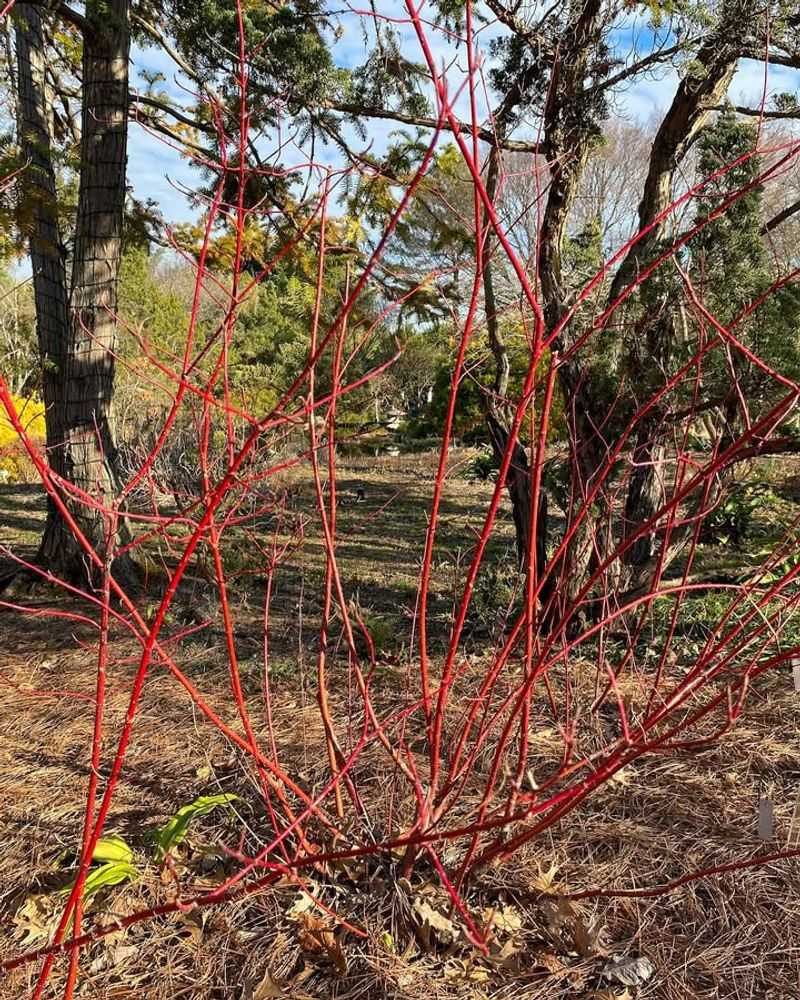
When winter strips most shrubs of their leaves and color, Red Osier Dogwood steps into the spotlight with its brilliant, fire-engine-red stems that glow against bare soil and gray skies.
Cornus sericea is a shrub that thrives in heavier clay soils and works especially well in wetter areas of Piedmont landscapes where drainage is slow and other plants struggle to cope.
That combination of beauty and toughness makes it genuinely special. In spring, clusters of small white flowers appear and attract a wide variety of pollinators, setting the stage for white or bluish-white berries in summer that birds consume eagerly.
The foliage turns attractive shades of burgundy and orange in fall before dropping to reveal those show-stopping red stems. Few shrubs offer this much visual interest across all four seasons in a single planting.
Red Osier Dogwood is particularly valuable for Piedmont homeowners dealing with low spots, rain gardens, or consistently moist areas where clay soil holds water longer than desired.
It tolerates these conditions far better than most ornamental shrubs, stabilizing soil with its spreading root system while looking beautiful in the process. It’s a practical and attractive solution for problem areas in the landscape.
Plants typically grow four to nine feet tall and spread generously, so give them space to develop naturally.
Cutting one-third of the oldest stems back each late winter keeps the plant producing the brightest, most vivid new red stems each season.
For North Carolina Piedmont gardeners tackling wet clay spots, Red Osier Dogwood is a bold, four-season answer worth planting with confidence.