12 Plants That Are Illegal Or Restricted In Oregon
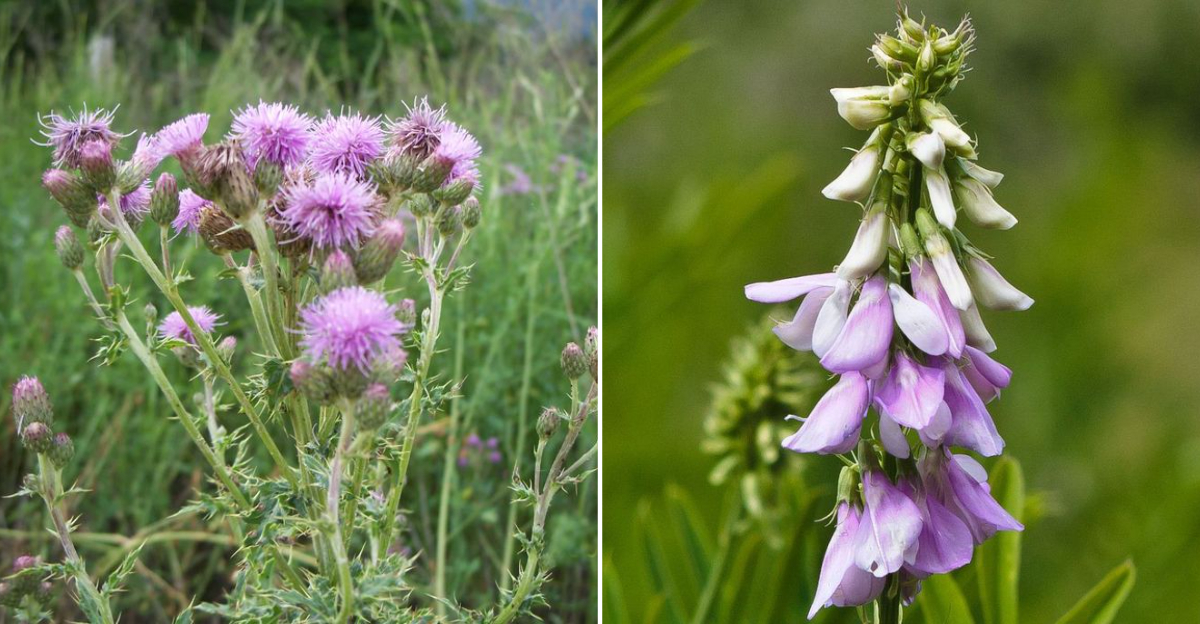
That gorgeous plant at the nursery might look harmless, but in Oregon, some plants come with a serious “do not plant” warning.
A few fast spreading species have caused enough trouble in forests, rivers, and farmland that the state keeps an official watchlist.
Some are outright banned, others are tightly controlled, and planting the wrong one can create bigger problems than you might expect.
Knowing which plants are restricted is not just about following rules, it is about protecting local landscapes, wildlife, and even your own garden from aggressive invaders that refuse to stay put.
In Oregon, A List weeds are typically prohibited, meaning they are targeted for eradication and should not be planted, transported, or intentionally spread.
B List weeds are restricted, which means they are already present in parts of the state and are actively managed to limit further spread. It’s somewhat easy to remember, right?
Regulations, enforcement, and allowed activities can vary by species and county. Always check current Oregon Department of Agriculture guidance before planting, removing, or disposing of any potentially regulated plant.
1. African Rue (Peganum harmala)
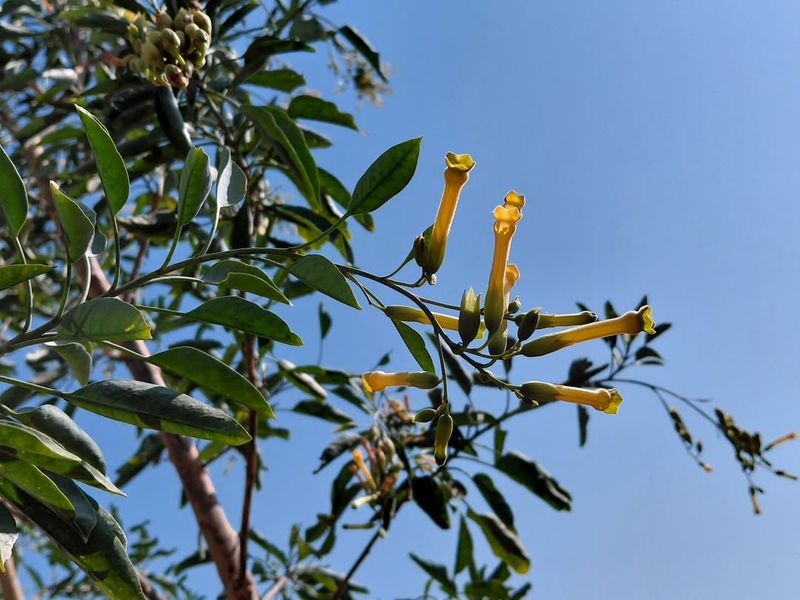
Looks can be deceiving, and African Rue is a perfect example of that. This bushy plant with small white flowers may seem innocent, but it is one of Oregon’s most serious noxious weeds.
It is listed as a Class A noxious weed in Oregon, which means it must be controlled or eliminated wherever it is found.
African Rue originally comes from the Middle East and Central Asia. It was introduced to North America unintentionally, and now it has spread across several western states, including Oregon.
The plant grows well in dry, disturbed areas like roadsides, rangelands, and overgrazed pastures.
One of the biggest problems with this plant is that it is toxic to livestock, especially sheep and horses. Animals that eat it can suffer serious health problems.
It also contains alkaloids that make the soil around it less friendly to other plants.
If you spot African Rue in Oregon, do not try to handle it without gloves. Report it to your local county weed control office right away.
Early detection is the best way to stop this plant from taking over more land in the state.
2. Giant Hogweed (Heracleum mantegazzianum)
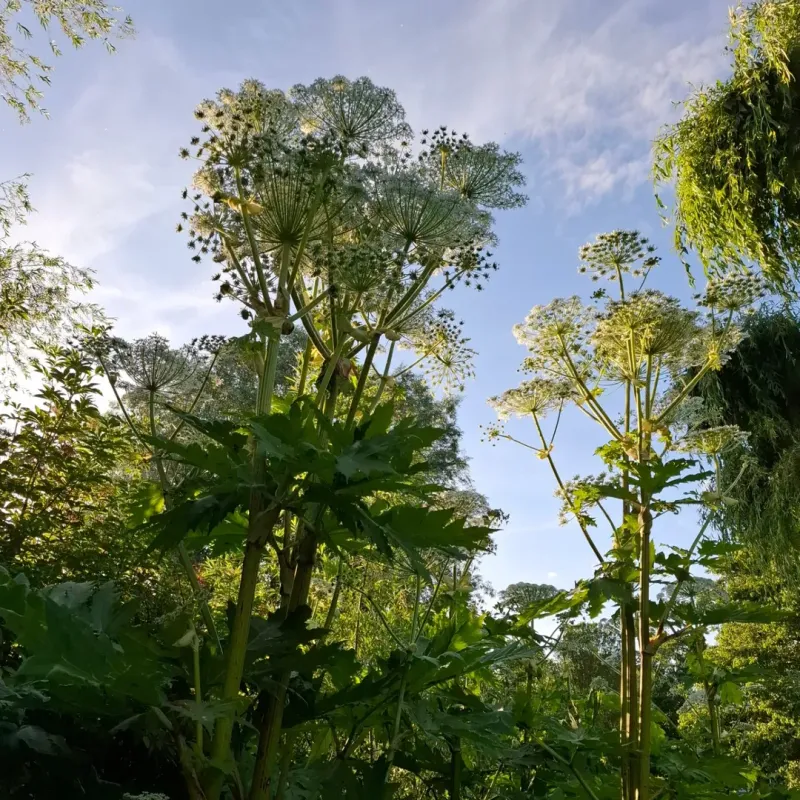
Few plants in Oregon carry as much of a warning label as Giant Hogweed. Standing up to 14 feet tall, this massive plant looks dramatic and almost prehistoric.
But getting too close to it can send you straight to the emergency room.
The sap of Giant Hogweed contains chemicals called furanocoumarins. When this sap touches your skin and is exposed to sunlight, it causes severe burns and blisters that can last for months.
Eye contact with the sap can even lead to temporary or permanent blindness. This is why Oregon treats it as an extremely serious threat.
Giant Hogweed is native to the Caucasus region of Eurasia. It was brought to North America as an ornamental garden plant in the early 1900s.
Once it escaped into the wild, it spread quickly along riverbanks, roadsides, and forest edges across the Pacific Northwest, including parts of Oregon.
Oregon has placed this plant on its prohibited list, meaning it cannot be sold, purchased, or transported in the state.
If you think you have spotted Giant Hogweed in Oregon, keep your distance and contact the Oregon Department of Agriculture immediately for guidance.
3. Yellow Floating Heart (Nymphoides peltata)
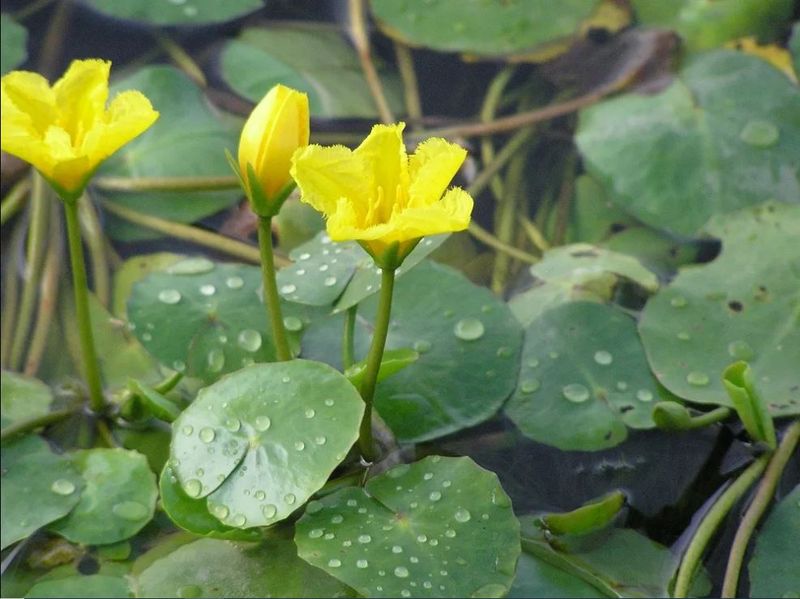
Pretty yellow flowers floating on the water might seem like a lovely addition to a garden pond, but Yellow Floating Heart is anything but harmless.
This aquatic plant is banned in Oregon because of the serious damage it does to lakes, ponds, and slow-moving waterways across the state.
Originally from Europe and Asia, Yellow Floating Heart was sold as an ornamental plant for water gardens. People loved the way it looked, and many introduced it into outdoor ponds without realizing it would escape into natural waterways.
Once it gets loose in Oregon’s water systems, it spreads fast and is extremely hard to remove.
The plant forms thick, dense mats on the water surface. These mats block sunlight from reaching underwater plants and reduce oxygen levels in the water.
Fish and other aquatic animals suffer when Yellow Floating Heart takes over. Boating and fishing become difficult too.
Oregon has placed this plant on its Class A noxious weed list, and it is illegal to possess, sell, or transport it in the state. Never dump aquarium or pond plants into natural water bodies.
Even a small piece of this plant can grow into a massive problem for Oregon’s waterways.
4. Common Cordgrass (Spartina anglica complex)
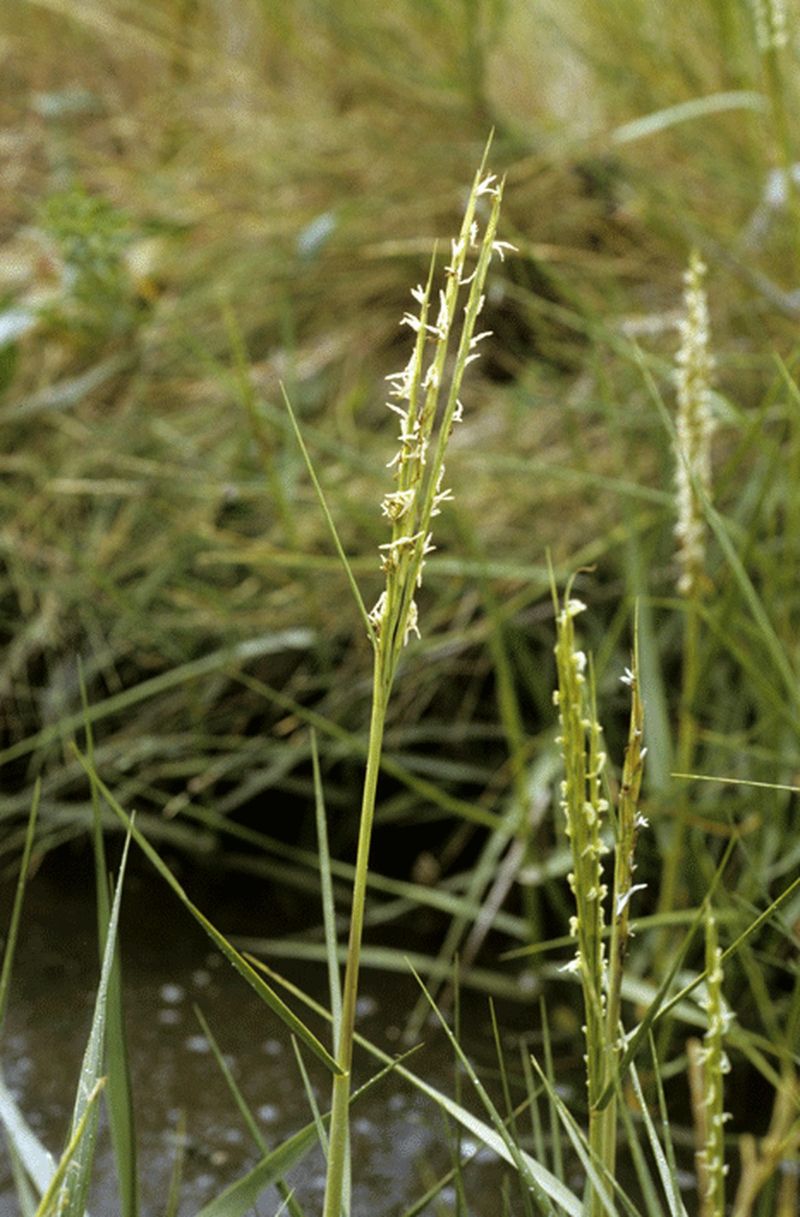
Along Oregon’s coastline, there is a grass quietly causing chaos. Common Cordgrass, part of the Spartina anglica complex, is an aggressive invader that has changed the face of estuaries and tidal flats in the Pacific Northwest.
Oregon takes this plant very seriously and has active programs to manage and eliminate it.
Cordgrass is native to Europe and was intentionally introduced in some areas to stabilize shorelines and reduce erosion. But it turned out to be far too good at spreading.
It colonizes mudflats and tidal zones, areas that are critically important for shorebirds, fish, and native plants.
As Cordgrass spreads, it raises the elevation of tidal flats by trapping sediment. This destroys the open mudflat habitat that many birds depend on for feeding.
It also reduces the productivity of estuaries, which are some of Oregon’s most important coastal ecosystems.
Oregon has classified Spartina species as Class A noxious weeds. Removal efforts often involve herbicide treatments and physical removal, and they require significant funding and coordination.
If you notice unusual grass growing in coastal wetlands while visiting Oregon’s shoreline, report it to local authorities. Protecting Oregon’s estuaries helps the entire coastal food chain.
5. Himalayan Blackberry (Rubus armeniacus)
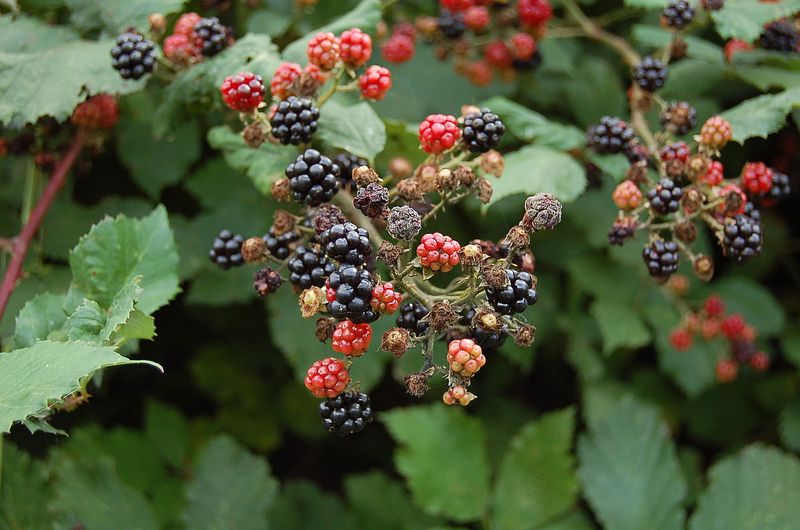
If you have ever walked along a trail in Oregon and been scratched by a thorny thicket of blackberries, chances are it was Himalayan Blackberry.
Despite producing sweet, edible fruit, this plant is one of the most widespread and difficult-to-manage invasive plants in the entire state of Oregon.
Himalayan Blackberry was introduced to North America in the late 1800s by horticulturalist Luther Burbank. It was meant to be a productive fruit plant, and it certainly lives up to that.
But it grows so aggressively that it takes over roadsides, riverbanks, fields, and forest edges, crowding out native vegetation in the process.
Each cane can grow up to 20 feet long, and the plant spreads both by seeds and through its root system. Birds eat the berries and spread seeds far and wide across Oregon.
Once established, Himalayan Blackberry is incredibly tough to remove. The roots go deep, and cutting the canes only encourages new growth.
Oregon lists it as a Class B noxious weed. While you can still pick and eat the berries, planting or spreading the plant is restricted.
Land managers across Oregon spend enormous resources each year trying to keep this thorny invader under control.
6. Tansy Ragwort (Jacobaea vulgaris)
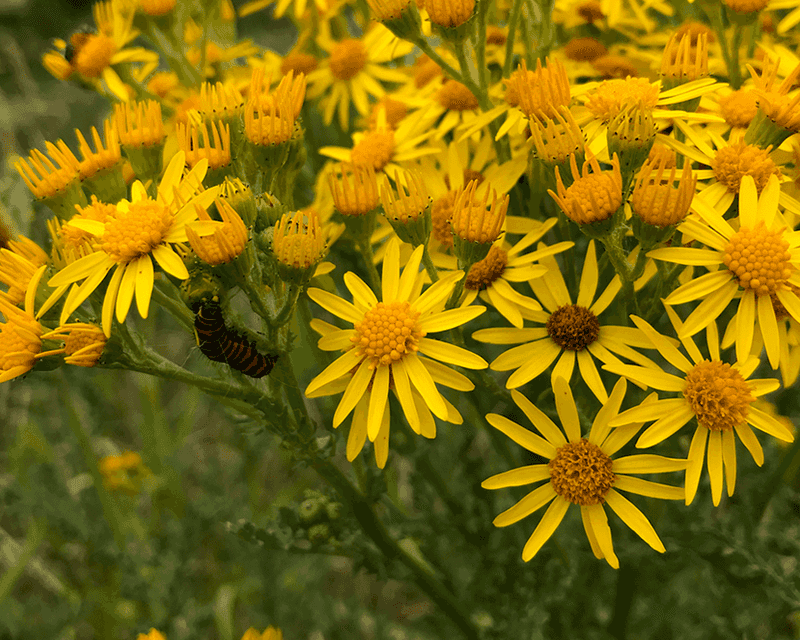
Bright yellow wildflowers often make people smile, but Tansy Ragwort is one bloom you definitely do not want spreading across Oregon’s pastures and roadsides. This plant is highly toxic to horses and cattle.
Even small amounts consumed over time can cause irreversible liver damage in livestock.
Tansy Ragwort came from Europe and arrived in Oregon in the early 20th century. It has since spread widely across the state, especially in western Oregon where the climate suits it well.
It thrives in disturbed areas, overgrazed pastures, roadsides, and logged forests.
Oregon considers Tansy Ragwort a Class B noxious weed. Landowners are required by law to control it on their property in certain counties.
The state has used biological control methods, including a specific flea beetle and cinnabar moth, to help reduce populations naturally without harsh chemicals.
One tricky thing about this plant is that it becomes more attractive to animals when it is dried in hay. Livestock may avoid fresh Tansy Ragwort but unknowingly consume it when it is mixed into hay.
Oregon farmers and horse owners are strongly encouraged to scout their pastures regularly and remove this plant before it goes to seed and spreads further.
7. White Bryony (Bryonia alba)
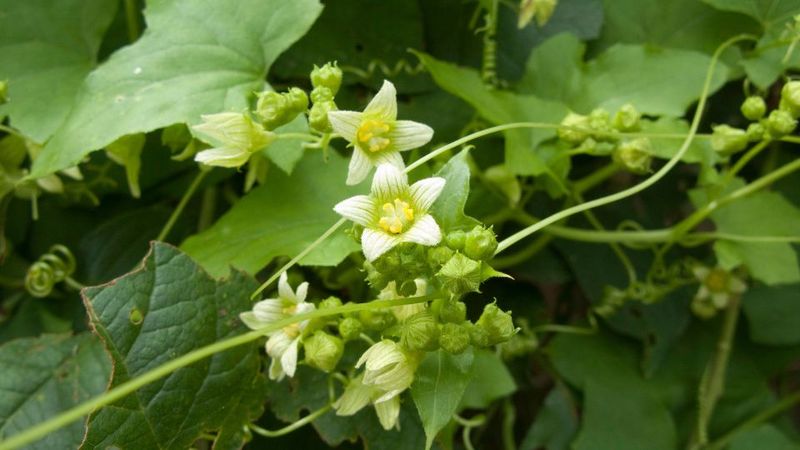
Climbing vines can add charm to a garden fence, but White Bryony is not the kind of vine you want anywhere near your yard in Oregon.
This fast-growing plant is classified as a Class A noxious weed in Oregon, and it is completely prohibited from being sold, grown, or transported in the state.
White Bryony is native to Europe and Western Asia. It was introduced to North America and has become a real problem in the Pacific Northwest.
The plant uses tendrils to climb over fences, shrubs, and other vegetation. It can grow several feet in a single season and quickly smothers whatever it climbs on.
Every part of this plant is toxic to humans and animals. The berries look tempting because they turn from green to red or black as they ripen, but eating even a small number can cause serious harm.
Children are especially at risk because the berries look like they could be edible.
In Oregon, if you spot White Bryony growing in a natural area or along a roadside, report it to the Oregon Department of Agriculture. Do not attempt to pull it out without protective gloves and clothing.
Early removal before it sets seed is the most effective way to prevent it from spreading further across Oregon.
8. Tree Of Heaven (Ailanthus altissima)
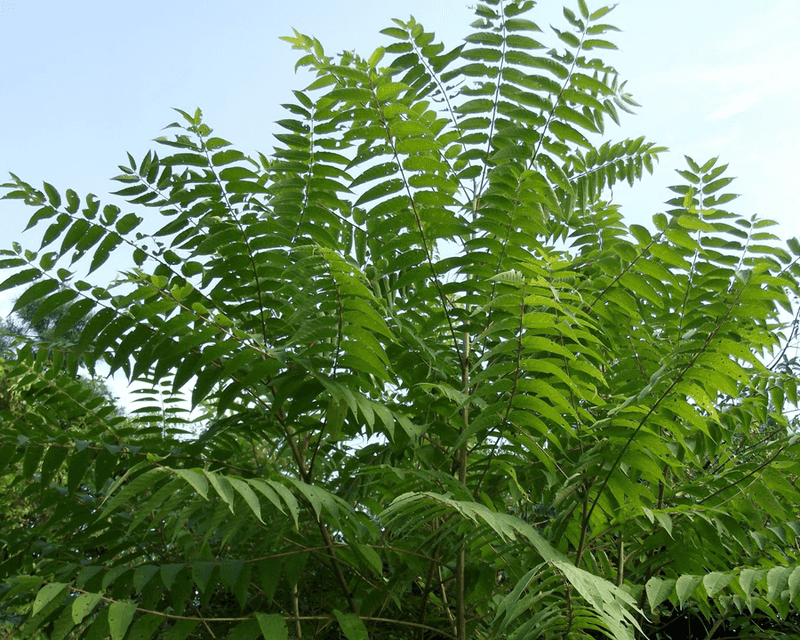
Its name sounds grand, but Tree of Heaven is far from heavenly when it comes to Oregon’s native ecosystems. Originally from China, this fast-growing tree was brought to the United States in the 1700s as an ornamental plant.
It has since spread across much of North America, including Oregon, where it is now listed as a noxious weed.
Tree of Heaven grows at a remarkable speed. A single tree can produce up to 325,000 seeds per year, and those seeds spread easily on the wind.
The tree also sprouts from its roots and stumps, making it very difficult to remove once it gets established in Oregon’s landscapes.
Beyond its aggressive spread, Tree of Heaven releases chemicals into the soil that prevent other plants from growing nearby. This process, called allelopathy, gives it an unfair advantage over native Oregon plants.
It thrives in disturbed areas like roadsides, vacant lots, and forest edges.
There is also a growing concern in Oregon because Tree of Heaven serves as a host for the Spotted Lanternfly, an invasive insect threatening agriculture in the eastern United States. Controlling Tree of Heaven in Oregon now could help prevent future problems.
If you see this tree growing wild, contact your local weed control authority.
9. Hydrilla (Hydrilla verticillata)
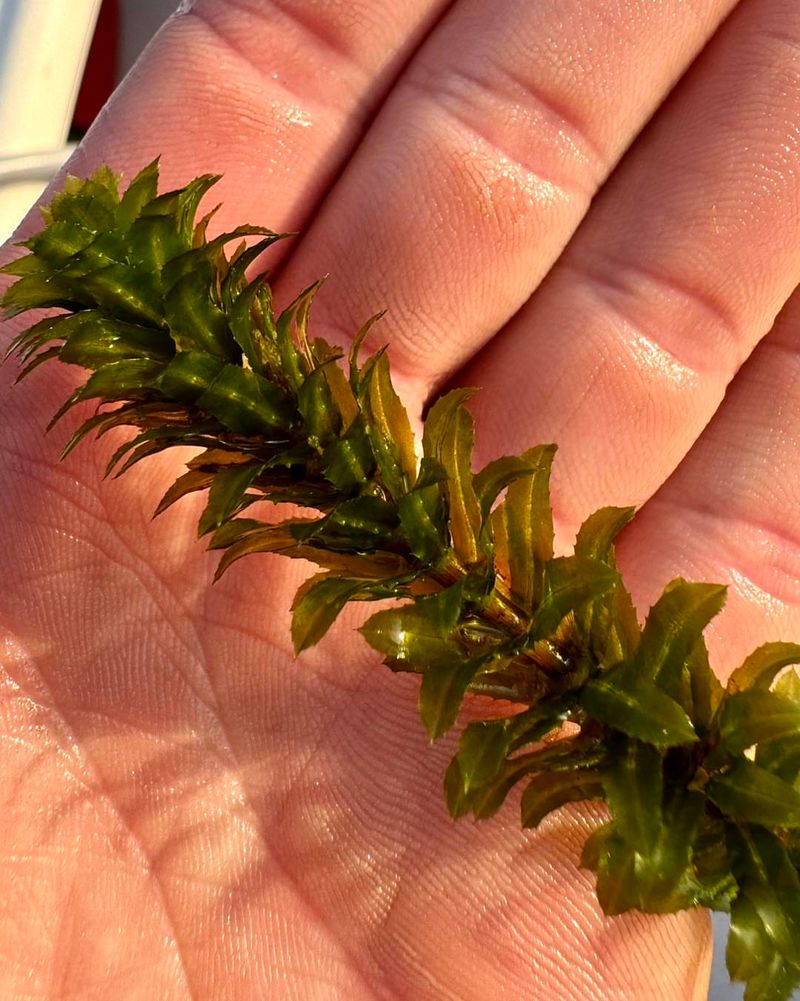
Underwater plants might seem like they stay out of the way, but Hydrilla is one of the most destructive aquatic invaders in the world. Oregon has worked hard to keep this plant out of its lakes and rivers, and for good reason.
Hydrilla grows so fast it can take over an entire water body in just a few years.
Native to parts of Asia and Australia, Hydrilla was introduced to the United States through the aquarium trade in the 1950s. People released it into natural waterways, and it quickly became a major problem.
It grows up to an inch per day and can form dense mats that stretch from the bottom of a lake all the way to the surface.
These thick underwater mats block sunlight, reduce oxygen levels, and push out native aquatic plants and animals. Boating, fishing, and swimming become nearly impossible in heavily infested areas.
Oregon’s waterways are particularly vulnerable because the state has so many lakes, rivers, and reservoirs that could support Hydrilla’s growth.
Oregon classifies Hydrilla as a prohibited plant. It is illegal to possess, sell, or transport it within the state.
Boaters in Oregon are urged to clean, drain, and dry their boats before moving between water bodies to prevent accidentally spreading this plant.
10. Mediterranean Sage (Salvia aethiopis)
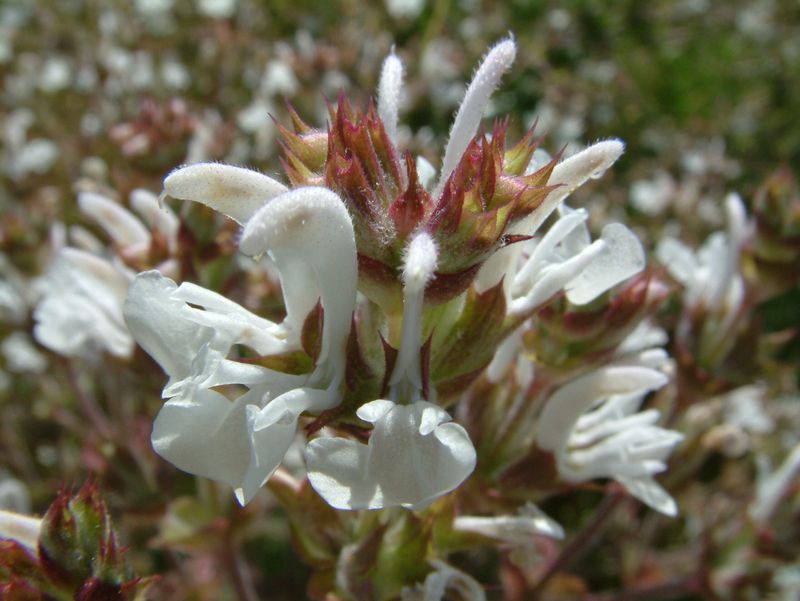
Sage is often associated with the dry, wide-open landscapes of the American West, but Mediterranean Sage is not the native kind. This plant is an unwanted guest in Oregon and has been causing problems on rangelands and dry hillsides across the state for decades.
Mediterranean Sage is native to southern Europe and western Asia. It arrived in North America as a seed contaminant and has spread widely across the western United States.
In Oregon, it is most commonly found in the eastern part of the state, where the dry climate suits it perfectly.
The plant forms large, woolly rosettes in its first year and then sends up tall flower stalks in its second year. After it releases its seeds, the entire plant breaks off at the base and rolls across the landscape like a tumbleweed, spreading seeds as it goes.
This makes it very efficient at colonizing new areas across Oregon.
Oregon lists Mediterranean Sage as a Class B noxious weed. It competes with native grasses and shrubs that livestock and wildlife depend on for food.
Land managers in Oregon recommend pulling young plants before they go to seed. Herbicide treatments are also effective when applied at the right time of year.
11. Goatsrue (Galega officinalis)
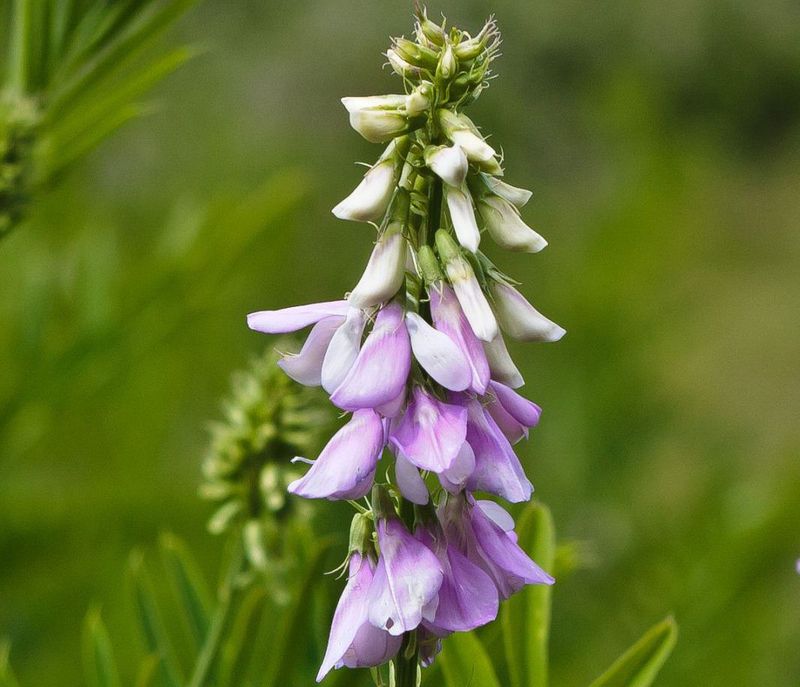
Here is a plant that sounds almost friendly but has earned a serious reputation in Oregon agriculture. Goatsrue is a perennial herb in the legume family, and it is one of only a handful of plants listed as a Federal Noxious Weed in the United States.
Oregon takes its presence very seriously.
Originally from the Middle East and southern Europe, Goatsrue was brought to the United States in the early 1900s as a potential forage crop. That experiment did not go well.
The plant turned out to be toxic to sheep and horses, and it quickly escaped cultivation and spread into natural areas.
Goatsrue is especially problematic in Utah and has been found in isolated areas of other western states. Oregon has strict regulations to prevent it from establishing here.
The plant grows in dense patches that crowd out native vegetation and make land unusable for grazing.
What makes Goatsrue so hard to manage is its deep, extensive root system and its ability to fix nitrogen in the soil, which actually helps it grow better than surrounding plants. Oregon land managers monitor for this plant carefully.
If you ever spot Goatsrue in Oregon, report it immediately because early action is the key to keeping it from spreading.
12. Canada Thistle (Cirsium arvense)
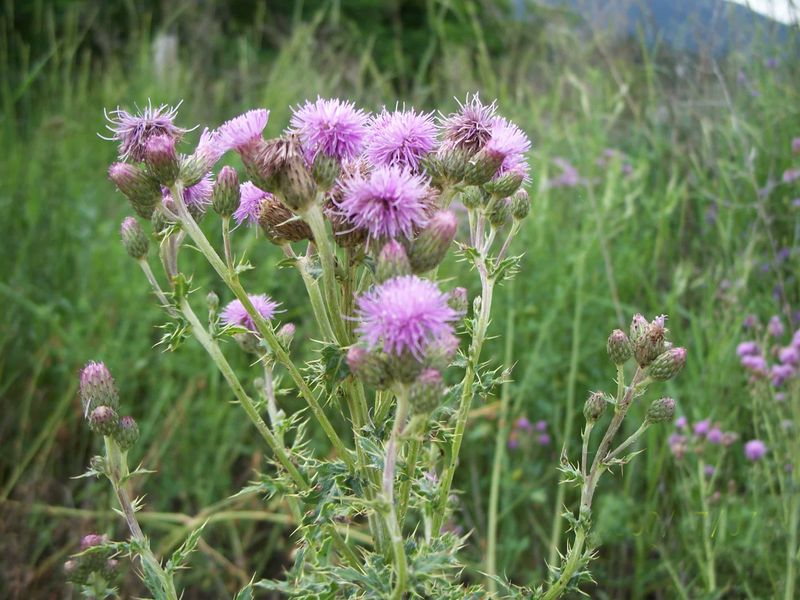
Despite its name, Canada Thistle is not just a Canadian problem. This spiny, aggressive plant has been frustrating farmers and land managers across Oregon for well over a century.
It is one of the most widespread and difficult-to-control noxious weeds in the entire state.
Canada Thistle is actually native to Europe and Asia and was introduced to North America by early settlers. It spread rapidly across the continent and is now found in every Oregon county.
The plant thrives in agricultural fields, roadsides, pastures, and disturbed natural areas throughout the state.
What makes Canada Thistle so persistent is its root system. The roots can extend 15 feet deep and spread horizontally underground.
Even if you cut the plant above ground, new shoots will sprout from the roots. Seeds are also carried by the wind, sometimes traveling miles from the parent plant.
Oregon classifies Canada Thistle as a Class B noxious weed, and many counties require landowners to actively control it. Repeated mowing, targeted herbicide use, and biological control agents like a stem-mining weevil have all been used to manage it in Oregon.
Staying on top of Canada Thistle before it goes to seed is the most practical advice for Oregon landowners dealing with this persistent invader.