10 Plants That Bring Butterflies To Michigan Gardens
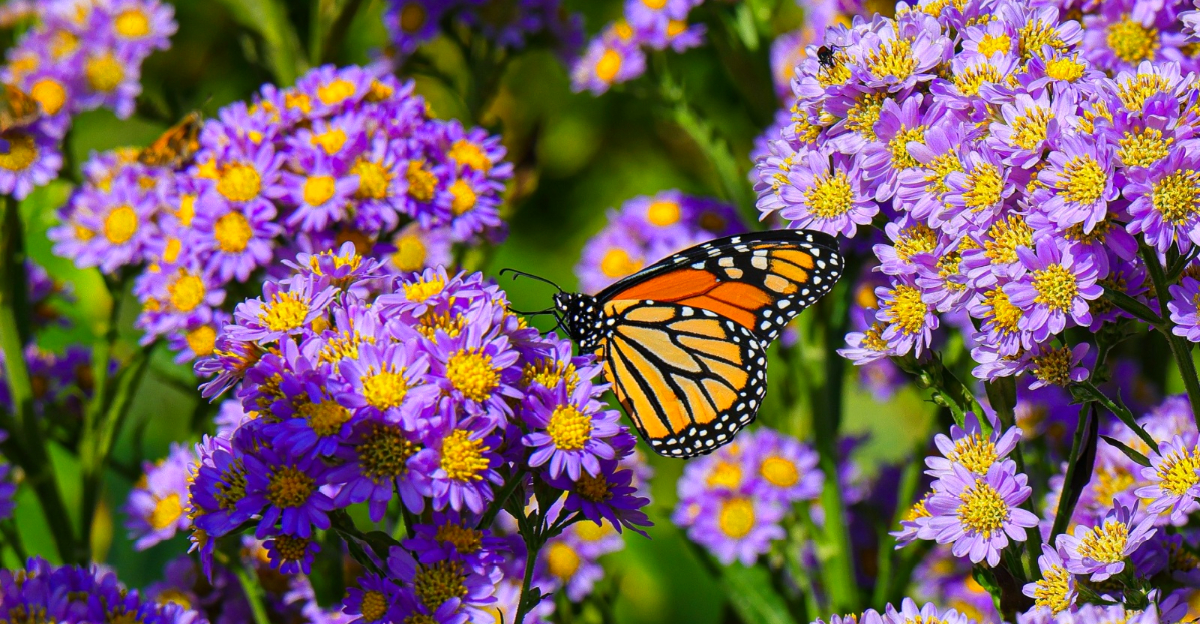
Want to know the secret to a backyard that feels like a scene from a nature documentary? It’s not just about filling your beds with the flashiest blooms at the nursery.
If you want to transform your Michigan landscape into a bustling butterfly haven, think like a pollinator.
Focus on providing a steady buffet of nectar, host plants for caterpillars, and flowers that can handle our unpredictable Midwestern climate.
From sun-drenched garden borders to those tricky, shaded corners, the right plant choices turn your yard into a seasonal sanctuary for monarchs, swallowtails, and fritillaries alike.
Whether you are aiming for early summer flair or a late-season show, these 10 Michigan-tested perennials are the heavy hitters you need.
Ready to turn your yard into the neighborhood’s go-to butterfly destination?
1. Butterfly Weed Welcomes Monarchs With Orange Blooms
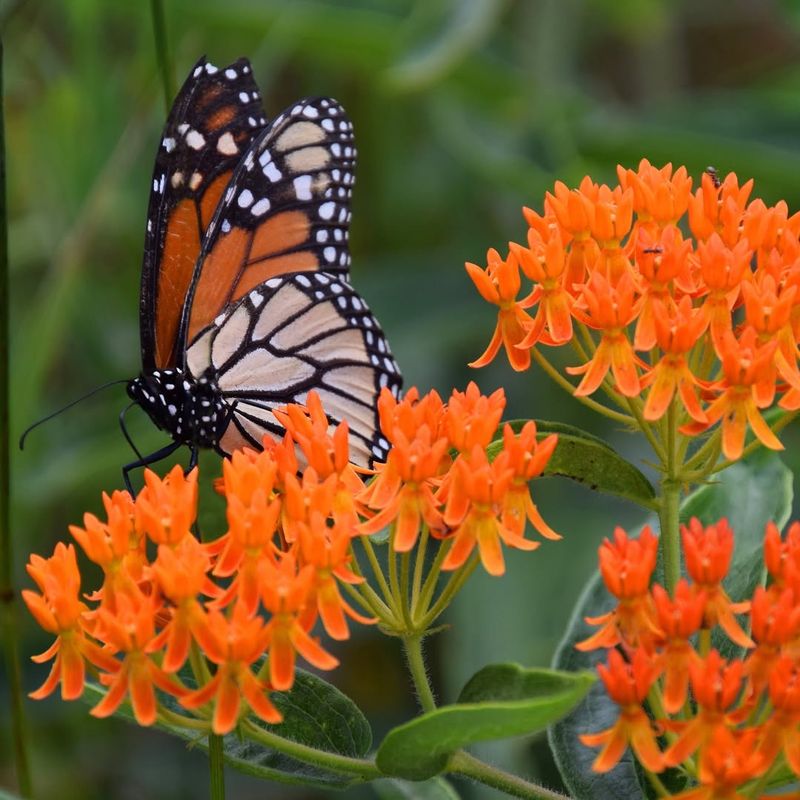
Few sights in a Michigan summer garden stop people in their tracks quite like a monarch butterfly resting on a cluster of blazing orange butterfly weed blooms.
This native perennial, known botanically as Asclepias tuberosa, is one of the most important plants you can add if supporting monarchs is a priority.
Unlike common milkweed, butterfly weed stays more compact and tidy, making it a natural fit for both formal borders and casual cottage-style plantings.
Butterfly weed blooms from roughly late June through August in Michigan, with peak color arriving in July. It thrives in full sun and actually prefers lean, well-drained soil, meaning it can handle sandy or rocky spots where other perennials struggle.
Overwatering or heavy clay soil tends to cause root problems, so good drainage is the most important factor for long-term success.
Monarch caterpillars feed exclusively on milkweed foliage, and butterfly weed counts as a true milkweed, making it both a nectar source and a host plant.
Plant it in groups of three or more for the strongest visual impact and the best chance of drawing in monarchs.
Once established, it is remarkably drought-tolerant and requires very little maintenance throughout the Michigan growing season.
2. Purple Coneflower Serves Nectar To Garden Guests

Walk through almost any successful Michigan pollinator garden and you will find purple coneflower holding its own from midsummer into early fall.
Echinacea purpurea is a tough, adaptable native perennial that produces large daisy-like flowers with rosy-purple petals surrounding a raised, spiky orange-brown center.
That bold center cone is exactly what butterflies find so appealing, as it provides a stable landing platform and a reliable supply of nectar.
Bloom time in Michigan runs from June through September, giving butterflies an extended window to visit. Purple coneflower performs best in full sun but tolerates light shade reasonably well.
It adapts to a wide range of soil types, from sandy loam to heavier clay, as long as drainage is adequate. Young plants benefit from regular watering during the first season, but established clumps handle dry stretches with ease.
Swallowtails, fritillaries, and skippers are among the most frequent butterfly visitors to coneflower in Michigan gardens.
Leaving the seed heads standing through fall and winter also supports goldfinches and other birds.
For the most striking garden effect, combine purple coneflower with black-eyed Susan and blazing star, creating a layered native planting that carries color and pollinator activity across the full growing season.
3. Blazing Star Sends Butterflies Soaring Up Tall Spikes
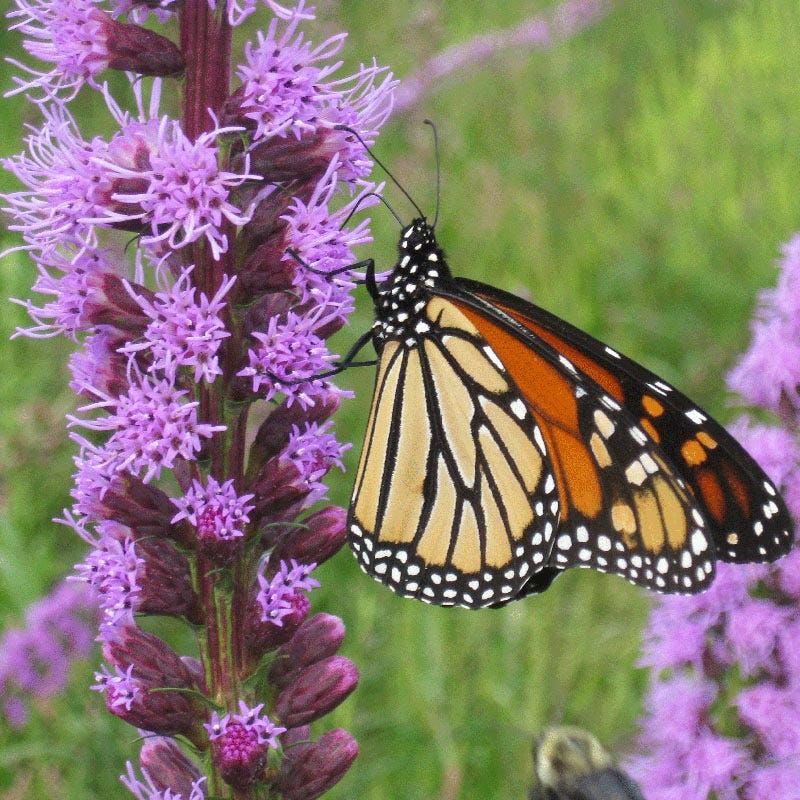
There is something almost theatrical about the way blazing star blooms, opening its fluffy purple flowers from the top of the spike downward, which is the opposite of how most flowering plants work.
This native perennial, also called liatris or gayfeather, creates a strong vertical accent in the garden while delivering some of the most butterfly-rich moments of the Michigan summer.
Monarchs, swallowtails, and fritillaries are all drawn to its nectar-rich flowers.
In Michigan, blazing star typically blooms from July through September, bridging the gap between early summer wildflowers and fall asters.
It thrives in full sun and well-drained soil, and once established, it handles dry conditions without much fuss.
Heavy, wet soils are the main challenge to avoid, as waterlogged roots can cause the corm to rot over Michigan’s long winters.
Plant blazing star in bold drifts of five or more for the most dramatic effect and the strongest butterfly draw. It pairs beautifully with black-eyed Susan and purple coneflower, creating a layered mid-border planting that peaks in midsummer.
At around two to four feet tall, it adds welcome height without becoming unruly.
Gardeners who leave the seed heads standing after bloom will also attract goldfinches and other seed-eating birds through the colder months.
4. Bee Balm Buzzes With Pollinators All Summer
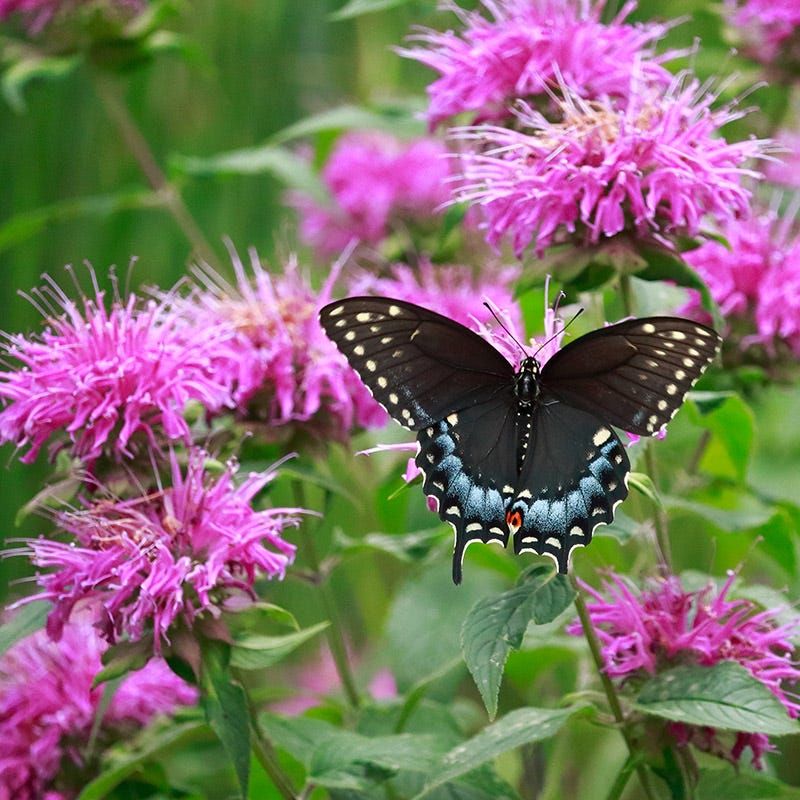
Planting bee balm for the first time tends to be one of those gardening decisions that pays off immediately and keeps rewarding you year after year.
This bold native perennial, known as Monarda, produces shaggy, tubular flower heads in shades of red, pink, lavender, and purple that attract an impressive parade of pollinators throughout the Michigan summer.
Butterflies, hummingbirds, and native bees all compete for space on its blooms from June through August.
Wild bergamot, Monarda fistulosa, is the native Michigan species most closely tied to butterfly activity, producing lavender to pale pink flowers that swallowtails and fritillaries find especially appealing.
It grows well in full sun to light shade and tolerates a range of soil conditions, though it does best with consistent moisture, particularly during hot, dry stretches.
Good air circulation around the plants helps reduce powdery mildew, which is a common issue in humid Michigan summers.
Bee balm spreads steadily by underground runners, so give it room to roam or divide clumps every few years to keep it in bounds.
Plant it near the middle or back of a border where its height of two to four feet adds structure.
Combining it with blazing star and purple coneflower creates a midsummer pollinator hotspot that will have butterflies visiting your Michigan yard on nearly every warm day.
5. Black-Eyed Susan Offers Sunshine And Sweet Nectar

Golden yellow petals surrounding a dark chocolate-brown center make black-eyed Susan one of the most cheerful and recognizable wildflowers growing across Michigan roadsides and gardens alike.
Rudbeckia hirta is a native biennial or short-lived perennial that self-seeds reliably, meaning once you plant it, it tends to stick around and spread in a natural, easy way.
Butterflies love the wide, open flower heads, which offer a flat landing surface and a generous supply of nectar.
Bloom time runs from June through October in Michigan, making black-eyed Susan one of the longer-blooming natives available to gardeners.
It thrives in full sun and adapts to a wide range of soils, including dry, sandy conditions where other plants might struggle.
Consistent deadheading encourages more blooms, but leaving some seed heads standing in late summer feeds birds and allows the plant to self-sow naturally for next year’s display.
Skippers, painted ladies, and fritillaries are frequent visitors to black-eyed Susan in Michigan gardens. It works beautifully as a front-to-middle border plant, growing roughly one to three feet tall depending on the variety.
Pairing it with purple coneflower and blazing star creates a classic Midwestern wildflower look that supports pollinators from early summer through the first hard frost of Michigan’s fall season.
6. Sedum Keeps Butterflies Coming In Late Season
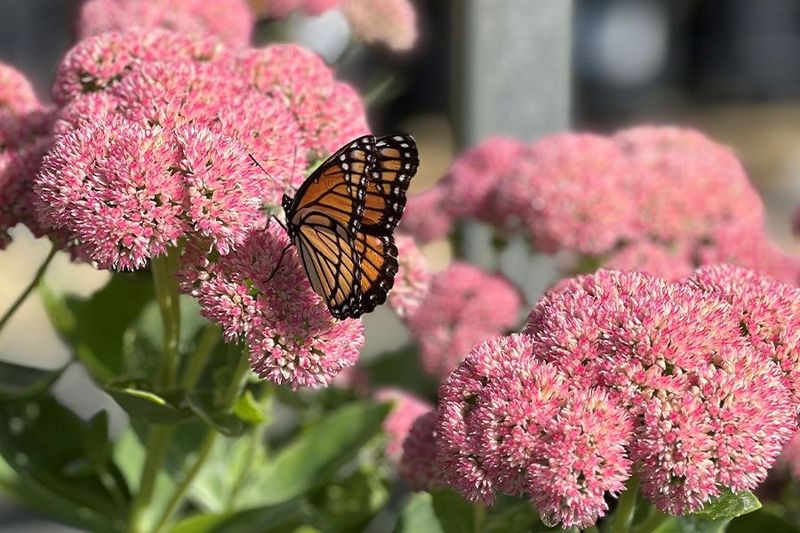
By late summer, many Michigan gardens start to look tired, with faded blooms and thinning foliage, but sedum is just hitting its stride.
Also sold under the name stonecrop, the showy varieties such as Hylotelephium spectabile produce broad, flat-topped flower clusters in shades of pink, rose, and dusty red from August well into October.
That late-season bloom timing is exactly what makes sedum so valuable for Michigan butterfly gardeners working to support pollinators through the end of the flying season.
Monarchs preparing for their southward migration pass through Michigan in late summer and early fall, and sedum provides an important refueling stop.
Painted ladies, cabbage whites, and various skippers also visit regularly.
Sedum thrives in full sun and is one of the most drought-tolerant perennials available, making it a smart choice for raised beds, slopes, or any spot with fast-draining soil.
Most showy sedum varieties reach one to two feet tall, forming tidy clumps that look attractive even before the flowers open, thanks to their thick, succulent foliage.
Plant sedum near the front or middle of a border where pollinators can be easily observed.
Leaving the dried flower heads standing through winter adds structural interest to the Michigan garden and provides a small amount of shelter for overwintering beneficial insects.
7. New England Aster Extends The Flight Season For Pollinators
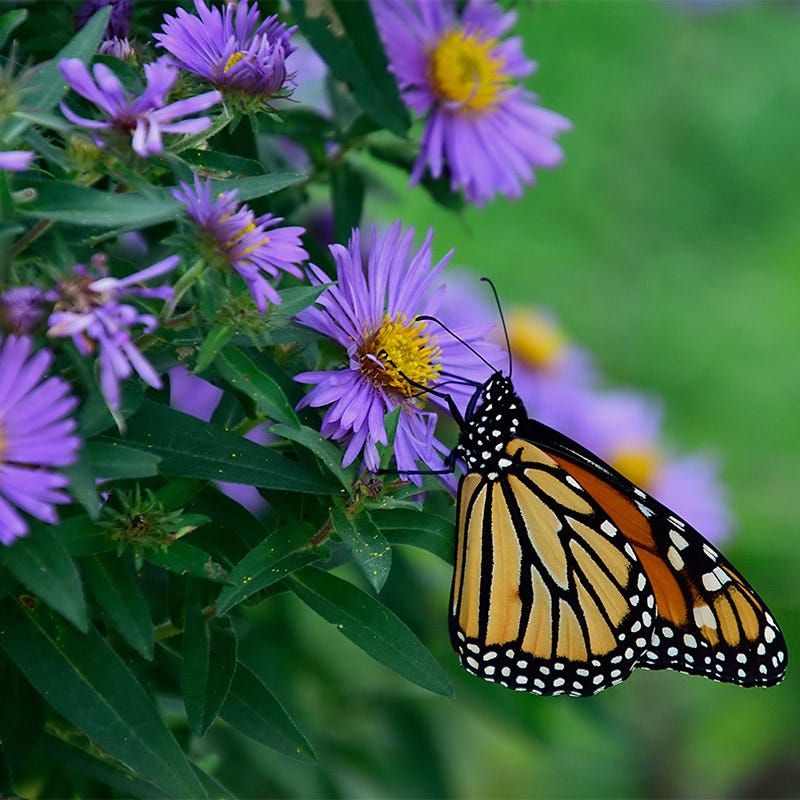
When most of the summer flowers have faded and Michigan gardens are beginning their slow transition toward fall, New England aster bursts into color with a display that is nothing short of spectacular.
Symphyotrichum novae-angliae produces masses of small daisy-like flowers in rich purple, pink, and violet shades from late August through October, often blooming right up until the first hard frost.
For butterflies that are still active in fall, including migrating monarchs and late-season painted ladies, this plant is genuinely irreplaceable.
New England aster grows naturally in moist meadows and roadsides across Michigan, which gives you a good idea of its preferred conditions.
It performs best in full sun with moderately moist, well-drained soil but tolerates partial shade and heavier soils better than many native plants.
Cutting plants back by about half in late June encourages bushier growth and more flowers without sacrificing bloom time.
Plants can reach three to six feet tall, so place them toward the back of a border or in a naturalistic meadow planting where their height becomes an asset.
Pairing New England aster with goldenrod and sedum creates a powerful late-season pollinator trio that keeps Michigan gardens productive well into autumn.
The combination of color, height, and nectar availability makes this aster one of the most rewarding native plants a Michigan gardener can grow.
8. Zinnia Pops Color And Nectar Into Any Garden
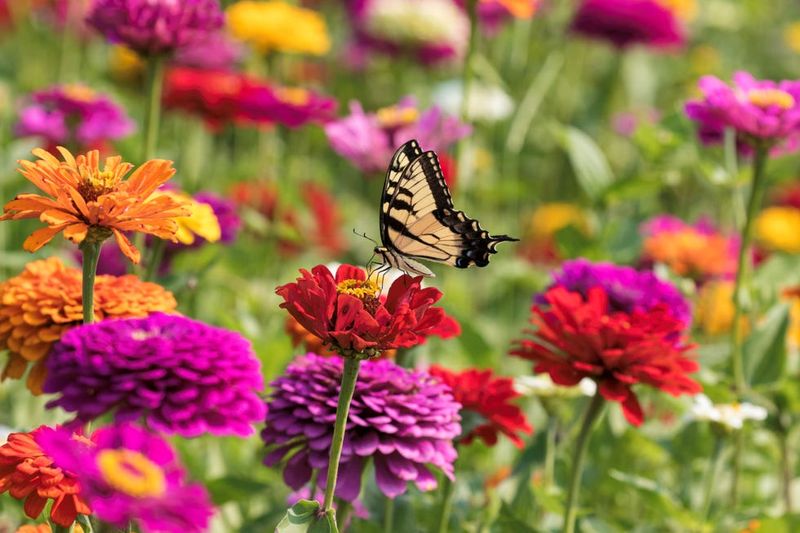
Not every great butterfly plant needs to be a native wildflower, and zinnia is the perfect example of a non-native annual that earns its place in a Michigan pollinator garden through sheer performance.
Few flowers attract as many butterflies as reliably as zinnias do, and their bold, saturated colors in red, orange, pink, yellow, and purple make them one of the most visually exciting plants in any summer garden.
Swallowtails, monarchs, and painted ladies are among the most frequent visitors.
Zinnias are warm-season annuals that should be started from seed directly in the garden after Michigan’s last frost date, which falls between mid-May and early June depending on your region.
They thrive in full sun and well-drained soil, and they actually perform better with less water once established, making them well-suited to Michigan’s sometimes unpredictable summer rainfall patterns.
Deadheading spent blooms regularly encourages continuous flowering from midsummer through fall frost.
For the best butterfly results, choose larger-flowered varieties with open centers rather than fully double types, as butterflies can access nectar more easily on single or semi-double flowers.
Plant zinnias in bold blocks of color rather than single plants scattered through the garden.
They fill in gaps left by earlier-blooming perennials and keep Michigan gardens buzzing with butterfly activity from July right through the first cool nights of September.
9. Goldenrod Feeds Butterflies When Flowers Are Scarce
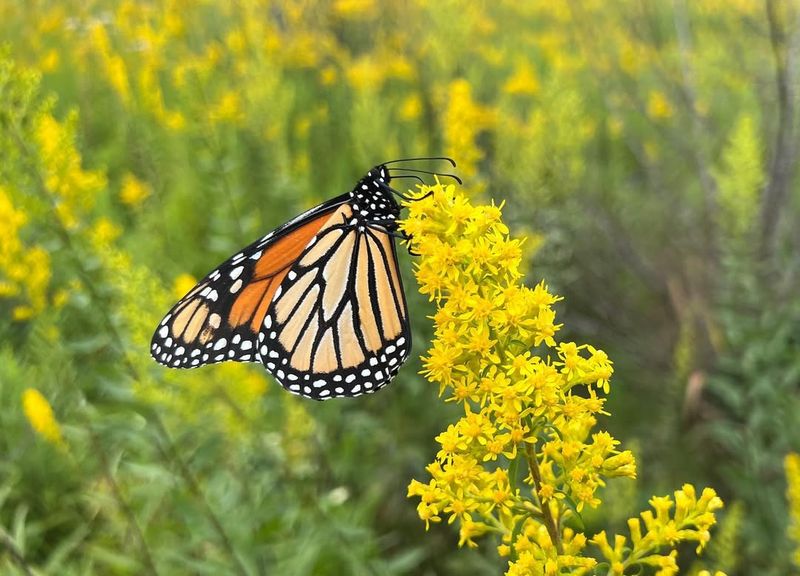
Goldenrod has an unfair reputation in many Michigan gardens, often blamed for causing hay fever when the real culprit is ragweed blooming at the same time.
Once gardeners look past that misconception, they discover one of the most ecologically valuable native plants available for late-season butterfly support.
Solidago species produce arching plumes of tiny golden-yellow flowers from August through October, arriving at exactly the moment when most other nectar sources have finished for the season.
Monarchs, fritillaries, skippers, and sulfurs all feed heavily on goldenrod during late summer and early fall, building up energy reserves for migration or overwintering.
Goldenrod thrives in full sun and tolerates a wide range of soil conditions, from dry sandy soils to moderately moist ground.
Compact cultivars such as Fireworks or Little Lemon are well-suited to smaller Michigan gardens, staying tidy at two to three feet rather than spreading aggressively like some wild species.
Plant goldenrod near the middle or back of a border, where its late bloom time fills the gap left by midsummer perennials.
Combining it with New England aster creates one of the most productive fall pollinator pairings possible in a Michigan yard.
The two plants bloom simultaneously, attract overlapping groups of butterflies, and together create a naturalistic late-season display that feels as though it belongs to the Michigan landscape rather than being forced into it.
10. Joe-Pye Weed Draws Swallowtails To Your Yard
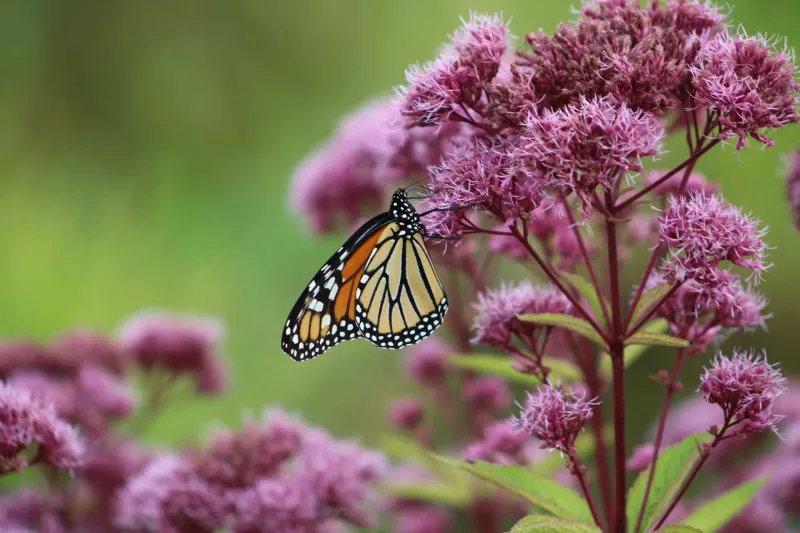
Standing up to seven feet tall in ideal conditions, Joe-Pye weed commands attention in a Michigan garden the moment it comes into bloom.
Eutrochium purpureum produces large, domed clusters of dusty mauve-pink flowers from July through September.
Its size and nectar richness make it one of the best plants for attracting large butterflies, including tiger swallowtails, spicebush swallowtails, and giant swallowtails.
Gardeners who plant it often describe the experience of watching swallowtails work through a mature clump as one of the highlights of the Michigan butterfly season.
Joe-Pye weed naturally grows along stream banks and woodland edges across Michigan, which tells you a lot about its preferences. It performs best in full sun to partial shade with consistently moist, rich soil.
While it tolerates average garden conditions reasonably well, providing extra moisture during dry spells encourages stronger growth and more abundant flowering.
It is a particularly good choice for low-lying areas or rain gardens where other perennials might struggle.
Because of its impressive height, Joe-Pye weed works best at the back of a border or as a bold focal point in a naturalistic planting.
Pairing it with New England aster and goldenrod creates a late-season butterfly corridor that carries pollinator activity deep into Michigan’s fall.
For gardeners with limited space, shorter cultivars like Baby Joe stay closer to three feet and deliver the same swallowtail-drawing power in a more manageable size.