10 Plants That Bring Butterflies To Ohio Gardens
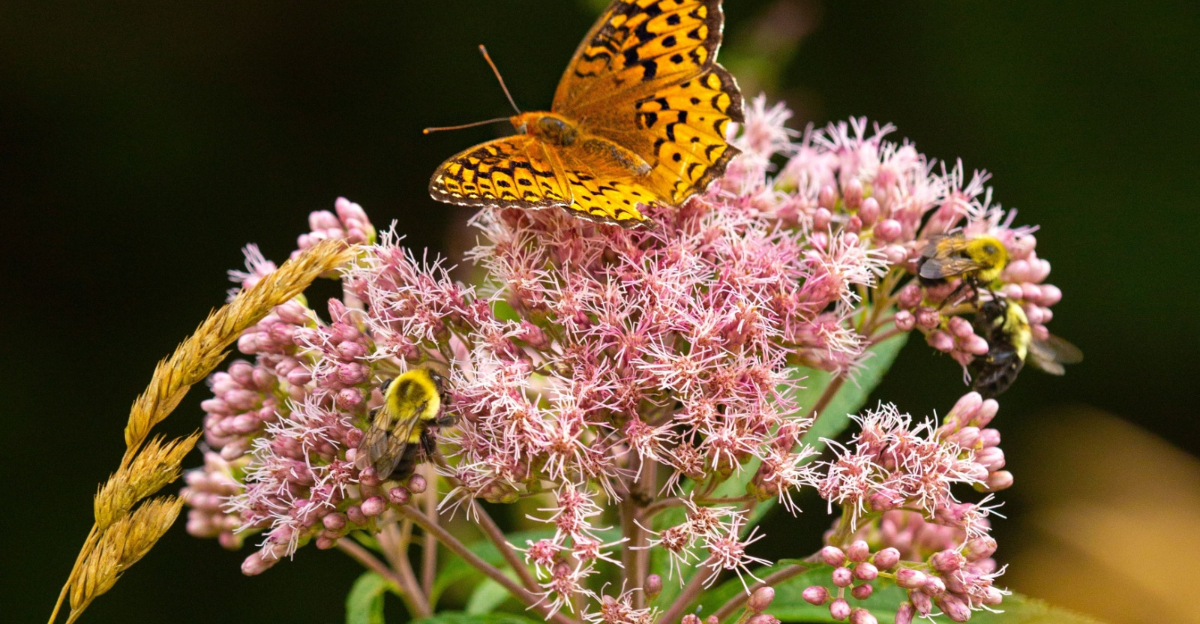
Step outside on a quiet summer morning in Ohio and you might catch a flicker of orange, gold, and velvet black drifting above your flowers. A garden that draws butterflies feels different.
It moves, it breathes, it feels alive. These delicate travelers search for safe places filled with nectar, sun, and shelter, and the right plants can turn an ordinary yard into one of their favorite stops.
As blooms open through the seasons, wings arrive in a slow, colorful dance that brings calm and wonder to any outdoor space. Ohio’s climate supports many beautiful, easy plants that butterflies return to again and again.
With a few thoughtful choices, your garden can become a living, fluttering canvas of color, light, and motion from spring’s first warmth to the gentle fade of autumn.
1. Milkweed Supports Monarch Butterflies And Pollinators
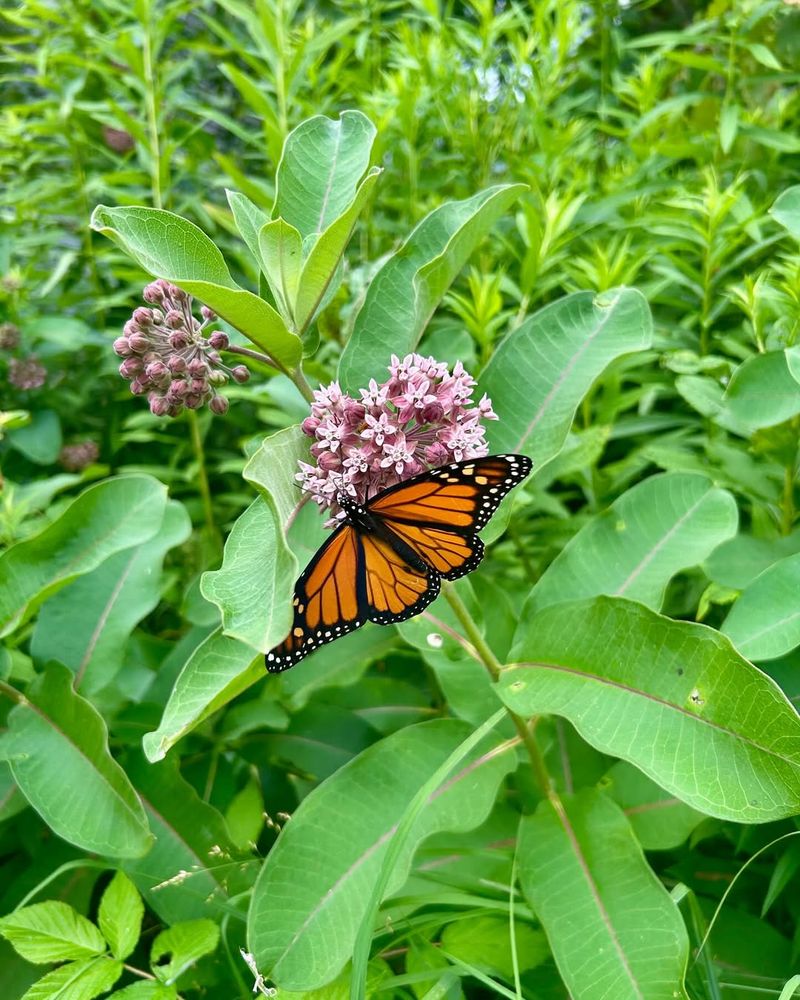
Monarch butterflies cannot complete their life cycle without this essential plant. Female monarchs lay their eggs exclusively on milkweed leaves, and the caterpillars feed only on this plant family.
Ohio gardeners can choose from several native species including common milkweed, swamp milkweed, and butterfly weed, each suited to different garden conditions.
Common milkweed grows tall and spreads through underground rhizomes, making it perfect for larger spaces or naturalized areas. Swamp milkweed prefers moist soil and works beautifully in rain gardens or along water features.
Butterfly weed tolerates dry conditions and adds brilliant orange blooms to sunny borders.
According to the Xerces Society, planting native milkweed species helps monarch populations far more than tropical varieties. These native plants bloom at the right times to support monarchs during their spring migration northward and their fall journey south.
Plant milkweed in full sun with well-drained soil, spacing plants about two feet apart.
The flowers produce abundant nectar that attracts many butterfly species, not just monarchs. Swallowtails, fritillaries, and skippers all visit milkweed blooms regularly.
Ohio State University Extension recommends including at least three milkweed plants in your butterfly garden to provide enough foliage for hungry caterpillars while maintaining attractive plants for your landscape.
2. Coneflower Adds Color And Attracts Native Butterflies
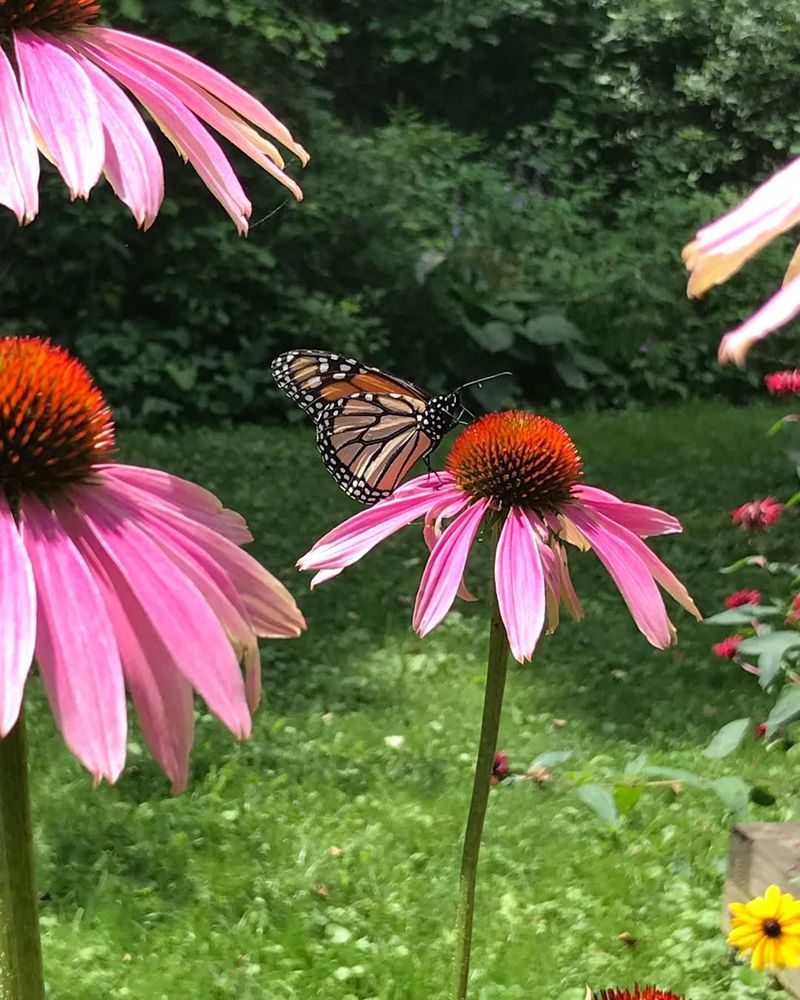
Few plants match the reliable beauty and pollinator power of coneflowers in Midwestern gardens. These tough natives bloom for weeks during summer heat, producing large daisy-like flowers with prominent cone-shaped centers that butterflies find irresistible.
Purple coneflower remains the most popular choice, but cultivars now offer pink, white, orange, and yellow blooms.
Butterflies land on the raised center cone to access nectar while using the sturdy platform as a feeding station. Swallowtails, painted ladies, and fritillaries visit throughout the day.
The long bloom period from June through September means continuous nectar availability during peak butterfly activity.
Once established, coneflowers handle drought remarkably well, making them perfect for Ohio’s occasionally dry summers. They thrive in full sun with average to poor soil, actually performing better without rich fertilization.
Space plants 18 to 24 inches apart to allow good air circulation.
Research from Ohio State University shows coneflowers support diverse pollinator communities beyond butterflies, including native bees. After blooming finishes, leave the seed heads standing through winter.
Goldfinches feast on the seeds, and the structural interest adds beauty to dormant gardens. Divide clumps every three to four years to maintain vigor and prevent overcrowding.
3. Black Eyed Susan Feeds Butterflies All Summer Long
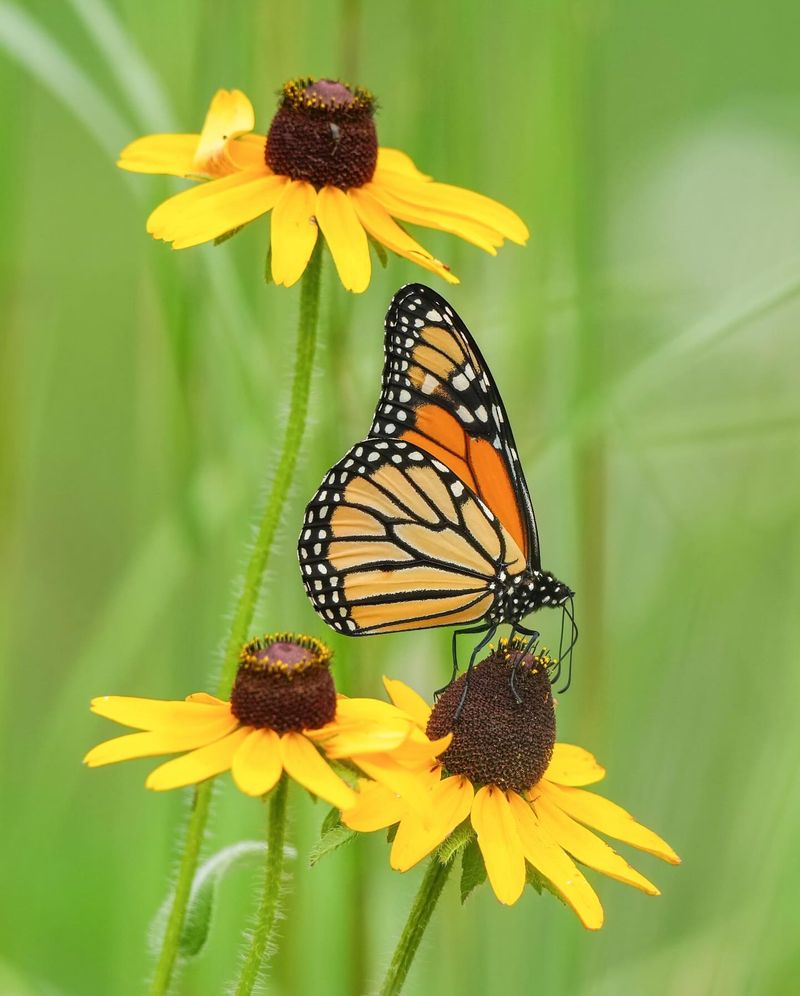
Golden petals surrounding dark chocolate centers make this cheerful native instantly recognizable across Ohio landscapes. Black-eyed Susans bloom prolifically from June straight through September, providing consistent nectar when butterflies need it most.
Their sunny disposition and carefree nature make them favorites among gardeners who want maximum impact with minimal fuss.
Butterflies appreciate the open flower structure that makes nectar easily accessible. Pearl crescents, clouded sulphurs, and various skippers visit regularly throughout the growing season.
The flowers also support many native bee species, creating a buzzing hub of pollinator activity.
These adaptable plants grow in nearly any soil type, from clay to sand, wet to dry. They prefer full sun but tolerate partial shade better than many prairie natives.
Black-eyed Susans self-sow readily, filling in gaps and creating natural drifts without becoming invasive.
According to Ohio State University Extension, black-eyed Susans work beautifully in both formal and naturalized settings. Plant them 12 to 18 inches apart in groups of five or more for the best visual impact.
They combine wonderfully with purple coneflowers and ornamental grasses. Deadheading encourages more blooms, but leaving some seed heads provides winter food for birds and adds architectural interest to cold-season gardens.
4. Liatris Spikes Draw Butterflies In Large Numbers
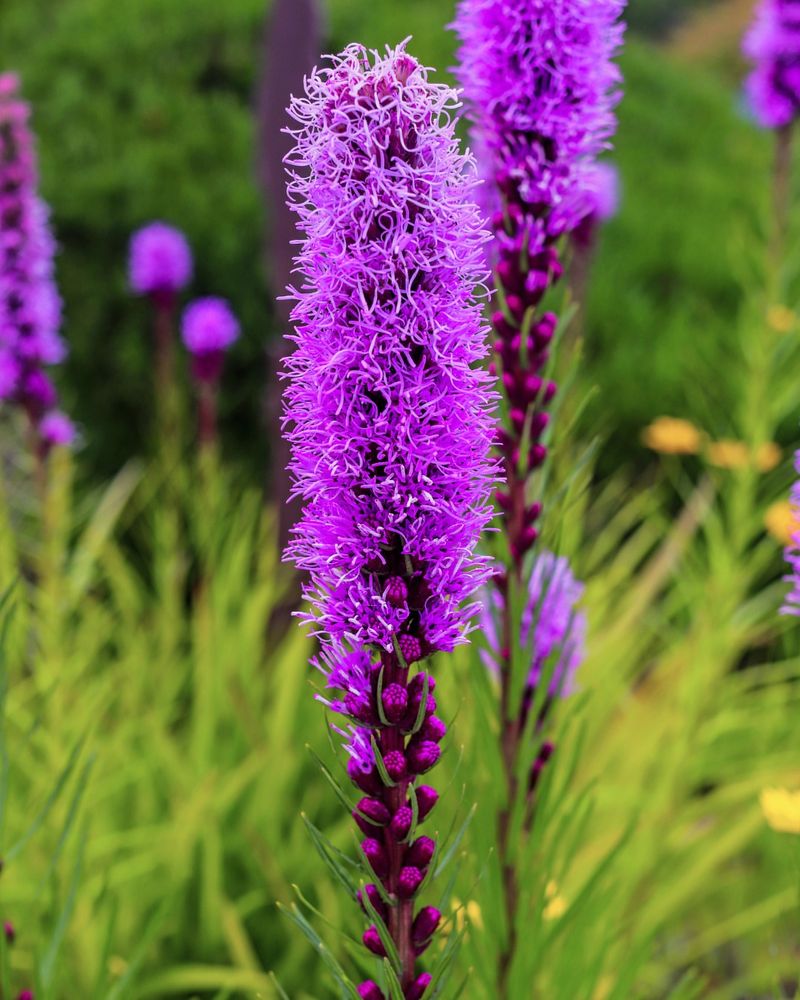
Vertical purple spikes rising three to four feet create dramatic focal points while serving as butterfly magnets. Liatris blooms from the top down, an unusual characteristic that sets it apart from most spike-flowering plants.
This native prairie plant brings authentic Midwestern character to gardens while supporting local butterfly populations.
The densely packed flowers produce copious nectar that attracts butterflies in impressive numbers. Monarchs, swallowtails, and fritillaries cluster on the blooms during peak flowering in July and August.
Watching multiple butterflies working a single spike provides unforgettable garden moments.
Liatris grows from corms planted in spring or fall. Choose locations with full sun and well-drained soil for best performance.
These plants tolerate clay soil better than many natives, making them suitable for typical Ohio garden conditions. Space corms 12 to 15 inches apart and plant about four inches deep.
Research supported by the Xerces Society confirms that native prairie plants like liatris provide superior support for native butterfly species compared to non-native ornamentals. The vertical form adds important structural diversity to butterfly gardens.
Pair liatris with lower-growing plants like coneflowers and black-eyed Susans to create layered plantings that maximize nectar availability and visual interest throughout the summer season.
5. Joe Pye Weed Is A Magnet For Swallowtails And Monarchs
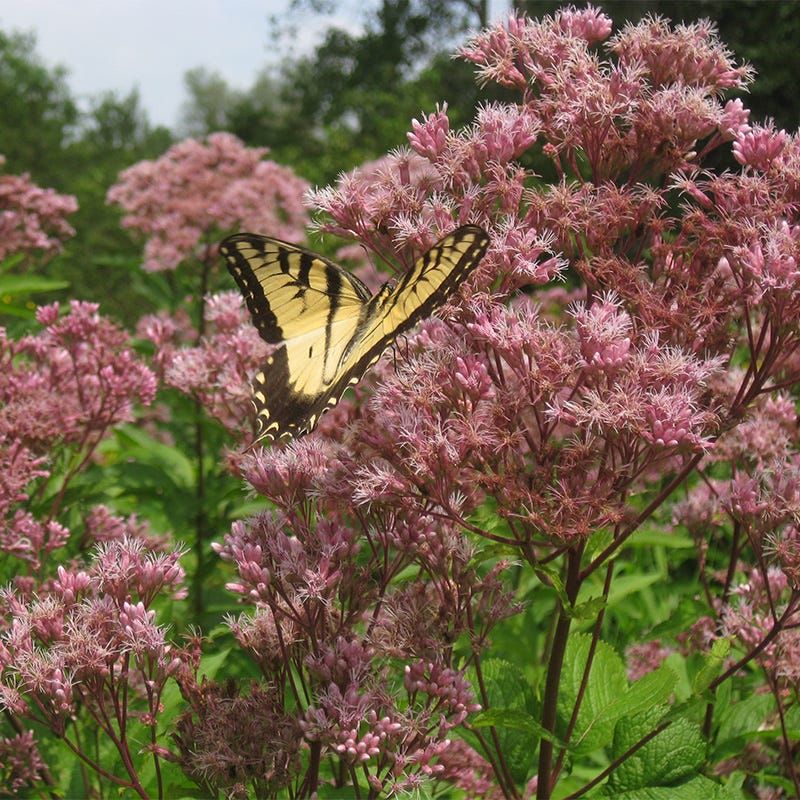
Towering stems reaching six to eight feet create impressive backdrops while offering some of the richest nectar sources available. Joe Pye weed blooms in late summer when many other plants finish flowering, providing crucial food for butterflies preparing for migration or producing final broods.
The massive dusty rose flower clusters can host dozens of butterflies simultaneously.
Swallowtails especially favor this native giant, but monarchs, fritillaries, and admirals also visit frequently. The flowers emit a light vanilla fragrance that attracts butterflies from considerable distances.
Blooming from late July through September fills a critical gap in the nectar calendar.
This moisture-loving native thrives in locations that stay consistently damp, making it perfect for rain gardens, pond edges, or naturally wet areas. While it prefers moist soil, established plants tolerate average garden conditions in Ohio’s climate.
Plant in full sun to partial shade, spacing plants three to four feet apart to accommodate their substantial size.
Ohio State University Extension recommends Joe Pye weed for naturalized areas and pollinator gardens where its size can be appreciated. The substantial presence creates privacy screens or living fences while supporting wildlife.
Cut stems back in late winter, leaving the dried seed heads through cold months to provide habitat for overwintering insects and visual interest.
6. Butterfly Bush Produces Nectar Rich Summer Blooms
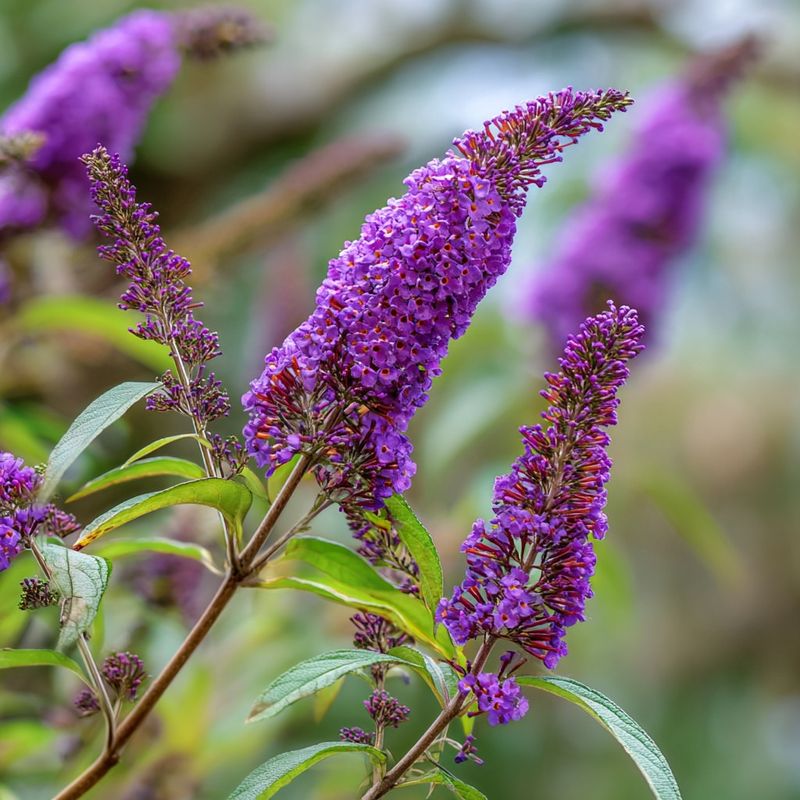
Long arching flower spikes loaded with tiny blossoms create irresistible feeding stations from June through frost. Butterfly bushes bloom continuously when spent flowers are removed, providing reliable nectar throughout the entire growing season.
The common name perfectly describes their appeal, as these shrubs consistently attract more butterflies than almost any other garden plant.
Nearly every butterfly species visits butterfly bush flowers. Swallowtails, monarchs, painted ladies, and red admirals crowd the blooms on sunny afternoons.
The concentrated nectar and easy landing platforms make feeding efficient for butterflies.
Modern sterile cultivars address concerns about older varieties spreading in natural areas. Choose non-invasive selections like ‘Miss Ruby’ or ‘Blue Chip’ that won’t produce viable seeds.
These compact varieties fit smaller gardens while still delivering excellent butterfly attraction.
Plant butterfly bushes in full sun with well-drained soil. They tolerate heat and drought once established, perfect for Ohio’s variable summer weather.
Prune hard in early spring, cutting stems back to about 12 inches. This encourages bushy growth and abundant flowering.
According to pollinator research, butterfly bushes provide nectar but don’t support caterpillars. Combine them with host plants like milkweed and native trees to create complete butterfly habitat.
Deadhead regularly to promote continuous blooming and prevent any seed formation in older varieties.
7. Zinnias Provide Bright Color And Easy Nectar Access
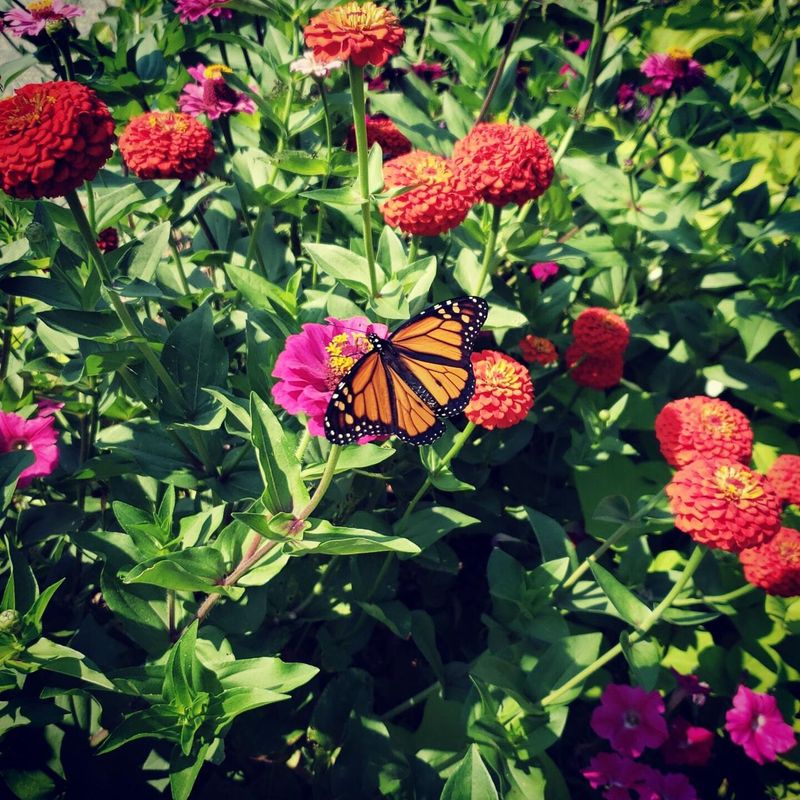
Brilliant colors and simple care make zinnias perfect for beginning butterfly gardeners. These cheerful annuals grow quickly from seed, blooming about eight weeks after planting and continuing until frost.
The flat flower heads provide perfect landing pads where butterflies can easily reach nectar while resting.
Monarchs, swallowtails, and painted ladies visit zinnias constantly throughout summer and fall. The bright colors attract butterflies from across your yard.
Planting zinnias in masses creates feeding stations that support multiple butterflies simultaneously.
Zinnias thrive in Ohio’s warm summers, loving full sun and heat. They grow in average garden soil without special amendments or fussing.
Direct seed after danger of frost passes, or start transplants indoors six weeks earlier. Space plants 12 to 18 inches apart depending on variety size.
Choose taller cutting varieties like ‘Benary’s Giant’ or ‘State Fair’ for maximum butterfly appeal. These reach three to four feet with large flowers that butterflies prefer over smaller types.
Shorter varieties work in containers and front borders.
Ohio State University Extension recommends zinnias for quick pollinator gardens and teaching children about butterflies. Deadhead regularly to encourage more blooms and prevent powdery mildew.
Water at soil level rather than overhead to keep foliage dry and healthy throughout the growing season.
8. Asters Offer Late Season Food For Migrating Butterflies
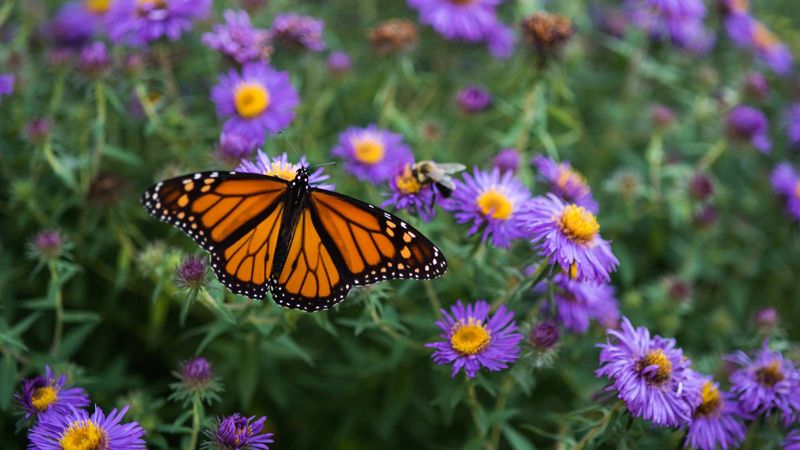
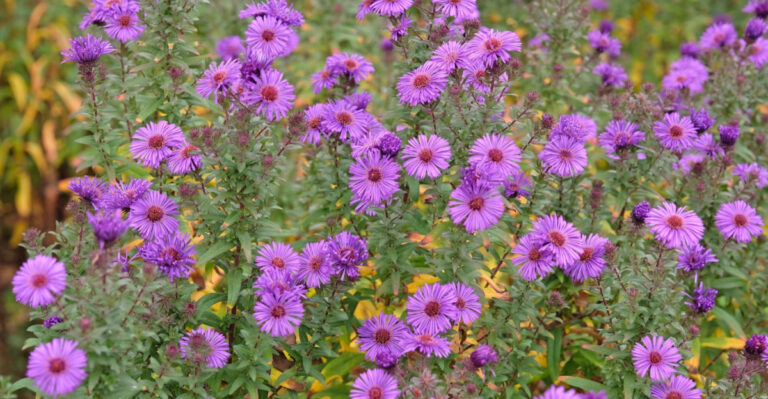
September and October bring cooler temperatures but also waves of migrating butterflies desperately seeking fuel for their journeys. Native asters bloom precisely when monarchs and other species need energy most, covering themselves with small daisy-like flowers in shades of purple, pink, and white.
These tough perennials provide essential support during critical migration periods.
Monarchs heading to Mexico stop frequently at aster patches to tank up on nectar. Red admirals, painted ladies, and various sulphurs also depend on fall-blooming asters.
The abundance of small flowers creates rich feeding opportunities when other plants have finished blooming.
Ohio gardeners can choose from many native aster species suited to different conditions. New England aster grows tall in moist soils, while aromatic aster tolerates dry conditions.
Smooth aster handles partial shade better than most fall bloomers. All prefer full sun when possible.
Plant asters in spring, spacing them 18 to 24 inches apart. They spread gradually to form substantial clumps that become more impressive each year.
Pinch stems back in early June to promote bushier growth and more flowers.
According to the Xerces Society, fall-blooming native plants like asters are critically important for supporting migrating pollinators. Leave dried stems standing through winter to provide habitat for beneficial insects and add structural beauty to dormant gardens.
9. Phlox Brings Fragrance And Constant Butterfly Activity
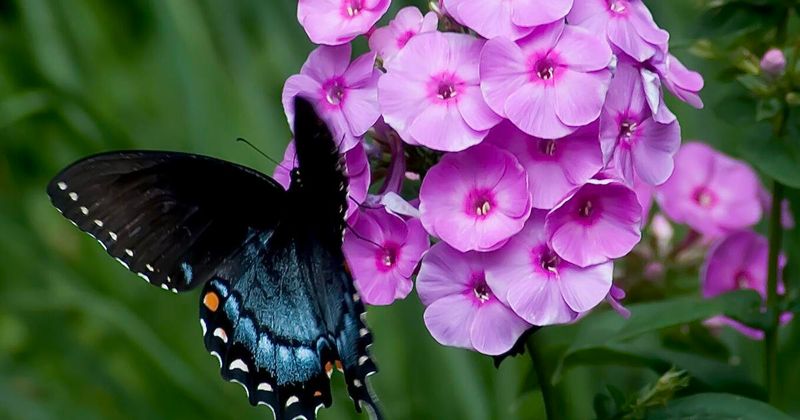
Sweet fragrance drifting across summer gardens signals phlox in full bloom. These cottage garden favorites produce dense clusters of tubular flowers that butterflies find both beautiful and delicious.
The clustered bloom structure allows multiple butterflies to feed simultaneously, creating animated feeding stations from July through August.
Swallowtails particularly love phlox flowers, often spending extended periods moving from cluster to cluster. Skippers, fritillaries, and sphinx moths visit during evening hours.
The fragrance helps butterflies locate flowers from considerable distances.
Garden phlox grows three to four feet tall in full sun to partial shade. Choose mildew-resistant varieties like ‘David’ or ‘Robert Poore’ to avoid the powdery mildew that plagues older cultivars.
Good air circulation and avoiding overhead watering also prevent disease problems.
Plant phlox 18 to 24 inches apart in soil enriched with compost. They appreciate consistent moisture but tolerate brief dry periods once established.
Deadhead spent flower clusters to encourage additional blooming and prevent self-sowing.
Ohio State University Extension recommends phlox for mid-season color and pollinator support. The plants blend beautifully with other butterfly favorites like coneflowers and black-eyed Susans.
Divide clumps every three to four years in early spring to maintain vigor. Thinning stems when growth begins improves air circulation and reduces disease pressure while encouraging stronger flowering.
10. Goldenrod Fuels Butterflies Before Fall Migration
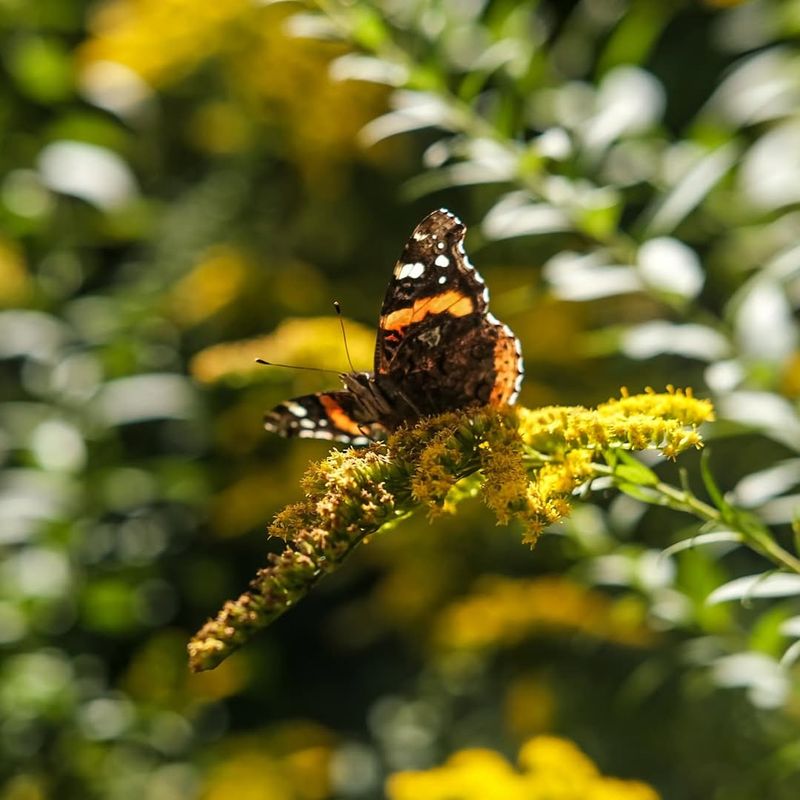
Bright yellow plumes signal summer’s end while providing vital energy for butterflies preparing for long migrations. Goldenrod blooms from late August through October, offering abundant nectar precisely when monarchs and other species need maximum fuel.
This native plant suffers from unfair reputation regarding allergies, but ragweed actually causes hay fever while goldenrod blooms at the same time.
Monarchs cluster on goldenrod during migration, sometimes with dozens of butterflies on a single plant. Painted ladies, sulphurs, and skippers also feed heavily on the rich nectar.
The dense flower clusters produce impressive amounts of pollen and nectar that support diverse pollinator communities.
Many goldenrod species grow wild across Ohio, but cultivated varieties offer better garden performance. Stiff goldenrod stays compact at two to three feet, while showy goldenrod reaches four feet with arching stems.
All prefer full sun and tolerate poor soil and drought.
Plant goldenrod 18 inches apart in spring or fall. These tough natives require virtually no care once established.
They spread gradually through rhizomes but remain manageable in garden settings.
Research from Ohio State University confirms goldenrod’s importance for fall pollinators. The bright yellow flowers add cheerful color when many gardens look tired.
Pair goldenrod with purple asters for stunning color combinations that maximize butterfly support during critical migration periods.