11 Plants That Grow Massive Flowers In California Gardens
In California gardens, bigger often feels better, and nothing proves it quite like plants that grow massive flowers.
When those oversized blooms open up, they stop people in their tracks and turn everyday yards into showstoppers.
These are the plants that do not whisper for attention.
They speak loud and clear, bringing drama, color, and serious curb appeal to the table.
California’s long growing season and varied climates give gardeners a golden ticket.
From coastal mildness to inland heat, many flowering plants hit their stride and grow blooms that look almost too good to be real.
Some tower over garden beds, while others spread wide, each flower packed with petals and presence.
Once they get going, they often steal the spotlight from everything around them.
Growing big flowers is not just about size, though.
It is about choosing plants that thrive without constant hand holding.
When matched with the right spot, these bold bloomers reward gardeners with flowers that last and repeat their performance.
In California, the right plant choices can turn sunshine and soil into a full blown floral spectacle that keeps paying off season after season.
1. Tree Peony
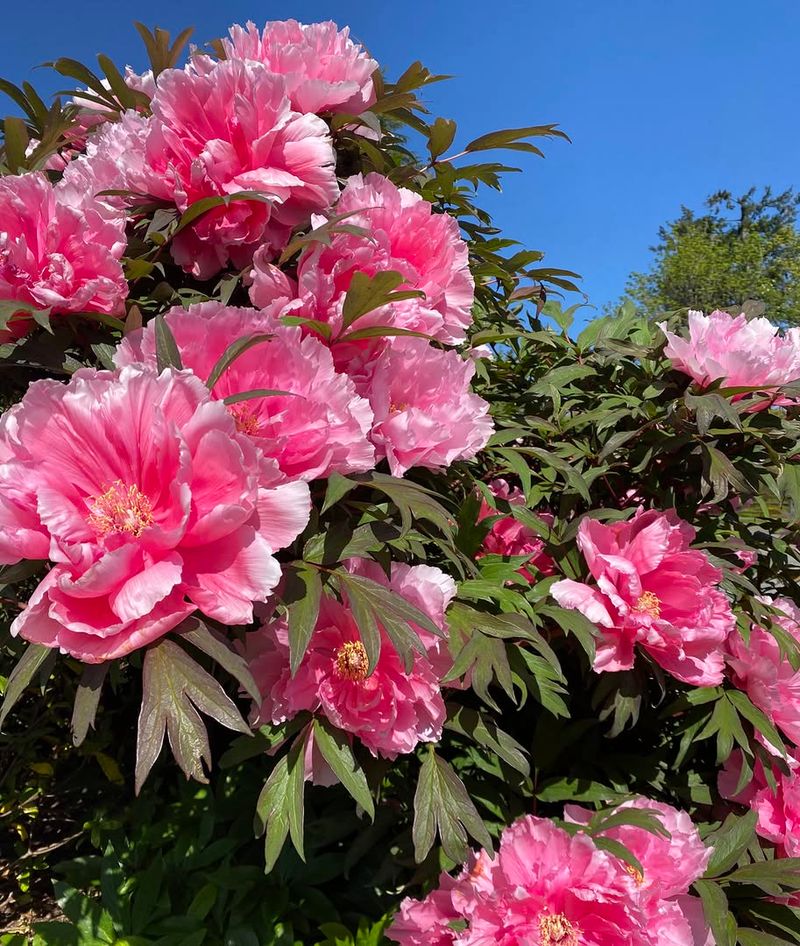
Picture flowers as big as dinner plates swaying gently in your garden, and you’ll understand why tree peonies captivate so many California gardeners.
Unlike their herbaceous cousins, these woody shrubs grow tall and sturdy, reaching heights of four to six feet.
Their blooms can measure up to ten inches across, displaying layers of delicate petals in shades of pink, white, red, yellow, and even purple.
Each spring, when these magnificent flowers open, they transform any garden space into something truly magical.
California’s Mediterranean climate suits tree peonies beautifully, especially in coastal and inland valley regions.
They appreciate cooler winter temperatures for proper dormancy but thrive in the mild springs and summers found throughout the state.
Plant them in locations with morning sun and afternoon shade for best results.
The soil should drain well, as soggy roots can cause problems.
Once established, tree peonies live for decades, becoming more impressive each year.
Their dramatic flowers make stunning cut arrangements, though many gardeners prefer leaving them in place to enjoy their full glory.
With minimal care requirements and spectacular rewards, tree peonies deserve a spot in every California garden seeking maximum flower power.
2. Dinner Plate Dahlia
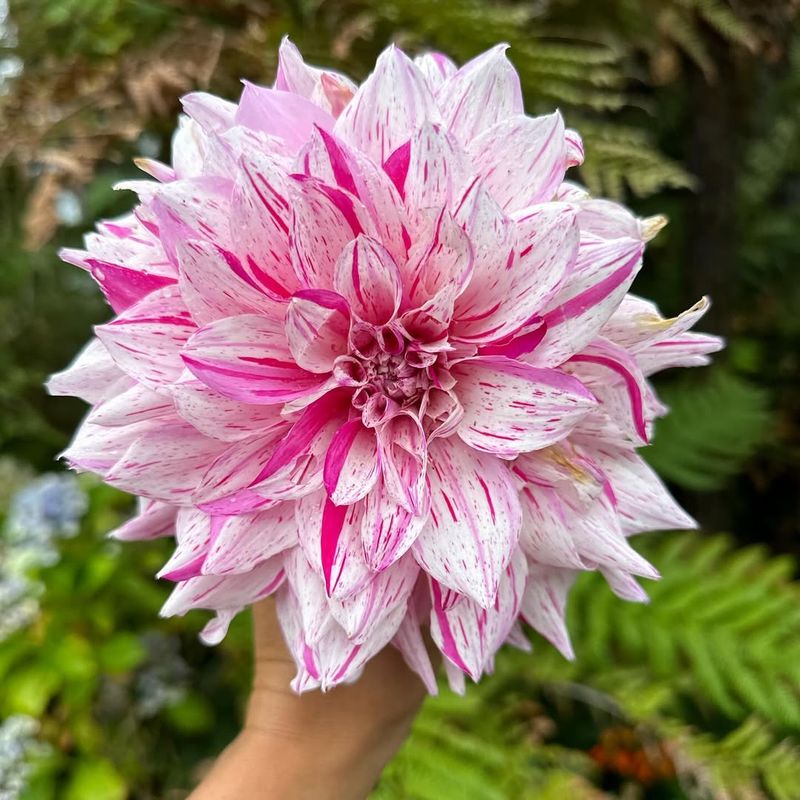
When gardeners talk about massive blooms, dinner plate dahlias immediately come to mind.
These showstoppers produce flowers that genuinely rival the size of dinner plates, often measuring ten to twelve inches in diameter.
Available in nearly every color except blue, these stunning plants bloom from summer through fall, providing months of spectacular color.
Their petals can be tightly packed or loosely arranged, depending on the variety you choose.
Growing dahlias successfully in California requires understanding their preferences.
They love full sun and rich, well-draining soil amended with plenty of compost.
Regular watering keeps them producing those enormous blooms throughout the growing season.
Staking becomes essential as the massive flowers develop, since their weight can topple stems without proper support.
Many California gardeners dig up dahlia tubers after the first frost and store them for replanting the following spring.
However, in frost-free coastal areas, they often survive winter in the ground.
The incredible variety of colors and forms available means you can create stunning combinations.
Whether displayed in borders or cutting gardens, dinner plate dahlias command attention and admiration from everyone who sees them blooming in California landscapes.
3. Angel’s Trumpet
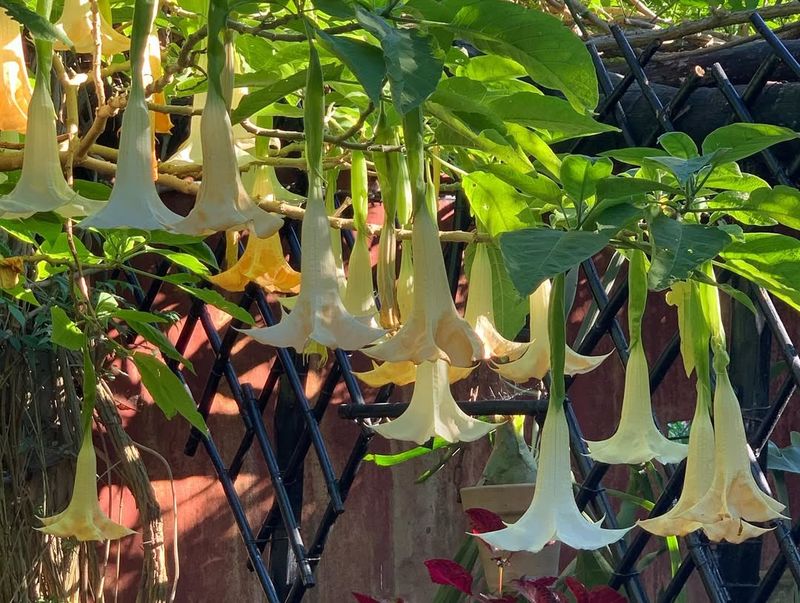
Imagine enormous trumpet-shaped flowers dangling gracefully from branches like elegant bells.
Angel’s trumpet creates exactly this enchanting effect in California gardens.
These dramatic plants produce blooms that can reach eight to twelve inches long, filling evening air with their sweet, intoxicating fragrance.
Colors range from pure white to peachy pink, golden yellow, and soft apricot shades.
California’s warm climate allows angel’s trumpet to grow as substantial shrubs or small trees, reaching impressive heights of ten to fifteen feet.
They thrive particularly well in Southern California and coastal regions where frost rarely threatens.
Full sun to partial shade works well, though more sun typically produces more blooms.
These plants appreciate regular watering and benefit from monthly feeding during the growing season.
The flowers appear most abundantly from late summer through fall, though some blooming continues year-round in mild areas.
Evening and nighttime bring out their strongest fragrance, making them perfect near patios and outdoor living spaces.
Pruning helps control size and encourages bushier growth with more flowering branches.
While all parts of the plant are toxic if ingested, their beauty and fragrance make them beloved additions to many California gardens seeking dramatic, oversized blooms.
4. Magnolia
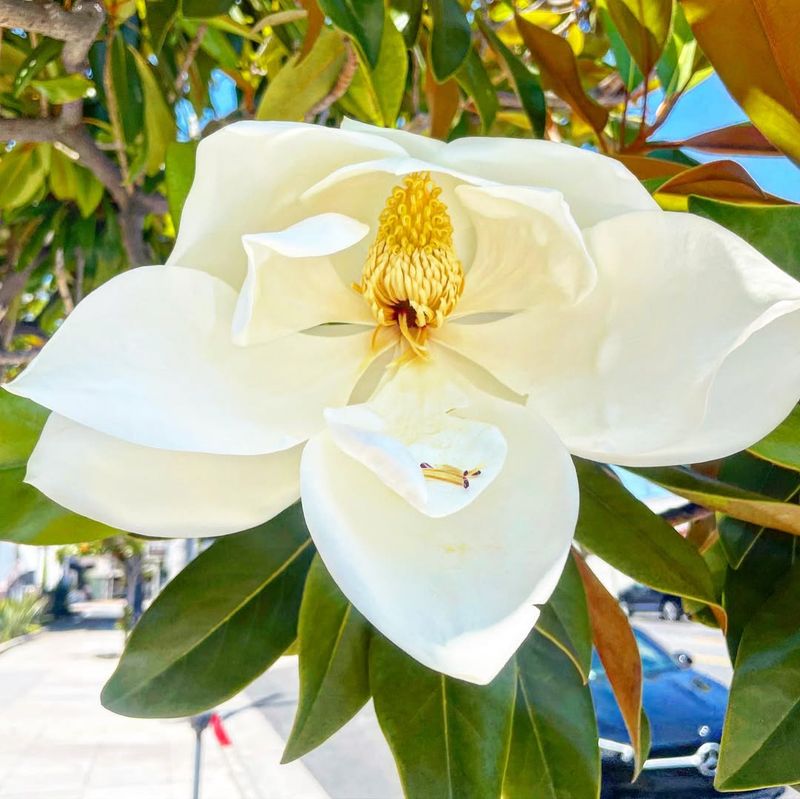
Few flowering trees match the breathtaking beauty of magnolias when their massive blooms open each spring.
Some varieties produce flowers measuring eight to twelve inches across, with thick, waxy petals that seem almost unreal in their perfection.
California gardeners can choose from several magnificent types, including saucer magnolias with pink and white petals and Southern magnolias with creamy white, lemon-scented blooms.
Each offers something special for different garden situations.
Saucer magnolias work wonderfully in Northern California gardens, where cooler winters help trigger their spectacular spring display.
Southern magnolias prefer warmer regions and bloom throughout summer months.
Both types appreciate deep, rich soil and regular watering, especially during establishment.
Once mature, magnolias become fairly drought-tolerant, though supplemental watering improves flowering.
The sheer size of magnolia blooms creates unforgettable garden moments when trees burst into flower.
Their sweet fragrance carries on spring breezes, announcing the changing season.
Many varieties also feature attractive glossy foliage that provides year-round interest.
Planting magnolias requires patience, as young trees take several years to reach flowering size.
However, the wait proves worthwhile when those first enormous blooms finally appear, transforming your California garden into something truly extraordinary with their magnificent presence.
5. Hibiscus
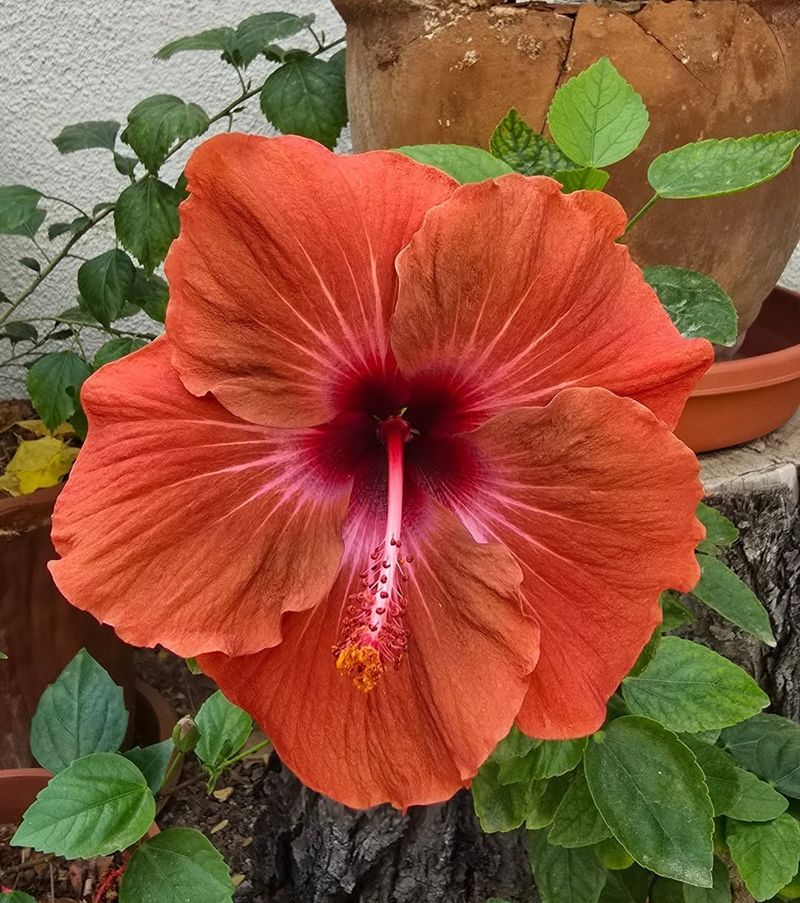
Tropical hibiscus brings island paradise vibes to California gardens with flowers that can reach six to eight inches across.
These stunning blooms open fresh each morning in brilliant shades of red, pink, orange, yellow, and even bi-colored combinations.
Each flower lasts just one day, but plants produce so many buds that new blooms constantly appear throughout warm months.
The glossy green foliage provides attractive backdrop even when flowers aren’t present.
California’s coastal and southern regions offer ideal conditions for growing tropical hibiscus outdoors year-round.
They demand full sun for best flowering and appreciate protection from strong winds that can damage their delicate blooms.
Regular watering keeps them happy, along with monthly fertilizing during the growing season.
Container growing works excellently for hibiscus, allowing gardeners in cooler areas to move plants indoors during winter.
Pruning encourages bushier growth and more flowering branches.
Many California gardeners create stunning focal points with large hibiscus specimens or use them for colorful hedges and screens.
The dramatic flowers attract hummingbirds and butterflies, adding even more life to your garden.
With proper care, hibiscus rewards California gardeners with months of spectacular blooms that bring tropical beauty to any outdoor space.
6. Protea
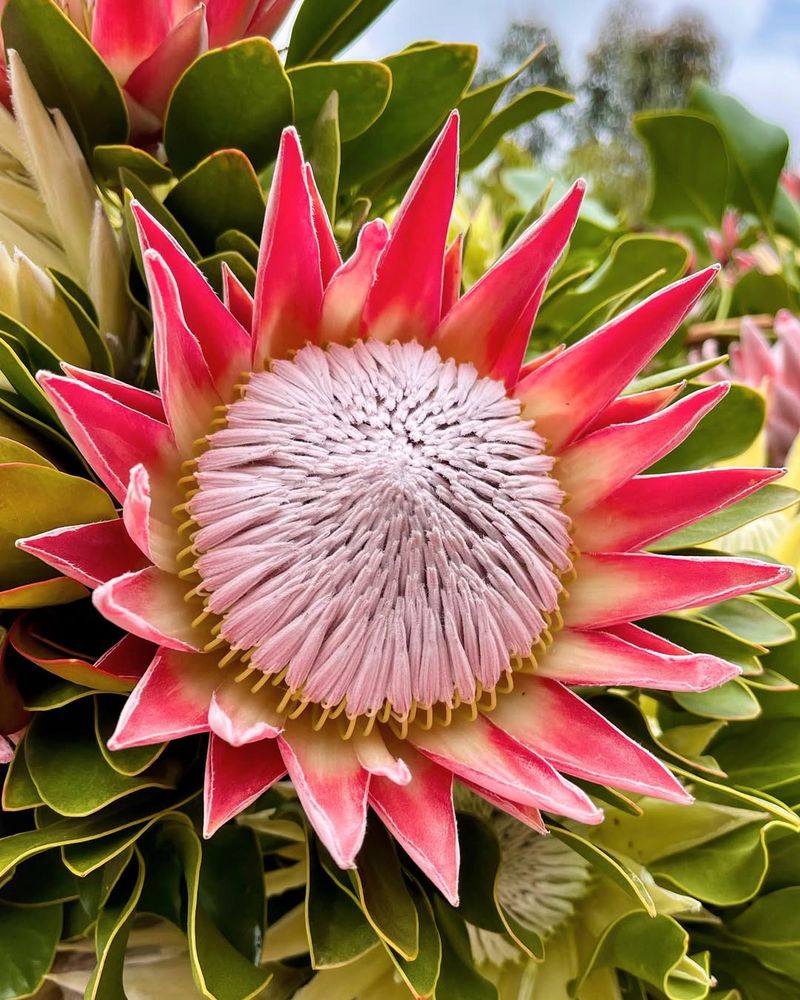
Nothing quite compares to the otherworldly appearance of protea flowers, which can measure six to twelve inches across depending on variety.
Native to South Africa, these remarkable plants have found a perfect home in California’s Mediterranean climate.
Their massive flower heads display incredible complexity, with spiky petals surrounding fuzzy centers in combinations of pink, red, cream, and orange.
Each bloom looks more like a piece of living art than a typical flower.
California’s coastal regions, particularly from Santa Barbara south, provide excellent growing conditions for proteas.
They absolutely require perfect drainage and thrive in sandy or rocky soils that many other plants struggle in.
Full sun exposure is essential, and once established, proteas become remarkably drought-tolerant, making them perfect for water-wise California gardens.
They actually prefer lean soil without added fertilizer or rich amendments.
The flowers last for weeks on plants and make extraordinary long-lasting cut arrangements.
Many varieties bloom during winter and spring when few other plants offer such dramatic displays.
Proteas work beautifully in modern, architectural landscapes and Mediterranean-style gardens throughout California.
Their exotic appearance and impressive size make them conversation starters that never fail to impress visitors seeing them for the first time.
7. Camellia
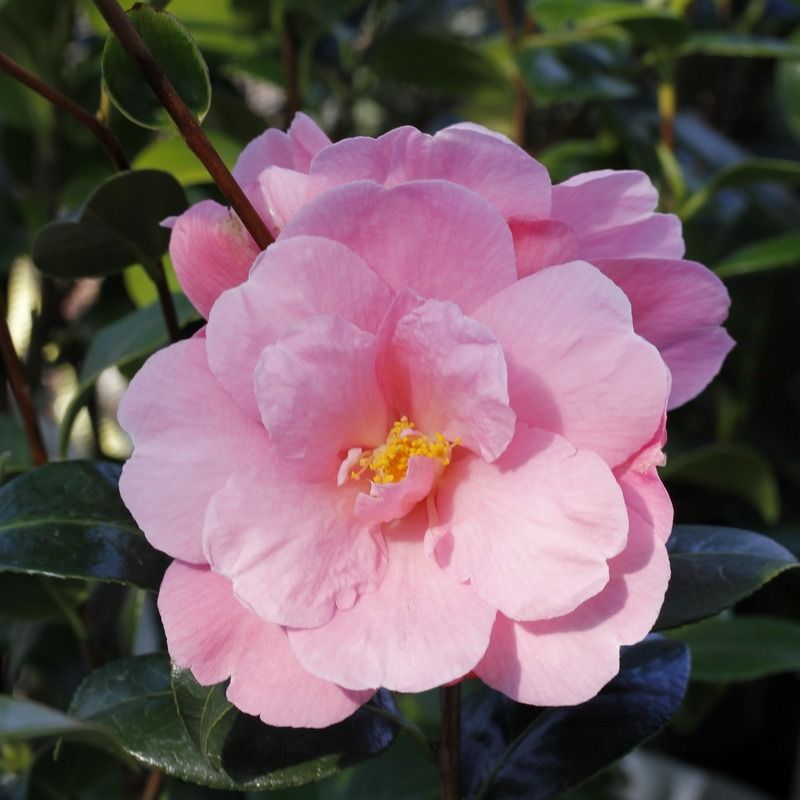
When most gardens look bare and dreary, camellias burst into bloom with flowers reaching four to six inches across.
These elegant evergreen shrubs produce layers of perfectly arranged petals in shades of white, pink, red, and variegated combinations.
Some varieties feature formal double blooms that look almost artificial in their perfection, while others display simpler, more relaxed forms.
California’s mild winters allow camellias to bloom from fall through early spring, providing color during months when little else flowers.
Northern California gardens particularly suit camellias, as they appreciate cooler temperatures and partial shade.
The filtered light beneath oak trees or on north-facing walls creates ideal conditions.
Acidic soil rich in organic matter keeps them thriving, along with regular watering during dry periods.
Mulching helps maintain the cool, moist root conditions camellias prefer.
Their glossy evergreen foliage looks attractive year-round, making them valuable landscape plants even when not blooming.
Many California gardeners use camellias as foundation plantings, hedges, or specimen shrubs.
The large flowers create stunning displays against dark green leaves, and their long blooming period provides extended enjoyment.
With hundreds of varieties available, California gardeners can find camellias perfectly suited to their specific needs and preferences.
8. Bird Of Paradise
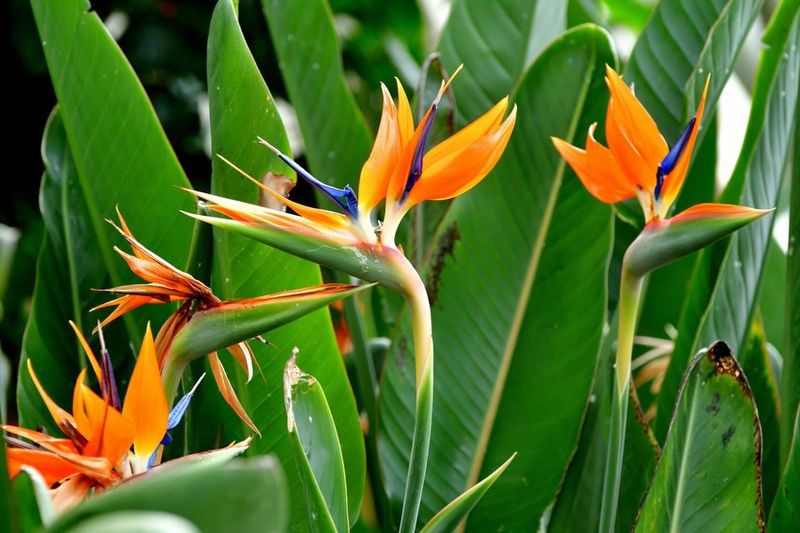
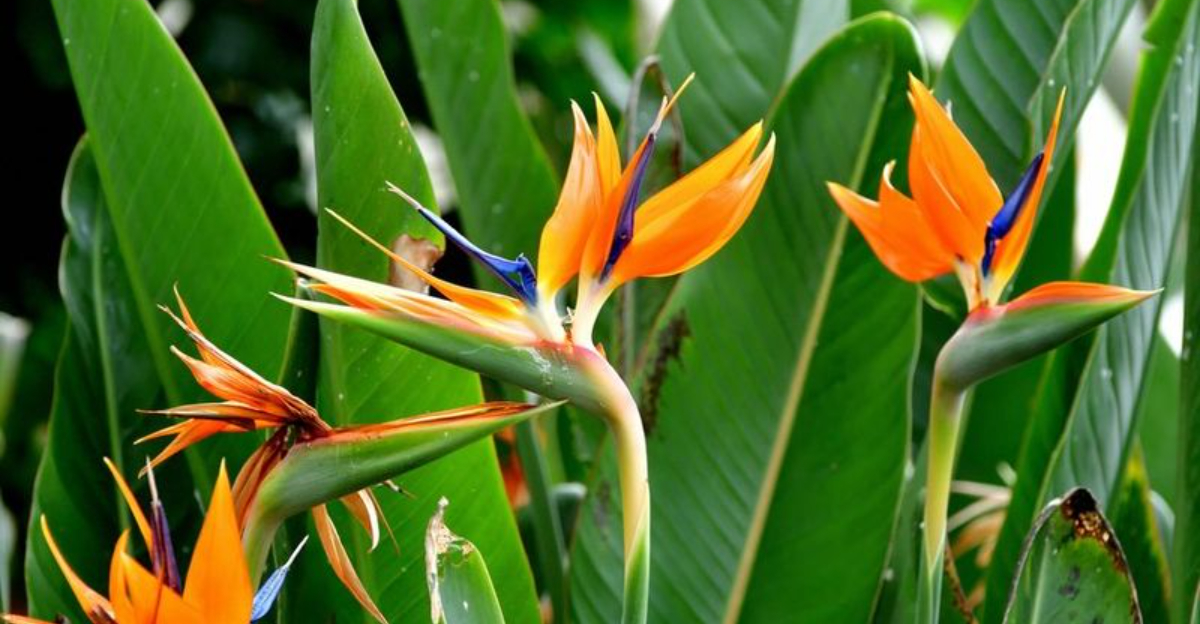
Bold orange and blue flowers that resemble tropical birds in flight make bird of paradise instantly recognizable.
While not as large as some flowers on this list, their dramatic form and size, reaching six to eight inches tall, create incredible visual impact.
Each flower emerges from a boat-shaped bract, with pointed petals arranged to mimic a bird’s head and plumage.
The effect is so striking that even single blooms command attention.
Southern California and coastal regions provide perfect conditions for bird of paradise to thrive.
These tough plants tolerate various soil types and become quite drought-tolerant once established.
Full sun produces the most abundant flowering, though they’ll grow in partial shade with reduced blooms.
Clumps spread slowly over time, eventually creating substantial masses of architectural foliage topped with exotic flowers.
Bird of paradise blooms most heavily in spring and summer, though some flowers appear year-round in mild areas.
The long-lasting blooms make exceptional cut flowers that can persist for weeks in arrangements.
These plants work beautifully in tropical-themed gardens, around swimming pools, or as bold accent plants.
Their large, banana-like leaves add structural interest even between flowering periods, making bird of paradise valuable additions to California landscapes seeking dramatic, oversized blooms with tropical flair.
9. Amaryllis
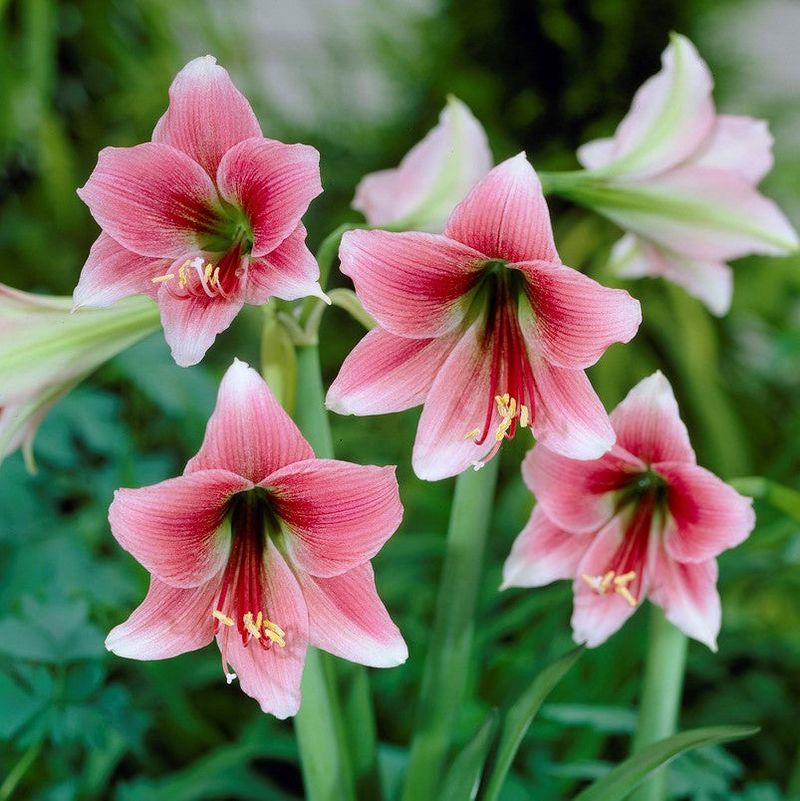
Spectacular trumpet-shaped blooms measuring six to ten inches across make amaryllis true showstoppers in California gardens.
These bulbous plants produce thick flower stalks topped with clusters of enormous flowers in shades of red, pink, white, orange, and striped combinations.
Each bulb typically sends up one or two stalks, with each stalk bearing three to four massive blooms.
The flowers open sequentially, extending the display period.
California’s mild climate allows amaryllis to grow outdoors year-round in many areas, unlike colder regions where they’re primarily indoor plants.
They appreciate well-draining soil and locations with morning sun and afternoon shade.
Planting bulbs in fall leads to spectacular winter and spring blooming, filling gardens with color during cooler months.
After flowering, the strap-like foliage continues growing, gathering energy for next season’s display.
Many California gardeners plant amaryllis in containers, which allows easy placement on patios, porches, and entryways where their massive blooms can be appreciated up close.
The bulbs multiply over time, creating increasingly impressive clumps.
Minimal care requirements make amaryllis perfect for busy gardeners wanting maximum impact with minimum effort.
Their reliable blooming and enormous flowers bring joy year after year to California gardens fortunate enough to include them in their planting schemes.
10. Canna Lily
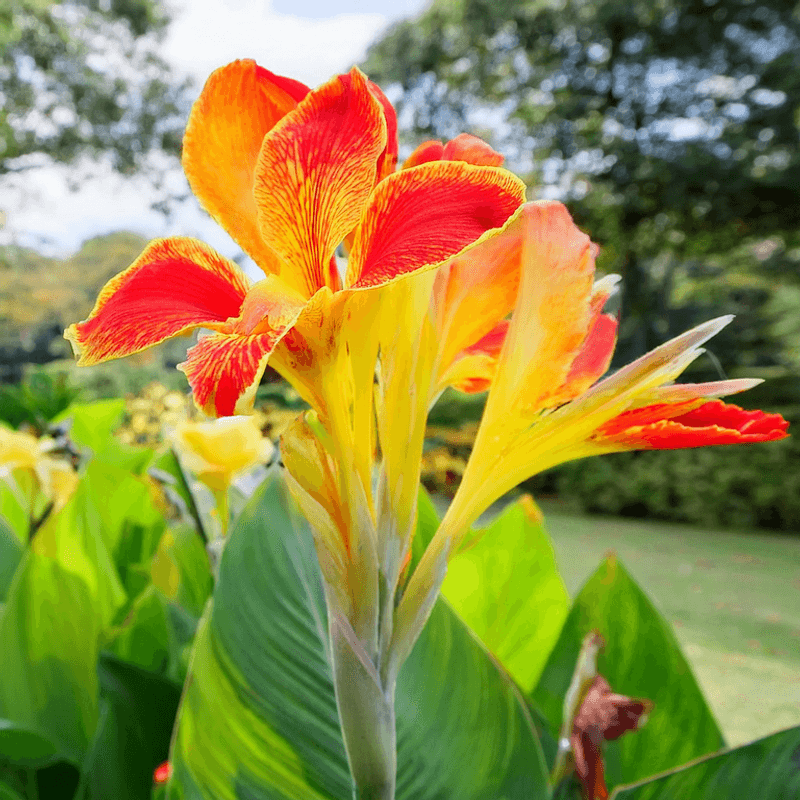
Tropical beauty meets easy care in canna lilies, which produce substantial flowers atop plants reaching four to six feet tall.
While individual flowers measure three to four inches across, they cluster together in impressive spikes that create major visual impact.
Available in fiery reds, bright oranges, sunny yellows, soft pinks, and bi-colored combinations, cannas bring bold color to California gardens throughout summer and fall.
Many varieties also feature stunning foliage in bronze, burgundy, or variegated patterns that rival the flowers for beauty.
California’s warm growing season suits cannas perfectly, allowing them to reach their full magnificent potential.
They thrive in full sun with regular watering and rich soil amended with compost.
These vigorous growers quickly form substantial clumps that fill space with lush tropical foliage and abundant blooms.
Removing spent flower spikes encourages continuous blooming throughout the season.
Cannas work wonderfully as background plants in borders, screening elements, or bold focal points in California landscapes.
Their height and dramatic presence create structure while their flowers provide intense color.
The rhizomes spread readily, making division every few years necessary to control growth and maintain vigor.
With minimal effort, cannas reward California gardeners with months of spectacular blooms and foliage that transform ordinary spaces into tropical paradises.
11. Hydrangea
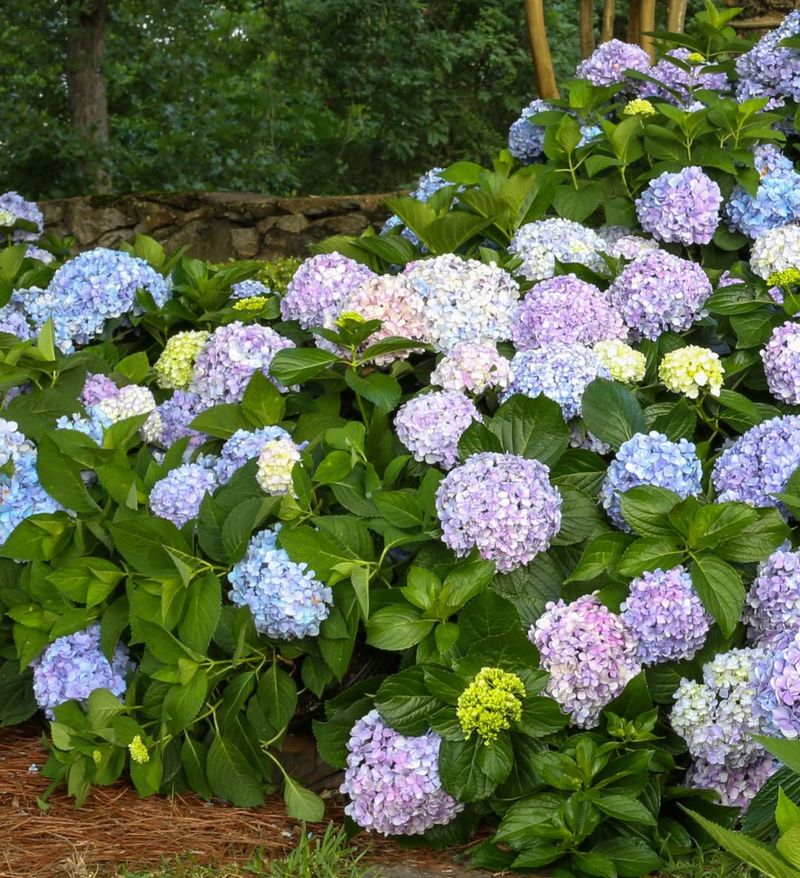
Massive flower clusters measuring eight to twelve inches across make hydrangeas beloved favorites in California gardens.
These rounded or cone-shaped blooms consist of dozens of individual flowers packed together, creating impressive displays that last for months.
Colors range from white and pink to blue and purple, with soil pH affecting blue and pink shades.
The flowers start one color and often age to different shades, providing constantly changing beauty.
Northern California and coastal regions offer ideal conditions for growing hydrangeas, as they appreciate cooler temperatures and consistent moisture.
Morning sun with afternoon shade works perfectly, protecting blooms from scorching heat.
Rich, well-amended soil and regular watering keep hydrangeas producing their spectacular flower clusters throughout summer and into fall.
Many varieties feature attractive foliage that looks good even when plants aren’t blooming.
The long-lasting flowers make wonderful cut arrangements, and many gardeners also dry them for winter decorations.
Hydrangeas work beautifully in foundation plantings, mixed borders, or as specimen shrubs throughout California landscapes.
Numerous varieties offer different bloom times, sizes, and colors, allowing gardeners to create extended displays.
Their reliable performance and massive flower clusters make hydrangeas essential additions to any California garden seeking substantial blooms with classic appeal and enduring beauty.