10 Plants That Instantly Make California Yards Look Lush
Some California yards feel instantly full and inviting, while others struggle to shake that sparse look no matter how much gets planted.
The difference often comes down to choosing plants that build layers, texture, and steady greenery over time.
Across California, from coastal fog zones to hot inland valleys, climate plays a big role in how that lush look comes together.
Certain plants naturally fill space, soften edges, and keep gardens looking vibrant through much of the year.
Once you understand how structure and growth habits work together, even a simple yard can start to feel richer, greener, and more put together.
1. Bird Of Paradise Brings Bold Tropical Color
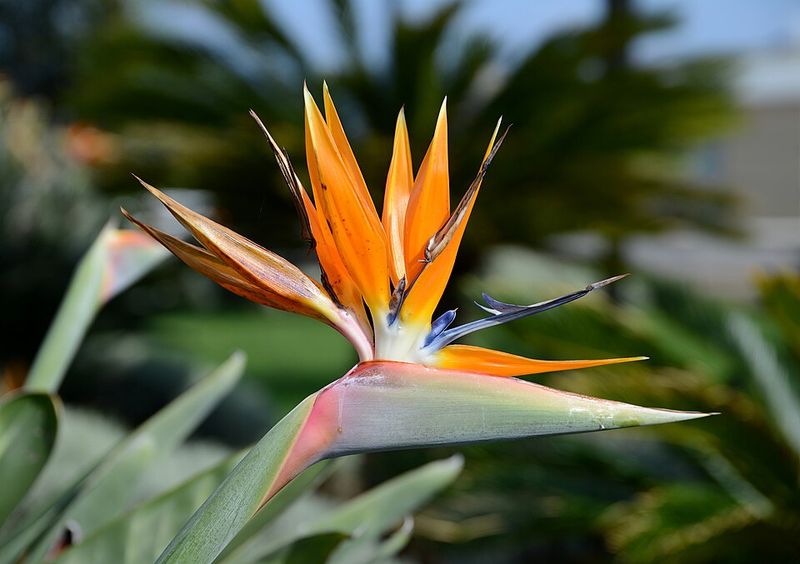
Few plants create a statement quite like a Bird of Paradise growing in full sun along a California driveway or garden border.
With its broad, waxy leaves and those unmistakable orange and blue flowers that shoot upward like tropical birds mid-flight, this plant has become one of the most recognized plants in Southern California landscaping.
Bird of Paradise grows well across much of coastal and inland California, thriving in full sun and tolerating dry conditions once it has established a solid root system.
It can reach six to eight feet tall when given enough room, making it a strong anchor plant for layered garden designs.
Spacing plants about five to six feet apart lets each one fill out naturally without crowding.
The foliage alone earns its place in the yard. Those large, paddle-shaped leaves create a lush, tropical feel even when the plant is not in bloom.
In warmer parts of California, Bird of Paradise blooms reliably through spring and into fall. It does best in well-drained soil and appreciates occasional deep watering during hot summer months.
A light layer of mulch around the base helps retain moisture and keeps roots cooler during heat waves.
2. New Zealand Flax Adds Texture And Year Round Interest
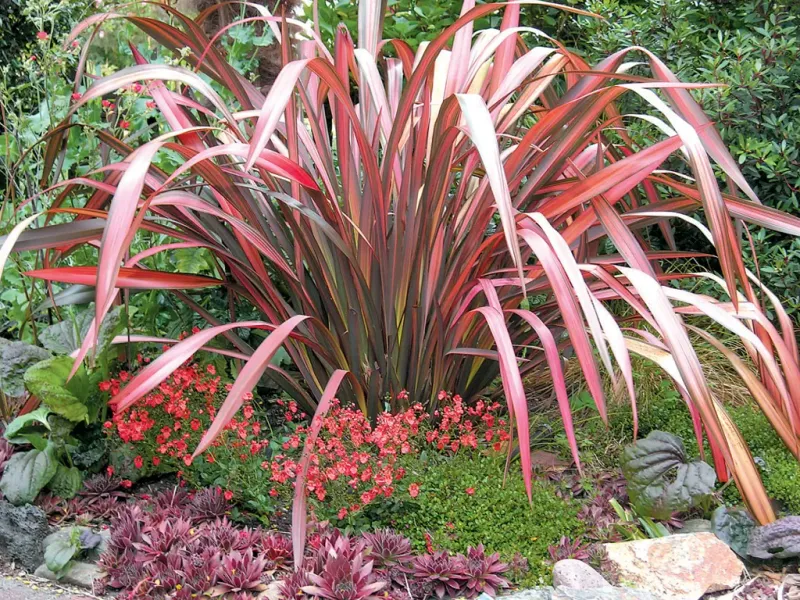
Walk through almost any well-designed California garden and you are likely to spot the bold, upright leaves of New Zealand Flax cutting through the landscape.
Its sword-shaped foliage comes in a range of colors – from deep burgundy and bronze to striped green and cream – giving gardeners plenty of options for adding visual contrast to a planting bed.
What makes this plant so useful in California yards is how reliably it looks good through every season. There are no bare winter branches, no messy leaf drop, and no waiting around for spring growth.
The leaves stay bold and upright year-round, providing structure when surrounding plants go through seasonal changes.
In coastal California, New Zealand Flax thrives with minimal supplemental watering once established.
Inland gardeners should plan for some afternoon shade in the hottest months, as intense heat can stress the foliage. Planting in well-drained soil makes a significant difference in long-term health.
New Zealand Flax works beautifully as a focal point in gravel gardens, raised beds, or mixed borders.
Varieties range from compact forms under two feet to dramatic specimens that can reach six feet or more, so there is a size suited to nearly any California yard layout.
3. Foxtail Fern Creates Soft Dense Green Mounds
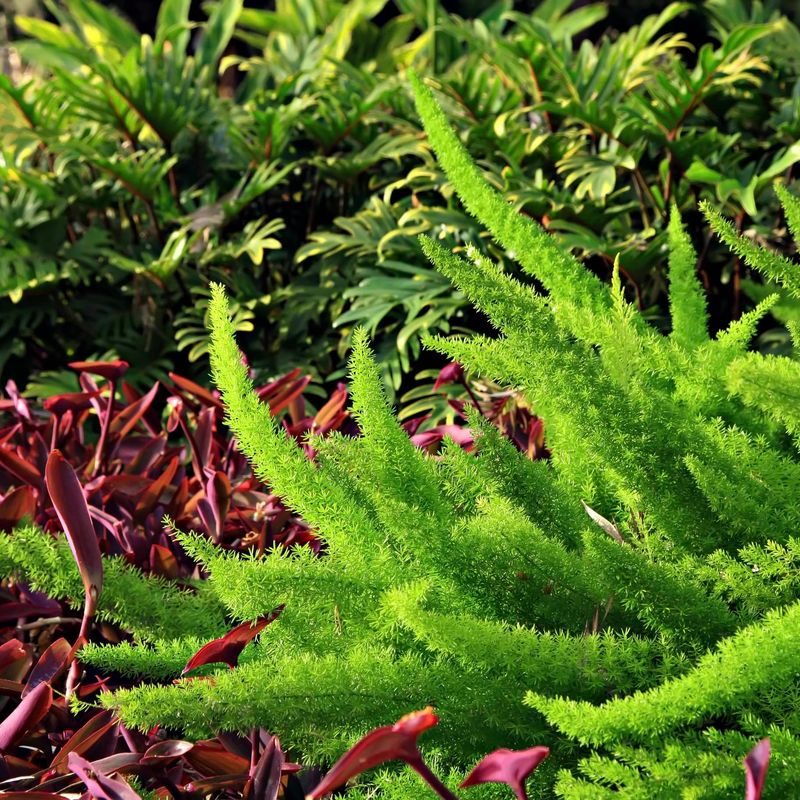
There is something almost irresistible about the texture of a Foxtail Fern.
Those arching, needle-covered stems fan outward in all directions, creating a soft, cloud-like mound of bright green that looks full and lush even in spots where other plants struggle to fill in.
Despite the name, Foxtail Fern is not a true fern – it belongs to the asparagus family, which partly explains its toughness.
In California, this plant has earned a loyal following among gardeners who want low-maintenance greenery with real visual presence.
It handles drought reasonably well once established and performs nicely in both full sun along the coast and partial shade in warmer inland areas.
The dense mounding habit means it fills gaps in garden beds quickly, making bare soil disappear under a canopy of feathery green stems.
Foxtail Fern grows to about two to three feet tall and wide, making it a solid choice for borders, container plantings, or slopes that need erosion control with a softer aesthetic.
Small red berries appear seasonally, adding another layer of visual interest.
Regular watering during dry summer months helps maintain that deep green color that makes this plant such a standout in California landscapes throughout the year.
4. Kangaroo Paw Adds Vertical Color And Texture
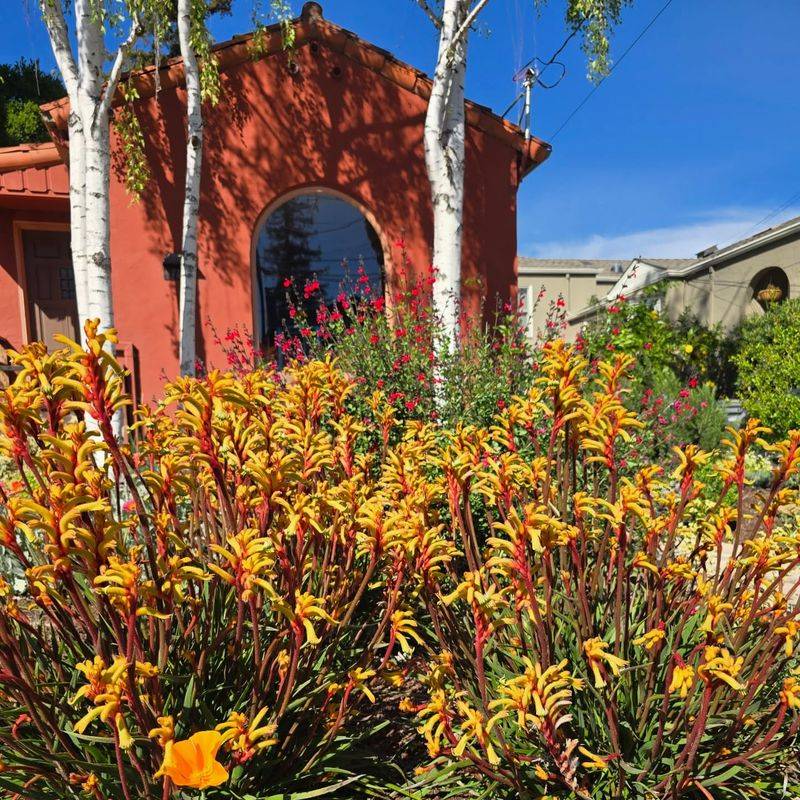
Originally from Western Australia, Kangaroo Paw has found a very comfortable home in California gardens, particularly in coastal and Mediterranean climate zones where the conditions closely mirror its native habitat.
The tubular flowers – covered in soft, velvety fuzz and reaching upward on tall stems – bring a sculptural quality to garden beds that few other flowering plants can match.
Colors range from deep red and orange to yellow, pink, and bi-color combinations, which means gardeners can mix varieties to extend bloom time and create layered color displays.
The strap-like foliage stays relatively compact near the ground while the flower stalks shoot upward, sometimes reaching three to four feet.
That vertical contrast is exactly what a flat or monotonous garden bed needs to feel more dynamic and full.
Kangaroo Paw is well-suited to California’s dry summers, handling periods without irrigation better than many flowering perennials. It prefers well-drained, slightly sandy soil and full sun exposure.
Cutting back the foliage after bloom cycles encourages fresh growth and more flowers in the following season.
In mild coastal California climates, some varieties bloom for extended periods, making this plant one of the more rewarding choices for gardeners who want consistent color and vertical interest throughout much of the year.
5. California Lilac Fills Spaces With Evergreen Growth
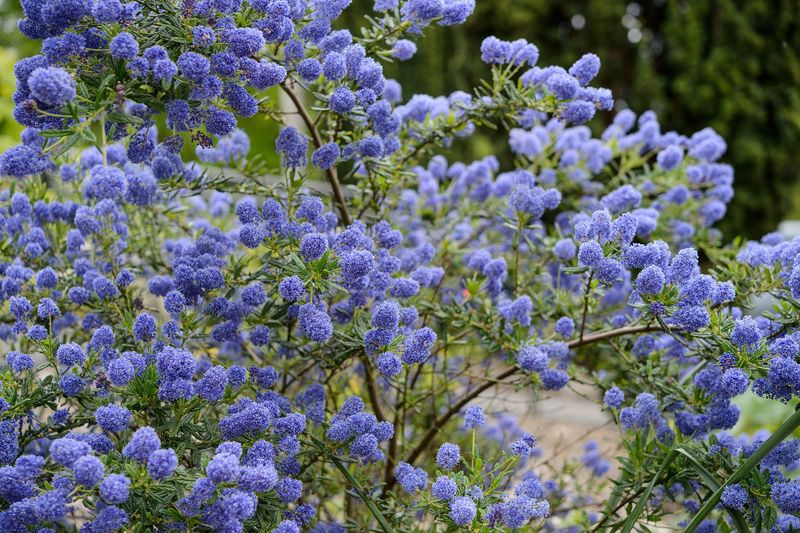
Ceanothus – commonly called California Lilac – is one of those plants that genuinely feels like it belongs in a California yard, because it does.
Native to the state, this evergreen shrub has been growing across California hillsides and coastal bluffs long before anyone was planting garden beds.
That deep-rooted connection to the local climate makes it one of the most reliable choices for gardeners who want a plant that thrives without a lot of intervention.
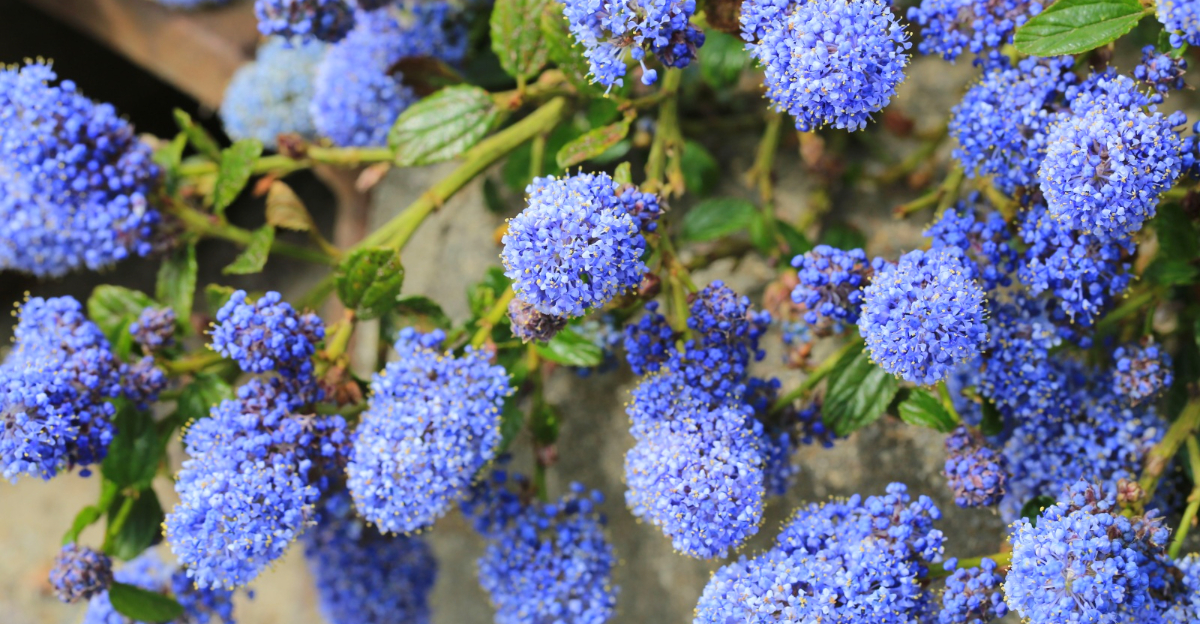
The blooms are spectacular. Dense clusters of flowers in shades of deep blue, lavender, and white cover the shrub in late winter and spring, creating a bold display that draws in native bees and butterflies by the dozens.
Even outside of bloom season, the glossy, dark green foliage keeps the plant looking full and vibrant throughout the year.
California Lilac grows quickly, which is a major advantage for gardeners trying to fill in large spaces or create natural screening along a fence line. Depending on the variety, plants can spread from three feet to over ten feet wide.
Once established, most varieties handle California’s dry summers with minimal supplemental water.
Well-drained soil and full sun are the main requirements for keeping this native shrub looking its absolute best season after season.
6. Star Jasmine Covers Spaces With Glossy Greenery
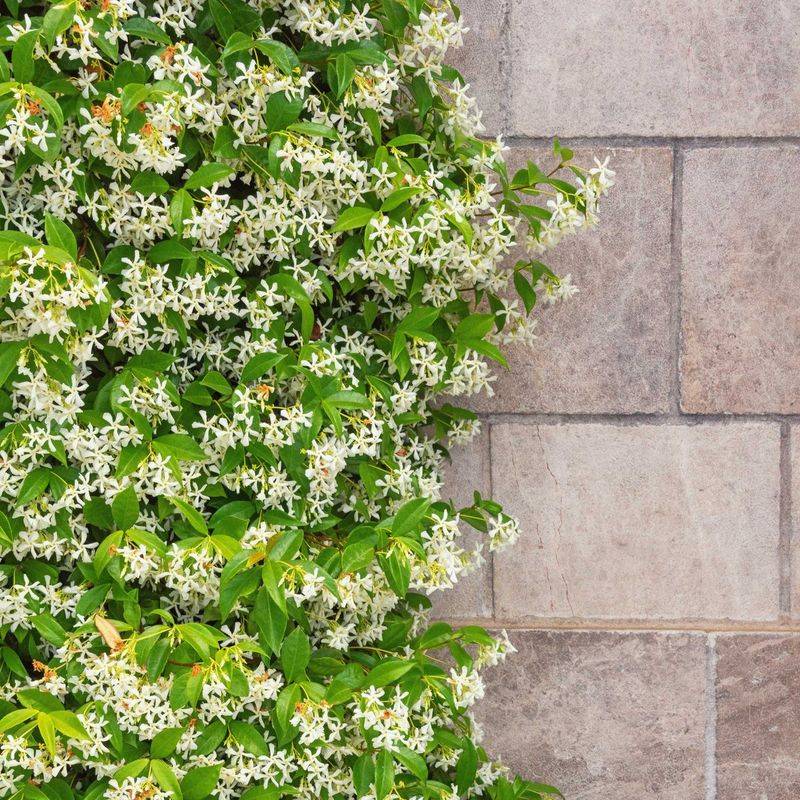
On a warm California evening, the scent of Star Jasmine drifting through an open window or across a backyard patio is one of those simple pleasures that makes outdoor living feel genuinely special.
The fragrance alone is reason enough to plant it, but Star Jasmine earns its place in the landscape through its dense, glossy foliage just as much as its blooms.
As a vine, it climbs fences, trellises, and walls with enthusiasm, covering bare surfaces in a thick mat of deep green leaves. It also works as a ground cover, spreading across slopes or filling in awkward spaces between larger shrubs.
In either role, it creates that full, layered look that makes a yard feel intentionally designed rather than sparsely planted.
Star Jasmine is widely adaptable across California, performing well in coastal gardens and inland valleys alike.
It handles part shade to full sun and is reasonably drought-tolerant once established, though it looks its best with occasional deep watering during summer.
The small, star-shaped white flowers appear in spring and early summer, blanketing the plant in blooms for several weeks.
Minimal pruning keeps it tidy without sacrificing that lush, full appearance that California gardeners find so appealing in this versatile evergreen plant.
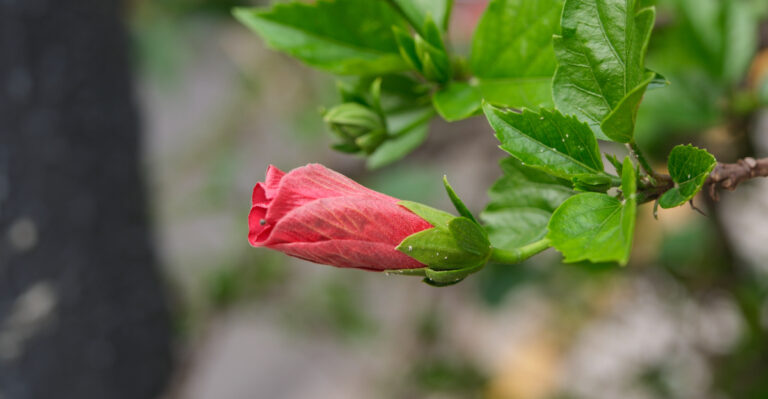
7. Hibiscus Brings Large Leaves And Bright Blooms
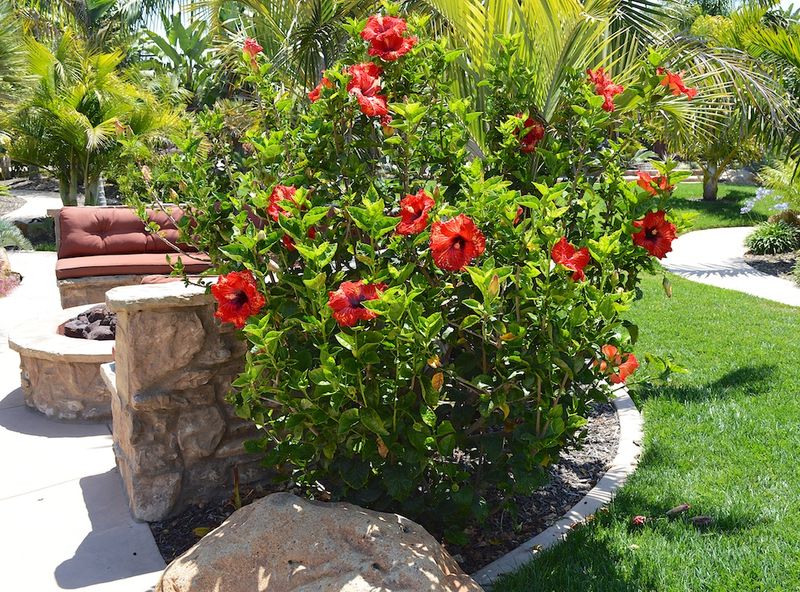
A Hibiscus in full bloom has a way of making a California yard feel instantly more alive.
The flowers are enormous – some varieties producing dinner-plate-sized blooms in shades of red, orange, yellow, pink, and white – and they appear in such abundance during warm months that the plant rarely goes a day without something to show for itself.
Tropical Hibiscus thrives in Southern California’s warm coastal and inland climates, where mild winters keep the plant growing year-round.
In cooler Northern California zones, it can be grown in large containers and brought indoors during cold snaps.
The large, glossy leaves contribute to the lush look even between bloom cycles, making Hibiscus a reliable visual anchor in garden beds or container arrangements near patios and pools.
Regular watering is important for keeping Hibiscus blooming consistently – this is not a plant that appreciates extended dry spells during its active growing season.
Feeding with a balanced fertilizer through spring and summer encourages heavier blooming.
Hibiscus grows well in full sun with well-drained soil and benefits from occasional shaping to maintain a fuller, bushier form.
For California gardeners who want something that delivers bold, tropical energy to the yard without demanding excessive maintenance, Hibiscus is a strong and rewarding contender.
8. Camellia Adds Glossy Foliage And Seasonal Flowers
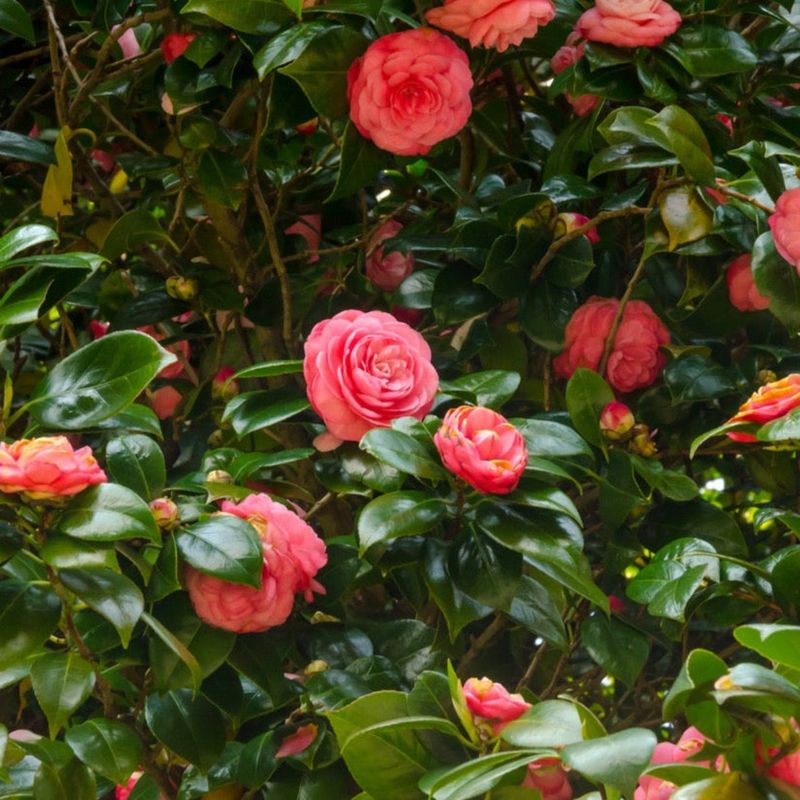
When most of the garden is quiet and the trees are bare, Camellia steps in with some of the most elegant blooms of the year.
Flowering through fall, winter, and early spring depending on the variety, Camellia fills a seasonal gap that few other shrubs can manage as gracefully.
That alone makes it a valuable addition to any California yard trying to maintain year-round visual interest.
The foliage is equally impressive. Deep, waxy green leaves cover the shrub densely, creating a lush backdrop that looks polished and full regardless of whether the plant is in bloom.
Camellias grow well in Northern and Central California, where cooler winters and mild summers suit their preferences. In warmer Southern California climates, afternoon shade helps protect both foliage and flowers from heat stress.
Camellias prefer slightly acidic, well-drained soil with consistent moisture – they do not respond well to either waterlogged roots or prolonged drought.
Planting under the filtered shade of larger trees often mimics the conditions they enjoy naturally.
Growth is moderately slow, so purchasing a larger nursery specimen gives a more immediate lush effect in the landscape.
With blooms ranging from pure white to deep crimson and layered petal forms that resemble peonies, Camellia brings a refined beauty to California gardens that is genuinely hard to replicate with other plants.
9. Coral Bells Fill Gaps With Colorful Foliage
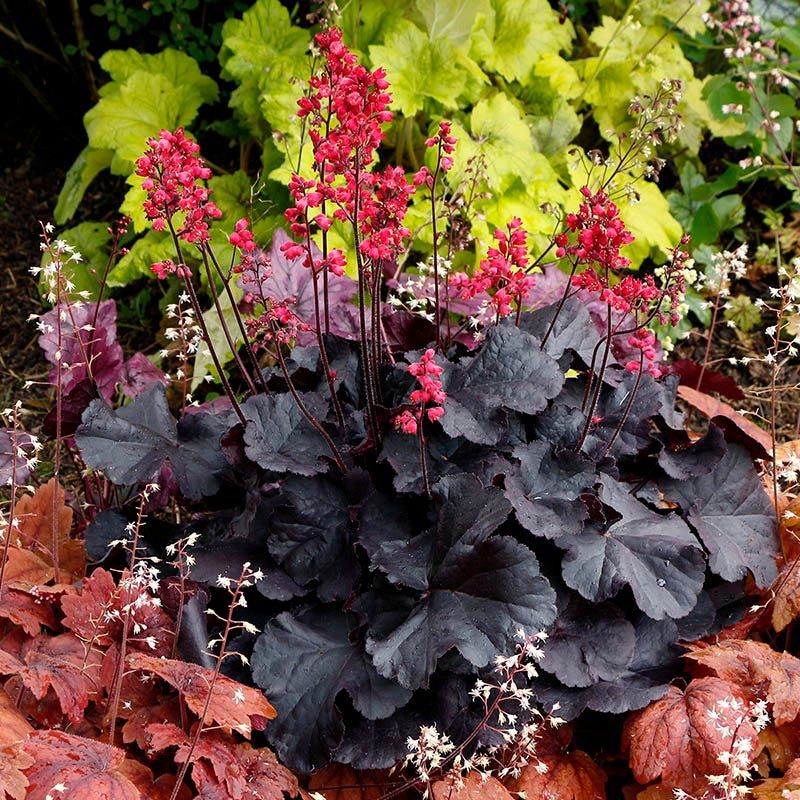
Some plants earn their spot in the garden through flowers. Coral Bells earns its spot through foliage – and what foliage it is.
The ruffled, rounded leaves come in a remarkable range of colors including deep burgundy, burnt caramel, lime green, silver, and near-black, making this one of the few plants that can add bold color to a shaded corner of a California yard without relying on blooms.
Heuchera, the botanical name for Coral Bells, grows in compact mounds that typically reach one to two feet tall and wide.
That manageable size makes it ideal for filling gaps between larger shrubs, edging pathways, or tucking into shaded spots where other plants tend to struggle.
In California, it performs well in partial to full shade and appreciates regular moisture, particularly during hot inland summers.
Delicate wiry stems rise above the foliage in spring and summer, carrying small bell-shaped flowers that attract hummingbirds – a bonus that California gardeners appreciate.
Coral Bells is evergreen in mild California climates, meaning the colorful foliage stays in place through winter without much fuss.
Refreshing older plants every few years by dividing the clumps encourages denser, more vigorous growth and keeps the color looking rich and saturated through the growing season.
10. Lemon Tree Adds Greenery With Fruit And Fragrance
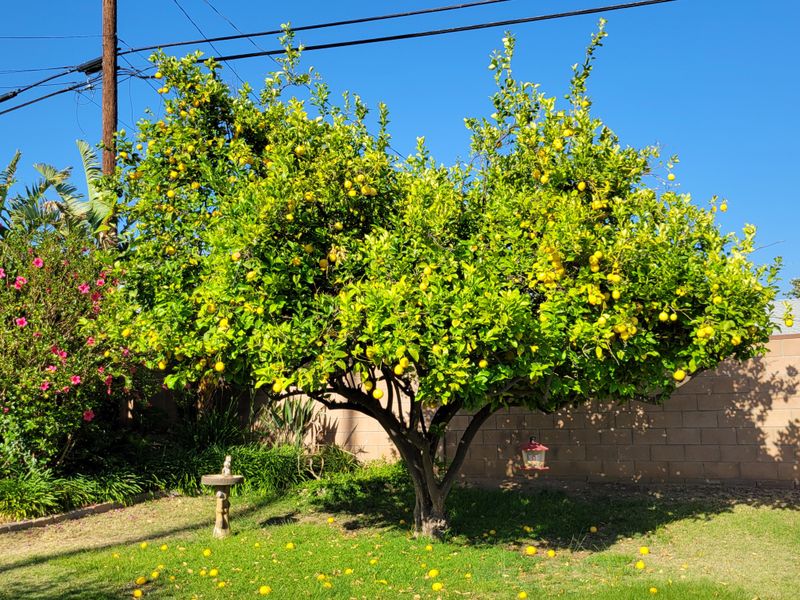
Growing up in California often means having a lemon tree somewhere in the backyard – or at least knowing a neighbor who does.
That familiar image of a tree loaded with bright yellow fruit against a backdrop of deep glossy leaves captures something essentially Californian about outdoor living.
Beyond the nostalgia, lemon trees genuinely contribute to a lush landscape in ways that go well beyond fruit production.
The dense, evergreen canopy of a mature lemon tree provides year-round greenery that anchors a yard visually in every season.
Varieties like Eureka and Lisbon perform reliably across much of coastal and inland California, while the Meyer Lemon – a hybrid that is slightly more cold-tolerant – works in a broader range of microclimates including cooler Bay Area gardens.
The fragrant white blossoms that appear through much of the year add another sensory layer to the outdoor space.
Lemon trees thrive in full sun and well-drained soil, and they respond well to consistent watering during the growing season.
Container-grown specimens work well for smaller California yards or patios where ground planting is not an option.
Regular fertilizing with a citrus-specific formula supports both healthy foliage and reliable fruit production. For a plant that delivers greenery, fragrance, and a practical harvest all at once, few choices feel as satisfying as a well-tended lemon tree.