Plants That Perform Better Than Boxwood In North Carolina Landscapes
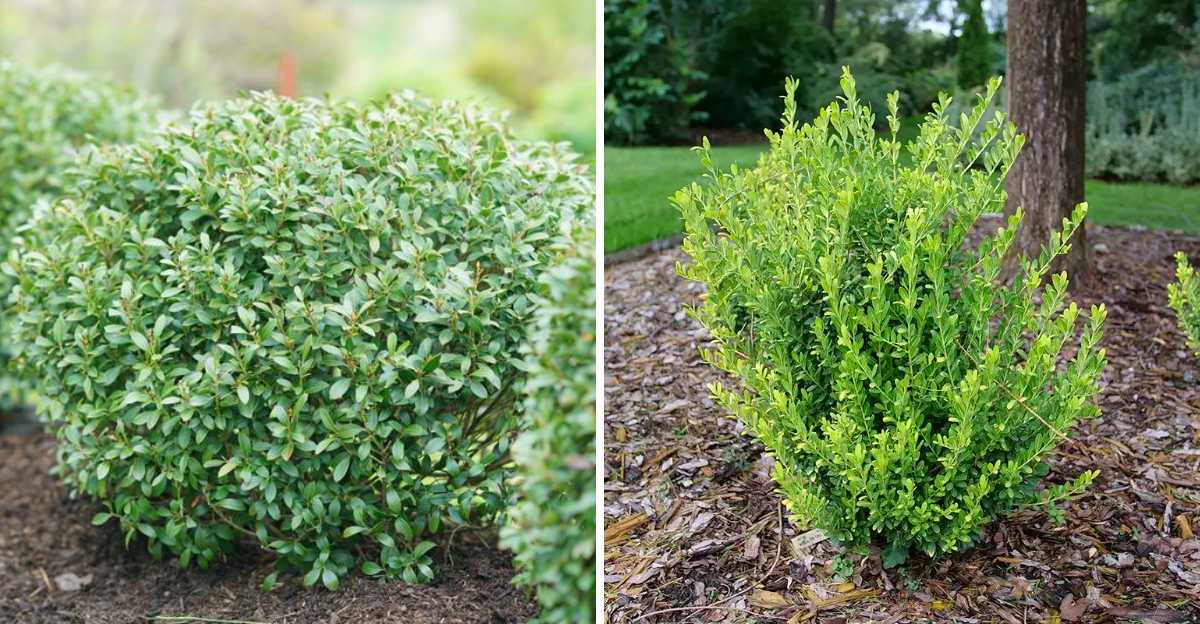
Boxwood used to be the go-to for neat hedges in North Carolina, but more gardeners are starting to rethink that choice.
After dealing with leaf issues, pest problems, and the challenges of humid summers, many are looking for plants that hold their shape with less trouble.
The good news is that North Carolina’s climate, from the mountains to the coast, supports a wide range of shrubs that can deliver that same clean, structured look.
With the right alternatives, it is possible to keep that polished style while choosing plants that feel better suited to local conditions.
1. Inkberry Holly Creates A Native Boxwood Alternative
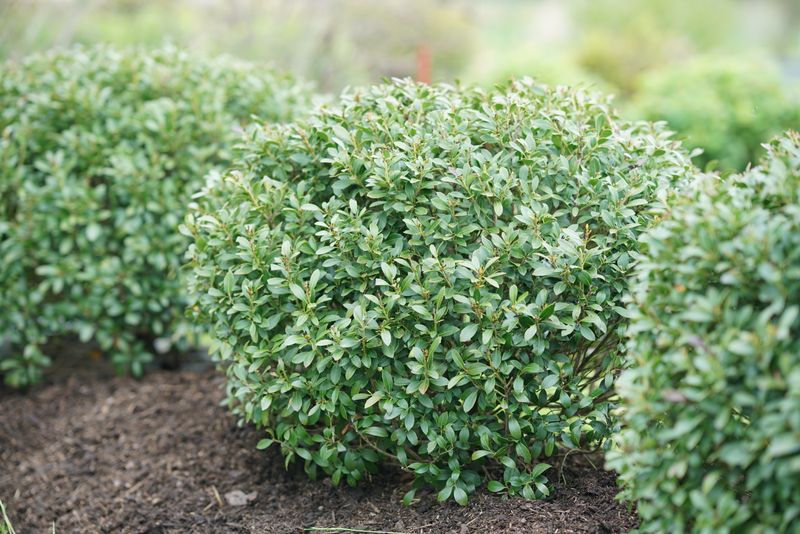
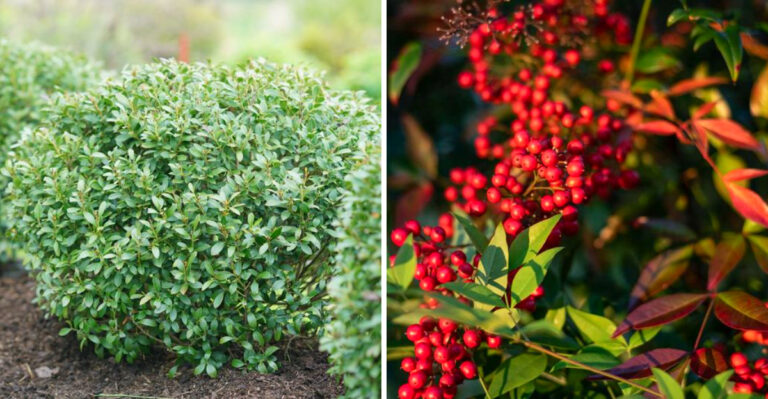
Few native shrubs match the reliable elegance of Inkberry Holly when it comes to filling the role boxwood once played in North Carolina yards.
Native to the eastern United States, Ilex glabra naturally thrives in the acidic, sometimes poorly drained soils common throughout the Piedmont and coastal regions of North Carolina.
That adaptability alone puts it ahead of boxwood in many planting situations. Inkberry Holly grows into a rounded, dense form that responds well to light shearing.
Most cultivars stay between 3 and 6 feet tall, though compact varieties like “Shamrock” and “Gem Box” can be kept tighter with minimal pruning.
The foliage stays a rich, dark green through winter, giving landscapes that evergreen structure homeowners count on year-round.
One practical advantage is its resistance to boxwood blight and the pests that commonly trouble Buxus.
Because it evolved alongside North Carolina’s native conditions, Inkberry Holly rarely demands the intervention that boxwood often requires.
It handles both sun and partial shade, making it flexible enough for many planting spots. Small black berries appear in fall and attract birds, adding seasonal interest beyond just structure.
Spacing plants about 3 to 4 feet apart creates a dense, uniform hedge that holds its shape through the seasons without constant attention.
2. Yaupon Holly Forms A Tough Evergreen Screen
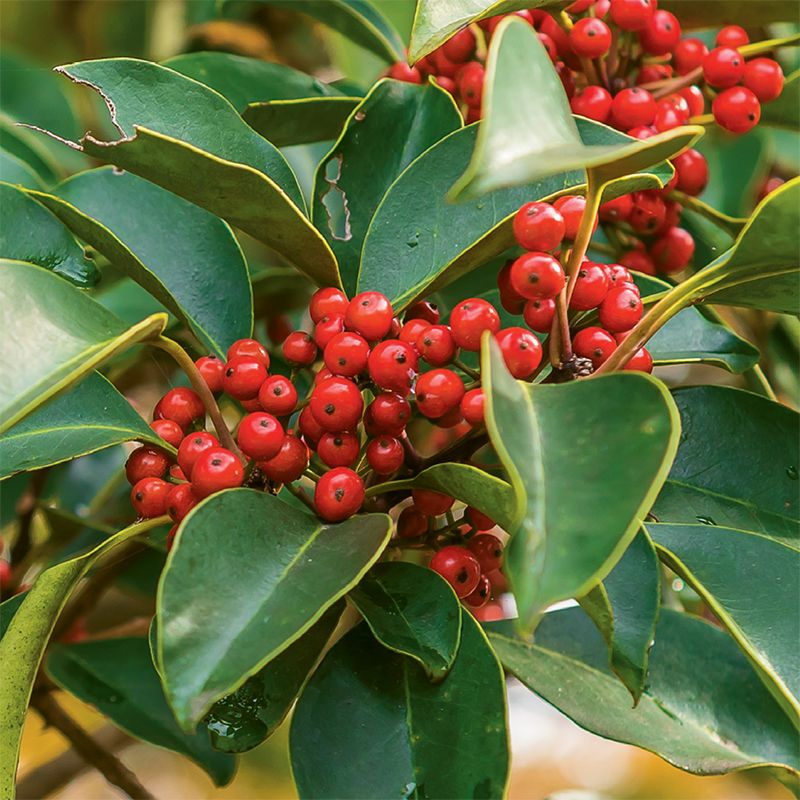
Humidity, heat, and occasional drought – North Carolina throws a lot at landscape plants, and Yaupon Holly handles all of it with quiet confidence.
Ilex vomitoria is one of the toughest native evergreens available to homeowners in the state, and it forms a dense, upright screen that rivals boxwood hedging in both structure and visual appeal.
Unlike boxwood, it rarely requires intervention for pests or disease. Yaupon Holly can grow anywhere from 8 to 15 feet tall depending on the cultivar and pruning habits.
For homeowners wanting a formal hedge, regular trimming keeps it tight and orderly. Left with less shearing, it develops a slightly more natural silhouette while still holding a clean, layered look.
The small, glossy leaves create a fine-textured appearance similar to boxwood but on a more vigorous, hardier framework.
Across North Carolina’s coastal plain and Piedmont, Yaupon Holly performs particularly well because it tolerates both wet conditions and dry spells without significant stress.
Female plants produce small red berries that add seasonal color and support wildlife, which boxwood simply cannot offer.
Full sun to partial shade works well for this shrub, and it adapts to sandy, clay, or loamy soils.
Your North Carolina Garden Changes Every Week. Your Plan Should Too.
Gardening in North Carolina changes quickly throughout the season. Every Friday you’ll receive a simple weekly plan showing exactly what to plant, prune, fertilize, harvest, and protect so you never miss the right timing.
For homeowners building a privacy screen or formal border that holds up through North Carolina summers, Yaupon Holly is a highly practical choice worth serious consideration.
3. Dwarf Yaupon Holly Keeps A Compact Shape
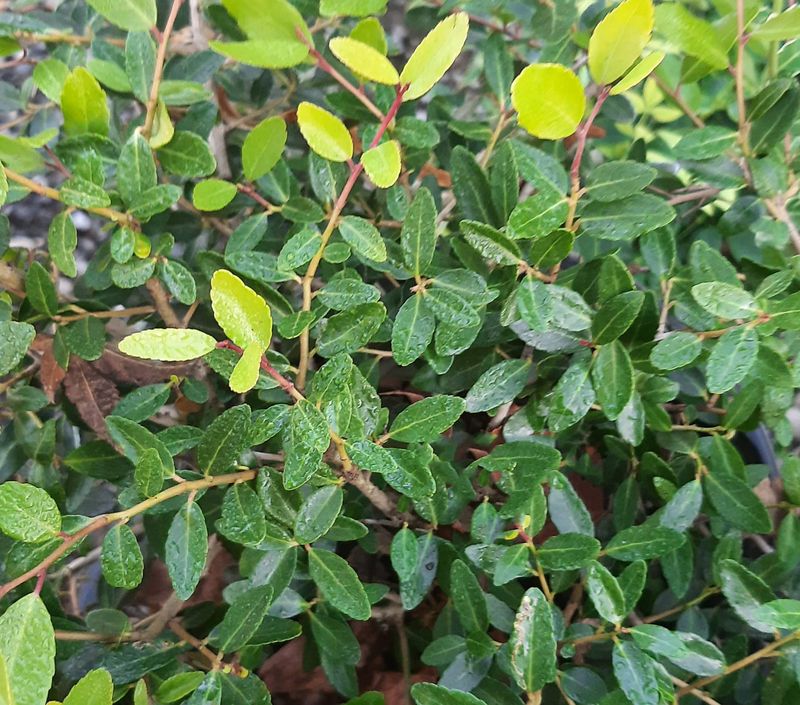
Homeowners who want the formal, low-maintenance look of a clipped boxwood border without the disease worries often find exactly what they need in Dwarf Yaupon Holly.
The cultivar Ilex vomitoria “Nana” naturally grows into a dense, rounded mound that stays compact without aggressive pruning.
That self-contained growth habit makes it one of the most manageable evergreen shrubs available in North Carolina nurseries.
Typically reaching 3 to 5 feet in height and spread, Dwarf Yaupon Holly fits comfortably in foundation plantings, low border hedges, and mass plantings along walkways.
Its fine-textured, small leaves give it a neat, polished appearance that mirrors what many gardeners love about boxwood.
Because it grows at a moderate pace, shaping once or twice a year is usually enough to keep it looking tidy.
North Carolina’s warm, humid summers do not slow this shrub down. It tolerates heat well, adapts to a range of soil types common across the state, and handles both full sun and partial shade without complaint.
Drought tolerance is another strong point, particularly valuable during dry stretches that can stress less hardy plants.
Unlike boxwood, Dwarf Yaupon Holly shows no significant vulnerability to boxwood blight or leafminer damage. Planting at 3-foot intervals creates a consistent, uniform hedge that fills in reliably.
For gardeners across the Piedmont and coastal regions of North Carolina, this compact holly delivers structure and dependability in equal measure.
4. Japanese Holly Delivers A Clean Hedge Look
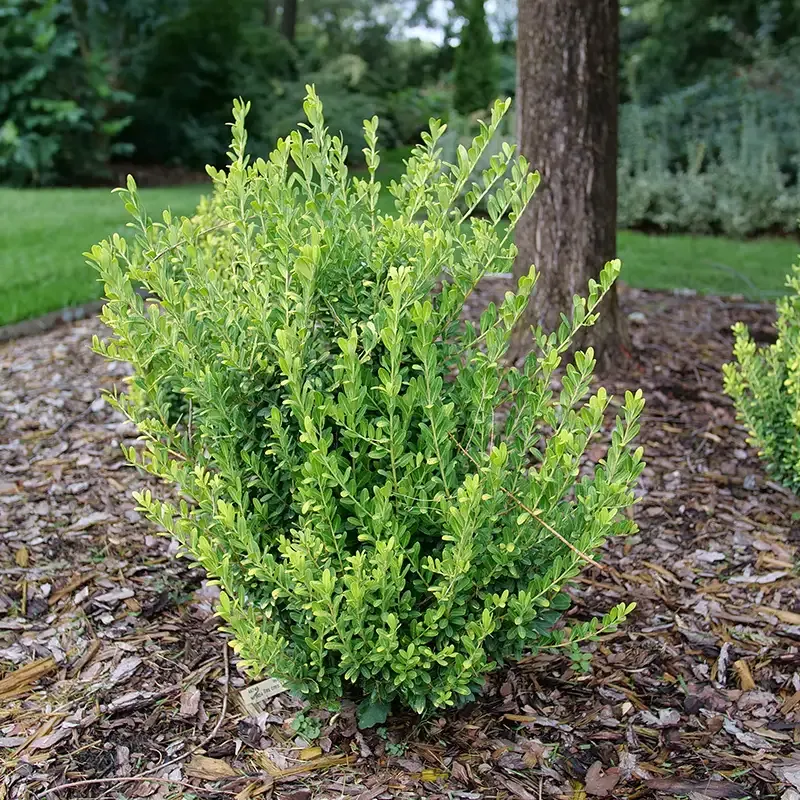
For gardeners who genuinely love the refined, clipped appearance of boxwood but want something more durable, Japanese Holly is often the first recommendation from experienced horticulturists.
Ilex crenata produces small, glossy, dark green leaves that closely resemble boxwood foliage in texture and color, making it one of the most convincing visual substitutes available for North Carolina landscapes.
Japanese Holly responds exceptionally well to shearing, which makes it easy to maintain as a formal hedge, low border, or foundation planting.
Most cultivars stay in the 3 to 6 foot range, with some compact types staying even smaller. Varieties like “Soft Touch,” “Sky Pencil,” and “Helleri” offer different growth habits to suit various design needs, from rounded mounds to narrow upright forms.
One important consideration for North Carolina gardeners is soil drainage. Japanese Holly prefers well-drained, slightly acidic soils and can struggle in heavy clay that stays wet for long periods.
In the right conditions – which much of the Piedmont and mountain foothills can provide – it performs reliably with minimal care.
It handles full sun to partial shade well and shows strong resistance to the diseases that commonly affect boxwood.
Spacing plants 2 to 3 feet apart builds a tight, uniform hedge that holds its shape between pruning sessions.
For homeowners after that classic, structured look without the boxwood maintenance burden, Japanese Holly hits the mark consistently.
5. Distylium Brings Strong Structure And Resilience
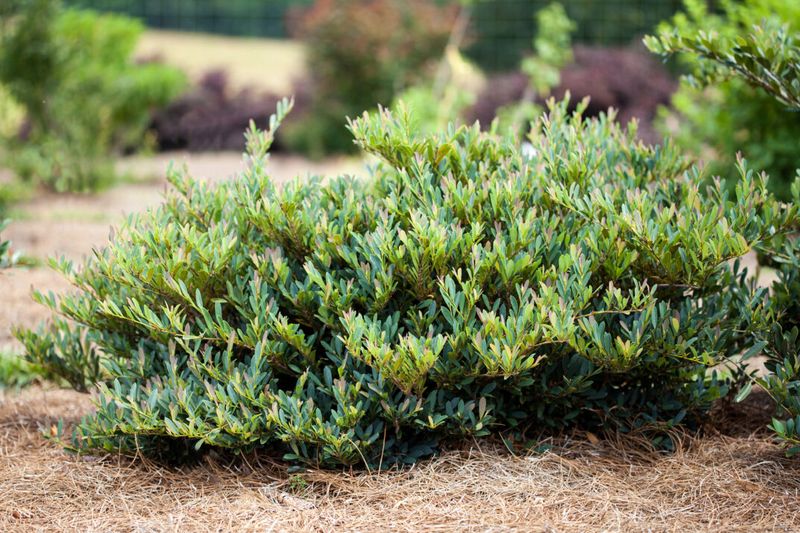
Not every gardener has heard of Distylium, but those who grow it in North Carolina tend to become enthusiastic advocates for it.
This evergreen shrub belongs to the witch-hazel family and brings a dense, layered structure to the landscape that holds its shape through heat, humidity, and occasional dry spells.
It handles the kinds of stressful conditions that can make boxwood struggle. Distylium grows in a naturally mounding, compact form without much intervention.
Depending on the cultivar, it typically ranges from 2 to 4 feet tall, though some varieties stay even lower. “Cinnamon Girl,” “Vintage Jade,” and “Blue Cascade” are popular options that offer slightly different habits and foliage tones, giving gardeners flexibility in design.
The leaves are small, glossy, and deep green, creating a refined texture that works well in formal or semi-formal settings.
One of Distylium’s strongest selling points for North Carolina landscapes is its tolerance for heat and humidity without the disease pressure that boxwood faces.
It grows well in full sun to partial shade and adapts to a range of soil types, including the clay-heavy soils common across much of the state’s Piedmont.
Minimal pruning is needed to keep it looking sharp, which appeals to homeowners who want a structured planting without a heavy maintenance schedule.
For those seeking a boxwood-like foundation plant that genuinely holds up through North Carolina summers, Distylium is worth strong consideration.
6. Dwarf Loropetalum Adds Color And Texture
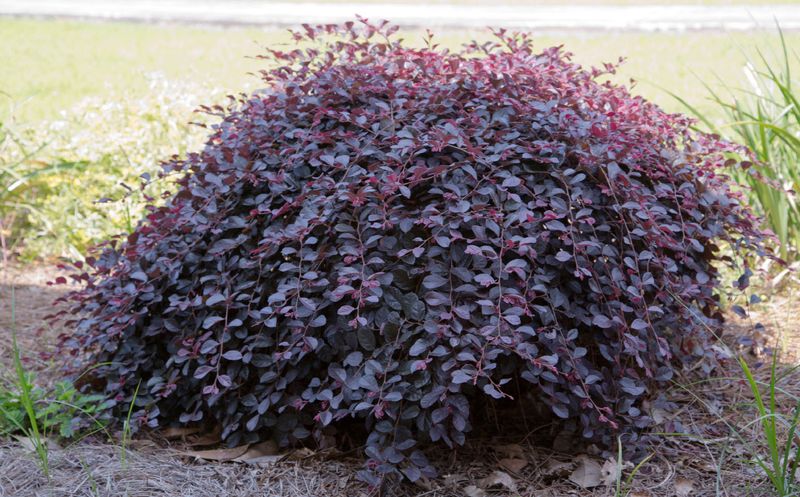
Burgundy foliage, soft pink blooms, and a compact mounding shape – Dwarf Loropetalum brings a level of visual interest that boxwood simply cannot match.
While boxwood offers solid green structure, Loropetalum chinense adds color to the equation, making it a versatile choice for homeowners who want both form and personality in their North Carolina landscape plantings.
Dwarf varieties like “Purple Pixie” and “Plum Delight” stay in a manageable size range, typically reaching 2 to 4 feet in height and spread.
The deep purple to burgundy foliage holds its color through most of the year, providing a striking contrast against lighter plants, mulch, or hardscape elements.
In spring and sometimes again in fall, clusters of delicate, ribbon-like pink flowers appear across the plant, adding another layer of seasonal appeal.
North Carolina’s climate suits Loropetalum well, particularly in the Piedmont and coastal plain where winters are mild enough to keep the foliage looking good year-round.
It grows best in full sun to partial shade and prefers well-drained, acidic soil – conditions that align with many North Carolina garden beds.
Loropetalum is notably resistant to the common pests and diseases that challenge boxwood, making it a lower-stress option overall. Light pruning after flowering keeps plants compact and tidy.
For gardeners who want that structured hedge look with added color and texture, Dwarf Loropetalum offers a refreshing departure from the standard green-only approach.
7. Abelia Offers Airy Growth And Long Interest
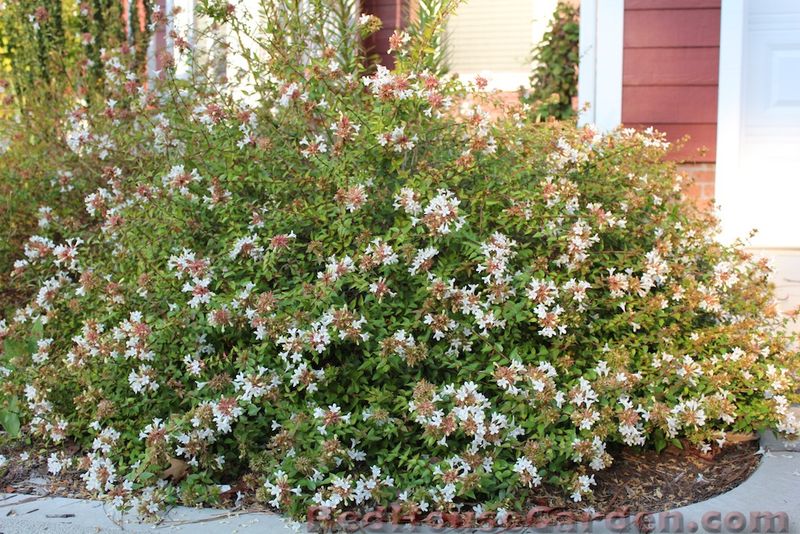
Gardeners who feel boxwood looks a little too stiff and formal sometimes find Abelia to be a breath of fresh air – literally.
Glossy Abelia (Abelia x grandiflora) produces graceful, arching branches covered in small, glossy leaves and clusters of tubular white to pale pink flowers that bloom from late spring well into fall.
That extended bloom season gives North Carolina landscapes months of delicate color that boxwood never provides.
Abelia typically grows 3 to 6 feet tall and wide, though compact cultivars like “Little Richard” and “Kaleidoscope” stay smaller and suit tighter spaces.
The foliage has a slight bronze or reddish tint when new growth emerges, adding seasonal variation throughout the growing season.
In North Carolina’s mild winters, Abelia often retains much of its foliage, keeping some evergreen presence through the colder months.
Across much of North Carolina, Abelia adapts well to a range of soil conditions and thrives in full sun to partial shade.
It handles heat and humidity without significant stress, which gives it an advantage over boxwood in the warmer, wetter parts of the state.
Pollinators, including bees and butterflies, are drawn to the flowers, adding ecological value to the planting. Light pruning in late winter or early spring shapes plants and encourages fresh growth.
For homeowners wanting a softer, more naturalistic hedge with long-season interest, Abelia is a genuinely rewarding option across many North Carolina growing conditions.
8. Sweetbox Thrives In Shade With Subtle Fragrance
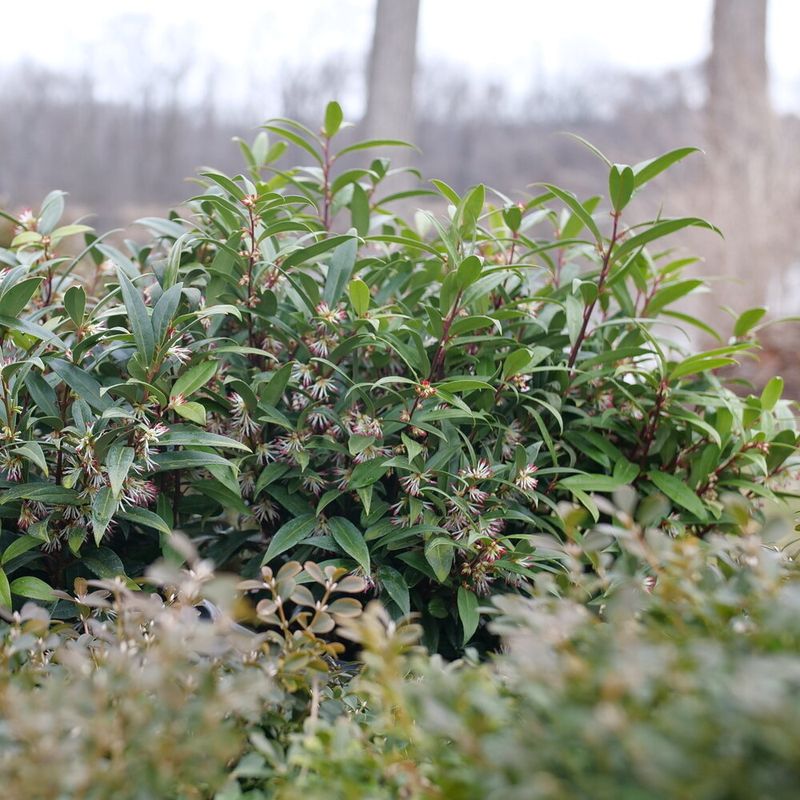
Shaded areas under large trees or along north-facing foundations can be some of the most frustrating spots to plant in a North Carolina yard. Boxwood often struggles in deep shade, becoming thin and leggy over time.
Sweetbox (Sarcococca hookeriana) fills those difficult spots with lush, dark green foliage and a naturally tidy, low-growing form that requires very little attention once established.
Growing between 2 and 4 feet tall, Sweetbox spreads slowly through underground runners to form a dense, weed-suppressing mass of evergreen foliage.
The leaves are narrow, glossy, and deep green, creating a refined texture that looks polished even in low-light conditions. In late winter or early spring, small white flowers appear along the stems.
They are modest in size but surprisingly fragrant, releasing a sweet scent that carries noticeably on cool air.
North Carolina’s warmer Piedmont and coastal regions provide a hospitable climate for Sweetbox, particularly in spots with moist, well-drained, acidic soil enriched with organic matter.
It grows best in partial to full shade and tends to perform poorly in hot, exposed locations, so placement matters.
Minimal pruning is needed since the plant naturally stays compact and orderly. Its resistance to common landscape pests and diseases makes it a low-intervention choice for challenging planting spots.
For gardeners across North Carolina who have struggled to find a reliable, low-growing evergreen for shaded areas, Sweetbox is genuinely worth trying.