Plants To Grow Around Squash In Michigan For Fuller Beds And Fewer Pest Problems
Squash plants have a funny way of making a garden bed look a little awkward at first. You plant them with big summer dreams, then stare at all that bare soil and think, well, that is a lot of empty space.
In a Michigan garden, those early warm-season weeks can leave plenty of room between young squash plants before the vines really start to roam. Unfortunately, weeds love that setup.
Of course they do. That is where smart companion planting can make things a lot more interesting.
Low-growing flowers, living mulches, and gentle filler plants can soften the look of the bed, help cover open ground, and add a little extra garden charm while the squash gets going. The trick is picking companions that play nicely.
Squash still wants sunlight, airflow, and enough elbow room to stretch out without feeling crowded. Choose the right partners, though, and your Michigan squash bed can look fuller, feel livelier, and work a little harder for you all summer.
1. Nasturtium Adds Bright Color Under Squash
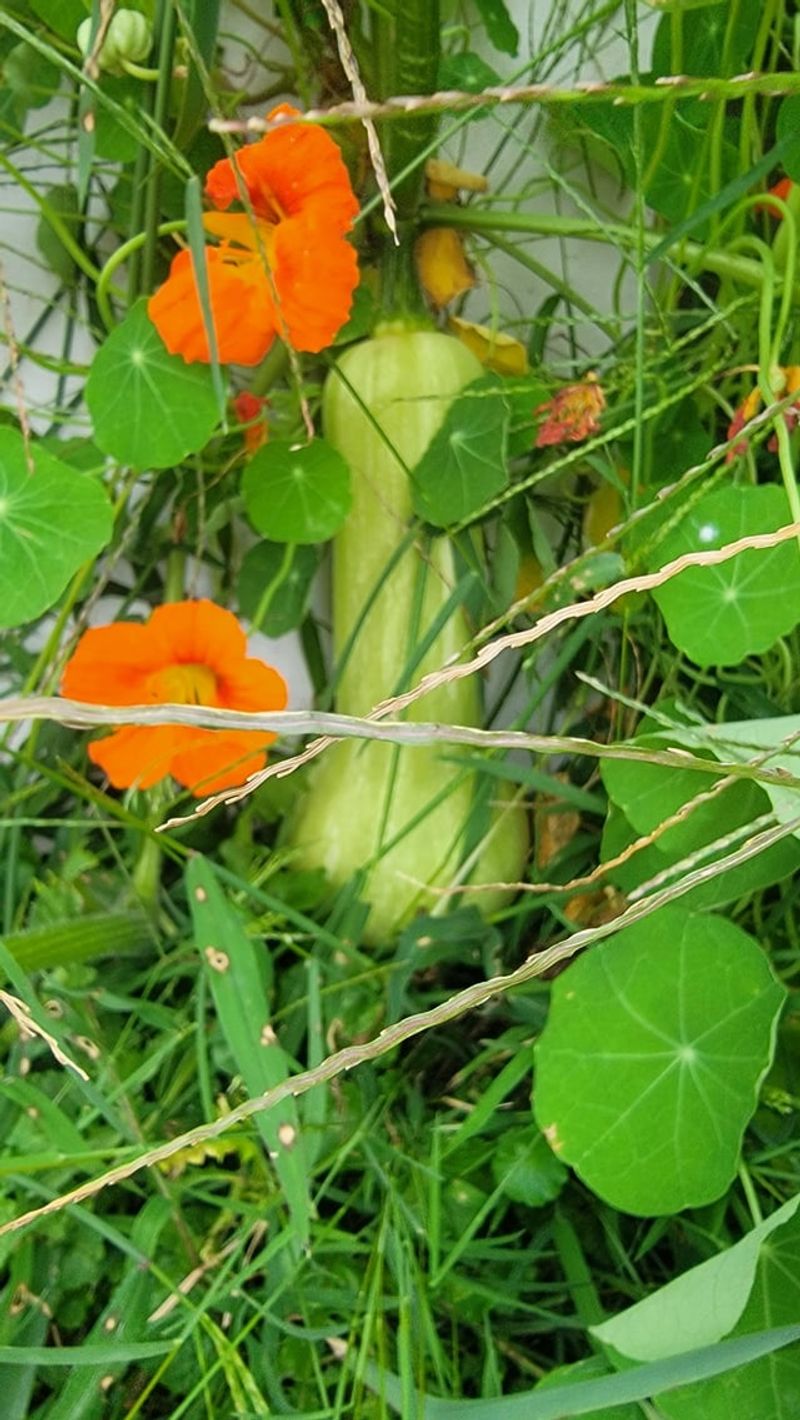
Sprawling squash vines tend to leave a lot of open ground during the early weeks of the season, and nasturtium is one of the most cheerful ways to fill that space.
With round, lily-pad-shaped leaves and bold flowers in shades of orange, red, and yellow, nasturtium brings real visual energy to a vegetable bed without demanding much from the gardener.
It grows quickly from seed, handles the warm Michigan summers reasonably well, and stays low enough to avoid blocking light from neighboring squash plants.
Nasturtium is often mentioned in companion planting discussions because it may attract aphids away from more valuable crops, acting as a kind of trap plant.
While this is not a guaranteed outcome, some Michigan gardeners do find that aphid pressure on their squash seems lighter when nasturtium is nearby.
The flowers are also known to draw beneficial insects, including some that prey on common garden pests, which adds a functional layer to the visual appeal.
One thing to keep in mind is that nasturtium spreads fairly freely, so it works best tucked along the edges of a squash bed or in gaps between young plants before the vines start to run.
Once squash really takes off in midsummer, it tends to shade out the nasturtium naturally.
In Michigan raised beds and backyard plots, nasturtium is both easy to grow and satisfying to look at, making it a practical and attractive choice for gardeners who want their squash beds to feel more complete from the very start of the season.
2. Marigold Brings Bold Color Near Squash
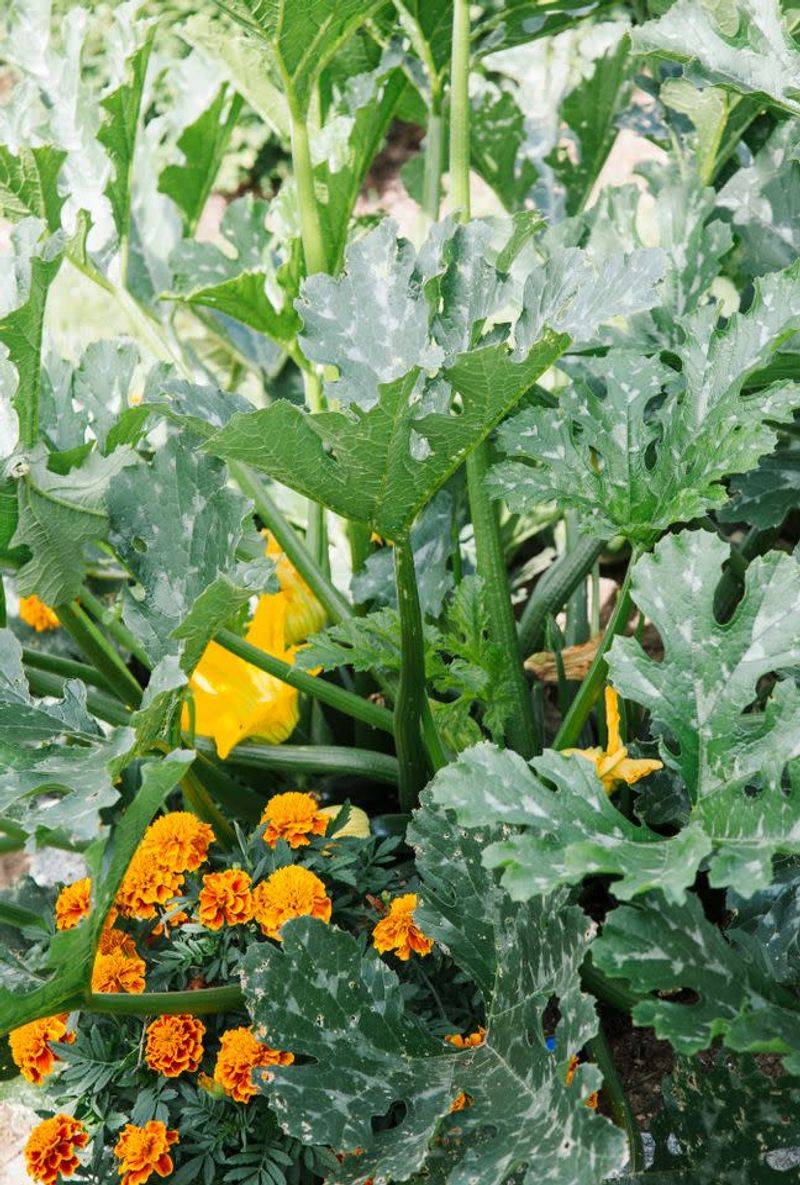
Open soil around squash plants can look pretty uninviting in late spring, but marigolds have a way of turning that bare space into something much more lively.
With their bright blooms in warm shades of yellow, orange, and gold, marigolds add an easy burst of color that stands out beautifully against the big, rough-textured leaves of squash.
Some stay compact and neat, while others grow taller and fuller, so they can fit into a range of garden styles and bed sizes. That flexibility is part of what makes them such a popular companion in vegetable gardens.
Your Michigan Garden Changes Every Week. Your Plan Should Too.
Gardening in Michigan changes quickly throughout the season. Every Friday you’ll receive a simple weekly plan showing exactly what to plant, prune, fertilize, harvest, and protect so you never miss the right timing.
From a practical standpoint, marigolds have long been valued in edible gardens for more than just their color.
They are often planted near vegetables because their flowers can attract pollinators and other helpful insects, which is especially useful for squash that depends on good pollination to produce well.
In Michigan, where the warm growing season moves quickly, keeping pollinators active around squash plants can be a real plus during summer.
Placement still matters. Smaller marigolds can fit closer to squash plants, while taller types usually make more sense along the edge of the bed where they can brighten the planting without crowding young vines.
Michigan gardeners who use marigolds as nearby companions rather than stuffing them too tightly under squash often get a nicer balance of color, airflow, and growing space through the season.
3. Sweet Alyssum Adds Low Blooms And Insect Support
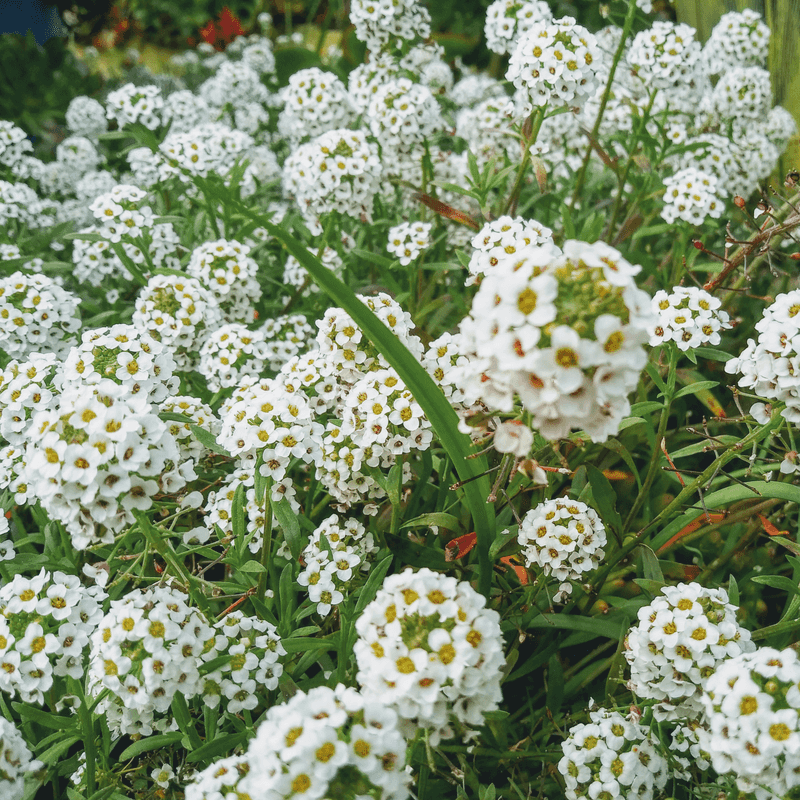
Few plants work as quietly and effectively in a vegetable garden as sweet alyssum. It stays close to the ground, spreads in soft, billowy mounds, and produces tiny clusters of white or pale lavender flowers almost continuously through the warm season.
That combination of low growth and steady bloom makes it a thoughtful choice for tucking into the open spaces around young squash plants in a Michigan garden bed.
Sweet alyssum is especially valued for the way it draws beneficial insects. The small, nectar-rich flowers are particularly attractive to parasitic wasps and hoverflies, both of which play a helpful role in managing pest populations in vegetable gardens.
Parasitic wasps target caterpillars and aphids, while hoverfly larvae feed on aphids directly.
Having sweet alyssum nearby does not guarantee that pest pressure will disappear, but it does create conditions that support a more balanced insect population in the garden, which many Michigan gardeners find worthwhile.
Because sweet alyssum stays so compact, it fits naturally between squash plants or along bed edges without stealing light or competing aggressively for water. It does appreciate consistent moisture, so it pairs well with squash in beds that get regular watering.
As Michigan summers heat up and squash vines spread, sweet alyssum may slow down a bit in the hottest weeks, but it often rebounds nicely with cooler late-summer temperatures.
For gardeners who want their beds to look fuller and also support a healthy insect community, sweet alyssum earns its place in a squash planting with very little fuss.
4. Buckwheat Fills Open Space With Fast Growth
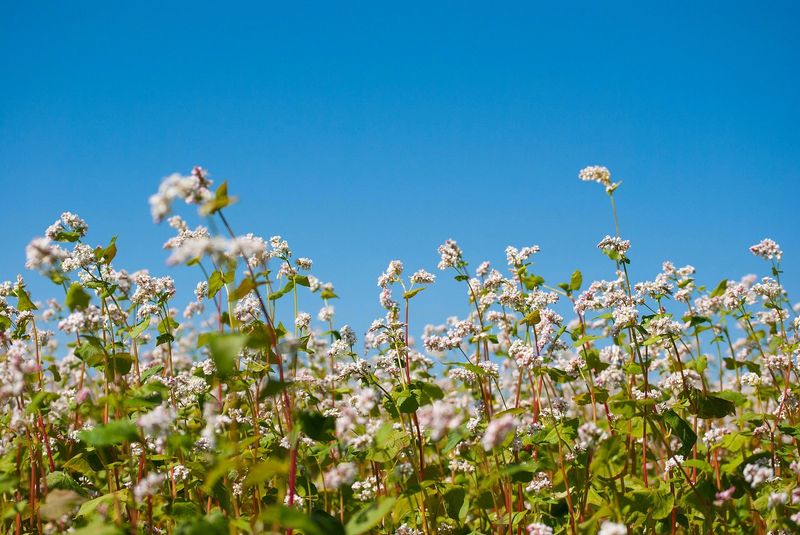
Not every companion plant in a squash bed needs to be a flower. Buckwheat is a fast-growing cover crop that Michigan gardeners sometimes use to fill bare ground quickly, especially in the early weeks of the season before squash vines really start to move.
It germinates and establishes much faster than most weeds, which means it can help keep open soil covered before unwanted plants take over.
That alone makes it worth considering in a summer vegetable garden where bare soil tends to disappear under weeds almost overnight.
Buckwheat also produces small, white flowers that are attractive to hoverflies, parasitic wasps, and other beneficial insects.
Because it blooms relatively quickly after planting, it can start supporting insect activity in the garden within just a few weeks of being sown.
This makes it a useful bridge plant early in the season when squash is still establishing and the surrounding soil is largely empty. It fills space, supports insects, and adds a bit of visual texture to what might otherwise be a pretty plain-looking bed.
The most important thing Michigan gardeners need to know about buckwheat is that it grows fast and can get tall if left unchecked.
It works best as a short-term space filler that gets cut back or turned under before it begins to compete seriously with squash for light and water.
Managing it at the right time takes a little attention, but gardeners who stay on top of it tend to find buckwheat genuinely useful for keeping beds looking full and active during those early summer weeks in Michigan.
5. White Dutch Clover Covers Bare Soil Softly
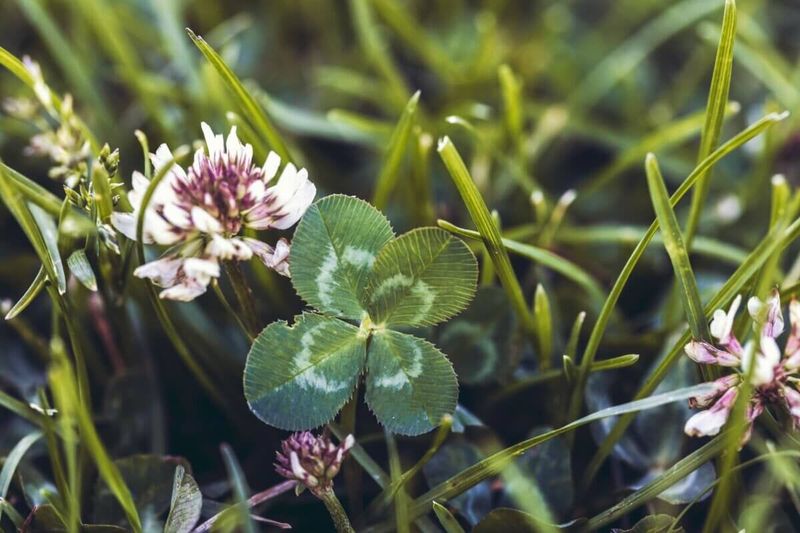
Bare soil between squash plants is practically an open invitation for weeds in a Michigan summer garden.
White Dutch clover is one of the most practical ways to address that problem because it grows low, spreads steadily, and stays out of the way of taller vegetable plants.
It forms a soft, dense mat that covers open soil without climbing or sprawling over neighboring crops, which makes it a genuinely useful living mulch for the spaces around squash.
One of the real strengths of white Dutch clover is its ability to fix nitrogen from the air into the soil through a natural process involving root bacteria.
This does not mean it will flood the garden with nitrogen immediately, but over time it can contribute to soil health in a way that benefits nearby plants.
Clover also holds soil moisture reasonably well, which can be helpful during dry stretches in Michigan’s warm season when squash plants need consistent water to develop properly.
White Dutch clover is not aggressive enough to outcompete established squash, but it should still be planted thoughtfully. Sowing it between plants rather than directly at the base of young squash gives everything a bit more breathing room.
The small white flowers that appear through the season are attractive to bees, including the native bees that help pollinate squash blossoms.
For Michigan gardeners working with raised beds or backyard plots where weed control and soil coverage are ongoing concerns, white Dutch clover offers a low-maintenance, multi-purpose solution that earns its space without causing problems.
6. Crimson Clover Adds Color And Living Mulch
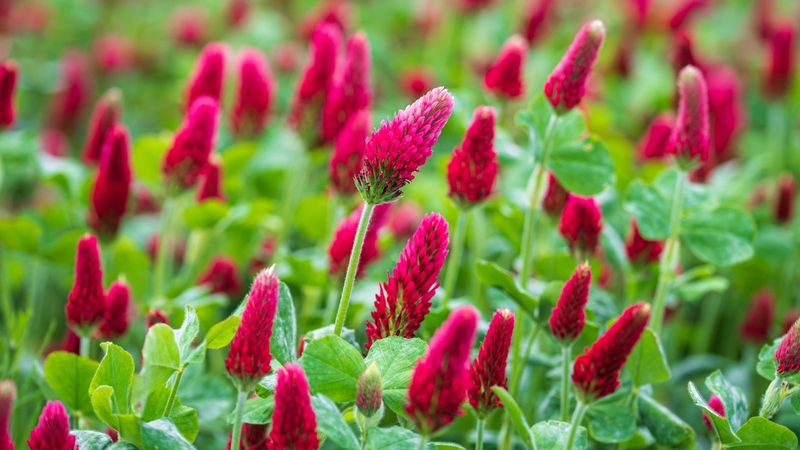
If white Dutch clover is the quiet, practical option, crimson clover is the one that makes a statement. The deep red, elongated flower spikes are genuinely striking, and they bring a richness of color to a vegetable bed that most cover crops simply cannot match.
Crimson clover works as a living mulch much like its white cousin, covering open soil between squash plants and suppressing weed growth, but it adds a visual layer that makes a Michigan summer garden feel more intentional and lively.
Crimson clover is also a nitrogen fixer, meaning it works with soil bacteria to pull nitrogen from the air and store it in the root zone.
This can benefit the broader soil environment over time, though it is most effective when the plant is eventually cut down and allowed to break down into the soil.
Many Michigan gardeners use crimson clover as a seasonal cover that gets mowed or turned under at the end of the planting cycle, returning some of that stored fertility back to the bed.
Because crimson clover grows a bit taller than white Dutch clover, spacing matters more when planting it near squash.
It fits best along bed edges or in wider gaps between plants where it has room to develop without pressing against squash stems or blocking airflow.
The flowers draw bumblebees and other native pollinators reliably, which supports squash fruit set through the season.
For Michigan gardeners who want their beds to look full, support soil health, and attract pollinators all at once, crimson clover brings a lot to the table in a single planting.
7. Borage Supports Pollinators And Fills Space Well
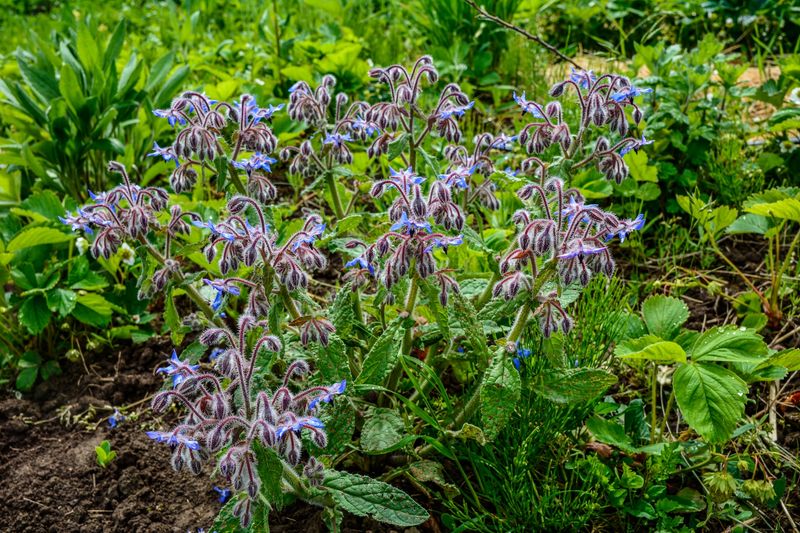
Borage has been a favorite in vegetable gardens for a long time, and it is not hard to understand why.
The star-shaped, vivid blue flowers are some of the most distinctive blooms you will find in any summer garden, and they appear in steady succession from early summer well into fall.
In a Michigan squash bed, borage earns its place by drawing pollinators consistently, which is genuinely valuable because squash plants need reliable visits from bees to set fruit well.
Bumblebees are especially drawn to borage, and since bumblebees are among the most effective pollinators for squash, having borage nearby can help support better fruit development through the season.
Borage also attracts other beneficial insects, including some predatory species that feed on common garden pests like aphids and caterpillars.
While no single plant will eliminate pest pressure on its own, borage contributes to a more diverse insect environment, which tends to be healthier overall for a Michigan vegetable garden.
Borage grows into a fairly large, somewhat sprawling plant, so it works best planted beside a squash bed or at the outer edge rather than directly underneath young squash where it might compete for space and light.
It self-seeds readily, which means Michigan gardeners may find it returning in the same area the following year without any effort.
The leaves and flowers are edible and have a mild cucumber-like flavor, adding a small bonus for gardeners who enjoy using what they grow. Borage is sturdy, easy to establish, and visually rewarding in any mixed vegetable and flower planting.