Powdery Mildew On Bee Balm Is The Biggest Problem In Humid North Carolina, Here’s How To Stop It
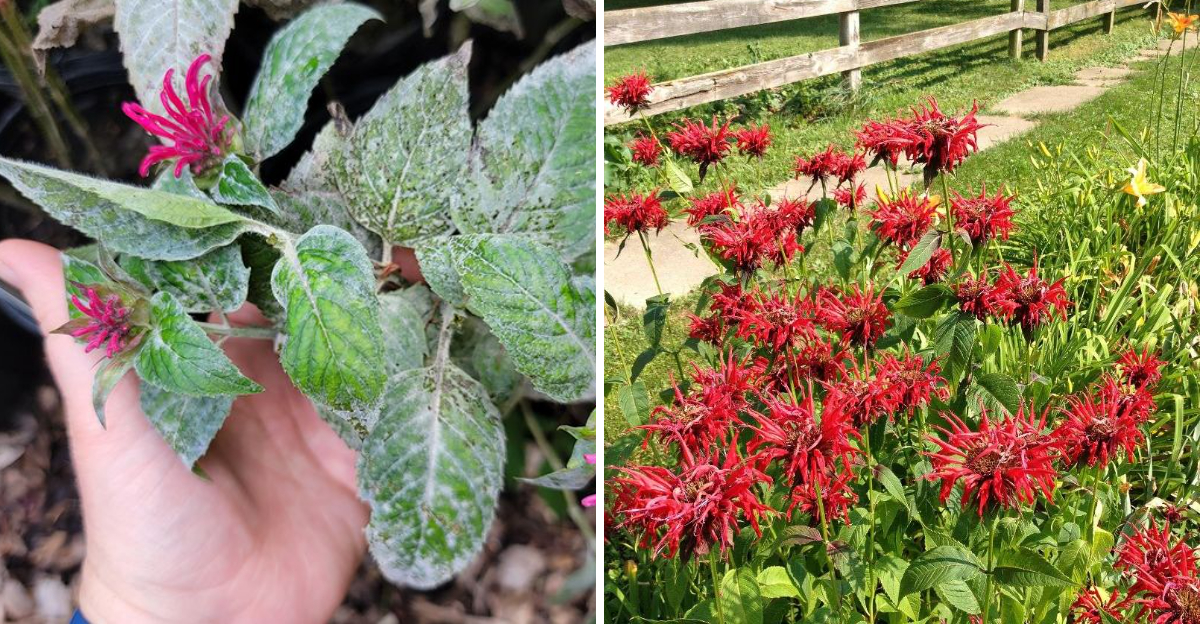
Few summer sights are as lively as bee balm in full bloom, its bold flowers buzzing with hummingbirds and pollinators across North Carolina gardens.
This vibrant perennial earns its popularity through brilliant color and long lasting seasonal interest, yet it faces a persistent challenge once warm weather settles in.
North Carolina’s humid summers create ideal conditions for powdery mildew, a fungal issue that can coat leaves in a pale film and weaken plants if left unchecked.
When airflow is limited and moisture lingers on foliage, the problem spreads quickly, turning a thriving display into a source of frustration.
Fortunately, prevention is both practical and effective. Choosing resistant varieties, spacing plants properly, improving circulation, and watering at the base instead of overhead can dramatically reduce risk.
With thoughtful care and early attention, your bee balm can remain strong and beautiful. A few smart habits ensure North Carolina gardeners enjoy healthy, colorful blooms all season long.
1. High Humidity Creates Ideal Conditions For Powdery Mildew
North Carolina summers are notoriously sticky, steamy, and relentless, and your bee balm feels every bit of it.
The state’s average summer humidity regularly climbs above 70 percent, which creates a near-perfect environment for the fungal spores behind powdery mildew to settle and multiply on plant surfaces.
Unlike what most gardeners assume, this fungus does not need rain or puddles to get started. It only needs moisture-laden air hanging around the leaf surface for extended periods.
Powdery mildew is caused by several species of fungi in the order Erysiphales, and Monarda, the genus bee balm belongs to, is especially susceptible.
The spores travel through air currents, landing on leaves and germinating quickly when humidity stays high and temperatures sit between 60 and 80 degrees Fahrenheit.
North Carolina checks every single one of those boxes from late spring through early fall. Gardeners in the Piedmont and coastal regions of North Carolina tend to see the worst outbreaks because those areas trap humid air between tree lines and structures.
Understanding that humidity itself is the trigger, not just rainfall, changes how you approach prevention.
Managing airflow and moisture around your plants becomes just as important as any spray treatment you might reach for.
2. Poor Air Circulation Increases Infection Risk
Picture a crowd of people packed into a small room with no open windows. Stuffy, warm, and uncomfortable, right? That is exactly what your bee balm experiences when plants grow too close together without room to breathe.
Poor air circulation is one of the biggest contributing factors to powdery mildew outbreaks, and it is a problem that builds gradually as your garden fills in over the growing season.
When bee balm foliage becomes dense and overlapping, moisture from the surrounding air and morning dew cannot evaporate properly.
That trapped moisture creates a humid microclimate right at leaf level, which is precisely where fungal spores love to land and grow.
The problem compounds itself because mildew spreads through airborne spores, and stagnant air keeps those spores circulating right where they started rather than dispersing away from the plant.
Research from plant pathology studies consistently shows that gardens with dense plantings and limited airflow report significantly higher rates of fungal disease compared to gardens with intentional spacing.
The fix is surprisingly straightforward. Thinning out crowded stems, removing interior growth that blocks airflow, and planting bee balm away from walls or fences that block wind all make a measurable difference.
Good airflow is one of the simplest and most effective tools a gardener has against this frustrating disease.
3. Powdery Mildew Thrives In Warm But Not Wet Conditions
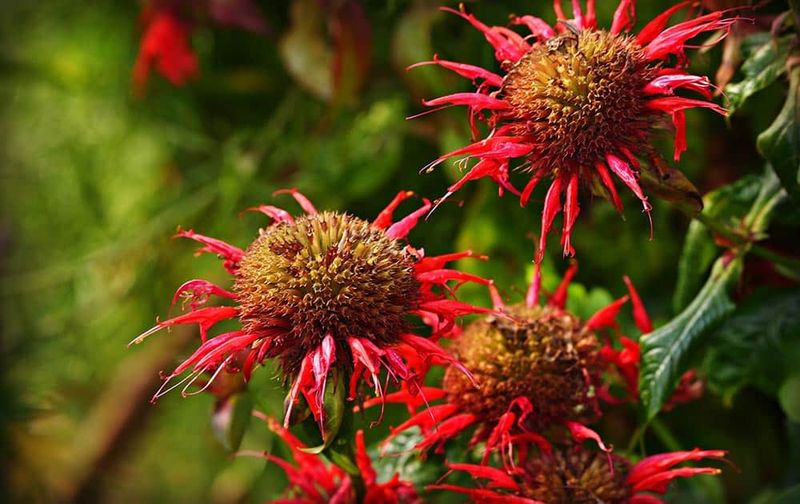
Here is something that surprises almost every gardener the first time they hear it. Powdery mildew actually prefers dry leaf surfaces over wet ones.
Most people assume fungal diseases need rain and soggy conditions to spread, but powdery mildew breaks that rule entirely.
High humidity in the surrounding air is all this fungus needs, and wet leaves can actually slow its spore germination rather than speed it up.
The sweet spot for powdery mildew development is warm daytime temperatures between 70 and 80 degrees Fahrenheit combined with nighttime temperatures that drop just enough to increase relative humidity without causing actual rainfall.
Sound familiar? That describes a typical North Carolina summer evening almost perfectly.
The fungal spores germinate and spread most aggressively during dry, warm stretches when gardeners are least worried about fungal threats.
This unique biology explains why powdery mildew can explode on your bee balm during a dry summer just as easily as during a rainy one. Overhead irrigation actually has a complicated relationship with this disease.
While wet foliage from irrigation is not ideal, it does not feed powdery mildew the way high ambient humidity does.
Focusing on reducing surrounding humidity through smart planting and spacing is far more effective than trying to control rainfall. Knowing this changes your entire prevention strategy.
4. Shade And Dense Growth Make Bee Balm More Vulnerable
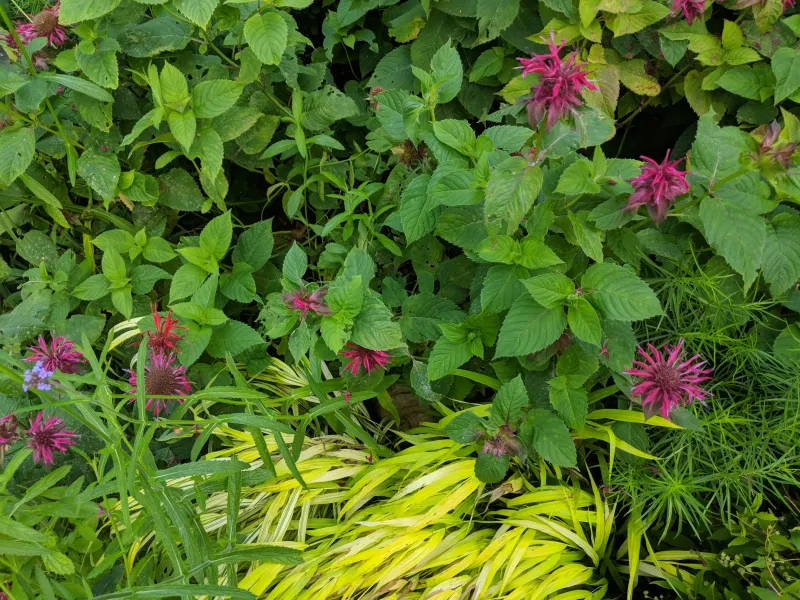
Bee balm is a sun lover at heart, and when it does not get enough light, it starts showing signs of stress in ways that open the door wide for fungal problems.
Shaded garden beds keep moisture on leaves longer because sunlight cannot dry the foliage quickly enough after morning dew or irrigation.
That extended moisture exposure gives powdery mildew spores more than enough time to take hold and begin colonizing leaf surfaces. Dense growth within the plant itself creates a similar problem.
Bee balm tends to spread aggressively through underground rhizomes, and if not divided or thinned regularly, the clump becomes a thick mass of stems where the inner foliage barely sees sunlight at all.
Those shaded interior leaves stay damp longer, receive less airflow, and become the first casualties of a mildew outbreak that then spreads outward to healthier growth.
Horticulture experts recommend that bee balm receive at least six hours of direct sunlight daily to stay vigorous and resist disease.
In North Carolina, this means thoughtful placement away from large trees, tall fences, and north-facing walls. Dividing established clumps every two to three years also helps maintain open, airy growth habits.
A well-lit, properly thinned bee balm plant is dramatically more resistant to powdery mildew than one struggling in a shaded, crowded corner of the yard.
5. Infected Leaves Develop White Or Gray Powdery Coating
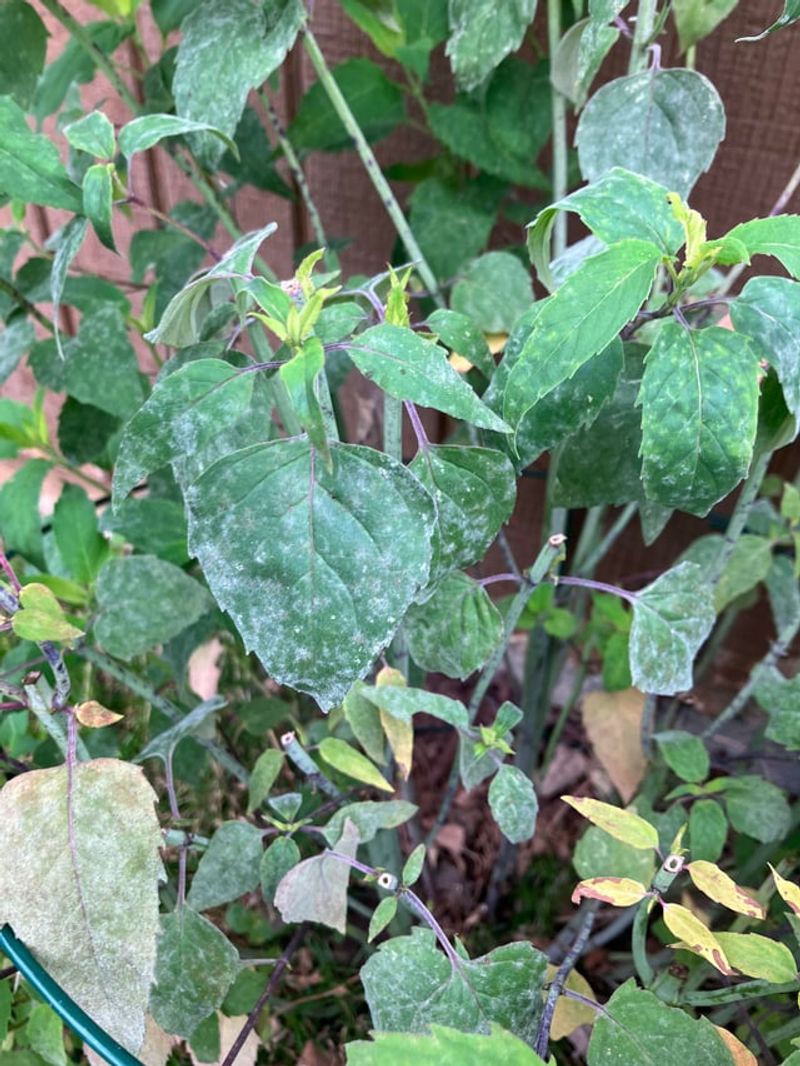
Spotting powdery mildew early is one of the most valuable skills a bee balm grower can develop.
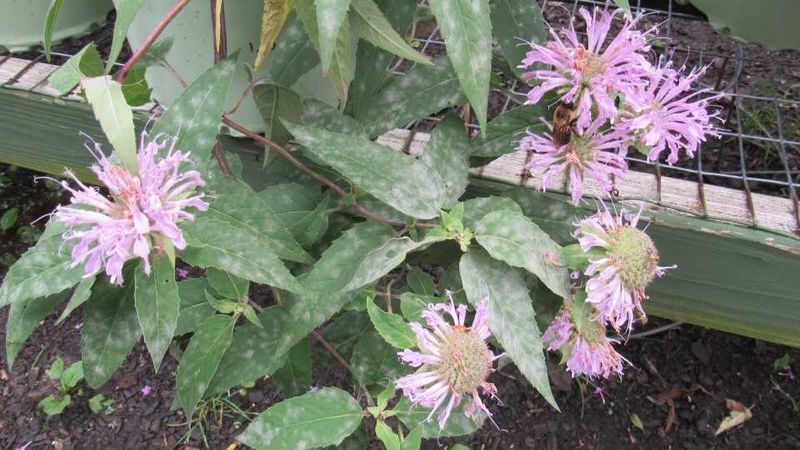
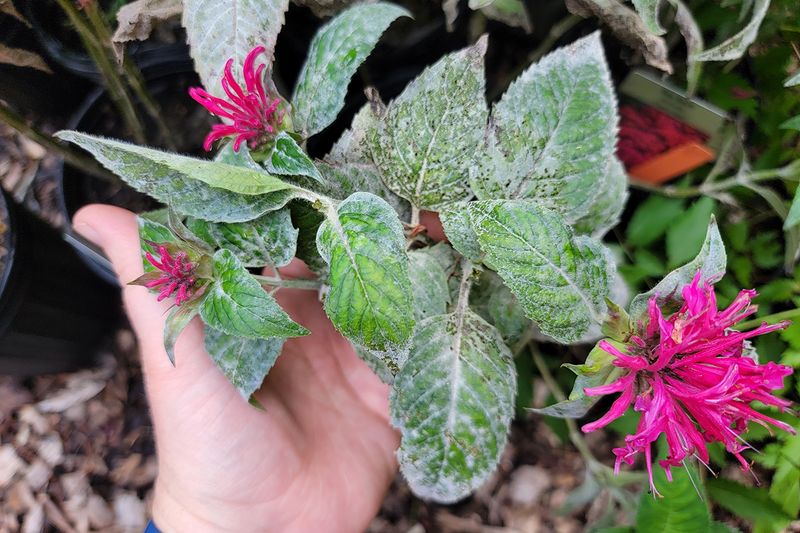
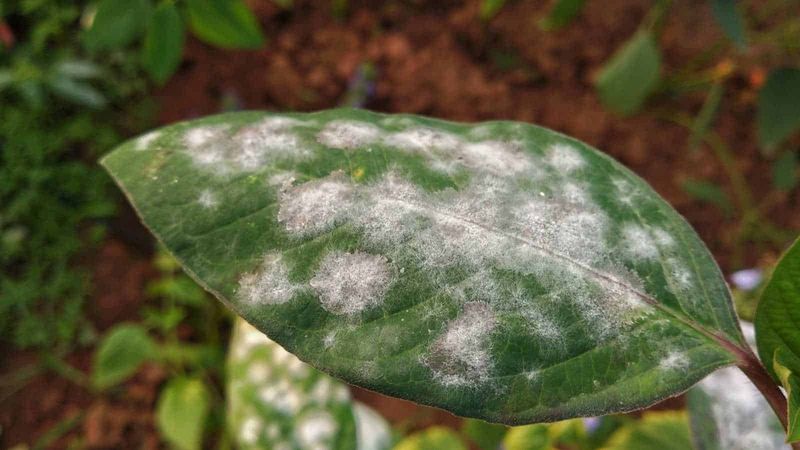
The first signs appear as small, circular patches of white or pale gray powder on the upper surface of leaves, looking almost like someone dusted them with flour.
These patches expand quickly and can cover entire leaves within days if conditions stay favorable.
Unlike some plant diseases that cause spots or lesions, powdery mildew produces that unmistakable chalky coating that sits right on the leaf surface.
As the infection progresses, leaves may begin to curl, yellow, or look generally stressed beneath the white coating.
The fungal mycelium actually grows on the outer surface of the leaf rather than inside the tissue, which is why it looks so visible and powdery.
Photosynthesis slows significantly on heavily coated leaves because sunlight cannot reach the leaf cells efficiently through the fungal layer.
Interestingly, the white coating you see is made up of the fungal mycelium and spores together. Those spores are constantly being released and carried by air currents to neighboring leaves and plants.
Catching the infection at the small-patch stage gives you the best chance of slowing its spread.
Regularly checking the underside and upper surface of leaves from midsummer onward is a smart habit for any North Carolina bee balm gardener who wants to stay ahead of the problem.
6. Severe Infection Reduces Flowering And Weakens Plants
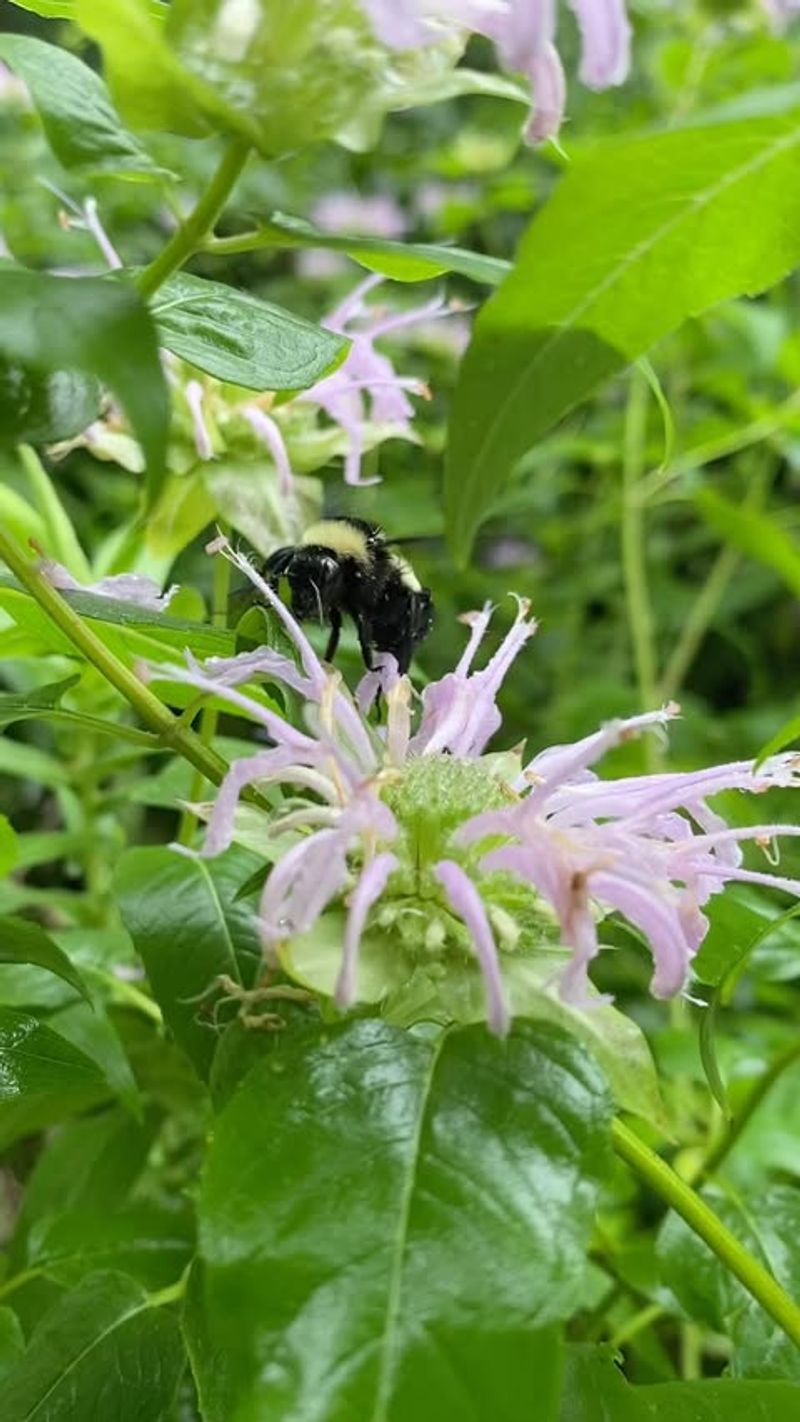
When powdery mildew gets a firm grip on a bee balm plant, the effects go far beyond cosmetic damage.
A heavily infected plant redirects energy away from flower production and toward basic survival, which means fewer blooms, shorter bloom periods, and flowers that look smaller and less vibrant than they should.
For gardeners who grow bee balm specifically to attract pollinators or simply enjoy its bold color display, a mildew-heavy season can be genuinely disappointing.
The physiological stress caused by a severe infection compounds over time. Leaves coated in fungal growth photosynthesize less efficiently, reducing the plant’s overall energy production.
With less energy available, the root system also suffers, making the plant less capable of absorbing water and nutrients from the soil.
This creates a cycle where the plant grows progressively weaker throughout the season, sometimes struggling to bounce back even after the mildew is addressed.
Perennial bee balm plants that experience repeated severe infections over multiple seasons can show a noticeable decline in overall vigor.
Clumps may shrink rather than expand, stems may become thinner, and flowering may become increasingly sparse year after year.
Addressing mildew early and consistently is not just about keeping plants looking good for one season. It is about protecting the long-term health and vitality of a plant that should thrive in your garden for many years to come.
7. Choosing Resistant Varieties Is The Most Effective Prevention
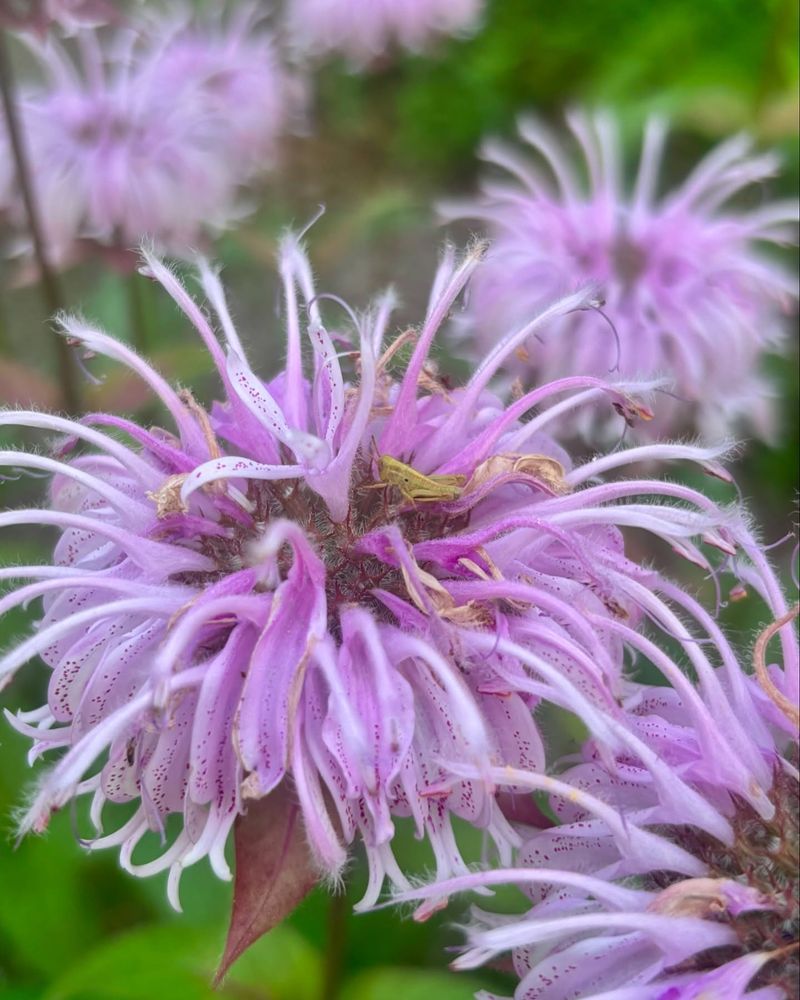
Plant breeders have done serious work over the past few decades to develop bee balm cultivars that shrug off powdery mildew far better than older varieties.
If you are starting fresh or replacing struggling plants, choosing a resistant variety is hands down the single most effective step you can take.
No spray, no special watering routine, and no soil amendment comes close to the protection built right into a well-bred plant’s genetics.
Several Monarda cultivars have earned strong reputations for mildew resistance backed by university trial data.
Varieties like ‘Jacob Cline,’ ‘Raspberry Wine,’ ‘Marshall’s Delight,’ ‘Violet Queen,’ and the Panorama series consistently perform well in humid climates similar to North Carolina’s.
These cultivars were specifically selected and bred for resistance to the Erysiphe cichoracearum and related fungi responsible for powdery mildew on Monarda.
Choosing a resistant variety does not mean you can ignore good gardening practices entirely. Resistant plants still benefit from proper spacing, sunlight, and smart watering habits.
But they give you a meaningful head start, especially during the peak mildew pressure of a hot, humid North Carolina August.
Local nurseries and cooperative extension offices in North Carolina often carry regionally tested cultivars that perform especially well in the state’s specific climate conditions.
Asking staff which varieties thrive locally is always a worthwhile conversation to have before you plant.
8. Proper Spacing Improves Airflow And Reduces Disease
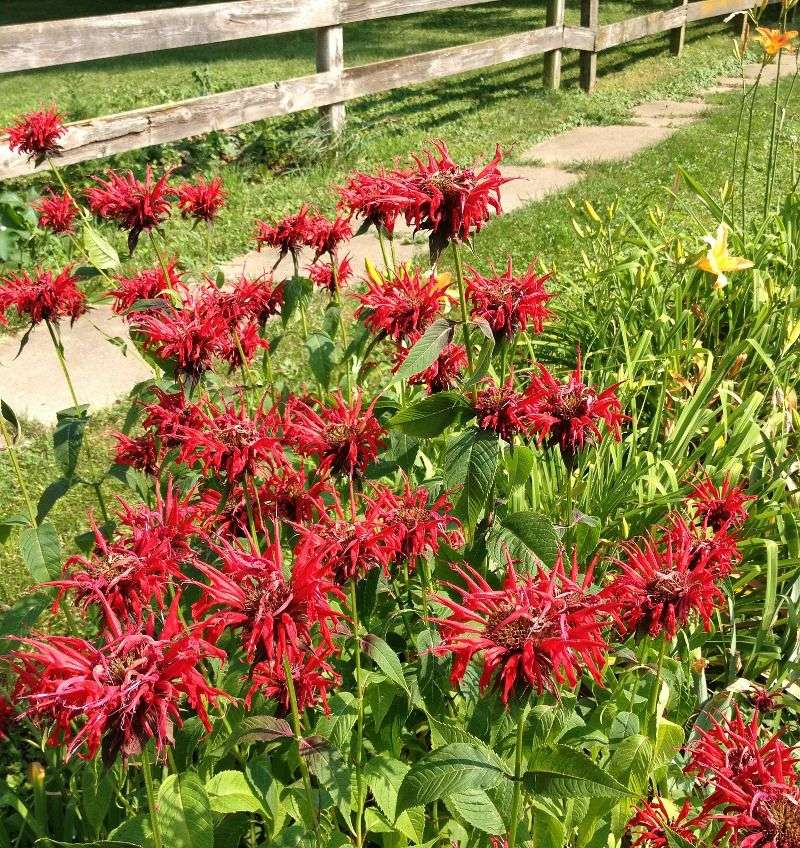
Giving your bee balm room to breathe is one of those simple, no-cost strategies that pays off season after season.
Planting too close together might seem efficient at first, especially when young plants look small and the garden bed feels sparse.
But bee balm grows quickly and spreads aggressively, and within a season or two, an underspaced planting becomes a dense, airless tangle that practically invites powdery mildew to move in.
Most horticultural guidelines recommend spacing bee balm plants 18 to 24 inches apart at minimum, with some larger cultivars needing up to 36 inches between plants.
This spacing allows air to move freely around and through the foliage, helping leaf surfaces dry faster after rain or heavy dew.
Faster drying means less time for fungal spores to find favorable conditions, which directly reduces infection rates even without any chemical intervention.
Beyond initial planting, ongoing thinning matters just as much. Each spring, take a few minutes to remove some of the new stems emerging from the outer edges of established clumps.
Keeping the center of the clump open by removing a few interior stems also dramatically improves internal airflow.
This annual habit keeps your bee balm looking full and lush from a distance while maintaining the open structure that makes fungal disease far less likely to take hold and spread through your garden.
9. Water At The Base Not Overhead
Watering habits matter more than most gardeners realize when it comes to managing powdery mildew.
Sprinklers and overhead watering systems that spray water across leaves create wet foliage that takes longer to dry, especially in the morning or evening when temperatures are cooler and evaporation slows down.
Wet foliage for extended periods raises the local humidity around the plant right where mildew spores are waiting to germinate.
Switching to drip irrigation or soaker hoses that deliver water directly to the soil at the base of the plant keeps leaves completely dry throughout the watering process.
This approach also reduces water waste since moisture goes straight to the root zone rather than evaporating off leaves or missing the target entirely.
Healthy, well-hydrated roots support stronger overall plant growth, which helps bee balm resist stress from fungal pressure more effectively. Timing also plays a big role.
If overhead watering is unavoidable, doing it early in the morning gives foliage the best chance to dry completely before temperatures cool in the evening.
Watering in the late afternoon or evening leaves leaves wet overnight, which is one of the worst conditions you can create for a plant already susceptible to mildew.
A simple shift in when and how you water can noticeably reduce mildew pressure across an entire growing season without spending a single dollar on treatments.
10. Remove And Dispose Of Infected Foliage Promptly
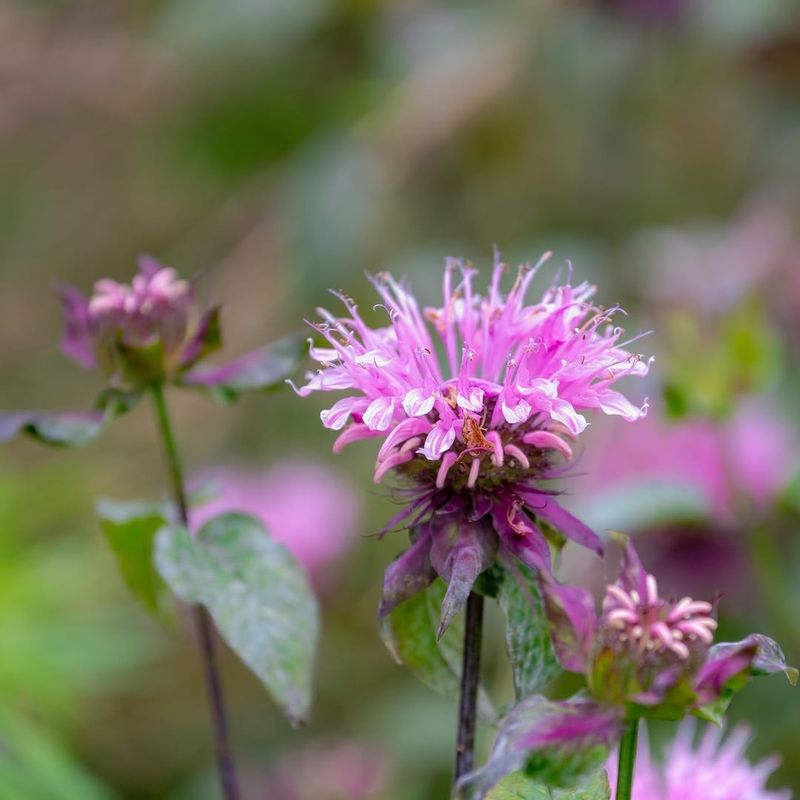
Spotting mildew on a leaf and leaving it in place is one of the most common and costly mistakes bee balm gardeners make.
Every infected leaf is a spore factory, releasing thousands of microscopic particles into the air with every breeze.
Removing infected foliage as soon as you notice it interrupts that cycle and significantly slows the spread of the disease to healthy parts of the plant and neighboring plants in your garden.
When removing infected leaves, always use clean, sharp pruning shears or scissors. Place the removed foliage directly into a sealed bag rather than dropping it on the ground near the plant.
Composting infected plant material is not recommended because home compost piles rarely reach temperatures high enough to break down fungal spores reliably.
Bagging and disposing of infected material in your regular trash is the safest approach to prevent reinfection.
At the end of the growing season, clearing away all fallen leaves and old stems from around your bee balm is equally important.
Fungal spores can survive on plant debris through winter and reinfect your plants as soon as conditions warm up the following spring.
A thorough garden cleanup in late fall, combined with a light layer of fresh mulch, removes that reservoir of overwintering spores and gives your bee balm a much cleaner, healthier start when the new season begins.