Privacy Plants That Hold Up To Michigan Snow And Wind
Creating privacy in Michigan is not just about picking something tall and green. The real challenge is finding plants that can stay standing and keep looking good after heavy snow, icy winds, and rough winter weather roll through.
Some plants grow fast but split apart under snow load. Others dry out in winter wind and lose the full look that made them useful in the first place.
That is why the best privacy plants for Michigan need more than height. They need strength, dense growth, and the ability to handle the state’s toughest seasons without turning into a yearly problem.
A smart choice can give your yard shelter, beauty, and a stronger sense of seclusion all year long. For homeowners who want privacy that lasts, the right plants are the ones that can face Michigan winter head on and still come out looking solid in spring.
1. Eastern Arborvitae
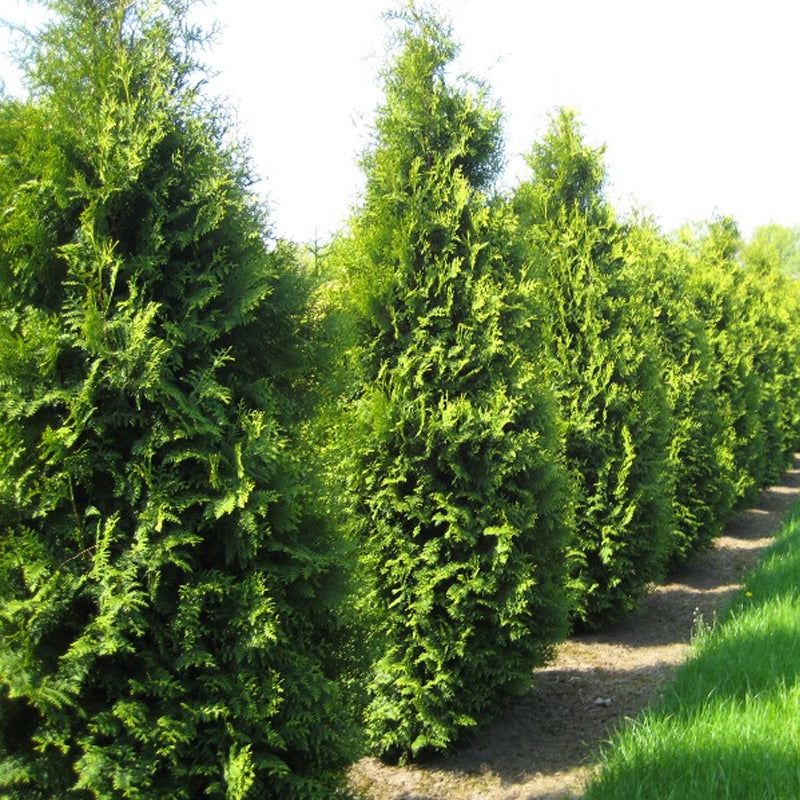
Few plants have earned their place in Michigan yards quite like the Eastern Arborvitae. Known scientifically as Thuja occidentalis, this native evergreen has been shielding homes from nosy neighbors and howling winter winds for generations.
It thrives in hardiness zones 3 through 7, which covers all of Michigan with room to spare.
What makes it such a standout choice is its naturally dense, columnar growth habit. Upright varieties like ‘Emerald Green’ and ‘Techny’ pack tightly together, forming a rich green wall that stays lush all year long.
That year-round color is a serious bonus when Michigan winters strip most other plants bare.
Snow is where many evergreens struggle, but arborvitae handles it better than most. Upright forms are especially good at shedding snow loads from their narrow profile.
That said, after a particularly heavy Michigan snowstorm, it is a smart habit to gently brush off heavy accumulation to keep branches from bending out of shape.
Spacing plants about three to five feet apart creates a seamless privacy screen within just a few growing seasons. Arborvitae also prefers moist, well-drained soil and full sun, both of which are easy to find in most Michigan landscapes.
Low maintenance, cold-hardy, and reliably beautiful, this plant is one of the best investments you can make for year-round backyard privacy.
2. Black Hills Spruce
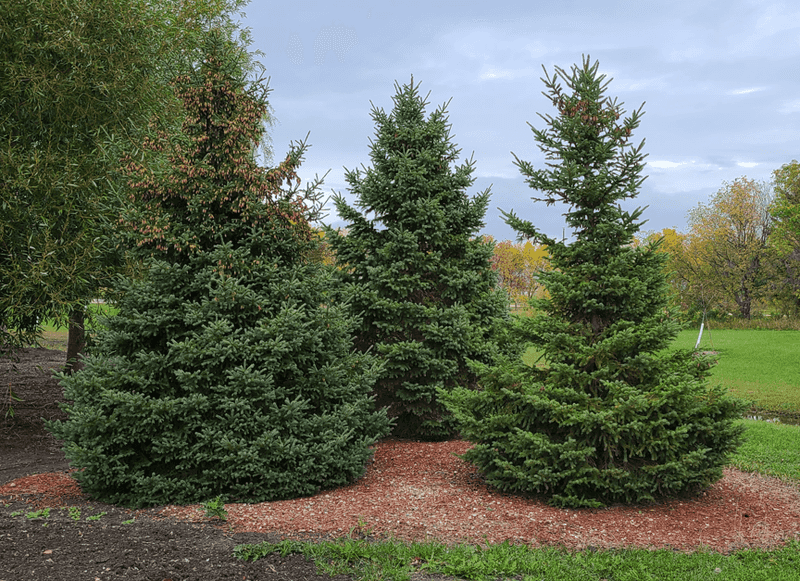
If you want a privacy plant that laughs in the face of Michigan winters, Black Hills Spruce deserves serious attention. Picea glauca var. densata is a compact, slow-growing spruce variety that was built for cold, windy climates.
It is native to the Black Hills region of South Dakota, where brutal winters are just a fact of life.
What separates this spruce from others is the remarkable density of its branching. The branches are strong, tightly packed, and naturally resistant to heavy snow loads.
While other trees might bend or snap under a thick Michigan snowfall, Black Hills Spruce holds its shape season after season without a lot of fuss from you.
Growing between 15 and 25 feet tall at maturity, with a spread of 10 to 12 feet, it creates a solid visual barrier that works beautifully as a windbreak or privacy screen. Its symmetrical, pyramidal form also means it looks polished and intentional in any yard without needing constant pruning.
Wind resistance is another major strength. The dense canopy actually deflects strong gusts rather than catching them, which helps protect the rest of your yard too.
Plant these in a row along a property line in Michigan and you will have a tough, attractive, year-round screen that requires very little care. Truly one of the most dependable privacy trees available for Michigan homeowners.
3. Eastern White Pine
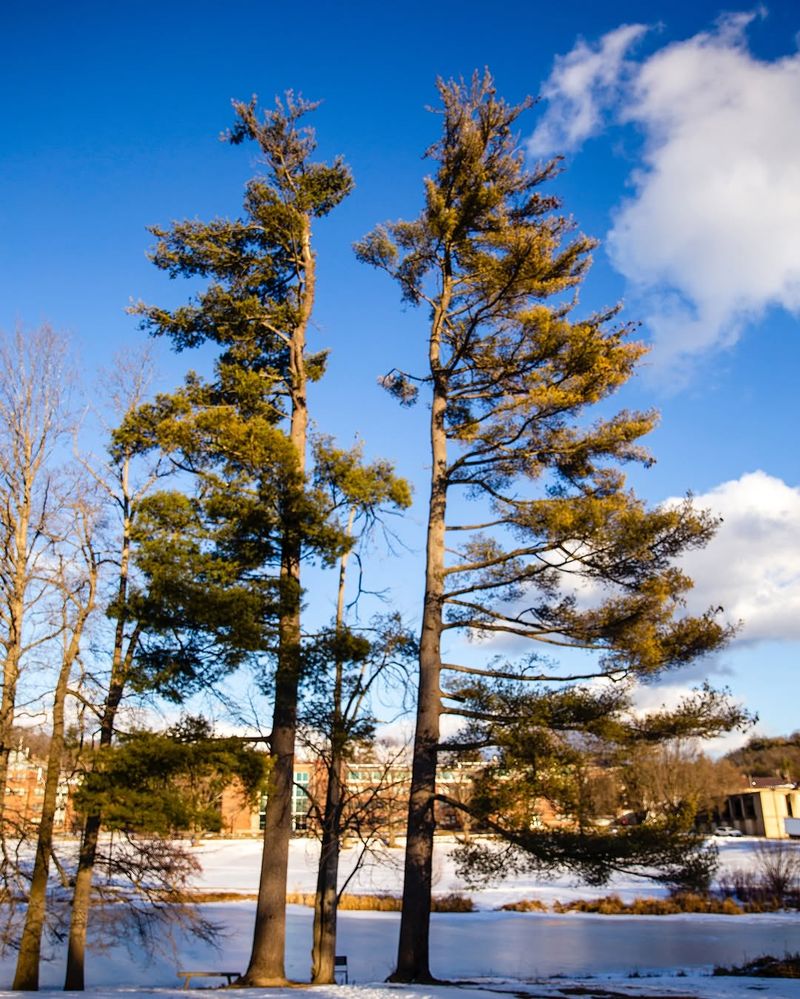
There is something almost magical about watching an Eastern White Pine handle a Michigan snowstorm.
While other trees stiffen up and risk snapping, the flexible branches of Pinus strobus simply bend gracefully under the weight and spring back once the snow slides off.
That flexibility is one of its greatest survival traits in a state known for brutal winter weather.
Eastern White Pine grows quickly and can reach impressive heights of 50 to 80 feet at maturity, making it a top pick for creating large-scale privacy screens.
Its soft, blue-green needles grow in bundles of five and give the tree a feathery, elegant texture that looks stunning year-round. Michigan gardeners love it because it adds real drama and height to any landscape.
This pine is native to Michigan, which means it is perfectly adapted to the local soil conditions, rainfall patterns, and temperature swings. It thrives in zones 3 through 8 and prefers full sun with well-drained soil.
Once established, it is remarkably self-sufficient and rarely needs extra attention.
For best results as a privacy screen, plant Eastern White Pines in a staggered double row about eight to ten feet apart. This creates a layered, natural-looking barrier that fills in beautifully over time.
Wind resistance is solid too, as the soft needles and flexible branches work together to handle even the strongest Great Lakes gusts with ease.
4. Common Juniper (Upright Forms)
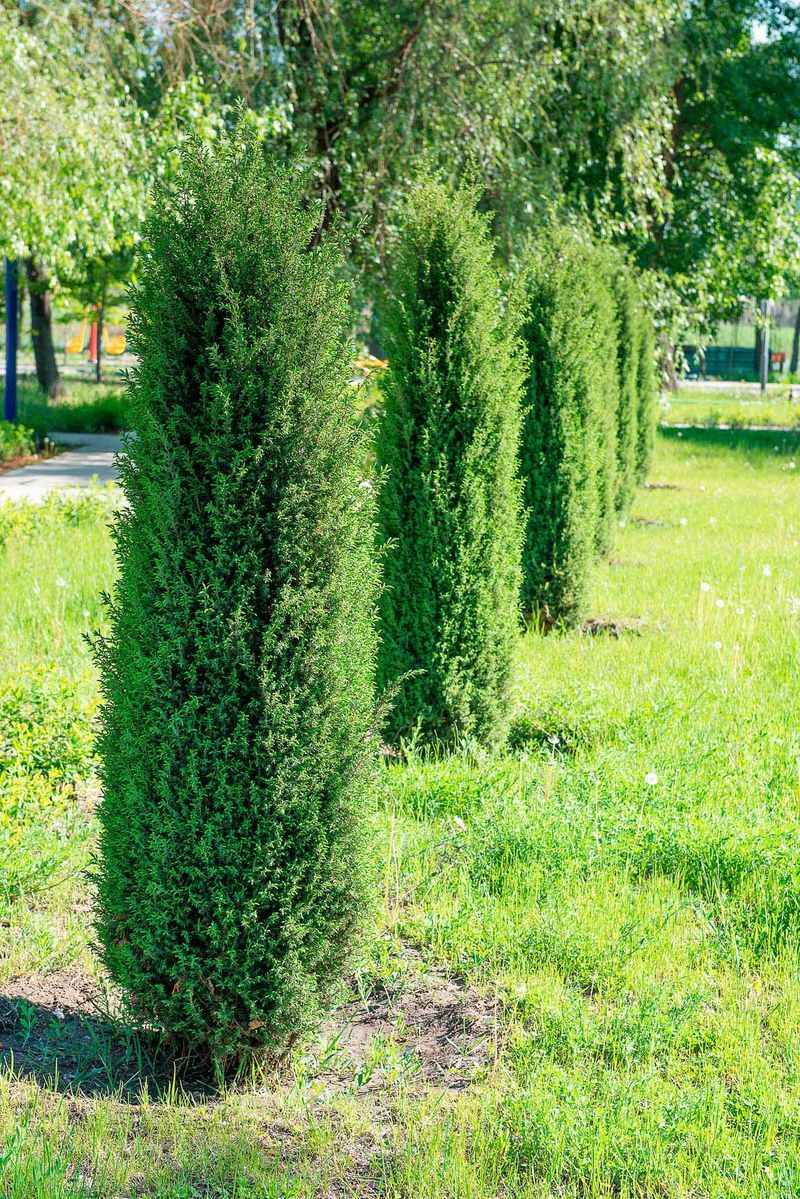
Tough as nails and ready for anything Michigan throws at it, the Common Juniper is a plant that truly earns its keep.
Juniperus communis has been growing wild across North America for thousands of years, and upright cultivars bring that same rugged resilience into a tidy, landscape-friendly package.
Hardy from zones 2 through 6, it handles Michigan cold without flinching.
One of the biggest advantages of upright juniper forms is their tolerance for difficult conditions. Sandy soil, clay soil, drought, and bitter wind are all situations where this plant simply keeps going.
Michigan yards often deal with dry stretches in summer and brutal cold in winter, and juniper takes both in stride without demanding a lot of extra care from you.
Upright varieties grow into a dense, columnar shape that provides reliable screening without the sprawling spread of low-growing types.
The blue-green foliage stays attractive all winter long, adding color to a landscape that might otherwise look dull and gray during Michigan’s long cold season.
Some varieties even develop attractive blue berry-like cones that birds love.
Snow rarely causes serious problems for upright junipers because their narrow profile sheds accumulation naturally. Wind damage is minimal too, thanks to their flexible yet sturdy stems.
Spacing them four to six feet apart along a fence line or property edge creates a neat, low-maintenance privacy hedge that will outlast many other planting choices in Michigan landscapes by decades.
5. Red Osier Dogwood
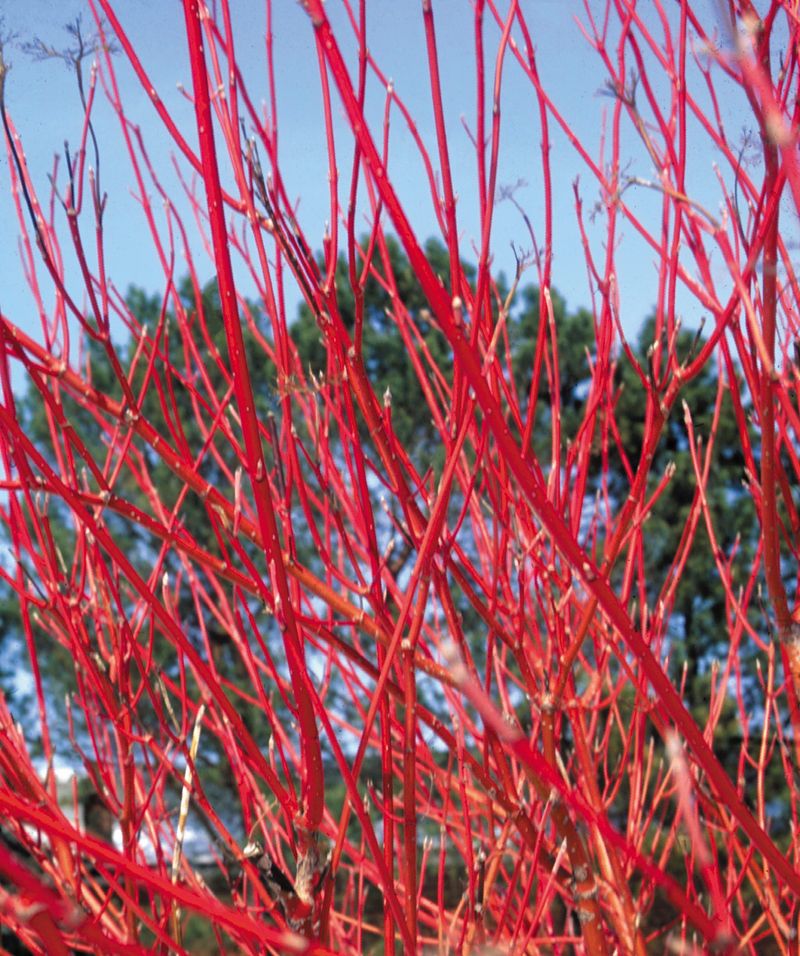
When everything else in a Michigan yard looks brown and lifeless in January, Red Osier Dogwood puts on a show.
Cornus sericea is famous for its brilliant red stems that practically glow against a snowy backdrop, making it one of the most visually exciting plants you can add to a winter landscape.
Beyond the looks, though, this shrub is a seriously tough performer.
Its stems are naturally flexible, which is a huge advantage in a state where heavy snow and ice storms are common. Instead of snapping under pressure, the branches bend and then bounce back once conditions ease up.
That resilience means you are not out in the yard after every storm assessing the damage like you might be with stiffer-branched plants.
Red Osier Dogwood spreads through underground runners, naturally forming dense thickets over time. Planted in a row or grouping, it creates a layered, multi-stem privacy screen that fills in quickly and looks lush from spring through fall.
Seasonal screening is excellent, and the winter stem color keeps it interesting even after the leaves drop in autumn.
This native Michigan shrub also thrives in wet or poorly drained soils where other plants struggle. It handles full sun and part shade equally well.
For the best stem color, cut a few of the oldest stems back every few years to encourage fresh, brighter growth. A low-effort plant with high-impact results throughout every season in Michigan.
6. Ninebark
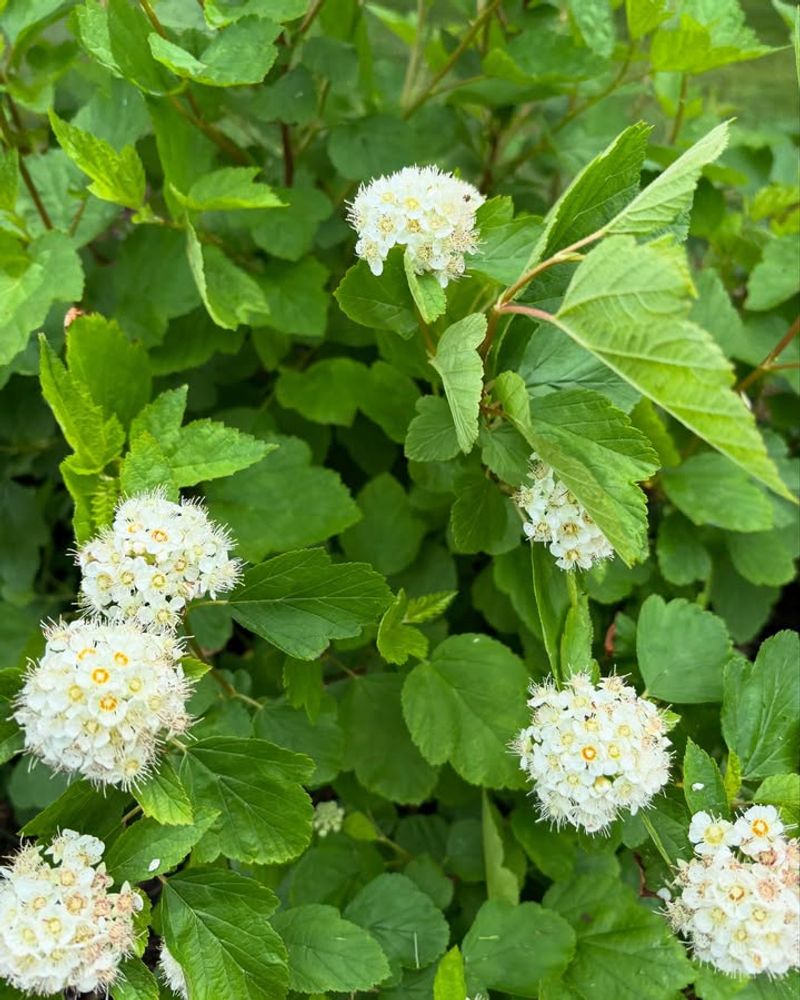
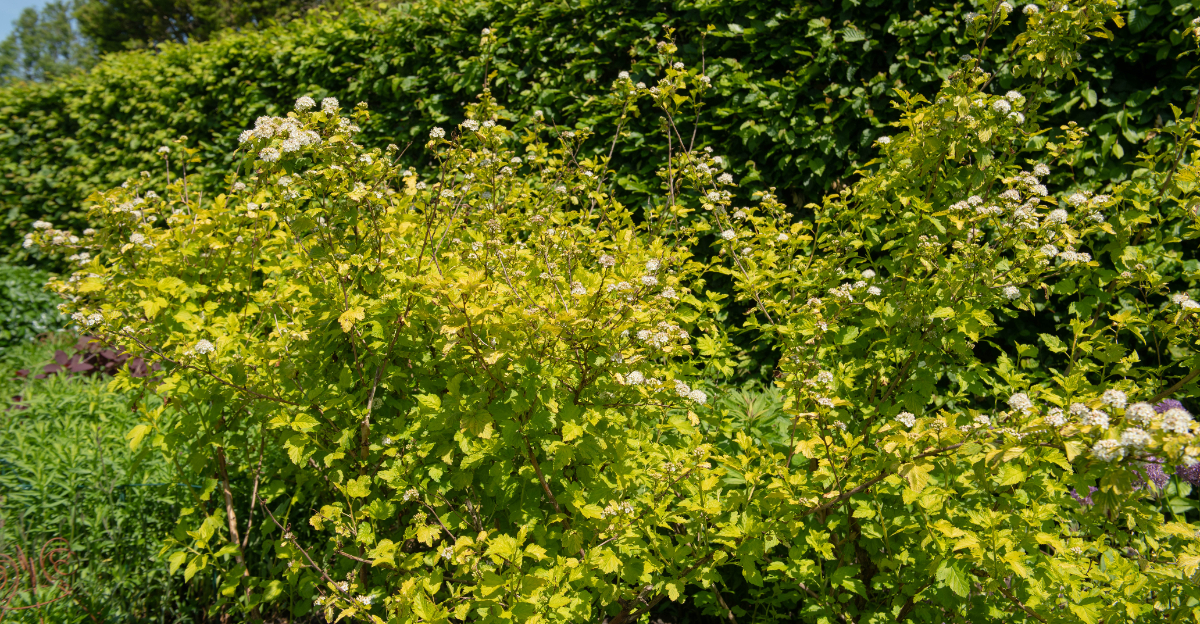
Ninebark might just be the most underrated shrub in Michigan landscaping. Physocarpus opulifolius is a native powerhouse that tolerates wind, snow, drought, poor soil, and just about every other challenge the Great Lakes climate can throw at it.
Gardeners who plant it quickly wonder how they ever managed without it.
The branching structure of Ninebark is one of its best assets when it comes to winter survival. Strong, arching stems hold up well under snow loads without the kind of breakage you might see in more brittle shrubs.
Even after a heavy Michigan ice storm, Ninebark tends to come through looking better than most of its neighbors in the landscape.
Growth is vigorous and relatively fast, with mature plants reaching six to ten feet tall and wide. That size makes it genuinely useful as a privacy screen, especially when planted in a row along a property boundary.
Popular varieties like ‘Diablo’ and ‘Coppertina’ also bring rich burgundy or coppery foliage that makes the hedge look stunning from spring through fall.
Winter interest comes from the plant’s signature peeling bark, which reveals layers of warm cinnamon and tan tones beneath. Even without leaves, a row of Ninebark has visual character that most other shrubs simply cannot match.
Add in its near-zero maintenance requirements and its love for Michigan’s native soil conditions, and you have one of the smartest privacy planting choices available in the state.
7. American Cranberrybush Viburnum
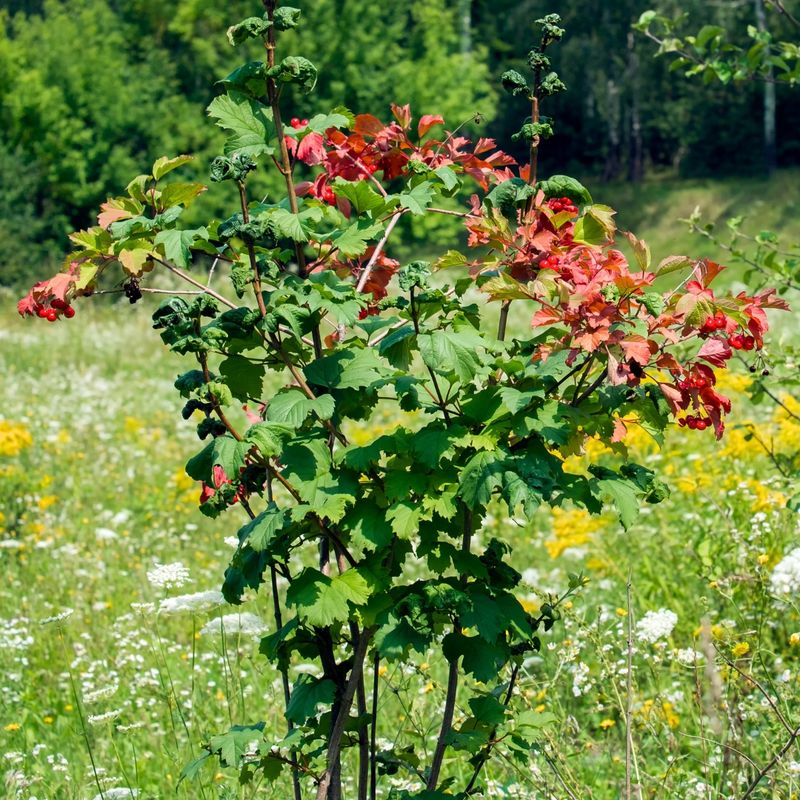
Bright red berry clusters hanging from snow-dusted branches is one of Michigan’s most beautiful winter sights, and American Cranberrybush Viburnum delivers exactly that.
Viburnum trilobum is a native shrub that grows into a dense, multi-stemmed form reaching 8 to 12 feet tall, making it a naturally effective privacy hedge when planted in a row along a yard edge.
Cold hardiness is exceptional, with this viburnum rated for zones 2 through 7. Michigan winters, even the brutal Upper Peninsula variety, are well within its comfort zone.
The flexible branch structure bends under snow weight without snapping, and the plant bounces back reliably once conditions improve. You will not be replacing broken plants after every hard winter storm.
From a privacy standpoint, the dense, layered branching creates a solid visual screen from spring through fall when the foliage is full and lush.
Even in winter, the multi-stem form and persistent berry clusters provide enough visual structure to define boundaries and block sightlines.
Birds absolutely love the berries, so your privacy hedge doubles as a wildlife magnet. Spring brings gorgeous white flower clusters that attract pollinators, and fall foliage turns shades of red and orange before dropping.
Planting American Cranberrybush Viburnum about five to six feet apart creates a continuous hedge that fills in naturally over a few seasons.
It prefers moist, well-drained soil and full to part sun, both easy to find across Michigan landscapes.
8. Serviceberry (Multi-Stem Form)
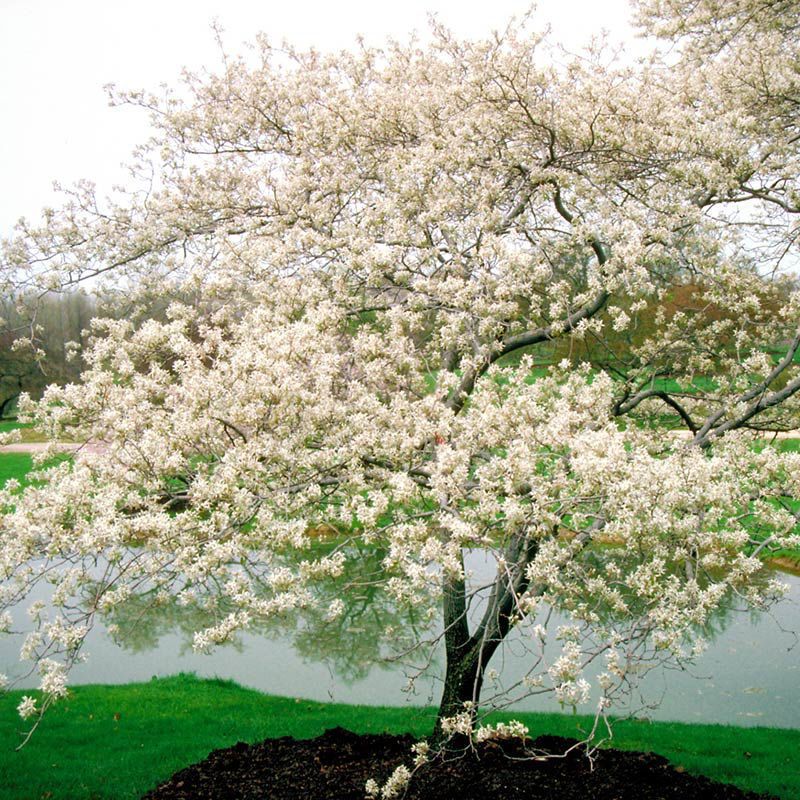
Serviceberry is one of those plants that surprises people with how much it can do. Amelanchier canadensis in its multi-stem form creates a naturally dense thicket of upright branches that works beautifully as a privacy screen along Michigan property lines.
Most folks plant it for the spring flowers, but the structure it provides year-round is what really makes it valuable.
The multi-stem growth habit is key to its snow and wind performance. Rather than one central trunk that could be vulnerable to storm damage, dozens of flexible stems share the load.
Heavy Michigan snowfall settles across the branching without causing the kind of catastrophic breakage that can ruin a single-trunk tree. The plant simply flexes and recovers.
Growing 15 to 25 feet tall at maturity, a row of multi-stem Serviceberry creates a layered, naturalistic screen that looks right at home in Michigan’s landscape. White spring blossoms appear before the leaves, creating a stunning early-season display.
Summer brings sweet, edible berries that birds and people both enjoy, and fall delivers fiery orange and red foliage that rivals any ornamental tree.
Serviceberry adapts to a wide range of Michigan soil conditions, from moist lowlands to slightly drier upland sites. It handles full sun and part shade without complaint.
Spacing plants six to eight feet apart encourages them to knit together over time into a continuous, wildlife-friendly privacy screen that rewards you with four seasons of beauty and reliable year-round structure.