8 Privacy Plants That Thrive In North Carolina Heat And Humidity
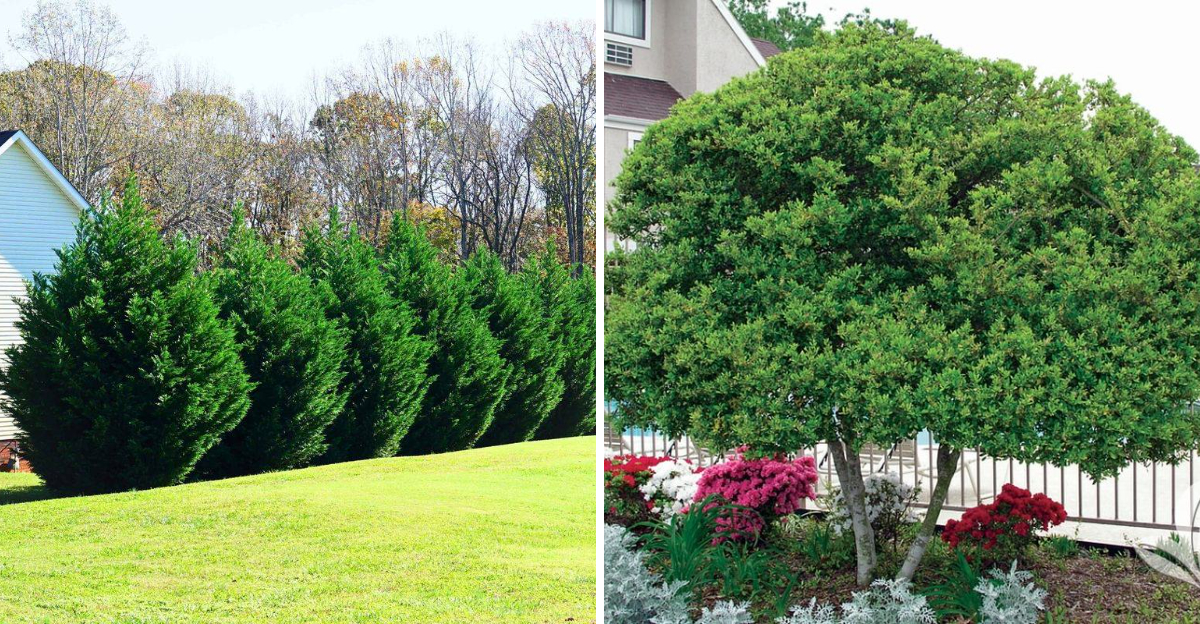
If you’ve ever felt like your North Carolina backyard was a bit too “neighborly” during a backyard barbecue, you aren’t alone.
Between the rising humidity of the Piedmont and the sandy stretches of the coast, finding a privacy screen that doesn’t wilt under our grueling, sticky summers is a true challenge.
Many popular hedges simply can’t handle the Tar Heel State’s “see-saw” rainfall and relentless heat.
Fortunately, a handful of rugged, evergreen powerhouses thrive in these exact conditions, offering a lush, living wall that blocks out the world without demanding your entire weekend.
1. Wax Myrtle Forms A Fast Native Privacy Screen
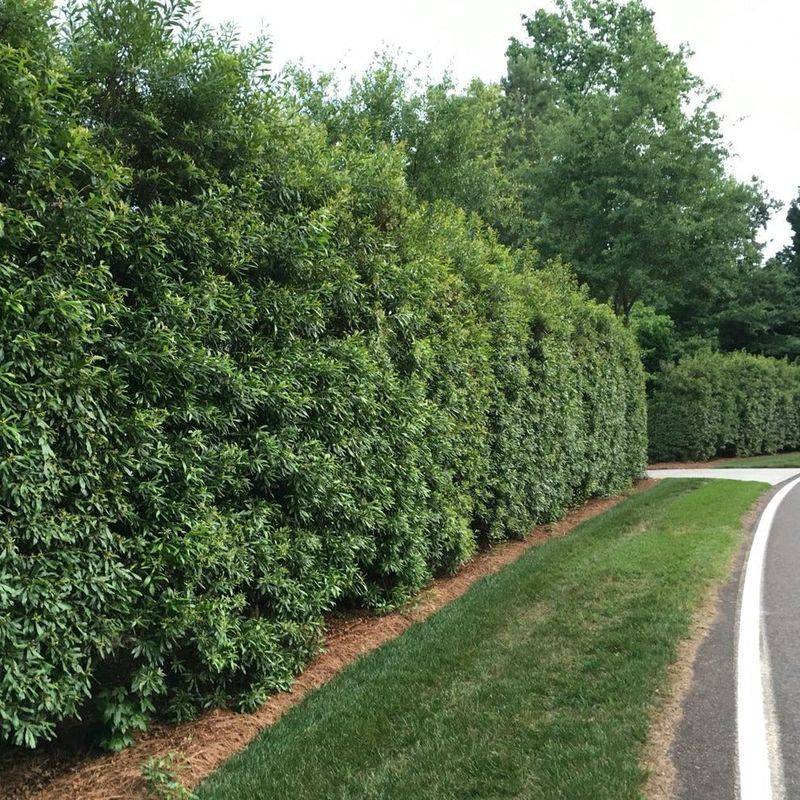
Few plants earn their place in a North Carolina yard quite as quickly as Wax Myrtle.
Native to the Southeast, this fast-growing evergreen shrub can shoot up several feet in a single growing season under the right conditions, making it one of the most practical choices for homeowners who want results without a long wait.
Wax Myrtle handles the heat and humidity that North Carolina summers dish out without missing a beat.
It tolerates a wide range of soils, from sandy coastal ground to heavy clay found in the Piedmont, and it holds up through both wet spells and short dry stretches.
The aromatic gray-green foliage stays on the plant year-round, giving you consistent coverage even in January when other plants look bare.
For privacy purposes, planting Wax Myrtle about six to eight feet apart encourages the shrubs to fill in and form a thick, natural wall over time.
Full sun brings out the densest growth, though it tolerates light shade reasonably well.
Occasional shaping helps keep the screen tidy, but heavy pruning is not required.
Wildlife, including birds, appreciate the small waxy berries that appear in fall and winter, adding an extra layer of value to what is already a hardworking, low-maintenance native plant well suited to North Carolina landscapes.
2. Eastern Red Cedar Handles Tough Conditions With Ease
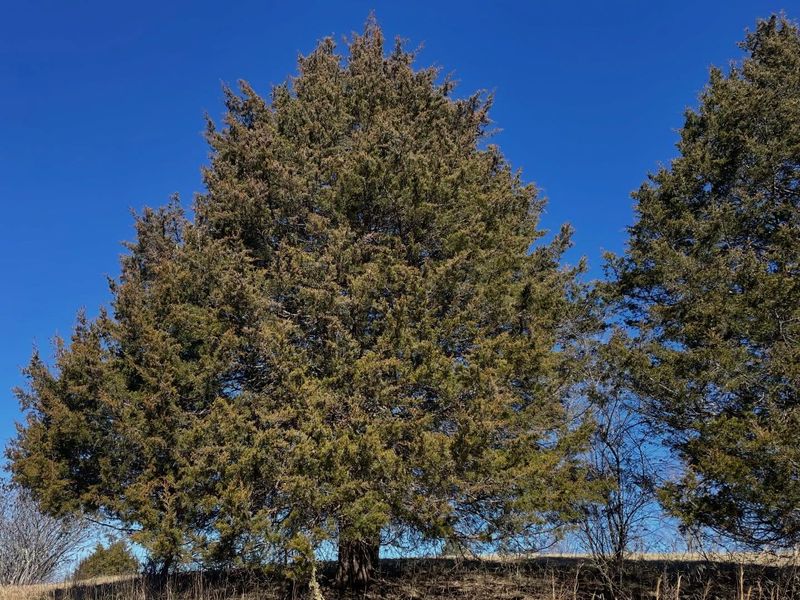
Rocky slopes, compacted clay, sandy ridgelines – Eastern Red Cedar seems almost indifferent to whatever the soil throws at it.
Across North Carolina, from the mountains to the coast, this native evergreen tree has been providing shelter, screening, and windbreaks for generations, and its reputation for toughness is completely earned.
Eastern Red Cedar grows at a moderate pace, typically adding one to two feet per year once established.
The dense, scale-like foliage stays deep green through summer heat and holds its color through cold winters, making it a reliable year-round privacy option.
It tolerates drought reasonably well after the first couple of seasons, which is a real advantage during North Carolina’s occasional dry spells in late summer.
For a privacy screen, spacing trees about six to eight feet apart creates a solid wall of foliage over several years. Full sun is where this tree truly thrives, so avoid shaded spots if dense coverage is the goal.
One thing worth noting is that Eastern Red Cedar can be a host plant for cedar-apple rust, which may affect nearby apple trees, so keep that in mind when planning placement.
Birds are drawn to the small blue berries the female trees produce, giving your yard an added wildlife benefit alongside excellent privacy screening throughout the year.
3. American Holly Creates Dense Evergreen Privacy
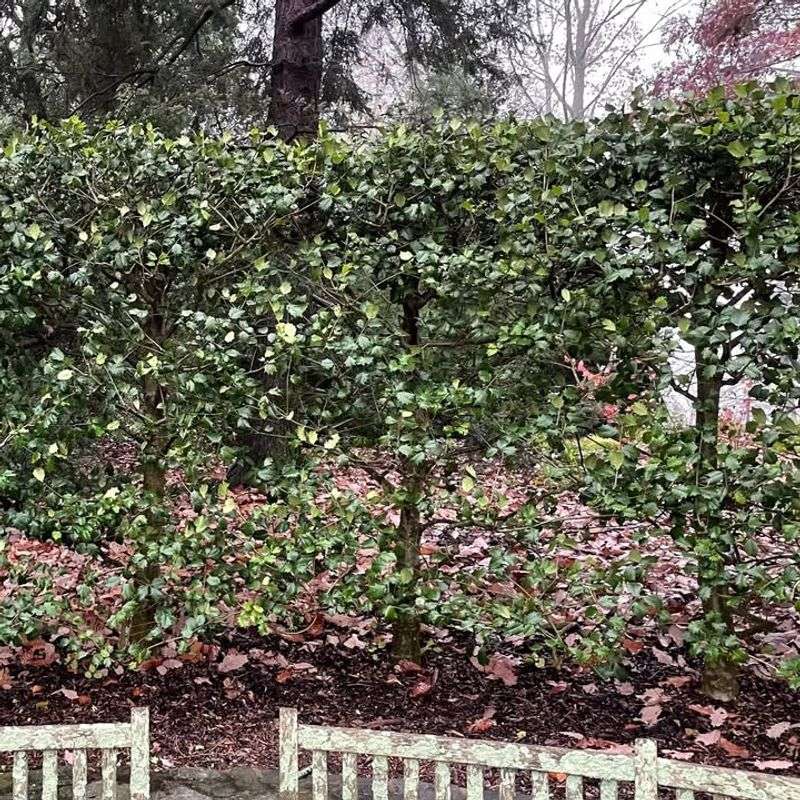
Walk through almost any older North Carolina neighborhood and you are likely to spot an American Holly standing tall near a property line, its glossy, spiny leaves catching the light year-round.
Native to the eastern United States, this tree has been used as a natural barrier and landscape anchor for a very long time, and for good reason.
American Holly grows into a dense, pyramidal tree that can reach 15 to 30 feet in height at maturity, though growth is relatively slow compared to some other options on this list. The trade-off is a plant that builds serious structural density over time.
The thick canopy of stiff, spiny leaves creates a screen that is difficult to see through and even harder to push through, which adds a secondary security benefit beyond simple visual privacy.
North Carolina’s humidity suits American Holly well, and it adapts to a range of soil types, including slightly acidic soils common across much of the state.
It handles both full sun and partial shade, giving gardeners flexibility in placement.
To get berries – those cheerful red clusters that appear in fall and winter – you will need at least one male tree planted near your female trees.
Spacing plants about eight to ten feet apart gives each tree room to develop its natural shape while still forming an effective continuous screen.
4. Southern Wax Myrtle Fills Space Quickly
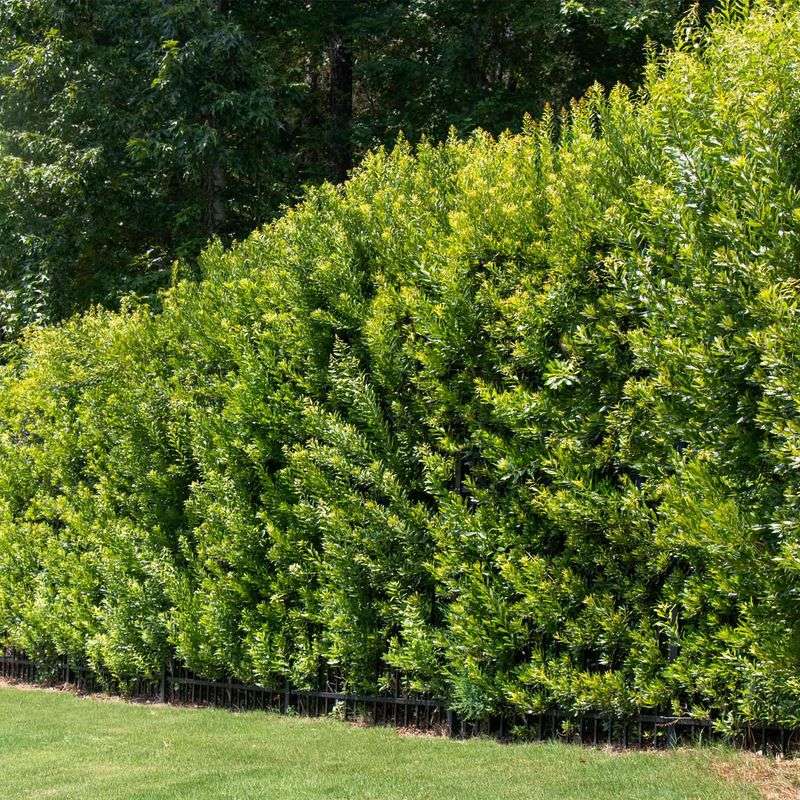
Gardeners who need to cover a lot of ground in a short amount of time often turn to Southern Wax Myrtle as their first call.
Closely related to the standard Wax Myrtle, this variety tends to grow with even more vigor in the warm, humid conditions that define much of North Carolina’s growing season, spreading wide and filling gaps with impressive speed.
Southern Wax Myrtle can reach heights of ten to fifteen feet if left unpruned, making it suitable for taller screens where you need to block second-story sightlines or create a true visual wall along a property boundary.
The foliage has that same pleasant, bayberry-like fragrance that makes working around it in the garden a genuinely enjoyable experience.
It also fixes nitrogen in the soil, which can be a quiet bonus in nutrient-poor planting sites.
Wet soils do not discourage Southern Wax Myrtle the way they might harm other plants. In fact, it handles poorly drained areas that would spell trouble for junipers or arborvitae, making it a flexible solution for North Carolina properties with low spots or soggy corners near drainage swales.
Pruning twice a year – once in late winter and again in midsummer – keeps the plant tidy and encourages denser branching throughout. Plant it in full sun for the most compact, dense growth habit over time.
5. Carolina Cherry Laurel Builds Thick Evergreen Coverage
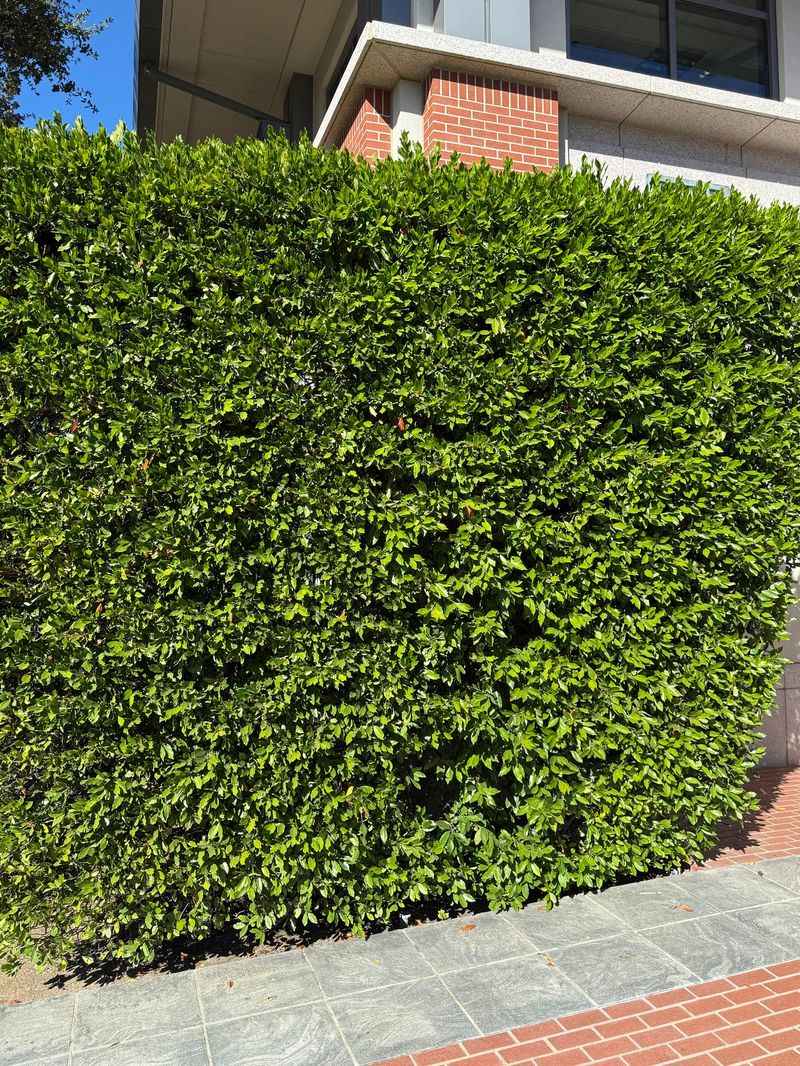
Humidity does not slow Carolina Cherry Laurel down one bit – if anything, the warm, moist summers across North Carolina seem to suit it just fine.
Known botanically as Prunus caroliniana, this native evergreen shrub or small tree produces some of the glossiest, darkest green foliage you will find on any privacy plant, giving hedges a polished, well-maintained appearance even without frequent trimming.
Growth rates are notably fast, often reaching two to three feet per year under good conditions, which means a newly planted row can develop into a functional privacy screen within two to three growing seasons.
The dense branching pattern fills in from the base upward, reducing the bare-legged look that plagues some faster-growing trees.
Small white flower clusters appear in late winter and early spring, followed by small black berries that birds find attractive.
One practical consideration is that Carolina Cherry Laurel can spread by seed, so removing berry clusters before they drop can help prevent unwanted seedlings from popping up nearby.
It handles both full sun and partial shade, which makes it one of the more versatile options for North Carolina yards with mixed light conditions along fence lines or property edges.
Spacing plants about five to six feet apart encourages them to knit together into a continuous wall of coverage that holds its density throughout the year, even during the hottest stretches of summer.
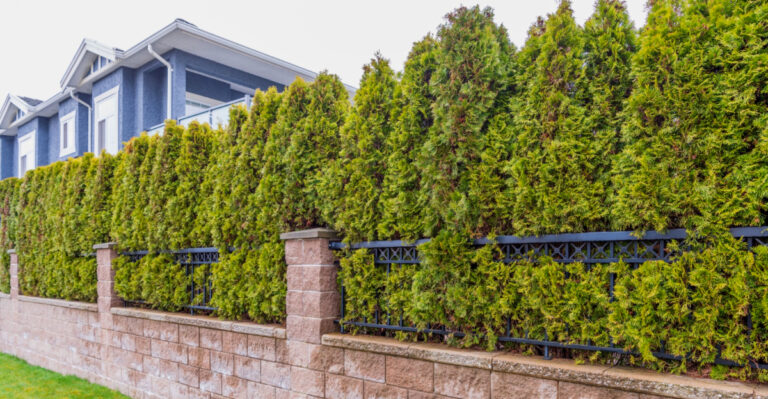
6. Leyland Cypress Grows Into A Tall Privacy Wall
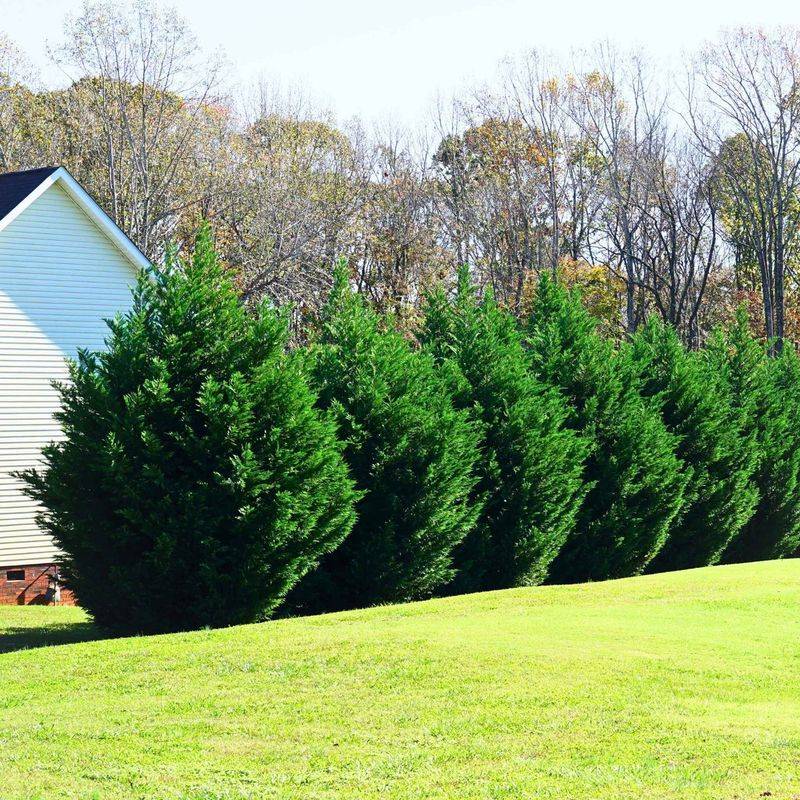
When neighbors can practically look into your living room from their backyard, Leyland Cypress tends to be the plant that comes up in conversation first.
Its rapid vertical growth – sometimes three to four feet per year under favorable conditions – makes it one of the fastest routes to a tall, solid privacy wall available to North Carolina homeowners.
The narrow, columnar shape of Leyland Cypress makes it especially useful on properties where horizontal space is limited but vertical screening is needed.
The soft, feathery blue-green foliage stays dense from the base to the tip, providing coverage at multiple levels simultaneously.
In North Carolina’s Piedmont and coastal plain regions, it adapts well to the heat and humidity, though it does best with good air circulation to reduce the risk of fungal issues like Seiridium canker, which can affect stressed trees.
Spacing Leyland Cypress about six to eight feet apart strikes a reasonable balance between coverage speed and long-term plant health.
Planting too closely can restrict airflow and create conditions that invite disease over time.
Consistent moisture during the first two growing seasons helps establish a strong root system, after which drought tolerance improves noticeably.
While this tree does not require heavy pruning, light shaping in early spring can help maintain a tidy profile and encourage even denser lateral branching as the screen matures across your North Carolina property.
7. Green Giant Arborvitae Delivers Fast Privacy Growth
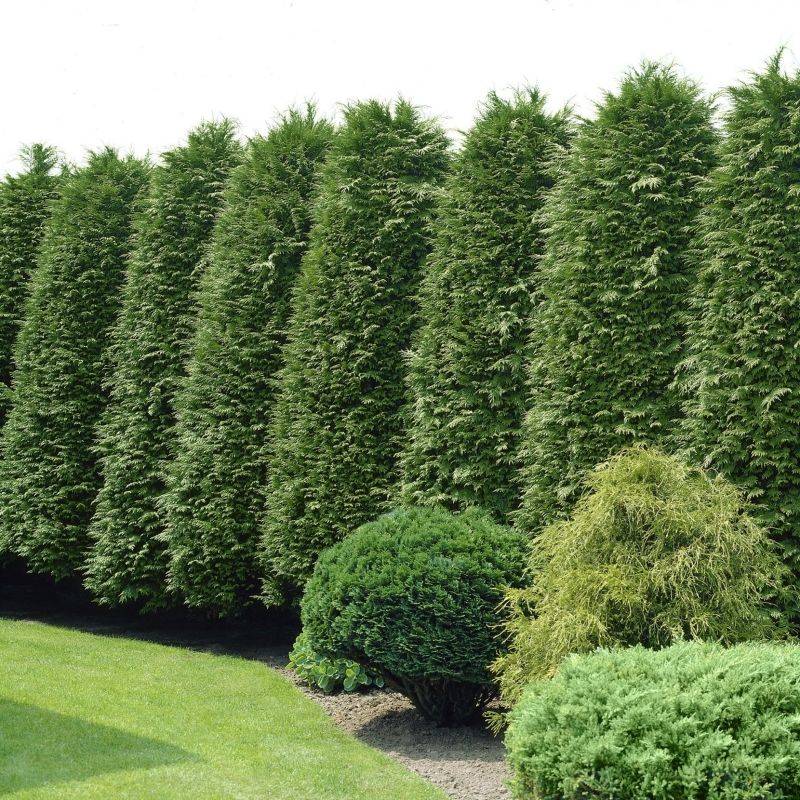
Among the most talked-about privacy trees in North Carolina gardening circles, Green Giant Arborvitae has built a well-deserved reputation for combining speed, density, and reliability into one attractive package.
A hybrid of Western Red Cedar and Japanese Arborvitae, it brings together traits that make it surprisingly well suited to the hot, humid summers that North Carolina delivers season after season.
Growth rates of three to five feet per year are common for Green Giant in its early years, meaning a modest six-foot nursery tree can reach twelve feet or taller within just a few growing seasons.
The rich, dark green foliage holds its color year-round without the bronzing that affects some other arborvitae varieties during cold weather.
The pyramidal form naturally stays dense without requiring significant pruning, which is a welcome feature for homeowners who want effective screening with minimal ongoing effort.
Green Giant performs best in full sun but tolerates light afternoon shade without losing too much density.
It handles North Carolina’s clay soils reasonably well as long as drainage is adequate, since standing water around the roots can cause problems over time.
Spacing plants about five to six feet apart creates a solid, continuous screen relatively quickly.
Supplemental watering during the first year or two after planting supports strong establishment, setting the tree up for years of dependable, low-maintenance privacy coverage across your property.
8. Yaupon Holly Forms A Durable Native Hedge
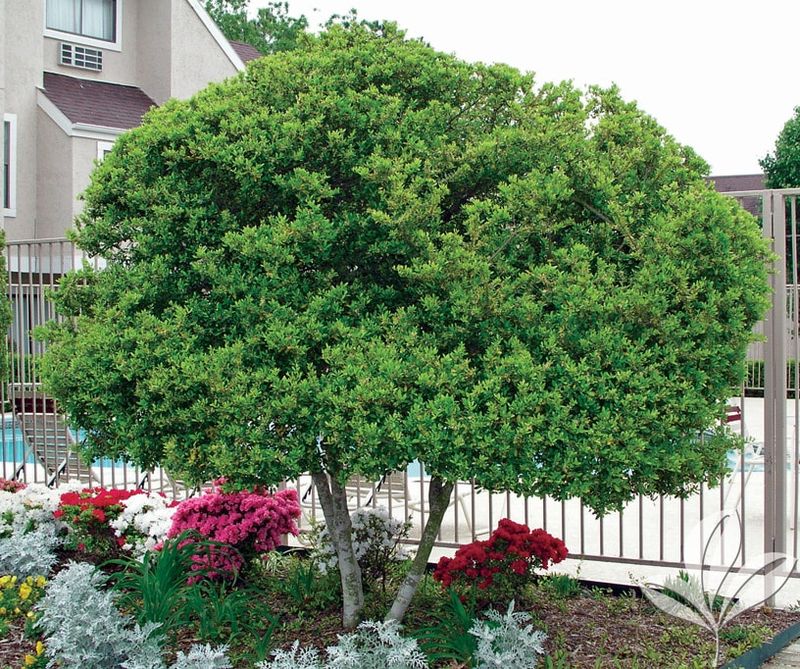
Yaupon Holly might just be the toughest evergreen shrub native to North Carolina, and that is saying something given the competition.
Tolerating heat, humidity, drought, salt spray, and even occasional flooding, this plant handles conditions that would stress or outright kill many alternatives – all while maintaining its neat, glossy appearance throughout the year.
As a privacy hedge, Yaupon Holly responds well to shearing, allowing you to shape it into a formal, tight wall of foliage or let it grow into a more relaxed, naturalistic screen depending on your landscape style.
Left unpruned, it can reach heights of ten to fifteen feet, providing substantial coverage.
Female plants produce small red or yellow berries in fall and winter that birds absolutely flock to, adding lively seasonal interest to what is already a hardworking hedge plant.
Across North Carolina, Yaupon Holly performs consistently from the coast to the Piedmont, adapting to sandy, clay, and loamy soils alike.
Full sun produces the densest growth habit, though it handles partial shade without thinning out dramatically.
Spacing plants about four to six feet apart encourages them to fill in and create continuous coverage within a few growing seasons.
One underappreciated quality is how rarely Yaupon Holly suffers from serious pest or disease problems, making it a genuinely low-maintenance choice for North Carolina homeowners who want reliable, long-lasting privacy screening year after year.