Protect Your Trees In North Carolina By Removing Lights, Windchimes, And Birdfeeders
In North Carolina, the biggest threat to your trees is often what you hang on them.
Many homeowners decorate their trees without realizing the slow damage it can cause. Lights wrapped too tightly can trap moisture against the bark, especially in the state’s humid climate, creating the perfect conditions for rot, fungus, and insect activity.
What looks harmless during the season can leave lasting stress on the tree long after decorations come down.
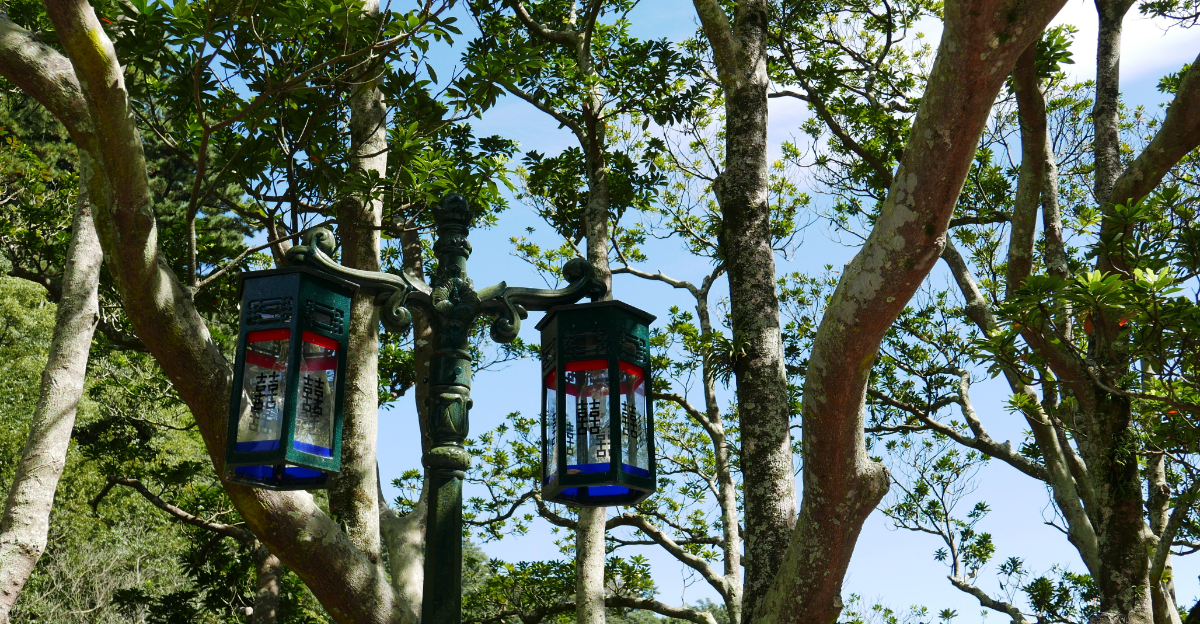
Windchimes and hanging feeders create a different problem. Constant movement in the wind can rub against branches, wearing away bark and exposing vulnerable areas.
Over time, this weakens limbs and makes trees more prone to disease or breakage during storms. Feeders can also attract animals that claw, peck, or nest in ways that harm the tree itself.
Removing these items helps trees breathe, heal, and grow naturally, keeping them stronger and healthier through North Carolina’s changing seasons.
Prevent Branch Damage
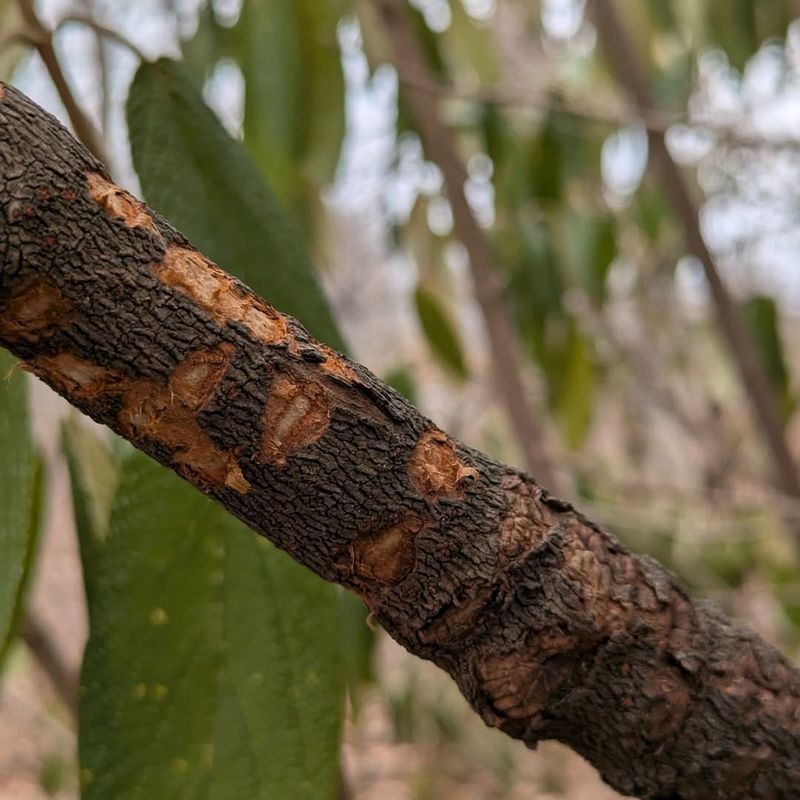
Winter storms in North Carolina can be unpredictable and fierce. When heavy decorations hang from tree branches, they add extra weight that limbs weren’t designed to support.
String lights might seem lightweight at first, but when you add multiple strands plus wind chimes, the load increases significantly.
Ice and snow make this problem even worse. A branch that normally handles a few pounds can suddenly bear twenty or thirty pounds during a winter storm.
This added stress causes branches to bend beyond their natural flexibility, leading to cracks and splits in the wood.
Young trees face the greatest risk because their branches haven’t fully matured yet. Even mature trees with established limbs can suffer when decorations concentrate weight in one spot.
The damage might not appear immediately, but weakened branches become vulnerable to breaking during the next storm.
Removing lights and wind chimes before winter weather arrives gives your trees their best chance. Check branches regularly for signs of stress like drooping or small cracks.
Taking down decorations takes just a few minutes but saves years of growth and keeps your landscape beautiful and safe throughout every season.
Reduce Ice And Snow Stress
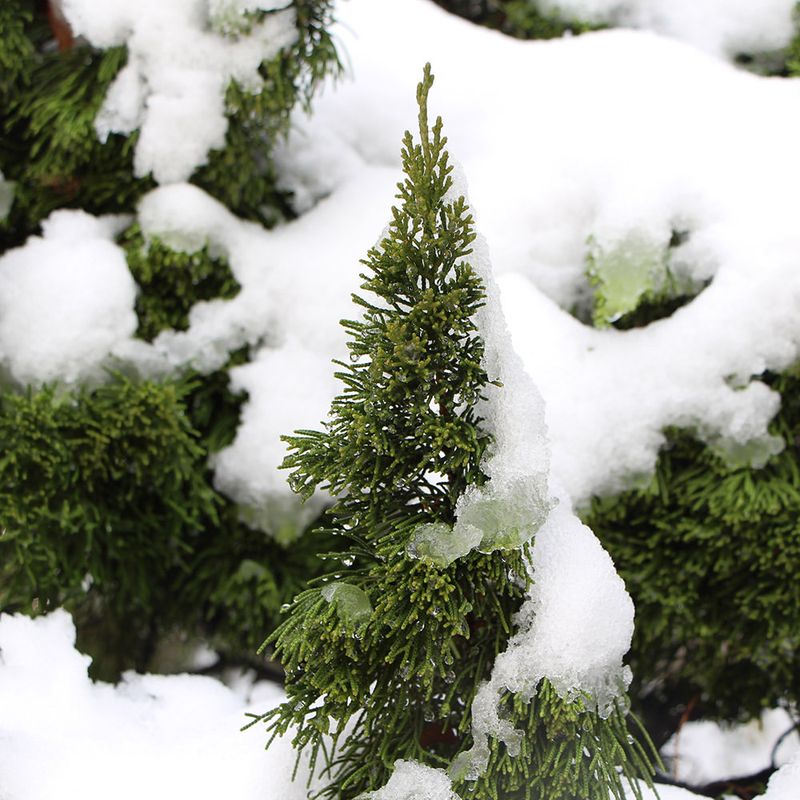
North Carolina winters bring freezing rain that coats everything in layers of ice. Each decoration on your tree becomes a collection point for this frozen moisture.
Wind chimes, with their multiple hanging parts, trap ice between their components and dramatically increase the weight pulling on branches.
String lights create similar problems because ice forms along every wire and bulb. What started as a decorative touch becomes a heavy frozen chain wrapped around delicate limbs.
The combined weight of ice plus decorations can exceed what branches can safely handle, especially on smaller or ornamental trees.
Splitting happens when ice-laden branches reach their breaking point. The wood fibers separate, creating wounds that take years to heal properly.
Some branches break completely, leaving jagged stubs that become entry points for moisture and disease organisms seeking vulnerable trees.
Prevention works better than trying to fix broken branches later. Before temperatures drop below freezing, remove all hanging decorations from your trees.
Store them safely until spring when weather conditions improve. Your trees will maintain their natural strength and flexibility, bending with ice storms instead of breaking under the extra burden of decorative items weighing them down unnecessarily.
Avoid Wildlife Entanglement
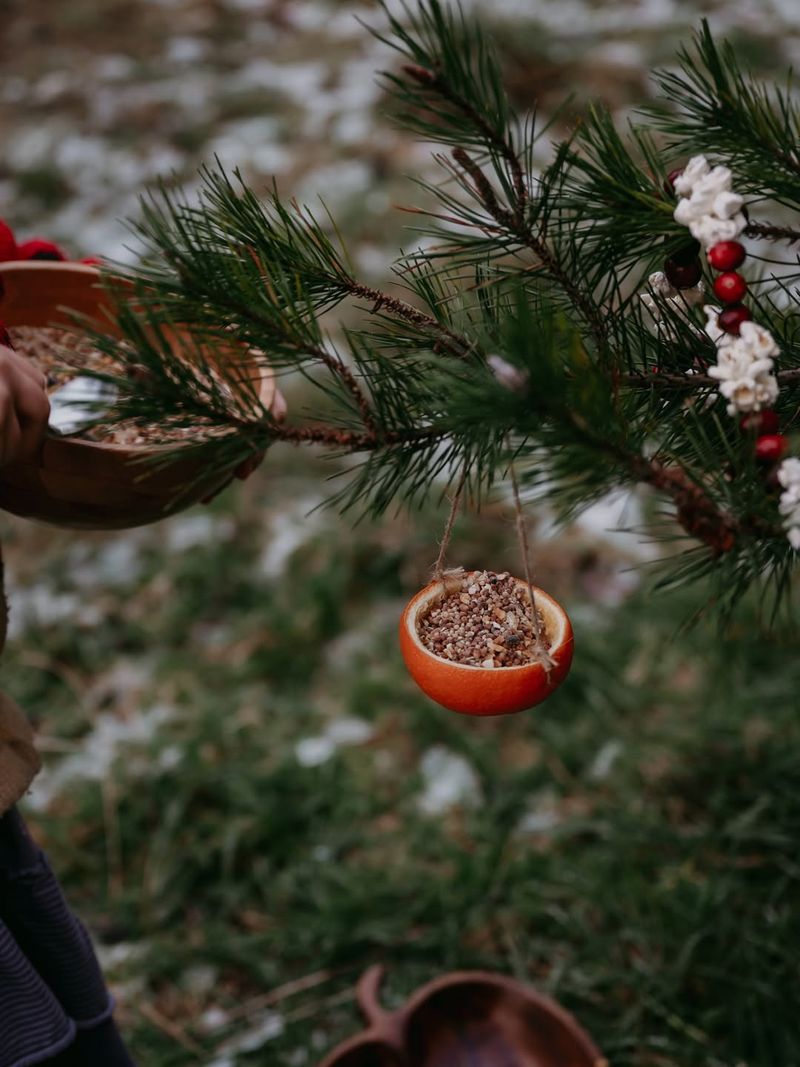
Birds and squirrels navigate tree branches with remarkable agility most of the time. However, dangling decorations create unexpected obstacles in their familiar pathways.
Wind chimes with their hanging strings and lights with loops of wire become hazards that animals don’t naturally recognize as dangerous until it’s too late.
Squirrels jumping between branches can catch their legs or tails in decoration wires. Birds landing near feeders sometimes get tangled in the chains or cords holding them.
Even the smallest wire loop can trap a small animal, preventing it from escaping without help that might not arrive in time.
Birdfeeder placement deserves special attention because it attracts multiple species to one location. The more animals visiting your yard, the higher the chance of accidental entanglement.
Woodpeckers, cardinals, and chickadees all frequent North Carolina feeders, and each species has different flight patterns that might intersect with hanging decorations.
Creating a safer environment means choosing when and where to place decorations carefully. During nesting season and winter when wildlife activity peaks, consider removing hanging items entirely.
Your yard can still welcome birds and squirrels without the risks that come from decorative elements. Natural beauty and wildlife safety work together when you prioritize tree health over temporary adornments.
Prevent Insect And Disease Harborage
Moisture loves to hide in unexpected places around your yard. When lights wrap around tree trunks or wind chimes hang against bark, they create small pockets where water collects and stays trapped.
North Carolina’s humidity makes this problem worse because the air already carries plenty of moisture that condenses on cool surfaces.
Fungal spores float through the air constantly, searching for damp spots to colonize. Decorations pressed against bark provide perfect conditions for fungi to establish themselves.
The darkness beneath wires and the constant moisture create an ideal environment for organisms that harm tree health over time.
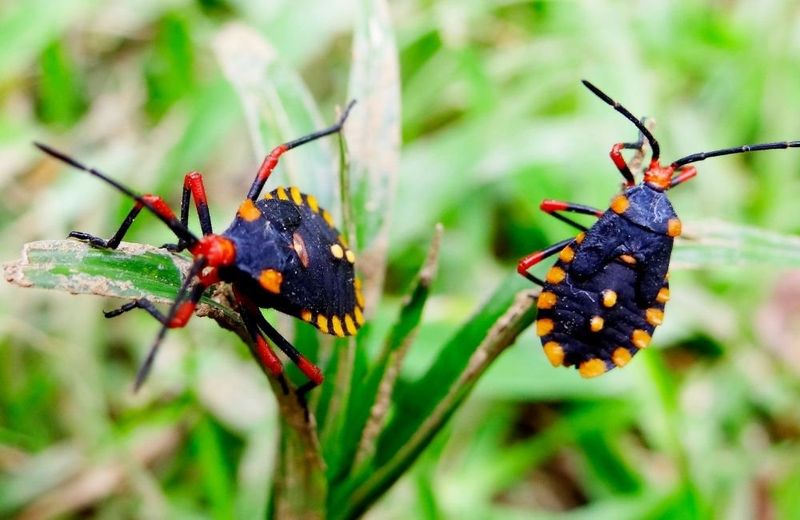
Insects also appreciate the shelter that decorations provide. Bark beetles, aphids, and scale insects hide beneath light strings where birds can’t easily spot them.
These pests multiply in their protected spaces, eventually spreading across the entire tree and weakening it from the inside out.
Regular inspection helps, but prevention works better than treatment. Remove decorations during humid months when fungal growth peaks.
Allow air to circulate freely around your tree’s trunk and branches. The bark needs to breathe and dry out naturally between rain events.
Clean, undecorated trees resist disease pressure much more effectively than those carrying decorative items that trap moisture and harbor unwanted guests throughout the growing season.
Encourage Natural Growth Patterns
Trees grow according to patterns established over millions of years of evolution. Each species has developed its own branching structure that maximizes sunlight capture while maintaining structural integrity.
When decorations interfere with this natural architecture, trees respond by growing in unusual ways that compromise their long-term health.
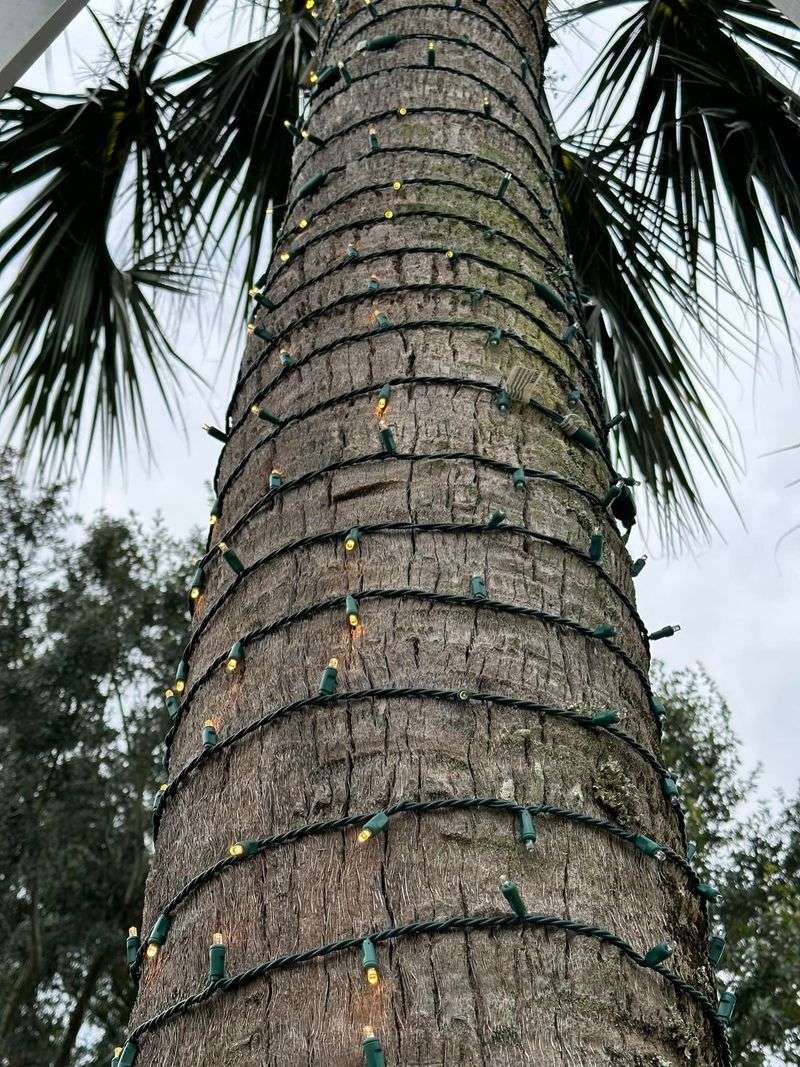
Lights wrapped tightly around branches restrict normal expansion as the tree grows. Young wood needs room to expand its diameter each year, but wires act like tourniquets that create weak points in the branch.
These constricted areas become permanent deformities that never fully recover even after decoration removal.
Wind chimes hanging from specific branches cause those limbs to grow differently than surrounding ones. The constant weight pulls the branch downward, changing its angle and affecting how water and nutrients flow through the wood.
Over several seasons, this creates lopsided growth that makes the entire tree less stable during storms.
Allowing trees to grow freely produces the strongest, healthiest specimens. Remove all decorations and let branches develop their natural shape.
The tree’s genetic programming knows exactly how to arrange limbs for maximum strength and efficiency. Trust this ancient wisdom instead of imposing artificial constraints that work against natural processes and create problems that last for decades beyond the temporary enjoyment decorations provide.
Reduce Risk During Storms
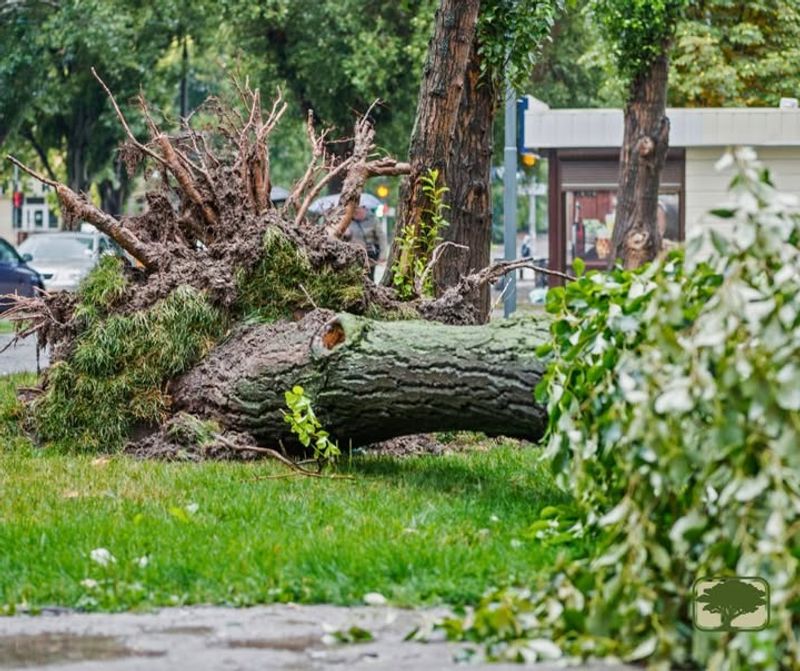
Strong winds turn normally harmless decorations into projectiles. Wind chimes designed to create peaceful sounds become battering rams during thunderstorms.
They swing wildly on their chains, smashing repeatedly into branches and stripping away bark with each impact. The damage accumulates quickly when storms last for hours.
String lights fare no better in high winds. The wires whip back and forth, abrading bark and breaking small twigs.
Bulbs shatter against tree trunks, leaving sharp glass fragments that can injure both trees and people. Metal clips and hooks scrape across wood surfaces, creating wounds that weaken the tree’s protective outer layer.
North Carolina experiences its share of severe weather throughout the year. Summer thunderstorms bring powerful straight-line winds that can exceed fifty miles per hour.
Tropical systems occasionally brush the state, bringing sustained winds that last for days. Each weather event tests your trees’ resilience and any decorations still hanging from their branches.
Preparation prevents most storm damage to trees. Before severe weather arrives, take down all hanging items and store them safely indoors.
Check weather forecasts regularly during storm season. A few minutes of preventive action protects years of tree growth and keeps your property safer when high winds inevitably arrive in your area.
Protect Buds And New Growth
Spring arrives in North Carolina with a burst of new growth. Trees wake from winter dormancy and push out tender buds that will become this year’s leaves and flowers.
These buds are incredibly fragile during their first few weeks, easily damaged by even gentle contact with hanging objects.
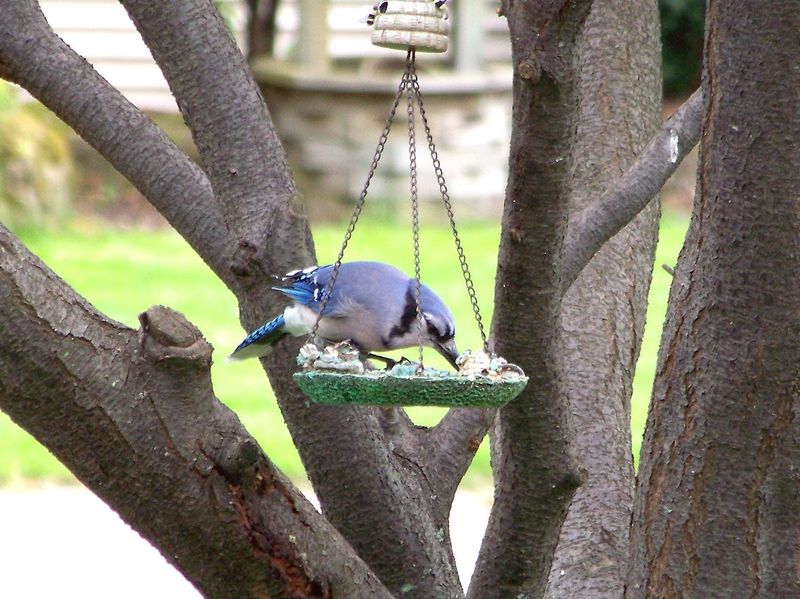
Birdfeeders swinging in spring breezes knock against emerging buds and break them off before they fully develop. Each lost bud represents a missed opportunity for the tree to produce energy through photosynthesis.
Fewer leaves mean less food production, which slows overall growth and reduces the tree’s vigor for the entire season.
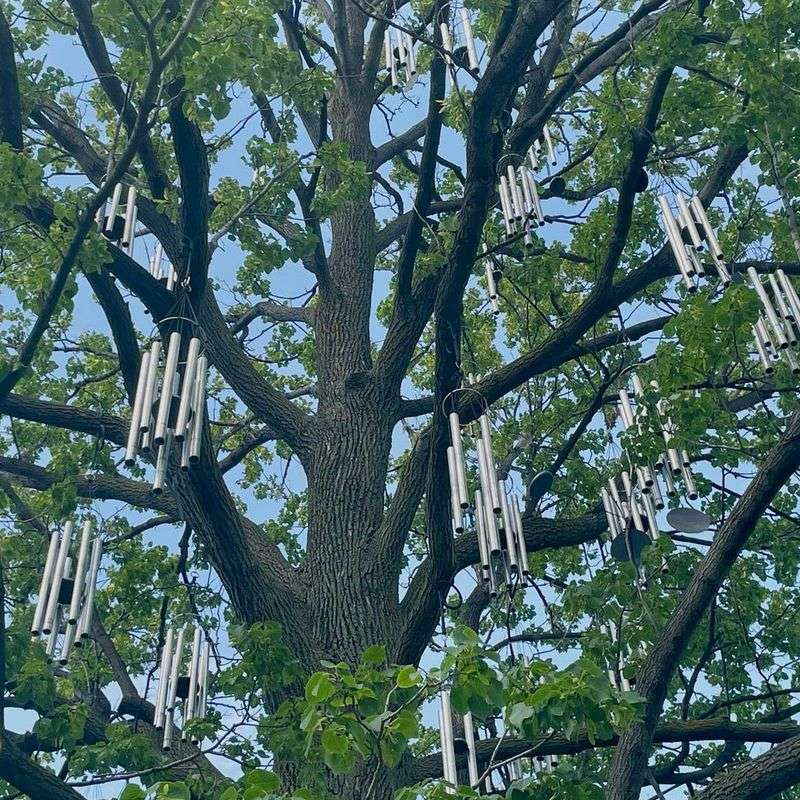
Wind chimes pose similar risks as they move with every breeze. Their metal or wooden tubes strike developing shoots and crush delicate tissue that hasn’t yet toughened into mature wood.
The damage might seem minor, but it affects the tree’s ability to maximize its growing potential during the critical spring months.
Timing your decoration removal makes all the difference. Take down birdfeeders and other hanging items in late winter before buds begin swelling.
Watch for the first signs of spring growth and ensure branches are completely clear. This simple step lets your trees focus all their energy on producing healthy new growth instead of recovering from preventable injuries caused by decorative items still hanging from their branches.
Prevent Bark Damage
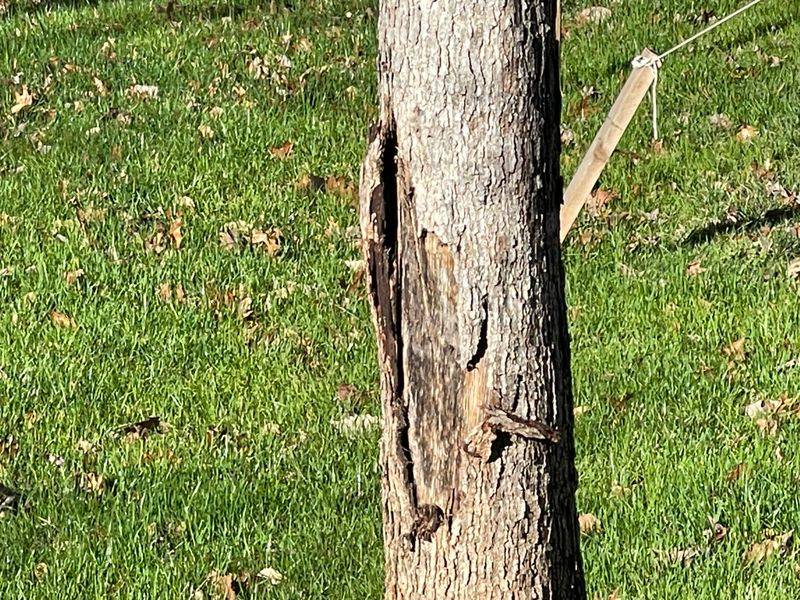
Bark serves as your tree’s first line of defense against the outside world. This protective layer keeps moisture inside while blocking harmful organisms from entering the living wood beneath.
Any damage to bark creates openings that compromise the tree’s natural defenses and invites trouble that can last for years.
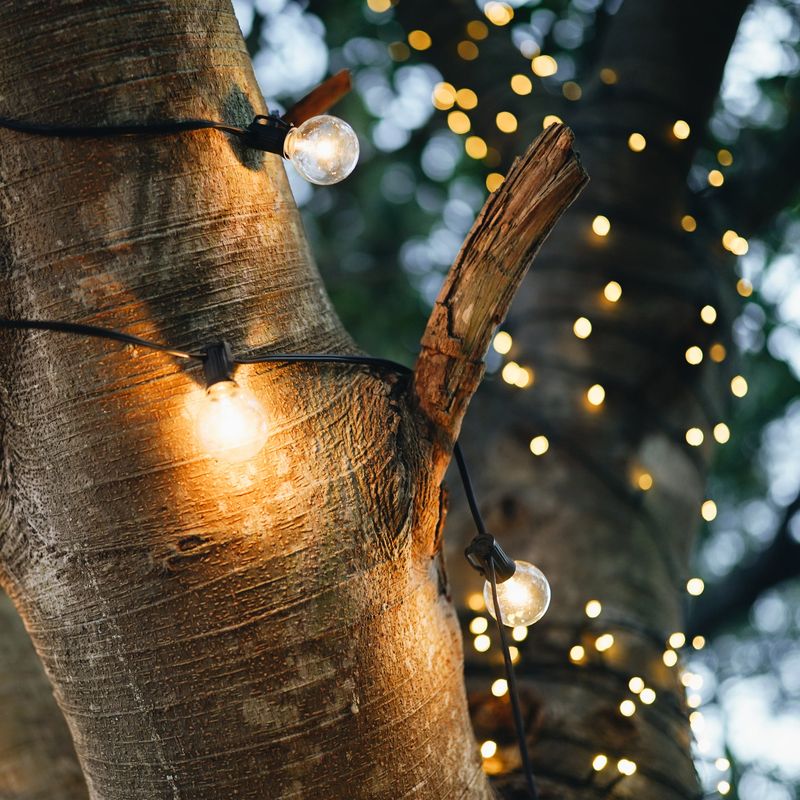
Wires from string lights cut into bark as trees grow and expand. What starts as a loose wrap becomes a tight band that girdles the branch.
The wire embeds itself deeper each season, eventually cutting through bark completely and reaching the cambium layer where all growth occurs. This damage never fully heals and creates permanent weak spots.
Hooks screwed into trunks or branches for hanging wind chimes and feeders puncture bark directly. Each hole provides an entry point for bacteria, fungi, and insects seeking vulnerable trees.
Moisture seeps into these openings during rain and creates ideal conditions for decay organisms to establish themselves inside the wood.
Protecting bark means avoiding anything that penetrates or constricts it. Use alternative methods for seasonal decorations that don’t involve attaching items directly to trees.
If you must hang something temporarily, use soft fabric straps that distribute pressure widely and remove them promptly. Your tree’s bark will remain intact, maintaining its protective function and keeping the living tissue beneath safe from invasion.
Reduce Chemical Exposure
Birdseed seems harmless enough, but spills create unexpected problems around tree roots. Seeds that fall to the ground attract rodents looking for easy meals.
Mice and rats congregate beneath feeders, and their waste products contain compounds that affect soil chemistry and nearby plants in ways that aren’t immediately obvious.
Mold grows quickly on damp birdseed scattered across mulch and soil. These fungal colonies release spores into the air and produce metabolic byproducts that leach into the ground.
Some mold species create substances that inhibit plant growth or alter nutrient availability in the soil surrounding your tree’s root zone.
String lights bring their own chemical concerns, especially older models. Wires degrade over time, releasing small amounts of plastic compounds and metal residues.
Dust and pollutants accumulate on light strands, then wash off during rain events and drip onto leaves and bark below. These contaminants add up over multiple seasons of use.
Minimizing chemical exposure keeps your trees healthier in the long run. Remove birdfeeders periodically and clean up any accumulated seed debris.
Store lights properly when not in use and inspect them for deterioration before rehanging. Consider the invisible impacts of decorations beyond just their physical presence.
Your trees absorb substances from their environment constantly, and reducing unnecessary chemical inputs helps them thrive naturally without fighting additional stressors.
Promote Long-Term Tree Health
Healthy trees grow stronger each year when given proper care and attention. Every small decision you make about decorations and yard maintenance accumulates over time, either supporting tree health or working against it.
The trees you plant today could live for fifty, seventy, or even a hundred years with the right treatment.
Seasonal removal of lights, wind chimes, and birdfeeders represents one piece of a larger care strategy. Combined with proper watering, mulching, and pruning, this practice helps trees develop robust root systems and strong branch structures.
Trees that grow without interference become landmarks in your landscape and provide shade, beauty, and wildlife habitat for generations.
Maintenance becomes easier when trees grow naturally without decoration-related damage. You spend less time treating wounds, fighting diseases, and removing broken branches.
The money saved on tree care services and replacement costs adds up significantly over the years, making prevention far more economical than correction.
Building good habits now pays dividends for decades to come. Mark your calendar for seasonal decoration removal and make it part of your regular yard maintenance routine.
Watch your trees respond with vigorous growth and improved resilience. The effort required is minimal compared to the benefits gained.
Your North Carolina landscape will flourish with trees that reach their full potential, standing strong through every season and every challenge nature presents.