Prune Fruit Trees The Right Way In Oregon For Bigger Harvests
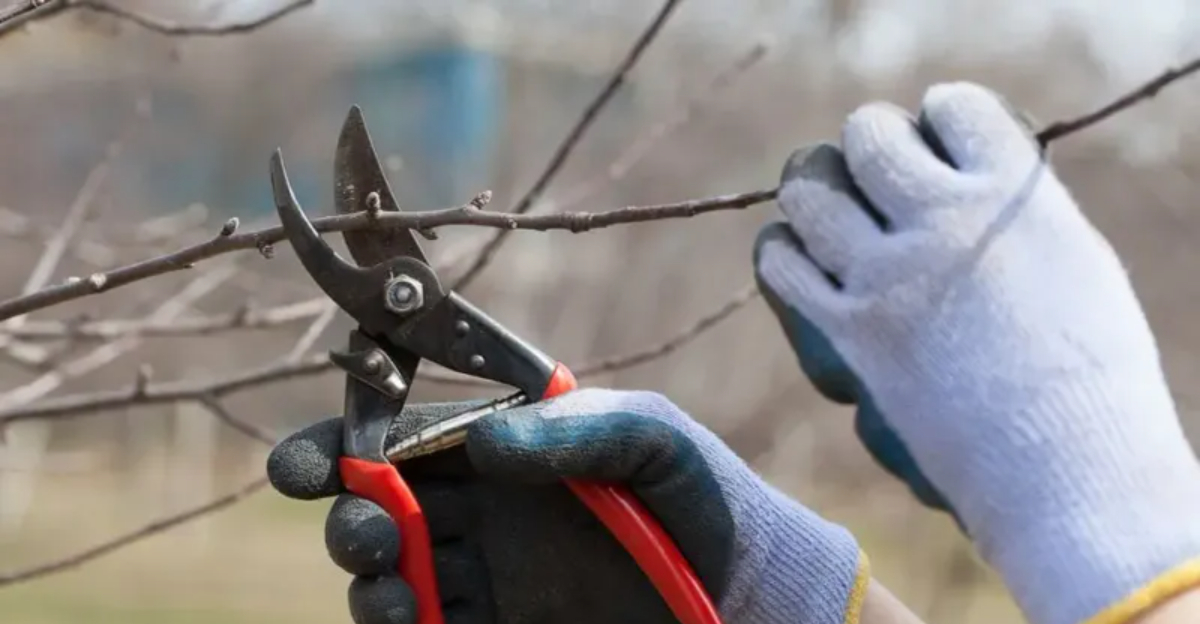
Pruning fruit trees can feel intimidating, especially if you’re in Oregon and worried about the weather, timing, or whether you’ll accidentally do more harm than good. But the truth is, a little careful pruning goes a long way.
Done right, it strengthens trees, improves air circulation, and helps produce bigger, healthier harvests year after year.
Many gardeners put off pruning because it seems complicated or messy, but it doesn’t have to be. With the right approach and a few simple techniques, you can encourage growth in all the right places and remove branches that don’t serve your tree.
Even small adjustments can make a noticeable difference when it’s time to harvest.
Oregon’s climate, with its wet winters, occasional late frosts, and warm summers, does influence how and when pruning should happen. Knowing the best methods for our region can save you time, protect your trees, and boost fruit production.
Whether you’re a seasoned gardener or trying your first orchard, learning how to prune properly will make your trees happier and more productive.
Here’s how to prune fruit trees the right way in Oregon to enjoy bigger, tastier harvests each season.
1. Start Pruning In Late Winter Or Early Spring
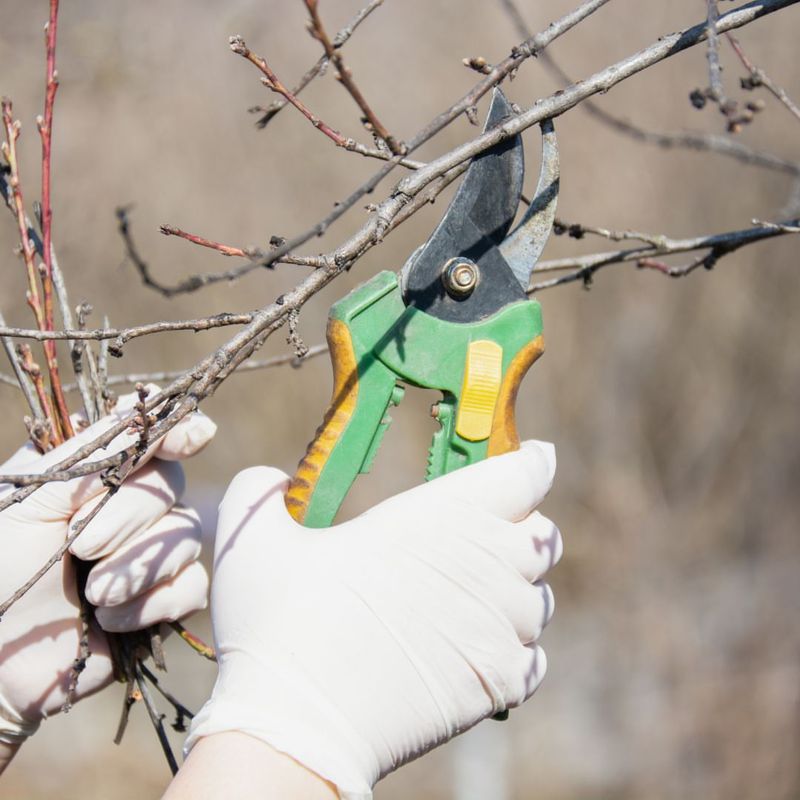
Picture this: it’s mid-February, rain drips off bare branches, and your apple tree stands dormant, waiting. This is your perfect pruning window.
Timing matters enormously in Oregon because our mild, wet winters mean trees wake up early, and pruning too late can stress them just as buds swell.
Late winter through early spring, typically February through early March is ideal because trees are still asleep but sap is beginning to rise. Cuts heal faster, disease pressure is lower, and you can see the tree’s structure clearly without leaves blocking your view.
You avoid the risk of winter freeze damage to fresh cuts, and you’re ahead of the spring disease season that thrives in Oregon’s damp climate.
Wait too long, and you’ll cut off flower buds that would have become fruit. Prune too early in deep winter, and frost can damage exposed wood.
For apples, pears, plums, and cherries, this late-winter sweet spot gives you the best chance at vigorous regrowth and a heavy fruit set.
Mark your calendar now. When the worst of the winter storms have passed but before the tree starts leafing out, grab your tools and get to work.
Your trees will reward you with strong, productive growth all season long.
2. Remove Diseased Or Damaged Wood First
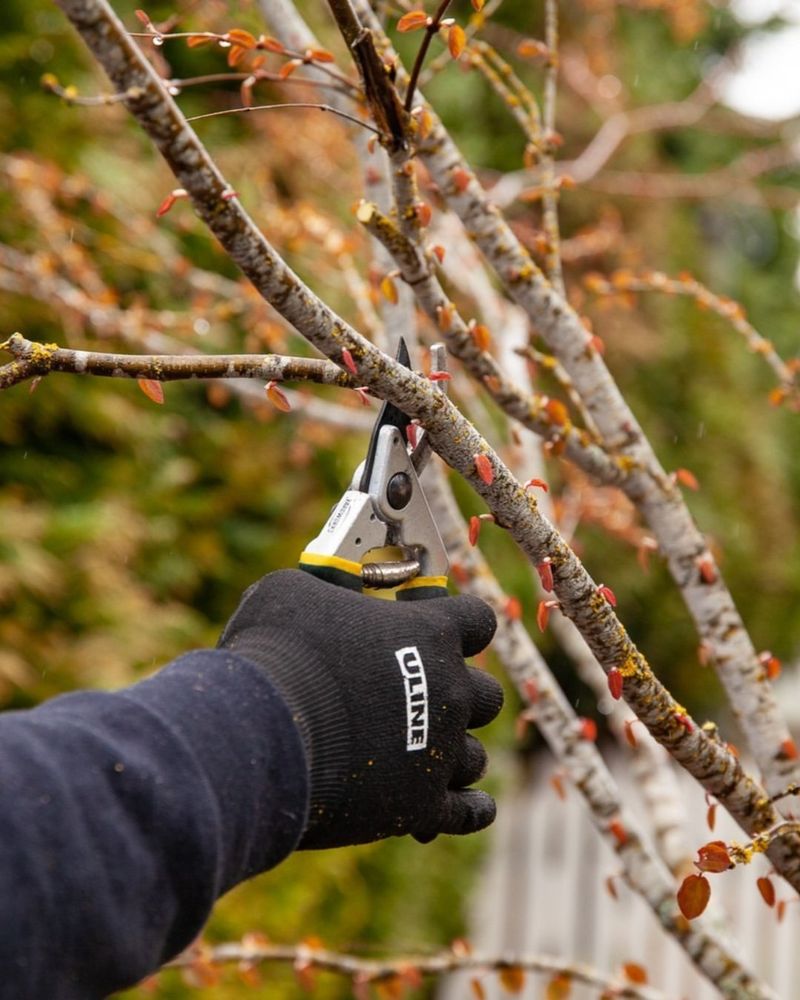
Walk up to your tree and look closely. You’ll often find branches that are brittle, discolored, or covered in cankers – these are trouble waiting to spread.
Every piece of damaged or diseased wood is a potential entry point for pests and pathogens, and in Oregon’s wet climate, fungal diseases love to lurk in damaged tissue.
Start every pruning session by cutting out anything that looks unhealthy. Damaged wood is easy to spot: it’s gray, brittle, and doesn’t bend.
Diseased branches might show sunken areas, oozing sap, or unusual discoloration. Damaged wood, broken by wind or heavy fruit, invites rot and insects.
Make your cuts back to healthy tissue, where the wood is green or white inside and firm to the touch. Don’t leave stubs; cut cleanly just above a bud or lateral branch.
This simple step prevents disease from spreading through your tree and ensures that energy goes to healthy, productive wood instead of fighting infection.
Oregon fruit trees face challenges like fire blight in apples and pears, bacterial canker in cherries, and brown rot in stone fruits. Removing problem wood early is your first line of defense.
It also opens up the canopy so air circulates freely, helping branches dry out faster after our frequent rains and reducing disease pressure all season.
3. Open Up the Center Of The Tree
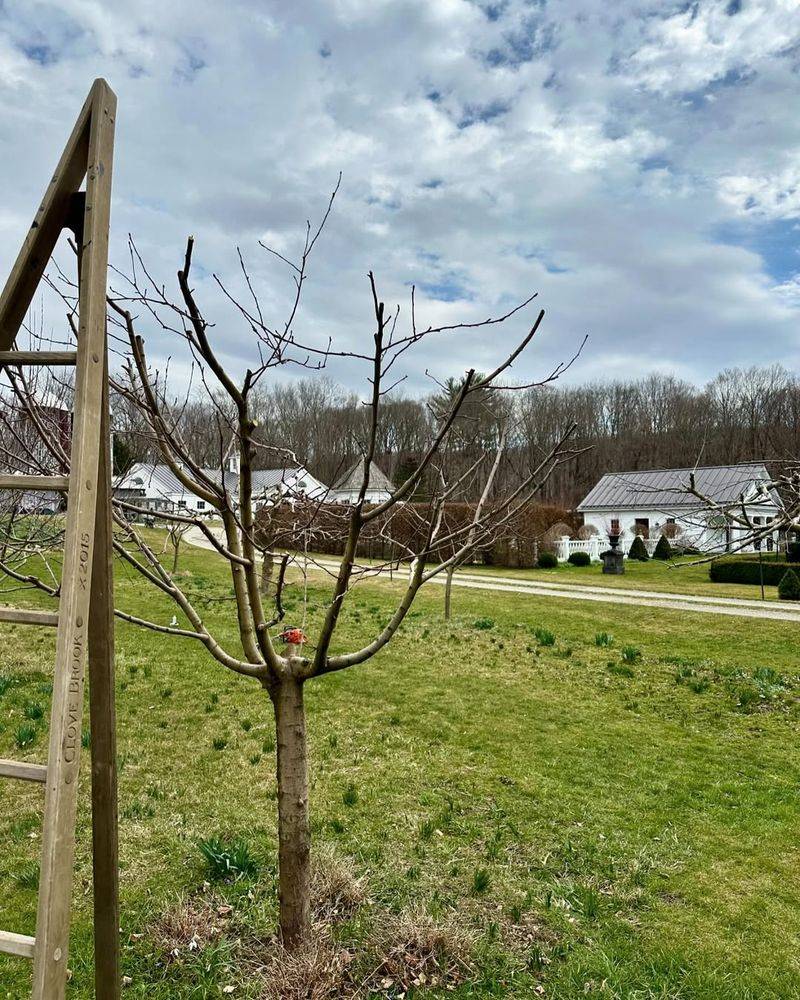
Imagine your fruit tree as a bowl or vase, open in the middle, with branches spreading outward. That’s the goal.
Too many Oregon gardeners let their trees grow into dense, tangled thickets where sunlight can’t penetrate and air barely moves. The result?
Small, pale fruit and a breeding ground for disease.
Opening the center means removing branches that grow straight up through the middle or cross inward. You want sunlight to reach every branch and air to flow freely, especially important in our humid climate where moisture lingers.
An open center also makes it easier to harvest fruit and spot problems early.
For apples and pears, aim for a modified central leader or open vase shape. For stone fruits like peaches, plums, and cherries, an open vase is ideal.
Cut out any branches that compete with the main leader or crowd the interior. Step back often and visualize light streaming through the canopy.
This single change can dramatically improve fruit size and flavor. Sunlight is what turns starches into sugars, giving you sweeter apples and juicier plums.
Better airflow means leaves and fruit dry faster after rain, reducing fungal diseases like powdery mildew and scab that plague Oregon orchards. Your tree will also be easier to spray, prune, and pick in future years.
4. Cut Back Water Sprouts And Suckers
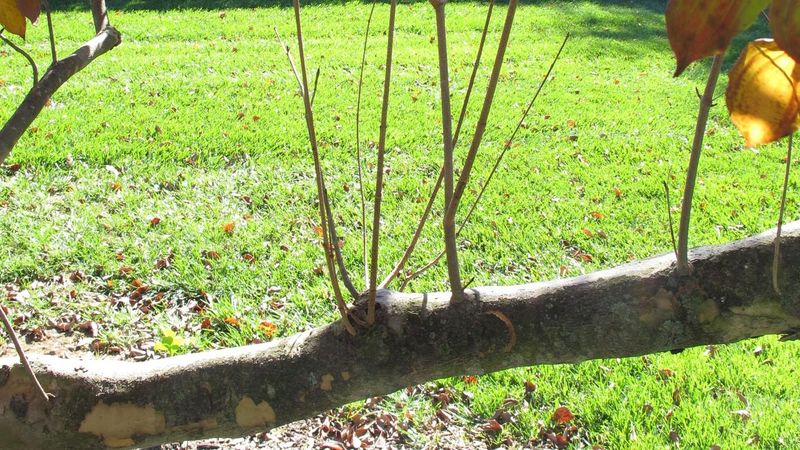
You’ve probably noticed them: vigorous, straight shoots growing vertically from the trunk or main branches, or sprouts popping up from the base of the tree. These are water sprouts and suckers, and they’re energy thieves.
They rarely produce fruit and sap strength from the productive parts of your tree.
Water sprouts shoot up fast, especially after heavy pruning or stress, and they grow so vigorously they can shade out fruiting wood. Suckers emerge from the rootstock below the graft union and, if left alone, can overtake the grafted variety you actually want.
Both are common in Oregon because our wet springs fuel rapid growth.
Cut water sprouts off flush with the branch they’re growing from. Don’t leave stubs, or they’ll just sprout again.
For suckers, trace them back to the base and remove them at ground level or below. If they keep coming back, it’s a sign your tree is stressed, check for poor drainage, root damage, or over-pruning.
Removing these unproductive shoots focuses the tree’s energy on fruit production and healthy scaffold branches. It also keeps your tree’s shape clean and balanced.
Don’t be shy about cutting them out – your tree will thank you with more fruit and less wasted energy on growth that goes nowhere.
5. Shorten Long Branches To Encourage Fruit Production
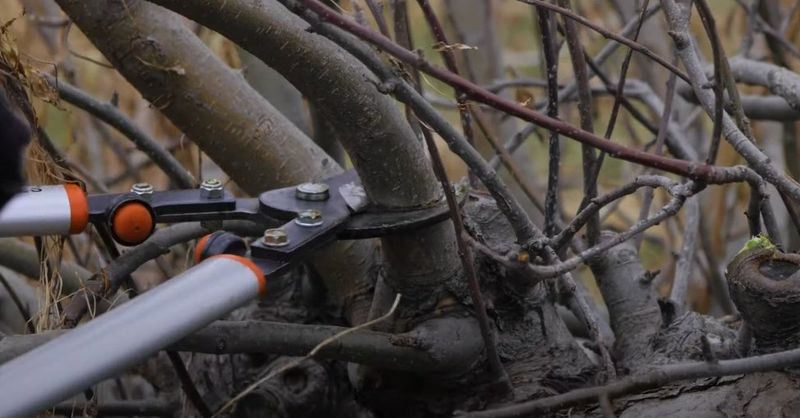
Long, whippy branches might look impressive, but they’re not where the fruit magic happens. Fruit forms on short, stubby spurs and on wood that’s one to three years old, depending on the variety.
If you let branches grow too long without cutting them back, they put all their energy into length instead of producing fruiting spurs.
Heading cuts, shortening a branch by cutting it back to a bud or lateral branch, stimulate the tree to put out more side shoots and spurs. This is especially important for apples and pears, which bear fruit on spurs along older wood.
For stone fruits like peaches and plums, shortening branches encourages new fruiting wood to develop closer to the main scaffold.
Make your cuts just above an outward-facing bud, angled slightly away from the bud. This directs new growth outward, keeping the center open.
Aim to shorten overly long branches by about one-third, but adjust based on the tree’s vigor and age. Younger trees can handle more aggressive heading; older trees need a lighter touch.
In Oregon, where our growing season is relatively short, encouraging compact, fruitful growth is key. Shorter branches also handle our occasional spring winds better and are less likely to break under the weight of a heavy crop.
You’ll see more flowers, better fruit set, and easier harvests when you keep your branches at a manageable length.
6. Make Clean, Proper Cuts At The Right Angle
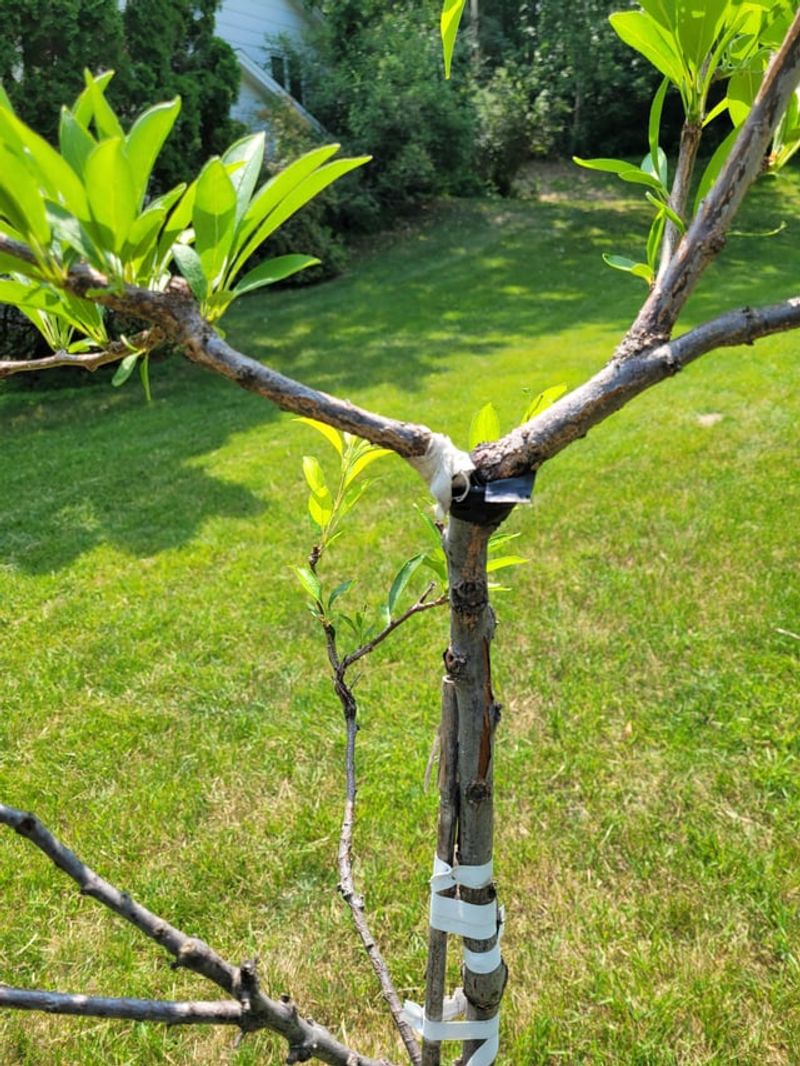
Ragged, torn cuts are an invitation for disease and slow healing. Every cut you make is a wound, and in Oregon’s damp climate, wounds can quickly become infected if not done correctly.
The quality of your cuts matters as much as which branches you remove.
Use sharp, clean tools, dull blades crush tissue instead of slicing cleanly. For small branches, bypass pruners work best; for larger limbs, use a pruning saw.
When removing a branch entirely, cut just outside the branch collar (the slightly swollen area where the branch meets the trunk or parent branch). Don’t cut flush to the trunk; the collar contains cells that heal the wound.
For heading cuts, angle your cut about 45 degrees, sloping away from the bud. This helps water run off instead of pooling on the cut surface, reducing rot risk.
Keep the cut close to the bud, within a quarter inch, but not so close you damage it.
Avoid leaving stubs, which die back and invite decay. Also avoid cutting too far from the bud, leaving a long stub that wastes the tree’s energy.
Clean cuts heal faster, seal naturally, and resist infection. In Oregon, where rain and humidity are constant companions, proper cutting technique is your best defense against canker, rot, and other diseases that thrive on wounded wood.
7. Maintain A Balanced Shape And Structure
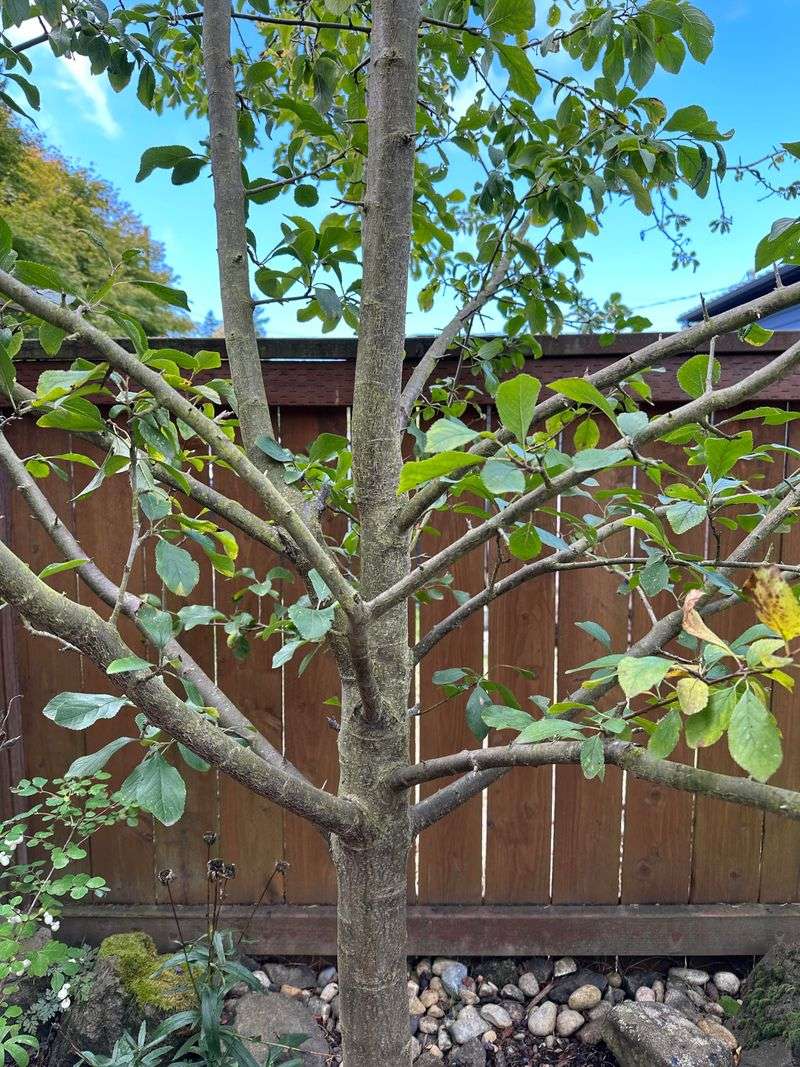
Step back and look at your tree from all sides. Does it lean heavily to one side?
Are branches clustered on one side and sparse on the other? A balanced tree isn’t just prettier, it’s stronger, healthier, and produces more evenly distributed fruit.
Aim for three to five main scaffold branches spaced evenly around the trunk, angled outward at roughly 45 to 60 degrees. These scaffolds form the tree’s framework and should be strong enough to support heavy crops without breaking.
Remove or shorten branches that throw off the balance or grow at awkward angles.
In Oregon, where spring winds can gust and heavy rain weighs down fruit-laden branches, structural balance is critical. A lopsided tree is more likely to split or topple, especially in our wet, soft soils.
Balanced scaffolds distribute weight evenly and reduce stress on the trunk and roots.
As you prune, think about the tree’s long-term shape. Young trees need more structural pruning to establish strong scaffolds; mature trees need maintenance pruning to keep the shape open and balanced.
Don’t be afraid to remove a large branch if it’s crowding others or growing in the wrong direction. The tree will compensate with stronger growth elsewhere, and you’ll have a more productive, resilient orchard for years to come.
8. Don’t Over-Prune – Less Is Often More
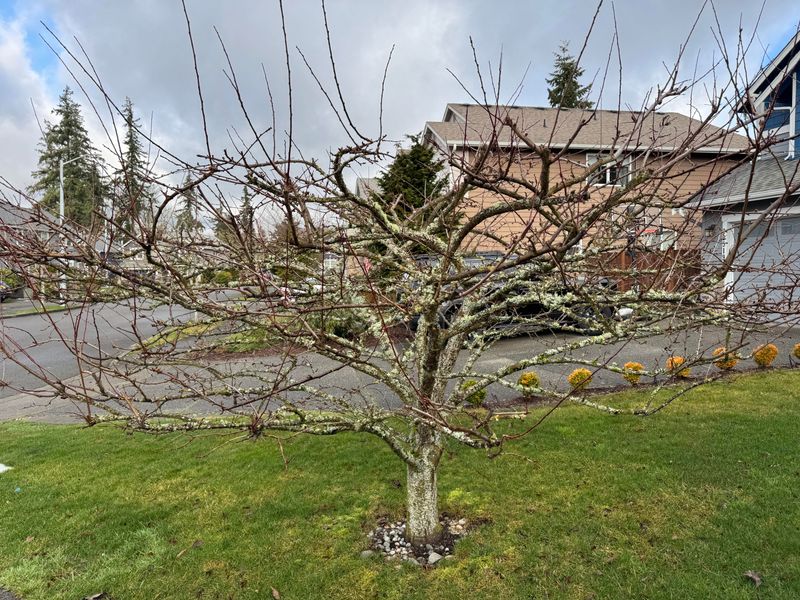
It’s tempting to get carried away once you start cutting, but over-pruning is one of the most common mistakes Oregon gardeners make.
Removing too much wood stresses the tree, reduces the leaf surface needed for photosynthesis, and can actually delay or reduce fruit production.
A good rule of thumb is to remove no more than 20 to 30 percent of the tree’s canopy in a single year. For young, vigorous trees, you can push toward the higher end; for older or slower-growing trees, stay conservative.
If your tree needs major corrective pruning, spread the work over two or three years to avoid shocking it.
Over-pruning also triggers excessive water sprout growth as the tree tries to replace lost foliage. You’ll end up with a thicket of unproductive shoots and more pruning work next year.
In Oregon, where our wet springs fuel rapid growth, this can quickly get out of hand.
Focus on removing problem wood, damaged, diseased, crossing, or inward-growing branches, and opening the center. Don’t feel like you have to cut something just because you’re out there with pruners.
Sometimes the best cut is the one you don’t make. A lightly pruned tree that’s healthy and well-shaped will always outproduce a heavily hacked one.
9. Sanitize Tools Between Cuts
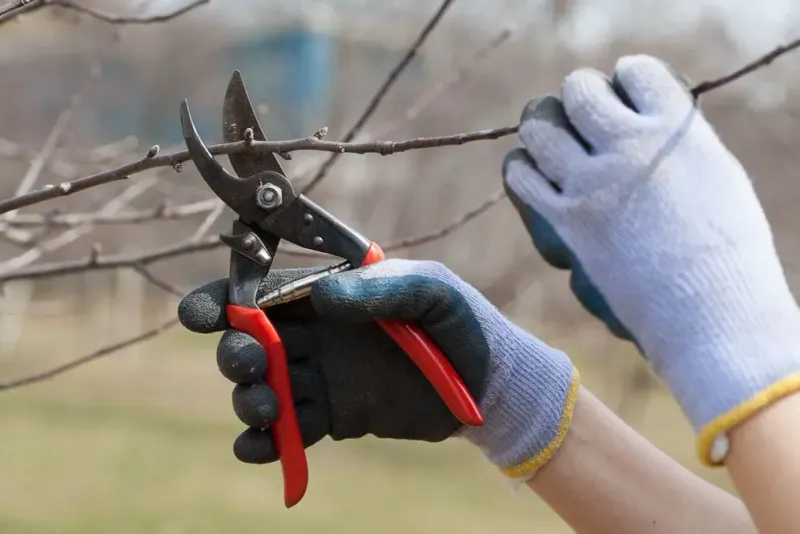
This step feels tedious, but it’s one of the most important things you can do to protect your Oregon fruit trees. Every time you cut into diseased wood, your tools pick up pathogens – bacteria, fungi, viruses – that can spread to healthy branches with the next cut.
Fire blight, bacterial canker, and other diseases are common in Oregon orchards, and they spread easily on dirty tools.
A quick wipe with a disinfectant solution between cuts, especially when moving between trees or cutting out diseased wood, can prevent an outbreak that ruins your entire orchard.
Use a solution of one part bleach to nine parts water, or rubbing alcohol, or a commercial disinfectant spray. Keep a small bucket or spray bottle with you as you prune.
Dip or spray your blades, let them sit for a few seconds, then wipe them dry before the next cut. It adds just seconds to each cut but saves you from heartbreak later.
Sharp, clean tools also make better cuts, which heal faster and resist infection. After each pruning session, clean your tools thoroughly, sharpen the blades, and oil the moving parts.
Store them dry to prevent rust. In Oregon’s damp climate, tool maintenance is just as important as tree care.
Treat your pruners like the precision instruments they are, and your trees will stay healthier year after year.
10. Observe And Adjust Year To Year
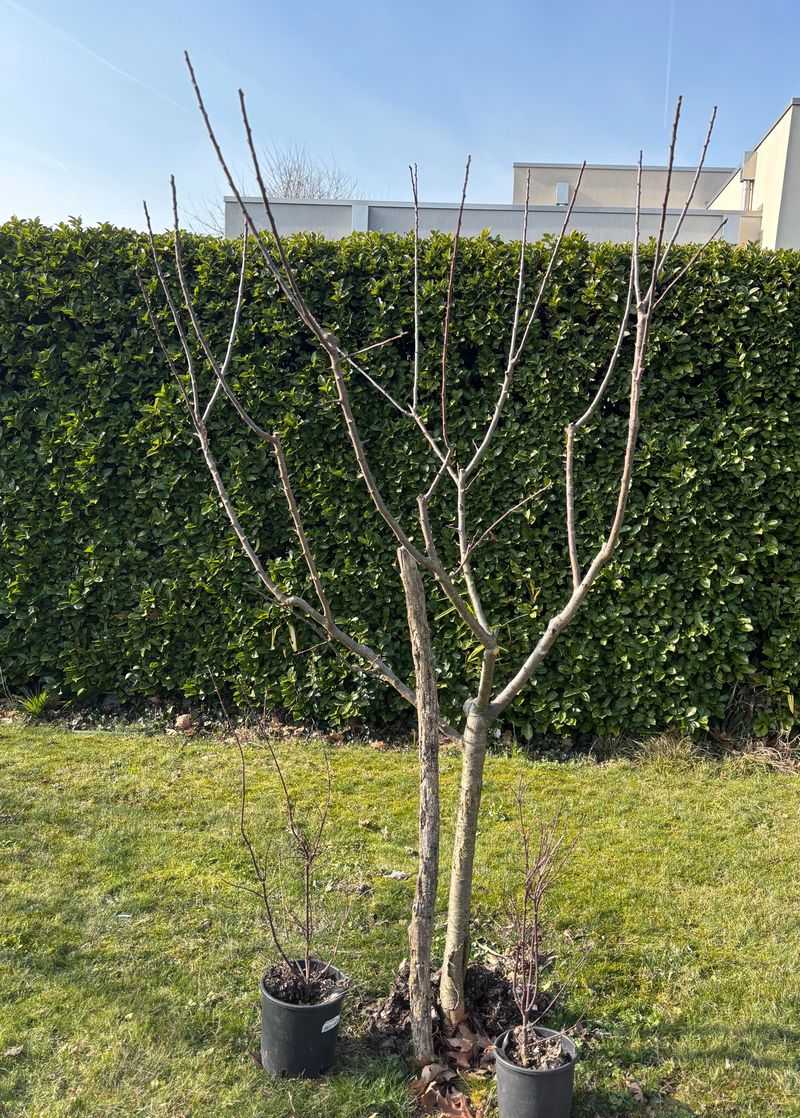
No two pruning seasons are exactly alike, and no two trees respond the same way. The best fruit growers are keen observers who learn from their trees and adjust their approach each year based on what they see.
After you prune, watch how your tree responds. Does it put out lots of water sprouts?
You might have pruned too hard. Is fruit production down?
You may have removed too many fruiting spurs or pruned at the wrong time. Are branches still crowded?
You need to be more aggressive about opening the center next year.
Keep notes or take photos each season so you can track changes over time. Notice which branches produced the best fruit and protect those in future pruning.
Pay attention to disease patterns, if one area of the tree keeps getting infected, improve airflow there. Watch how the tree’s shape evolves and guide it gently toward your ideal structure.
Oregon’s climate varies year to year, too. A wet spring might mean more disease pressure and a need for better airflow.
A dry summer might stress trees, so prune lighter the following winter. Flexibility and observation are your best tools.
Pruning is as much art as science, and you’ll get better every year as you learn to read your trees and respond to their needs.