Prune This Tree In Late Winter For A Stunning Early Spring Display In North Carolina

In North Carolina, late winter pruning can feel risky—but for this tree, it’s the secret to a spectacular spring show.
Done at the right time, pruning encourages explosive blooms just as winter loosens its grip.
This tree flowers on new growth, meaning late winter cuts redirect energy into fresh branches packed with buds.
Skip pruning, and the display suffers. Prune too late, and you lose blooms altogether.
Timing is everything. North Carolina’s mild winters make this window especially effective.
Gardeners who act confidently are rewarded with vibrant color when most landscapes are still waking up.
It’s a reminder that pruning isn’t about cutting back—it’s about setting the stage.
A few strategic cuts now can turn an ordinary tree into a spring centerpiece.
It’s The Crape Myrtle (Lagerstroemia Indica And Hybrids)
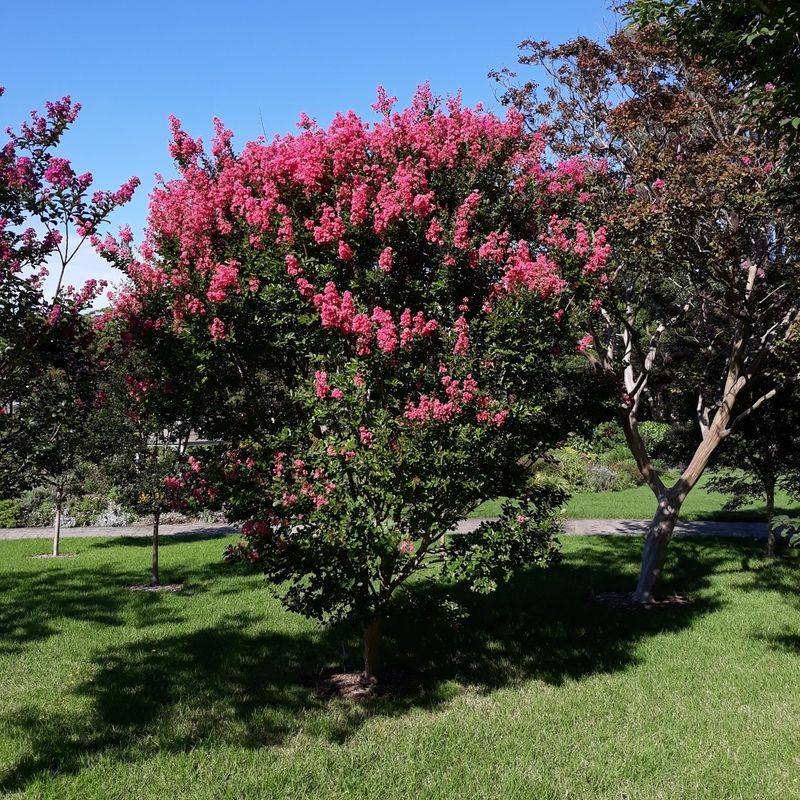
North Carolina gardeners have discovered that timing makes all the difference when it comes to crape myrtle care.
Pruning while the tree is fully dormant in late winter sets up everything your landscape needs for spectacular spring performance.
This waiting period ensures the plant channels all its stored energy into vigorous new growth once warmer weather arrives.
Crape myrtles enter complete dormancy during the coldest months, making late winter the ideal pruning window.
February through early March typically works best across most of North Carolina, though exact timing varies slightly by region.
Waiting until this period means you’re working with a tree that won’t waste resources healing cuts during active growth.
Pruning too early risks exposing fresh cuts to harsh freezes, while waiting too long interrupts the tree’s natural spring awakening.
Gardeners who master this timing see stronger shoots, more abundant blooms, and healthier overall structure.
Your crape myrtle essentially gets a head start, directing all its winter-stored nutrition toward building the framework for summer’s spectacular flower show.
This Southern favorite responds beautifully to thoughtful late-winter attention, rewarding patient gardeners with months of stunning color.
Late-Winter Pruning Preserves Flower Bud Formation
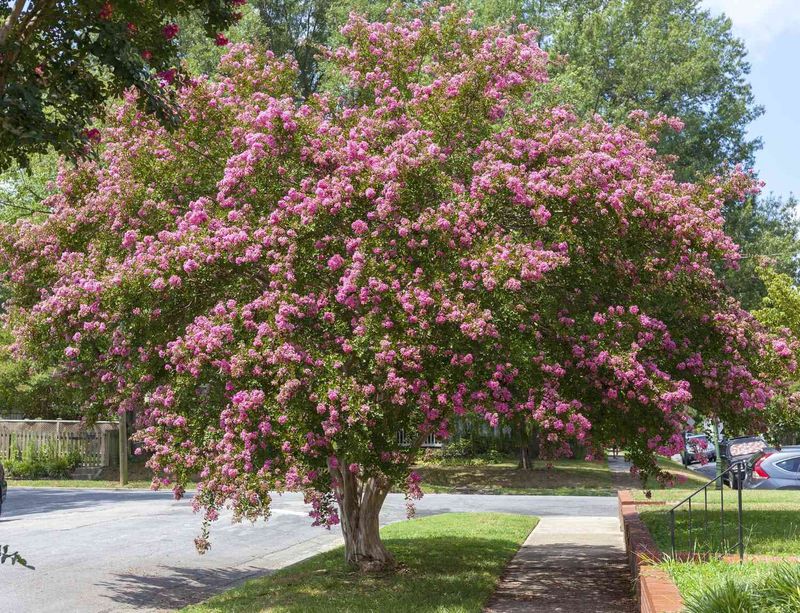
Understanding how crape myrtles produce flowers changes everything about your pruning approach.
These trees bloom exclusively on new wood—the fresh growth that emerges each spring.
Pruning in late winter, before any signs of awakening appear, maximizes the number of flowering shoots your tree produces.
When you prune during full dormancy, you’re essentially telling the tree where to focus its energy.
Each strategic cut encourages the development of strong new branches that will carry this season’s blooms.
Timing this work before growth begins means every bit of stored nutrition goes straight into bud formation rather than repairing wounds during active growth.
Gardeners who prune too late often sacrifice early blooms because the tree must redirect resources to healing.
Conversely, those who prune in late winter enjoy fuller flower clusters that arrive right on schedule.
Your crape myrtle essentially gets a clean slate, with all its energy channels open and ready to push out vigorous flowering wood.
This natural growth pattern means late-winter pruning isn’t just about shaping—it’s about unlocking the tree’s genetic potential for abundant summer color.
North Carolina’s climate provides the perfect dormancy window to make this happen.
Dormant Pruning Reduces Disease Risk

Fungal spores and garden pests become significantly less active during North Carolina’s coldest months.
Pruning when temperatures stay consistently low creates an environment where disease organisms simply can’t establish themselves on fresh cuts.
This natural protection means your crape myrtle heals cleanly without the complications that warm-weather pruning often brings.
Powdery mildew, a common crape myrtle challenge, thrives in the humidity and warmth of growing season conditions.
Cutting during dormancy sidesteps this problem entirely, as fungal activity remains minimal until temperatures rise.
Insect pests that might otherwise explore fresh wounds stay dormant themselves, leaving your tree’s healing process undisturbed.
Clean cuts made in late winter have weeks to begin sealing before any pathogens become active.
By the time spring warmth arrives, your pruning wounds have already started their natural closure process.
This head start makes a tremendous difference in overall tree health throughout the growing season.
Gardeners who prune in summer often battle persistent fungal issues and increased pest pressure on vulnerable cut surfaces.
Late-winter pruning eliminates these concerns almost entirely, giving your crape myrtle the healthiest possible start to its growing season.
Nature’s dormancy period provides built-in protection that smart gardeners use to their advantage.
Branch Structure Is Easier To See Without Leaves

Leafless branches reveal secrets that summer foliage keeps hidden from even experienced gardeners.
Winter’s bare framework lets you see exactly which branches cross, rub, or grow in directions that will cause problems later.
This clarity transforms pruning from guesswork into precise decision-making that shapes your tree’s future form.
Crowded interior branches become obvious when leaves aren’t blocking your view.
You can trace each branch from its origin to its tip, identifying weak attachments or awkward angles that summer’s canopy would completely disguise.
This visibility means every cut serves a clear purpose rather than being a hopeful guess beneath dense foliage.
Gardeners working in winter can step back and evaluate the tree’s entire architecture at a glance.
Problematic growth patterns stand out immediately, making it simple to remove what doesn’t contribute to a healthy, balanced structure.
You’re essentially working with a living blueprint, where every structural element reveals itself clearly.
Summer pruning forces you to work partially blind, often missing issues until they’ve already affected the tree’s health or appearance.
Late-winter clarity prevents these mistakes, letting you shape with confidence and precision.
Your pruning becomes surgical rather than random, creating a foundation for beautiful spring growth that unfolds exactly as you envisioned.
Encourages Strong, Upright New Growth
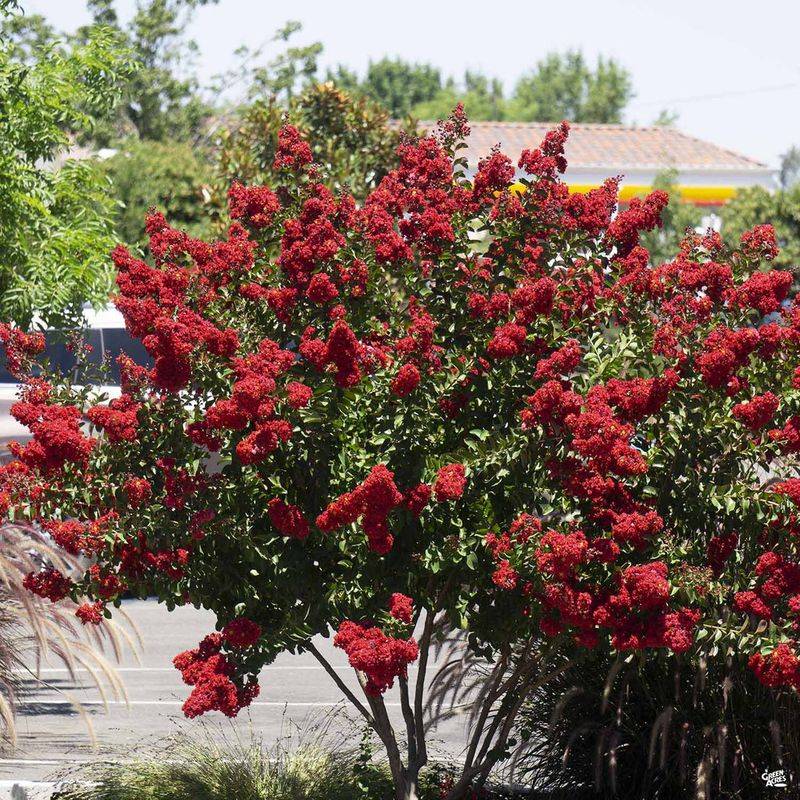
Selective thinning during late winter acts like a growth director for your crape myrtle’s spring performance.
Removing excess branches forces the tree to concentrate its stored energy into fewer, more robust shoots.
These strengthened stems can support heavier flower clusters without bending or breaking under summer’s weight.
Think of it as quality over quantity—your tree produces fewer but far superior branches when properly thinned.
Each remaining shoot receives a larger share of nutrients, resulting in thicker stems and more vigorous upward growth.
This directed energy creates a canopy that’s both stronger and more visually appealing than the tangled mess unpruned trees often develop.
Weak, spindly growth happens when too many branches compete for the same resources.
Late-winter pruning eliminates this competition before the growing season even begins.
Your crape myrtle responds by pushing out powerful new wood that stands upright and supports abundant blooms without additional staking or support.
Gardeners who skip this step often watch their trees develop drooping branches that can’t hold up under the weight of flowers.
Proper late-winter attention prevents this frustration entirely, creating a self-supporting structure that looks magnificent from spring through fall.
The investment of an hour or two in February pays dividends throughout the entire growing season.
Prevents Excessive Summer Pruning
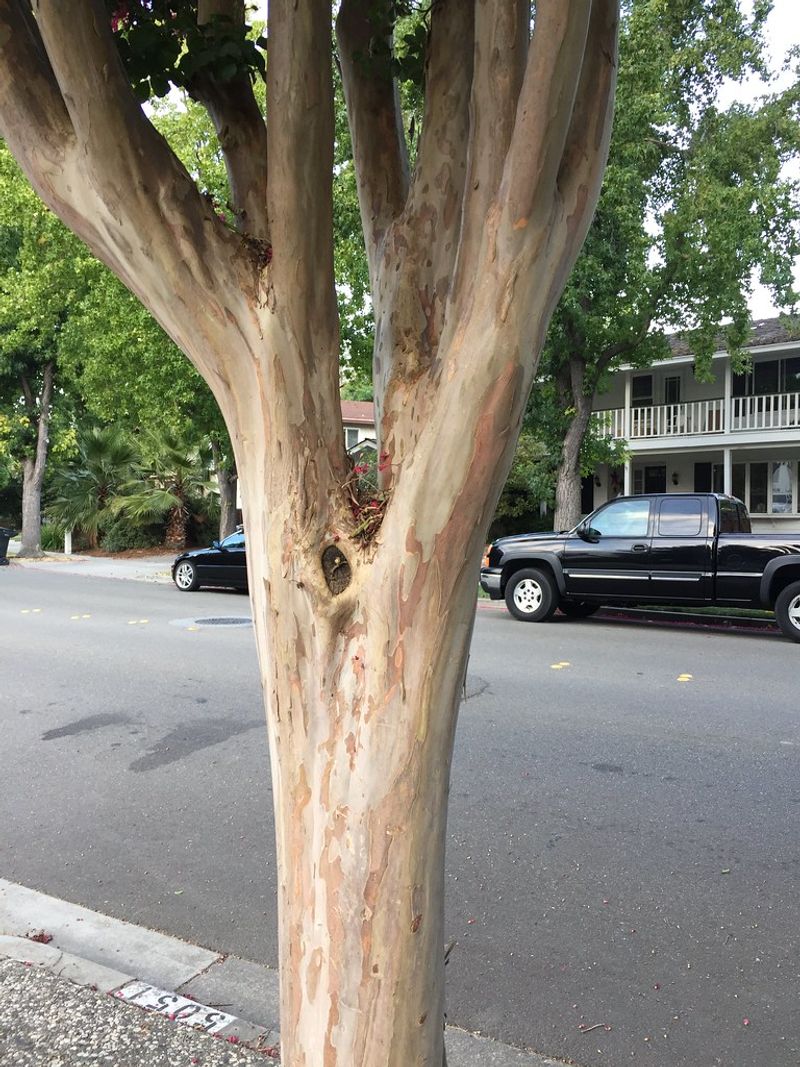
Getting your pruning right in late winter means you can put the shears away for the rest of the growing season.
Correct dormant-season work creates such a well-balanced structure that summer touch-ups become unnecessary.
This matters tremendously because any pruning during active growth directly reduces the number of flowers your tree produces.
Crape myrtles pruned in summer lose developing flower buds with every cut.
Those buds were weeks or months in development, representing significant energy investment the tree can’t recover.
Late-winter pruning avoids this waste entirely, preserving every potential bloom for maximum summer impact.
Gardeners who establish good structure while trees sleep rarely face the need for corrective cuts later.
Their crape myrtles emerge in spring with balanced branching that grows exactly where it should.
This proactive approach eliminates the reactive cycle of constant summer trimming that many gardeners trap themselves in.
Summer pruning also disrupts the tree’s natural growth rhythm, forcing it to redirect energy away from flowering toward wound healing.
Late-winter work aligns perfectly with the plant’s biological calendar, supporting rather than fighting its natural patterns.
Your crape myrtle essentially maintains itself all season when you’ve done the foundational work at the right time.
Smart timing in February means effortless beauty from April through October.
Protects Against Cold Damage In North Carolina Winters
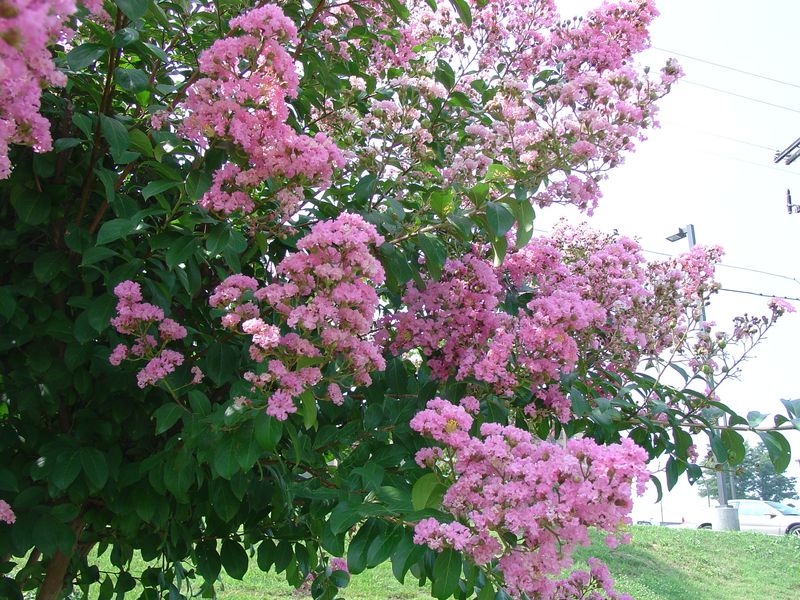
North Carolina’s unpredictable late-winter weather makes timing absolutely critical for pruning success.
Cutting too early exposes fresh wounds and newly stimulated growth to potentially damaging late freezes.
Waiting until the worst cold has passed protects your tree from setbacks that can delay spring growth by weeks.
Fresh pruning cuts essentially create entry points where cold can penetrate deeper into branch tissue.
When temperatures plunge after premature pruning, this vulnerability can result in more extensive damage than if you’d left the tree alone.
Patient gardeners who wait for late winter’s milder temperatures avoid this risk entirely.
February and early March typically offer the sweet spot across most of North Carolina—cold enough for full dormancy but past the harshest freeze events.
This window lets you prune with confidence that warming trends will follow rather than another Arctic blast.
Your crape myrtle gets the benefits of dormant pruning without exposure to weather extremes.
Gardeners in mountain regions might wait until mid-March, while coastal areas can sometimes start in late January.
Knowing your local climate patterns helps you choose the safest timing within the late-winter window.
The goal is pruning during dormancy but after the coldest weather has reliably passed, giving your tree the best possible conditions for spring awakening.
Improves Airflow And Light Penetration
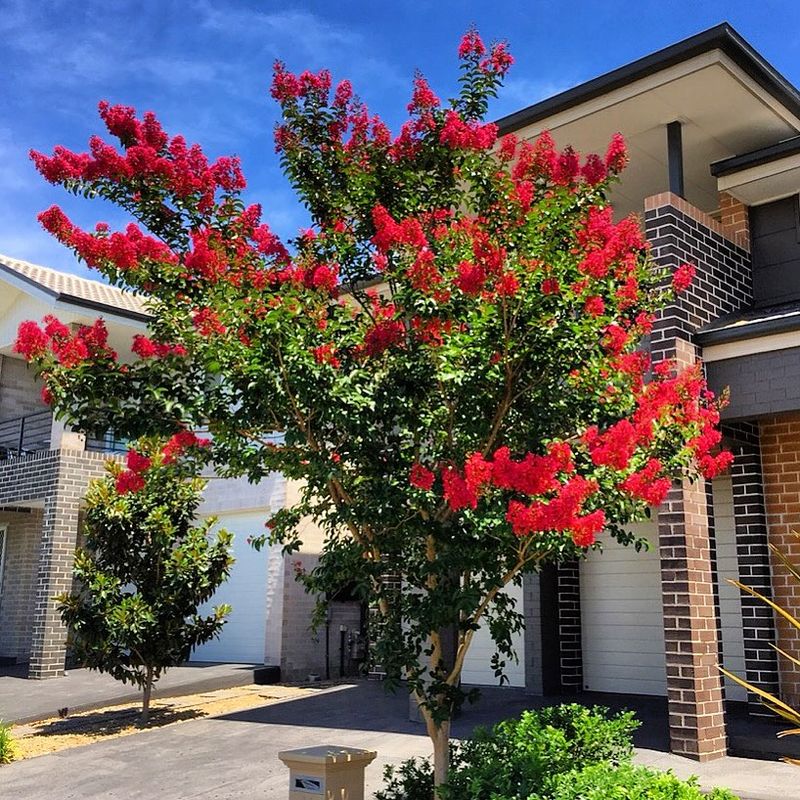
Dense, crowded branches create shadowy interiors where air stagnates and moisture lingers too long.
Thinning your crape myrtle in late winter opens up the canopy, allowing breezes to circulate freely through the tree’s interior.
This improved airflow dramatically reduces conditions that favor fungal diseases and pest establishment.
Sunlight penetration matters just as much as air movement for healthy spring growth.
When light reaches interior branches, your entire tree leafs out more evenly rather than concentrating growth only on outer edges.
This balanced development creates fuller, more attractive form while supporting better overall health.
Leaves that develop in good light and air circulation are naturally more resistant to disease.
They dry quickly after rain and dew, preventing the prolonged moisture that fungal spores need to germinate.
Your crape myrtle essentially becomes self-protecting when its structure promotes these healthy conditions.
Gardeners who thin properly in late winter notice their trees stay cleaner and healthier throughout humid Southern summers.
The difference becomes especially obvious during North Carolina’s muggy July and August weather.
Well-spaced branches mean fewer disease problems, less maintenance, and more energy available for producing those spectacular flower clusters.
Proper winter structure creates summer success through simple but effective environmental management.
Enhances The Tree’s Natural Form
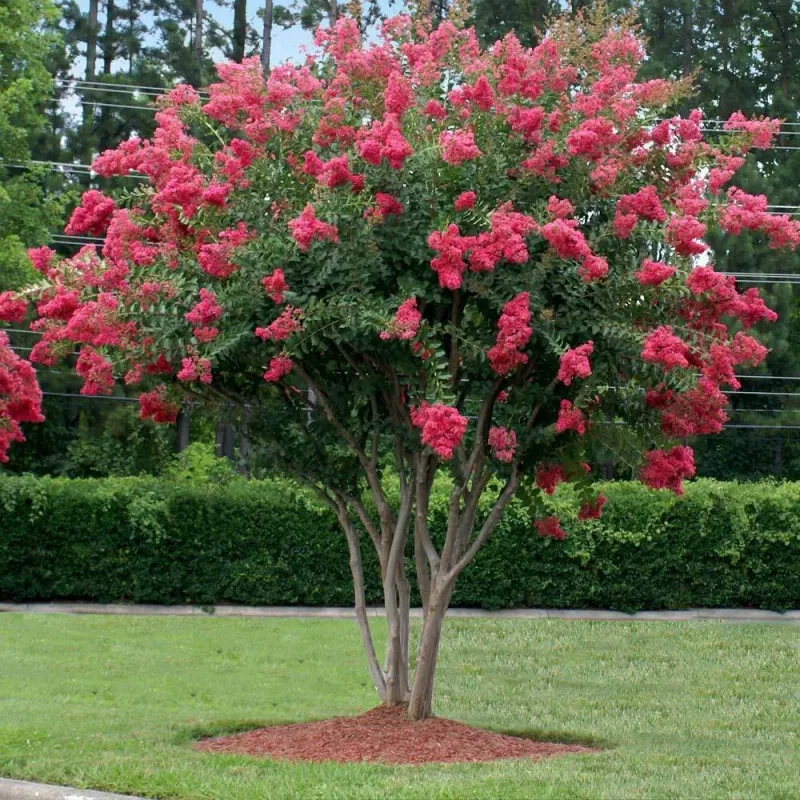
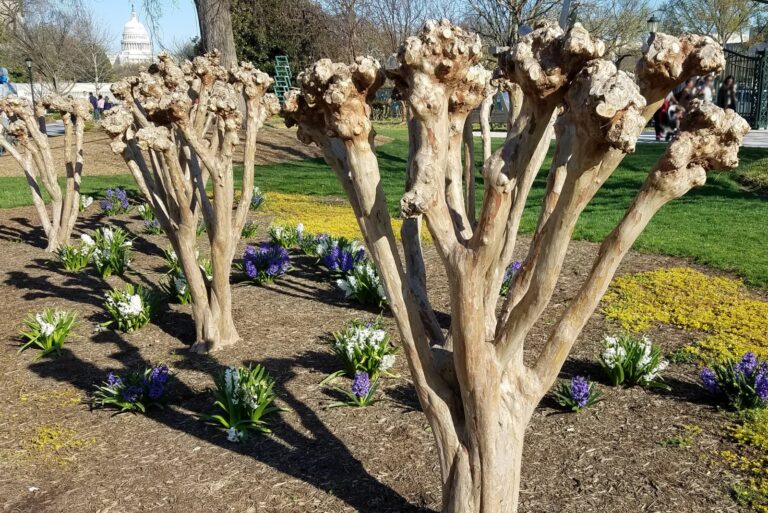
The infamous practice called “crape murder”—severe topping that leaves ugly stubs—has unfortunately become common across the South.
This brutal approach destroys the tree’s graceful natural vase shape, replacing elegant architecture with knobby, unnatural regrowth.
Late-winter pruning done correctly enhances rather than fights the crape myrtle’s inherent beauty.
Proper pruning works with the tree’s growth patterns, selectively removing branches while preserving the overall structure.
You’re guiding rather than forcing, encouraging the natural upward-and-outward flow that makes crape myrtles so visually appealing.
This approach requires more thought than mindless topping but delivers results that look professionally landscaped rather than butchered.
Expert gardeners remove crossing branches, thin crowded areas, and shape gently while maintaining the tree’s essential character.
The result looks like the tree grew that way naturally rather than showing obvious signs of human intervention.
Your landscape gains a specimen that becomes more beautiful with age rather than increasingly deformed.
Topped crape myrtles develop weak, crowded regrowth that requires constant corrective cutting.
Naturally shaped trees need minimal maintenance once proper structure is established through thoughtful late-winter work.
The time you invest in learning correct techniques pays off in decades of effortless beauty.
Respecting the tree’s natural form creates landscapes that look mature and intentional rather than hacked and struggling.
Sets The Stage For A Dramatic Early Spring Presence
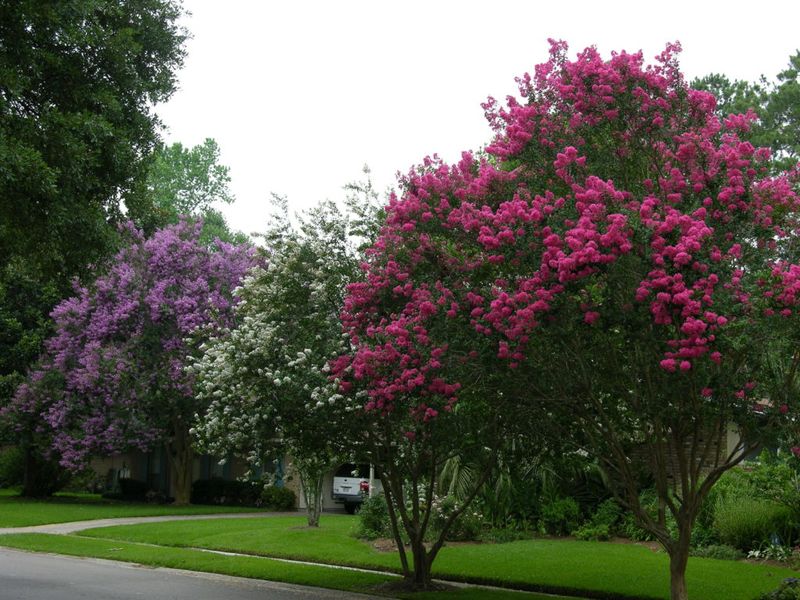
Everything about proper late-winter pruning builds toward that magical moment when spring arrives in North Carolina landscapes.
Clean structure, balanced branching, and directed energy combine to create one of the season’s most striking transformations.
Your crape myrtle essentially explodes into life, with fresh growth emerging exactly where you want it.
Healthy new shoots unfold in coordinated waves, covering the tree’s framework with vibrant spring foliage.
The contrast between winter’s bare bones and spring’s fresh green becomes a landscape focal point that draws every eye.
Neighbors will wonder what you did differently to achieve such spectacular results.
Well-pruned crape myrtles don’t just leaf out—they perform, turning your yard into a showcase of spring vitality.
Balanced branching means even growth distribution, creating full canopies without gaps or awkward bare spots.
This early-season beauty sets the stage for summer’s flower display, building anticipation for the color explosion to come.
Gardeners who master late-winter pruning timing and technique enjoy a competitive advantage in neighborhood curb appeal.
Their landscapes wake up earlier, grow more vigorously, and transition into summer bloom with seamless grace.
The investment of a few hours in February transforms into months of landscape drama that begins the moment temperatures warm.
Your crape myrtle becomes the star of spring, proving that timing truly is everything in Southern gardening success.