10 Rare Garden Plants Oregon Gardeners Seek For Unique Blooms
In Oregon, gardeners are always on the hunt for something a little different, something that makes their outdoor spaces stand out from the crowd.
Rare garden plants have a way of turning ordinary landscapes into living works of art.
Unique blooms, unusual foliage, and unexpected colors give gardens personality, making them more than a patch of green, they become a statement of style and creativity.
Serious gardeners know that rare plants do more than impress visitors.
They challenge skill, reward patience, and bring a sense of discovery to every season.
Tracking down these special varieties can feel like treasure hunting, with each new bloom offering a reward that goes beyond beauty.
From hidden nurseries to carefully cultivated seeds, rare plants demand attention and care, but the payoff is unforgettable.
In Oregon’s diverse climate, these plants thrive when chosen thoughtfully, creating bursts of color and texture that regular garden staples cannot match.
Unique blooms draw pollinators, spark conversation, and give every garden a signature touch.
For gardeners willing to go the extra mile, rare plants provide magic in every season, proving that a little boldness can turn an everyday garden into a one-of-a-kind paradise.
1. Tacca Chantrieri (Black Bat Flower)
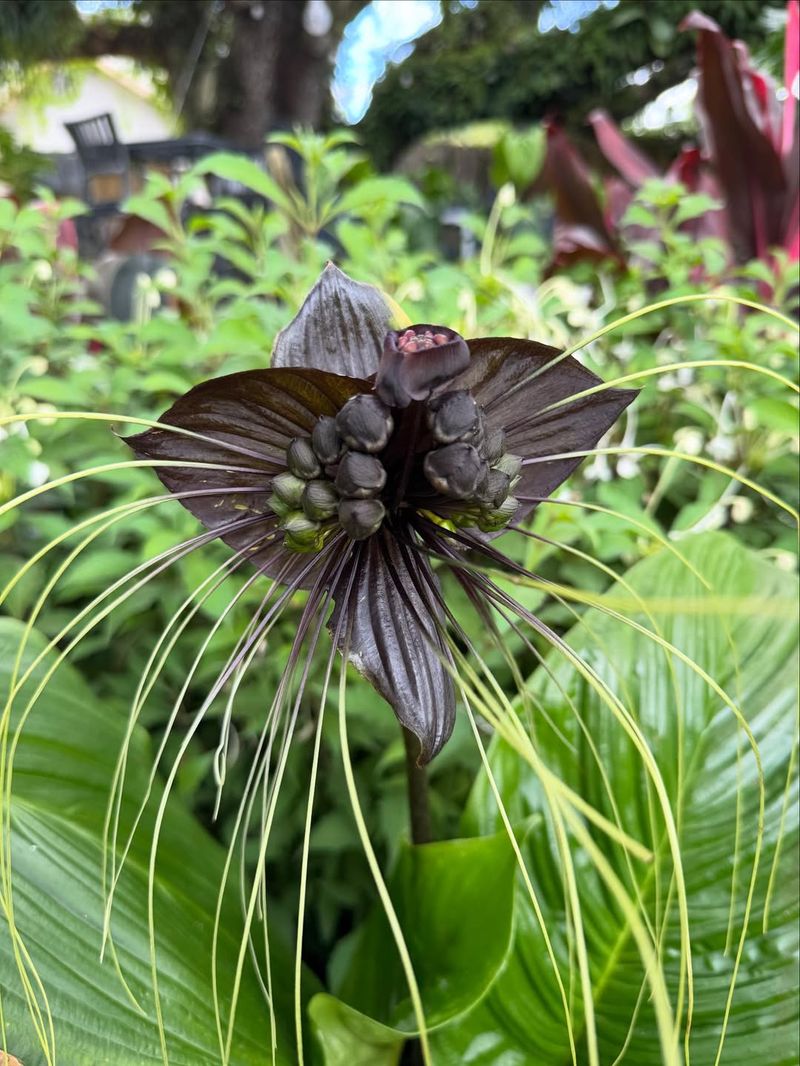
Nothing quite compares to the shock value of a black bat flower blooming in your garden space.
Tacca chantrieri earns its spooky nickname honestly, with flowers that genuinely resemble bats in flight, complete with wing-like petals and long, thread-like whiskers that can stretch over a foot long.
The blooms emerge in deep purple-black shades that look almost otherworldly against bright green foliage.
Oregon gardeners typically grow this tropical oddity as a houseplant or in heated greenhouses, since it originates from the steamy forests of Southeast Asia.
However, adventurous Portland and Eugene gardeners have successfully moved potted specimens outdoors during warm summer months.
The plant craves high humidity, warm temperatures, and bright indirect light, making Oregon’s naturally humid climate somewhat helpful.
Provide rich, well-draining potting mix and keep the soil evenly moist throughout the growing season.
Reduce watering slightly during winter when growth naturally slows.
The bat flower blooms sporadically throughout the year when conditions suit its preferences.
While not the easiest plant to maintain, its bizarre appearance makes it a prized conversation piece among Oregon collectors who specialize in unusual specimens that push the boundaries of typical garden aesthetics.
2. Meconopsis Betonicifolia (Himalayan Blue Poppy)
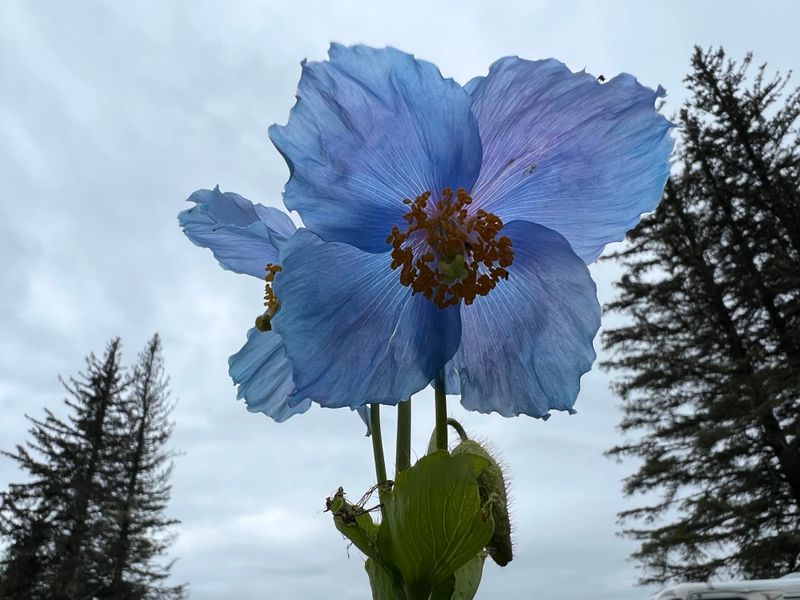
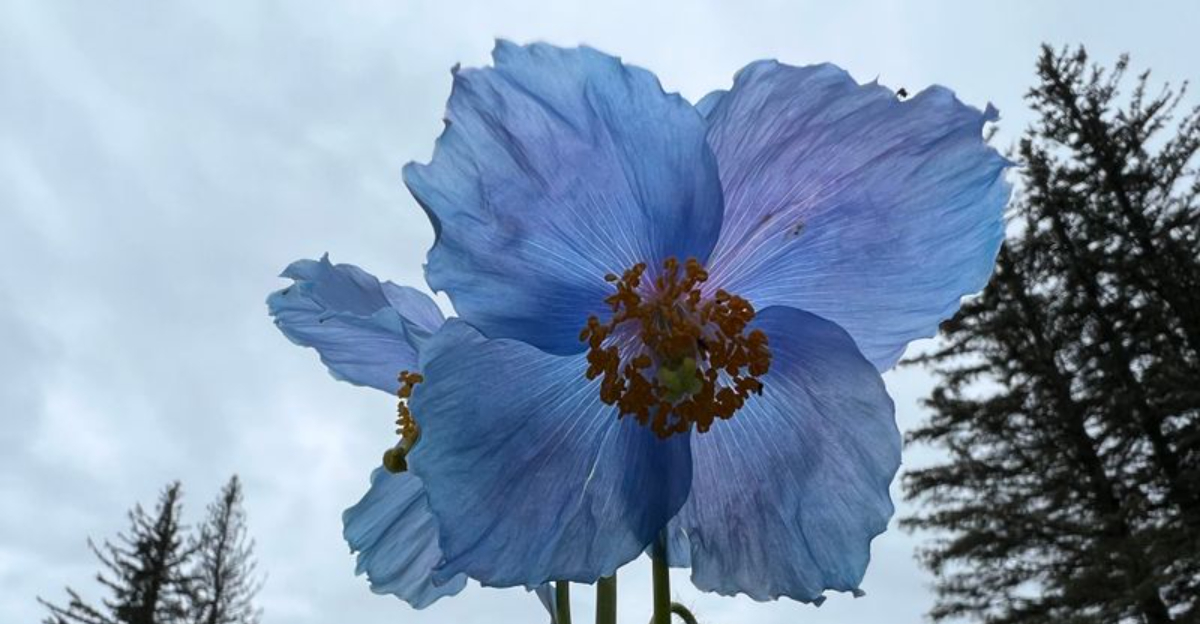
Picture a poppy so blue it looks like someone painted the sky onto delicate petals.
Meconopsis betonicifolia brings that exact magic to Oregon gardens, and it’s no wonder local gardeners go to great lengths to track down these stunning specimens.
Native to the Himalayan mountains, this rare beauty thrives in Oregon’s cooler regions, particularly in areas with afternoon shade and consistent moisture.
The flowers emerge in late spring and early summer, displaying an electric blue color that simply doesn’t exist in most garden plants.
Each bloom stretches about three to four inches across, creating a breathtaking display that stops visitors in their tracks.
Oregon gardeners in the Willamette Valley and coastal areas have the best success with this temperamental treasure.
The plant demands acidic, well-draining soil rich in organic matter, and it absolutely hates hot, dry conditions.
Keep the soil consistently moist but never waterlogged, and provide protection from harsh afternoon sun.
Many Oregon growers treat it as a short-lived perennial, often lasting just two to three years.
Despite its fussy reputation, the reward of those impossible blue blooms makes every bit of extra care worthwhile for dedicated gardeners seeking something truly extraordinary.
3. Cypripedium Reginae (Showy Lady’s Slipper Orchid)
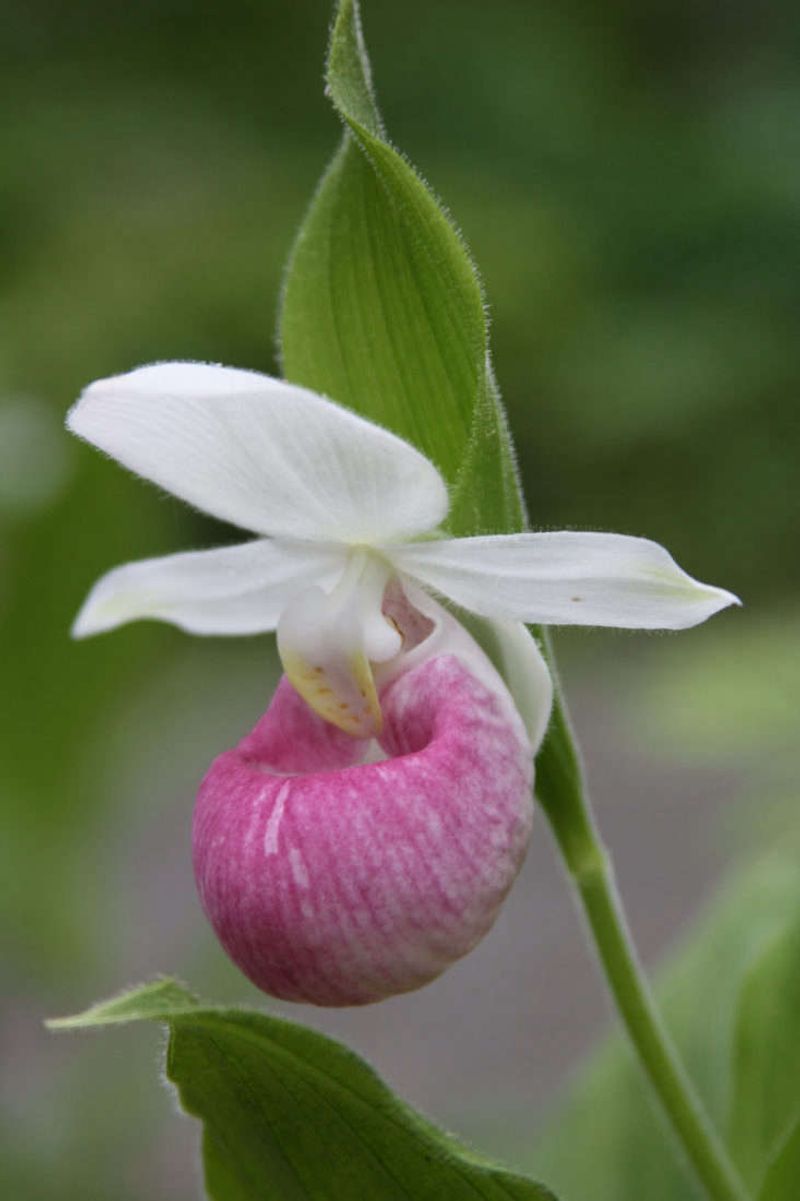
Few native orchids can match the stunning elegance of Cypripedium reginae.
This rare lady’s slipper orchid produces blooms that look hand-crafted from silk, featuring a pouched white lip blushed with rose-pink and topped with white petals striped in the same rosy hue.
Oregon gardeners prize this species not just for its beauty but also for its challenge.
Successfully growing showy lady’s slippers requires recreating the specific woodland conditions they love.
The plant naturally occurs in boggy, acidic areas with dappled shade, making Oregon’s western forests ideal territory.
Gardeners in Bend, Salem, and other Oregon cities with similar climates have achieved success by providing consistently moist, acidic soil enriched with plenty of organic matter.
Never let the roots completely dry out, but avoid soggy conditions that promote rot.
These orchids form partnerships with specific soil fungi, which makes transplanting tricky and purchasing from reputable nurseries essential.
Never collect wild specimens, as this threatens already vulnerable populations.
The blooms appear in late spring to early summer, lasting several weeks when conditions stay cool and moist.
Patience rewards dedicated Oregon orchid enthusiasts, as established plants can live for decades and slowly expand into impressive colonies that become cherished garden heirlooms.
4. Protea Cynaroides (King Protea)
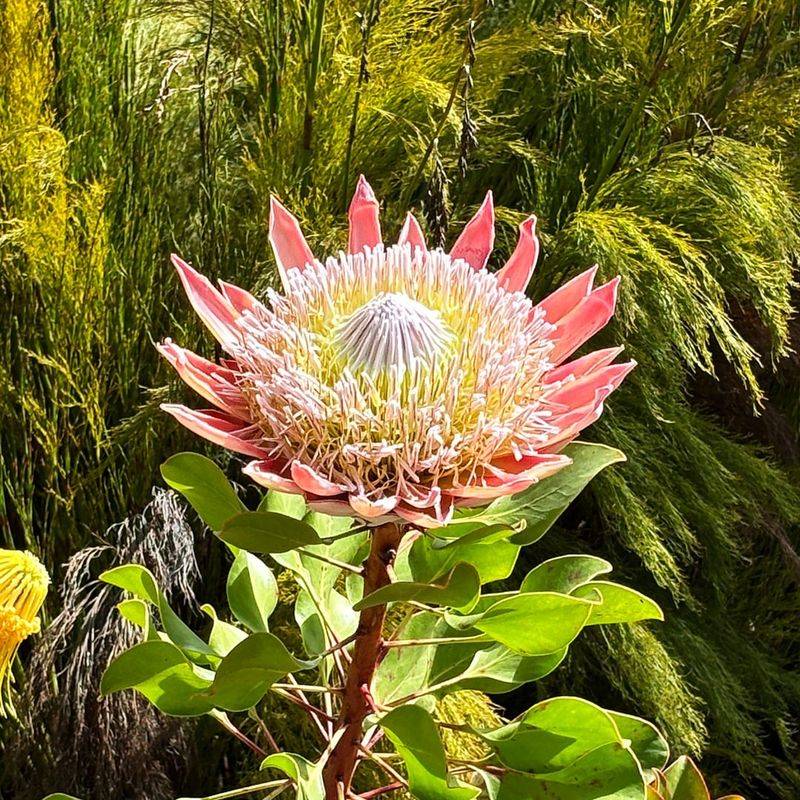
South Africa’s national flower has found an unlikely home in Oregon’s milder coastal regions.
Protea cynaroides produces flower heads so large and dramatic they barely look real, with some blooms reaching nearly a foot across.
The artichoke-like structure features layers of pointed, petal-like bracts surrounding a fuzzy center, typically in shades ranging from creamy white to deep crimson.
Oregon gardeners along the coast and in southern regions with Mediterranean-like climates have the best luck with these spectacular blooms.
King proteas demand excellent drainage and actually prefer poor, slightly acidic soil with minimal fertilizer.
Too much richness or phosphorus can actually harm these unusual plants.
They need full sun and protection from Oregon’s wettest winter weather, which can cause root rot in heavy soils.
Many successful Oregon growers plant proteas on slopes or in raised beds amended with sand and gravel to ensure water drains quickly.
Once established, these tough plants tolerate drought remarkably well, making them surprisingly low-maintenance for such exotic-looking specimens.
The blooms appear primarily in late winter through spring, providing stunning cut flowers that last weeks in arrangements.
For Oregon gardeners seeking bold, architectural plants that defy expectations, king proteas deliver unforgettable impact.
5. Dracunculus Vulgaris (Dragon Arum)
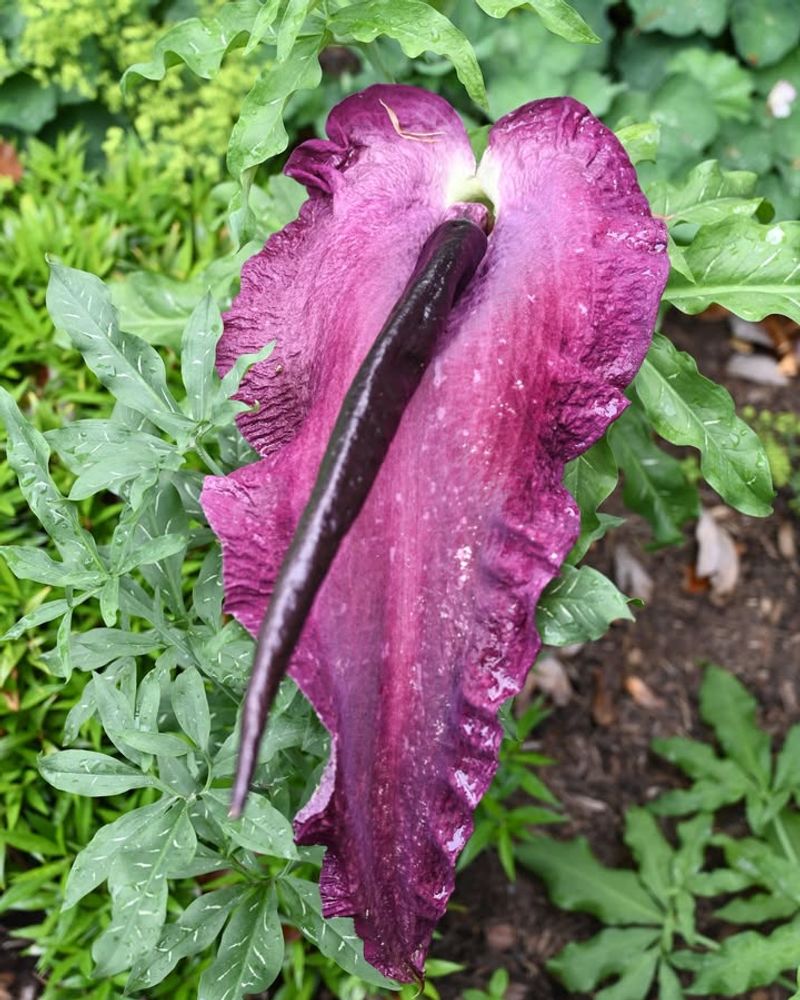
Brace yourself for one of the garden world’s most controversial beauties.
Dracunculus vulgaris produces a flower so visually stunning yet so notoriously stinky that it divides Oregon gardeners into devoted fans and horrified skeptics.
The bloom consists of a deep maroon, velvety spathe that unfurls to reveal a tall, almost black spadix rising from the center like a dragon’s tongue.
Here’s the catch: for about 24 hours when the flower first opens, it releases an odor resembling rotting meat to attract pollinating flies.
Smart Oregon gardeners plant dragon arums away from patios and windows, allowing them to appreciate the dramatic blooms from a safe distance.
After that first day, the smell fades completely, leaving only the architectural beauty.
This Mediterranean native adapts surprisingly well to Oregon gardens, particularly in the Willamette Valley and southern regions.
Plant the large tubers in fall, positioning them in partial shade with well-draining soil.
The spotted, palm-like foliage emerges in spring, followed by the spectacular blooms in late spring to early summer.
After flowering, the plant produces clusters of orange berries before going dormant in late summer.
Dragon arums prove remarkably cold-hardy and low-maintenance once established, slowly spreading to form impressive colonies that become the ultimate conversation starter in adventurous Oregon gardens.
6. Cardiocrinum Giganteum (Giant Himalayan Lily)
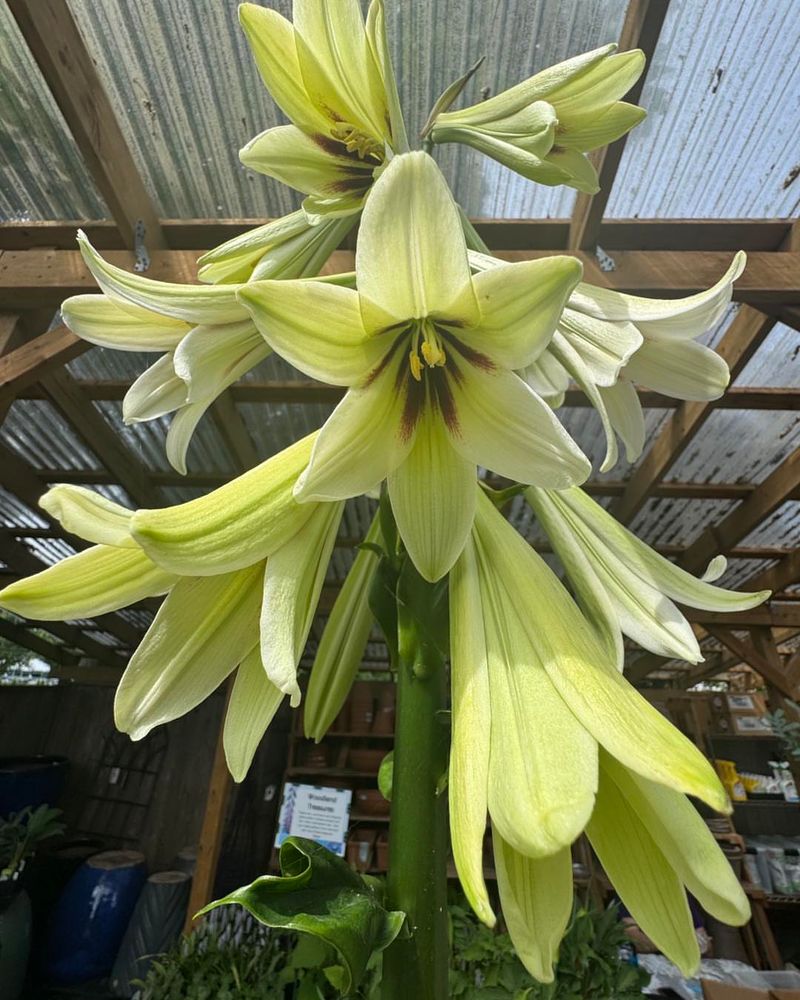
Imagine a lily that towers over your head, sending up flower spikes that can reach 12 feet tall.
Cardiocrinum giganteum makes that fantasy real, and Oregon gardeners with patience and the right conditions treasure these magnificent giants.
The enormous white trumpet flowers emerge in summer, each bloom stretching six to eight inches long and releasing a sweet, intoxicating fragrance that fills the evening air.
A single mature plant can produce 20 or more flowers clustered along the top portion of the towering stem.
Oregon’s western regions provide ideal conditions for these Himalayan natives, which crave rich, moist, woodland soil and protection from hot afternoon sun.
The main challenge with giant lilies involves their unique lifecycle: after flowering, the main bulb exhausts itself and fades, but it produces offset bulbs that continue the legacy.
This means gardeners need patience, as bulbs typically take five to seven years from planting to reach flowering size.
Savvy Oregon growers plant bulbs of different ages to ensure blooms appear every year once the cycle establishes.
Provide deep, humus-rich soil and consistent moisture, especially during the growing season.
These spectacular plants suit woodland gardens and shaded borders throughout western Oregon, where they create unforgettable vertical drama that transforms ordinary spaces into enchanted forest retreats.
7. Aristolochia Gigantea (Brazilian Dutchman’s Pipe)
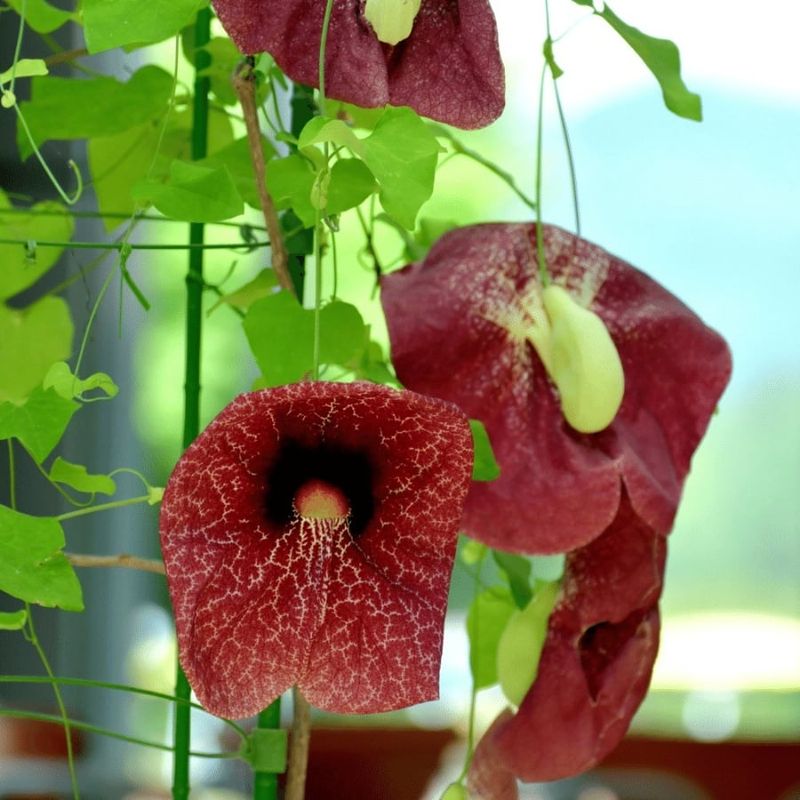
Mother Nature must have been feeling particularly creative when she designed Aristolochia gigantea.
This tropical vine produces flowers that look more like alien creatures than plant blooms, with enormous pouched structures patterned in maroon, cream, and burgundy that can measure over a foot across.
The intricate veining and mottled coloring create patterns so complex they seem hand-painted.
Oregon gardeners typically grow this Brazilian native in heated greenhouses or as a dramatic houseplant, since it demands tropical warmth and high humidity.
However, during Portland and Eugene’s warmest months, container-grown specimens can vacation outdoors in protected locations.
The vine climbs vigorously when happy, potentially reaching 15 feet or more in a single season.
Provide a sturdy trellis and bright indirect light for best growth and flowering.
The blooms appear sporadically throughout the year when conditions suit the plant’s preferences.
Like the dragon arum, these flowers produce a mild odor to attract pollinators, though it’s generally less offensive and fades quickly.
Keep the soil consistently moist during active growth and maintain humidity levels above 50 percent.
For Oregon collectors seeking the ultimate conversation piece, Brazilian Dutchman’s pipe delivers bizarre beauty that guests simply can’t ignore, making it worth the extra effort required to keep these tropical oddities thriving.
8. Streptocarpus Saxorum (False African Violet)
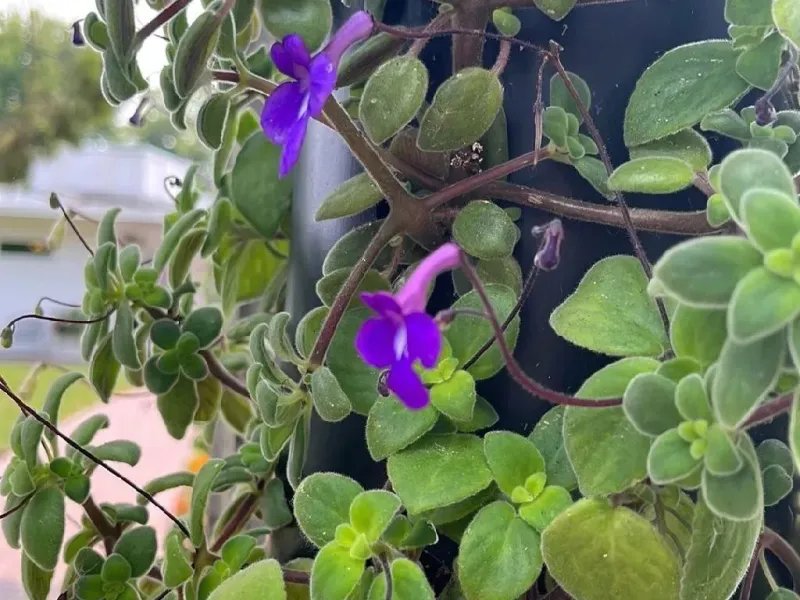
Don’t let the common name fool you into thinking this plant is boring or ordinary.
Streptocarpus saxorum creates a cascading waterfall of delicate lilac-blue flowers that bloom almost continuously when conditions stay right.
Each tubular blossom features five petals that flare open at the mouth, creating a trumpet shape that attracts hummingbirds in outdoor settings.
Oregon gardeners appreciate this East African native for its adaptability and generous flowering habit.
While it prefers warm temperatures, it tolerates cooler conditions better than many tropical plants, making it suitable for Oregon homes and covered patios.
The trailing growth habit makes it perfect for hanging baskets or elevated planters where the stems can drape gracefully.
Provide bright indirect light and keep the soil lightly moist but never soggy.
The fuzzy leaves and stems store some water, giving the plant mild drought tolerance.
Feed monthly during the growing season with diluted liquid fertilizer to support continuous blooming.
In milder Oregon coastal areas, adventurous gardeners have successfully grown false African violets outdoors year-round in protected microclimates.
The plant self-cleans by dropping spent flowers, keeping maintenance minimal.
For Oregon plant lovers seeking reliable color and graceful form without fussy care requirements, Streptocarpus saxorum delivers beauty that feels both exotic and approachable.
9. Gloriosa Superba (Flame Lily)
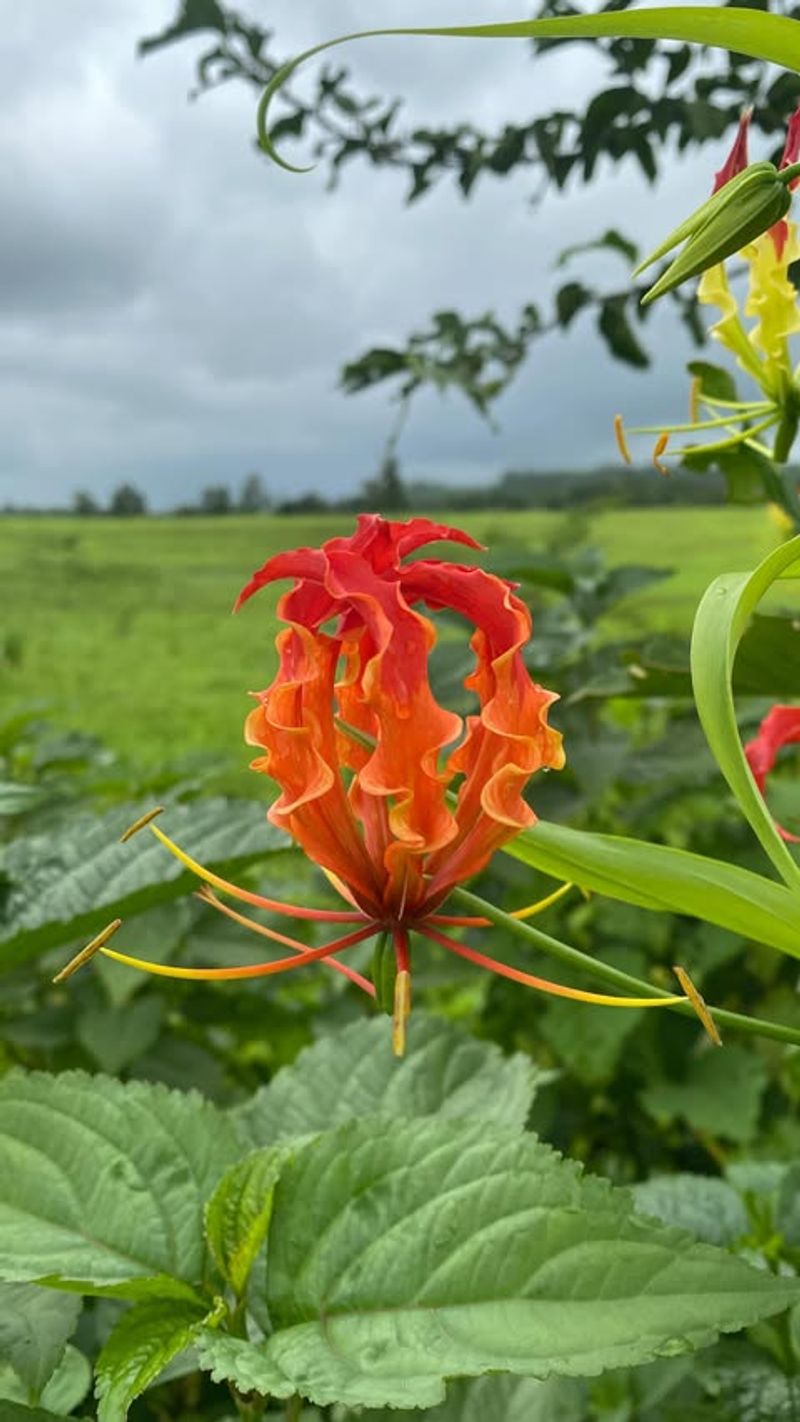
Few flowers capture attention quite like the flame lily in full bloom.
Gloriosa superba produces flowers that look like they’re made of flickering flames, with petals that curve dramatically backward in shades of brilliant red edged with golden yellow.
The wavy, crimped edges add extra drama, while prominent stamens arch outward from the center.
This climbing lily from Africa and Asia thrives in Oregon’s warmer summer months, making it a popular choice for adventurous gardeners seeking temporary tropical flair.
Most Oregon growers treat flame lilies as tender perennials, planting the tubers in spring after frost danger passes and lifting them before winter cold arrives.
The vines climb by modified leaf tips that wrap around supports, eventually reaching six to eight feet tall.
Plant tubers horizontally about four inches deep in rich, well-draining soil with full sun to partial shade.
Keep soil consistently moist during active growth and provide a trellis or other support structure.
Flowers appear throughout summer and into fall, with each bloom lasting about a week.
Remember that all parts of this plant contain toxic compounds, so handle tubers with care and plant away from areas where children or pets play.
For Oregon gardeners seeking bold summer color with an exotic twist, flame lilies bring unforgettable drama that elevates any garden design.
10. Amorphophallus Titanum (Corpse Flower)
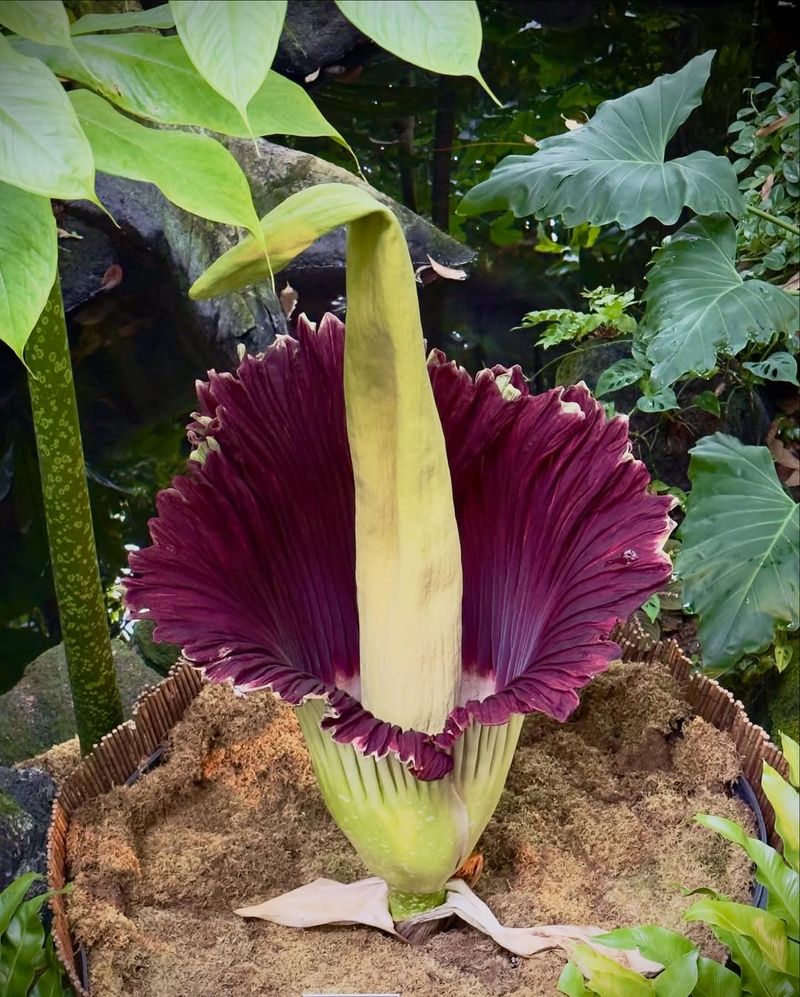
Only the most dedicated Oregon plant collectors attempt growing the legendary corpse flower.
Amorphophallus titanum holds the record for producing the world’s largest unbranched inflorescence, with blooms that can tower over ten feet tall and weigh more than 200 pounds.
The massive burgundy spathe unfurls to reveal a tall, pale spadix that releases an infamous odor resembling rotting flesh when the flower opens.
This Sumatran giant requires enormous space, specialized care, and years of patient cultivation before blooming, making it extremely rare in private Oregon collections.
Most residents see corpse flowers only at botanical gardens like Portland’s Hoyt Arboretum when specimens bloom.
The plant grows from a massive underground corm that can weigh over 200 pounds in mature specimens.
Between bloom cycles, it produces a single enormous leaf that can reach 20 feet tall, resembling a small tree.
This leaf grows for several months before collapsing, and the cycle repeats.
Eventually, after accumulating enough energy, the plant sends up its spectacular bloom instead of a leaf.
The flower typically remains open for just 24 to 48 hours before collapsing.
For Oregon gardeners with greenhouse space, resources, and extraordinary patience, successfully blooming a corpse flower represents the ultimate horticultural achievement and a once-in-a-lifetime experience worth every year of dedicated care.