7 Reasons Why Ohio Seedlings Get Leggy Indoors In March
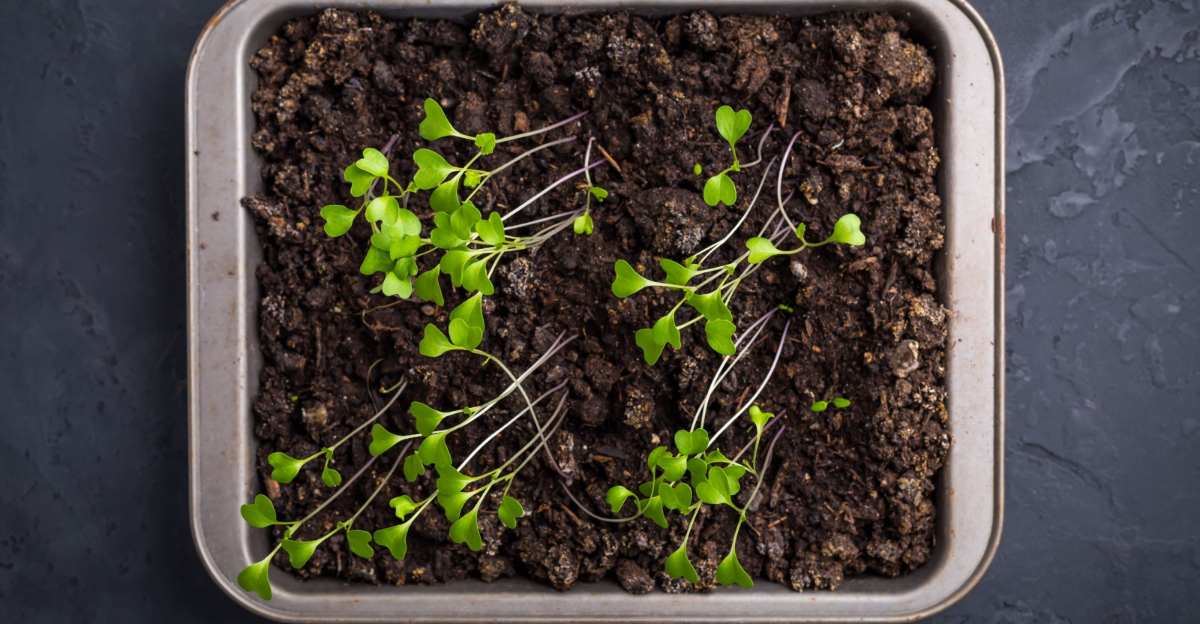
March is an exciting time to start seeds indoors, but many Ohio gardeners get frustrated when their seedlings grow tall, thin, and floppy. You’ve probably seen tiny plants leaning toward the window or tipping over, and it can make a simple project feel like a struggle.
Seedlings don’t always behave the way we hope, even when you’re careful. Some trays look crowded, leaves stretch too far, and stems feel weak.
It’s a common sight in homes across Ohio, and it can leave gardeners questioning if their efforts will pay off. A few small changes can make a big difference in how seedlings look and perform.
By the time they’re ready for the garden, healthy, sturdy seedlings give your spring planting a serious head start and make the effort feel worthwhile.
1. Insufficient Light Makes Seedlings Stretch
Natural sunlight through windows rarely provides enough intensity for seedlings started indoors during March in Ohio. Even a south-facing window delivers only a fraction of the light seedlings need because window light is weaker and less direct than outdoor sunlight.
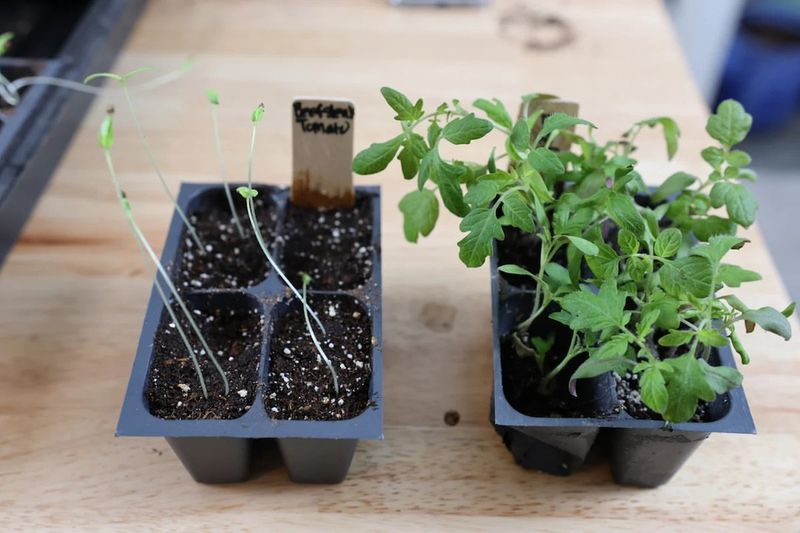
Seedlings sense the direction of light and stretch their stems rapidly to reach it, resulting in tall, weak plants that topple over easily.
Most vegetable seedlings require 12 to 16 hours of bright light daily to develop thick stems and deep green leaves. Without enough light, they prioritize height over strength, hoping to reach a better light source.
This survival response creates the classic leggy appearance with long gaps between leaves and pale coloring.
To prevent stretching, place seedlings directly under full-spectrum grow lights positioned just 2 to 4 inches above the tops of the plants. Adjust the lights upward as seedlings grow, maintaining that close distance.
Use a timer to provide consistent 14 to 16 hour light periods, mimicking long spring days.
If you notice early stretching, lower your lights immediately and consider gently brushing your hand over seedlings daily to stimulate stronger stem development. You can also transplant leggy seedlings deeper into soil, burying part of the stem to provide extra support.
Adding reflective material around your seed trays, such as aluminum foil or white cardboard, helps bounce light back onto plants from all sides. These adjustments will encourage compact, vigorous growth even during Ohio’s cloudy March weather.
2. Grow Lights Too High Cause Spindly Growth
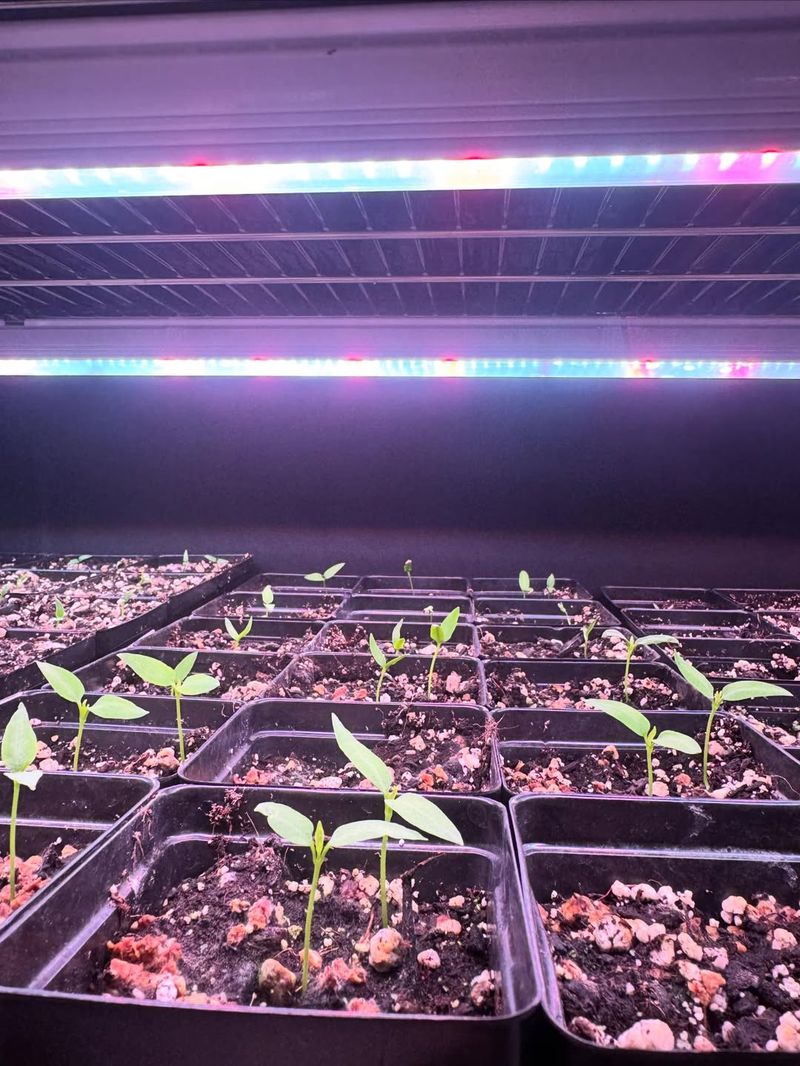
Many gardeners invest in quality grow lights but position them too far above their seedlings, creating the same stretching problem as insufficient natural light. When lights hang 12 inches or more above seedlings, the light intensity drops dramatically and plants respond by reaching upward.
Even powerful LED or fluorescent fixtures lose effectiveness with distance, and seedlings will stretch just as badly as they would near a dim window.
Light intensity follows the inverse square law, meaning it decreases rapidly as distance increases. A grow light that provides excellent coverage at 3 inches delivers significantly less intensity as distance increases.
Seedlings detect this reduced light and immediately begin elongating their stems in search of a stronger source.
Position your grow lights 2 to 4 inches directly above the tops of your seedlings when they first emerge. As plants grow taller, raise the lights to maintain this close distance throughout their indoor growth period.
Check the spacing daily because seedlings can grow surprisingly fast under good conditions.
Adjustable light hangers or chains make height changes easy and allow you to customize positioning for different tray heights. If you are using shop lights or fluorescent tubes, remember they produce less intense light than LEDs, so keep them even closer, around 2 inches from seedling tops.
Proper light placement creates stocky, dark green seedlings with short spaces between leaves, setting them up for successful transplanting later in spring.
3. Overcrowded Trays Force Competition And Stretching
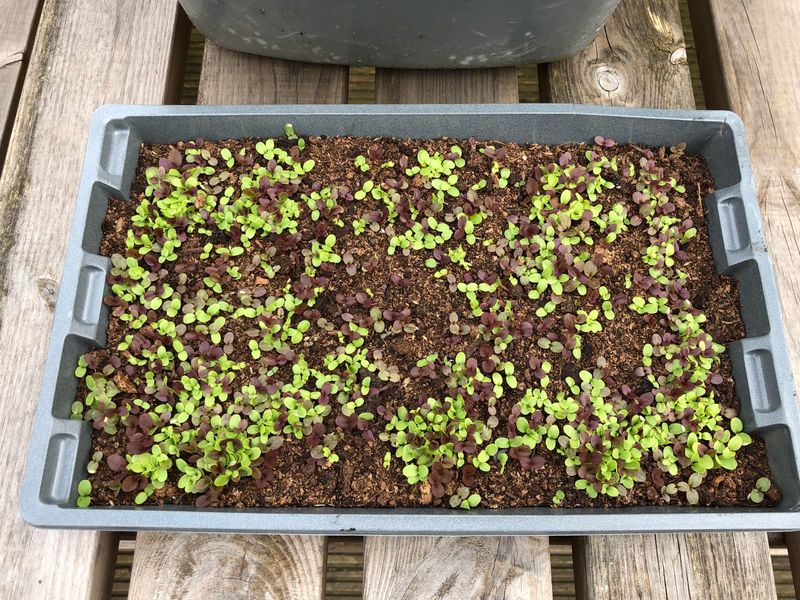
Planting seeds too thickly or failing to thin seedlings after germination creates intense competition for light, water, and nutrients. When seedlings crowd together in trays, they shade each other and trigger the same stretching response as poor lighting.
Each plant races to grow taller than its neighbors, resulting in an entire tray of spindly, weak seedlings that cannot support themselves.
Crowded conditions also reduce air circulation around stems and leaves, increasing humidity and the risk of damping-off disease. Seedlings grown too close together develop shallow root systems because they cannot spread out properly in the limited soil space.
These stressed plants struggle to recover even after transplanting into the garden.
Sow only one or two seeds per cell or space seeds at least an inch apart in open trays. Once seedlings develop their first true leaves, thin them by snipping off weaker plants at soil level with small scissors rather than pulling them out, which can disturb roots of nearby seedlings.
Leave only the strongest, most compact seedling in each cell.
Though it feels wasteful to remove healthy-looking seedlings, thinning is essential for raising strong transplants. Properly spaced seedlings receive adequate light from all directions, develop thicker stems, and grow robust root systems that support vigorous growth after transplanting.
If you have trouble thinning, start fewer seeds per cell or use individual containers from the beginning.
Giving each seedling room to grow makes a dramatic difference in final plant quality.
4. Warm Indoor Temperatures Speed Up Weak Growth
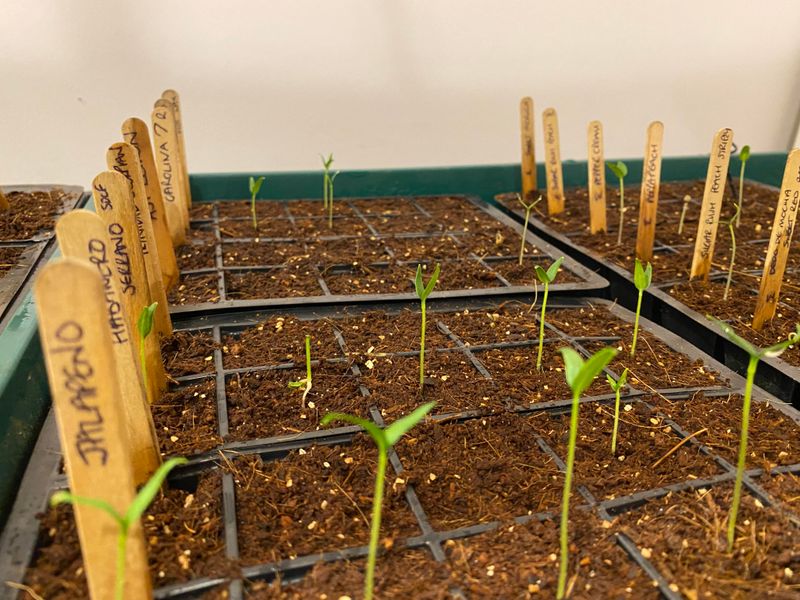
Most Ohio homes stay comfortably warm during March, with thermostats set between 68 and 72 degrees Fahrenheit for human comfort. While these temperatures feel pleasant, they can actually be too warm for seedlings, especially when combined with inadequate light.
Warm temperatures speed up plant metabolism and growth rate, but without sufficient light to support that rapid growth, seedlings produce long, soft stems instead of compact, sturdy ones.
Seedlings grown in warm conditions with limited light stretch faster and more dramatically than those grown in cooler temperatures. The combination creates extremely leggy growth because plants metabolize quickly but cannot produce enough chlorophyll and structural tissue to support that speed.
Cool-season crops like lettuce, broccoli, and cabbage particularly dislike warm indoor temperatures and become leggy very quickly.
Most vegetable seedlings grow sturdier at moderate temperatures around 65 to 70°F, with slightly cooler nights helping prevent stretching. Consider moving seed trays to a cooler room, basement, or enclosed porch where temperatures stay moderate.
You can also turn down the thermostat slightly or position trays away from heat vents and radiators.
Using a seedling heat mat only during germination and removing it once sprouts emerge helps prevent excessive warmth. Good air circulation from a small fan also helps moderate temperatures while strengthening stems through gentle movement.
Cooler growing conditions slow growth to a manageable pace, giving seedlings time to develop thick stems and deep green color before the rapid growth phase begins outdoors.
5. Too Much Early Fertilizer Leads To Leggy Stems
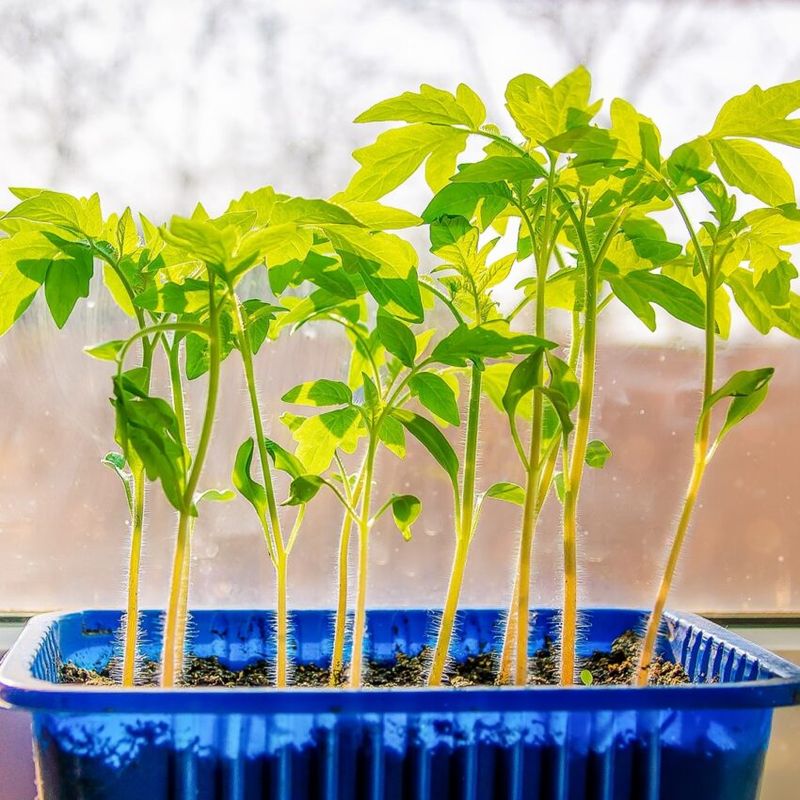
Enthusiastic Ohio gardeners often apply fertilizer too early or too heavily, hoping to boost seedling growth and create strong plants. However, young seedlings contain enough stored energy in their seed leaves to support early growth and need very little additional nutrition during their first few weeks.
Excessive fertilizer, especially nitrogen-rich formulas, pushes seedlings to grow too quickly, producing soft, elongated stems that cannot support the plant.
Overfertilized seedlings focus energy on rapid leaf and stem growth rather than developing strong root systems and sturdy structure. The resulting plants look lush and green but have weak, floppy stems that bend or break easily.
Too much nitrogen also makes seedlings more susceptible to disease and insect damage once transplanted outdoors.
Wait until seedlings develop their first set of true leaves before applying any fertilizer. True leaves appear after the initial seed leaves and look like miniature versions of adult plant leaves.
At this stage, begin feeding with a diluted liquid fertilizer mixed at one-quarter to one-half the recommended strength.
Apply this weak fertilizer solution once per week, gradually increasing to full strength as seedlings mature. Choose a balanced fertilizer formula such as 10-10-10 or a specialized seedling formula with lower nitrogen content.
Water thoroughly before fertilizing to prevent root burn, and always follow package directions carefully. If you notice sudden rapid growth with thin stems after fertilizing, skip the next feeding and reduce the concentration.
Proper fertilization supports steady, controlled growth that produces transplants with thick stems and healthy root systems ready for outdoor conditions.
6. Low-Quality Light Makes Seedlings Reach
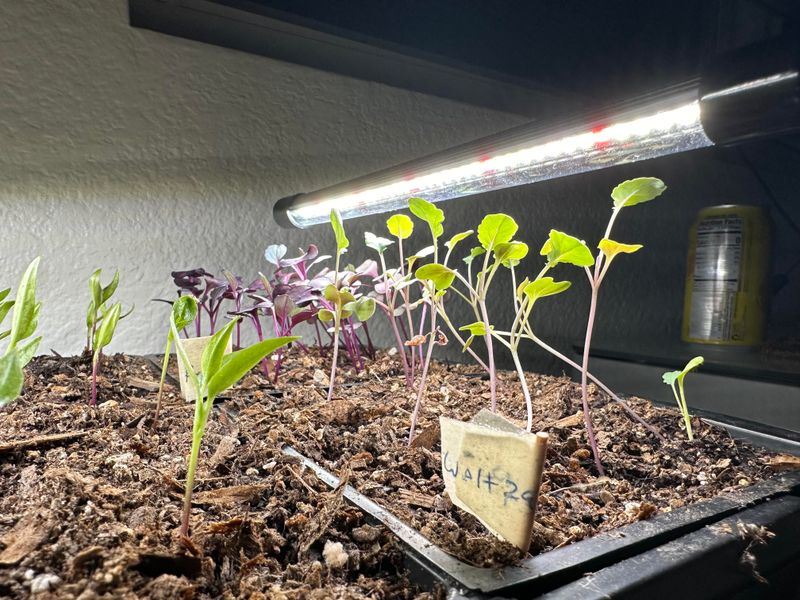
Not all light sources work well for growing seedlings indoors, even if they appear bright to human eyes. Regular incandescent bulbs, standard LED household bulbs, and warm-spectrum lights provide less of the blue-rich light that helps keep seedlings compact and healthy.
Plants use specific light wavelengths for photosynthesis and growth regulation, and without the right spectrum, they stretch and reach just as they would in dim conditions.
Warm-colored bulbs provide less of the blue-rich light that helps keep stems short, which can contribute to leggy growth. Seedlings under these lights sense inadequate growing conditions and respond by stretching upward.
Even bright warm-spectrum lights positioned close to plants will produce leggy growth because the light quality is wrong.
Choose full-spectrum grow lights, cool-white fluorescent tubes, or LED grow lights specifically designed for plant growth. Look for lights labeled with color temperatures between 5000K and 6500K, which provide the blue wavelengths seedlings need.
Full-spectrum LEDs designed for plants offer the best combination of proper wavelengths, energy efficiency, and long lifespan.
If you already own shop lights or fluorescent fixtures, replace standard bulbs with cool-white or daylight bulbs rated at 6500K. These inexpensive bulbs work well for seed starting and cost much less than specialized grow lights.
Avoid mixing warm and cool bulbs in the same fixture because this creates uneven light quality. Proper light spectrum combined with correct positioning produces compact seedlings with thick stems, dark green leaves, and strong root systems ready for successful transplanting into Ohio gardens.
7. Keeping Seedlings Indoors Too Long Causes Overgrowth
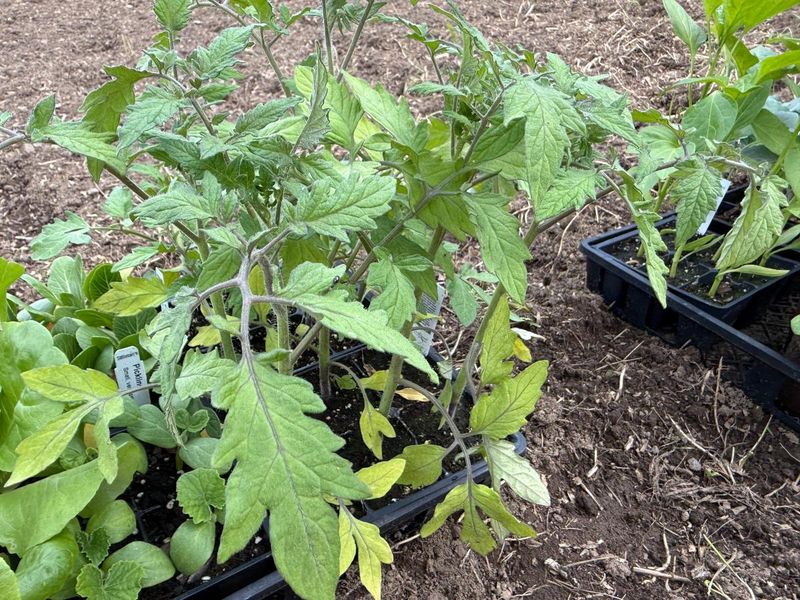
Starting seeds too early for your planting date or delaying transplanting causes seedlings to outgrow their containers and become leggy from lack of space and resources. Seedlings started in March should move outdoors in May after the last frost date, but unexpected cold weather or busy schedules sometimes delay transplanting.
When seedlings stay indoors beyond their ideal transplanting window, they become root-bound, stretch upward searching for more growing room, and develop weak, elongated stems.
Northern Ohio gardeners should wait until late May to transplant warm-season crops like tomatoes and peppers, while Southern Ohio gardeners can sometimes transplant in early May.
Starting seeds more than 6 to 8 weeks before your target transplant date often results in overgrown, leggy seedlings that struggle to adapt to outdoor conditions.
Seedlings kept too long indoors also deplete nutrients in their small containers and become stressed even with regular fertilizing.
Count backward from your average last frost date to determine the best seed-starting time for each crop. Tomatoes and peppers need 6 to 8 weeks indoors, while faster-growing crops like cucumbers and squash need only 3 to 4 weeks.
Mark your calendar with both starting and transplanting dates to stay on schedule.
If unexpected weather delays transplanting, move seedlings into larger containers with fresh potting mix to provide more growing space and nutrients. Gradually harden off seedlings by exposing them to outdoor conditions for increasing periods over 7 to 10 days before final transplanting.
This adjustment period helps stretched seedlings strengthen and adapt to wind, direct sun, and temperature changes, improving their chances of thriving in the garden despite their leggy growth.