15 Reliable Heat-Proof Container Plants For California Summers
When California summer turns up the heat, container gardens can still shine with the right tough and beautiful plants.
Instead of wilting in the sun, these heat loving stars thrive in warm pots, bright patios, and sizzling balconies, bringing color and texture all season long.
Picture bold blooms, silvery foliage, and lush greenery standing strong through hot afternoons while other plants fade. The secret is choosing varieties that love sunshine, handle dry soil, and keep growing even when temperatures climb.
With the right mix, your containers can look vibrant, fresh, and full of life without constant watering or worry.
1. Angelonia (Summer Snapdragon)
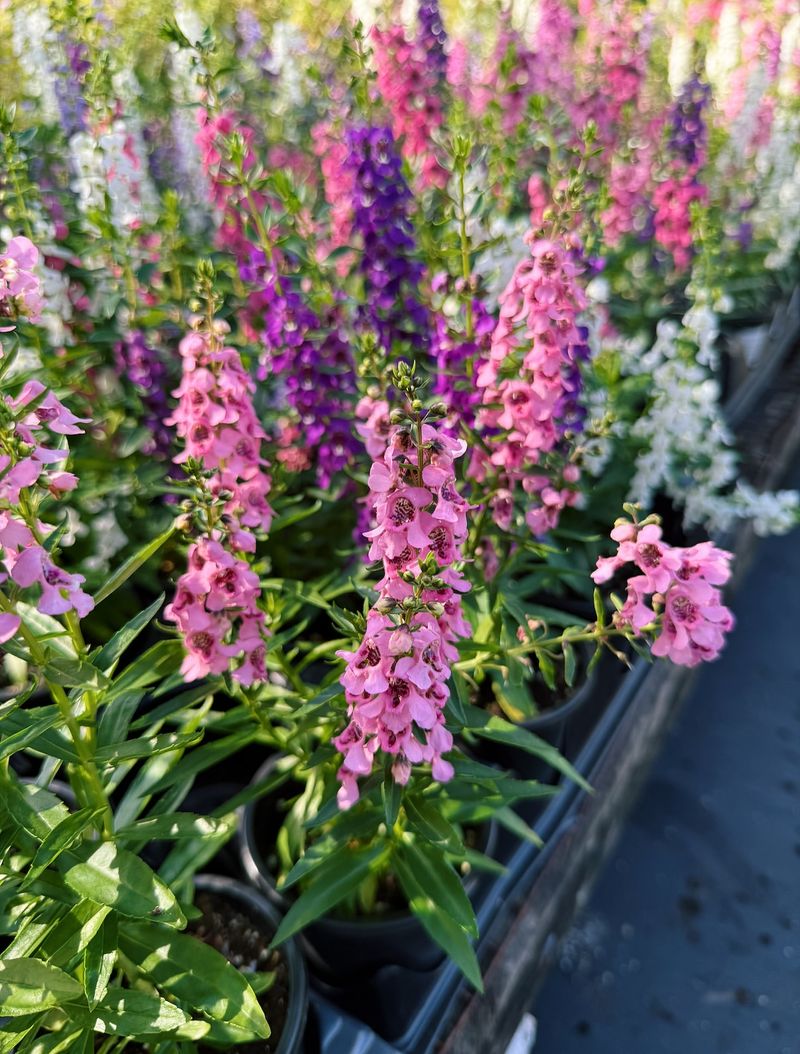
Spikes of orchid-like flowers rise above narrow leaves, bringing vertical interest to California containers. Angelonia earned its common name from flowers that resemble miniature snapdragons.
This relative newcomer to the gardening scene has quickly become a favorite for heat tolerance.
California’s hot, dry summers suit angelonia perfectly. These plants actually perform better in heat than in cool weather, blooming prolifically when temperatures climb.
Full sun produces the most flowers, though plants tolerate light afternoon shade in desert regions.
Water when the top inch of soil dries out, maintaining consistent moisture without waterlogging. Angelonia does not need deadheading and requires no pinching to stay bushy and full.
Flowers appear along tall stems, creating an airy, graceful effect in containers.
Purple, pink, white, and bicolor varieties offer plenty of choices for color schemes. Plants grow 12 to 24 inches tall depending on variety, working well as thrillers in mixed containers or as standalone specimens.
Angelonia resists pests and diseases remarkably well, staying healthy throughout California’s long growing season. Feed every few weeks with balanced fertilizer to support vigorous growth and abundant blooming.
2. Bougainvillea
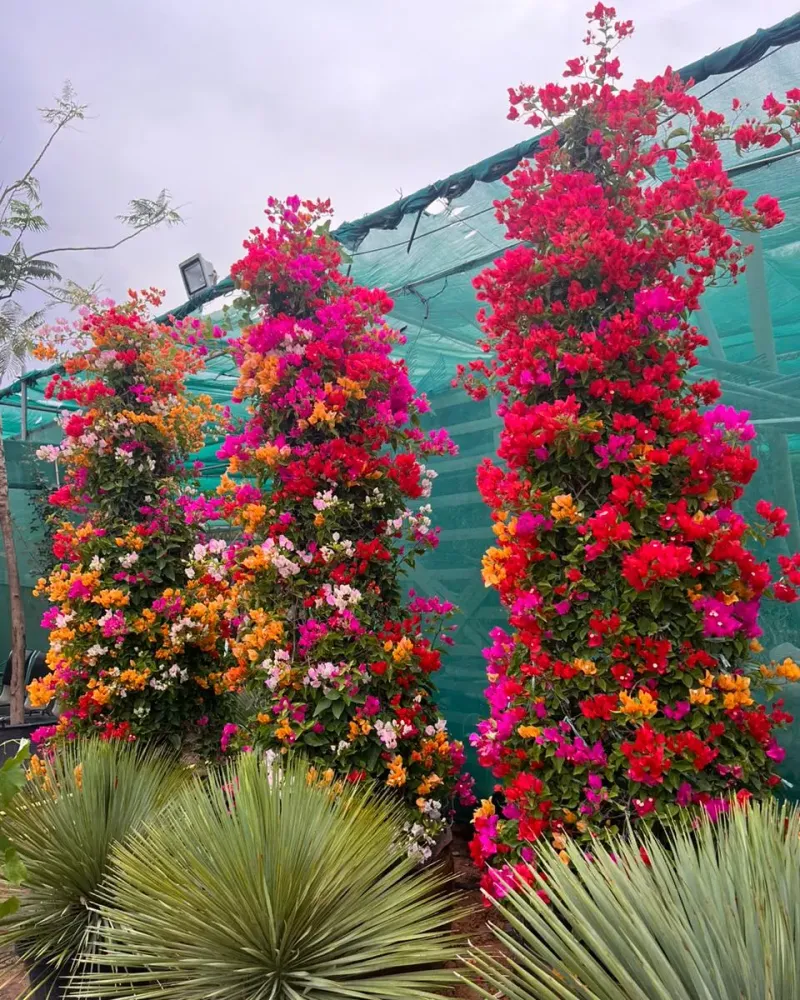
Brilliant papery bracts in shades of magenta, orange, red, and white make bougainvillea a showstopper for California container gardens. This Mediterranean native actually loves the heat and produces more blooms when temperatures soar.
The hotter it gets, the happier this plant becomes.
Bougainvillea needs full sun to perform its best, requiring at least six hours of direct sunlight daily. Water deeply but let the soil dry out between waterings since soggy roots can cause problems.
These plants are drought-tolerant once established, making them perfect for busy gardeners.
Container-grown bougainvillea works beautifully trained up a trellis or allowed to cascade over pot edges. Choose dwarf varieties for smaller spaces or standard types for dramatic vertical interest.
The colorful parts you see are actually modified leaves called bracts, not true flowers.
Feed monthly during the growing season with a balanced fertilizer to encourage continuous blooming. Protect from frost during California winters by moving containers to sheltered locations.
With minimal care, bougainvillea delivers maximum impact throughout those long, hot California summer months.
3. Lantana
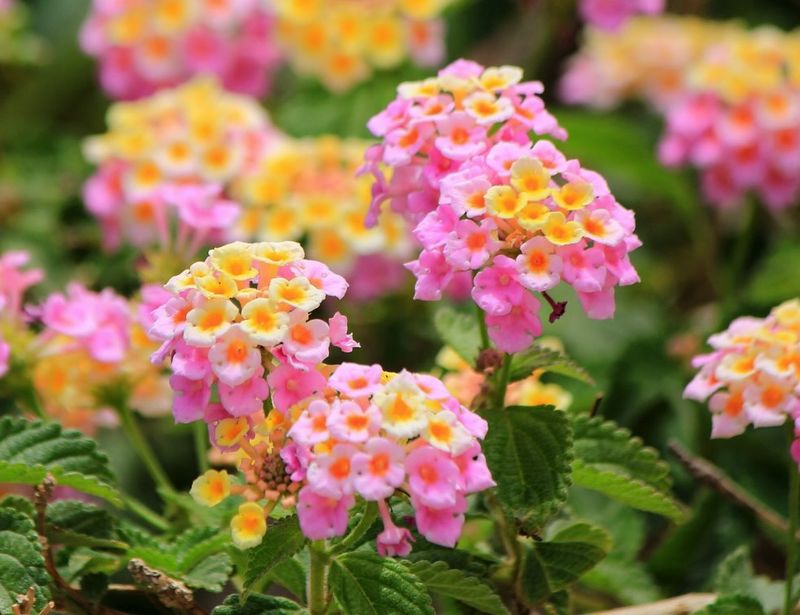
Clusters of tiny tubular flowers change color as they age, creating a rainbow effect on each bloom head. Lantana laughs at California heat and keeps producing flowers from late spring through fall.
Butterflies and hummingbirds flock to these nectar-rich blooms, adding movement and life to your container displays.
This tough plant handles neglect better than most, thriving in hot, dry conditions that would wilt other flowers. Full sun brings out the best color and most abundant blooms.
Lantana tolerates poor soil and requires minimal fertilizing, making it low-maintenance for California gardeners.
Trailing varieties spill beautifully over container edges while upright types create bushy mounds of color. Pinch back stems occasionally to encourage bushier growth and more flower production.
Deadheading spent blooms keeps plants looking tidy but is not necessary for continued flowering.
Water when the top inch of soil feels dry to the touch. Lantana bounces back quickly even if you forget to water occasionally.
Choose from traditional varieties or newer sterile cultivars that do not produce berries, which some California areas prefer to prevent unwanted spreading.
4. Geranium (Pelargonium)
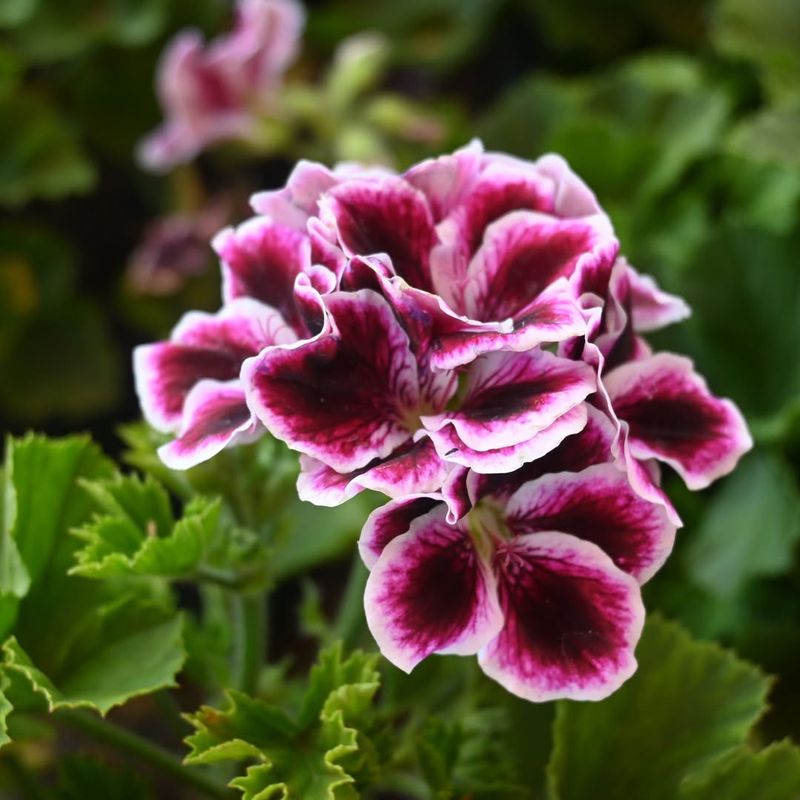
Classic geraniums bring reliable color to California containers with their bold flower clusters and attractive foliage. These Mediterranean natives handle heat exceptionally well and bloom continuously throughout summer.
Many people remember these cheerful plants from their grandmother’s porch, and they remain popular for good reason.
Geraniums prefer full sun but tolerate some afternoon shade in extremely hot California locations. Water thoroughly when soil feels dry an inch below the surface.
Good drainage is essential since waterlogged roots lead to problems quickly in container settings.
Remove spent flower heads regularly to encourage new blooms and keep plants looking fresh. Geraniums respond well to monthly feeding with a balanced fertilizer during active growth.
Scented-leaf varieties add fragrance when you brush against their foliage, offering an extra sensory dimension.
Zonal geraniums feature distinctive dark markings on their leaves and come in numerous colors. Ivy geraniums trail gracefully and work perfectly for hanging baskets or tall containers.
Both types handle California’s dry summer heat admirably and require minimal attention once established in containers with quality potting mix.
5. Portulaca (Moss Rose)
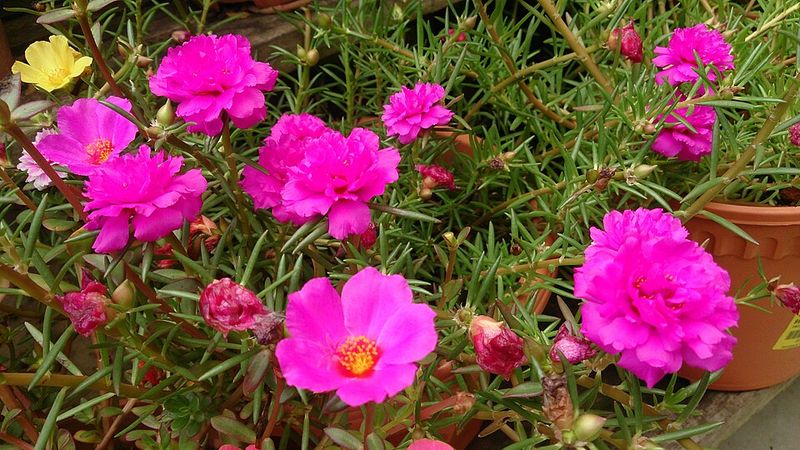
Succulent leaves and jewel-toned flowers make portulaca a natural choice for California’s hottest container spots. These low-growing plants spread quickly to fill pots with vibrant color.
Flowers open in sunshine and close at night or on cloudy days, creating a daily show.
Portulaca absolutely loves heat and actually sulks in cool, cloudy weather. Plant them where they will receive full, blazing California sun all day long.
Drought tolerance is exceptional since their fleshy leaves store water like tiny reservoirs.
Water sparingly, allowing soil to dry completely between waterings. Overwatering causes more problems than underwatering with these desert-loving plants.
They thrive in sandy, well-draining potting mix and need very little fertilizer to perform beautifully.
Single or double flowers come in nearly every color except blue, often with contrasting centers. Portulaca self-seeds readily, so you might find volunteers appearing in containers year after year.
Their low, spreading habit makes them perfect for shallow bowls or as thriller companions in mixed containers. California gardeners appreciate how portulaca keeps blooming through the absolute hottest weeks of summer without complaint.
6. Vinca / Madagascar Periwinkle (Catharanthus roseus)
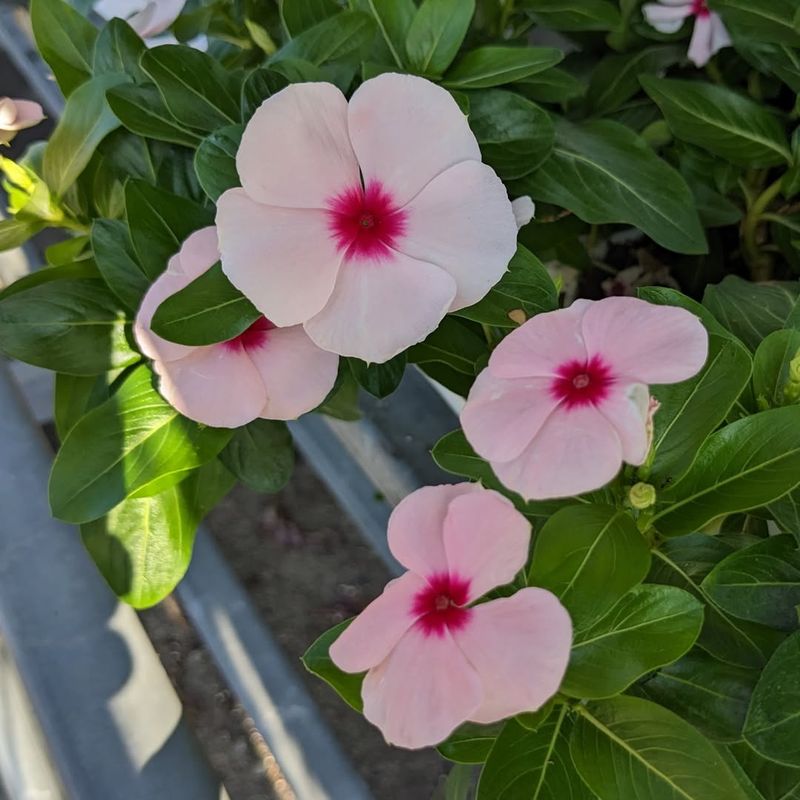
Glossy green leaves and cheerful five-petaled flowers make vinca a workhorse for California container gardens. These plants bloom nonstop from late spring until frost, never taking a break even during the hottest months.
Each flower features a contrasting eye in the center, adding visual interest.
Vinca handles heat and humidity better than many annuals, staying fresh-looking when others fade. Full sun to partial shade works fine, though more sun means more flowers.
These adaptable plants tolerate various soil conditions but prefer well-draining potting mix in containers.
Water regularly but avoid keeping soil constantly soggy. Vinca tolerates short dry periods once established, making it forgiving for California gardeners who travel or have busy schedules.
No deadheading is needed since plants shed spent blooms on their own.
Colors range from pure white to deep rose, with many shades of pink in between. Some varieties feature variegated foliage that adds interest even before flowers appear.
Vinca grows 12 to 18 inches tall, creating tidy mounds that never need pinching or pruning. Feed monthly with diluted liquid fertilizer to support continuous blooming throughout California’s extended summer season.
7. Calibrachoa (Million Bells)
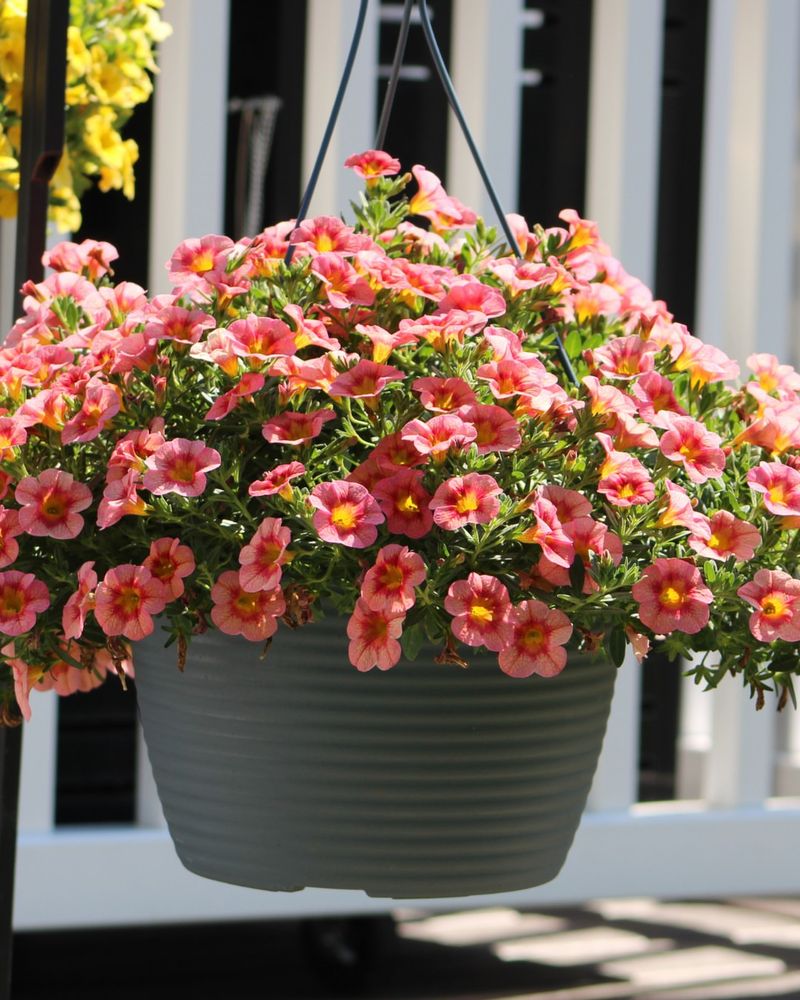
Tiny petunia-like flowers cover trailing stems in a profusion that explains this plant’s common name. Calibrachoa produces literally hundreds of blooms on each plant, creating waterfalls of color.
These South American natives love California’s Mediterranean climate and summer heat.
Full sun brings out the best performance, with plants producing the most flowers in bright light. Calibrachoa works beautifully in hanging baskets, tall containers, or window boxes where stems can cascade freely.
Flowers come in every color imaginable, including some with striking patterns and veining.
Keep soil consistently moist but not waterlogged, checking containers daily during California’s hottest weeks. Calibrachoa is more drought-sensitive than some heat lovers and performs best with regular watering.
Feed weekly with diluted liquid fertilizer since these heavy bloomers need steady nutrition.
No deadheading is required as plants shed spent flowers naturally and keep producing new blooms. Calibrachoa occasionally benefits from a light trim if stems become leggy, but generally maintains good form without intervention.
These plants handle California heat admirably while providing months of continuous color from spring through fall with minimal care requirements.
8. Verbena
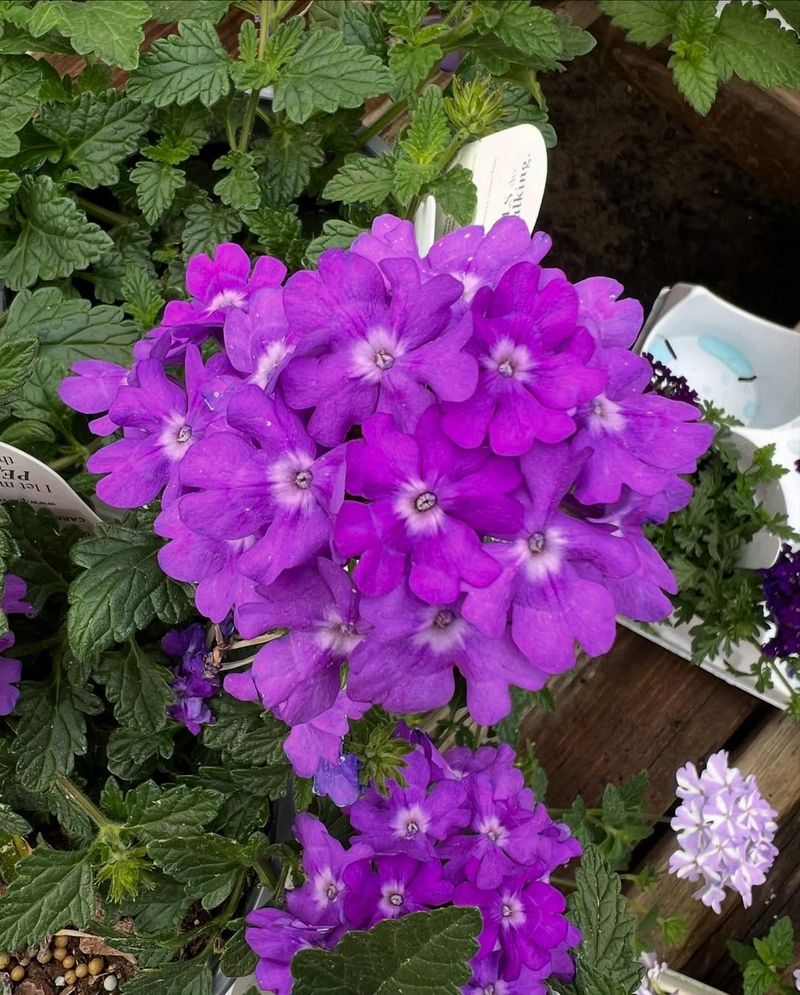
Flat-topped clusters of small flowers create a carpet of color in containers and hanging baskets. Verbena blooms relentlessly through California summers, handling heat that would stop many other flowers.
Butterflies visit these nectar-rich blooms constantly, adding movement to your container displays.
Full sun is essential for best flowering, with at least six hours of direct sunlight daily. Verbena tolerates drought once established but blooms more prolifically with regular watering.
Allow soil to dry slightly between waterings rather than keeping it constantly moist.
Trailing varieties spread 18 to 36 inches, making them perfect for spilling over container edges. Upright types form mounding plants that work well as fillers in mixed arrangements.
Colors range from white through pink, red, purple, and bicolor combinations.
Deadhead spent flower clusters to encourage continuous blooming, though newer varieties require less maintenance. Feed monthly with balanced fertilizer to support vigorous growth.
Verbena resists most pests and diseases, staying healthy throughout California’s growing season. Some varieties offer a light fragrance as a bonus.
These tough performers keep containers colorful from late spring until fall frost arrives in California gardens.
9. Gazania
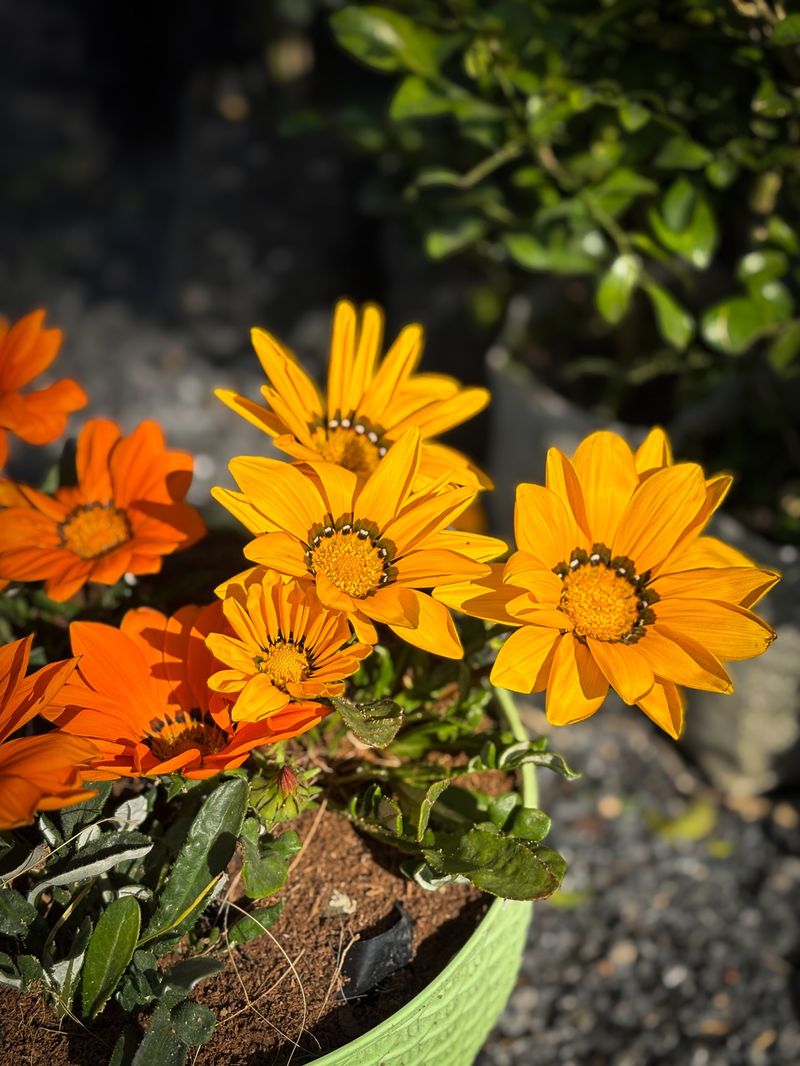
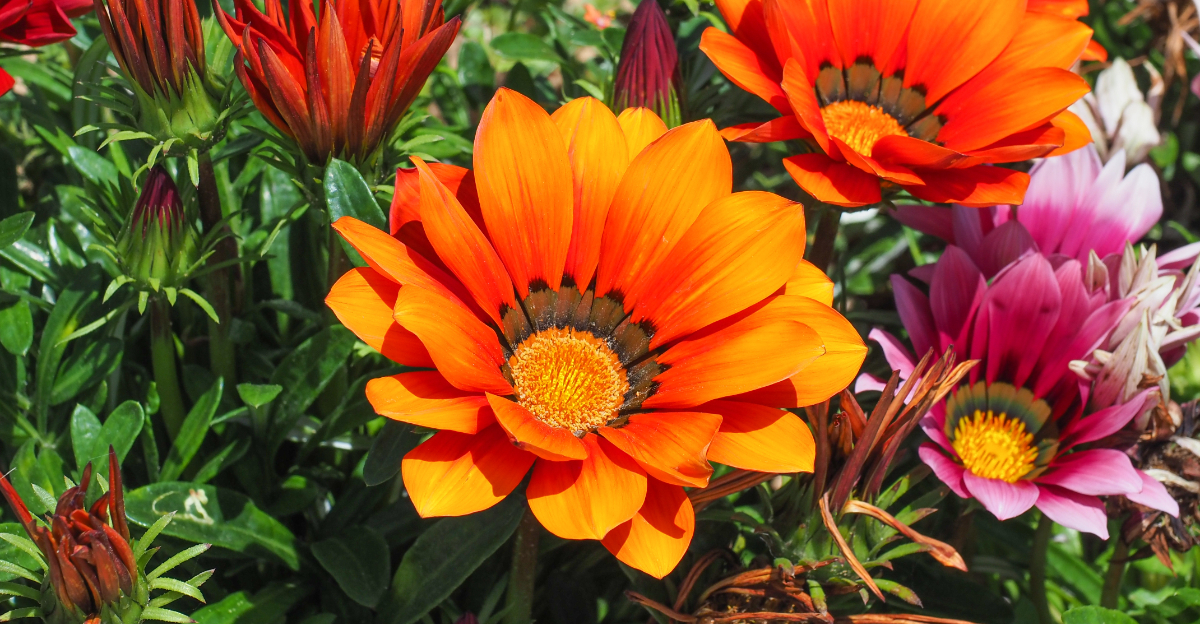
Bold daisy-like flowers with striking patterns and brilliant colors open wide in California sunshine. Gazania blooms close at night and on cloudy days, saving their show for bright weather.
These South African natives thrive in conditions that match California’s dry summer climate perfectly.
Silver-gray foliage provides attractive contrast to the vibrant flowers and helps reflect heat. Gazania needs full sun and excellent drainage, making it ideal for containers.
These plants actually prefer lean soil and require minimal fertilizing to bloom abundantly.
Drought tolerance is exceptional once plants establish in containers. Water deeply but infrequently, allowing soil to dry between waterings.
Overwatering causes more problems than underwatering with these desert-adapted plants.
Flowers come in shades of orange, yellow, pink, red, and cream, often with contrasting stripes or zones. Each bloom lasts several days, and plants produce flowers continuously throughout summer.
Gazania grows 6 to 12 inches tall, forming neat clumps that never become unruly. Deadheading spent blooms keeps plants tidy and encourages more flowers.
California gardeners value gazania for its ability to bloom through the hottest, driest weeks without wilting or complaining.
10. Lavender
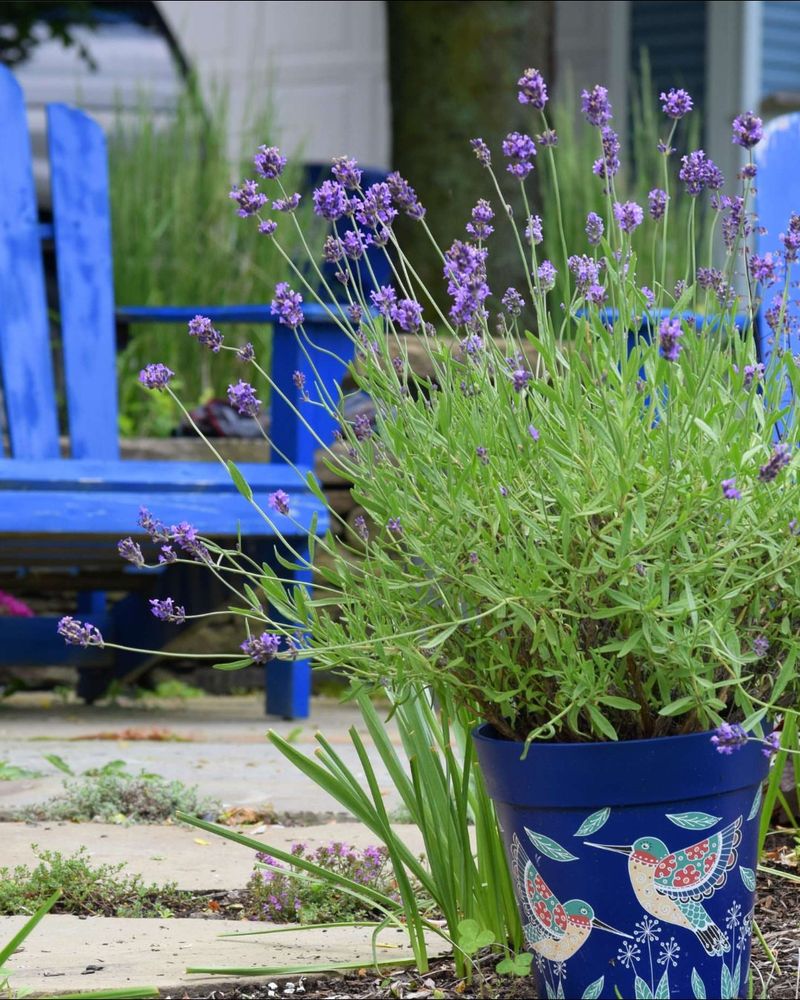
Fragrant purple flower spikes and aromatic silvery foliage make lavender a sensory delight for California containers. This Mediterranean herb loves hot, dry summers and actually performs better with less water.
The scent alone makes lavender worth growing, but it also attracts beneficial pollinators.
Full sun and excellent drainage are absolutely essential for success with container-grown lavender. Use a gritty, well-draining potting mix and avoid overwatering at all costs.
Lavender roots rot quickly in soggy soil, especially in containers.
Water deeply but infrequently, allowing soil to dry completely between waterings. Established plants are extremely drought-tolerant and need minimal summer irrigation in California.
Skip fertilizer entirely or use very sparingly since lavender prefers lean conditions.
Spanish and French lavender varieties handle heat better than English types and bloom longer in California. Prune lightly after flowering to maintain compact shape and encourage new growth.
Lavender typically lives several years in containers with proper care and good drainage. Harvest flower stems for dried arrangements or sachets.
California’s climate suits lavender perfectly, and container growing allows you to move plants to ideal locations for maximum sun exposure and air circulation.
11. Rosemary
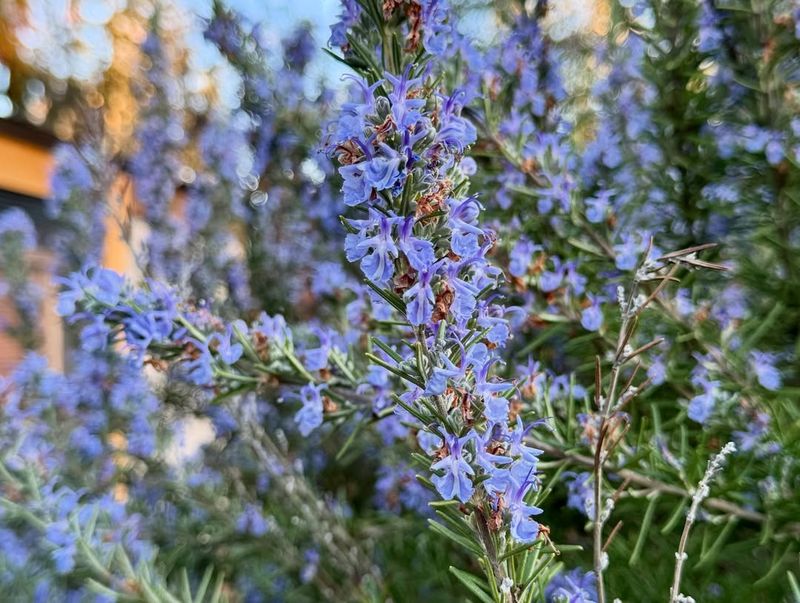
Aromatic needle-like leaves and woody stems make rosemary both ornamental and useful for California container gardens. This Mediterranean herb thrives in heat and actually prefers the dry conditions that California summers provide.
Small blue flowers appear sporadically, adding a delicate touch to the sturdy foliage.
Rosemary demands full sun and excellent drainage, making it perfect for containers with quality potting mix. Overwatering is the most common mistake, so err on the dry side.
Allow soil to dry between waterings and never let containers sit in water.
Upright varieties work well as focal points while trailing types cascade beautifully over container edges. Rosemary tolerates pruning well, so snip stems for cooking anytime.
Regular harvesting actually encourages bushier growth and better form.
Feed sparingly if at all, since rosemary prefers lean soil conditions. Container-grown rosemary can live for years with proper care and occasional repotting.
Choose varieties suited to your space, from compact types to large shrubby forms. Rosemary handles California heat without complaint and needs minimal water once established.
The fragrance intensifies in hot weather, releasing scent when you brush against the foliage or work nearby.
12. Agave (small container varieties)
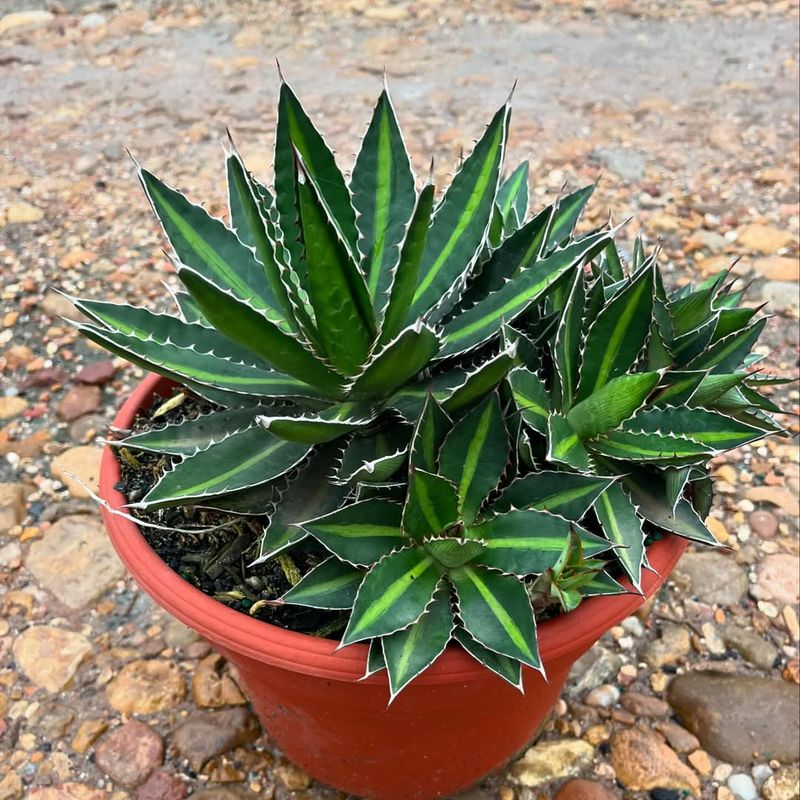
Architectural rosettes of thick, pointed leaves bring dramatic structure to California container gardens. Small agave varieties offer the striking form of larger types in container-friendly sizes.
These succulents handle extreme heat and drought better than almost any other container plant.
Full sun and fast-draining soil are essential for healthy agaves in containers. Use cactus potting mix or add extra perlite to regular potting soil.
Water sparingly, allowing soil to dry completely between waterings. Agaves store water in their leaves and tolerate neglect remarkably well.
Container-grown agaves need almost no fertilizer and actually prefer lean conditions. Choose compact varieties like Agave parryi or Agave victoriae-reginae that stay manageable in pots.
Blue-gray, green, or variegated foliage adds year-round interest even without flowers.
Protect hands when handling since most agaves have sharp leaf tips and edges. Some gardeners trim the pointed tips for safety around walkways.
Agaves rarely need repotting and can live in the same container for years. These plants epitomize low-maintenance California container gardening, requiring minimal water and zero fussing.
Their bold form provides strong focal points and contrasts beautifully with softer flowering plants in mixed container displays.
13. Aloe
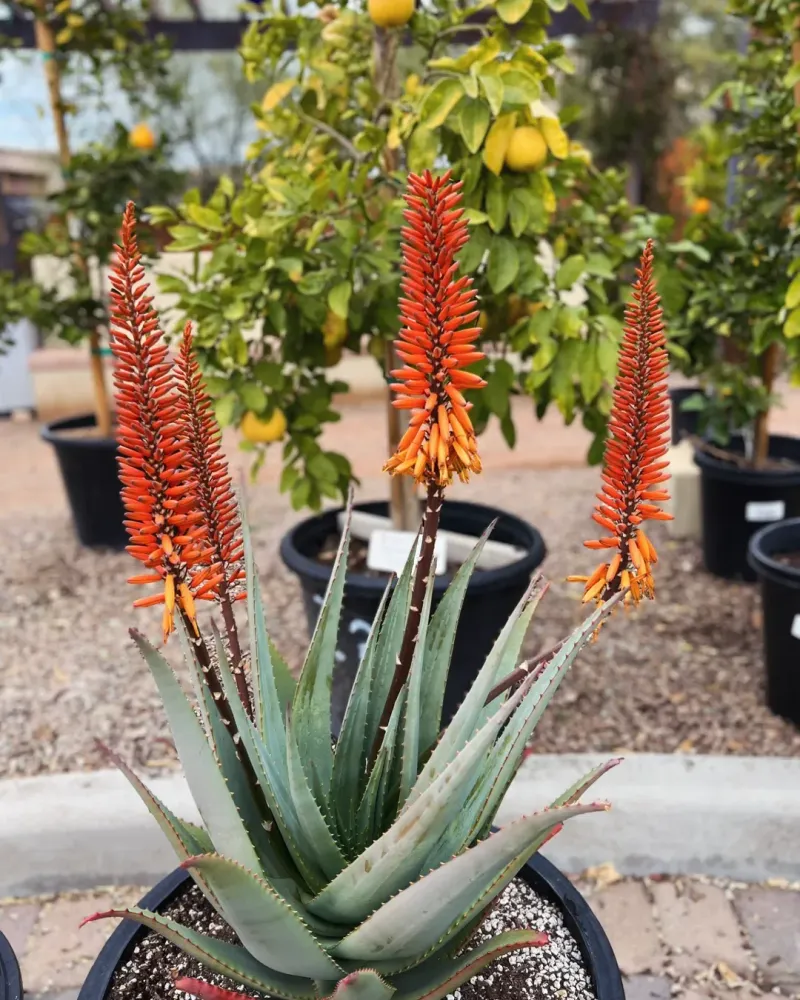
Thick, fleshy leaves filled with soothing gel make aloe both ornamental and practical for California containers. These succulents laugh at heat and drought, staying plump and healthy through the hottest summers.
Tall flower spikes with tubular blooms appear on mature plants, attracting hummingbirds.
Aloe needs bright light and excellent drainage to thrive in containers. Use cactus potting mix and containers with drainage holes.
Water deeply but infrequently, allowing soil to dry completely between waterings. Overwatering causes root rot and mushy leaves quickly.
Many aloe species stay compact enough for container growing, from familiar Aloe vera to colorful varieties with red or coral tones. Some feature spotted or striped leaves that add visual interest.
Aloe produces offsets or pups that you can separate and pot up for new plants.
Feed sparingly during the growing season or skip fertilizer entirely. Aloe tolerates neglect and actually prefers being slightly pot-bound.
These plants handle California’s intense summer sun without burning or wilting. Move containers to protected spots during rare cold snaps since aloe is frost-sensitive.
Container-grown aloe provides years of easy-care beauty while offering fresh gel for minor burns or skin irritation whenever you need it.
14. Euphorbia ‘Diamond Frost’
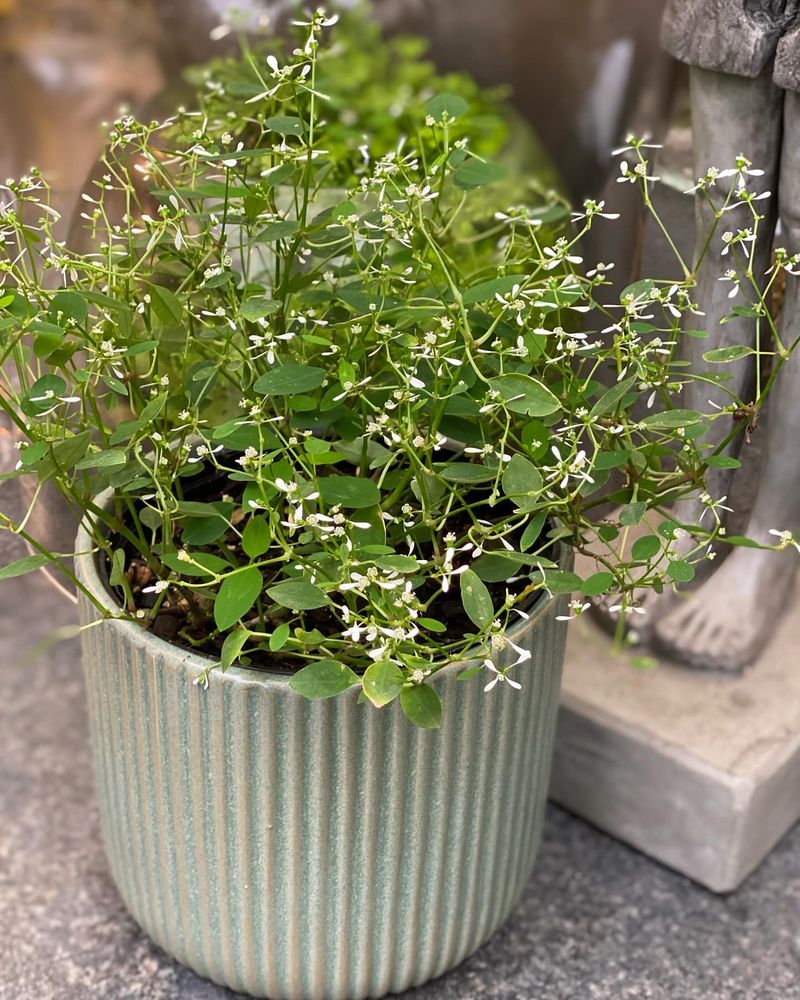
Clouds of tiny white flowers create an airy, almost ethereal effect in California containers. Euphorbia ‘Diamond Frost’ blooms nonstop from spring through fall without deadheading or fussing.
This relatively new introduction has quickly become a favorite for its heat tolerance and delicate appearance.
Full sun to partial shade works well, with plants adapting to various light conditions. Diamond Frost handles California heat exceptionally well, never wilting or stopping bloom production.
The fine-textured foliage and flowers provide perfect contrast to bold-leaved companions in mixed containers.
Water regularly but allow soil to dry slightly between waterings. This euphorbia tolerates short dry periods once established, making it forgiving for busy California gardeners.
Plants stay naturally compact and well-shaped without pinching or pruning.
Feed monthly with balanced fertilizer to support continuous blooming. Diamond Frost works beautifully as a filler in mixed containers or as a standalone specimen in smaller pots.
The white flowers complement any color scheme and brighten shady spots. Plants grow 12 to 18 inches tall and wide, maintaining good proportions throughout the season.
California gardeners appreciate how this euphorbia keeps performing through summer heat while adding a soft, romantic touch to container displays.
15. Salvia
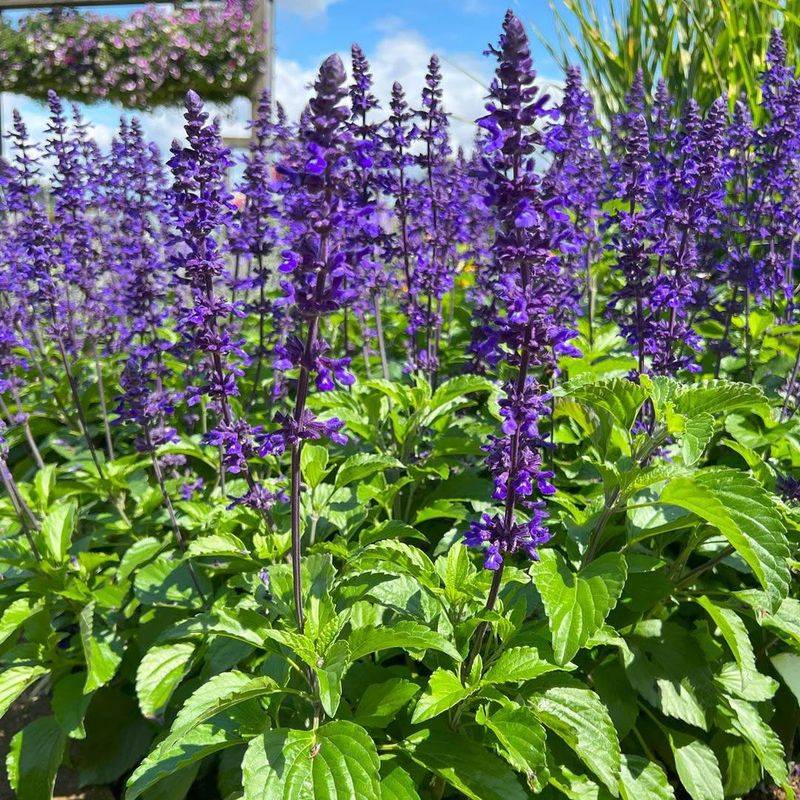
Spikes of tubular flowers in brilliant colors rise above attractive foliage throughout California summers. Salvia includes hundreds of species, many perfectly suited for container growing in hot climates.
Hummingbirds and butterflies visit these flowers constantly, adding life and movement to your patio.
Most salvias prefer full sun and well-draining soil, thriving in California’s dry summer conditions. Water regularly but avoid keeping soil constantly wet.
Many species tolerate drought once established and actually bloom better with moderate water stress.
Annual salvias like Salvia splendens provide reliable color all summer, while perennial types return year after year in containers. Colors range from classic red through purple, pink, white, and even bicolors.
Flower spikes appear continuously when you remove spent blooms regularly.
Feed monthly during active growth to support vigorous blooming. Some salvias have aromatic foliage that releases fragrance when brushed.
Choose compact varieties for containers or allow larger types to create bold statements. Salvia handles California heat admirably, staying fresh-looking when other plants wilt.
These versatile plants work well alone or mixed with other heat lovers. Container-grown salvias bring vertical interest and brilliant color to California patios, decks, and balconies throughout the entire summer season.