8 Rock Garden Plants That Work Well In Arizona Front Yards
A rock garden in an Arizona front yard should feel simple, clean, and built to last, but that only works when the right plants are doing their job. It is not just about filling space between stones.
The plants need to handle heat, stay structured, and blend naturally with gravel and rock instead of fighting against it.
Some plants look fine at first but quickly thin out, flop over, or struggle once temperatures rise. Others settle in and quietly hold everything together, giving the yard that steady, well-kept look people aim for.
In Arizona, the difference shows up fast. The plants that truly belong in a rock garden make the whole space feel balanced and intentional, while the wrong ones create gaps and extra work.
Once you start noticing which plants actually perform well in these conditions, it becomes much easier to build a front yard that stays consistent without constant fixing.
1. Agave Adds Structure And Strong Form
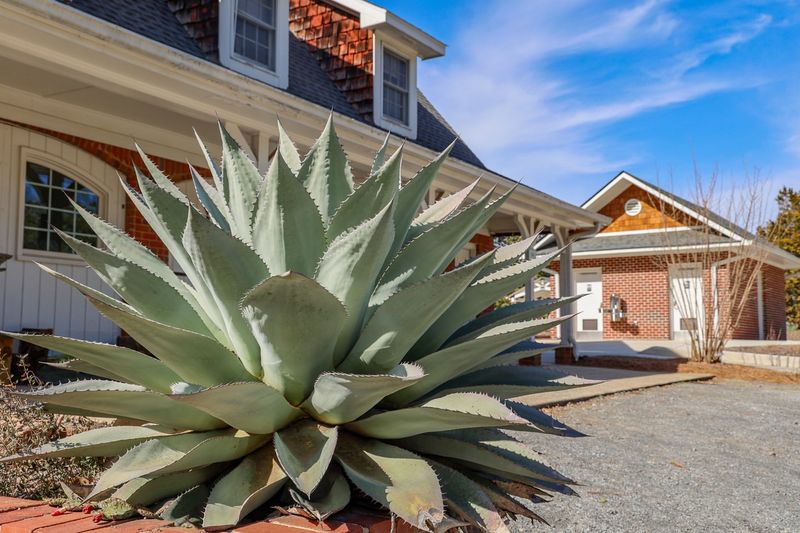
Bold, architectural, and completely unbothered by Arizona heat, agave is one of those plants that earns its spot without asking for much in return. Plant one near a rock cluster and it instantly becomes the focal point of the whole yard.
No fussing, no babying, just strong presence and clean lines.
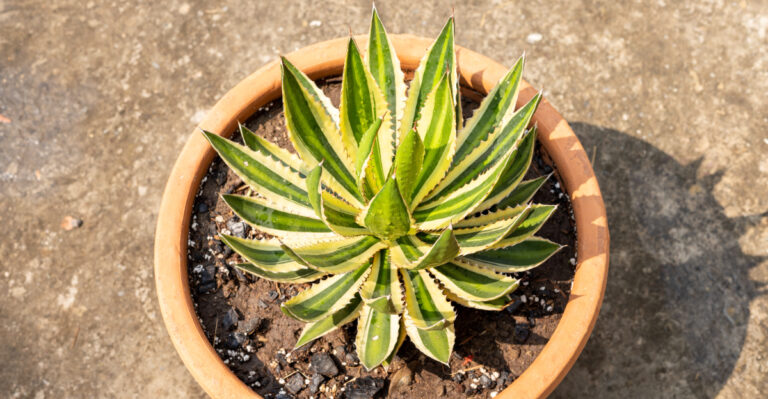
Agave grows in a tight rosette, with thick leaves that fan out in every direction. Depending on the variety, it can stay small enough for a container or grow wide enough to fill a corner bed.
Century plant, blue agave, and Weber agave are all solid choices for Arizona front yards.
Watering is minimal once roots settle in. A deep soak every few weeks during summer is usually enough.
During cooler months, you can back off even more. Pair agave with smaller desert plants around the base to add contrast without cluttering the look.
Rocks work really well around agave because they help hold soil moisture and keep the root zone from getting too hot. Decomposed granite is a popular choice in Arizona, and it complements the plant’s color nicely.
Give agave plenty of space from foot traffic since those leaf tips are sharp enough to cause a real surprise.
It would be best to position it where it can stand out without crowding nearby plants or pathways.
2. Red Yucca Handles Heat And Dry Soil
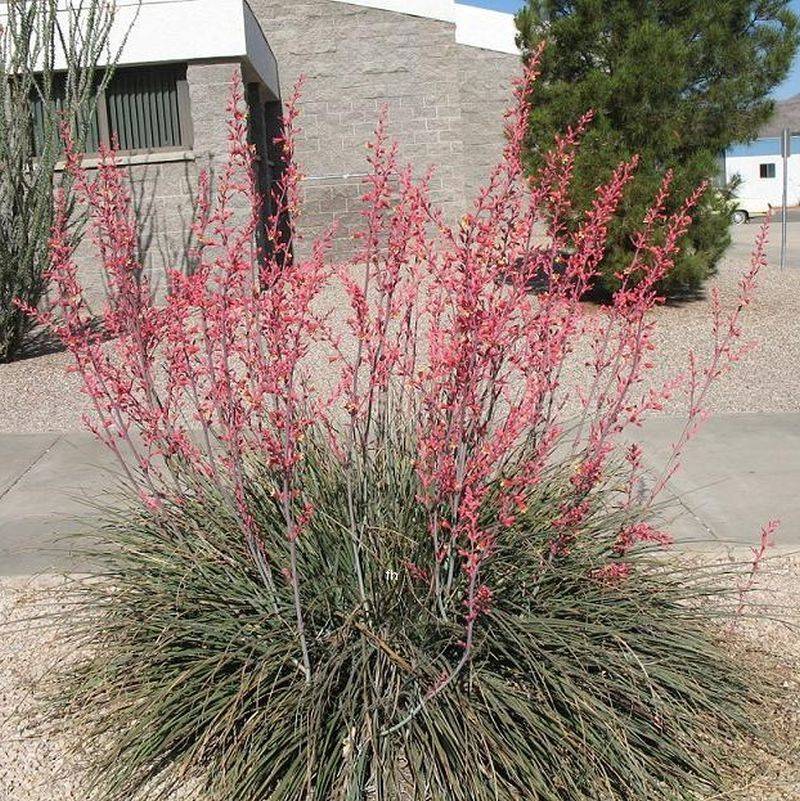
Hummingbirds find this plant before you even finish planting it. Red yucca sends up tall, arching flower spikes loaded with tubular coral-red blooms that hummingbirds cannot resist, making your front yard feel alive during the warmer months without any extra effort from you.
Unlike true yuccas, red yucca has soft, grass-like leaves that bend and sway in the breeze. It looks delicate but handles Arizona summers without complaint.
Full sun is preferred, and poor, rocky soil actually suits it well. Rich soil or overwatering can cause more problems than drought ever would.
Bloom spikes can reach four to five feet tall, adding vertical interest above a sea of rocks or low-growing ground covers. After blooms fade, the seed pods are worth leaving on the plant since they add texture through fall and early winter.
Birds also pick at the seeds, which adds another layer of yard life.
Plant red yucca in clusters of three for a fuller, more natural look. Single plants work too, but grouping them creates a stronger visual impact along a driveway edge or near a front walkway.
Across many Arizona neighborhoods, you will spot this plant tucked into rock beds where other plants have long given up.
It stays tidy year-round with almost no maintenance, making it one of the easiest choices for a clean, structured front yard. Just give it space to spread and avoid placing it too close to walkways since those leaves can still be a bit sharp.
3. Barrel Cactus Brings Shape And Texture
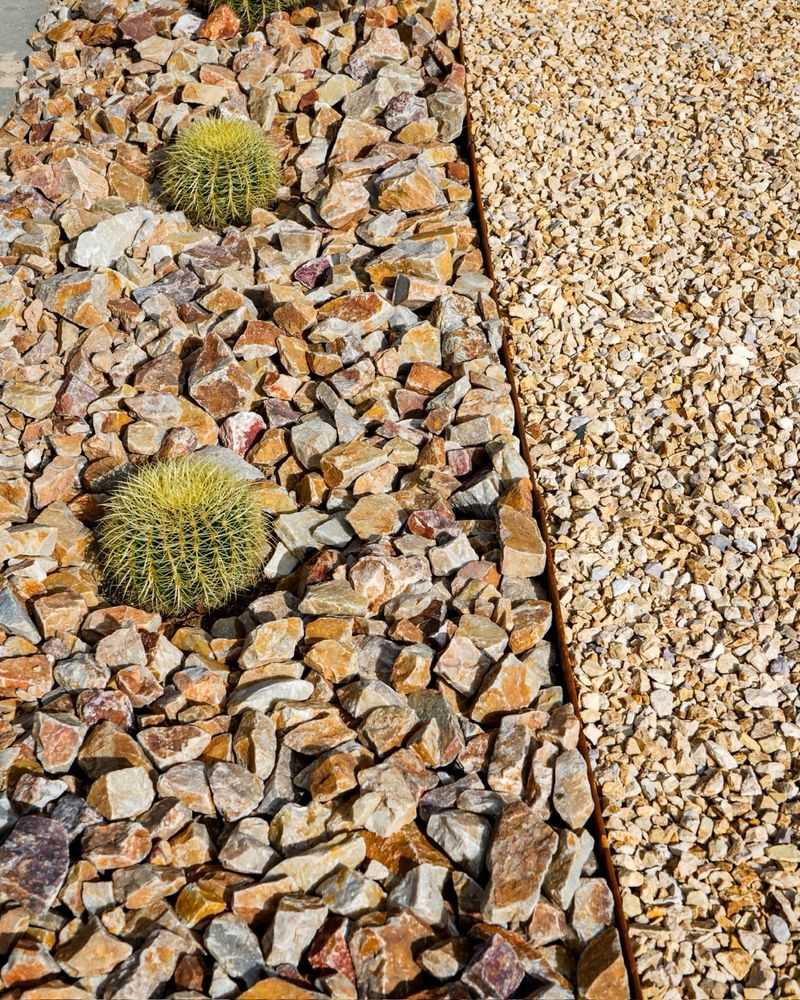
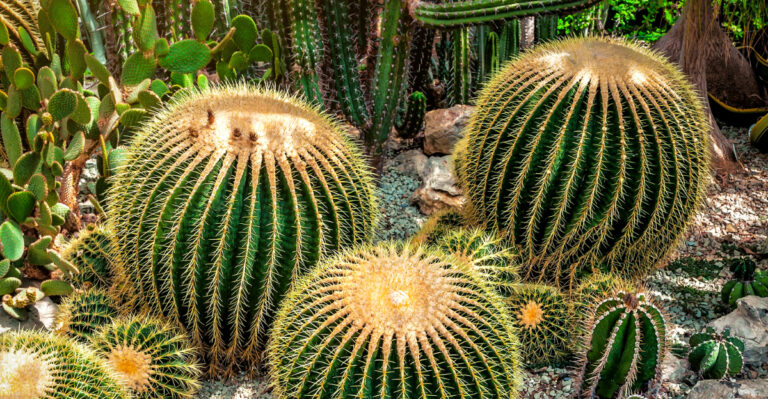
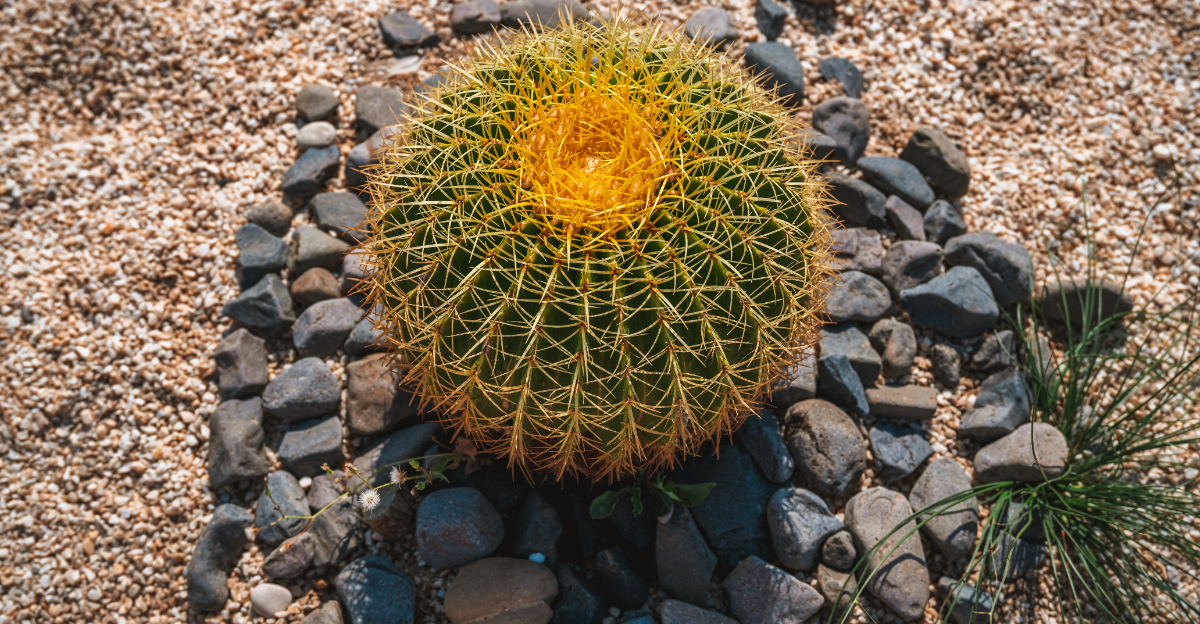
Few plants in Arizona look as unmistakably desert as a barrel cactus. Perfectly round, ribbed, and covered in stout golden or reddish spines, it adds a texture that no other plant can replicate.
Placed among flat rocks or smooth river stones, it creates an instant contrast that just looks right.
Barrel cactus grows slowly, which means you do not have to worry much about it outgrowing its space. A mature plant might reach two to four feet tall over many years.
Yellow or orange flowers appear at the top in summer, usually after a stretch of heat, and they are worth the wait.
Drainage is the one thing barrel cactus absolutely needs. Sitting in wet soil for too long causes root rot, which is the main reason people have trouble with them.
Raised rock beds and gravelly soil are ideal. Avoid low spots in the yard where water pools after monsoon rains.
Placement matters for more than just looks. Barrel cactus tends to lean slightly toward the south over time, which is a well-known quirk locals call the compass cactus.
Knowing that ahead of time helps you position it where the lean will not become a problem. In Arizona rock gardens, barrel cactus earns its spot with almost zero upkeep and a look that never gets old.
4. Desert Spoon Stays Tough In Harsh Conditions
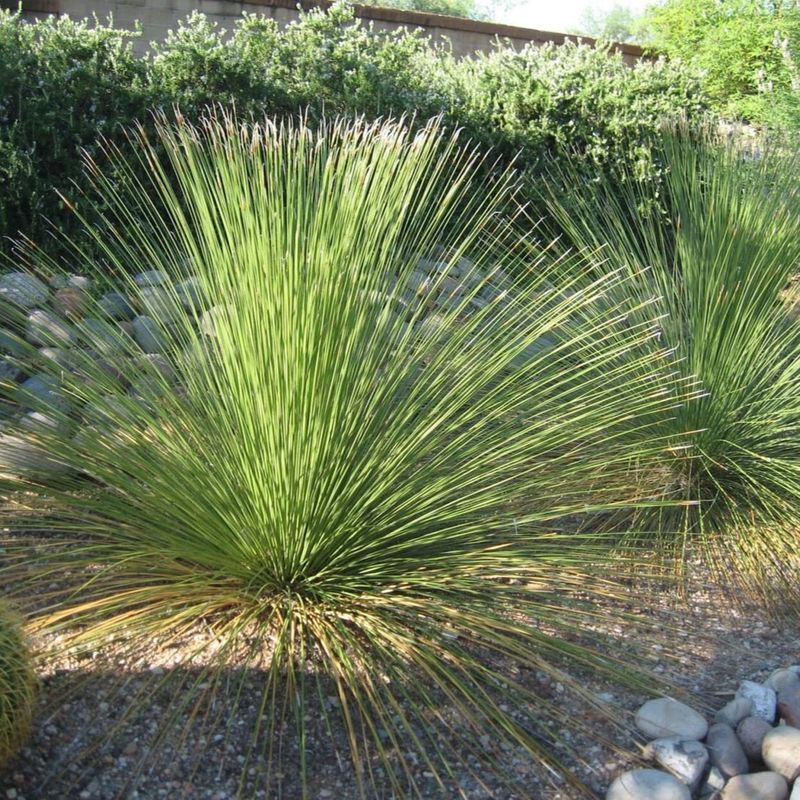
Surviving where most plants would struggle is basically what desert spoon was built for. Native to the Chihuahuan and Sonoran deserts, this plant has been dealing with rocky soil, intense sun, and minimal rain long before anyone thought to put it in a front yard.
Arizona conditions are essentially its home turf.
Desert spoon, also called sotol, grows as a dense rosette of long, narrow leaves with tiny teeth along the edges. Mature plants develop a visible woody trunk at the base over time, which gives older specimens a sculptural, prehistoric quality.
Flower stalks shoot up dramatically in late spring, sometimes reaching eight feet or taller.
Cut leaf margins are sharp, so placement away from sidewalks and play areas makes sense. Near a rock wall or at the back edge of a bed, it adds height and structure without crowding anything in front of it.
Silvery-green coloring pairs nicely with both dark volcanic rock and lighter sandstone.
Watering once or twice a month during summer is plenty. Winter rain usually handles itself.
Fertilizer is not needed and can actually cause problems by pushing soft, weak growth. Across Arizona yards, desert spoon is one of those plants that holds its ground year after year with almost no help, and it always looks like it belongs exactly where it is.
5. Blackfoot Daisy Blooms With Little Water
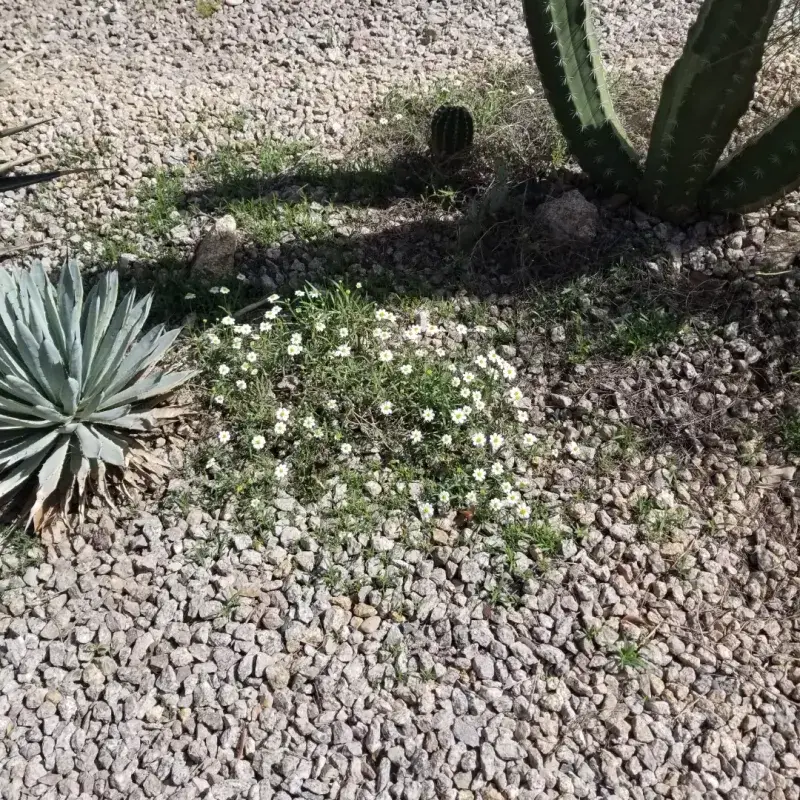
Something about a plant covered in cheerful white flowers while sitting in rocky, dry soil just feels like a small miracle. Blackfoot daisy pulls that off consistently, blooming heavily in spring and fall and producing scattered flowers through the heat in between.
It is one of the most rewarding plants you can tuck into an Arizona rock garden.
Plants stay compact, usually reaching about a foot tall and spreading roughly two feet wide. That size fits perfectly between larger rocks or along the edges of a gravel path.
Clusters of three or five plants together create a fuller, more generous look without taking over the space.
Honey-scented blooms attract bees and butterflies, which adds real life to a front yard that might otherwise feel static. Cutting plants back by about a third after a heavy bloom cycle encourages fresh growth and another round of flowers.
Skip this step and they can get a bit woody and open in the center.
Blackfoot daisy prefers lean soil, meaning you should resist the urge to amend heavily before planting. Rich soil actually shortens the plant’s lifespan.
Gravelly or sandy soil with good drainage is exactly what it wants. Across many Arizona neighborhoods, this plant quietly becomes a favorite because it delivers color without demanding much back in return.
6. Angelita Daisy Keeps Color Through Heat
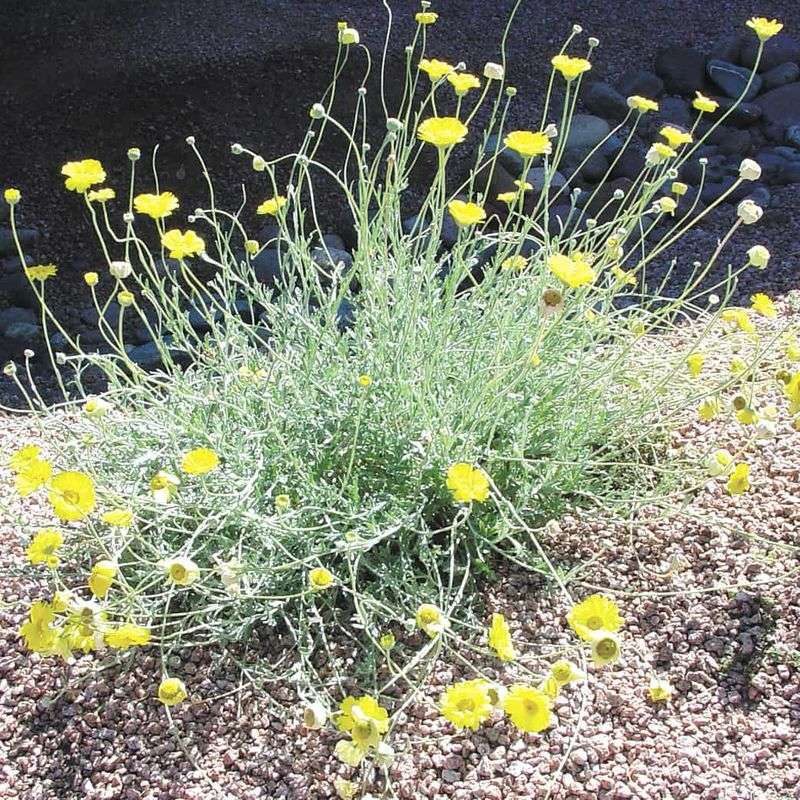
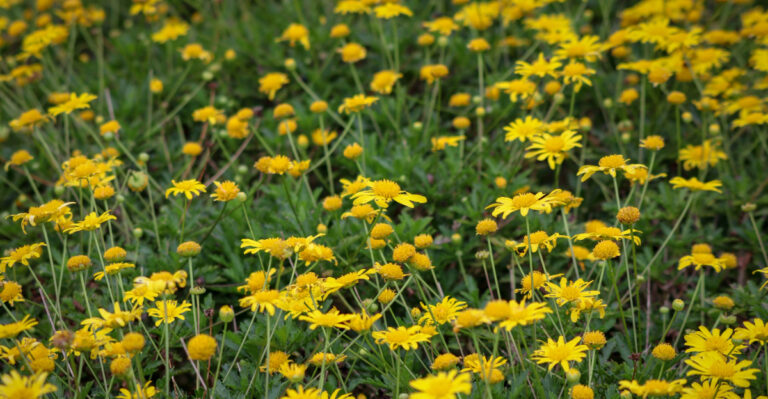
While most flowering plants take a long break during Arizona’s brutal summer, angelita daisy keeps right on blooming. Bright yellow flowers cover the plant from late winter through fall, and even a mild winter will see a few blooms hanging on.
For a front yard that needs consistent color without constant replanting, this one delivers.
Foliage is fine-textured and dark green, which creates a nice contrast against the yellow flowers and against the pale tones of gravel or limestone rock. Plants grow into tidy mounds about a foot tall and a foot and a half wide.
No aggressive spreading, no sprawling, just a clean, rounded shape that holds well all season.
Full sun is non-negotiable. Partial shade leads to fewer flowers and a looser plant habit.
In Arizona, afternoon sun exposure is rarely a problem since that is what the plant is built for. Good drainage is the other key factor, especially during the monsoon season when heavy rains can saturate the soil quickly.
Trim plants lightly after the main bloom flush to keep them tidy and productive. Deadheading individual flowers is not necessary since the plant cycles through blooms on its own.
Angelita daisy works well in mass plantings, as edging along a rock bed, or mixed with taller desert plants for layered color that actually holds up through the long Arizona summer.
7. Blue Chalksticks Spread And Soften Edges
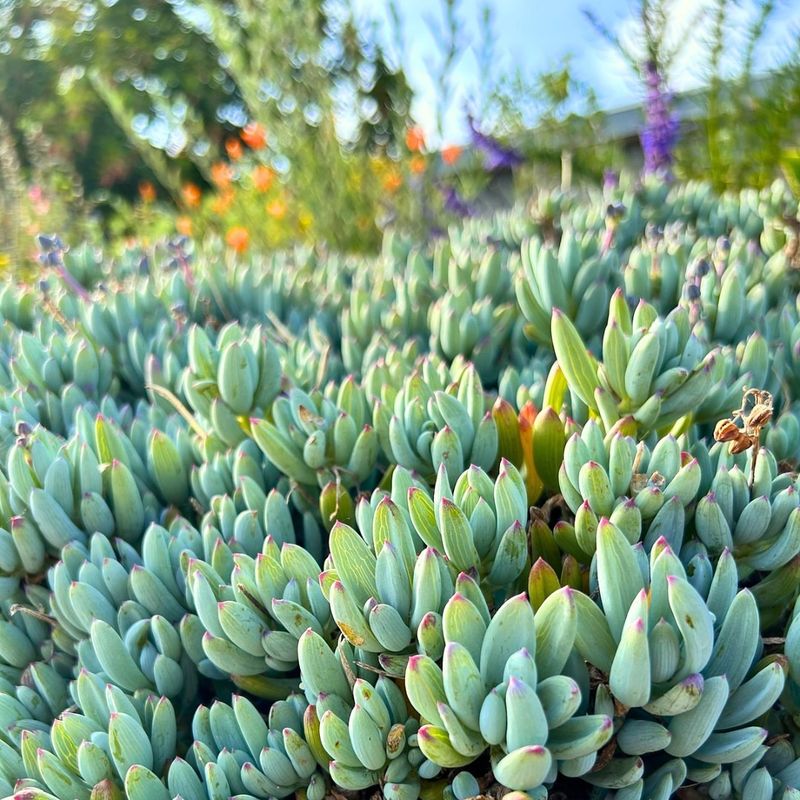
That soft, powdery blue-gray color stands out in any rock garden, and blue chalksticks delivers it effortlessly. Succulent fingers of silvery-blue spread outward from the center, filling gaps between rocks in a way that looks completely natural.
It softens hard edges without hiding them, which is exactly what a rock garden needs.
Blue chalksticks spreads at a moderate pace, gradually filling in open areas without becoming a problem. Stems root where they touch the soil, so it slowly colonizes bare patches of gravel over time.
Pulling back sections that get too wide is easy since roots are shallow and stems break apart cleanly.
Flowers appear in late fall or winter, small white clusters that sit just above the foliage. They are not showy, but they attract pollinators at a time when not much else is blooming in Arizona yards.
After flowering, seed heads add a bit of texture before eventually dropping off on their own.
Overwatering is the main issue to avoid. Arizona winters are cool enough that the plant needs very little supplemental water, and summer watering should be infrequent.
Well-draining soil or a raised rock bed suits it perfectly. Plant blue chalksticks along the front edge of a rock border or between stepping stones to get that flowing, effortless look that makes a desert yard feel both polished and relaxed.
8. Lantana Fills Spaces With Long Lasting Color
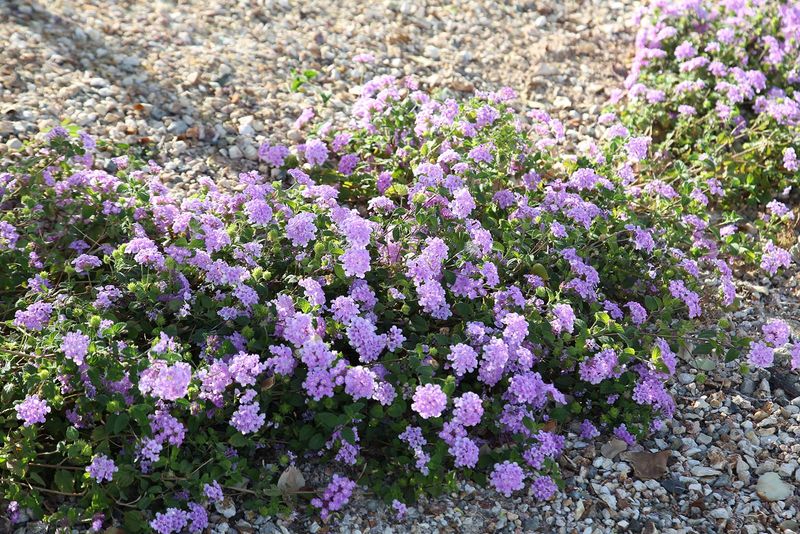
Few plants match lantana when it comes to sheer color output in an Arizona summer. Clusters of tiny flowers cover the plant in mixes of yellow, orange, pink, purple, and red, and they keep coming month after month without much encouragement.
Butterflies swarm it, which makes the whole front yard feel like a busy, colorful scene.
Trailing lantana stays low and spreads wide, making it ideal for filling open rock beds or flowing over the edges of retaining walls. It hugs the ground rather than mounding up tall, which keeps sightlines open and lets rocks remain visible through the planting.
Spacing plants about three feet apart gives them room to spread naturally.
Heat brings out the best in lantana. Stretches of 100-plus degree days that slow other plants down barely register with this one.
Cutting plants back hard in late winter encourages a fresh flush of growth and keeps them from getting woody and bare at the base. Skip that annual trim and the plant tends to look tired by midsummer.
Lantana is not fussy about soil as long as water drains away quickly. Sandy or gravelly soil works well, and decomposed granite mulch around the base suits it fine.
Across Arizona front yards, lantana earns its reputation as a go-to rock garden plant because it handles the conditions here better than almost anything else and never really stops putting on a show.