9 Sculptural Plants That Bring Instant Drama To California Gardens
In California, gardens are about more than pretty flowers, they are about creating spaces that stop people in their tracks.
Sculptural plants have a way of doing just that, adding bold shapes, strong lines, and instant drama to outdoor landscapes.
One well-placed architectural plant can turn a garden from ordinary to extraordinary, giving it personality and flair that lasts all season.
These plants are the showstoppers of the garden world.
They provide height, structure, and focal points, drawing the eye across beds and borders.
In combination with softer foliage and flowering plants, sculptural greenery adds contrast and tension, creating landscapes that feel balanced yet full of character.
Sunlight bouncing off glossy leaves or dramatic stems can make even a small garden feel expansive and carefully curated.
California’s climate makes it possible to experiment with a wide range of sculptural plants, from striking succulents to bold perennials and ornamental grasses.
Many thrive in sun and tolerate dry conditions, keeping their dramatic shapes season after season.
With a few well-chosen sculptural plants, gardens gain depth, intrigue, and instant impact, transforming outdoor spaces into living works of art that capture attention and imagination.
1. Agave Attenuata (Foxtail Agave)
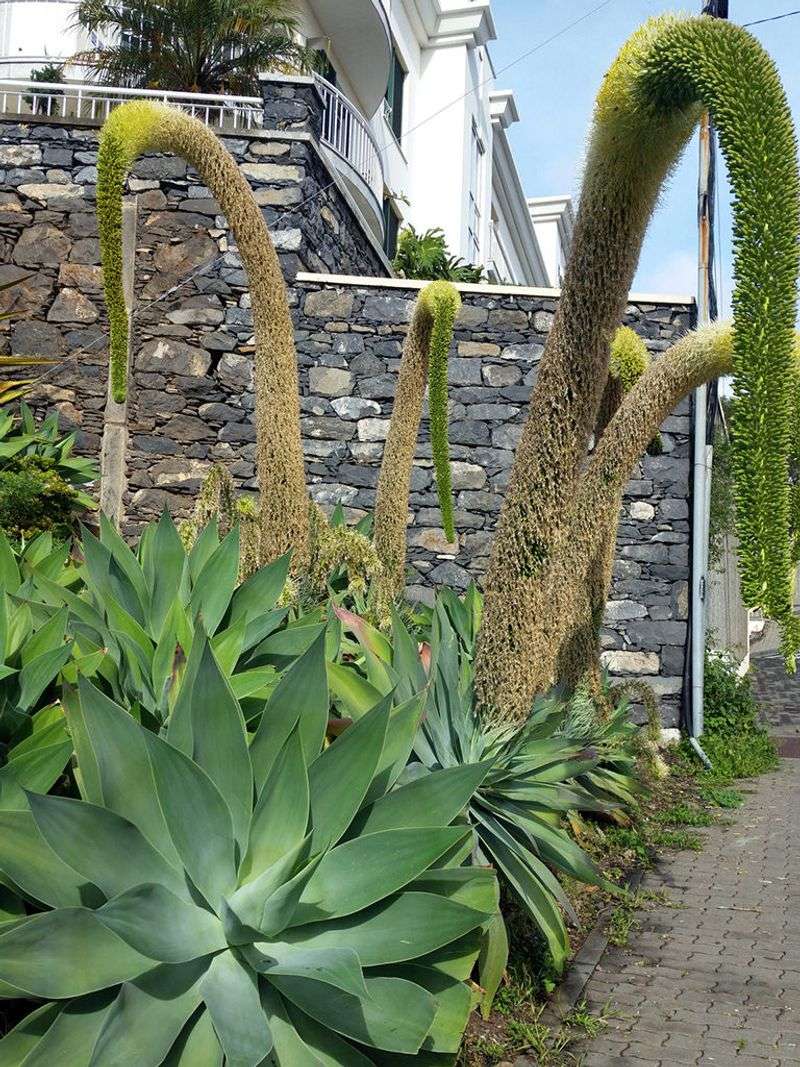
Soft curves and a graceful silhouette make this agave completely different from its spiky cousins.
Unlike most agaves with sharp edges and threatening points, Agave attenuata features smooth, spineless leaves that curve elegantly outward in a perfect rosette pattern.
The pale blue-green foliage creates a striking focal point in any California garden, whether planted solo or grouped in multiples.
This plant thrives in coastal California conditions, tolerating fog and salt air with ease.
It grows slowly to about three to four feet tall and wide, making it manageable for smaller spaces.
The real showstopper arrives when mature plants send up a dramatic arching flower spike that can reach ten feet long, covered in greenish-yellow blooms that hummingbirds adore.
After flowering, the main rosette fades, but offsets typically form around the base to continue the display.
Plant it in well-draining soil with partial shade in hotter inland areas or full sun along the coast.
It pairs beautifully with boulders, gravel, and other succulents in modern California landscapes.
Water sparingly once established, as this drought-tolerant beauty stores moisture in its thick leaves.
Foxtail agave brings soft architectural elegance without the danger of sharp spines, making it family-friendly and visually stunning.
2. Dracaena Draco (Dragon Tree)
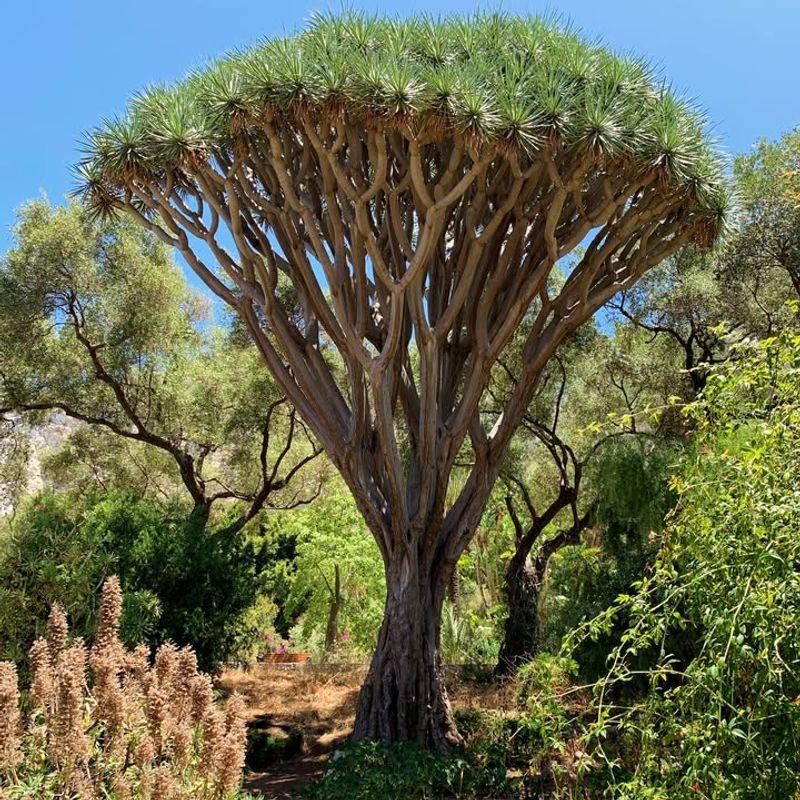
Ancient and otherworldly, the Dragon Tree looks like it belongs in a fantasy novel rather than a California backyard.
Its thick, branching trunk develops slowly over many years, creating an umbrella-shaped canopy of stiff, sword-like leaves that radiate from each branch tip.
The silvery-blue foliage contrasts beautifully against the rough, gray bark, and mature specimens develop a wonderfully gnarled appearance that adds instant age and character to any landscape.
Native to the Canary Islands, this tree adapts remarkably well to California’s Mediterranean climate, especially in coastal and southern regions.
It grows very slowly, eventually reaching fifteen to twenty feet tall, though it takes decades to achieve impressive size.
The name comes from the reddish sap that oozes from cuts in the bark, which ancient peoples called dragon’s blood.
In California gardens, Dragon Trees work beautifully as specimen plants in gravel gardens, succulent landscapes, or even large containers on patios.
They tolerate drought once established and prefer well-draining soil with occasional deep watering.
Full sun to partial shade suits them well, though they appreciate some afternoon protection in the hottest inland valleys.
This living sculpture brings timeless drama and exotic flair to California landscapes.
3. Euphorbia Ingens (Candelabra Tree)
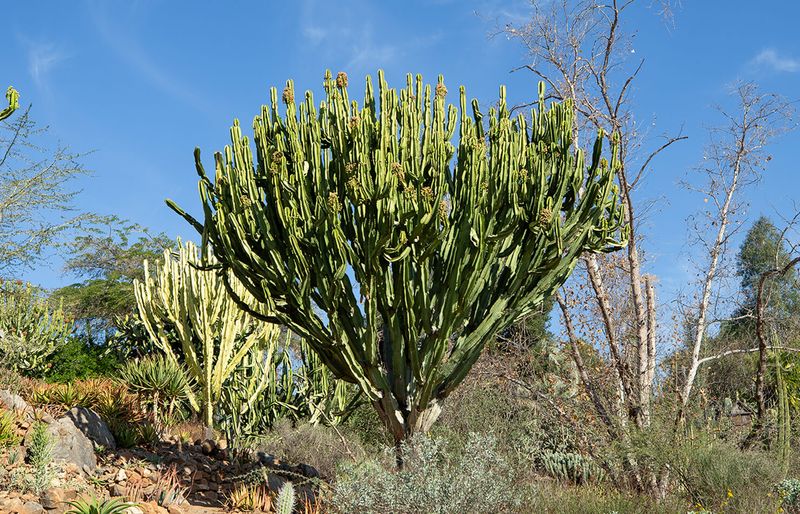
Towering columns of green reach skyward like a living chandelier in your California garden.
Euphorbia ingens grows into a spectacular multi-stemmed tree that resembles a giant cactus, though it’s actually a succulent from South Africa.
The thick, segmented branches grow vertically with occasional side arms, creating that classic candelabra shape that gives the plant its common name.
Shallow ridges run along each stem, and tiny leaves appear briefly during the growing season before dropping off.
Mature specimens can reach twenty to thirty feet tall in California, creating dramatic vertical accents that draw the eye upward.
This architectural wonder thrives in full sun with excellent drainage, making it perfect for California’s dry summers.
It tolerates heat, drought, and poor soil once established, asking for very little maintenance in return for its striking presence.
Plant it as a bold focal point in modern landscapes, desert-style gardens, or alongside other succulents and cacti.
The vertical lines contrast beautifully with rounded agaves and spreading groundcovers.
Water sparingly, as overwatering causes problems in California’s clay soils.
Note that the milky sap is toxic and can irritate skin, so plant it away from high-traffic areas and wear gloves when pruning.
This showstopper brings instant height and architectural interest to California gardens.
4. Yucca Rostrata (Beaked Yucca)
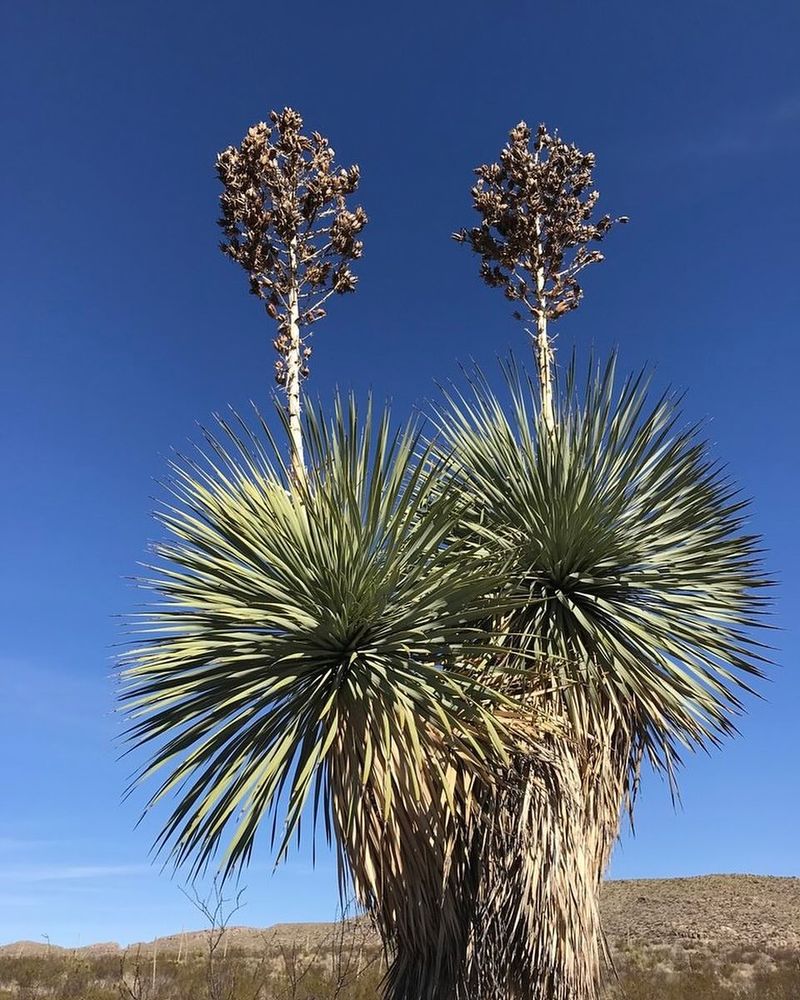
Picture-perfect symmetry and icy blue foliage make this yucca a designer favorite across California.
Yucca rostrata forms an almost perfectly round head of thin, flexible leaves in stunning shades of powder blue to silvery gray.
The leaves radiate from a central point atop a thick trunk that develops slowly over time, eventually reaching six to twelve feet tall.
Unlike stiff, dangerous yuccas, this species has softer leaf tips that won’t cause serious injury, though they’re still pointy enough to command respect.
The overall effect resembles a giant blue pom-pom balanced on a sturdy pedestal.
Native to northern Mexico and west Texas, this tough plant handles California’s climate with ease, from coastal gardens to hot inland valleys.
It tolerates cold better than many succulents, withstanding occasional freezes without damage.
In late spring, mature plants send up tall flower spikes covered in white blooms that attract bees and hummingbirds.
Plant it in full sun with well-draining soil, and water occasionally during establishment.
Once settled, it becomes remarkably drought-tolerant, surviving on rainfall alone in many California locations.
The blue foliage provides stunning color contrast against warm-toned walls, dark mulch, or green companion plants.
Yucca rostrata works beautifully as a specimen plant, in groupings, or as container accents for California patios and entryways.
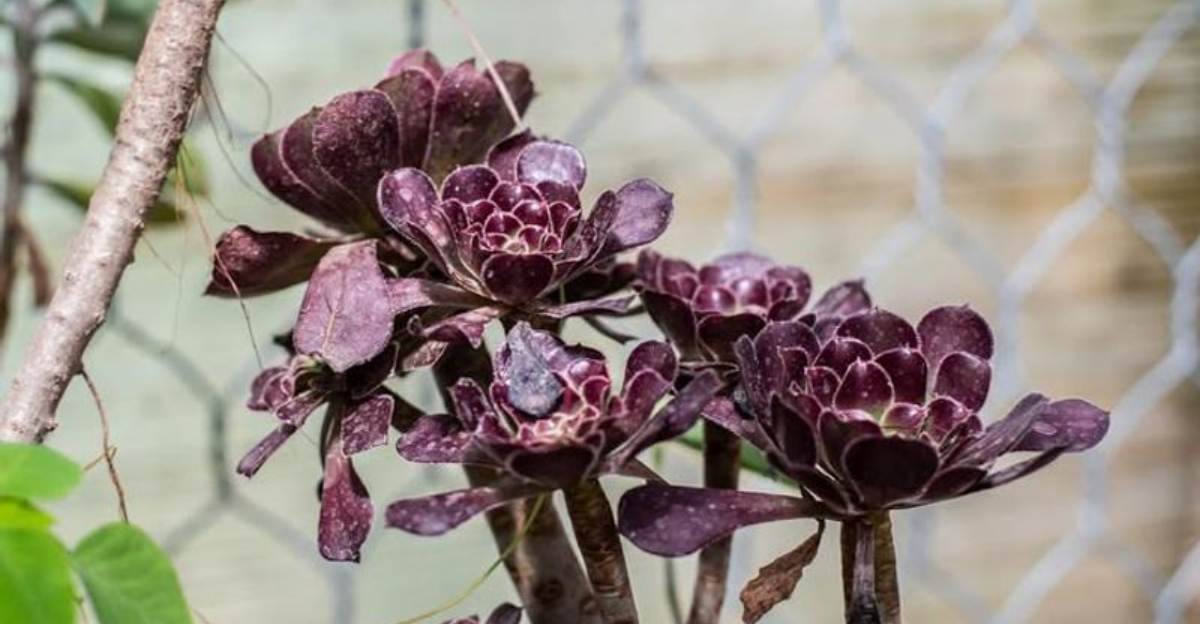
5. Aeonium Arboreum ‘Zwartkop’ (Black Rose)
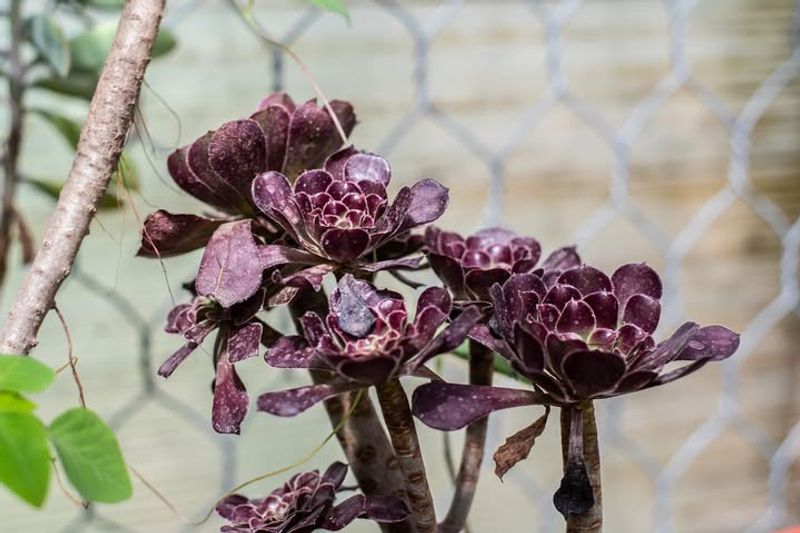
Dark as midnight and dramatic as velvet, Black Rose aeoniums stop visitors in their tracks.
The deep burgundy-black rosettes look almost artificial, like perfectly formed flowers carved from dark wax.
Each rosette sits atop a branching stem, and mature plants develop multiple heads that create a striking sculptural cluster.
The color intensifies in full sun and cooler weather, while plants grown in shade stay greener.
In California’s mild climate, these Canary Island natives thrive year-round, growing actively during winter and spring when most gardens look dormant.
They reach two to three feet tall and wide, making them perfect for containers, borders, or massed plantings.
The branching structure becomes more interesting with age, developing a tree-like form that adds architectural interest.
In spring, mature rosettes send up tall yellow flower spikes, after which that particular rosette fades, but the plant continues growing from other branches.
Plant Black Rose in well-draining soil with morning sun and afternoon shade in hot inland California areas, or full sun along the coast.
Water regularly during the growing season, allowing soil to dry slightly between waterings.
These succulents pair beautifully with silver-leaved plants, orange flowers, or lime-green foliage for maximum color contrast.
Their dark, dramatic presence brings gothic elegance to California gardens year-round.
6. Beschorneria Yuccoides (Mexican Lily)
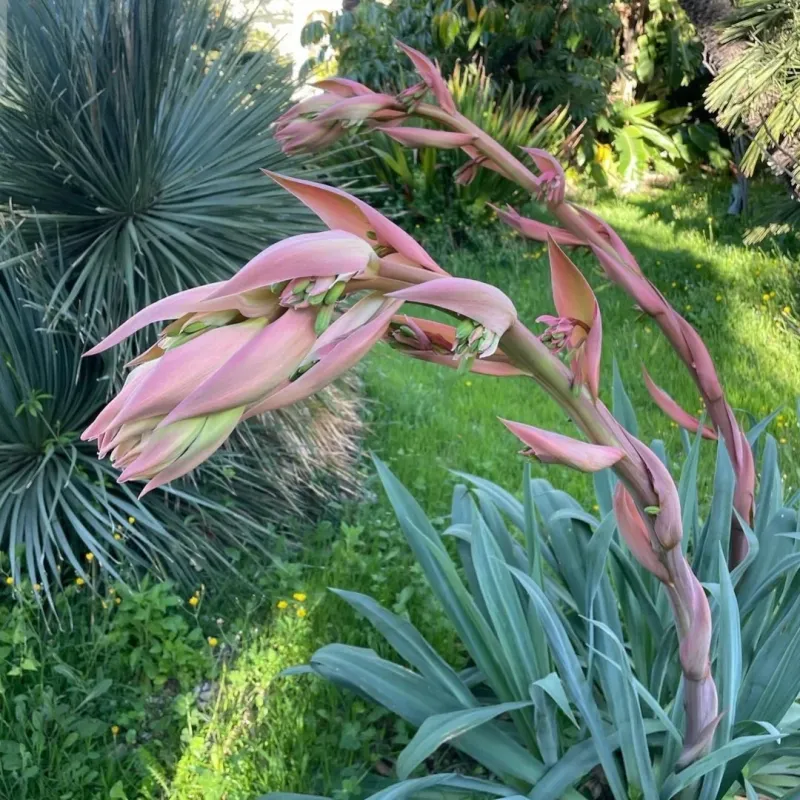
When this plant blooms, neighbors will stop and ask what on earth you’re growing.
Beschorneria yuccoides forms a fountain-like clump of soft, blue-green leaves that arch gracefully outward, reaching about three feet tall and wide.
The foliage alone provides year-round interest, but the real magic happens when mature plants send up spectacular flower spikes in late spring or early summer.
These towering stalks can reach six to eight feet tall, covered in bright coral-pink bracts that contrast with dangling tubular flowers in shades of green and red.
The effect is absolutely stunning and completely unexpected in a California garden.
Hummingbirds go crazy for the nectar-rich blooms.
Native to Mexican mountains, this plant adapts beautifully to California’s climate, handling both coastal fog and inland heat with equal grace.
It prefers well-draining soil and regular water during establishment, becoming quite drought-tolerant once settled.
Plant it in full sun to partial shade, with some afternoon protection in the hottest areas.
The soft leaves won’t stab like yucca or agave, making it safer for planting near pathways.
After flowering, the main rosette gradually fades, but offsets form around the base to continue the show.
This underused gem brings tropical flair and explosive color to California landscapes without demanding tropical care.
7. Aloe Barberae (Tree Aloe)
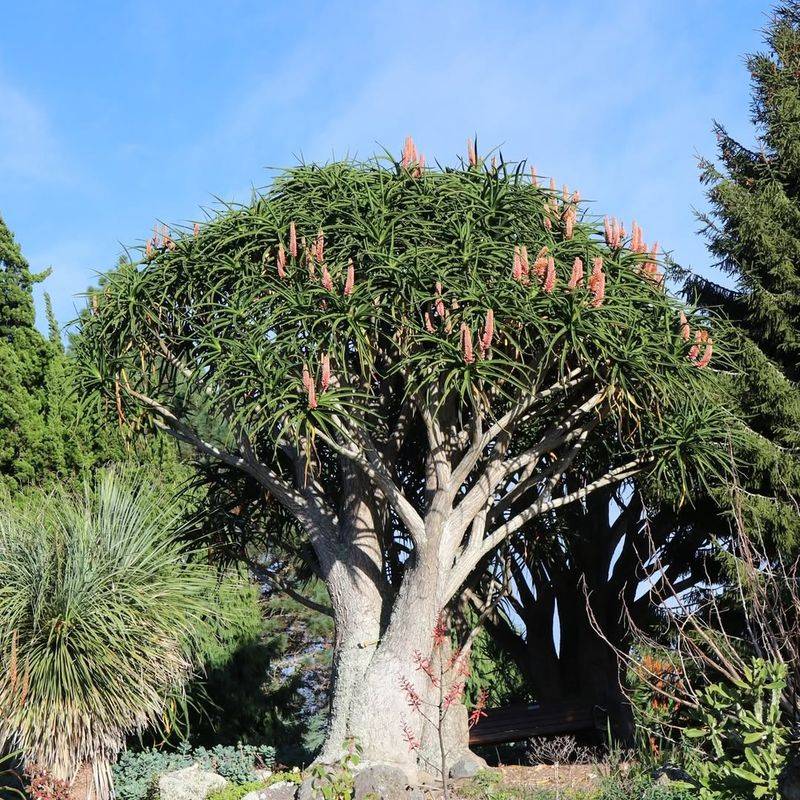
Forget small potted aloes, this species grows into an actual tree that dominates the California landscape.
Aloe barberae develops a thick, branching trunk covered in rough bark, topped with multiple rosettes of green, slightly curved leaves.
Mature specimens can reach thirty to forty feet tall in ideal California conditions, creating an unforgettable focal point that resembles a prehistoric giant.
The sculptural branching pattern develops slowly over many years, with each branch ending in a dense cluster of succulent foliage.
In winter, mature plants produce spectacular spikes of tubular pink flowers that attract hummingbirds from across the neighborhood.
Native to South Africa, this tree thrives in California’s Mediterranean climate, especially in coastal and southern regions where frost rarely threatens.
It grows slowly when young but picks up speed as it matures, eventually becoming quite impressive.
Plant it in well-draining soil with full sun to partial shade, providing regular water during establishment.
Once settled, it tolerates considerable drought, though occasional deep watering keeps it looking its best.
The massive size means you need space, this isn’t a plant for tiny yards.
However, in larger California gardens, it creates instant drama and serves as a living sculpture that improves with age.
Tree aloe brings bold architectural presence and African character to California landscapes.
8. Dasylirion Wheeleri (Desert Spoon)
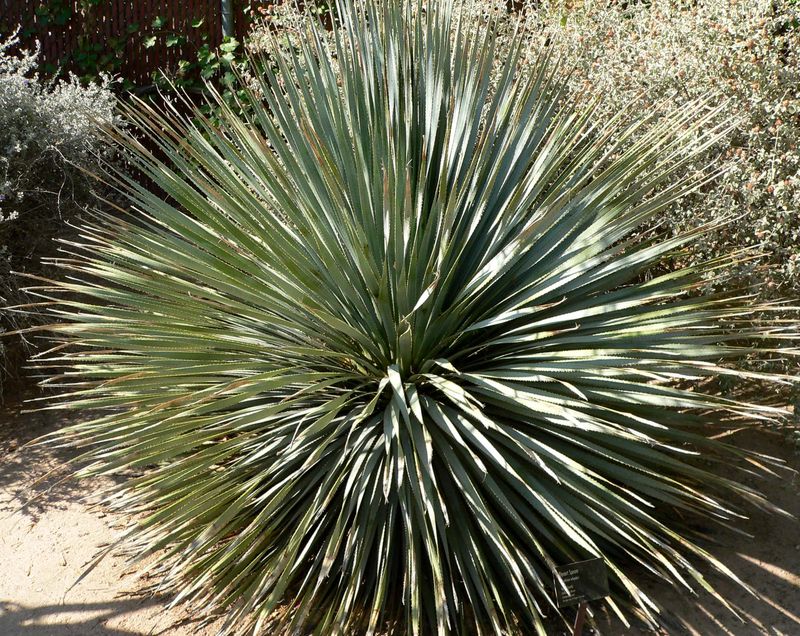
Spiky, spherical, and absolutely striking, Desert Spoon creates a perfect globe of architectural interest.
Hundreds of narrow, blue-gray leaves radiate from a central point, each edged with tiny teeth that catch the light and create a silvery halo effect.
The overall shape resembles a giant sea urchin or exploding firework frozen in time.
Plants grow slowly to about three to four feet tall and wide, maintaining that perfect round form without any pruning.
The leaf tips are sharp, so plant it away from walkways where people might brush against it.
Native to southwestern deserts, Dasylirion wheeleri handles California’s hottest, driest conditions with ease, making it perfect for water-wise landscapes throughout the state.
It thrives in full sun and well-draining soil, asking for almost nothing once established.
Mature plants occasionally send up tall flower spikes reaching ten to fifteen feet high, covered in small cream-colored blooms that create a dramatic vertical accent.
The common name comes from the spoon-shaped leaf bases that remain after old leaves are removed.
In California gardens, Desert Spoon works beautifully in modern landscapes, desert-style plantings, or as a bold container specimen.
The blue-gray foliage contrasts wonderfully with warm earth tones, dark rocks, or green plants.
This tough beauty brings textural drama and perfect geometry to California gardens year-round.
9. Furcraea Foetida ‘Mediopicta’ (Variegated False Agave)
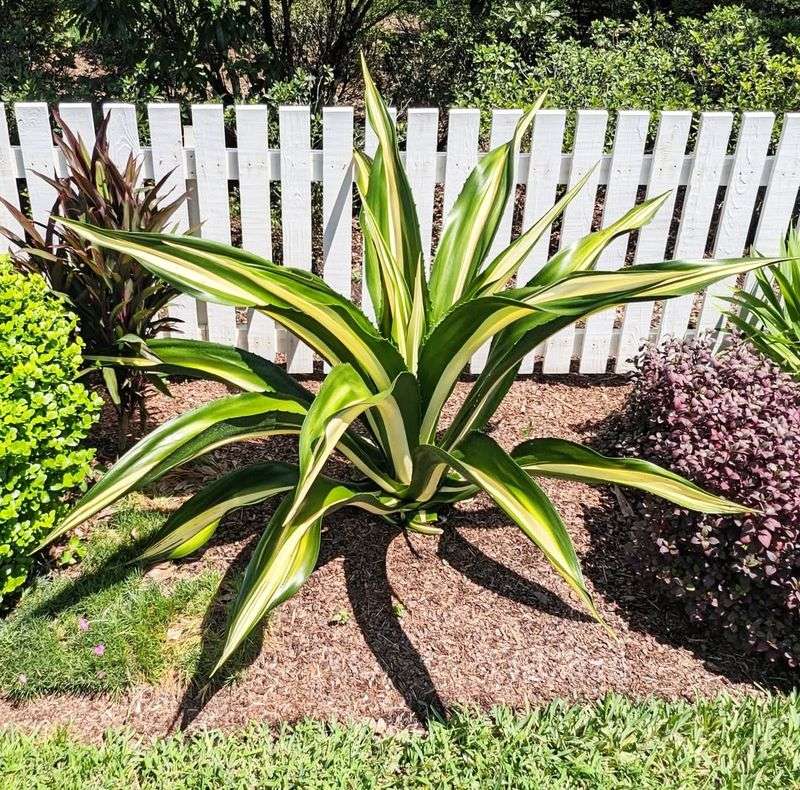
Bold stripes and massive size make this plant impossible to ignore in any California landscape.
Furcraea foetida ‘Mediopicta’ forms enormous rosettes of sword-shaped leaves dramatically striped with creamy yellow centers and green edges.
Each leaf can reach four to six feet long, and the entire plant spreads six to eight feet across, creating a substantial presence.
The variegation provides year-round color that brightens shady corners or adds punch to sunny spots.
Unlike true agaves, this plant has softer leaf margins with fewer spines, though the leaf tips are still pointy.
Native to tropical America, it adapts surprisingly well to California’s climate, especially in coastal and southern regions.
It tolerates more shade and water than most succulents, making it versatile for various garden situations.
Plant it in well-draining soil with regular water during establishment, then reduce watering once settled.
It handles full sun to partial shade, with the variegation staying brightest in good light.
After many years, mature plants send up enormous flower spikes reaching fifteen to twenty feet tall, covered in white blooms that create an unforgettable spectacle.
The main rosette fades after flowering, but numerous offsets typically form to continue the display.
This giant beauty brings tropical drama and bold color to California gardens, serving as a living sculpture that commands attention from every angle.