10 Shade-Loving Ground Covers That Make Ohio Gardens Shine
Shade gets a bad reputation in Ohio gardens. Homeowners stare at those dim patches under maples, along north-facing fences, and beneath towering oaks like they are unsolvable problems.
Grass gave up. Mulch looks tired.
And bare dirt is never the answer. But what if that shady corner is not a lost cause?
It is an opportunity you have not tapped yet. The right ground cover turns a problem patch into the most interesting part of your yard.
Ohio’s climate throws a lot at plants: brutal humidity, surprise late frosts, clay soil that drains like a parking lot, and summer heat that lingers well into September. Not every shade lover can handle that combination.
The ground covers on this list can. They spread reliably, survive Ohio winters, and bring texture, color, and life to spots where nothing else wants to grow.
1. Plant Wild Ginger For A Calm Woodland Carpet
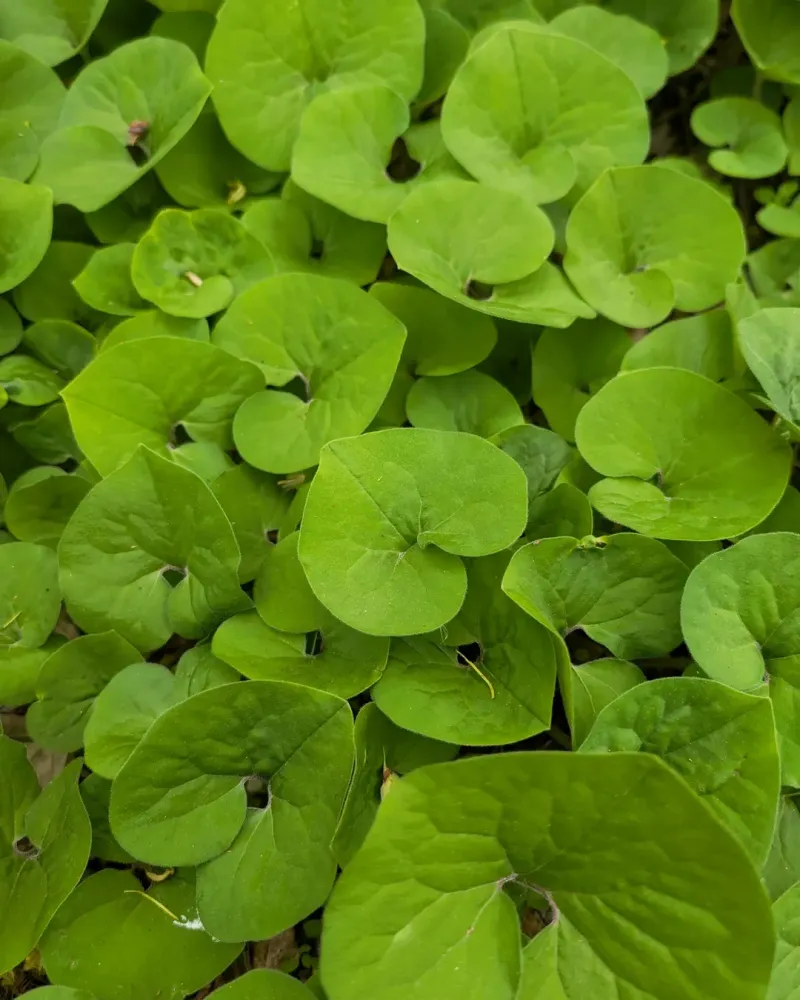
That bare, shady patch under your oak can become a lush woodland carpet of glossy, heart-shaped leaves. That is exactly what wild ginger can do for a difficult shade bed.
Native to eastern North American woodlands, Asarum canadense is one of the most satisfying choices for gardeners who want a calm, low-maintenance look without reaching for invasive plants.
Wild ginger prefers rich, moist, well-drained soil with plenty of organic matter. It grows best in deep to part shade, making it a strong candidate for spots under mature trees where little else thrives.
Establishment is slow, so expect a year or two before plants really start to spread. Watering during dry spells in the first season makes a real difference.
Leaf litter from nearby trees can actually help by keeping roots cool and moist. Wild ginger is not a good fit for high-traffic paths since foot traffic damages the foliage.
Plant it in drifts of five or more for the best visual effect. As a bonus, its unusual low-growing flowers add ecological interest in spring, even though they are easy to miss beneath the foliage.
2. Use Pennsylvania Sedge Where Turfgrass Struggles
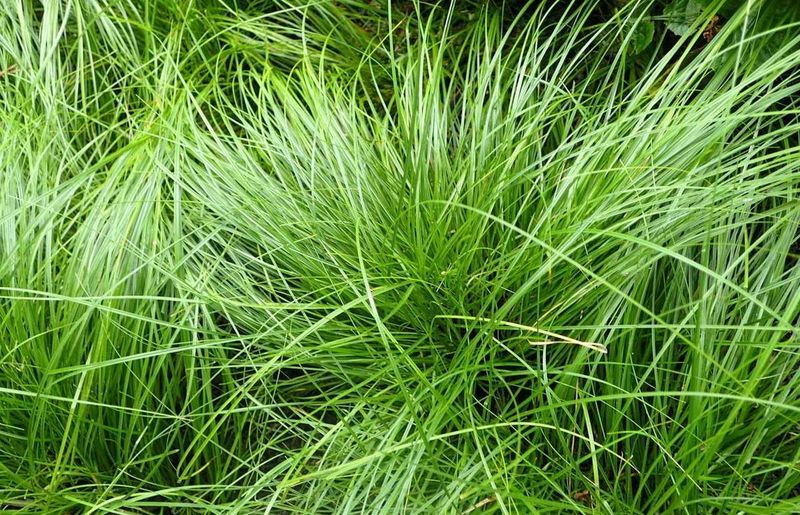
Turfgrass and deep shade are a bad combination. If you have spent summers trying to coax lawn grass to grow under a big maple or a dense row of shrubs, Pennsylvania sedge might be the answer you have been looking for.
Carex pensylvanica is a native, grass-like sedge that creates a soft, flowing, low-maintenance look in spots where traditional lawn simply cannot compete.
Pennsylvania sedge can work in part shade to moderately dry shade, including some tough spots under trees, once it has had time and moisture to establish. It stays relatively low, rarely needing mowing, and holds its soft green color through much of the growing season.
In northern regions, it may stay green well into late fall. In southern regions, it can go semi-dormant in summer heat but usually recovers.
Establishment takes patience. Weeds will move in before the sedge fills in, so hand-weeding or careful mulching during the first two seasons is worth the effort.
Water regularly during the first summer, especially in dry spells. Pennsylvania sedge is not a tough athletic surface, so keep foot traffic light.
Your Ohio Garden Changes Every Week. Your Plan Should Too.
Gardening in Ohio changes quickly throughout the season. Every Friday you’ll receive a simple weekly plan showing exactly what to plant, prune, fertilize, harvest, and protect so you never miss the right timing.
Once established, it forms a pleasant, meadow-like texture that looks intentional and feels right at home in a woodland-style yard.
3. Add Foamflower For Soft Spring Texture
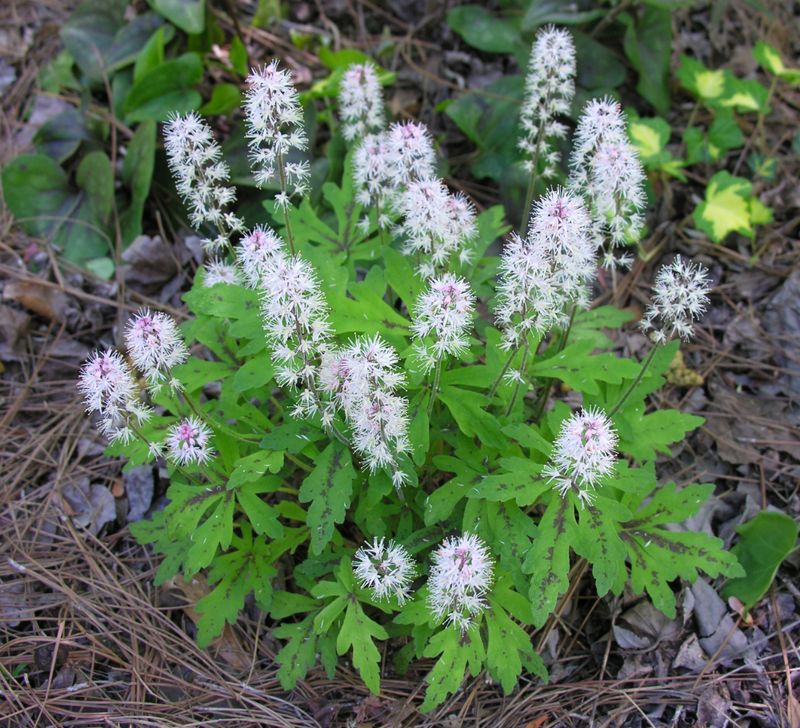
Spring in a shady Ohio garden can feel quiet and a little dull before the canopy fills in. Foamflower changes that.
Tiarella cordifolia is a native woodland perennial that sends up soft, feathery white flower spikes in mid-spring, creating a frothy, almost magical display above its attractive lobed foliage.
Few plants make a shady bed look more intentional during that awkward early-season window.
Foamflower prefers moist, humus-rich, well-drained soil and does best in part shade to full shade. It can struggle in harsh dry shade under shallow-rooted trees unless you amend the soil generously and water during dry stretches.
Adding compost at planting and top-dressing with leaf mulch each fall gives it the best chance.
For ground cover use, group plants in clusters of five to nine for coverage that reads as a real design layer rather than a few scattered specimens. Some cultivars spread by runners and fill in more quickly than the straight species.
Foamflower also pairs beautifully with Pennsylvania sedge, wild ginger, and ferns for a layered woodland look. Native bees and early pollinators visit the flowers, adding quiet wildlife value to the bed through the spring season.
4. Grow Wild Geranium For Native Color In Part Shade
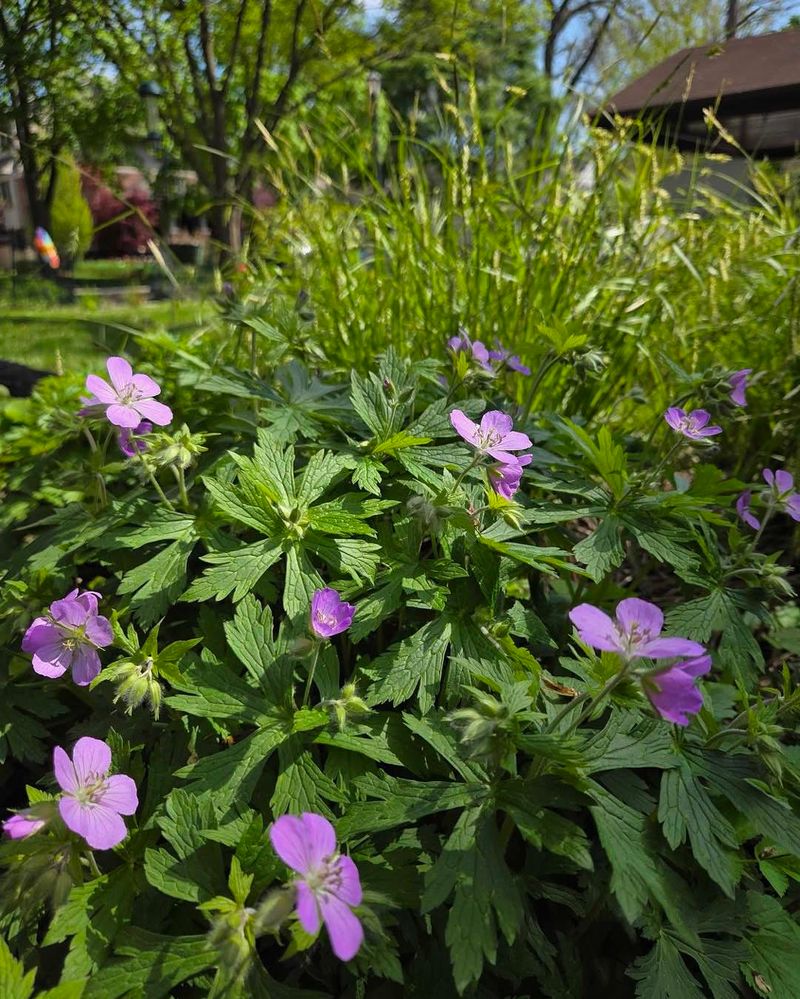
Some plants earn their place in the garden by being genuinely useful across a range of conditions, and wild geranium is one of them.
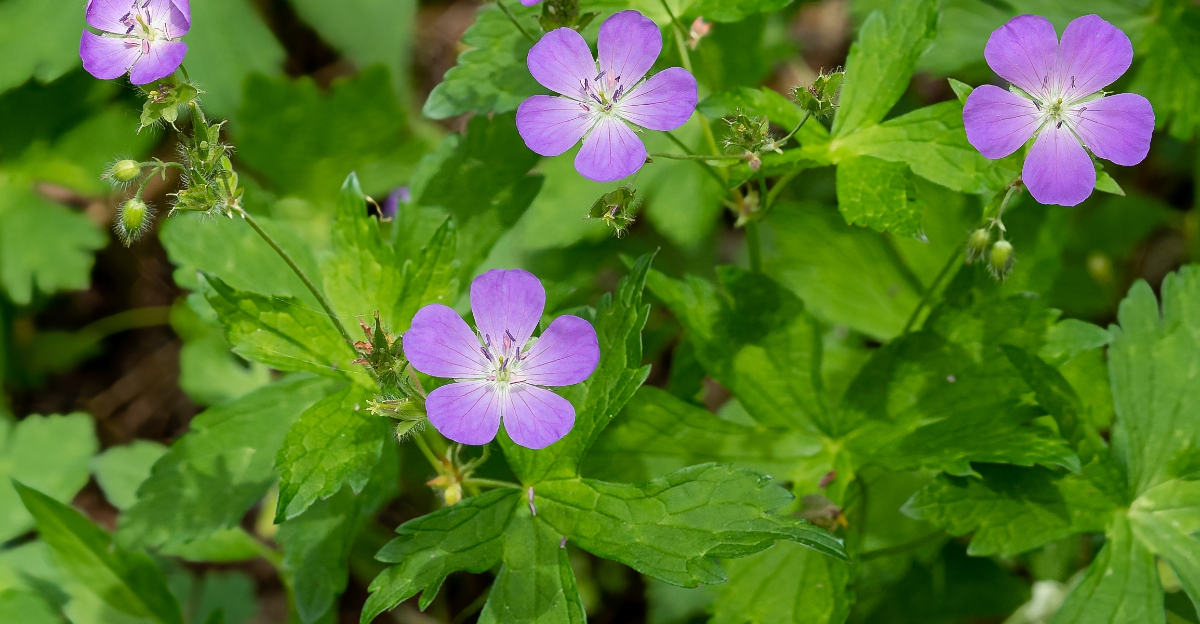
Geranium maculatum is a native perennial that blooms in soft shades of pink and lavender in mid-spring, attracting early bees and bumblebees at a time when many other shade plants are just waking up.
The deeply lobed foliage can stay attractive into summer when soil moisture is steady, and may turn warm reddish tones in fall.
Wild geranium grows best in part shade with well-drained soil that holds some moisture. It tolerates the dappled light under high-branched trees quite well and can handle brief dry spells once established.
Planting it along shaded borders, at the edge of a woodland garden, or under ornamental trees gives it room to spread gradually without becoming a problem.
Plants self-seed modestly, which helps fill in a bed over time without aggressive takeover. Trimming spent flowers can reduce self-seeding if you prefer a tidier look.
Wild geranium combines well with foamflower, Virginia bluebells, and Pennsylvania sedge for a layered spring display.
For gardeners in central and northern regions working with older neighborhoods and mature tree canopies, wild geranium is a reliable, low-fuss performer that rewards a little patience.
5. Let Green And Gold Brighten Shady Bed Edges
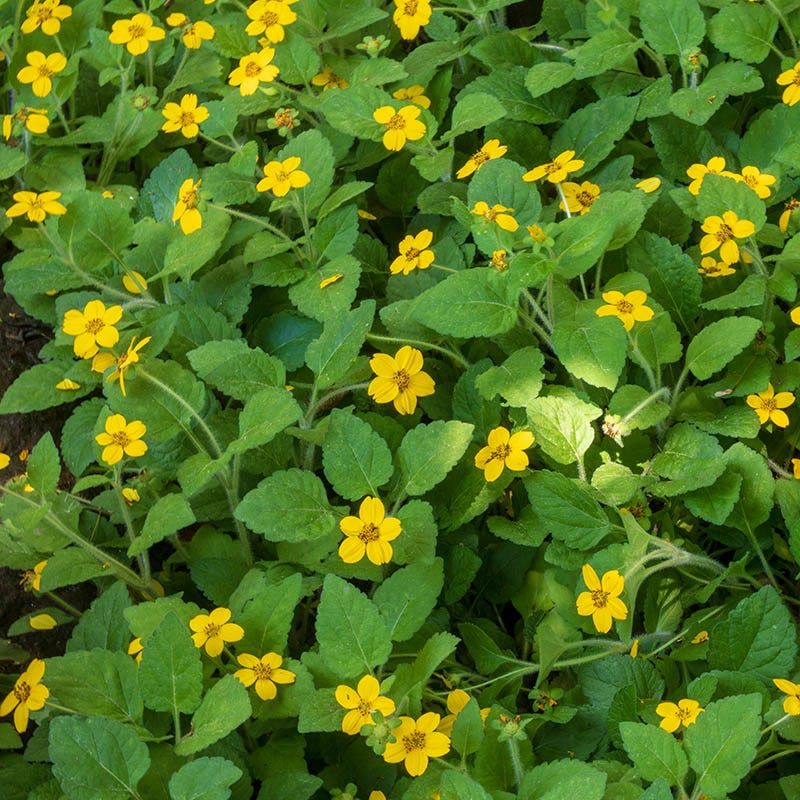
Not many native ground covers bring cheerful yellow flowers to a shady bed, which is exactly what makes green and gold stand out.
Chrysogonum virginianum is a low-growing native perennial that blooms in spring and often again in fall, producing small, bright yellow daisy-like flowers above a mat of dark green foliage.
Along path edges, bed borders, and woodland transitions, it adds a pop of color that feels warm and welcoming.
Green and gold performs best in part shade with moist, well-drained soil rich in organic matter. It can handle some dry shade but may bloom less freely and spread more slowly in those conditions.
If your shady bed sits under a shallow-rooted tree with dry, compacted soil, amend generously before planting and mulch to hold moisture through summer.
Spread is gradual and manageable, making green and gold a well-behaved choice compared to many non-native ground covers that take over. Plants can be divided every few years to expand coverage or share with other gardeners.
For gardeners wanting a sunny accent in a shady space, green and gold delivers without any of the invasive baggage.
6. Try Barren Strawberry For A Tidy Native Mat
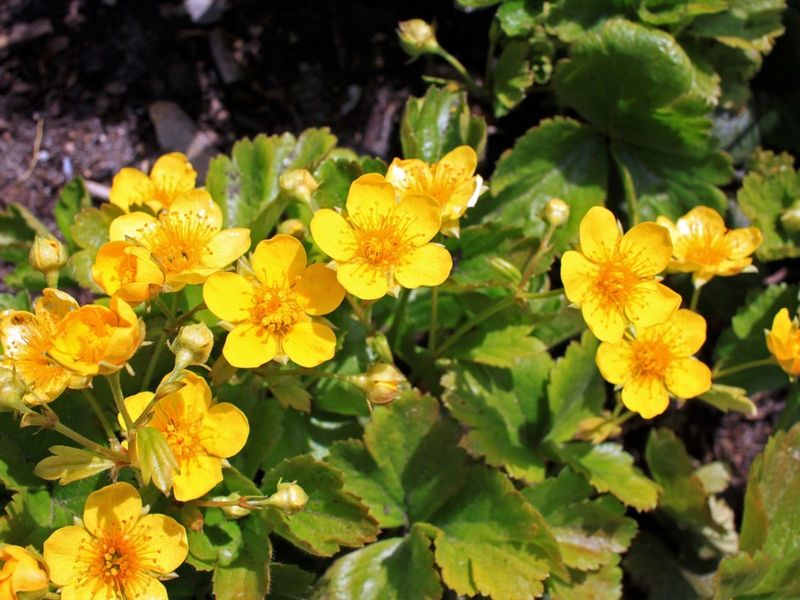
There is something satisfying about a ground cover that looks tidy without demanding constant attention. Barren strawberry, known botanically as Waldsteinia fragarioides, fits that description well.
Native to eastern North America, it forms a low, dense mat of strawberry-like foliage that stays semi-evergreen in winters, giving beds a finished look even in the quieter months of the year.
Small yellow flowers appear in spring, adding a bright seasonal touch before the canopy closes in overhead. Barren strawberry grows best in part shade with well-drained soil and tolerates dry conditions better than many native shade plants once it is fully established.
That makes it useful under shrubs, along shaded slopes, and in naturalized bed edges where moisture is inconsistent.
Spread is steady but not aggressive, so barren strawberry fills in gradually without taking over neighboring plants. Weeding during the first season or two helps it establish without competition.
Avoid planting in waterlogged spots since good drainage is important for long-term health.
Barren strawberry pairs well with taller native ferns and sedges, providing a low layer that holds the bed together visually.
For gardeners managing shaded slopes or foundation beds under conifers, barren strawberry is a practical and attractive option worth trying.
7. Plant Virginia Bluebells For Early Spring Magic
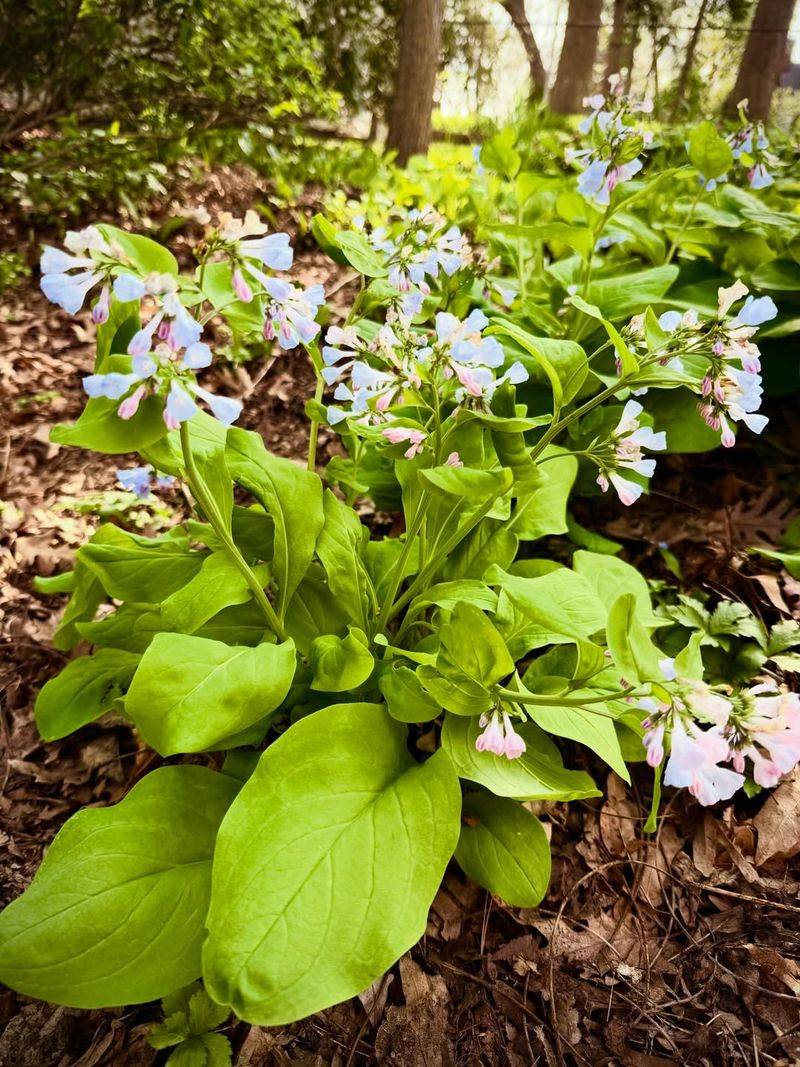
Few sights in a spring garden are as genuinely stunning as a drift of Virginia bluebells in full bloom. Mertensia virginica opens clusters of sky-blue, trumpet-shaped flowers in early to mid-spring, often before most other plants have fully emerged.
The soft blue-green foliage and nodding flower clusters create a dreamy, watercolor quality that is hard to match with any other native plant.
Virginia bluebells thrive in moist, rich, woodland soil in part to full shade. They are spring ephemerals, meaning the foliage fades and disappears completely by early summer.
That is an important detail for garden planning. Planting them alongside longer-lasting plants like Pennsylvania sedge, wild ginger, Christmas fern, or foamflower ensures the bed does not look bare after the bluebells go dormant.
Moist conditions are non-negotiable for good performance. Bluebells planted in dry shade under shallow-rooted trees will struggle without supplemental watering during spring.
In northern regions and lake-influenced areas, the cooler, moister springs tend to suit them especially well. Self-seeding helps colonies expand naturally over time.
Mark planting areas clearly so you do not accidentally disturb dormant roots when weeding in summer.
Virginia bluebells reward patience with a spring display that genuinely stops people in their tracks, as long as other ground covers fill the space after they go dormant.
8. Use Woodland Phlox For Fragrant Native Blooms
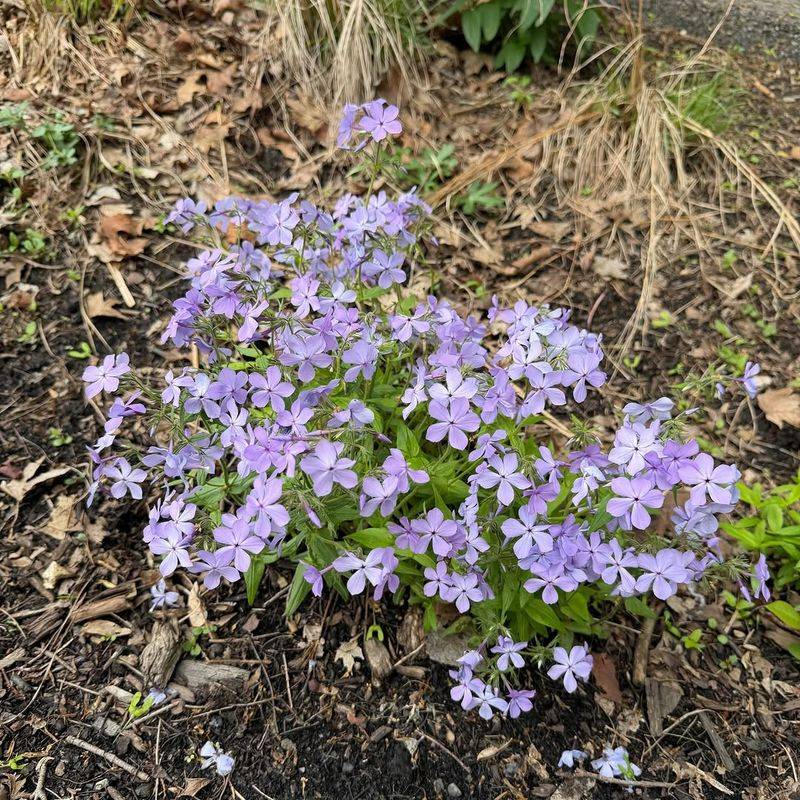
Walk past a patch of woodland phlox in bloom and the fragrance alone will make you stop.
Phlox divaricata is a native perennial that produces loose clusters of lavender-blue flowers in mid-spring, filling shady beds with both color and a soft, sweet scent.
For gardeners who want a shade plant that engages more than just the eyes, woodland phlox is worth a close look.
Woodland phlox grows best in moist, organic-rich, well-drained soil in part shade. It spreads gently by runners and self-seeding, gradually filling in a bed without becoming a problem.
Planting it along woodland edges, under high-canopied trees, or near shaded paths lets it naturalize in a way that looks deliberate rather than accidental.
Pair woodland phlox with wild geranium, foamflower, and Virginia bluebells for a spring-blooming native layer that supports early pollinators, including hummingbirds and sphinx moths.
Avoid planting in harsh dry shade without soil improvement and supplemental watering during establishment.
Powdery mildew can be an issue in humid summers, so good air circulation helps. Cutting plants back lightly after bloom encourages fresh foliage and sometimes a second flush of flowers in fall.
For shaded front beds and borders in neighborhoods, woodland phlox adds real seasonal character.
9. Add Common Blue Violet For A Low Pollinator Patch
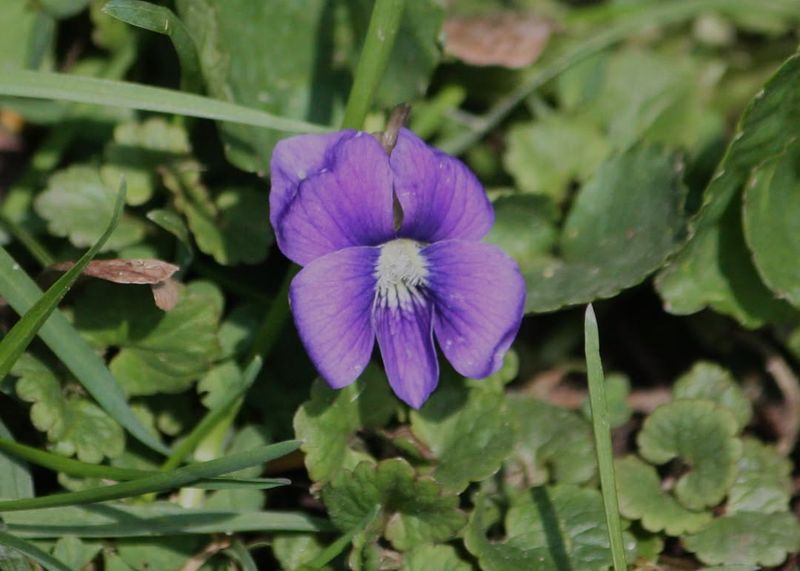
Chances are common blue violet is already growing somewhere in your yard, and that might be a reason to welcome it rather than pull it out.
Viola sororia is a native low-growing perennial that shows up in lawns, bed edges, and shaded spots across the state, producing small purple-blue flowers in early spring when pollinators are just getting active.
For informal shady areas, it can be a genuinely useful part of the plant community.
Common blue violet supports a surprising range of wildlife. Bumble bees visit the early flowers, and fritillary butterfly caterpillars depend on violet foliage as a primary food source.
Allowing violets to naturalize in a shaded corner or under a tree creates a small but real contribution to local food webs without any planting effort at all.
Violets do spread by self-seeding, so they work best where a relaxed, naturalistic look is acceptable rather than in formal beds where tidy edges matter. They can move into adjacent lawn areas, which some gardeners find charming and others find frustrating.
For north-facing slopes, shaded tree lawns, or informal backyard borders in older Ohio neighborhoods, common blue violet fills space honestly and supports pollinators better than bare mulch ever will.
Managing spread is straightforward with occasional hand-weeding.
10. Choose Christmas Fern For Evergreen Structure In Shade
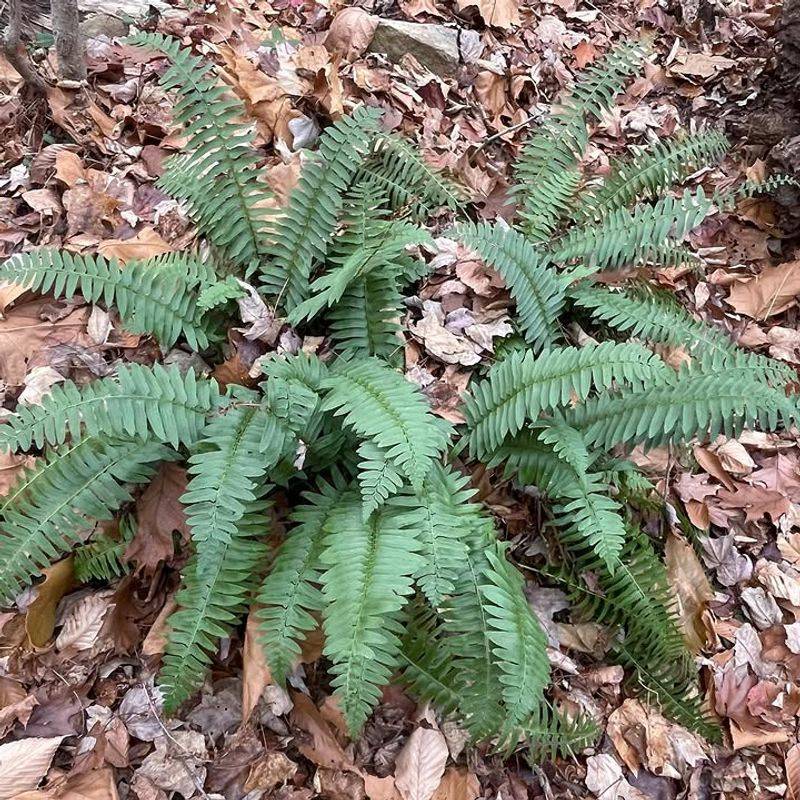
When the rest of the garden goes brown and bare in November, Christmas fern holds its ground.
Polystichum acrostichoides is a native evergreen fern that keeps its dark, glossy fronds through most winters, providing structure and texture in shaded beds long after other perennials have faded.
For gardeners who feel their shady spots look neglected in the off-season, Christmas fern is a practical solution with real visual staying power.
Christmas fern forms clumps rather than spreading into a fast carpet, so it works best as part of a layered ground cover mix rather than as a solo solution for large areas. Grouping five to nine plants together creates a full, polished look that reads as intentional design.
Spacing plants about 18 to 24 inches apart gives each clump room to develop without crowding.
Well-drained soil and natural leaf litter mulch suit Christmas fern well. It tolerates dry shade better than many native ferns, making it one of the more adaptable choices for difficult spots under maples and other shallow-rooted trees.
New fronds emerge in spring and the older fronds flatten to the ground, eventually decomposing into organic matter.
Pair Christmas fern with wild ginger, foamflower, or Pennsylvania sedge for a layered, four-season shade planting that looks cared for year-round.