9 Shade Perennials Oregon Gardeners Should Plant In February
Shade gardens have a quiet kind of magic, and February is the perfect time to start building one in Oregon.
While most landscapes still look sleepy, the soil is workable, the air is cool, and shade loving perennials are ready to settle in without stress.
Planting early gives roots time to establish before warmer days arrive, which means stronger growth and fuller plants come spring. Think layered greens, interesting leaf shapes, and gentle blooms that brighten darker corners without needing much sun.
A well planned shade bed feels calm, lush, and surprisingly low maintenance once it fills in. The best part is these perennials return each year, slowly creating a richer and more textured garden.
If you want those quiet spaces to feel intentional and alive, now is a great moment to begin shaping a shady retreat that will only get better with time.
1. Western bleeding heart (Dicentra formosa)
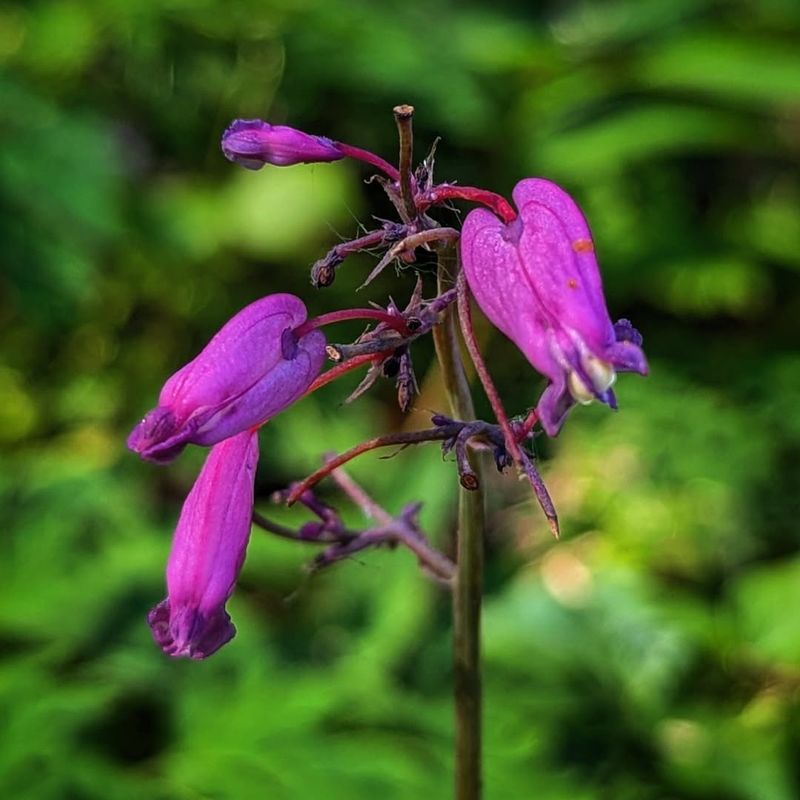
Our native Western bleeding heart fits naturally into many Oregon gardens, having evolved in the same woodland conditions found across much of the Pacific Northwest.
This wildflower is well adapted to shaded environments, including areas with root competition from Douglas firs and seasonal patterns of wet winters followed by drier summers.
Unlike its larger Asian relative, this species spreads gradually by rhizomes, forming loose colonies of finely divided foliage topped with soft pink, heart-shaped flowers that typically appear from mid-spring into early summer.
The delicate, fern-like leaves can remain attractive into summer with moderate soil moisture, though plants may go dormant during extended dry periods and usually re-emerge the following spring.
Planting in late winter or early spring can help roots establish while soil is cool and moist. Set crowns about an inch deep in well-drained, organically enriched soil, spacing plants roughly 12 to 18 inches apart.
Over time, they can spread gently to form a naturalistic ground layer that pairs well with other woodland plants such as ferns, trilliums, and Solomon’s seal.
Some gardeners assume this is a high-water shade plant, but once established it is fairly tolerant of typical dry summer conditions, especially beneath tree cover where soil stays cooler.
Good drainage remains important, as plants may struggle in persistently waterlogged or compacted soils.
2. Foamflower (Tiarella cordifolia)
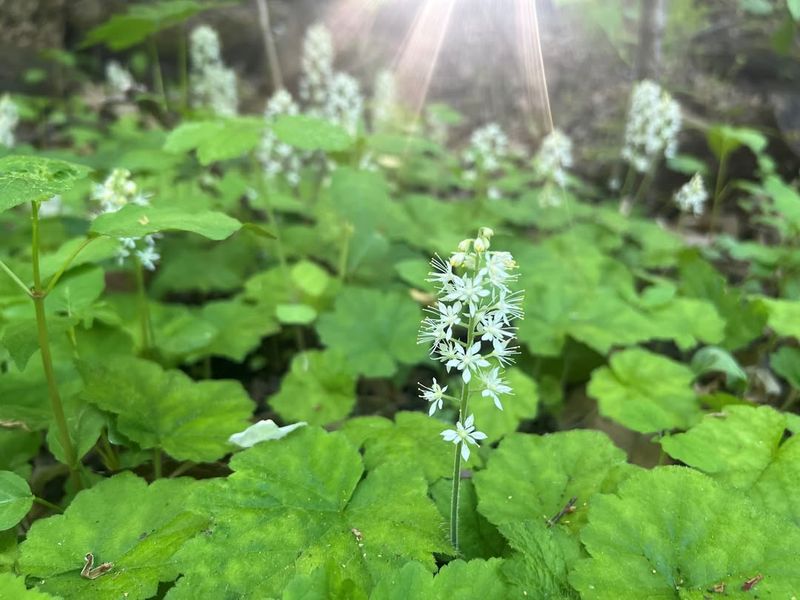
Groundcovers that perform well in dry shade can be hard to find, and foamflower is valued for its gentle growth and manageable spread.
This eastern North American native adapts to many Oregon garden conditions, forming tidy clumps of maple-like leaves that often remain semi-evergreen through milder winters.
The main display arrives in mid to late spring when soft white flower spikes rise above the foliage, creating the airy effect that gives the plant its common name.
Individual plants spread gradually by short runners, helping fill small gaps without typically becoming invasive.
In cooler months, the foliage may develop deeper tones or markings, adding seasonal interest in shaded areas.
Plant divisions or container-grown plants when soil is workable and moist. Space them about 12 inches apart in humus-rich, well-drained soil.
Once established, foamflower can tolerate some summer dryness in shade, though plants usually look fuller with occasional deep watering during extended warm periods.
Coastal gardens often provide conditions foamflower enjoys, including cooler temperatures and steady moisture. Inland gardeners may benefit from adding organic matter at planting time and applying mulch to help conserve soil moisture in summer.
Avoid compacted or poorly drained sites where water collects during wet weather.
3. Lungwort (Pulmonaria spp.)
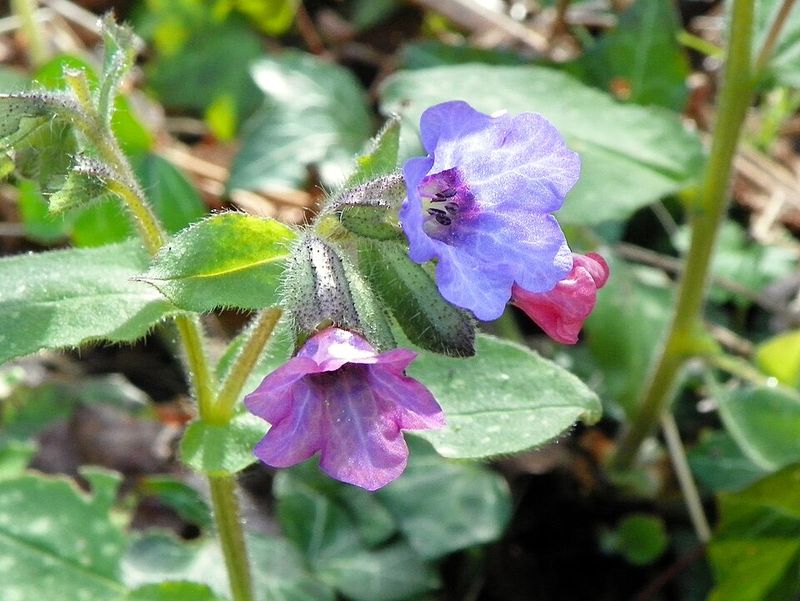
Early spring color in deep shade can be hard to find, but lungwort often begins blooming in March or April, sometimes overlapping with late daffodils. Its flowers frequently open pink and mature to shades of blue or violet on the same plant.
The foliage provides lasting interest, remaining attractive from spring into fall with silver spotting, mottling, or patterned leaves depending on the variety.
Oregon’s cool, moist springs generally suit lungwort, and winter rainfall often supports early growth without much supplemental watering.
Leaves expand after flowering, forming clumps that help shade the soil and reduce weed growth beneath shrubs, along shaded walls, or under deciduous trees.
Compared with some other shade perennials, lungwort is less favored by deer, which can make it useful in areas with browsing pressure.
Late winter to early spring is a suitable time for planting divisions or container-grown plants. Space them about 12 to 15 inches apart in organically enriched, well-drained soil, setting the crown at or slightly above soil level.
Water thoroughly at planting, then adjust watering as active growth resumes.
Powdery mildew may occasionally appear on older leaves during dry summer periods, though it is often mostly cosmetic on established plants. Removing affected foliage can encourage fresh growth later in the season.
Avoid frequent overhead watering and provide reasonable air circulation to help limit fungal issues.
4. Siberian bugloss (Brunnera macrophylla)
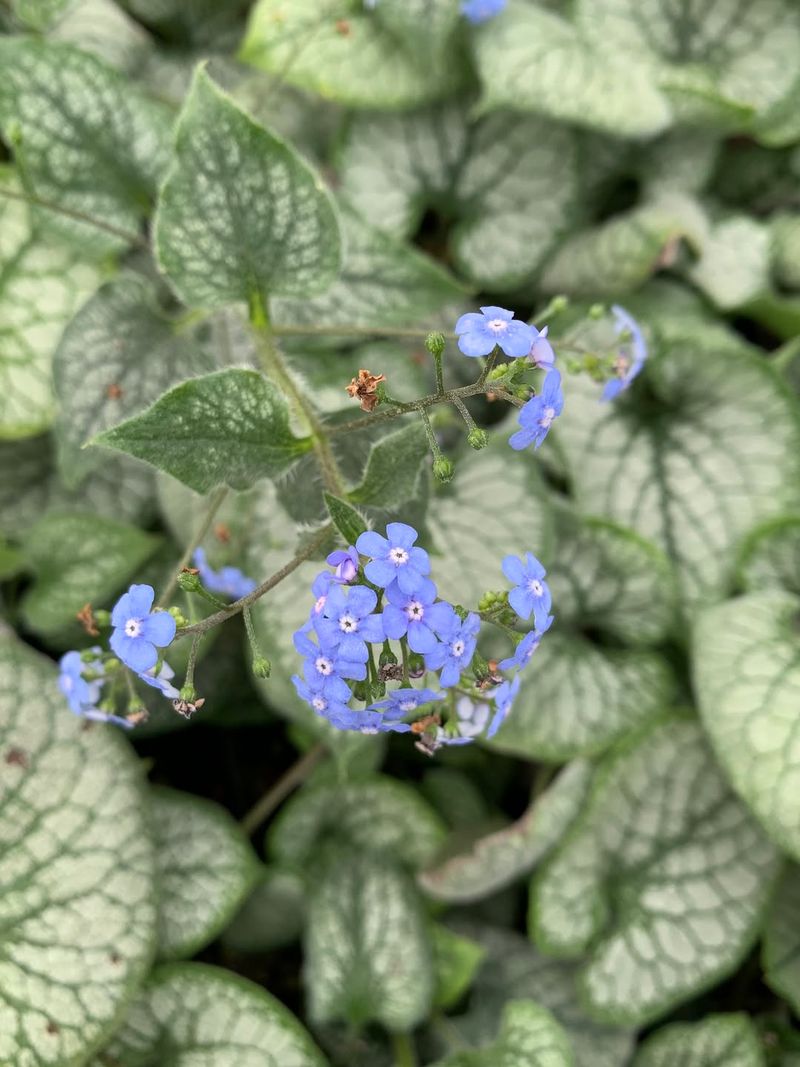
Siberian bugloss offers the charm of forget-me-not–like flowers with a more restrained growth habit. This perennial produces clusters of bright blue blooms in spring, followed by large, heart-shaped leaves that remain attractive through much of the season.
Variegated cultivars with silver-patterned foliage can brighten shaded areas and provide long-lasting visual interest.
Many Oregon gardeners value bugloss for its ability to handle moist winter conditions and moderate summer dryness once established, provided soil drains well.
The broad foliage helps fill space between early bulbs and later perennials, forming gradually enlarging clumps that are generally well behaved compared with annual forget-me-nots, which can reseed freely.
Plant divisions or container-grown plants when soil is workable, spacing them roughly 18 to 24 inches apart to allow for mature spread. They prefer evenly moist, organically rich soil but can tolerate short dry periods once established.
Partial shade, such as morning sun with afternoon protection or filtered light beneath deciduous trees, often produces the best growth.
Variegated cultivars such as ‘Jack Frost’ and ‘Sea Heart’ benefit from protection against strong afternoon sun, which may scorch lighter leaf areas. Mulching helps retain soil moisture and moderate temperature during warmer months.
Avoid poorly drained sites or areas with standing water, as prolonged saturation can contribute to crown or root problems during wet periods.
5. Barrenwort (Epimedium spp.)
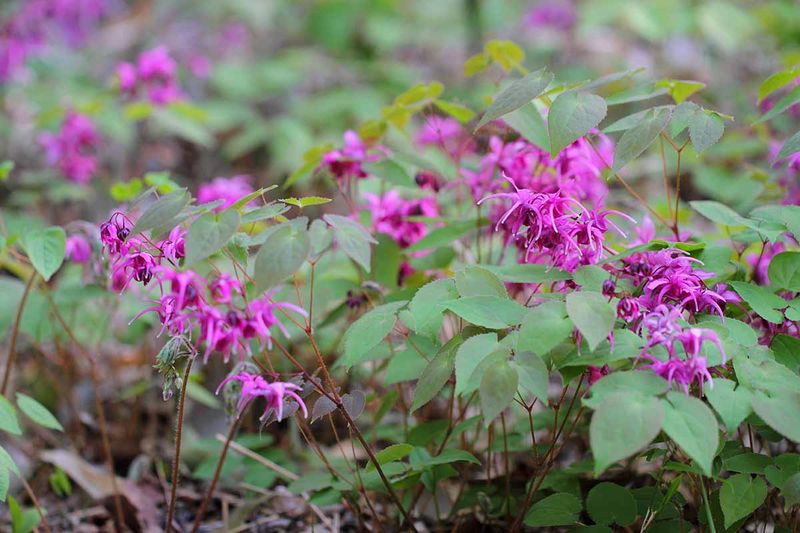
When a durable groundcover is needed for dry, shaded, root-filled areas, barrenwort is often a dependable choice.
These woodland perennials are adapted to conditions such as shade beneath trees, root competition, and periods of summer dryness once established.
Their fine, wiry stems gradually form a close ground layer that helps suppress weeds while maintaining a light, refined appearance.
In spring, delicate flowers in shades of yellow, pink, red, white, or bicolors rise above the foliage, sometimes resembling tiny columbines.
The leaves themselves add seasonal interest, often emerging with bronze or reddish tones, maturing to green, and sometimes coloring again in autumn.
Some varieties remain semi-evergreen in milder winters, providing year-round texture.
Planting in late winter or early spring allows roots to begin settling in while soil is cool and moist. Space plants about 12 to 15 inches apart in organically enriched, well-drained soil, setting them at the same depth they grew previously.
Water regularly during the first growing season, then reduce irrigation as plants become established.
Trimming back older foliage near the end of winter can highlight new growth and spring flowers. After establishment, barrenwort usually requires little attention beyond occasional mulching and light seasonal cleanup.
Good drainage is important, as plants may struggle in persistently wet or compacted soils.
6. Japanese forest grass (Hakonechloa macra)
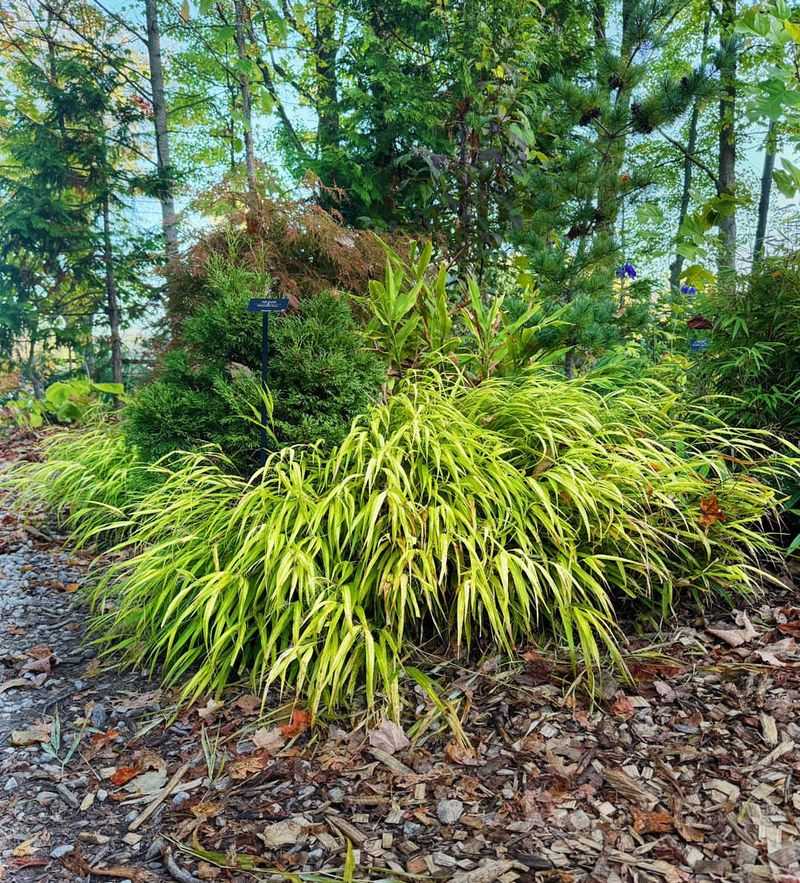
Ornamental grasses for shade may seem unusual, yet Japanese forest grass is well suited to lower-light conditions. This graceful deciduous grass forms soft, arching mounds of foliage that bring movement and brightness to shaded areas from spring through fall.
Golden variegated cultivars such as ‘Aureola’ can appear especially luminous in filtered light, while solid green forms provide a more understated effect.
Many parts of Oregon offer conditions this woodland grass prefers, including cool temperatures and consistent soil moisture. Its cascading habit works well along path edges, in containers, or as an accent among shade plants like hostas and ferns.
It spreads slowly by clumping rather than aggressive seeding, so it is generally easy to manage.
Plant divisions or container-grown specimens when soil is workable, spacing them roughly 18 to 24 inches apart.
Growth may be modest during the first year or two, after which plants gradually develop fuller clumps, often reaching around 12 to 18 inches tall and wider over time.
Incorporating organic matter at planting and applying mulch can help retain moisture and improve soil structure.
Variegated forms benefit from protection against strong afternoon sun, which may fade color or scorch leaf edges. Morning sun with afternoon shade, or bright filtered light beneath trees, usually provides favorable conditions.
Cut back old foliage in late winter before new growth emerges. Coastal gardens often provide naturally suitable moisture, while inland gardeners may need to maintain more consistent watering during dry summer periods for best appearance.
7. False Solomon’s seal (Maianthemum racemosum)
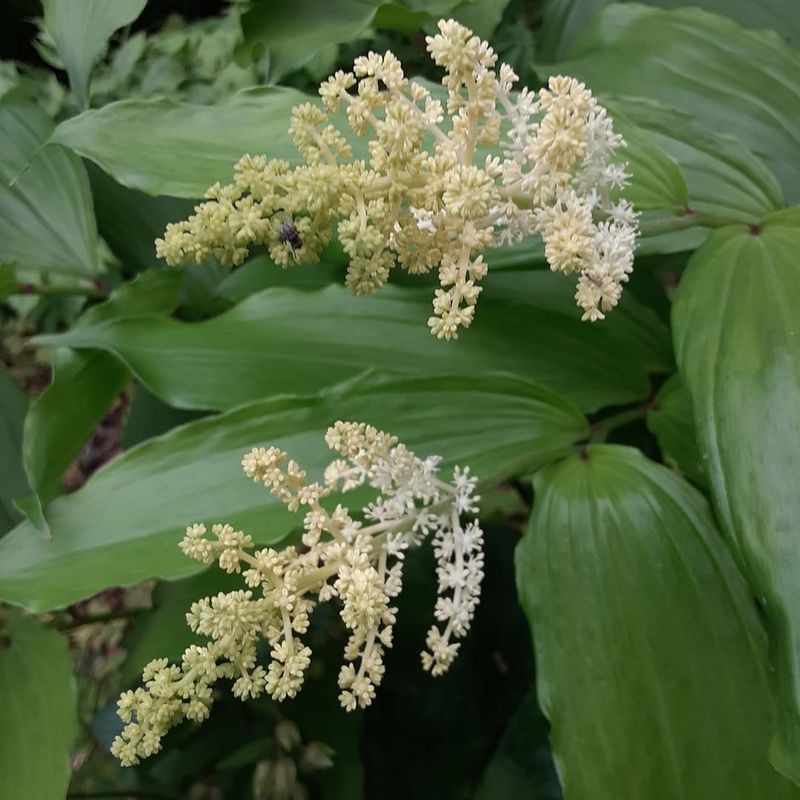
Native woodland plants that look refined enough for formal gardens are uncommon, but false Solomon’s seal brings a natural yet elegant presence to shaded spaces.
This Pacific Northwest species produces arching stems with neatly arranged, pleated leaves that add structure to woodland plantings.
Soft white flower clusters appear at the tips of stems in late spring, followed by red berries that mature later in the season.
Unlike some woodland natives that struggle outside their natural setting, false Solomon’s seal generally adapts well to garden conditions while maintaining its graceful habit.
It spreads gradually by rhizomes, forming loose colonies over time without usually becoming invasive, making it useful beneath trees or along shaded walkways.
Plants wither back after frost, going dormant through winter and reemerging in spring.
Late winter to early spring is a suitable time to plant rhizomes or container-grown specimens, as cool, moist soil supports early root growth. Space plants about 18 to 24 inches apart in humus-rich, well-drained soil.
Once established, they can tolerate some summer dryness in shade, particularly under tree cover where soil remains cooler.
False Solomon’s seal is sometimes confused with true Solomon’s seal, which bears flowers hanging beneath the stems rather than at the tips. Both can grow well in Oregon, though the native species is often well suited to local conditions.
Avoid poorly drained sites or areas with standing water, and expect foliage to fade to yellow in autumn before dying back for the season.
8. Rodgersia
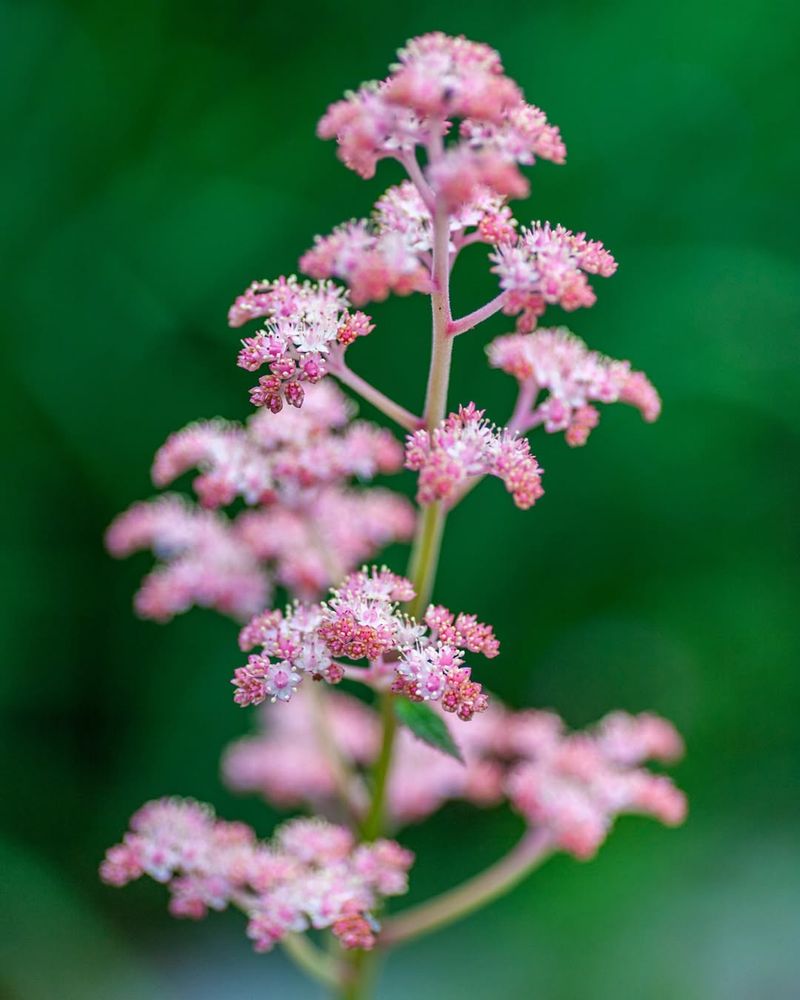
Bold foliage plants that thrive in shade can add strong visual impact, and rodgersia is valued for its large, dramatic leaves.
These woodland perennials produce broad, textured foliage that can reach impressive size, creating a lush, architectural effect in shaded gardens.
In early to mid-summer, tall flower plumes in shades of pink, white, or red rise above the leaves, adding height and seasonal interest.
Oregon’s moist winters and cool springs often suit rodgersia, though consistent soil moisture is important for best growth, particularly in warmer inland areas.
The large leaves lose moisture readily during hot weather, so plants may appear stressed if soil becomes too dry.
Coastal gardens frequently provide favorable conditions, with cooler temperatures and higher humidity helping maintain healthy foliage.
Plant when soil is workable, spacing plants about 2 to 3 feet apart to allow for mature spread. They prefer fertile, moisture-retentive soil enriched with organic matter.
Partial shade, such as morning sun with afternoon protection or bright filtered light, usually supports the best leaf size and flowering, while deep shade may reduce vigor.
Rodgersia benefits from steady moisture during the growing season rather than prolonged dryness. Mulching helps conserve soil moisture and moderate root temperature.
Sheltered sites protect large leaves from strong wind, and plants typically take a few seasons to reach full size and form.
9. Leopard plant (Farfugium japonicum)
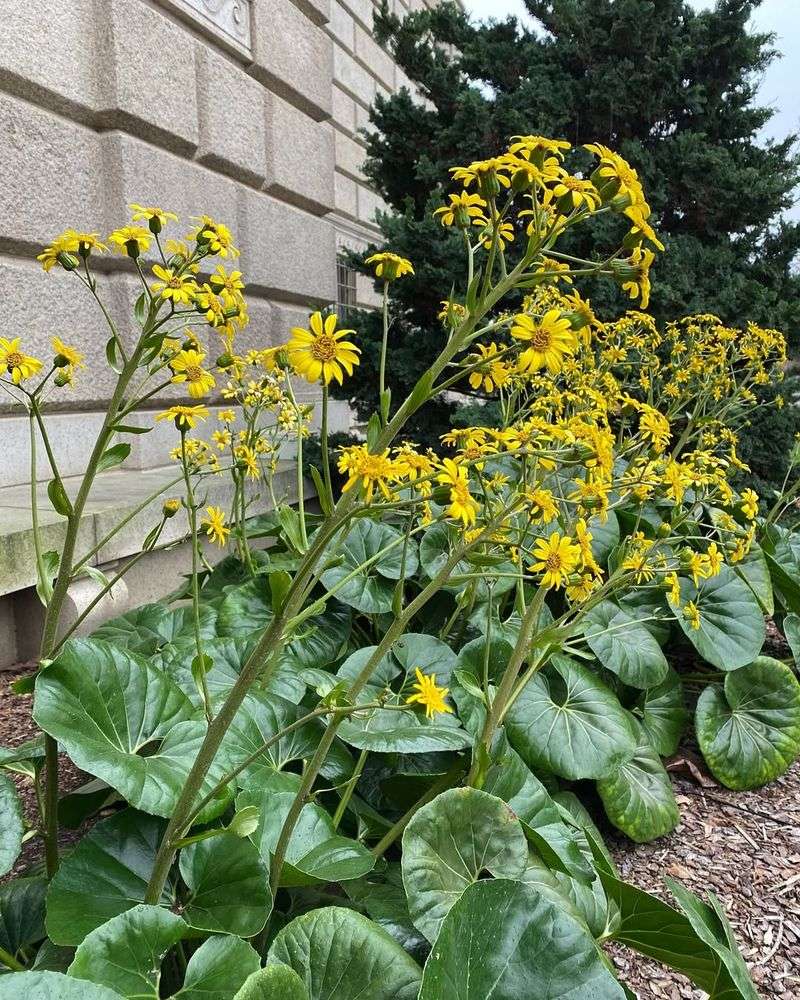
Evergreen perennials that remain attractive year-round in shade are less common in cooler climates, but leopard plant can perform well in milder parts of Oregon.
This Japanese species produces large, glossy, rounded leaves that often stay appealing through winter in favorable conditions, with spotted or variegated forms adding visual interest.
Yellow, daisy-like flowers may appear on tall stems in late fall or early winter, providing color when few other plants are in bloom.
Leopard plant is generally suited to western Oregon’s mild, moist climate, particularly in coastal areas where winter temperatures are less severe.
In colder inland locations, it may benefit from sheltered planting near buildings or beneath evergreen cover, where temperatures are moderated.
The bold foliage works well in containers, along shaded walkways, or as an accent in woodland-style plantings.
Plant when soil is workable, spacing plants about 18 to 24 inches apart in fertile, moisture-retentive, well-drained soil enriched with organic matter. Consistent moisture supports best growth, as plants may appear stressed during extended dry periods.
Partial shade, such as morning sun with afternoon protection, is often suitable, though deeper shade may also be tolerated in cooler coastal settings.
Variegated or spotted forms may need protection from strong afternoon sun, which can scorch foliage. In colder inland gardens, applying mulch around the base in autumn can help protect roots during colder weather.
Slugs may occasionally feed on new growth in spring, so monitoring and control measures can be useful where they are common.