Should You Fertilize Tulips In Early Spring In Ohio
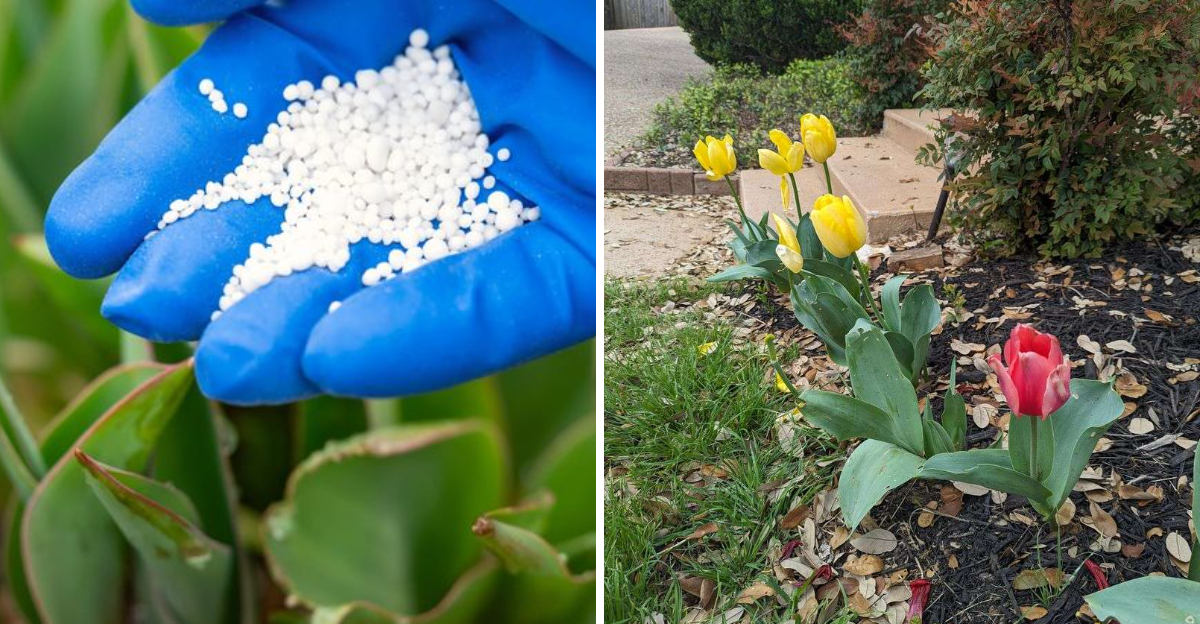
Your tulips are peeking up, and your first thought might be: “Do I feed them now?”
You’re not alone. Every Ohio gardener wonders about fertilizing in early spring.
You want those blooms to be big, bold, and healthy, but there’s a catch. Too much fertilizer, too soon, or even the wrong type can actually slow growth or harm the bulbs.
It’s one of those garden moments where patience pays off more than action. Knowing exactly when and how to fertilize makes all the difference.
Give your tulips what they really need, and they’ll reward you with a season of color that makes your garden the envy of the neighborhood.
1. Know When Ohio Tulips Break Dormancy
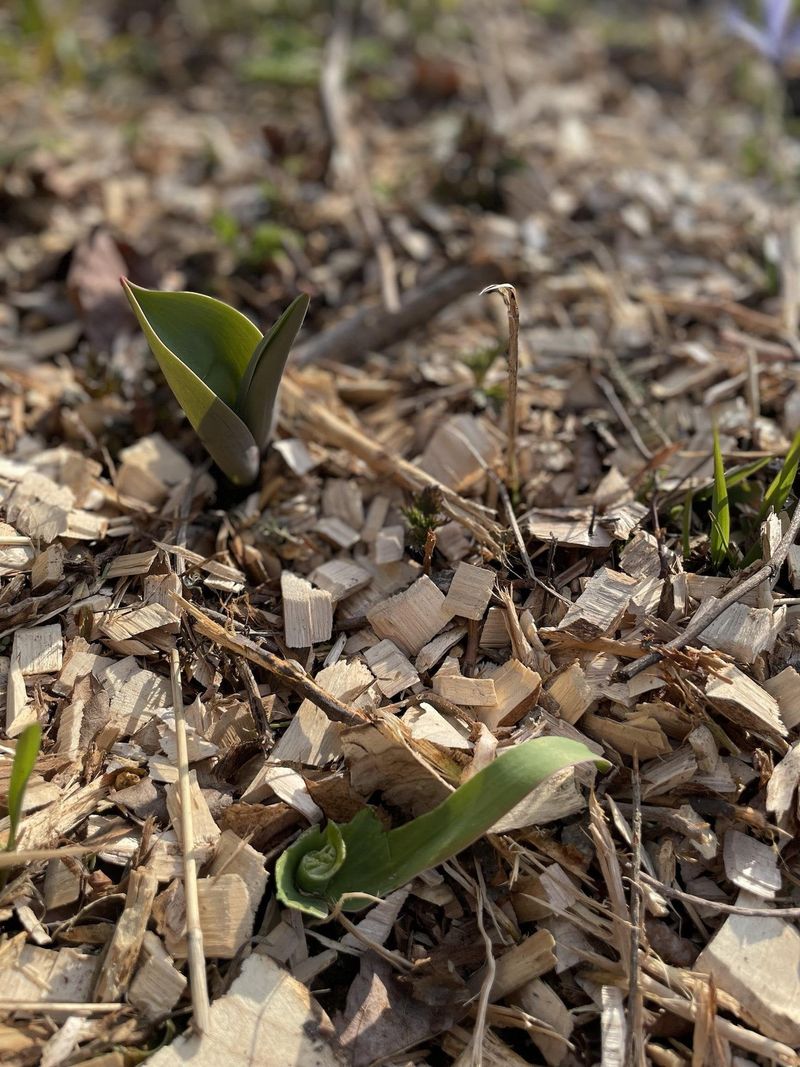
Picture this: it is late February or early March in Ohio, temperatures are barely above freezing, and tiny green tips start poking through the cold soil. That moment is called breaking dormancy, and it is one of the most exciting signs that spring is on its way.
For Ohio gardeners, tulip shoots typically begin emerging anywhere from late February in southern parts of the state to mid-March in northern areas near Lake Erie.
Recognizing this early growth is important because it signals the start of your fertilization window. When you see those first green nubs pushing up, the bulb has already begun drawing on stored energy to fuel new growth.
At this stage, the roots are active and ready to absorb nutrients from the surrounding soil.
Ohio State University Extension notes that soil temperature plays a huge role in this process. Bulbs begin rooting activity when soil temps drop below 50 degrees Fahrenheit in fall, and they resume active growth in spring as temps climb back up.
Watching your garden daily during late winter helps you catch that first emergence. Mark it on a calendar so you can plan your fertilizer application with confidence and precision each year.
2. Choose The Right Fertilizer For Early Growth
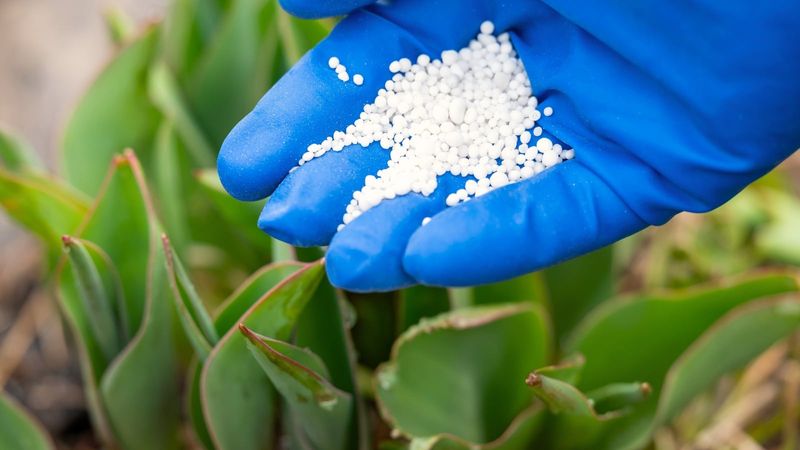
Not all fertilizers are created equal, and picking the wrong one for your tulips can lead to more leaves and fewer flowers. For early spring feeding in Ohio, a balanced, slow-release granular fertilizer with equal parts nitrogen, phosphorus, and potassium works really well.
A formula labeled 10-10-10 is a popular and widely recommended choice among home gardeners across the Midwest.
Phosphorus is especially valuable at this stage because it supports strong root development and helps the bulb store energy for a vibrant bloom. Potassium contributes to overall plant health, helping stems stay upright even when Ohio winds pick up in April.
Nitrogen in moderate amounts supports healthy green foliage without pushing the plant to grow too many leaves at the expense of flowers.
Bulb-specific fertilizers are also available at most Ohio garden centers and home improvement stores. These products are often labeled as “bulb booster” or “bulb food” and are specially formulated to meet the nutritional needs of flowering bulbs like tulips, daffodils, and hyacinths.
Sprinkling the fertilizer evenly around the base of the emerging shoots, without letting it touch the foliage directly, helps avoid any risk of burning the tender new growth.
3. Avoid Fertilizer Too Soon After Snow Melt
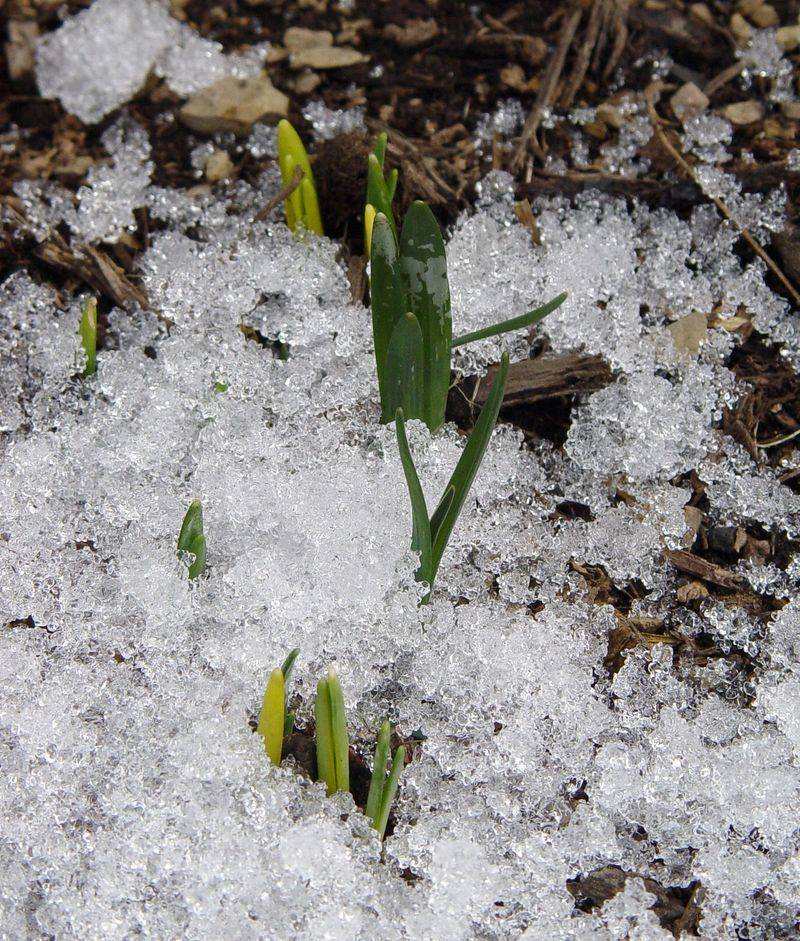
One of the most common mistakes Ohio gardeners make is rushing to fertilize the moment the snow melts. It feels logical, right?
Snow is gone, spring must be here. But the reality is that Ohio soil in late winter is often cold, compacted, and waterlogged, making it nearly impossible for roots to absorb nutrients effectively.
Fertilizing too early can actually cause the product to wash away before bulbs ever get a chance to use it.
There is also the issue of Ohio’s notorious late-season cold snaps. A warm week in February can fool both gardeners and tulips into thinking winter is over, only for temperatures to plunge again in March.
Fertilizing during this false spring window can stress bulbs by encouraging premature growth that gets damaged when freezing temperatures return.
Patience is genuinely a gardener’s best tool here. Wait until you can clearly see green shoots above the soil surface and overnight temperatures are consistently staying above freezing.
At that point, the soil has warmed enough to support nutrient uptake. Ohio’s USDA hardiness zones range from 5a to 6b, so timing will vary slightly depending on where in the state your garden is located.
Watching local weather patterns is always a smart move before you open that bag of fertilizer.
4. Use Nutrients To Strengthen Bulbs Before Bloom
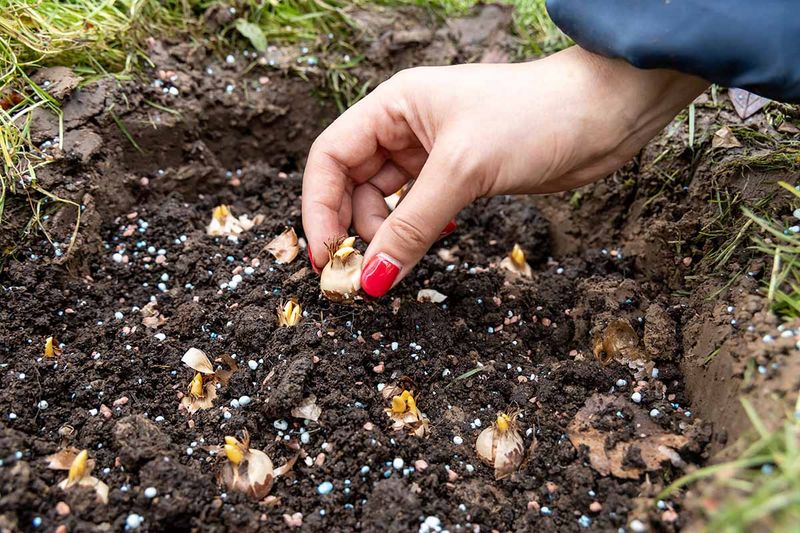
Feeding tulips before they bloom is not just about making flowers look pretty. It is about giving the bulb itself the energy it needs to put on a strong performance this season and recover well for next year.
Tulip bulbs are living storage units, and the nutrients they absorb in early spring directly influence how big, bold, and long-lasting the flowers will be.
Phosphorus-rich fertilizers play a starring role here. When applied as shoots emerge, phosphorus helps build strong cell walls in developing flower stems and supports the complex process of flower formation happening inside the bulb.
Ohio gardeners who skip this step often notice shorter stems, smaller blooms, and flowers that fade faster than expected.
Think of early fertilization as an investment in your garden’s future. A well-fed bulb does not just bloom better this spring.
It also stores more energy through its foliage after flowering, which means it will perform better again next year. According to the Chicago Botanic Garden, applying fertilizer when new shoots appear and watering it in thoroughly is one of the most effective ways to support bulb health over the long term.
For Ohio tulips facing a short but intense growing season, that nutritional head start truly makes a noticeable difference.
5. Skip High Nitrogen Formulas Early In Spring
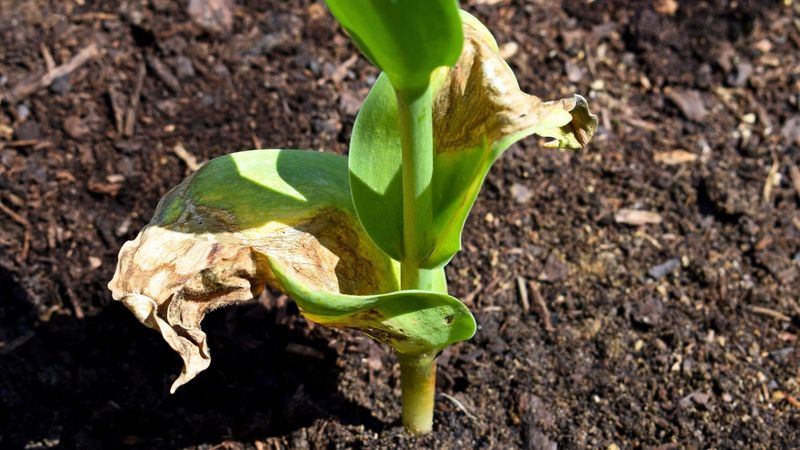
Nitrogen is one of the three main plant nutrients, and it does a great job of pushing leafy, green growth. But when it comes to tulips in early spring, too much nitrogen is actually the last thing you want.
High-nitrogen fertilizers encourage the plant to put most of its energy into producing large, lush leaves rather than developing the flowers that make tulips so beloved in Ohio gardens.
You might think more green growth sounds healthy, but for a flowering bulb, it is a bit of a trade-off. When the plant spends its resources on foliage, the energy available for bloom development drops significantly.
The result is often a plant with impressive leaves and disappointing flowers, or sometimes no flowers at all in a given season.
Fertilizers with a high first number, like 20-10-10 or similar formulas, are better suited for lawns and leafy vegetables than for spring-flowering bulbs. Stick with balanced or phosphorus-forward options for your tulip beds.
A formula like 5-10-10 or a dedicated bulb fertilizer with higher phosphorus and potassium content is a much smarter choice. Ohio gardeners who have made this switch often report noticeably larger blooms and sturdier stems compared to years when they used a general-purpose lawn fertilizer by mistake.
6. Check Soil Nutrients Before You Feed
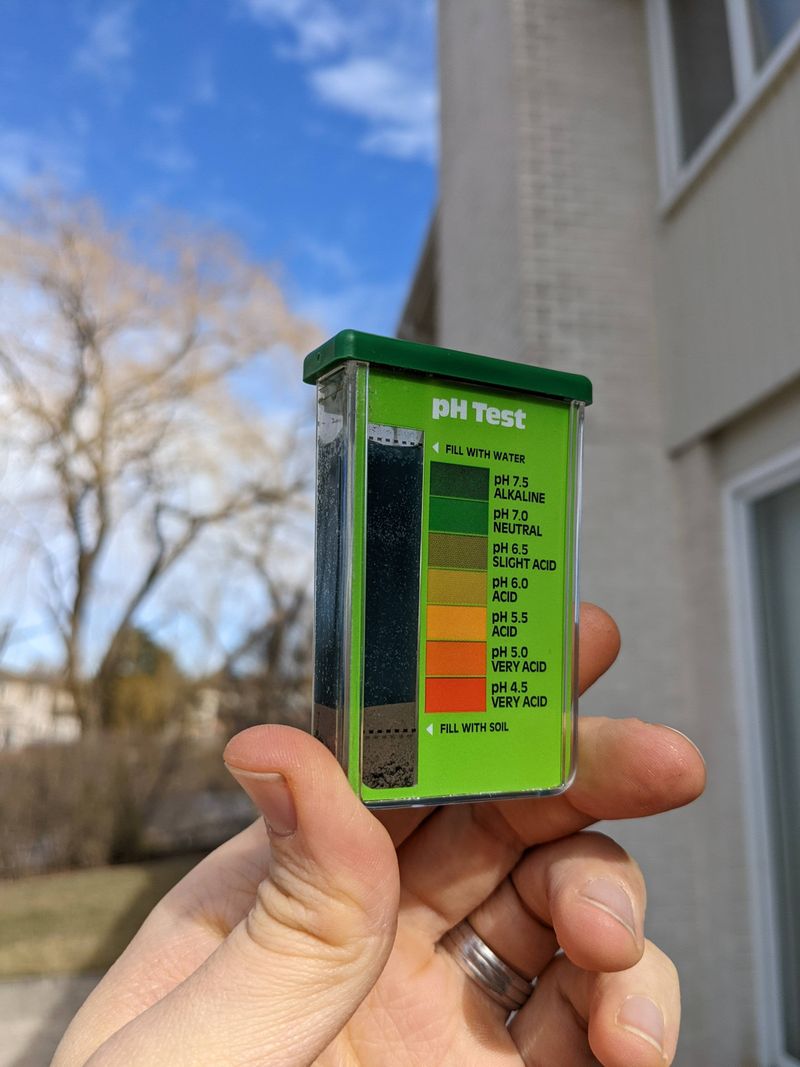
Before you sprinkle any fertilizer on your tulip bed, it is worth taking a few minutes to find out what your soil actually needs. Soil testing might sound like something only farmers or professional landscapers do, but it is genuinely useful for home gardeners in Ohio, especially those who have been growing tulips in the same spot for several years.
Ohio State University Extension offers affordable soil testing through its laboratory services. A basic test can tell you the pH level of your soil along with the amounts of phosphorus, potassium, and other key nutrients already present.
This information helps you avoid the common problem of overfeeding, which can cause nutrient imbalances that actually harm plant performance rather than help it.
Tulips prefer a slightly acidic to neutral soil pH, typically between 6.0 and 7.0. If your Ohio garden soil is too acidic, nutrients may not be available to the plant even if you add fertilizer.
If it is too alkaline, similar problems can occur. Testing gives you a clear picture so you can amend the soil thoughtfully.
Many Ohio gardeners are surprised to discover their soil already has plenty of phosphorus from years of composting or past fertilizer applications, meaning they may need far less than they assumed.
7. Time Fertilizer With New Leaf Emergence
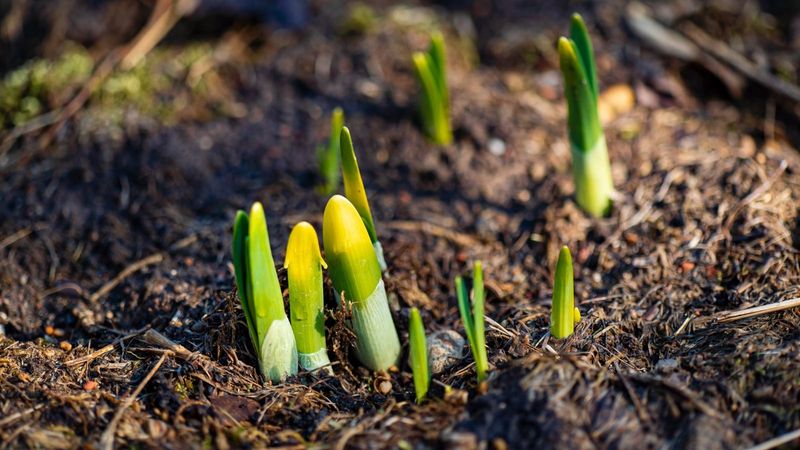
Timing is everything when it comes to feeding tulips, and the sweet spot is right when new leaves are visibly pushing out of the soil. At this stage, the plant’s root system is actively expanding and pulling moisture and nutrients from the surrounding soil.
Applying fertilizer during this window means the roots can absorb it quickly and put those nutrients to work right away.
In Ohio, this leaf emergence stage typically happens somewhere between late February and mid-April, depending on your location and the weather patterns of that particular year. Gardeners in warmer southern Ohio counties like Adams or Scioto may see leaves earlier, while those in colder northern areas near the Lake Erie shoreline often wait a few extra weeks.
Keeping an eye on your specific garden rather than following a fixed calendar date gives you the most reliable results.
Once leaves are one to three inches tall, spread your chosen fertilizer evenly around the base of the plants, keeping it off the foliage itself to avoid any surface irritation. Then water the area gently but thoroughly so the nutrients begin moving down toward the root zone.
This combination of correct timing and proper watering is what separates a good tulip season from a truly spectacular one in Ohio gardens.
8. Balance Water And Fertilizer For Best Results
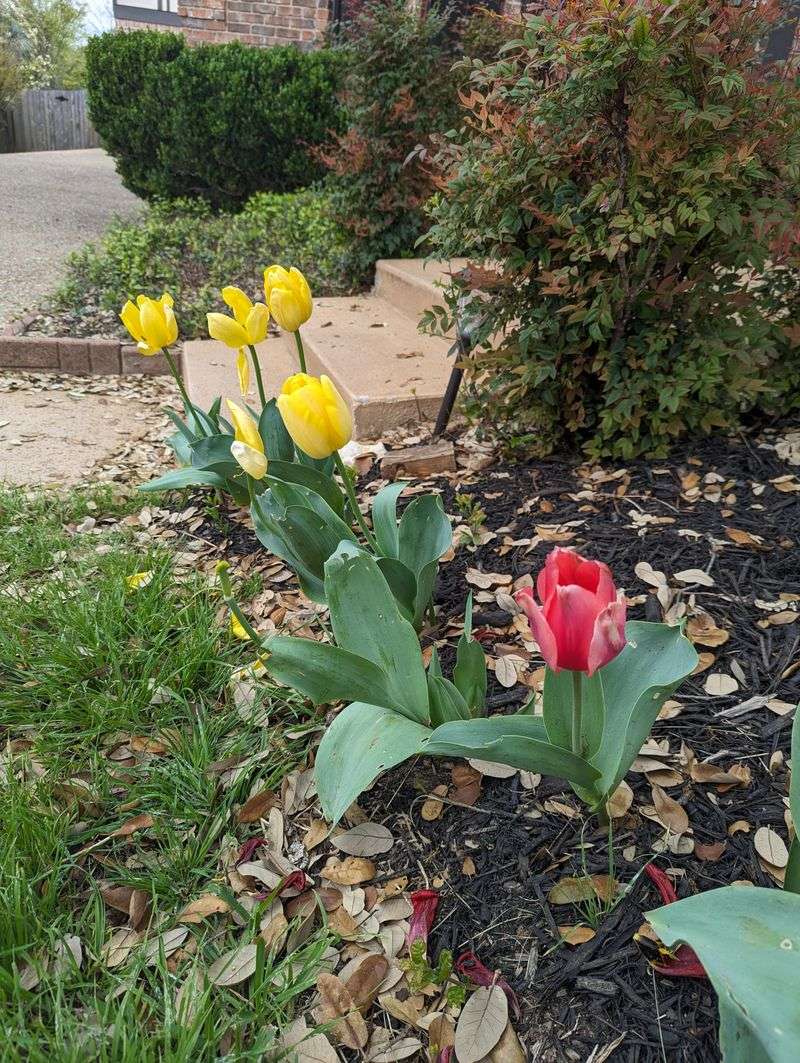
Fertilizer alone cannot do its job without water. Think of water as the delivery system that carries dissolved nutrients from the soil surface down to where the tulip roots can actually use them.
In early spring, Ohio gardens often receive a fair amount of rainfall, but relying solely on rain to activate your fertilizer is not always reliable, especially during dry spells that sometimes occur in March and April.
After applying granular fertilizer around your tulips, always water the area thoroughly. This helps dissolve the granules and encourages the nutrients to move into the root zone rather than sitting on top of the soil where they can evaporate or wash away with the next heavy rain.
A slow, deep watering is more effective than a quick sprinkle.
At the same time, be careful not to overwater your tulip beds in early spring. Ohio soils, particularly clay-heavy ones common in central and western parts of the state, can hold moisture for a long time.
Soggy conditions around tulip bulbs can lead to fungal issues and poor nutrient uptake. Aim for moist but well-draining soil.
Raised beds or areas amended with compost and sand tend to drain better and create the ideal environment for fertilizer and water to work together in perfect balance for your Ohio tulips.