8 Shrubs Georgia Gardeners Should Inspect For Pests This April
April has a way of making everything look fresh again in Georgia. New growth fills in quickly, leaves look clean, and it finally feels like the garden is back on track.
It is the kind of moment where it is easy to relax and assume everything is doing just fine.
But this is also when a lot of small problems begin quietly, before they are obvious. Pests often show up early, settling into tender new growth while everything still looks healthy from a distance.
If they go unnoticed now, they can build up fast and turn into bigger issues just as the season picks up.
Taking a closer look at certain shrubs this time of year can help catch those early signs before they spread. A quick check now can save a lot of frustration once growth is in full swing.
1. Azalea Shrubs Showing Early Lace Bug Damage On Leaves
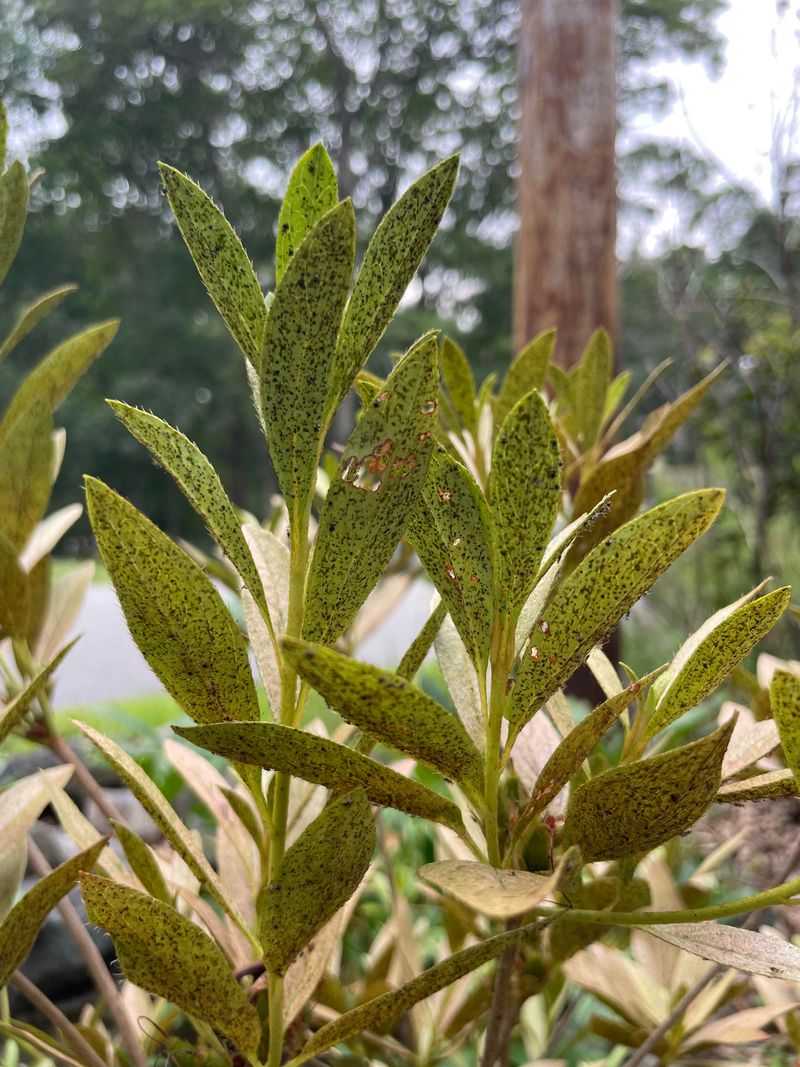
Flip over an azalea leaf right now, and you might be surprised by what is hiding there. Lace bugs are small, flat insects with lacy wings, and they spend most of their time on the undersides of leaves sucking out plant sap.
By the time you notice the damage from the top side, they have already been feeding for a while.
Affected leaves develop a speckled, silvery, or bleached appearance that spreads quickly across the plant. Georgia’s warm April temperatures speed up their reproduction cycle, so populations can build up fast.
Azaleas planted in full sun tend to get hit harder than those growing in partial shade.
Check the undersides of leaves carefully for tiny dark spots, which is pest waste, and look for clusters of small insects along the leaf veins. A strong spray of water from a garden hose can knock them off and reduce numbers quickly.
For heavier infestations, neem oil or insecticidal soap applied directly to leaf undersides works well.
Avoid over-fertilizing with nitrogen in spring, since lush, soft new growth attracts more lace bugs. Keeping your azaleas healthy with consistent watering and light mulching around the base helps them recover faster.
Catching this problem early in April is absolutely worth the effort.
Early leaf damage on azaleas often starts underneath, where lace bugs feed out of sight. Catching those speckled leaves early makes it much easier to stop the problem before it spreads.
2. Gardenia Shrubs Developing Whiteflies And Sooty Mold
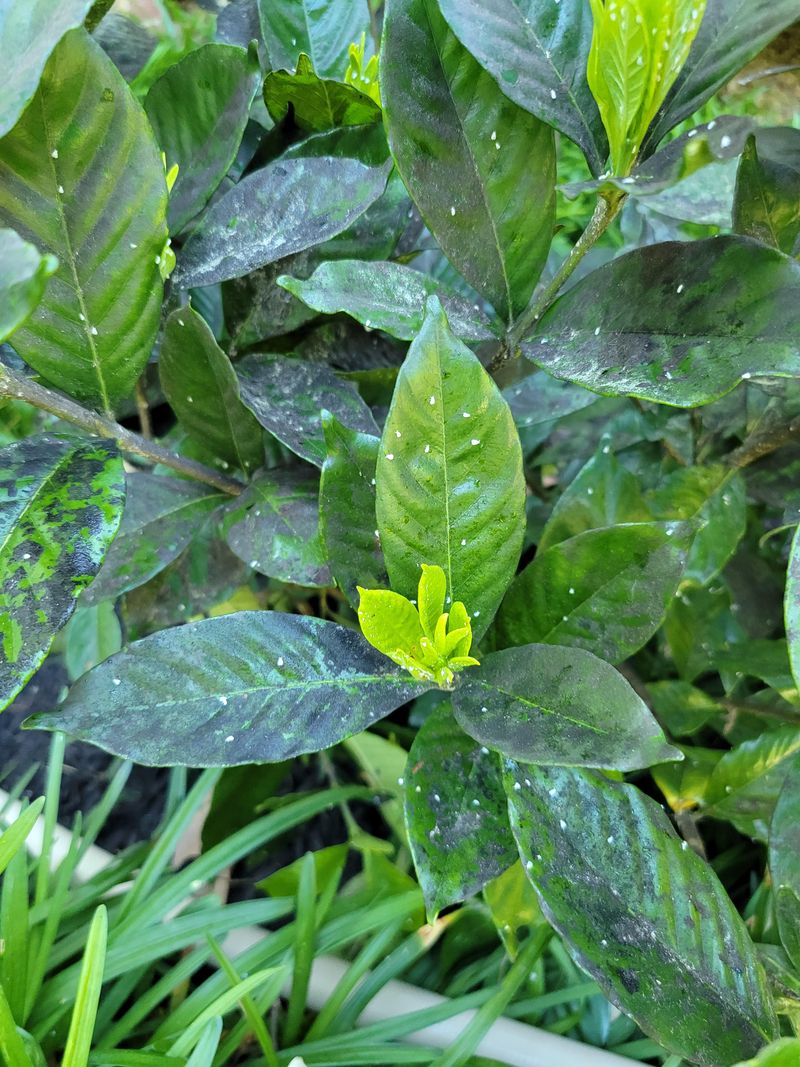
Shake a gardenia branch and watch what happens. If a cloud of tiny white insects flies up into the air, you have got a whitefly problem that needs attention right away.
Whiteflies are persistent pests in Georgia gardens, and gardenias are one of their favorite targets each spring.
Whiteflies feed on leaf sap from the undersides of leaves, leaving behind a sticky substance called honeydew. That honeydew is what causes sooty mold, a black fungal coating that covers leaves and blocks sunlight.
Plants dealing with both whiteflies and sooty mold at the same time start to look exhausted, with yellowing leaves and reduced flowering.
Yellow sticky traps placed near the shrub can help monitor how bad the infestation is getting. Insecticidal soap sprays work well when applied directly to leaf undersides, and you may need to repeat treatments every five to seven days.
Neem oil is another solid option that also helps with the mold.
Sooty mold itself can be wiped off leaves with a damp cloth once the whitefly population is under control. Strong plants handle pressure better, so avoid letting gardenias dry out between waterings this spring.
Georgia gardeners who stay on top of this in April usually avoid the worst of the summer damage.
Whiteflies can take over quickly, and the sticky residue they leave behind only makes things worse. A quick response now keeps gardenias from looking stressed as the season moves forward.
3. Boxwood Shrubs With Leafminer Blistering And Browning
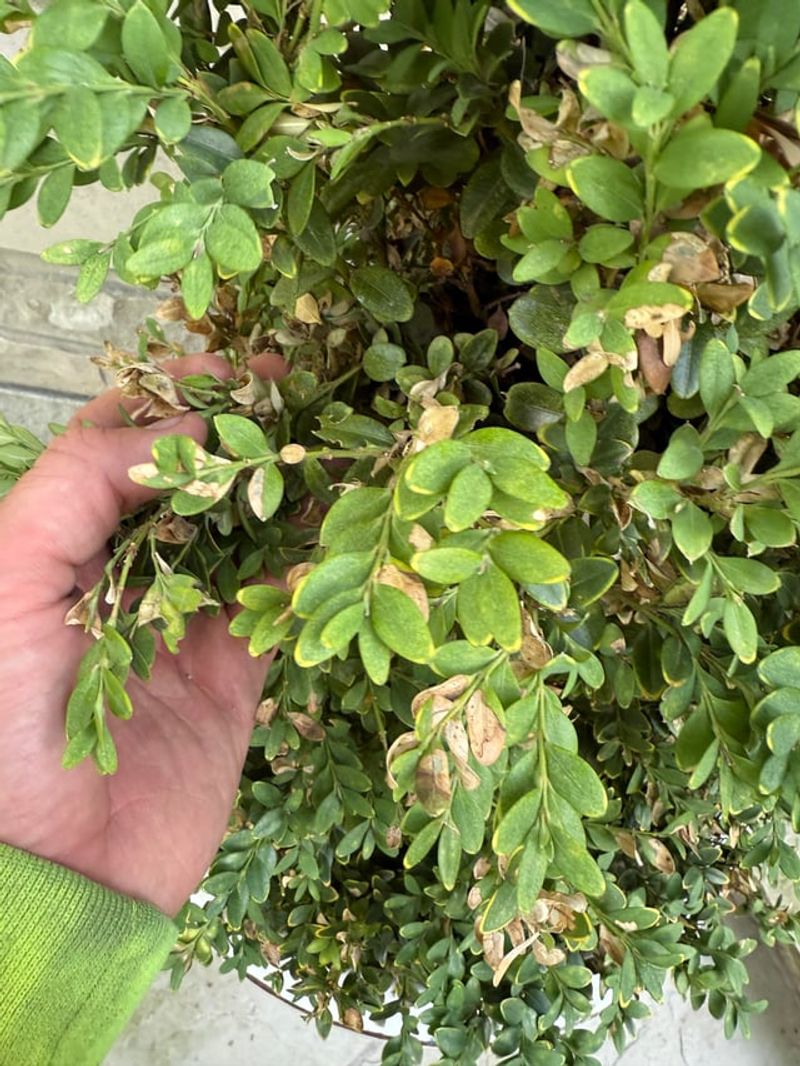
Boxwoods look tough, but leafminers can quietly cause serious damage before most gardeners even realize something is wrong.
Adult leafminer flies lay eggs inside boxwood leaves in early spring, and the larvae feed from the inside out, creating blistered, discolored patches that turn brown over time.
Hold a boxwood leaf up to sunlight and look for translucent or blistered areas where the leaf tissue has been hollowed out. Heavily infested shrubs develop a general brownish, unhealthy appearance that is easy to mistake for drought stress or a nutrient problem.
In Georgia, the timing of adult fly activity often lines up with forsythia bloom, which is a useful natural indicator.
Pruning out heavily infested stems and disposing of them away from the garden removes a portion of the pest population. Systemic insecticides applied in early spring when adults are laying eggs are the most effective treatment option for severe infestations.
Always follow label directions carefully when using any chemical product.
Keeping boxwoods properly pruned for air circulation reduces the humid conditions that pests prefer. Avoid overhead watering, which can stress the plants and make them more vulnerable.
Georgia gardeners dealing with recurring leafminer problems may want to consider replacing heavily damaged plants with resistant varieties over time.
Leafminers damage boxwoods from the inside, which makes early signs easy to miss. Checking leaves closely now helps prevent that slow, widespread browning later on.
4. Hydrangea Shrubs Attracting Aphids On Tender New Growth
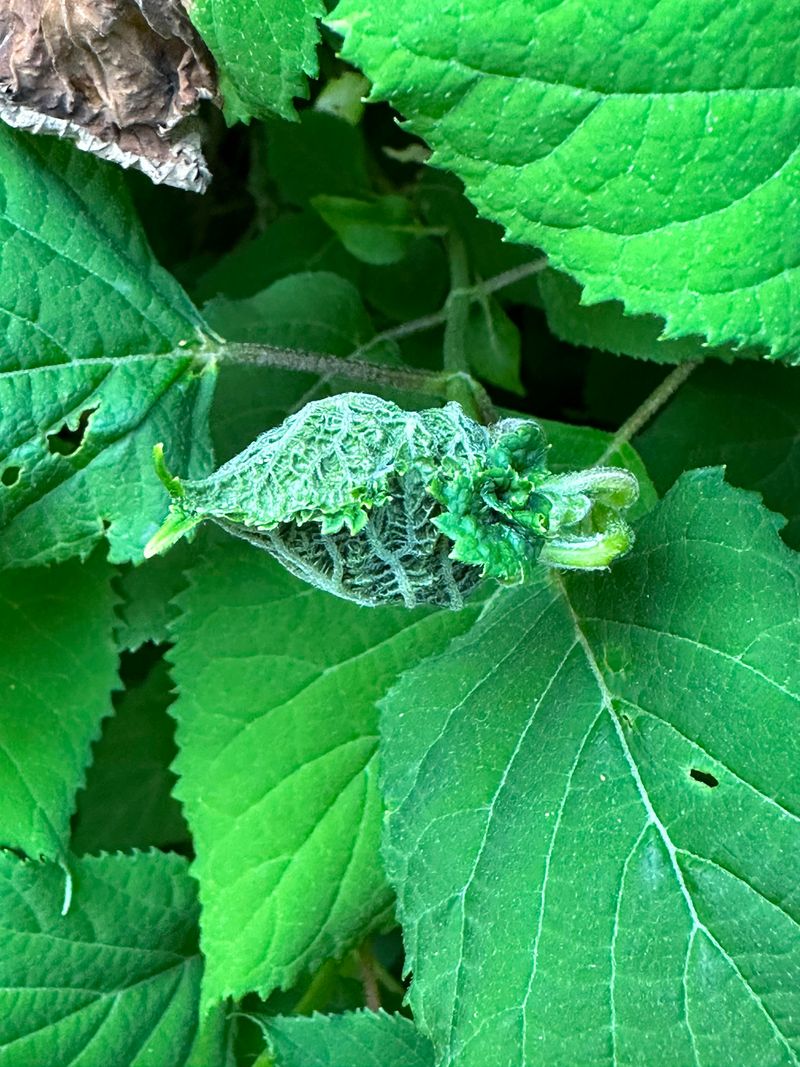
Soft, fresh hydrangea growth in April is basically an open invitation for aphids. Aphids are tiny, pear-shaped insects that cluster in large numbers on the newest, most tender shoots and buds, and they reproduce at a speed that catches a lot of gardeners off guard.
Look for clusters of green, black, or cream-colored insects crowded along new stems and on the undersides of young leaves.
Infested growth often looks curled, puckered, or slightly distorted, and you may notice a shiny, sticky residue on leaves below where the aphids are feeding.
Ants moving up and down the stems are another reliable sign, since they actively protect aphids in exchange for the honeydew they produce.
A strong blast of water from a garden hose knocks aphids off plants effectively, and doing this several mornings in a row can dramatically cut their numbers. Insecticidal soap is a safe and effective treatment option that works on contact.
Avoid applying it during the hottest part of the day to prevent leaf scorch.
Encouraging natural predators like ladybugs and lacewings in your Georgia garden helps keep aphid populations in check over time. Skip heavy nitrogen fertilizing in spring, because it pushes out the extra-soft growth that aphids love most.
Checking hydrangeas weekly through April keeps small problems from turning into big ones.
5. Camellia Shrubs With Scale Insects Along Leaves And Stems
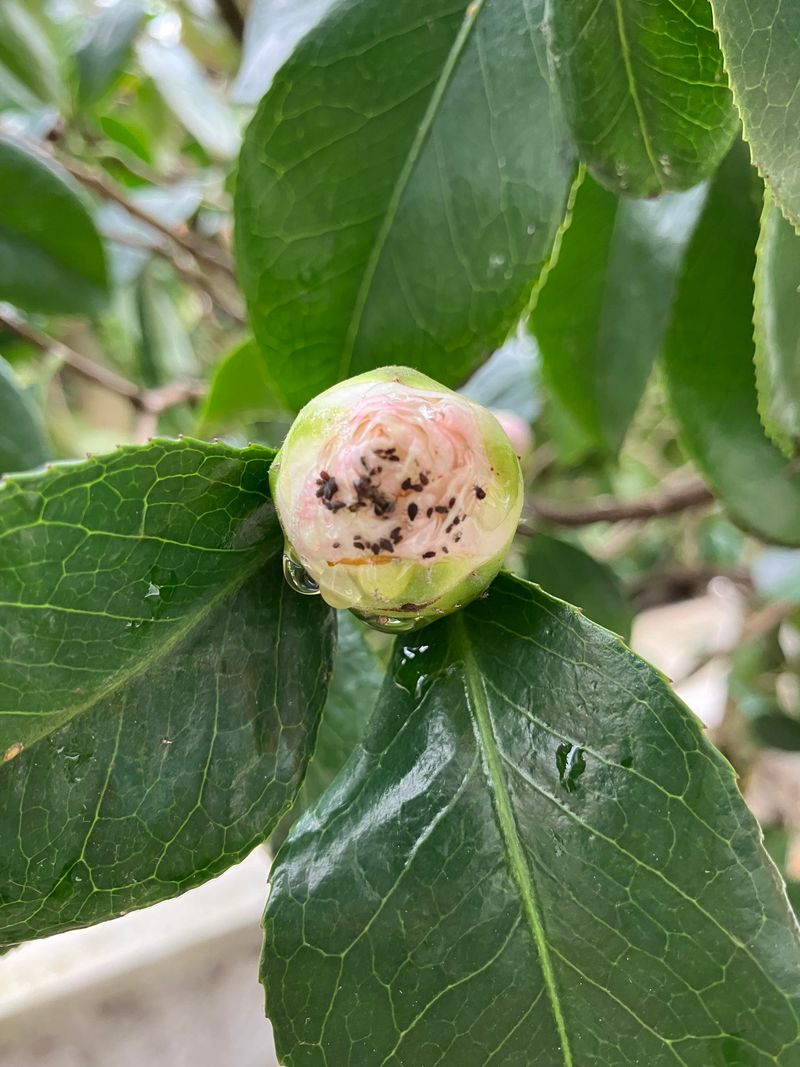
Scale insects are sneaky. Unlike most garden pests, they do not run or fly away when you spot them.
Instead, they sit completely still on stems and leaves, protected by a hard or waxy shell, slowly draining the life from your camellias without making a sound.
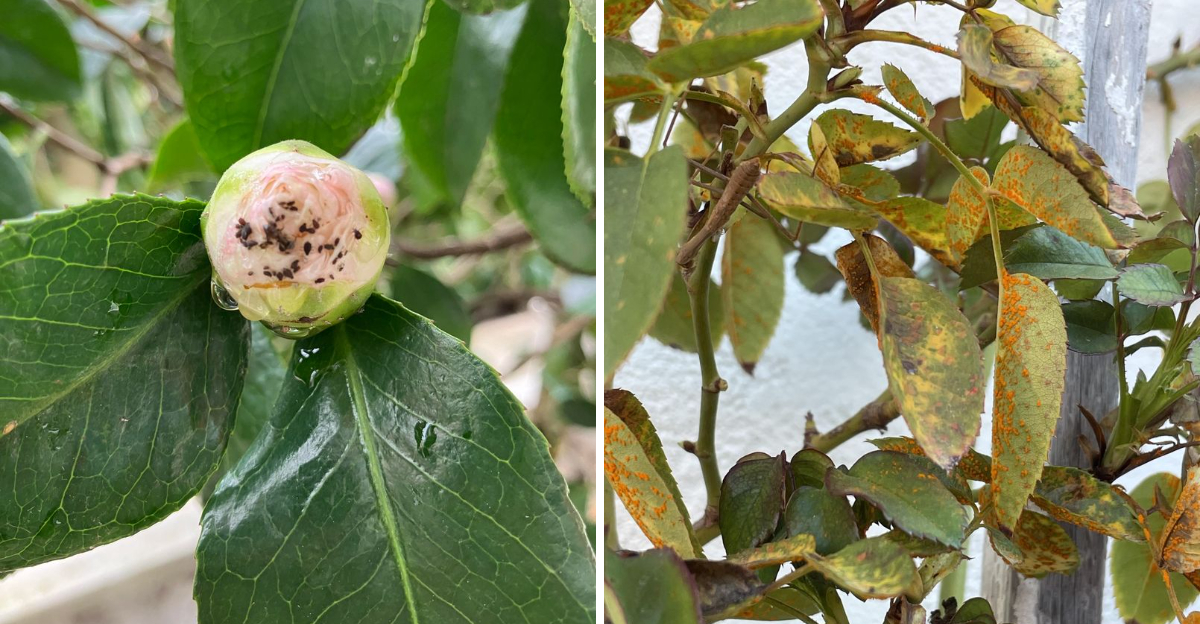
Two common types show up on camellias in Georgia: armored scales, which have a hard shell, and soft scales, which produce honeydew and lead to sooty mold. Both types appear as small bumps along stems and the undersides of leaves.
A plant carrying a heavy load of scale often shows yellowing leaves, weak new growth, and a general look of decline.
Scraping scales off with a soft brush or cloth and treating with horticultural oil is one of the most effective approaches. Horticultural oil smothers insects by coating their bodies, and it works well on both armored and soft scale species.
Apply when temperatures are moderate, avoiding days above 90 degrees or below 40 degrees.
Repeat treatments are usually necessary since eggs may survive a single application. Check new growth carefully after treatment to catch any surviving crawlers, which are the immature mobile stage that moves before settling permanently.
Georgia gardeners who treat camellias in April, before populations explode in summer heat, get much better results than those who wait.
6. Rose Shrubs Facing Aphids And Early Spider Mite Activity
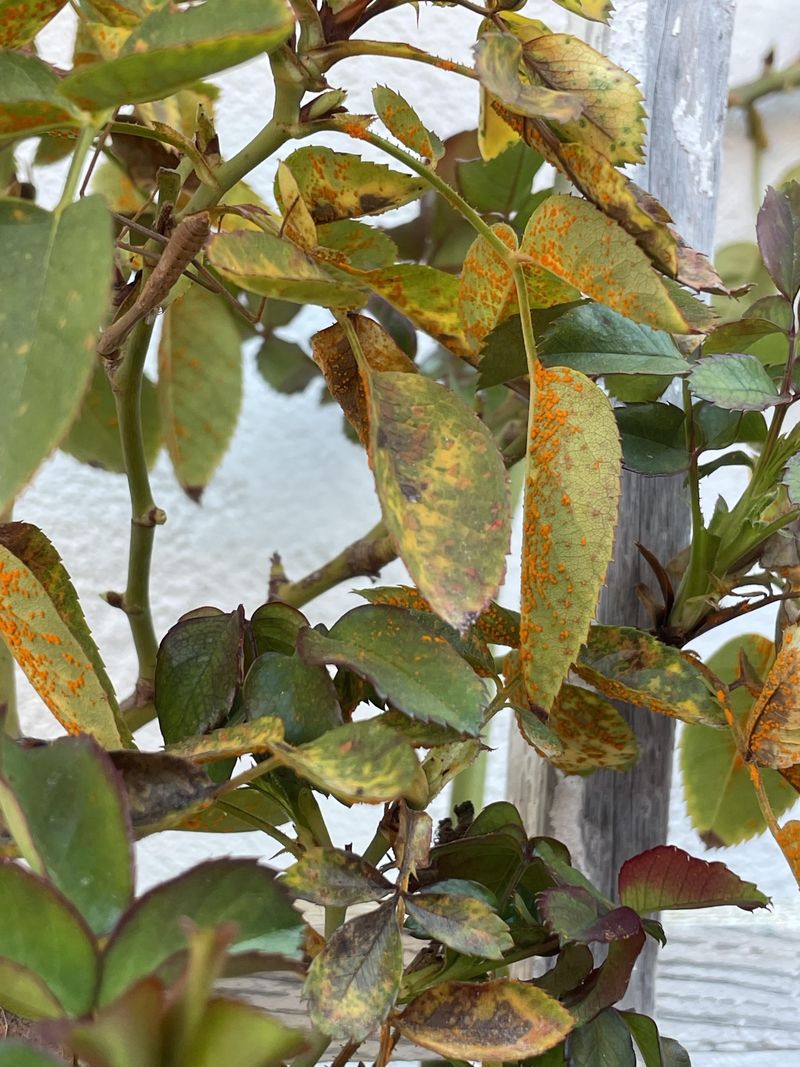
Roses in Georgia barely get a chance to show off their first buds before the pest pressure starts.
Aphids are usually the first to arrive, clustering on new growth and flower buds in early spring, followed closely by spider mites as temperatures begin to climb toward summer levels.
Aphids on roses are often greenish or pinkish, and they tend to gather right at the tips of new shoots where growth is softest. Spider mites are harder to see without a magnifying glass, but their damage shows up as a fine, dusty stippling on leaf surfaces.
Look for very fine webbing between leaves and along stems as another sign of mite activity.
Knocking aphids off with water works well early in the season, and insecticidal soap handles both aphids and mites effectively when applied thoroughly to all leaf surfaces. For spider mites specifically, keeping plants well-watered reduces stress and makes them less attractive targets.
Dry conditions are what mites love most.
Avoid using broad-spectrum pesticides that wipe out beneficial insects, since those natural predators help keep both aphid and mite populations in check. Check roses at least twice a week through April and into May.
Georgia’s spring warmth moves fast, and staying one step ahead is the best strategy any rose grower can have.
7. Spirea Shrubs Developing Aphids On Soft Spring Growth
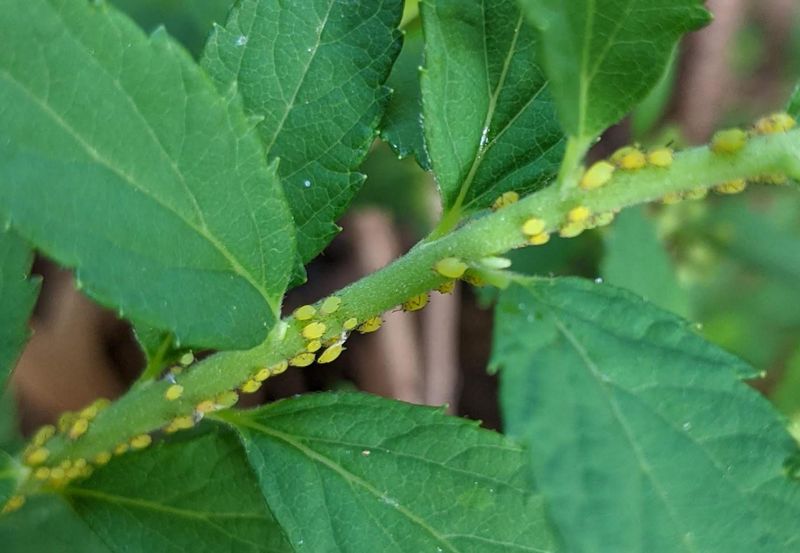
Spirea puts out some of the softest, most tender growth of any spring-blooming shrub, and aphids know it.
Right around the time spirea starts leafing out and blooming in Georgia, aphid populations are building quickly and looking for exactly the kind of growth these plants produce.
Colonies often form on the tips of branches where new leaves are still unfurling, and they spread quickly from shoot to shoot. Curling leaves, sticky residue on branches below the infestation, and ants crawling up the stems are all signs you need to act.
Left alone, heavy aphid feeding can distort new growth and reduce flowering noticeably.
Water sprays are a great first response, especially in the morning when plants have time to dry before evening. Repeating this every couple of days breaks up colonies before they can regroup.
Insecticidal soap is easy to mix and apply, and it breaks down quickly without leaving harmful residue on the plant.
Spirea tends to bounce back well once pest pressure is reduced, but the key is catching it before the infestation spreads across the whole shrub. Pruning off the most heavily infested branch tips right away removes a big chunk of the problem instantly.
Georgia gardeners who check their spirea weekly in April usually catch aphid problems when they are still very manageable.
8. Holly Shrubs Showing Scale Insects And Sticky Residue
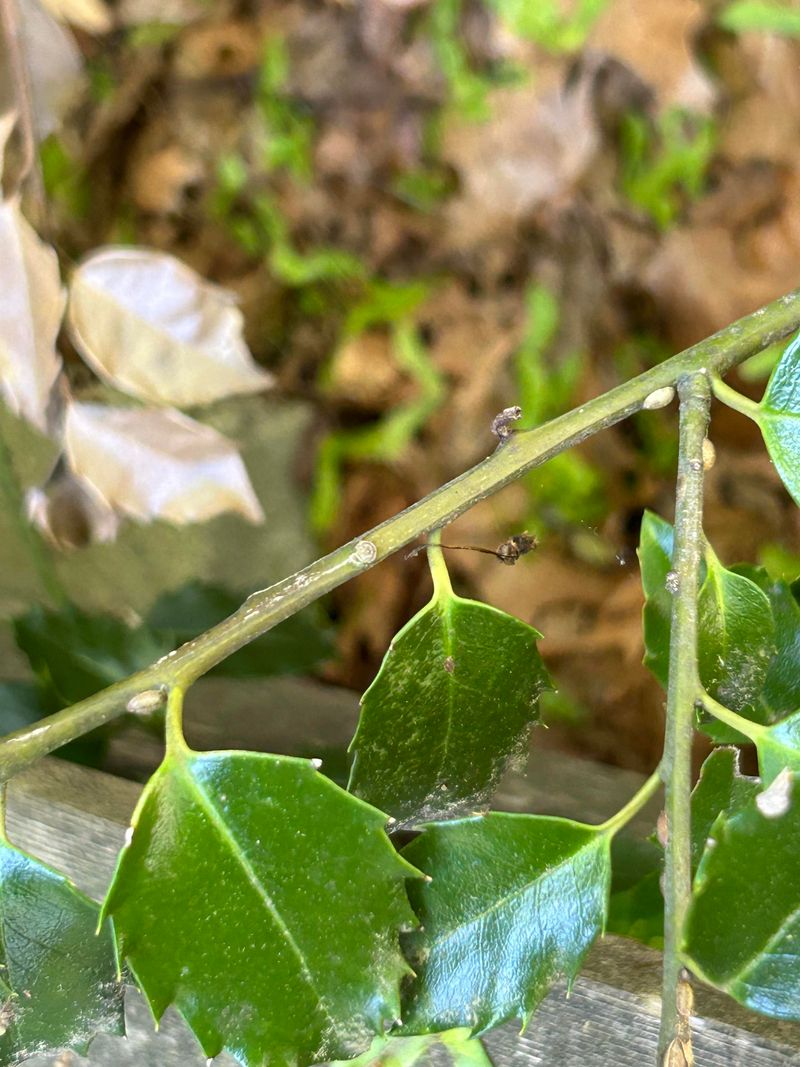
Holly shrubs look like low-maintenance workhorses, standing green and sturdy through winter, but April reveals a vulnerability that surprises a lot of Georgia gardeners.
Scale insects have a habit of building up quietly on hollies over winter, and by the time spring arrives, populations can already be significant.
Sticky residue on leaves and branches is often the first clue. That stickiness comes from honeydew produced by soft scale insects, and it collects on anything below the infested area, including patio furniture, walkways, and lower leaves.
A black sooty mold often follows, coating surfaces and giving the plant a grayish, grimy appearance.
Look along stems and the undersides of leaves for small, rounded bumps that do not come off easily. Armored scales are harder and flatter, while soft scales tend to be rounder and more waxy in texture.
Both types weaken hollies gradually by drawing out sap, leading to yellowing and sparse foliage over time.
Horticultural oil applied thoroughly to stems and leaf surfaces is the most reliable treatment, and early spring is one of the best windows for application before temperatures get too high. A second application two weeks later improves results significantly.
Georgia hollies that get regular spring inspections tend to stay dense, glossy, and healthy all season long, which is exactly what most gardeners are going for.