10 Shrubs Michigan Gardeners Can Grow As Natural Fences
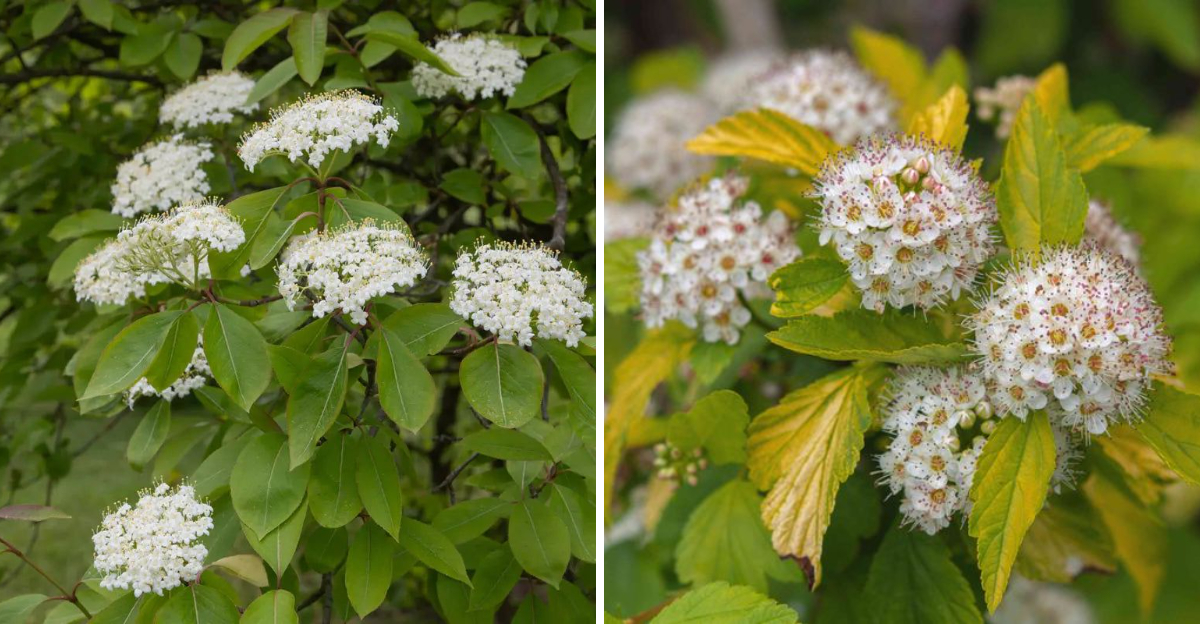
Michigan yards go through a lot, from deep winter cold and soggy spring stretches to summer heat and stubborn clay soil.
A natural shrub fence can handle those changing conditions while bringing something a standard fence never could: flowers, berries, texture, movement, and real four-season beauty.
Native shrubs do more than mark a boundary. They grow into the landscape, create privacy, soften the look of a yard, and provide valuable food and shelter for birds, pollinators, and other local wildlife.
When planted together in layers, they form a living screen that becomes fuller, stronger, and more beautiful with time instead of wearing out like a traditional fence.
1. Arrowwood Viburnum Builds A Dense Wildlife Friendly Screen
Few shrubs earn their place in a Michigan yard as naturally as Arrowwood Viburnum.
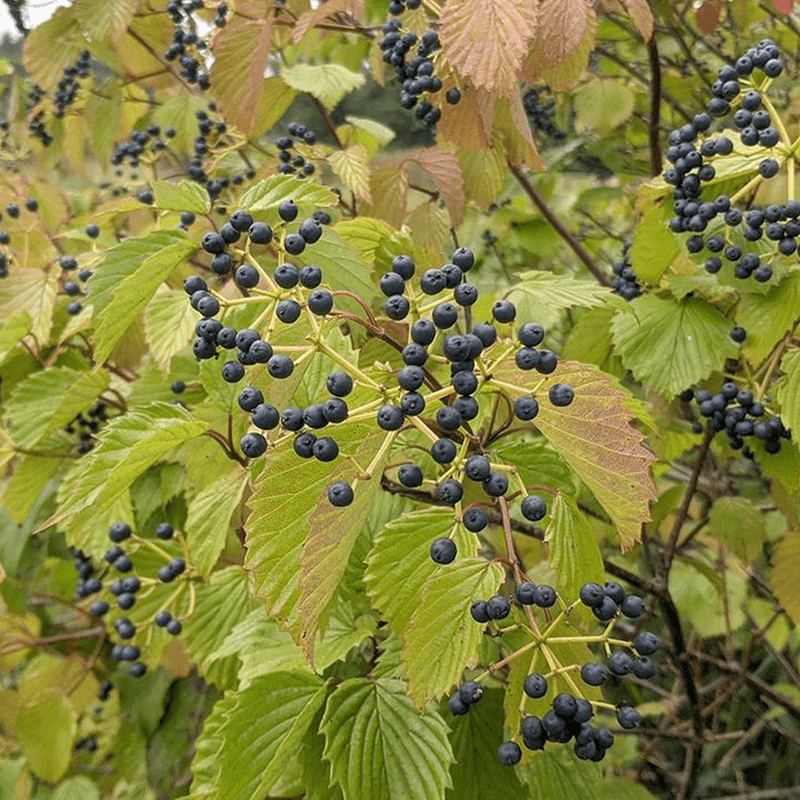
Native throughout the state, this dependable plant grows 8 to 10 feet tall and nearly as wide, forming a thick, rounded mass of glossy dark green foliage that fills in quickly and holds its shape season after season.
In late spring, it produces flat-topped clusters of creamy white flowers that attract butterflies and native bees. By early fall, those flowers become clusters of blue-black berries that birds absolutely love.
The foliage transitions from green to shades of red, orange, and burgundy before dropping in late autumn.
Arrowwood thrives in full sun to partial shade and tolerates a wide range of soils, including clay, which makes it a practical choice across most Michigan properties. Space plants about 6 to 8 feet apart when planting in a row for a hedge.
Mixing it with taller viburnums creates a layered screen with more visual depth. Pruning is rarely needed beyond occasional shaping right after flowering.
This shrub rewards patient gardeners with a sturdy, wildlife-rich boundary that looks polished without demanding much attention.
2. Nannyberry Viburnum Adds Height And Seasonal Beauty
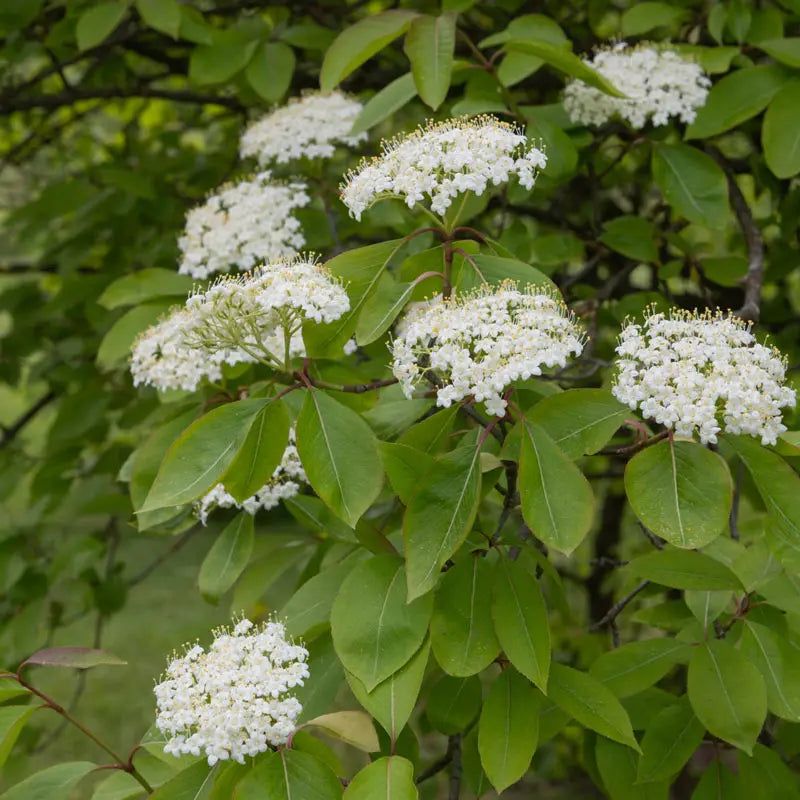
When a yard calls for serious height and four-season appeal, Nannyberry Viburnum steps up in a way few other native shrubs can match.
This large, multi-stemmed shrub reaches 12 to 18 feet tall at maturity, making it one of the tallest native viburnums suited for Michigan landscapes.
Its naturally upright habit and arching branches create a graceful screen that blocks sightlines without looking stiff or overly manicured.
Spring brings clusters of creamy white flowers that attract pollinators across several weeks. Late summer and fall reveal clusters of berries that shift from green to pink to deep blue-black as they ripen, drawing migrating birds in significant numbers.
The fall foliage turns rich shades of purple-red, adding bold color before the leaves drop.
Nannyberry performs well in full sun to part shade and adapts to both moist and moderately dry soils. It handles Michigan clay reasonably well once established.
For a natural fence, plant specimens about 8 feet apart in a staggered double row for better coverage.
Minimal pruning is needed, though removing older stems at the base every few years encourages fresh, vigorous growth and helps maintain a fuller, more uniform screen across the planting.
3. American Cranberrybush Viburnum Brings Flowers Fruit And Cover
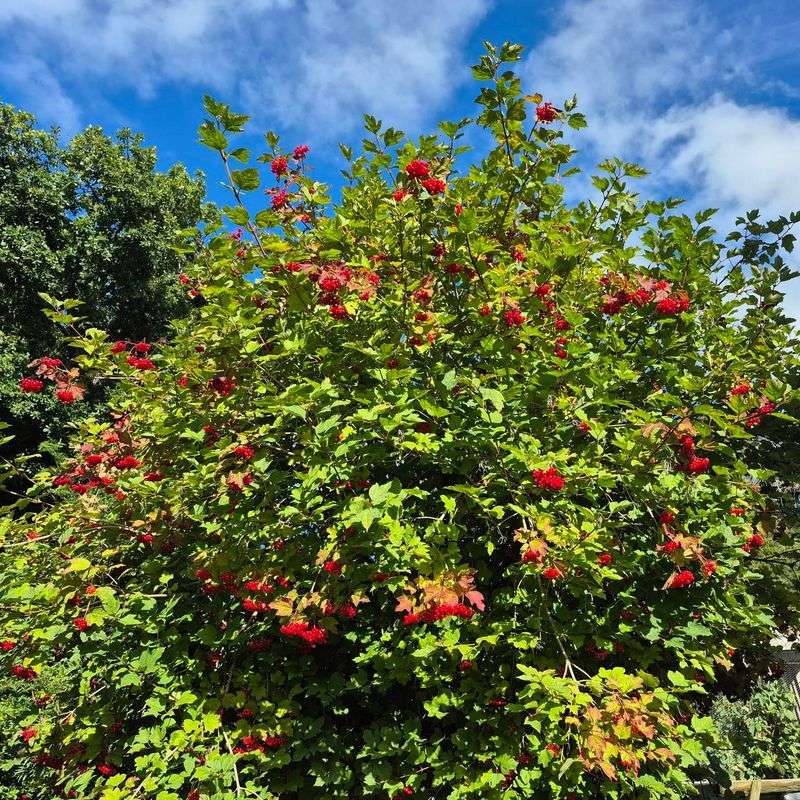
There is something genuinely exciting about a shrub that delivers a full seasonal show from spring straight through winter.
Your Michigan Garden Changes Every Week. Your Plan Should Too.
Gardening in Michigan changes quickly throughout the season. Every Friday you’ll receive a simple weekly plan showing exactly what to plant, prune, fertilize, harvest, and protect so you never miss the right timing.
American Cranberrybush Viburnum, sometimes called Highbush Cranberry, grows 8 to 12 feet tall and wide, making it a substantial privacy screen when planted in a row along a property line or fence corridor.
In May, it opens flat-topped white flowers with a distinctive lacecap look, where showy outer florets ring a center of smaller fertile flowers.
Those blooms become clusters of bright red berries by late summer, and unlike many fruiting shrubs, the berries often hang on well into winter, feeding cedar waxwings, robins, and other cold-season visitors.
The lobed, maple-like foliage turns orange-red in autumn.
This viburnum grows well in full sun to partial shade and prefers moist, well-drained soils, though it tolerates periodic wet conditions that are common in many Michigan yards. Space plants about 6 to 8 feet apart for a solid screen.
Avoid planting in very dry, sandy soil without consistent moisture. Light pruning after flowering keeps the form tidy.
For homeowners who want a shrub that earns attention in every season, this one genuinely delivers without requiring constant care.
4. Ninebark Creates A Full Natural Fence With Texture
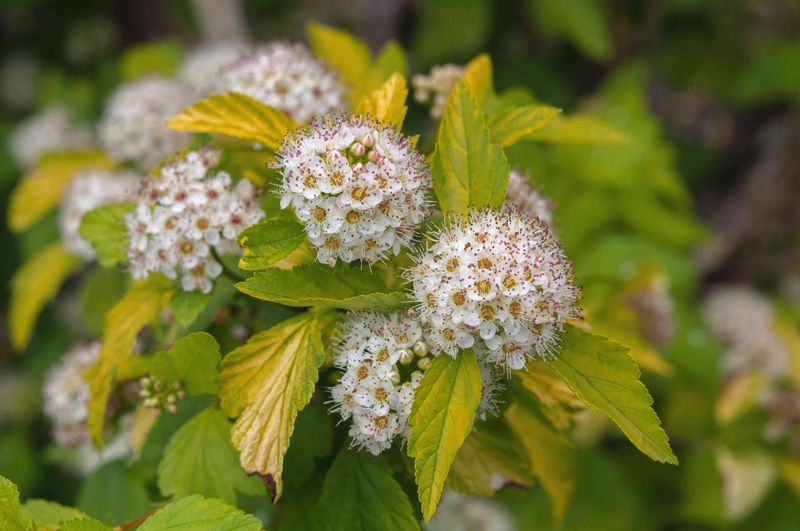
Ninebark might be one of the most underappreciated native shrubs in Michigan, but gardeners who plant it along a boundary quickly understand why it deserves far more attention.
Common Ninebark grows 6 to 9 feet tall with arching, fountain-like branches that spread nearly as wide.
The layered, exfoliating bark peels back in thin strips to reveal contrasting inner layers of copper, orange, and tan, giving the plant a textured, interesting look even in the middle of winter.
In May and June, it covers itself in rounded clusters of small white to pink flowers that attract native bees enthusiastically. Rose-red seed capsules follow and provide some visual interest through early fall.
The foliage holds a deep green through summer, and newer cultivars offer purple or gold leaf color for added contrast.
Ninebark thrives in full sun to partial shade and adapts well to clay soils, rocky ground, and areas with variable moisture. It handles both dry spells and occasional wet periods without significant stress.
For a natural fence, space plants 5 to 6 feet apart. Rejuvenation pruning every few years, cutting older stems to the ground in late winter, keeps the plant vigorous and encourages the lush, full growth that makes it such an effective screen.
5. Red Osier Dogwood Brightens Boundaries With Red Stems
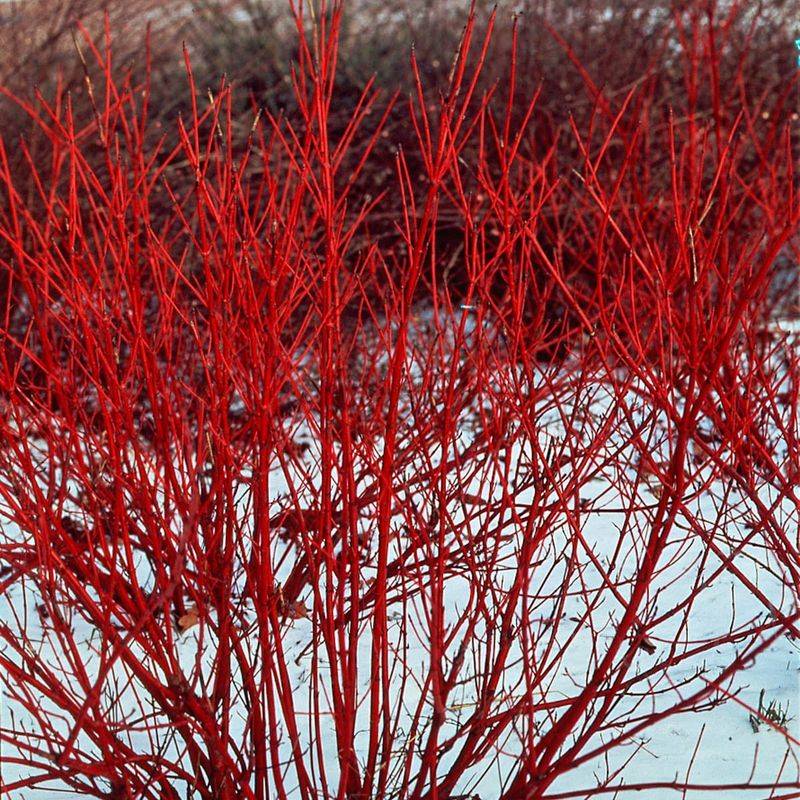
Walk past a Michigan wetland edge in January and you might notice a burst of vivid red color standing out against the snow. That is Red Osier Dogwood doing exactly what it does best, bringing life and structure to a landscape even in the coldest months.
The bright red stems glow most intensely in late winter when there is little else competing for attention, making this shrub a genuine standout in any natural fence planting.
During the growing season, it produces clusters of small white flowers in May and June, followed by white to bluish berries that birds consume quickly. The foliage turns reddish-purple in fall before dropping.
Plants grow 6 to 10 feet tall and spread vigorously by suckering, which can be a bonus when you want dense coverage along a boundary.
Red Osier Dogwood performs best in moist to wet soils and full sun to partial shade, making it ideal for low spots, rain gardens, and areas near ponds or streams. It also handles clay soils very well.
Space plants 4 to 6 feet apart for a dense screen. To maintain the brightest stem color, cut back about one-third of the oldest stems each spring before new growth begins.
Younger stems always show the most vivid red through the winter season.
6. Gray Dogwood Spreads Into A Reliable Living Screen
Gray Dogwood has a quiet confidence about it. It does not demand attention the way flowering shrubs do, but over time it quietly expands into one of the most reliable living screens a Michigan gardener can establish.
Growing 6 to 10 feet tall, it spreads steadily by root suckers to form a colony-style thicket that fills in boundary lines naturally and provides serious wildlife habitat along the way.
In late spring, flat-topped clusters of small white flowers appear and attract a wide variety of native pollinators.
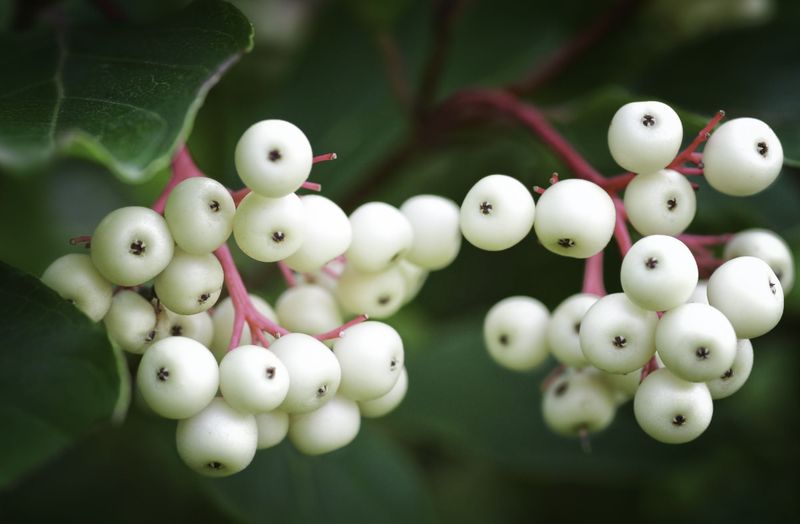
By late summer, the flowers give way to round white berries held on striking red stalks, which makes the fruiting display almost as colorful as the bloom.
More than 90 species of birds are documented to feed on the berries. Fall color ranges from dusty red to purple.
This shrub grows in full sun to partial shade and tolerates dry, poor soils better than most native dogwoods, making it a good choice for slopes, roadsides, and spots where other shrubs struggle. Clay and sandy soils are both acceptable.
Space plants 5 to 6 feet apart and allow the colony to fill in naturally over several seasons. Occasional mowing or cutting at the edges keeps the spread from extending beyond the intended boundary area.
7. Silky Dogwood Fills Damp Spaces With Soft Green Growth
Plenty of Michigan yards have a low, damp corner that stays wet through spring and never quite dries out in summer. Most shrubs struggle in those spots, but Silky Dogwood was practically made for them.
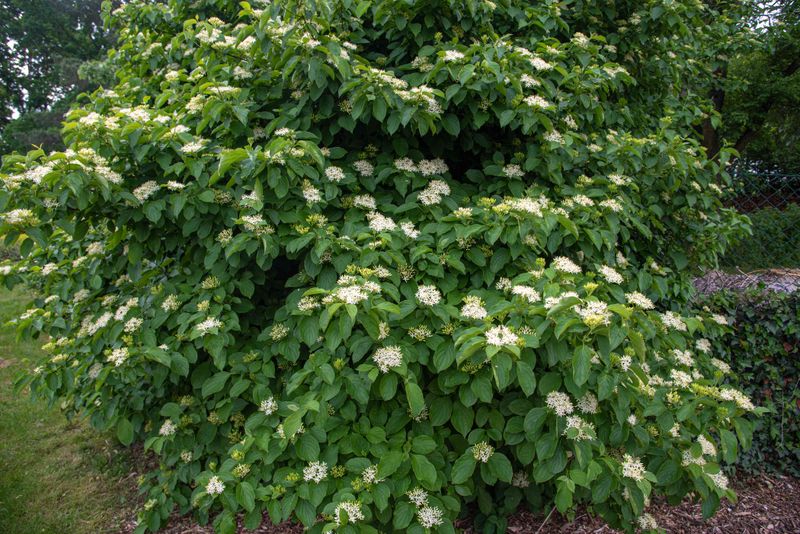
Native to stream banks, pond edges, and wet meadows across Michigan, this multi-stemmed shrub grows 6 to 10 feet tall and spreads gradually to form a soft, arching screen of deep green foliage.
In late spring and early summer, flat clusters of creamy white flowers open and attract native bees, beetles, and butterflies. The blooms transition into clusters of bluish berries on reddish stalks that ripen by late summer and draw in a variety of songbirds.
Stems develop a reddish-brown color in winter that adds subtle warmth to the landscape when leaves are gone.
Silky Dogwood grows well in full sun to partial shade and performs best in consistently moist to wet soils with good organic matter content. It handles clay and loamy soils without difficulty.
For a natural fence in wet areas, space plants about 5 feet apart and let the colony fill in gradually. Light pruning in late winter helps manage size and encourages fresh new growth.
This shrub pairs well with Red Osier Dogwood for a layered, moisture-tolerant living screen along wet boundaries.
8. Black Chokeberry Brings Compact Growth And Four Season Interest
Compact does not mean boring, and Black Chokeberry proves that point convincingly. Growing 3 to 6 feet tall and spreading to about 6 feet wide over time, this native shrub packs a remarkable amount of seasonal interest into a tidy, manageable frame.
For smaller Michigan yards or for filling gaps in a mixed shrub border, it is a smart, low-maintenance choice that earns its spot in every season.
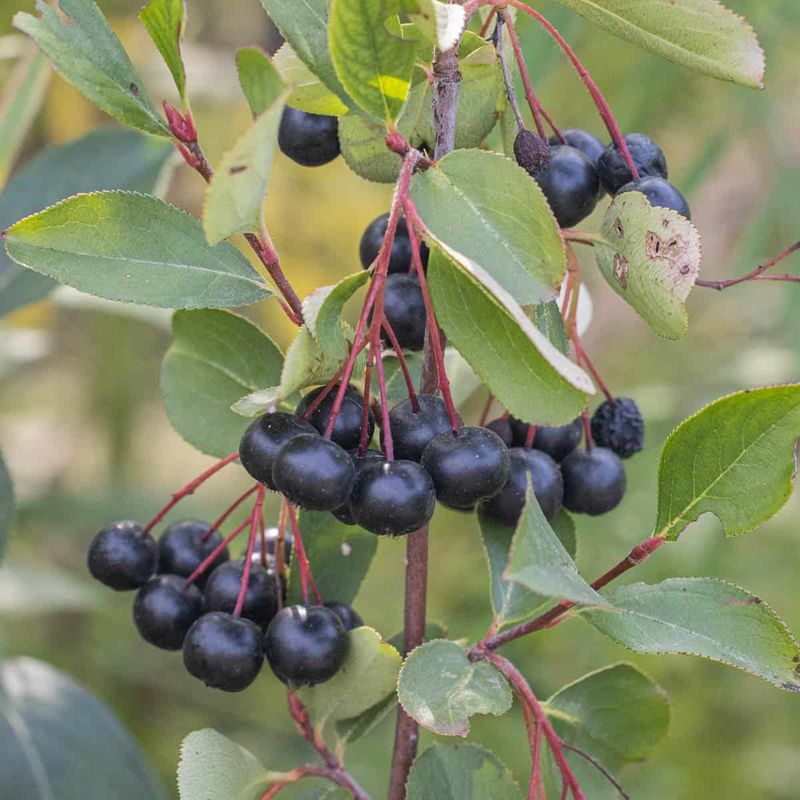
White flowers appear in clusters in early spring, often among the first native shrubs to bloom. By late summer, glossy clusters of dark purple-black berries develop and persist well into fall and winter.
The berries are edible but quite astringent raw, though birds and small mammals appreciate them. The fall foliage turns brilliant shades of orange and red, rivaling many ornamental shrubs grown specifically for fall color.
Black Chokeberry grows in full sun to partial shade and tolerates a wide range of soil conditions, including wet clay, dry sandy soils, and everything in between.
That adaptability makes it one of the more flexible native shrubs available to Michigan gardeners.
Space plants 4 to 5 feet apart for a dense low hedge. It spreads slowly by suckers, which can be left to fill in or removed to keep a tighter form.
Minimal pruning is needed beyond occasional shaping in late winter.
9. American Hazelnut Forms A Shrubby Barrier With Wildlife Value
Before the leaves even open in early spring, American Hazelnut announces itself with long, dangling yellow catkins that sway in the March wind.
It is one of the earliest native shrubs to show signs of life after a Michigan winter, and that early energy carries through the entire growing season.
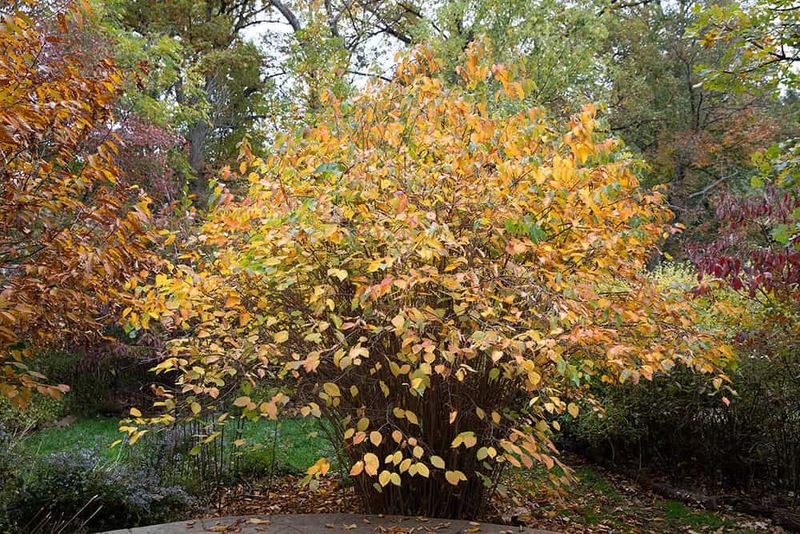
Mature plants reach 8 to 12 feet tall and spread by suckering to form a dense, arching thicket that makes an excellent natural barrier along property lines and woodland edges.
The large, rounded leaves create a full, lush canopy through summer, and the plant produces small, edible hazelnuts enclosed in papery husks by late summer. Squirrels, deer, turkeys, and a wide range of songbirds target the nuts enthusiastically.
The foliage turns yellow to orange in fall before dropping cleanly.
American Hazelnut grows best in full sun to partial shade and adapts to a variety of soil types, including clay, loam, and somewhat sandy ground. It is especially well suited to Michigan’s woodland edges and naturalized landscapes.
Space plants 6 to 8 feet apart when establishing a hedgerow. Because it spreads by root suckers, the colony will naturally thicken over time.
Mow or cut back suckers at the edges annually if you want to control the spread and maintain a defined boundary along your property.
10. Fragrant Sumac Covers Sunny Slopes And Open Edges
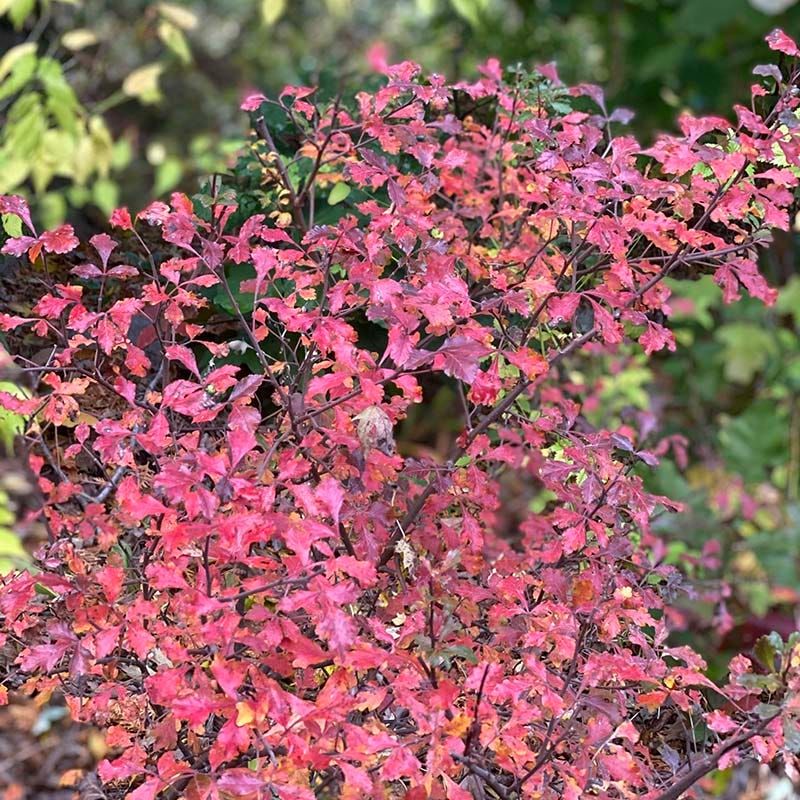
Sunny, dry slopes that bake in the summer heat and drain fast after a rain are often the hardest spots to plant in a Michigan yard. Fragrant Sumac was built for exactly those conditions.
This low-growing native shrub typically reaches 3 to 6 feet tall and spreads aggressively by root suckers to form a wide, dense colony that holds slopes firmly and creates a tough, informal screen along open boundaries and field edges.
Small yellow flowers appear in early spring before the leaves open, providing an early nectar source for native bees. The leaves have three leaflets and release a pleasant, lemony fragrance when bruised or rubbed, which gives the plant its common name.
In fall, the foliage turns brilliant shades of orange, red, and scarlet that rival any ornamental plant in the landscape. Small red, hairy fruit clusters attract birds through winter.
Fragrant Sumac thrives in full sun and well-drained to dry soils, including sandy and gravelly ground. It does not perform well in consistently wet or poorly drained areas.
Space plants 4 to 5 feet apart for a ground-level screen, or let a colony establish naturally along a slope or edge. Occasional cutting back in late winter keeps growth vigorous and the colony from expanding beyond the intended area.
It pairs nicely with taller shrubs for a layered, multi-height natural fence.