9 Shrubs Michigan Gardeners Should Not Cut Back Before Spring

Michigan winters push any gardener to the brink of impatience, and the first hint of melting snow triggers an almost uncontrollable urge to grab the pruning shears. Before you start hacking away, pause.
Many garden favorites set their flower buds on old wood during the previous summer, and a premature trim could accidentally erase your entire season of color. In a state where spring weather remains notoriously fickle, timing is everything.
You need to identify which shrubs demand patience and which ones tolerate a haircut. Leaving the right plants untouched until after they finish their show ensures a landscape that bursts with vibrant blooms rather than standing bare.
From fragrant lilacs to showy viburnums, mastering the art of the wait protects both your garden’s beauty and its ecological health.
Keep those shears in the shed a little longer and learn the secret to a high-performing Michigan sprin
1. Lilac Delivers Fragrant Blooms And Springtime Beauty

Few things signal spring in Michigan quite like the unmistakable scent of lilac drifting across a yard on a warm afternoon. Lilacs (Syringa vulgaris) have been growing in Michigan landscapes for generations, and their popularity has never faded.
These hardy shrubs are reliable performers across most of Michigan’s hardiness zones, tolerating cold winters without much fuss.
Lilacs bloom on old wood, which means the flower buds were formed on last year’s stems during the previous growing season. Cutting them back in late fall or early spring removes those buds before they ever get a chance to open.
The best time to prune lilacs is immediately after the blooms fade, usually within a few weeks of flowering.
Lilacs prefer full sun, at least six hours daily, and well-drained soil with a slightly neutral to alkaline pH. Once established, they are quite drought-tolerant and low-maintenance.
They work beautifully as a privacy hedge, a border anchor, or a standalone specimen near a patio or walkway where their fragrance can be fully enjoyed.
Pollinators, including butterflies and bees, are strongly attracted to lilac blooms, making them a welcome addition to any Michigan pollinator garden.
2. Forsythia Offers Bright Yellow Flowers And Early Cheer

When the ground is barely thawed and most plants still look like bare sticks, forsythia explodes into a wave of golden yellow that feels almost electric.
It is one of the earliest bloomers in Michigan, and many gardeners use it as a reliable sign that spring is on its way.
That vibrant display, however, depends entirely on protecting the flower buds that formed on last year’s growth.
Pruning forsythia before it flowers in spring removes those buds, leaving the plant covered only with green leaves for the season. The best approach is to wait until immediately after the blooms fade.
This timing allows the shrub to put energy into new growth that will form next year’s flowers.
Forsythia thrives in full sun to partial shade and adapts well to a variety of soil types. It handles urban conditions and occasional wet spots better than many other shrubs.
Forsythia works beautifully as a mass planting on slopes, as an informal hedge, or incorporated into a mixed shrub border.
Its graceful, arching branches provide structure and texture even when the plant is not in bloom, keeping the landscape visually interesting throughout the off-season.
3. Rhododendron Provides Evergreen Leaves And Summer Blooms

Evergreen shrubs are valuable in Michigan landscapes because they provide structure and color even during the bleakest months of winter.
Rhododendrons do exactly that, holding onto their broad, glossy leaves through snow and ice while quietly developing flower buds that will put on a show in late spring or early summer.
Cutting them back before that bloom period eliminates the buds that have been forming since the previous season.
Rhododendrons bloom on old wood, so any pruning done in late fall or early spring before flowering will reduce or eliminate the floral display. The ideal time to prune is right after the flowers fade, allowing the plant to recover and set new buds for the following year.
Deadheading spent blooms also encourages a tidier appearance and redirects energy into healthy growth.
In Michigan, rhododendrons perform best in partial shade with protection from harsh winter winds, which can cause leaf scorch and bud damage. They prefer moist, acidic, well-drained soil rich in organic matter.
Mulching around the base helps retain moisture and regulate soil temperature through Michigan’s temperature swings.
Rhododendrons are excellent choices for shaded borders, foundation plantings, and woodland garden settings where their bold foliage adds year-round texture and visual weight.
4. Azalea Brings Colorful Spring Flowers And Pollinator Appeal

Spring pollinator activity picks up as azaleas begin to bloom, and there’s a good reason for it. The flowers are rich in nectar and pollen, attracting native bees, butterflies, and even hummingbirds at a time when other food sources are still scarce.
Protecting that floral display means resisting the urge to prune before the blooms appear.
Like their rhododendron relatives, azaleas form flower buds on old wood during the previous growing season. Pruning in late winter or early spring removes those buds along with the stems, leaving little to show for the season.
The best time to prune is immediately after flowering, which preserves the current year’s blooms and gives the shrub time to grow new stems that will carry next year’s buds.
Both deciduous and evergreen azalea varieties perform well when planted in the right conditions. They prefer partial shade – especially afternoon shade in warmer spots – and acidic, well-drained soil enriched with organic matter.
Maintaining consistent moisture throughout the growing season supports healthy bloom development.
Azaleas work beautifully in woodland garden designs, mixed shrub borders, or pollinator-focused beds, where their seasonal color creates a vivid focal point from mid-spring through early summer.
5. Bigleaf Hydrangea Produces Large Flower Clusters And Garden Drama

There is something undeniably dramatic about a bigleaf hydrangea (Hydrangea macrophylla) in full bloom, with its oversized mophead or lacecap clusters commanding attention from across the yard.
In Michigan, however, these showstoppers can be tricky because late frosts and cold winters sometimes damage the old wood where flower buds are stored.
Pruning on top of that is one of the most common reasons Michigan gardeners end up with a healthy-looking plant that produces no blooms.
Bigleaf hydrangeas bloom on old wood, meaning the buds that will open this summer were set last fall. Cutting the stems back in late winter removes those buds entirely.
The safest approach is to wait until after the plant has bloomed to do any shaping or cleanup, removing only spent flower heads and any stems that did not survive winter.
Bigleaf hydrangeas prefer partial shade in Michigan, particularly afternoon shade, which helps protect both the foliage and the flower buds from heat and late-season frost damage. They grow best in moist, well-drained, organically rich soil.
Consistent watering during dry spells is important because these plants wilt quickly in heat. They work well as bold specimen plants in mixed borders, near patios, or in lightly shaded garden beds where their enormous blooms create lasting seasonal impact.
6. Oakleaf Hydrangea Adds Textured Leaves And Long-Lasting Blooms

Native plant enthusiasts in Michigan have long appreciated oakleaf hydrangea (Hydrangea quercifolia) for its remarkable four-season interest. The large, deeply lobed leaves resemble oak foliage and turn brilliant shades of burgundy and orange in fall.
The papery white flower panicles age to a warm pinkish-tan and persist on the plant well into winter, adding texture to the landscape long after the growing season ends.
Oakleaf hydrangea blooms on old wood, just like bigleaf hydrangea. Pruning before it flowers removes the buds that developed on last year’s growth, reducing or eliminating the summer bloom display.
Penn State Extension notes that pruning should occur after flowering to protect next year’s bud development and maintain the plant’s natural form.
In Michigan landscapes, oakleaf hydrangea performs well in partial to full shade, making it a strong choice for woodland edges, shaded borders, and areas under large trees where many shrubs struggle.
It tolerates a range of soil types but prefers consistently moist, well-drained conditions.
Once established, it develops a good level of drought tolerance.
The exfoliating bark on mature stems adds winter interest, and the shrub’s bold texture makes it a standout choice for mixed borders, naturalized areas, and low-maintenance landscape beds throughout Michigan.
7. Viburnum Offers Seasonal Flowers And Wildlife-Friendly Fruit

Wildlife gardeners often consider viburnum one of the most valuable shrubs to include in their landscapes.
Beyond its clusters of white or pink spring flowers, viburnum produces berries in late summer and fall that attract a wide range of birds, including cedar waxwings, robins, and thrushes.
That full-season performance begins with protecting the flower buds that formed on old wood during the previous growing season.
Many viburnum species bloom on old wood, so pruning before they flower removes those buds, reducing both the spring floral display and the fruit crop that birds depend on.
Light shaping after flowering is usually sufficient to maintain a tidy appearance while preserving blooms and berries.
Viburnums are highly adaptable and grow well across most hardiness zones in Michigan. They tolerate a variety of soil conditions but prefer moist, well-drained soil and full sun to partial shade.
Native species such as arrowwood viburnum (Viburnum dentatum) and blackhaw (Viburnum prunifolium) are particularly well-suited to Michigan’s climate and soil variability.
Viburnums serve multiple roles in the garden, from privacy screens and hedges to pollinator garden anchors and naturalized woodland borders, making them some of the most versatile and wildlife-friendly shrubs for Michigan landscapes.
8. Weigela Brings Pink Blooms And Butterfly Attraction
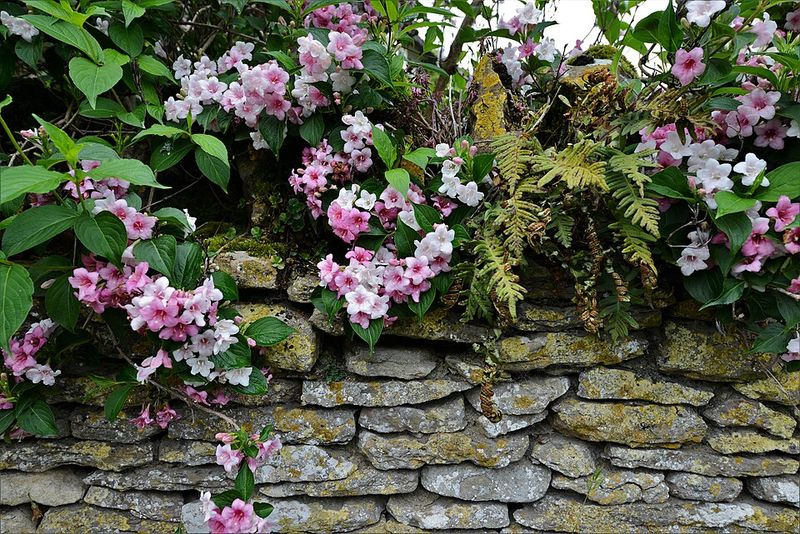
Late spring brings a burst of activity in the garden, and weigela is right at the center of it. Its tubular pink, red, or white flowers attract hummingbirds and butterflies, creating a lively, colorful display that enlivens any yard.
The full show depends on old wood, as weigela sets its flower buds on stems that grew during the previous season.
Pruning before it blooms removes the stems that carry this year’s flowers. The best approach is to wait until immediately after the blooms fade before performing any significant shaping or size reduction.
A light cleanup at that time encourages the shrub to produce new growth, which will form next year’s flower buds.
Weigela is a hardy, adaptable shrub that performs reliably across most growing zones. It thrives in full sun with well-drained soil and tolerates urban conditions, including air pollution and compacted soils.
Modern compact varieties have expanded its versatility, making it suitable for mixed shrub borders, woodland edges, or even container plantings on patios and decks.
Bold foliage in burgundy or variegated varieties adds visual interest even when the plant is not in bloom, giving gardens color and texture from spring through fall.
9. Serviceberry Provides White Flowers And Early Fruit For Birds
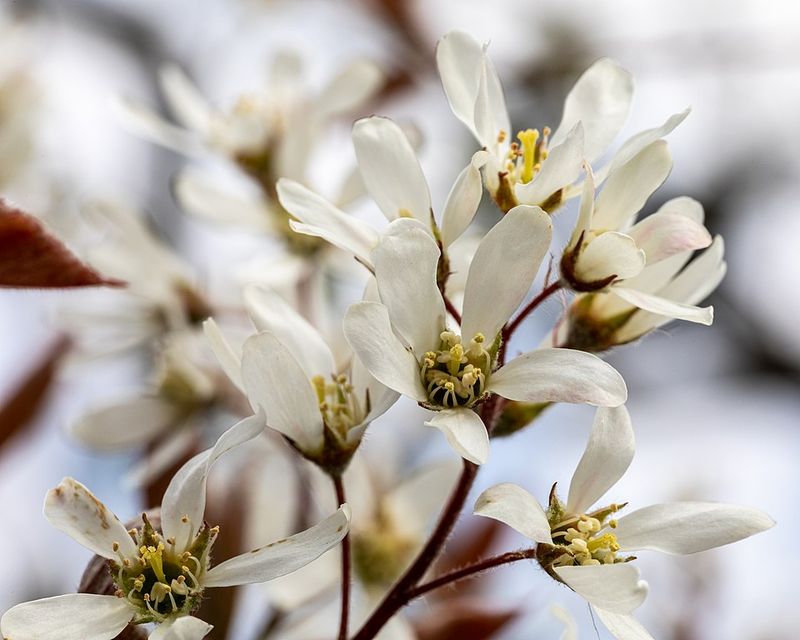
Early spring in Michigan can feel like a race between late snowstorms and the first signs of new life, and serviceberry (Amelanchier spp.) almost always wins that race.
It is one of the first woody plants to bloom in Michigan each year, producing clouds of delicate white flowers before most other shrubs have even leafed out.
Those early blooms are a critical food source for native bees emerging after winter.
Serviceberry blooms on old wood, which means the buds for this year’s flowers were set during the previous growing season.
Cutting the plant back in late winter removes those buds and eliminates both the floral display and the small, sweet berries that follow.
Birds such as cedar waxwings and American robins rely heavily on serviceberry fruit in early summer, so preserving the bloom cycle has real ecological value.
Several serviceberry species are native to Michigan, making them naturally adapted to the state’s soils, rainfall patterns, and temperature extremes. They grow well in full sun to partial shade and tolerate both moist and moderately dry soils once established.
Serviceberry works beautifully as a multi-stem specimen, a naturalized woodland edge planting, or a seasonal accent in a mixed border. Its fall foliage in shades of orange and red adds one more season of color to Michigan landscapes.