10 Shrubs That Thrive In Coastal North Carolina Gardens
Coastal gardens in North Carolina can be surprisingly demanding. Salt carried on ocean breezes, fast draining sandy soil, steady winds, and intense summer sun can leave many plants struggling to keep up.
Gardeners near the Outer Banks, Wilmington, and other shoreline communities quickly learn that not every shrub is built for life by the coast. The good news is that some shrubs actually thrive in these conditions.
These tough plants handle salty air, shifting sand, and strong coastal weather while still bringing color, texture, and structure to the landscape. Many also attract birds and pollinators, adding even more life to a coastal garden.
Choosing the right shrubs can completely change how your yard performs near the ocean. With the right selections, North Carolina coastal gardens can be vibrant, resilient, and beautiful throughout the growing season.
1. Wax Myrtle
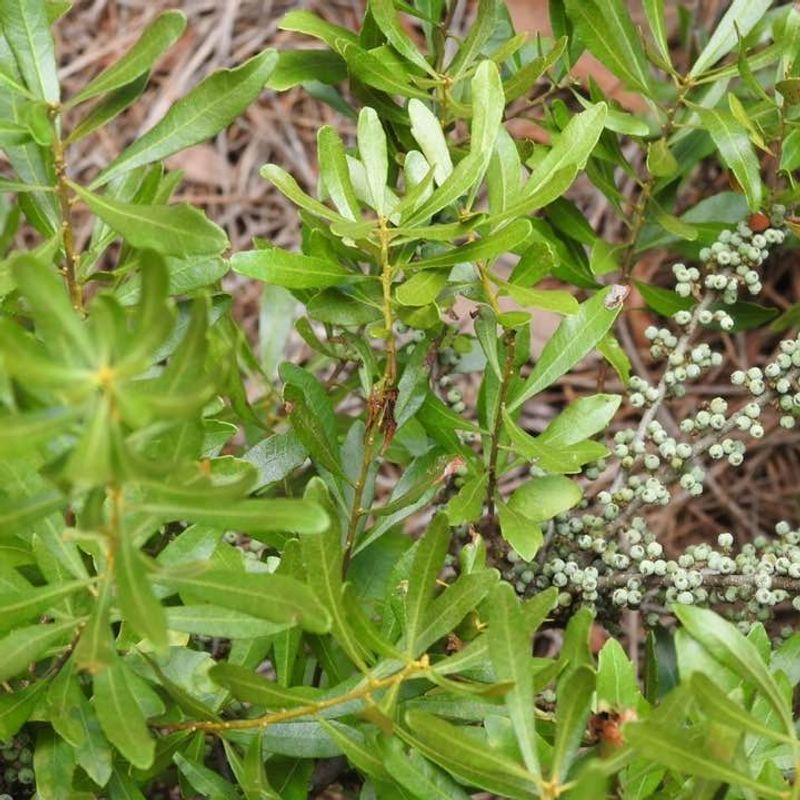
Few plants feel more at home along the North Carolina coast than Wax Myrtle. This fast-growing native evergreen has been thriving in coastal landscapes long before any garden center ever stocked it.
It handles salt spray, dry sandy soils, and relentless summer winds without missing a beat. Growing anywhere from 10 to 20 feet tall, Wax Myrtle works beautifully as a privacy screen or windbreak near the shoreline.
Its aromatic leaves release a pleasant scent when brushed, which makes working in the garden around it a genuinely enjoyable experience.
Coastal homeowners love how quickly it fills in bare spots and creates a lush, natural-looking boundary.
Small clusters of waxy, blue-gray berries appear on female plants and become a favorite food source for songbirds throughout fall and winter.
The foliage stays green year-round, giving your garden structure even during the quieter months.
Because it spreads by suckers, you can easily propagate new plants from established ones without spending a dime.
Wax Myrtle also tolerates wet conditions, which makes it perfect for low-lying coastal areas that collect rainwater after storms.
Whether you plant it as a specimen or mass it together for a bold hedge, this native powerhouse earns its place in every coastal North Carolina garden.
2. Yaupon Holly

Yaupon Holly might just be the toughest shrub growing along the North Carolina coast today.
It naturally colonizes barrier islands, sandy dunes, and salt-sprayed shorelines without any help from gardeners, which tells you everything you need to know about its strength.
Few shrubs match its ability to shrug off drought, salty air, and poor soil all at the same time.
The glossy, dark green leaves stay on the plant year-round, making Yaupon Holly a reliable source of color and texture through every season.
Female plants put on a spectacular show in fall and winter, producing clusters of bright red berries that practically glow against the foliage.
Birds absolutely love these berries, so planting a few near a window gives you a front-row seat to some serious wildlife activity.
Yaupon Holly grows in a wide range of sizes, from compact dwarf forms perfect for foundation plantings to tall multi-stemmed specimens that work well as screens.
It responds well to pruning, which means you can shape it into a formal hedge or let it grow wild and natural. Fun fact: Yaupon Holly is the only known caffeinated plant native to North America.
Coastal North Carolina gardeners who want a no-fuss, year-round performer will find this shrub nearly impossible to beat.
3. Oakleaf Hydrangea

Walk through any shaded woodland garden along the North Carolina coast in late spring, and chances are you will spot the stunning white blooms of Oakleaf Hydrangea.
Those large, cone-shaped flower clusters can reach up to a foot long, creating a dramatic display that few other shrubs can match.
Even as the flowers age through summer, they turn a soft pinkish-brown that adds a rustic charm to the landscape.
What makes this shrub especially exciting for coastal gardeners is its four-season appeal. In fall, the deeply lobed, oak-shaped leaves shift into rich shades of burgundy and orange before dropping for winter.
Once the leaves are gone, the peeling, cinnamon-colored bark becomes the star of the show, giving your garden an interesting texture through the colder months.
Oakleaf Hydrangea grows best in partial shade with well-drained soil, which makes it a natural fit for spots under large trees or on the north side of a building.
It handles the heat and humidity of coastal North Carolina summers far better than most hydrangea varieties, and it bounces back reliably each spring.
Mature plants can spread quite wide, so give them room to stretch out. Plant one where you want a real focal point, and this shrub will reward you with beauty in every single season.
4. American Beautyberry
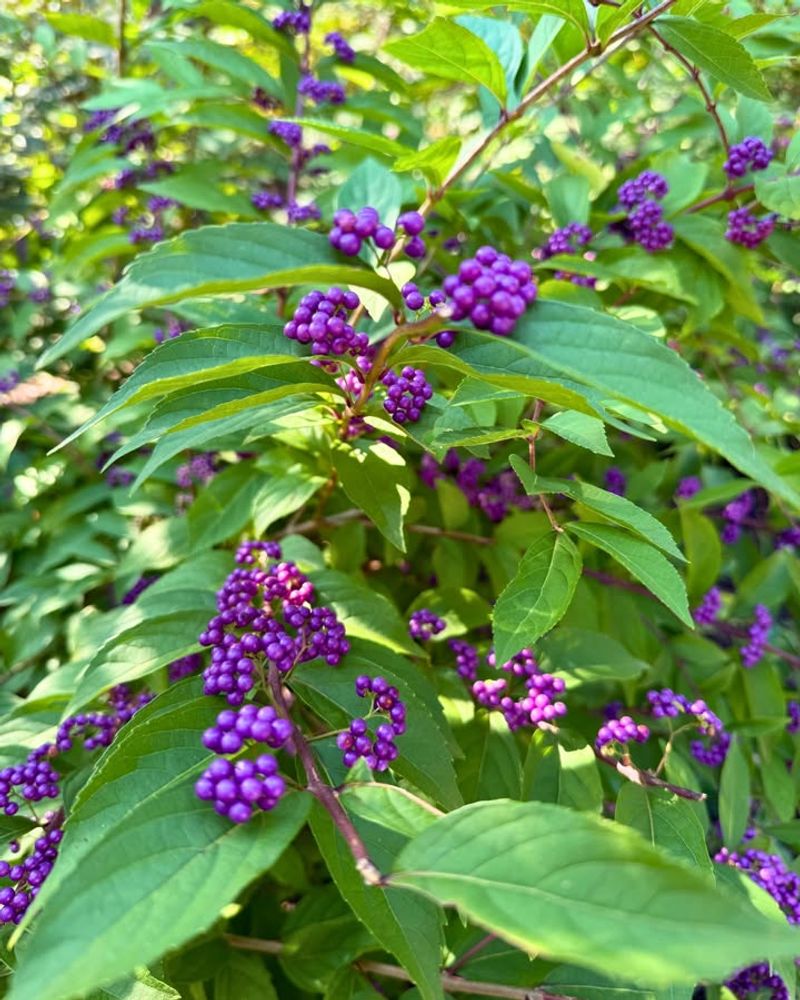
Nothing in a coastal North Carolina garden stops visitors in their tracks quite like American Beautyberry in full fruit.
The clusters of vivid, metallic-purple berries wrap tightly around the arching branches in late summer and fall, creating a color display so bold it almost looks artificial. Even people who have never gardened a day in their life want to know what this plant is.
Through spring and early summer, the shrub plays it low-key with small, soft-pink flowers tucked along the stems.
They are modest but attract plenty of pollinators, quietly doing important ecological work before the berries steal the spotlight.
The large, textured leaves give the plant a lush, tropical feel that fits right in with the coastal North Carolina climate.
American Beautyberry handles heat and humidity like a true Southern native, which is exactly what it is.
It grows happily in a range of soils, including the sandy, slightly acidic ground common near the coast.
Cutting it back hard in late winter actually encourages stronger, more productive growth the following season.
Birds flock to the berries in fall, making this shrub a genuine wildlife magnet. Fun fact: some research suggests that crushed leaves of this plant may naturally repel insects, adding yet another reason to grow it. Give it space, some sunshine, and watch it perform.
5. Dwarf Palmetto

Want a touch of the tropics in your coastal North Carolina garden without the maintenance headache?
Dwarf Palmetto delivers that lush, vacation-resort feel while being completely at home in the local environment.
Unlike taller palms that can topple in storms, this low-growing native stays close to the ground, which actually helps it handle coastal winds with ease.
The fan-shaped fronds spread wide and create a bold, architectural statement in the landscape.
Dwarf Palmetto grows naturally in the southern coastal plain of North Carolina, including areas of Dare County, where it thrives in both moist, low-lying soils and drier sandy ground.
That kind of flexibility is rare and incredibly valuable in coastal gardening situations. Salt spray, occasional flooding, and intense summer heat are no problem for this tough native.
It grows slowly, which means less pruning and fussing over the years. Because it stays under six feet tall in most garden settings, it works well as an understory plant beneath larger trees or as a bold accent near a patio or entrance.
Pair it with ornamental grasses or other coastal natives for a layered, naturalistic look that practically takes care of itself.
Coastal North Carolina gardeners who want drama, toughness, and genuine regional character will find Dwarf Palmetto checks every single box on the list.
6. Virginia Sweetspire

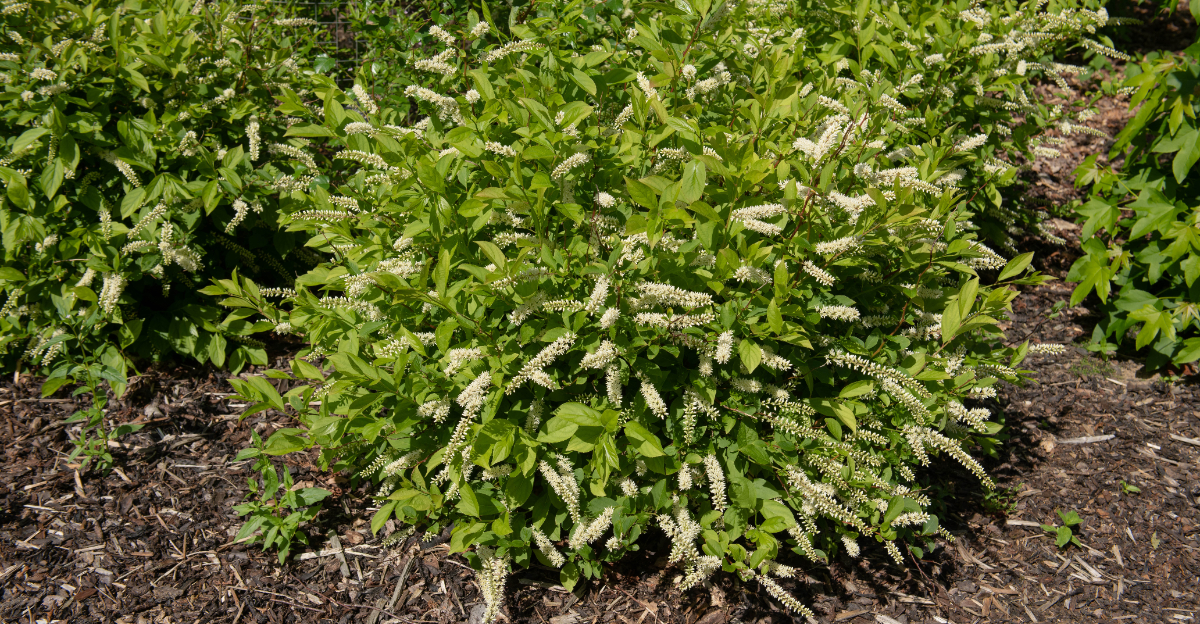
Virginia Sweetspire is one of those shrubs that earns admiration twice a year, once for its flowers and again for its fall color.
In late spring, long arching spikes of small white flowers appear, releasing a sweet fragrance that drifts through the garden on warm coastal breezes.
Pollinators, especially native bees, absolutely love these blooms and visit them constantly. Come fall, the foliage shifts into brilliant shades of red, orange, and purple that rival any maple or dogwood in the landscape.
What makes this especially impressive is that the color holds for weeks, giving coastal North Carolina gardens a long-lasting autumn display.
Even in mild coastal winters, the leaves often cling to the stems longer than expected before finally dropping.
Virginia Sweetspire naturally grows along stream banks and moist woodland edges, which makes it a perfect fit for the low-lying, sometimes soggy areas common in coastal gardens.
It handles partial shade well and also performs in full sun as long as the soil stays reasonably moist.
Mature plants spread gradually through root suckers, forming a beautiful, natural-looking colony over time. Salt tolerance adds another layer of toughness for gardens close to the water.
With four distinct seasons of interest, easy care requirements, and genuine native credentials, Virginia Sweetspire deserves a spot in every thoughtfully planted coastal North Carolina garden.
7. Inkberry Holly

Reliability is the word that comes to mind every time a gardener plants Inkberry Holly along the North Carolina coast.
This evergreen native is practically built for coastal conditions, naturally growing in sandy woods, swamp edges, and wet flatwoods throughout the region.
Its deep green foliage stays lush and glossy even when salt spray, flooding, and summer heat push other shrubs to their limits.
Inkberry Holly works especially well as a hedge or foundation planting because of its dense, tidy growth habit.
The dark foliage creates a clean, classic backdrop that makes colorful flowers and ornamental grasses pop in the surrounding landscape.
Small black berries ripen in late summer and persist into winter, providing a steady food source for birds including bluebirds, mockingbirds, and cedar waxwings. One of the most practical qualities of this shrub is its tolerance for wet soils.
Coastal North Carolina gardens often deal with seasonal flooding after heavy rains or tropical storms, and Inkberry Holly handles those soggy conditions far better than most ornamental shrubs.
It grows in sun or partial shade, which gives you plenty of flexibility when planning your garden layout.
Compact cultivars like Shamrock and Gem Box stay smaller and neater than the straight species, making them great choices for tighter spaces.
For a dependable, wildlife-friendly, low-maintenance evergreen on the coast, Inkberry Holly is a smart and satisfying choice.
8. Bottlebrush Buckeye

Bottlebrush Buckeye is the kind of shrub that makes guests stop mid-conversation and ask what that spectacular thing is blooming in the corner of the garden.
In early summer, it sends up tall, cylindrical spikes of white flowers with long, showy stamens that look exactly like a giant bottle brush.
Each flower spike can reach 12 inches or more, and a mature plant covered in them is truly a sight to remember.
This shrub thrives in the sheltered, partially shaded spots that appear throughout coastal North Carolina gardens, especially on the north side of buildings or under the canopy of larger trees.
Rich, well-drained soil helps it perform at its best, and consistent moisture during dry spells keeps the large, tropical-looking leaves looking their finest through the summer heat.
Pollinators go absolutely wild for the blooms, with hummingbirds, swallowtail butterflies, and bumblebees all making regular appearances.
Bottlebrush Buckeye spreads slowly by underground stems, eventually forming a wide, multi-stemmed colony that fills a shaded area beautifully over several years.
The bold, compound leaves create a lush, layered texture that adds real visual depth to a garden.
For coastal North Carolina gardeners with a partially shaded corner that needs a dramatic focal point and genuine pollinator value, Bottlebrush Buckeye is an outstanding and underused choice worth every bit of the space it takes.
9. Coastal Azalea

Spring along the North Carolina coastal plain takes on a whole new level of beauty when Coastal Azalea bursts into bloom.
The fragrant white to soft-pink flowers open in April and May, filling the surrounding air with a sweet, honeysuckle-like scent that signals the true arrival of the season.
This native azalea grows naturally along the coastal plain from Delaware down through Georgia, and North Carolina sits right in the heart of its native range.
Unlike many cultivated azaleas that struggle in sandy, acidic soils, Coastal Azalea evolved in exactly those conditions.
It actually prefers the slightly acidic, well-drained to moist soils common in coastal woodland gardens, which means far less amending and fussing compared to other flowering shrubs.
Partial shade suits it perfectly, making it a natural companion for longleaf pines, oaks, and other native trees along the coast.
Pollinators, especially native bees and hummingbirds, are drawn to the flowers during their brief but beautiful spring display.
The shrub stays relatively compact at three to six feet, fitting neatly into woodland garden edges, naturalistic borders, or rain garden plantings.
Because it is a true native, it supports local ecosystems in ways that non-native azaleas simply cannot.
For gardeners in coastal North Carolina who want fragrance, spring color, and real ecological value in one package, Coastal Azalea is an inspired and deeply rewarding choice.
10. Red Chokeberry

Red Chokeberry is one of those quietly impressive shrubs that rewards patient gardeners with four full seasons of interest.
White flower clusters open in spring and look cheerful and delicate against the fresh green foliage.
By fall, the leaves shift into fiery shades of red and orange while clusters of glossy, bright red berries ripen and cling to the branches well into winter.
Coastal North Carolina gardens often include areas that stay wet after heavy rains or seasonal flooding, and Red Chokeberry handles those conditions better than almost any other ornamental shrub.
It naturally grows in swampy woodland edges, stream margins, and low-lying flatwoods throughout the eastern coastal plain, so waterlogged soil is nothing new to it.
That kind of toughness makes it incredibly practical for tricky spots in the garden where other shrubs would struggle. Wildlife value is another major selling point.
Birds including robins, cedar waxwings, and thrushes feast on the berries through fall and winter when other food sources are scarce.
The shrub grows four to eight feet tall and spreads over time through root suckers, forming a natural, low-maintenance colony.
Full sun to partial shade suits it well, and it adapts to a range of soil types beyond just wet areas.
For coastal North Carolina gardeners who want beauty, toughness, and genuine wildlife support all in one shrub, Red Chokeberry delivers with quiet confidence and real staying power.