11 Shrubs That Thrive In Shady Oregon Backyards

Shady spots don’t have to be dull.
Some corners of your backyard barely see the sun, and it can feel like nothing really grows there.
Maybe you’ve tried planting flowers or small shrubs, only to watch them fade or struggle.
I guess we’ve all experienced this, it’s a little discouraging when you want your yard to feel full and lively.
However, shade doesn’t have to mean empty space.
There are plenty of shrubs that actually thrive in Oregon’s shady spots, from low-maintenance evergreens to flowering varieties that bring life and color even in dim light.
With a few smart choices, those darker corners of your yard can become some of the most interesting and attractive areas.
If your shady backyard has felt overlooked, these eleven shrubs are a perfect place to start.
They’ll handle low light, wet winters, and still give your garden texture, structure, and year-round appeal.
These shrubs can bring life and color to Oregon backyards that don’t get much sun.
1. Oregon Grape

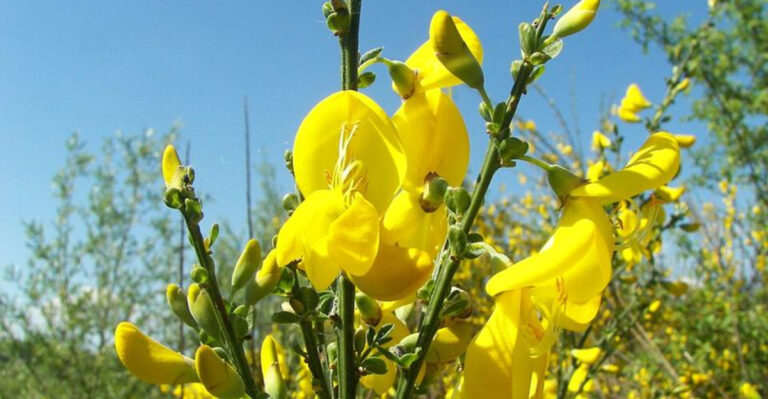
Native to the Pacific Northwest, Oregon Grape brings year-round beauty to any shady spot with its spiky, holly-like leaves that shimmer in deep green.
Come spring, cheerful yellow flower clusters appear and fill the air with a light, pleasant scent.
By summer, small blue-purple berries form, attracting birds and adding extra color to your landscape.
Oregon Grape tolerates dry shade once established, which makes it perfect for spots under big trees where other plants struggle.
The shrub grows slowly and stays compact, usually reaching three to six feet tall.
You can plant it along pathways, under evergreens, or near fences where sunlight rarely reaches.
In fall, some leaves turn bronze or burgundy, adding seasonal interest.
This shrub requires very little maintenance and resists most pests and diseases.
Pruning is optional, but you can trim after flowering to keep its shape tidy.
Oregon Grape also provides food and shelter for local wildlife, supporting pollinators and songbirds.
Its tough nature and striking appearance make it a top choice for Oregon gardeners who want a low-fuss, high-impact plant.
2. Evergreen Huckleberry
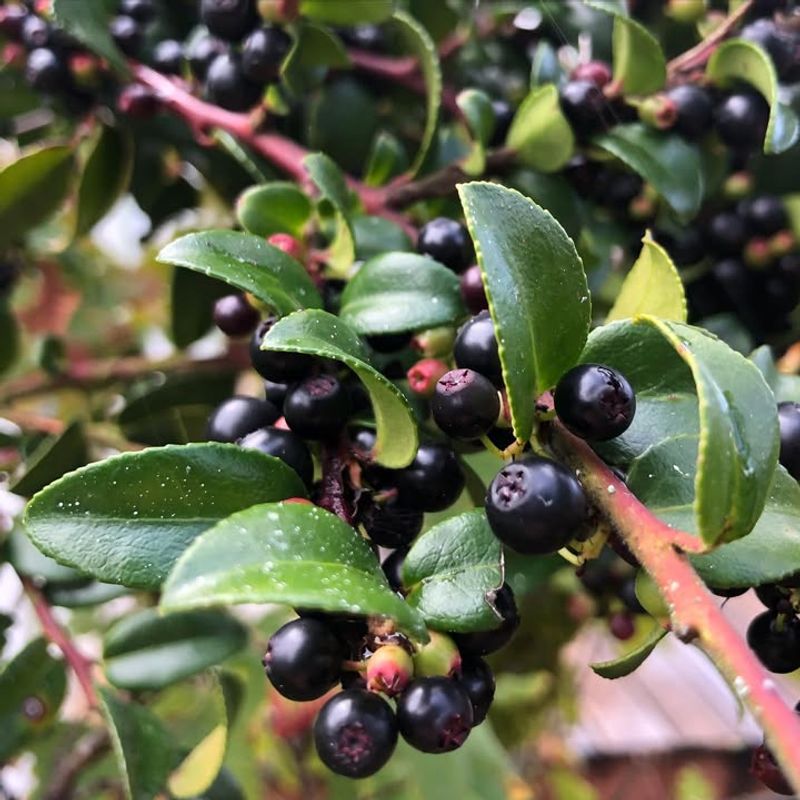
Small glossy leaves and tasty dark berries make Evergreen Huckleberry a favorite among Oregon gardeners and local wildlife alike.
Birds adore the sweet fruit, and you might enjoy snacking on them too if you can harvest before the critters do.
This shrub thrives in partial to full shade and adapts well to acidic soil, which is common in many Oregon yards.
Evergreen Huckleberry grows slowly, typically reaching four to ten feet tall depending on conditions.
Its upright, branching habit creates a natural screen or backdrop for other shade-loving plants.
In spring, tiny pink or white bell-shaped flowers dangle from the branches, adding delicate charm.
By late summer, berries ripen to a rich purple-black color.
You can use them fresh, freeze them, or bake them into pies and jams.
Evergreen Huckleberry needs minimal care once established and tolerates drought better than many shade plants.
Mulch around the base to keep roots cool and moist.
Pruning is rarely necessary, but you can shape the shrub lightly after fruiting.
Its evergreen foliage provides year-round structure and color, making it a reliable choice for any shady Oregon garden.
3. Red-Flowering Currant
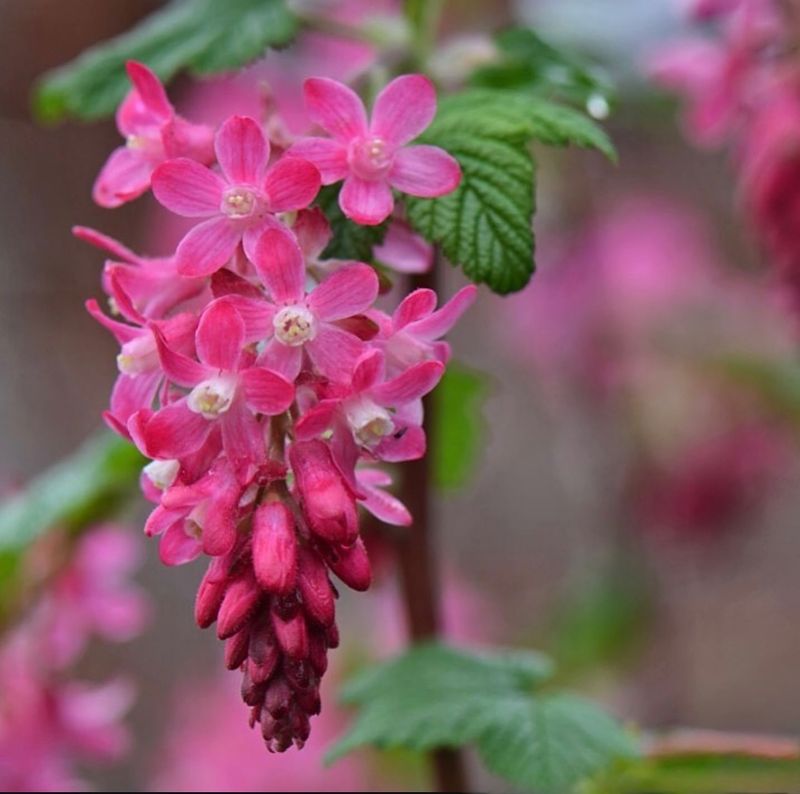
Hummingbirds go crazy for Red-Flowering Currant, and you will too once you see its cascades of bright pink blooms in early spring.
This Pacific Northwest native lights up shady spots with color just when you need it most, right after winter fades.
The tubular flowers dangle in clusters and attract not only hummingbirds but also bees and butterflies.
After flowering, small blue-black berries appear, providing food for songbirds.
Red-Flowering Currant grows quickly, reaching six to ten feet tall and wide, so give it plenty of room to spread.
It tolerates a range of light conditions, from full shade to partial sun, and adapts to different soil types.
Once established, this shrub handles dry summers well, though occasional watering helps it look its best.
The leaves are soft green and lobed, adding texture to your garden even after the flowers fade.
You can prune Red-Flowering Currant after blooming to control size or shape.
It also works beautifully as a hedge or mixed into a native plant border.
Its early blooms and wildlife value make it a must-have for any Oregon shade garden.
4. Salal

Tough as nails and beautiful all year, Salal is a Pacific Northwest classic that thrives in deep shade where few other shrubs dare to grow.
Its thick, glossy leaves stay green through every season, providing reliable structure and color.
Florists love Salal for its long-lasting foliage, and you will love how easy it is to grow.
In late spring, small white or pink bell-shaped flowers appear, followed by edible dark purple berries that taste sweet and slightly bland.
Native tribes traditionally used these berries for food, and birds still enjoy them today.
Salal spreads slowly by underground stems, forming dense, low-growing colonies that work well as ground cover or low hedges.
It typically reaches two to four feet tall but can grow taller in ideal conditions.
This shrub tolerates dry shade, poor soil, and even salty coastal air.
Once established, Salal needs almost no care and resists pests and diseases.
You can prune it anytime to control spread or harvest branches for floral arrangements.
Its evergreen leaves and adaptability make Salal a workhorse plant for Oregon shade gardens, especially under Douglas firs and other big trees.
5. Vine Maple
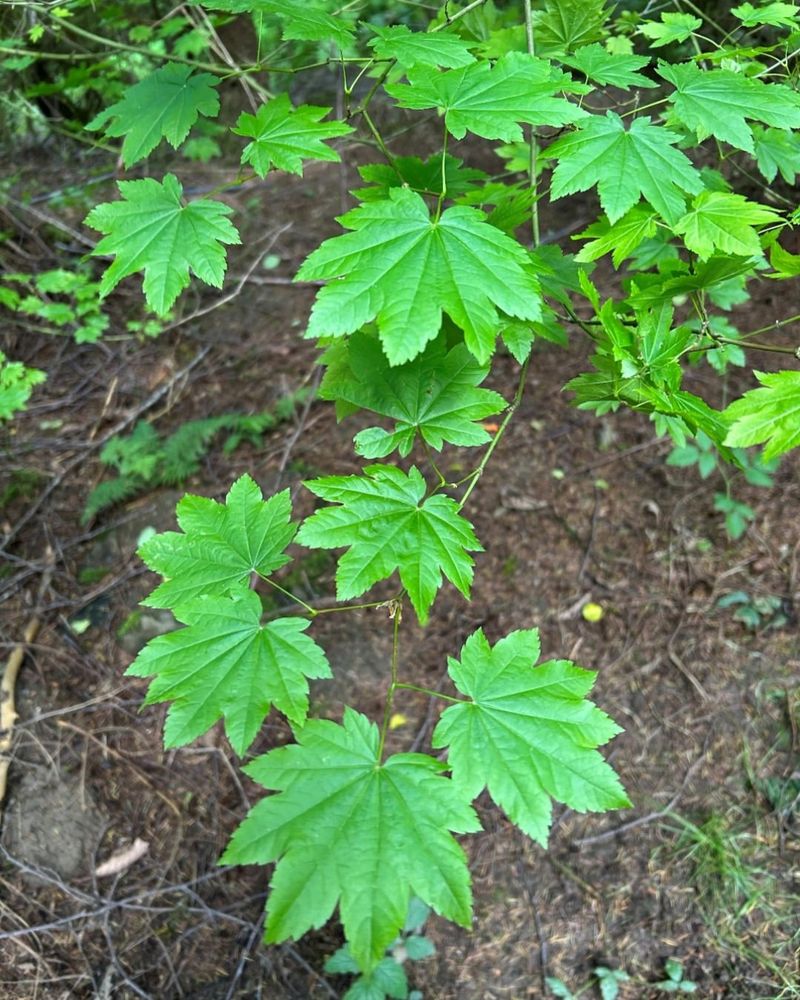
Graceful arching branches and stunning fall color make Vine Maple a true showstopper in shady Oregon gardens.
Though often grown as a small tree, you can prune it into a multi-stemmed shrub that fits beautifully under larger trees or along woodland edges.
In spring, small reddish flowers appear, followed by winged seeds that spin like helicopters when they fall.
But the real magic happens in autumn, when the leaves turn brilliant shades of orange, red, and yellow.
Vine Maple tolerates full to partial shade and prefers moist, well-drained soil.
It grows slowly, reaching ten to twenty feet tall depending on how you prune it.
The shrub’s natural form is loose and irregular, giving your garden a soft, naturalistic feel.
You can plant Vine Maple as a focal point, in groups, or mixed with other native shrubs.
Its shallow roots do not compete aggressively, so it plays well with other plants.
Vine Maple needs little maintenance once established, though it appreciates regular water during dry spells.
Prune in late winter to shape or remove crossing branches.
Its elegant form and seasonal drama make Vine Maple a favorite for Oregon gardeners who want year-round beauty.
6. Pacific Rhododendron
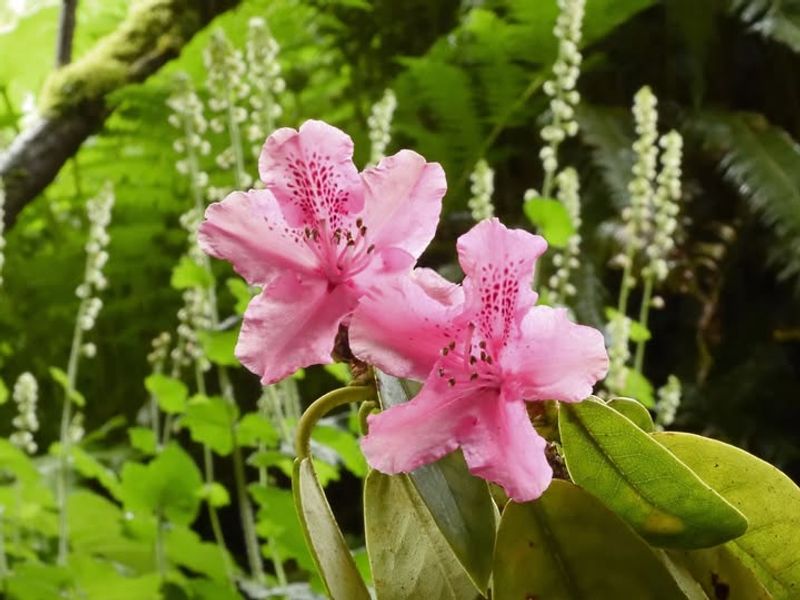
Bold pink blooms and glossy evergreen leaves make Pacific Rhododendron a stunning addition to any shady Oregon yard.
This is Washington’s state flower, but Oregon gardeners adore it just as much.
In late spring, large clusters of rose-pink flowers open, creating a spectacular display that lasts for weeks.
Pacific Rhododendron thrives in partial to full shade and prefers acidic, well-drained soil rich in organic matter.
It grows slowly, eventually reaching six to ten feet tall and wide.
The shrub’s dense, rounded form provides excellent structure and year-round interest.
Its thick leaves stay green through winter, offering a solid backdrop for other plants.
Pacific Rhododendron needs consistent moisture, especially during summer, so mulch well and water during dry periods.
Avoid planting it in heavy clay or areas with poor drainage.
Pruning is rarely necessary, but you can remove spent flowers to encourage more blooms next year.
This shrub pairs beautifully with ferns, huckleberries, and other native plants.
Its showy flowers and evergreen foliage make Pacific Rhododendron a must-have for Oregon shade gardens, especially under tall conifers where it feels right at home.
7. Indian Plum
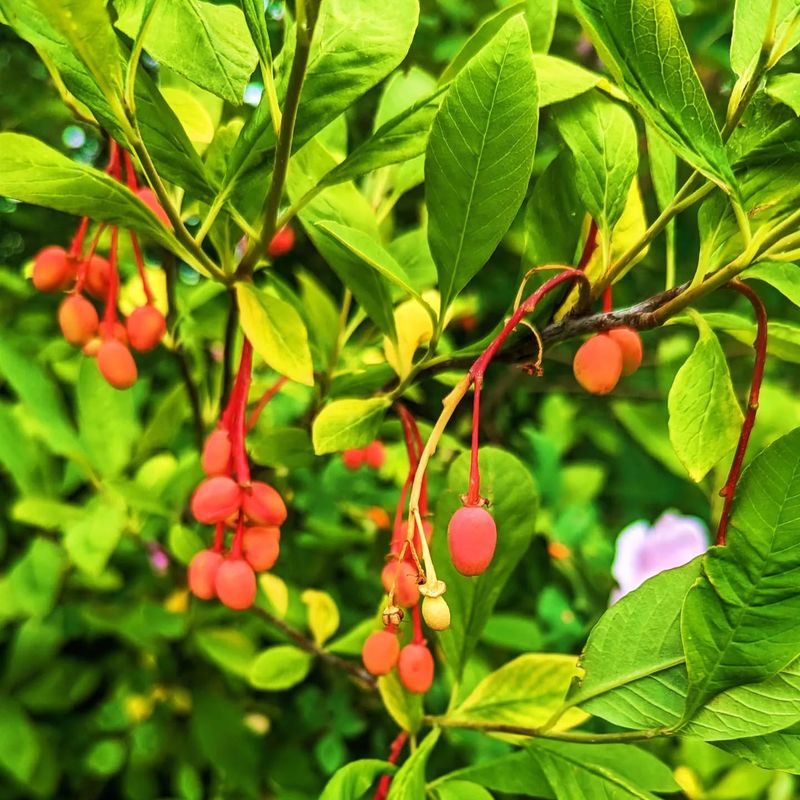
One of the earliest bloomers in the Pacific Northwest, Indian Plum signals spring’s arrival with delicate white flowers that appear before most other plants wake up.
This deciduous shrub grows quickly, reaching eight to fifteen feet tall, and its upright, arching branches create a graceful silhouette.
In late winter or early spring, clusters of small, fragrant white flowers dangle from bare stems, attracting early pollinators like bees and butterflies.
After flowering, small plum-like fruits ripen to dark purple by summer, providing food for birds.
Indian Plum tolerates full to partial shade and adapts to a variety of soil types, though it prefers moist, well-drained ground.
Once established, it handles dry summers fairly well.
The bright green leaves turn yellow in fall, adding seasonal color before dropping for winter.
You can plant Indian Plum as a specimen, in groups, or as part of a native hedgerow.
Its early blooms and fast growth make it ideal for filling in new gardens quickly.
Prune after flowering to control size or remove old stems.
Indian Plum’s cheerful flowers and wildlife value make it a wonderful choice for Oregon gardeners who want to support local ecosystems.
8. Mock Orange
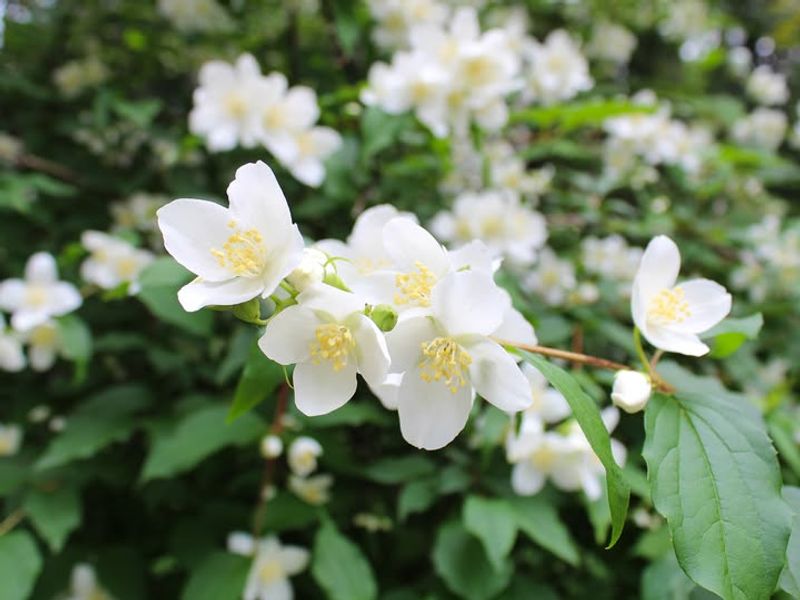
Sweet, intoxicating fragrance makes Mock Orange a garden favorite, especially when its white blooms fill the air with perfume in late spring.
This deciduous shrub grows vigorously, reaching six to ten feet tall and wide, and its upright form works well as a hedge or focal point.
Mock Orange tolerates partial shade and adapts to most soil types, though it blooms best with a bit of morning sun.
In late spring or early summer, clusters of white, four-petaled flowers cover the branches, creating a stunning display.
The blooms resemble orange blossoms and smell just as delightful.
After flowering, the shrub’s green oval leaves provide a simple, clean backdrop for other plants.
Mock Orange needs regular water during its first few years but becomes more drought-tolerant once established.
Prune right after flowering to shape the shrub or remove old, woody stems.
This encourages fresh growth and more blooms next year.
Mock Orange pairs beautifully with ferns, hostas, and other shade-loving perennials.
Its fragrant flowers and easy care make it a classic choice for Oregon gardens, especially near patios or windows where you can enjoy the scent.
Plant one, and you will look forward to its blooming season every year.
9. Snowberry
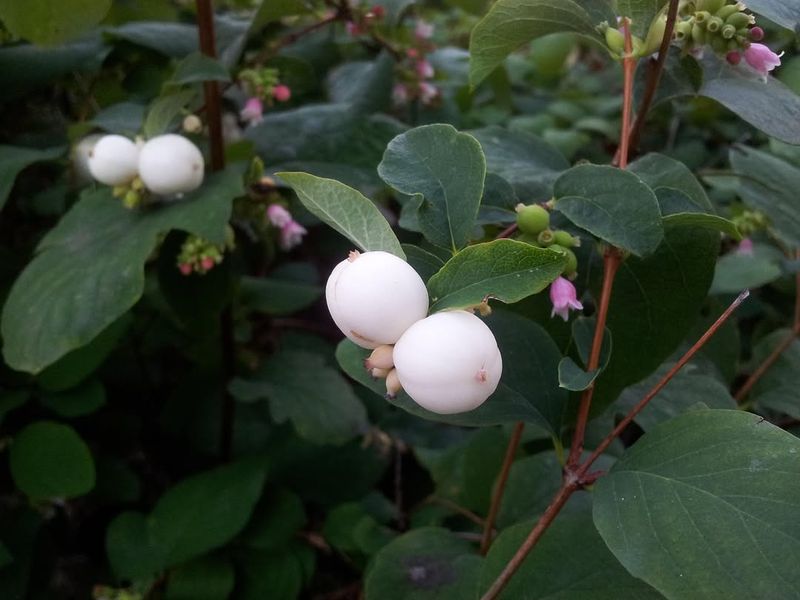
Bright white berries that glow like tiny snowballs make Snowberry a standout shrub for shady Oregon yards.
This Pacific Northwest native grows easily in full to partial shade and tolerates a wide range of soil conditions, including clay and dry spots.
In late spring or early summer, small pink bell-shaped flowers appear, attracting bees and other pollinators.
By fall, clusters of white berries form and persist through winter, providing food for birds and adding visual interest when most other plants look bare.
Snowberry grows three to six feet tall and spreads slowly by underground stems, forming loose colonies over time.
Its arching branches and soft green leaves create a relaxed, informal look.
You can plant Snowberry as a low hedge, in mixed borders, or under trees where little else will grow.
Once established, this shrub needs almost no care and resists pests and diseases.
Prune in late winter to control size or rejuvenate older plants.
Snowberry’s white berries and adaptability make it a great choice for low-maintenance Oregon gardens.
It also supports local wildlife, offering nectar, berries, and shelter for birds and beneficial insects throughout the year.
10. Western Sword Fern

Lush, arching fronds and evergreen beauty make Western Sword Fern a cornerstone plant for shady Oregon gardens.
Though technically a fern, many gardeners treat it like a shrub because of its size and structure.
Western Sword Fern thrives in deep shade and tolerates dry conditions once established, making it perfect for spots under big trees.
The fronds grow two to five feet tall and spread outward, creating a dense, textured carpet.
Each frond has a sword-like shape with small leaflets arranged along a central stem.
In spring, new fiddleheads uncurl from the center, adding fresh green growth.
Western Sword Fern stays green all year, providing reliable color and structure even in winter.
It prefers moist, well-drained soil rich in organic matter but adapts to drier conditions.
Mulch around the base to keep roots cool and conserve moisture.
You can plant Western Sword Fern in groups, as ground cover, or mixed with other shade-loving shrubs and perennials.
It needs little maintenance beyond removing old, damaged fronds in early spring.
Western Sword Fern’s lush foliage and adaptability make it a must-have for Oregon shade gardens, especially in woodland or naturalistic settings.
11. Nootka Rose
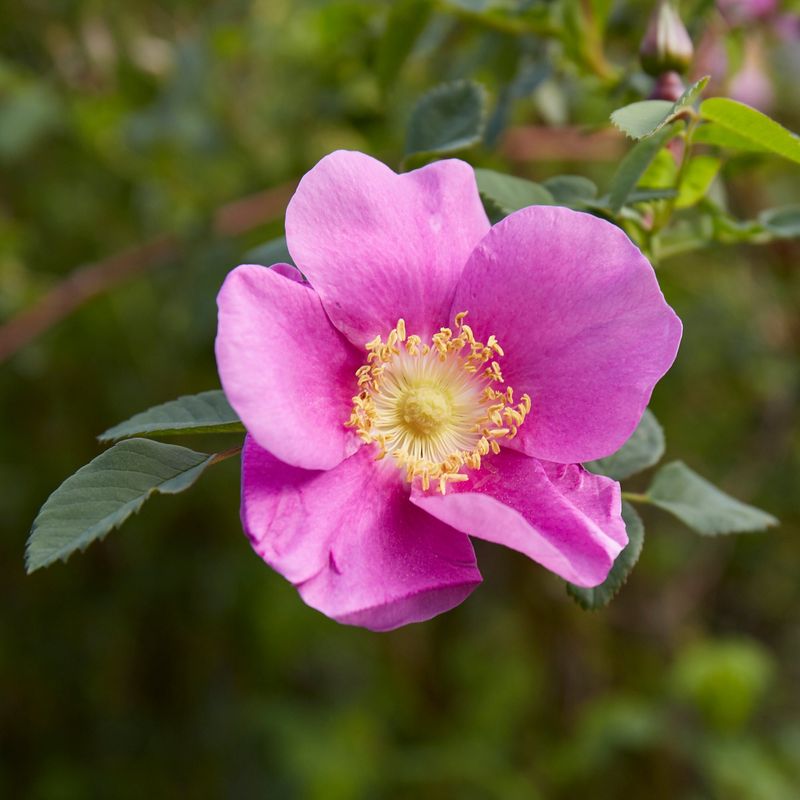
Fragrant pink blooms and bright red hips make Nootka Rose a delightful addition to shady Oregon gardens, especially near the coast.
This native rose tolerates partial shade and thrives in sandy or loamy soil, though it adapts to other conditions too.
In late spring or early summer, single pink flowers open, releasing a sweet, classic rose scent that attracts bees and butterflies.
After flowering, round red hips develop and persist through winter, providing food for birds and adding cheerful color.
Nootka Rose grows three to six feet tall and spreads slowly by suckers, forming loose, informal thickets over time.
Its thorny stems and dense growth make it useful as a natural barrier or hedge.
The shrub’s green leaves turn yellow or orange in fall, adding seasonal interest.
Nootka Rose needs regular water during its first year but becomes more drought-tolerant once established.
Prune in late winter to remove old canes or control spread.
You can also harvest the hips for tea or jelly, as they are rich in vitamin C.
Nootka Rose’s fragrant flowers and wildlife value make it a wonderful choice for Oregon gardeners who want beauty and function in one tough, adaptable shrub.