7 Simple Tricks North Carolina Gardeners Use To Keep Geraniums Blooming All Season
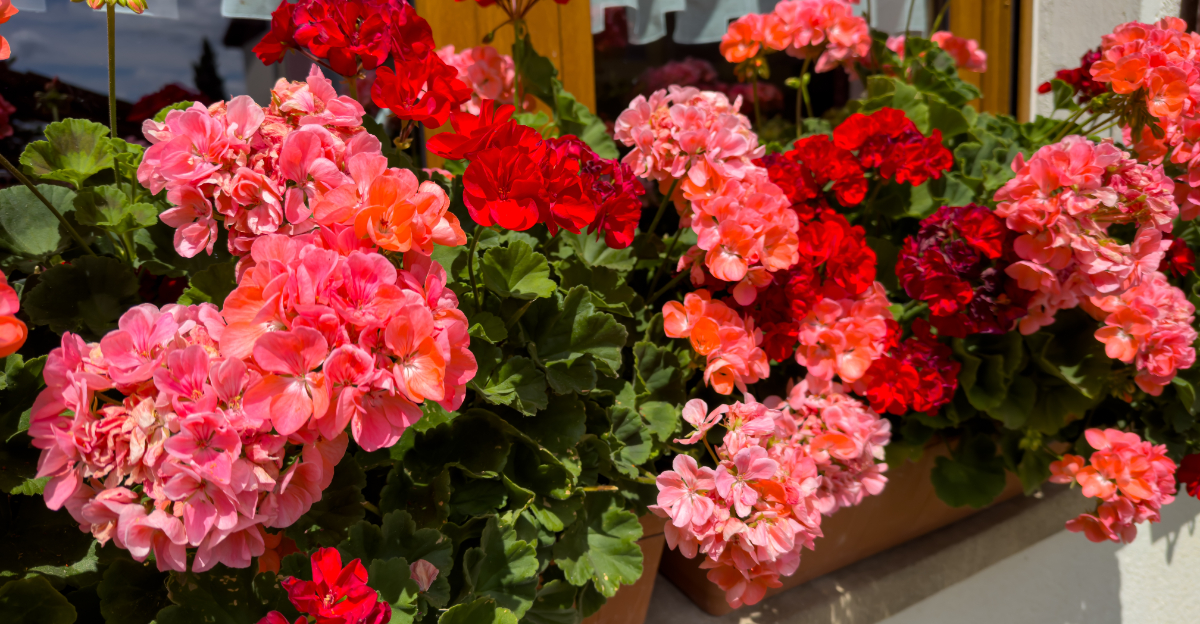
Geraniums are a favorite in North Carolina for a reason. Their bright, cheerful blooms instantly lift the look of porches, containers, and garden beds, and they are known for being easy to grow.
But keeping them covered in flowers all season takes a little more know how than simply planting and waiting. Our hot summers, sudden rain, and long growing season can either help geraniums shine or slow them down if conditions are not quite right.
The good news is local gardeners have figured out exactly what works in this climate. With a few smart techniques, you can encourage nonstop blooms, stronger plants, and richer color from spring through fall.
If you want fuller, healthier geraniums that keep producing month after month, you are about to discover the simple methods North Carolina gardeners rely on for truly stunning displays.
1. Provide Full Sun With Light Afternoon Protection In Extreme Heat
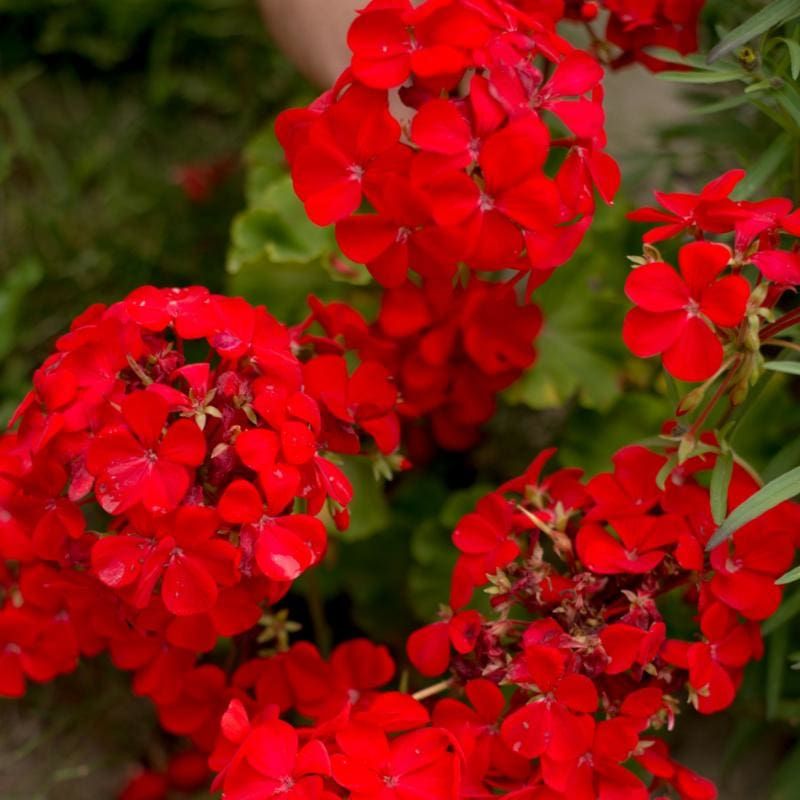
Sunlight fuels flower production in geraniums, making bright conditions essential for abundant blooms. These plants naturally crave at least six hours of direct sun daily to perform their best.
North Carolina’s generous sunshine provides ideal conditions for most of the growing season.
However, our summer afternoons can become intensely hot, especially in July and August. Temperatures climbing into the 90s can stress even sun-loving plants.
When geraniums experience prolonged extreme heat, they may pause blooming temporarily to conserve energy.
Strategic placement makes all the difference in our climate. Morning sun gives plants the energy boost they need for vigorous growth.
Positioning containers or beds where they receive bright light until early afternoon works wonderfully. A location offering light filtered shade during the hottest hours helps plants stay comfortable.
Geraniums near east-facing walls or under high tree canopies often perform beautifully. The dappled protection reduces stress without limiting overall light exposure.
Plants maintain their blooming momentum rather than entering survival mode during heat waves.
Container gardeners enjoy flexibility in adjusting plant positions. Moving pots to slightly shadier spots during extreme weather protects blooms.
Once temperatures moderate, returning them to full sun encourages continued flower production. This simple adjustment keeps plants happy throughout our variable summer weather patterns.
2. Deadhead Spent Blooms Regularly
Flowers naturally complete their cycle by forming seeds after blooming finishes. Geraniums follow this pattern, directing considerable energy toward seed development once petals fade.
This biological priority shifts resources away from producing new flowers, gradually reducing the overall bloom display.
Removing spent blooms interrupts this cycle in a beneficial way. The plant receives a clear signal to keep flowering rather than focusing on reproduction.
This simple maintenance task dramatically extends the blooming period throughout the season.
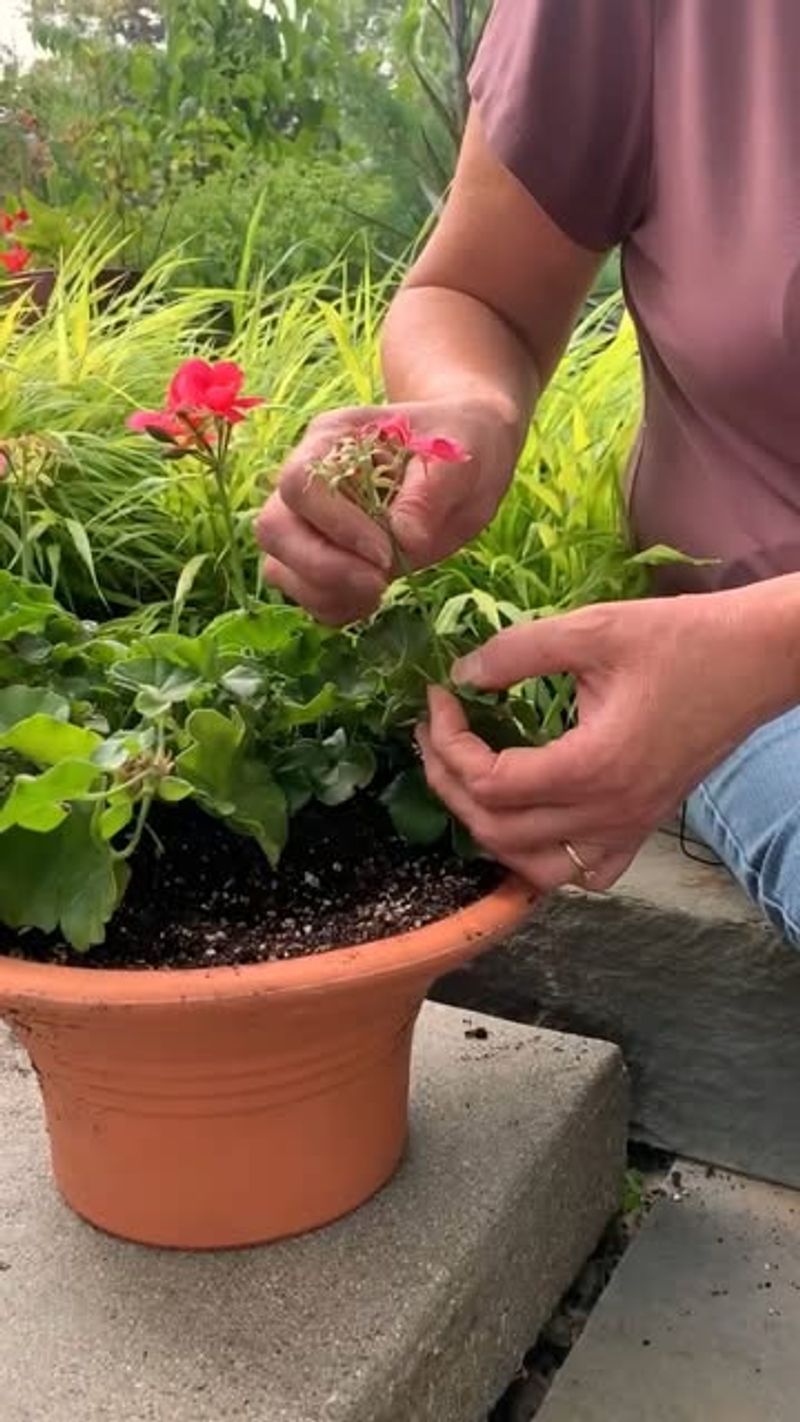
The process takes just minutes but delivers impressive results. Grasp each faded flower cluster where it meets the stem.
Pinch or snip cleanly just above the first set of healthy leaves. The stem will soon sprout fresh growth and new flower buds.
Checking plants twice weekly works well for most gardeners. Some vigorous varieties may need attention more frequently during peak growing periods.
Regular inspection becomes a pleasant routine that keeps you connected with your garden’s progress.
Timing matters less than consistency with this technique. Early morning sessions feel refreshing during warm weather.
Evening rounds offer a peaceful way to unwind after busy days. Either approach keeps plants looking tidy while encouraging continuous flower production.
The visual improvement happens quickly. Within days, plants respond with renewed vigor and fresh buds.
This responsive nature makes geraniums particularly rewarding for gardeners who enjoy active plant care.
3. Allow Soil To Dry Slightly Between Watering
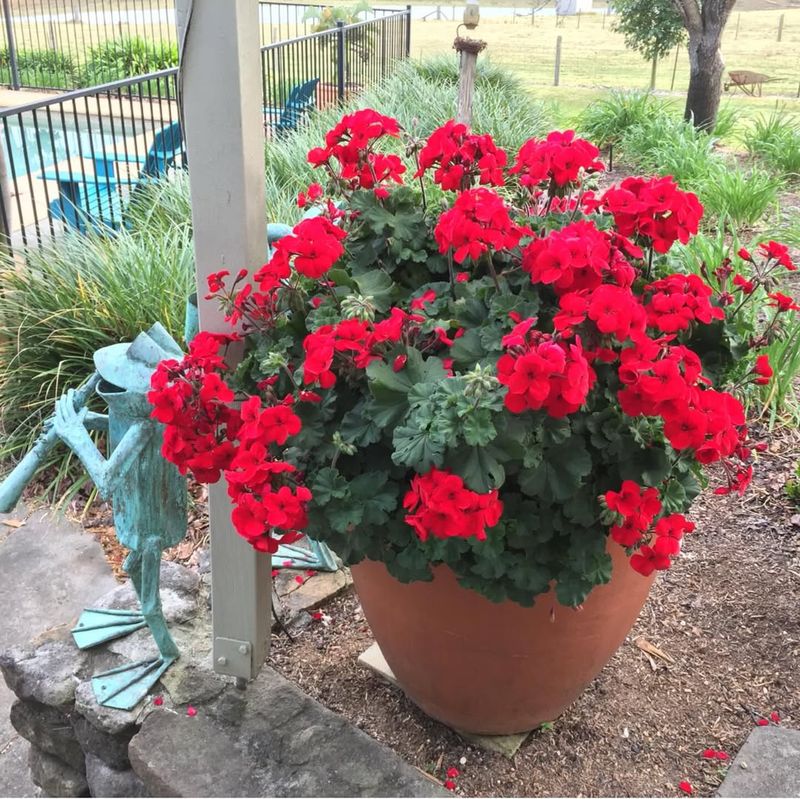
Roots need both moisture and oxygen to function properly. When soil stays constantly saturated, air pockets fill with water, limiting oxygen availability.
Geraniums particularly dislike this condition, which can compromise their root health and reduce blooming performance significantly.
These Mediterranean natives evolved in regions with periodic dry spells. Their root systems adapted to prefer moderate moisture with good drainage between waterings.
Mimicking these natural conditions produces the healthiest plants with the most prolific flowering.
Testing soil moisture takes just seconds and prevents problems. Insert your finger about two inches into the soil near the plant base.
If it feels dry at that depth, watering time has arrived. Moist soil means the plant has adequate water for now.
Container geraniums dry faster than those planted in beds. Pots in full sun may need daily attention during hot weather.
Garden beds typically require watering two or three times weekly, depending on rainfall and temperatures.
Water thoroughly when you do irrigate. Light sprinkling encourages shallow root development, making plants less resilient.
Deep watering promotes strong root systems that support vigorous growth and abundant blooms.
Proper drainage matters as much as watering frequency. Containers need holes allowing excess water to escape freely.
Garden soil benefits from organic matter that improves structure while maintaining good drainage. These conditions help geraniums flourish throughout our growing season.
4. Fertilize Lightly And Consistently
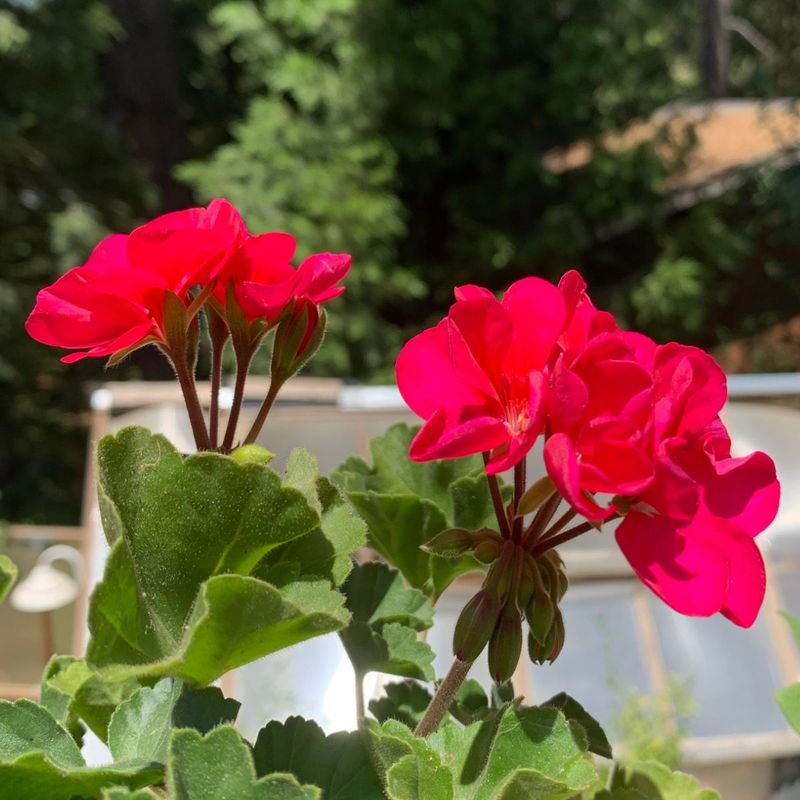
Continuous blooming demands steady nutrition throughout the growing season. Each flower cluster requires energy and nutrients to develop fully.
Without adequate feeding, plants gradually exhaust soil nutrients, leading to smaller blooms and reduced flower production over time.
Balanced nutrition supports all aspects of plant health simultaneously. Nitrogen encourages lush foliage growth.
Phosphorus promotes robust root development and flower formation. Potassium strengthens overall plant structure and stress resistance.
A balanced formula with equal numbers works beautifully for geraniums. Look for products labeled 10-10-10 or 20-20-20 for reliable results.
These provide all essential nutrients in proportions that support healthy growth without promoting excessive leafy growth at the expense of blooms.
Application frequency matters more than heavy feeding. Light applications every two weeks during active growth maintain steady nutrient availability.
This approach prevents the feast-or-famine cycle that can stress plants and interrupt blooming patterns.
Water-soluble fertilizers offer convenience and quick nutrient delivery. Mix according to package directions, then apply during regular watering sessions.
The dissolved nutrients reach roots immediately, supporting ongoing flower production.
Slow-release granular options provide another excellent approach. These products gradually release nutrients over several weeks or months.
One application can feed plants for an extended period, reducing maintenance while ensuring consistent nutrition. Either method works well when used regularly throughout the season.
5. Trim Leggy Growth To Encourage New Blooms
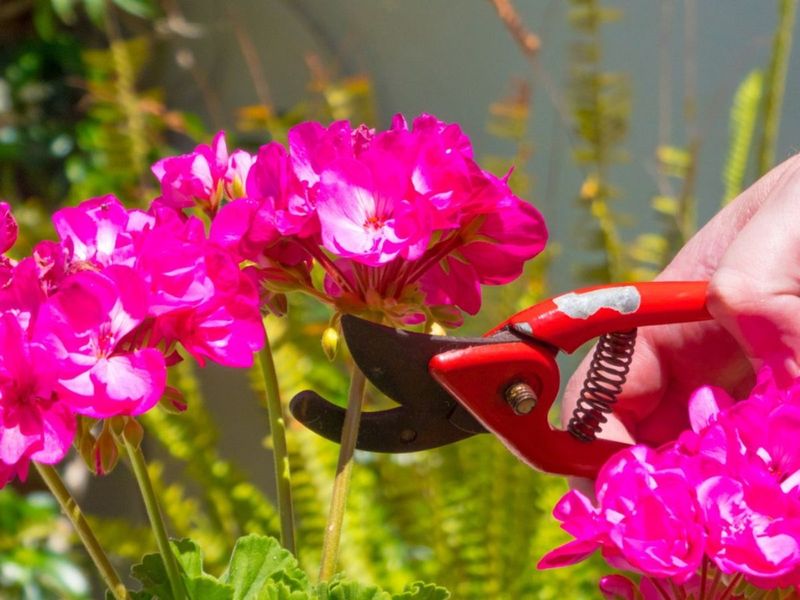
Plants naturally stretch toward light sources, sometimes developing elongated stems with sparse foliage. This growth pattern becomes more pronounced as the season progresses.
Geraniums may lose their compact shape, becoming tall and sparse rather than full and bushy.
Strategic trimming redirects growth energy in beneficial ways. When you remove stem tips, dormant buds lower on the plant activate and begin growing.
This branching response creates fuller plants with more potential flowering sites. The best time for pruning arrives when plants show active growth. Spring and early summer offer ideal opportunities to shape plants.
Light trimming can continue throughout the season as needed to maintain attractive form. Cut stems back by about one-third their length for moderate reshaping. More aggressive pruning works well for severely leggy specimens.
Make cuts just above leaf nodes where new shoots will emerge most readily. Sharp, clean tools make the job easier and healthier for plants. Bypass pruners create clean cuts that heal quickly.
Sterilizing blades between plants prevents spreading potential problems. Plants respond within days, producing fresh shoots along trimmed stems. These new branches soon develop flower buds, actually increasing total bloom production.
The fuller growth habit also improves overall plant appearance, creating more attractive displays in containers and beds. Regular light trimming throughout the season maintains ideal plant shape while maximizing flowering potential.
6. Ensure Good Airflow Around Plants
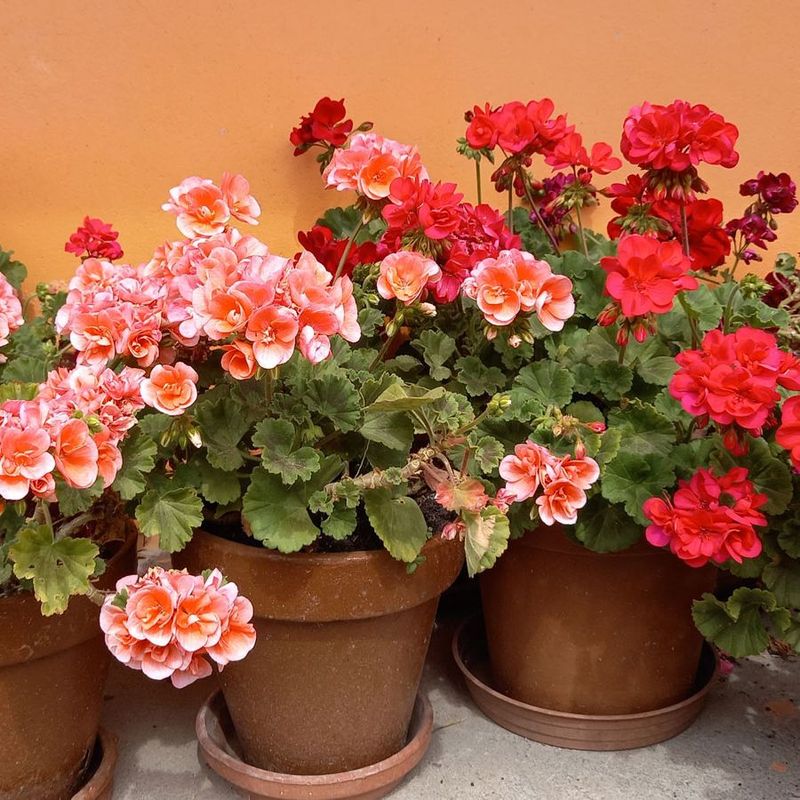
North Carolina summers bring warmth and humidity that plants must navigate successfully. When foliage stays damp for extended periods, conditions favor problems that can interrupt blooming and affect plant vigor.
Proper spacing and placement help moisture evaporate quickly, keeping plants healthier. Air movement around leaves and stems serves multiple beneficial purposes. It carries away excess moisture that accumulates on plant surfaces.
Good circulation also moderates temperatures around foliage, reducing heat stress during hot afternoons.
Spacing requirements vary with plant size and growth habit. Container geraniums need several inches between pots for adequate air movement.
Garden plantings benefit from spacing individual plants twelve to eighteen inches apart at installation time.
Location choices influence airflow significantly. Open areas receive natural breezes that keep air moving around plants.
Positions against solid walls or in enclosed corners may trap humid air, creating less favorable conditions.
Overcrowding creates problems even with initially proper spacing. As plants grow larger throughout the season, their expanding foliage can restrict airflow between specimens.
Periodic evaluation helps identify situations where plants would benefit from increased spacing.
Container gardens offer easy adjustment options. Simply moving pots farther apart improves conditions immediately.
Garden beds may require thinning or transplanting some specimens to achieve better spacing. These adjustments pay dividends in healthier plants with sustained blooming performance throughout our warm, humid growing season.
7. Remove Yellowing Or Damaged Leaves Promptly
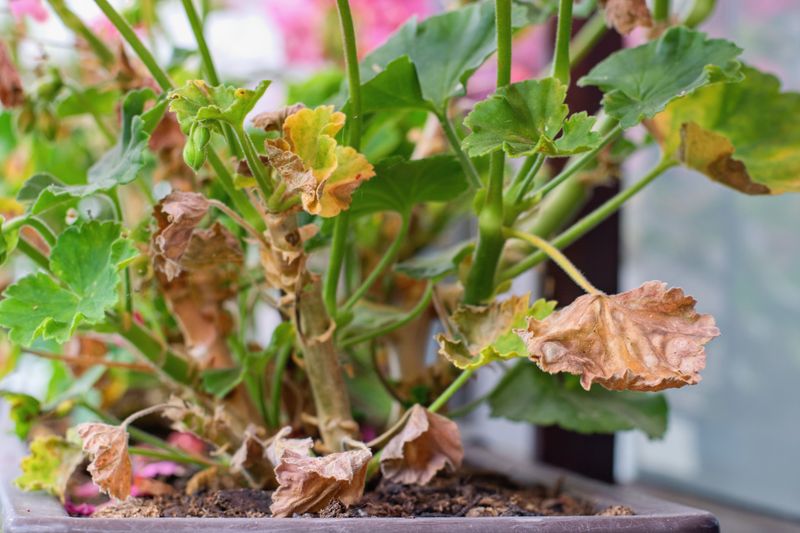
Lower leaves naturally age as plants grow and develop new foliage above. These older leaves gradually yellow and lose their vigor as the plant reallocates resources to younger, more productive growth.
This process represents normal plant development rather than a problem requiring concern.
However, keeping aging foliage attached serves no beneficial purpose. These leaves contribute little to the plant’s energy production through photosynthesis.
They actually consume resources during the gradual decline process, diverting energy that could support flowering instead.
Prompt removal offers several practical advantages. It improves the plant’s appearance immediately, creating a tidier, more attractive display.
Removing declining foliage also eliminates potential sites where problems might develop in our humid climate.
The removal process takes minimal time and effort. Grasp each yellowing leaf near its base where it connects to the main stem.
Pull gently but firmly, and most leaves detach cleanly. Stubborn ones can be snipped with small scissors or pruners.
Weekly inspection during regular watering provides perfect opportunities for this maintenance. A quick scan reveals any yellowing or damaged leaves that need attention.
Removing just a few leaves each week prevents accumulation of declining foliage.
This simple grooming practice keeps plants channeling energy into productive growth and flower production. The cleaner appearance also makes it easier to spot any developing concerns early.
Combined with other care techniques, regular leaf removal contributes to sustained blooming throughout our extended growing season.