7 Simple Ways To Get Begonias Blooming Indoors In Georgia
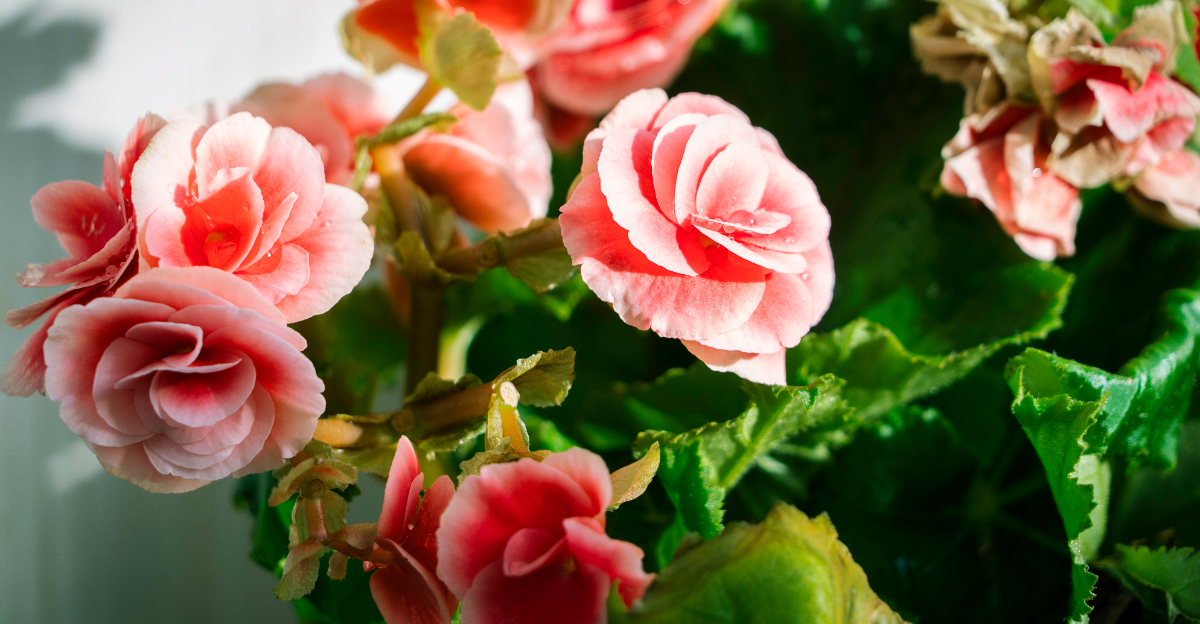
Why do begonias grow plenty of leaves indoors but never seem to bloom? This is a common frustration in Georgia homes during cooler months.
At first glance, nothing looks wrong. The plant stays green, stems keep growing, and leaves appear healthy.
But indoor conditions quietly interfere with flowering. Light shifts, air dries out, and small changes add up faster than most people realize.
The good news is begonias don’t need complicated care to bloom indoors. A few simple adjustments usually make the difference.
These tips work best for flowering begonias commonly grown indoors, such as Rieger, wax, and similar blooming varieties.
1. Place Begonias Where They Get Bright, Indirect Light
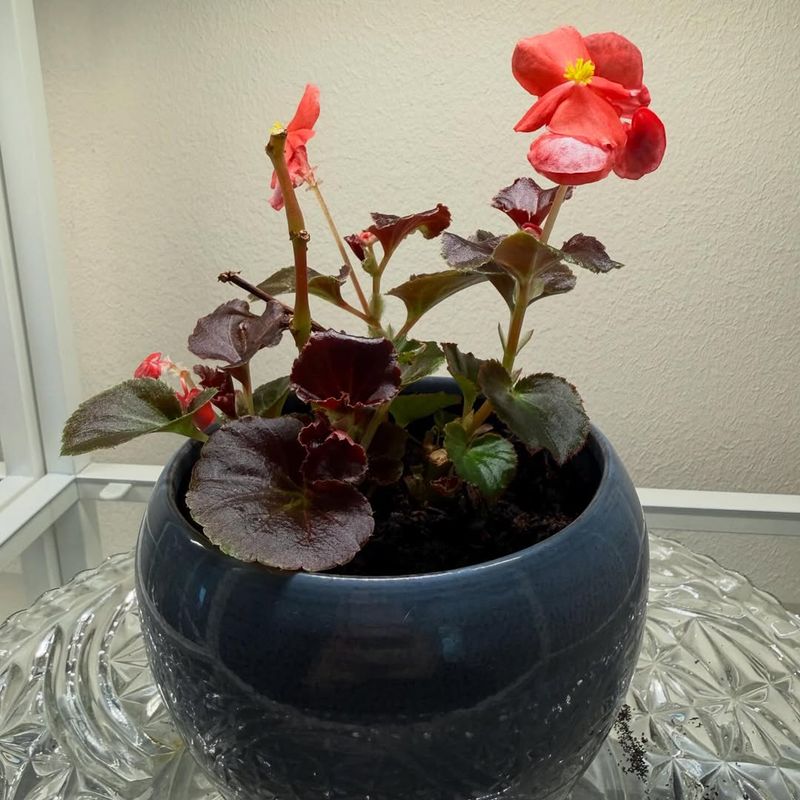
Without enough bright, indirect light, begonias simply won’t bloom. Begonias love brightness but can’t handle the intense direct rays that Georgia sun delivers through south-facing windows during peak afternoon hours.
When sunlight hits the leaves directly for extended periods, you’ll notice scorched edges and faded foliage instead of the vibrant blooms you’re hoping for.
East-facing windows work beautifully because they provide gentle morning sun that energizes your plant without overwhelming it.
North-facing windows also do the job if they’re not blocked by trees or buildings that cut off too much natural light. Sheer curtains become your best friend when you want to use a bright south or west window, as they diffuse harsh rays while still allowing plenty of illumination through.
You can tell your begonia is getting proper light when new growth appears healthy and buds start forming at the tips of stems. Too little light results in leggy, stretched-out plants that produce mostly leaves and rarely any flowers, which defeats the whole purpose of growing these beauties indoors.
Georgia homes often have great natural light, so take advantage of it by rotating your pot every few days to ensure all sides get equal exposure.
If your space lacks adequate windows, consider adding a grow light designed for flowering plants to supplement what nature provides.
The goal is consistent, bright conditions that mimic the dappled shade begonias would enjoy under tree canopies in their natural habitat.
2. Keep Indoor Temperatures Steady Day And Night
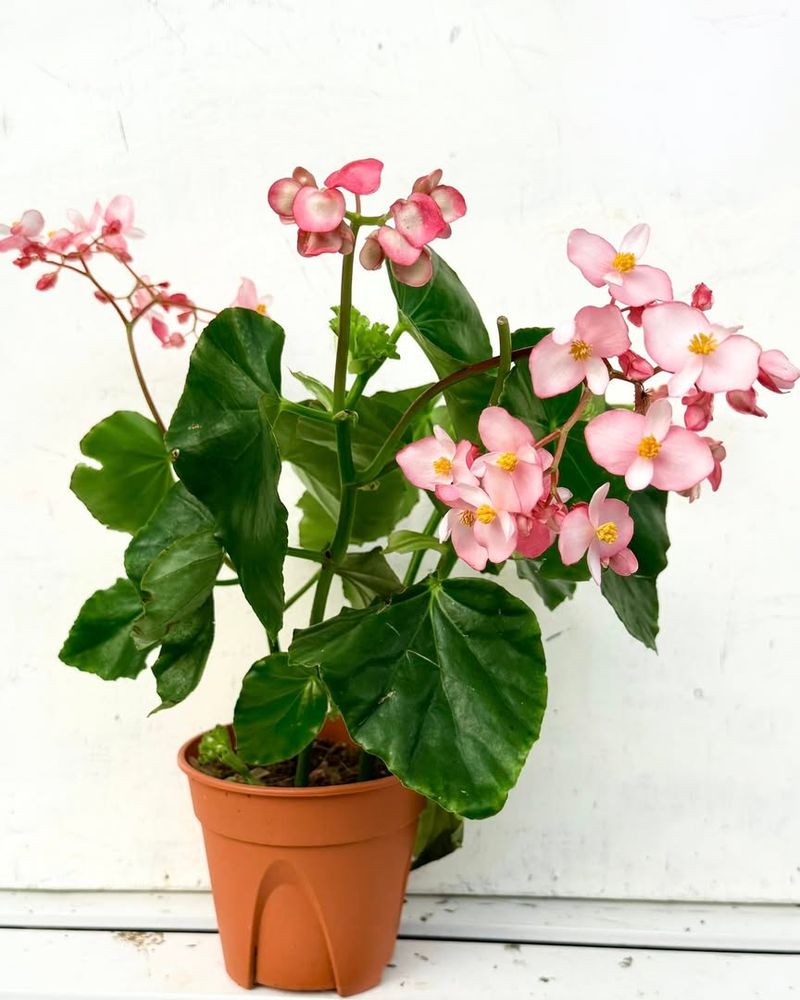
Temperature swings are one of the fastest ways to stop begonia blooms. These plants prefer daytime temperatures between 65 and 75 degrees Fahrenheit, with nighttime temps that don’t drop below 60 degrees.
Wild fluctuations confuse the plant’s internal systems and can halt bud production entirely, leaving you with a healthy-looking plant that simply won’t flower. Georgia winters rarely freeze inside heated homes, but spring and fall can bring temperature swings that stress your begonias if you’re not careful.
Avoid placing your pots near heating vents that blast hot air during winter months, as this creates an uncomfortable microclimate.
Similarly, keep them away from air conditioning units that create cold pockets during Georgia’s sweltering summer days.
Consistency is what triggers the hormonal responses that lead to flower formation, so maintaining steady conditions becomes essential. If you notice buds forming but then dropping off before they open, temperature stress is often the culprit behind this frustrating problem.
A simple room thermometer placed near your begonia helps you monitor conditions and make adjustments before problems develop. Most Georgia homes naturally stay within the ideal range, but awareness prevents those accidental placements that sabotage your blooming efforts.
Basements tend to stay cooler and attics warmer, so choose your growing location based on which rooms maintain the most stable environment throughout the day and night.
3. Water Only When The Top Soil Feels Dry
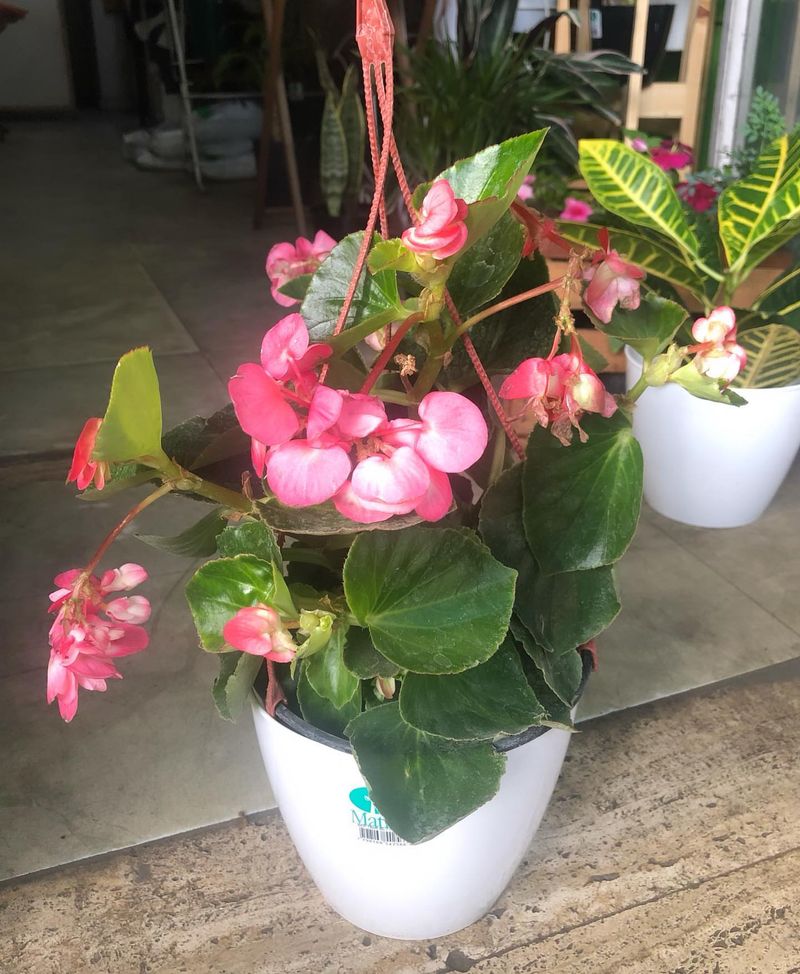
Overwatering is one of the most common reasons begonias refuse to flower. Begonias need consistent moisture but absolutely hate sitting in waterlogged soil that suffocates their roots and prevents blooming.
The top inch of potting mix should feel dry to your touch before you water again, which might mean watering twice a week in summer or once every ten days in winter. Georgia’s humidity levels affect how quickly soil dries out, so your schedule will vary depending on the season and your home’s conditions.
Stick your finger into the soil up to your first knuckle, and if it feels moist, wait another day or two before adding water.
When you do water, pour slowly until liquid drains from the bottom holes, then empty the saucer so the pot doesn’t sit in standing water.
Overwatering leads to root problems that show up as yellowing leaves and a complete lack of flower buds, even when everything else seems perfect. Underwatering causes wilting and bud drop, but begonias recover from dryness faster than they bounce back from soggy conditions.
Room-temperature water works better than cold tap water straight from the faucet, which can shock the roots and stress the plant. Pay attention to how quickly your specific pot dries out, and you’ll develop a feel for what your begonia needs without overthinking the process.
During Georgia’s humid summers, you might water less frequently than you expect, while winter heating can dry things out faster than you’d guess.
4. Increase Humidity Without Misting The Leaves
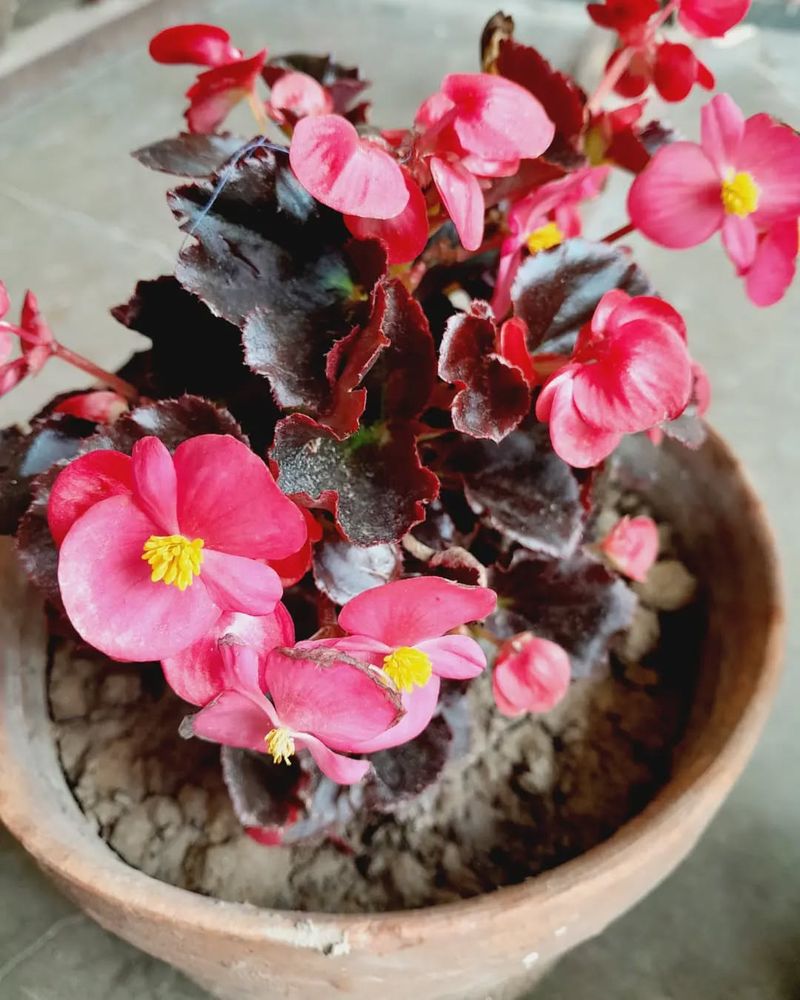
Low humidity quietly dries out buds before they ever open. These tropical beauties thrive when relative humidity stays between 50 and 60 percent, which is higher than most air-conditioned homes maintain.
Low humidity causes leaf edges to brown and buds to dry up before they ever open, robbing you of the colorful display you’re working toward.
The temptation to mist begonia leaves seems logical, but this practice actually invites fungal problems and water spots that damage foliage.
Instead, create humidity around your plant using methods that don’t wet the leaves directly and risk disease issues. A pebble tray works wonderfully: fill a shallow dish with stones, add water until it reaches just below the top of the pebbles, then set your pot on top.
As water evaporates, it creates a humid microclimate around your begonia without making the leaves damp. Grouping several plants together also raises humidity levels naturally, as they all release moisture through transpiration.
Small humidifiers designed for single rooms help tremendously during Georgia’s dry winter months when heating systems strip moisture from indoor air. Bathrooms and kitchens naturally have higher humidity, making them excellent locations if they also provide adequate light for your begonias.
You can test your home’s humidity with an inexpensive hygrometer, which gives you concrete numbers to work with rather than guessing whether conditions are right.
5. Use Well-Draining Potting Mix To Prevent Root Stress
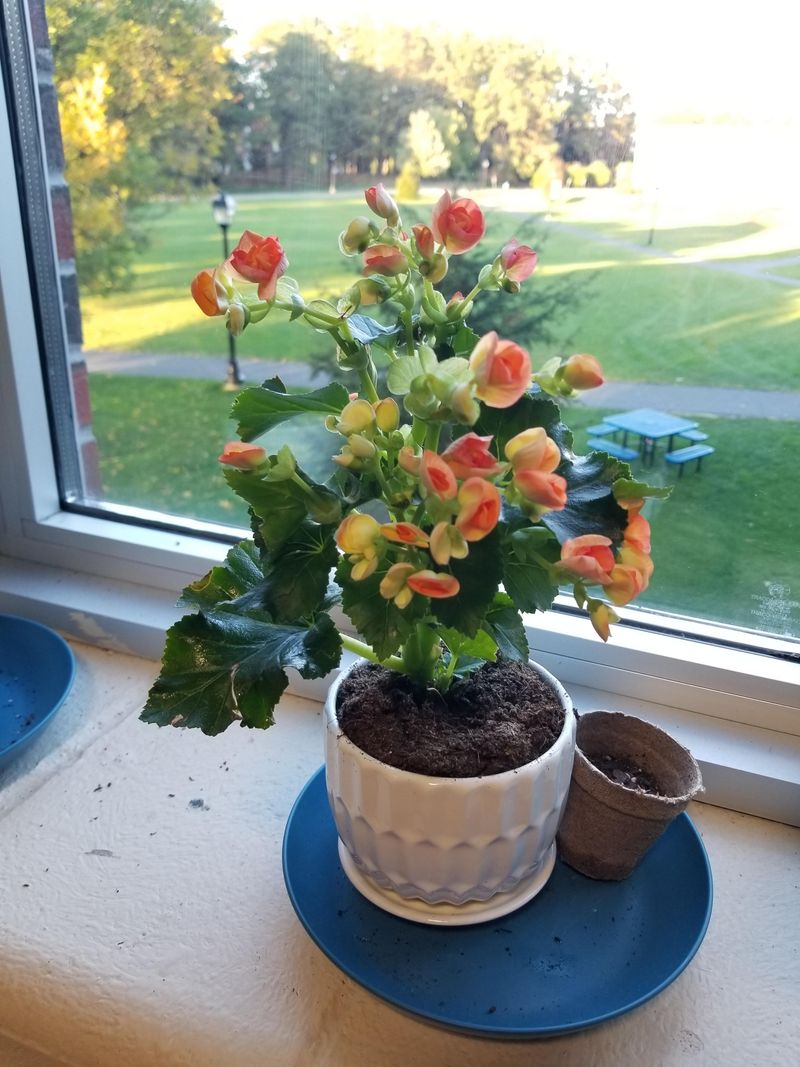
Poor drainage stresses begonia roots and shuts down flowering. Regular garden soil or heavy potting mixes compact too tightly in containers, creating an environment where roots struggle and flowers never develop.
Begonias need a light, airy medium that drains quickly yet retains enough moisture to keep roots hydrated between waterings. A commercial potting mix labeled for African violets or general houseplants usually provides the right texture and drainage characteristics.
Adding perlite or coarse sand to standard potting soil improves drainage if you’re mixing your own blend at home. The mix should feel fluffy and loose when you squeeze a handful, not dense and clumpy like clay-based products.
Good drainage becomes especially important in Georgia’s humid climate, where excess moisture can linger in pots and create problems.
Roots that sit in soggy conditions develop rot, which manifests as stunted growth and a complete absence of buds no matter what else you do right.
When repotting, choose containers with drainage holes in the bottom, as decorative pots without holes trap water and doom even the best soil mix. Fresh potting mix every year or two replenishes nutrients and maintains proper structure, giving your begonia the best foundation for producing abundant flowers.
If you notice water pooling on the surface when you irrigate or soil that stays wet for days, it’s time to repot with a better-draining medium.
6. Avoid Cold Drafts From Windows And Doors
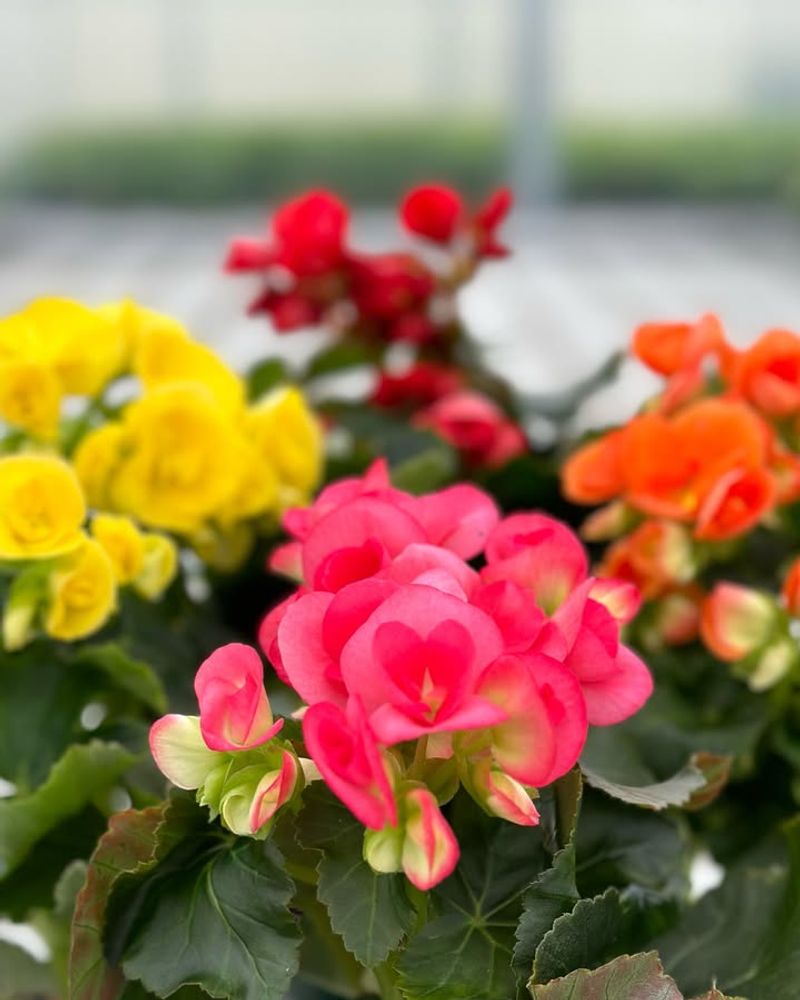
Cold drafts can stop blooms even in an otherwise healthy begonia. Begonias react poorly to sudden temperature drops and chilly air currents that sweep across their foliage and shock their systems.
A plant sitting near a frequently opened exterior door experiences repeated stress each time cold outdoor air rushes in, even if the exposure lasts only seconds. Similarly, older windows with poor seals leak cold air that creates invisible streams flowing across nearby surfaces, including your begonia’s leaves.
You might not feel these drafts yourself, but plants are far more sensitive to temperature changes than we are.
Buds that were forming nicely can abort and drop off when exposed to draft stress, leaving you wondering why your begonia won’t complete its flowering cycle.
Check for drafts by holding a lit candle near windows and doors on a cold day and watching for flame movement that indicates air leaks. Weather stripping and draft stoppers solve most of these problems inexpensively, protecting both your begonias and your heating bills.
Interior rooms away from exterior walls often provide more stable conditions, though you’ll need to ensure they still receive adequate light. During Georgia’s occasional cold snaps, moving your begonia a few feet away from windows at night prevents exposure to the coldest air.
Pay attention to where your plant sits relative to traffic patterns, and you’ll avoid the hidden stresses that prevent blooming despite your best care efforts.
7. Feed Lightly Once Active Growth Appears
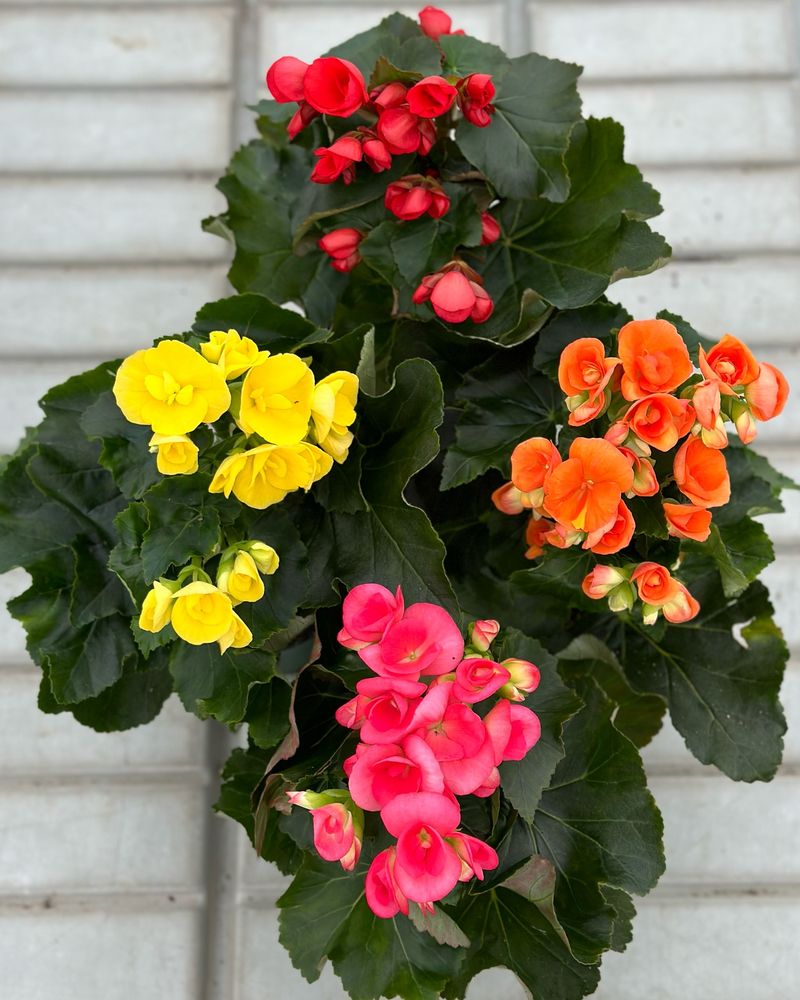
Begonias won’t bloom well without the right feeding at the right time. Feeding a dormant or stressed plant pushes unwanted growth and can actually damage roots, so wait until you see clear signs of active growing before starting your fertilization routine.
New leaves unfurling and stems lengthening tell you the plant is ready to use supplemental nutrients productively.
A balanced liquid fertilizer diluted to half the package-recommended strength works perfectly for begonias, which prefer gentle feeding over heavy applications.
Too much fertilizer causes salt buildup in the soil and leaf burn that looks like brown, crispy edges on otherwise healthy foliage. During active growth periods in spring and summer, feeding every two to three weeks provides steady nutrition without overwhelming the plant.
Choose a formula with equal or near-equal numbers for nitrogen, phosphorus, and potassium, such as 10-10-10 or 20-20-20. Phosphorus, the middle number, specifically supports flower production, so balanced formulas help begonias bloom rather than just producing leaves.
Georgia’s long growing season means your indoor begonias might stay active for many months, requiring consistent but light feeding throughout that time. Stop fertilizing in late fall when growth naturally slows, and resume in early spring when new activity begins again.
Water your begonia before fertilizing to prevent root burn, and always follow the dilution instructions to avoid concentration problems. Healthy, well-fed begonias reward you with more blooms and longer flowering periods than undernourished plants struggling to find nutrients in depleted soil.