Simple Ways To Tell A Raccoon Has Settled Into Your Ohio Garden

Raccoons are clever, adaptable animals, and once they take interest in an Ohio yard, the signs start showing quickly.
These nighttime visitors leave behind subtle clues—some easy to miss, others hard to ignore.
Gardeners may notice disturbed soil, overturned containers, missing vegetables, or tracks near water sources.
Raccoons are drawn to food scraps, bird feeders, and even pet dishes left outside, and once they find a reliable source, they tend to return.
Knowing how to spot early signs of raccoon activity helps homeowners protect gardens, secure attractants, and prevent long-term problems.
Understanding their habits makes it easier to discourage them before they become regular guests.
Overturned Trash Cans And Scattered Garbage

Raccoons have incredibly strong and dexterous paws that allow them to open latches, flip lids, and tear through bags with ease.
If you wake up to find your trash cans tipped over and garbage strewn across your lawn, a raccoon is likely the culprit.
They are nocturnal feeders, so this mess usually appears overnight.
Ohio homeowners often notice this pattern repeating several nights in a row once a raccoon discovers a reliable food source.
These animals have excellent memories and will return to spots where they have found meals before.
Raccoons are opportunistic eaters, which means they will dig through anything that smells remotely edible.
You might see chewed containers, torn plastic bags, and food scraps scattered everywhere.
To discourage them, secure your trash cans with bungee cords or heavy-duty locks.
Store bins in a garage or shed if possible until pickup day.
Cleaning up promptly and removing food odors will also help reduce their interest.
Persistent trash raiding is one of the clearest signs a raccoon has settled into your space and views your property as a regular dining spot.
Disturbed Garden Beds And Uprooted Plants
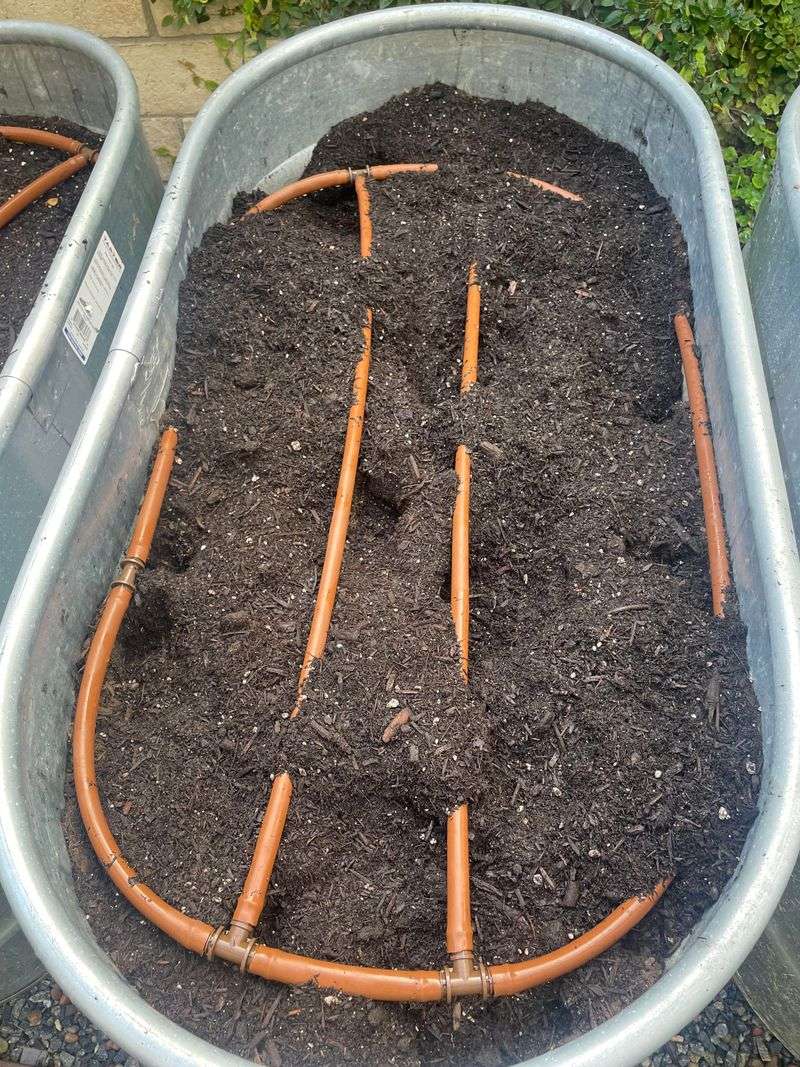
Your once-neat garden beds might start looking like a construction zone if raccoons have moved in.
These animals love to dig for grubs, worms, and insects hiding beneath the soil surface.
Their strong claws make short work of even firmly planted flowers and vegetables.
You will notice chunks of sod rolled back, holes scattered throughout your beds, and plants tipped over or completely uprooted.
Raccoons are not gentle gardeners—they tear through soil looking for tasty treats without any regard for your hard work.
Ohio gardens are particularly vulnerable in spring and summer when insect populations boom and raccoons are feeding young kits.
The damage often appears overnight and can be extensive across multiple garden areas.
Look for small handprint-like tracks in the disturbed soil, which are a signature sign of raccoon activity.
Their prints show five distinct toes and resemble tiny human hands.
To protect your plants, consider installing motion-activated sprinklers or placing chicken wire over vulnerable areas.
Reducing grub populations with natural treatments can also make your garden less appealing to hungry raccoons searching for an easy meal.
Empty Or Destroyed Bird Feeders
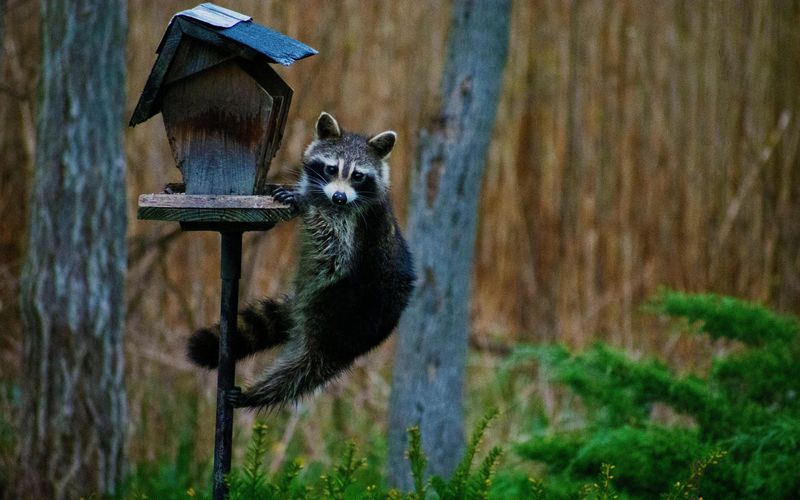
Bird feeders are like all-you-can-eat buffets for raccoons, and they will go to great lengths to access them.
If your feeder is frequently empty, knocked down, or even broken apart, a raccoon is probably responsible.
These clever animals can climb poles, jump from nearby branches, and manipulate feeders designed to keep out larger pests.
You might find your feeder lying on the ground with the bottom torn open or the perches bent and twisted.
Raccoons are strong enough to dismantle feeders that are not securely fastened or made from flimsy materials.
They are especially active during late evening and early morning hours, so the damage typically appears after dark.
Ohio bird lovers often report seeing raccoons hanging upside down from feeders or shaking them until seeds pour out.
To prevent this, use raccoon-proof feeders with weight-activated perches that close when heavier animals climb on.
Placing feeders on tall, smooth poles with baffles can also help keep raccoons from reaching them.
Bringing feeders inside at night is another effective solution.
Persistent raiding of bird feeders signals that a raccoon has claimed your yard as part of its nightly feeding route.
Visible Paw Prints Around Your Property

Raccoon tracks are unmistakable once you know what to look for.
Their prints look like miniature human hands with five long toes and visible claw marks.
The hind feet are larger than the front, and both leave clear impressions in soft soil, mud, or dust.
Check around garden beds, near water sources, along fence lines, and near trash cans for these telltale tracks.
Fresh prints will have sharp edges and clear details, while older ones may appear smudged or worn.
Ohio homeowners often spot raccoon tracks after rain or early in the morning when dew makes the ground soft.
You might also notice tracks on wooden decks, patios, or even on top of outdoor furniture if raccoons are using these surfaces to travel.
Measuring the tracks can help confirm your suspicions—raccoon front paws are about two inches long, and hind paws are roughly four inches.
The pattern usually shows the hind foot slightly ahead of or beside the front foot.
If you see these prints regularly in the same spots, it means a raccoon has established a routine path through your yard.
Documenting the tracks with photos can also help if you need to consult a wildlife professional about removal or deterrent strategies.
Unusual Noises At Night
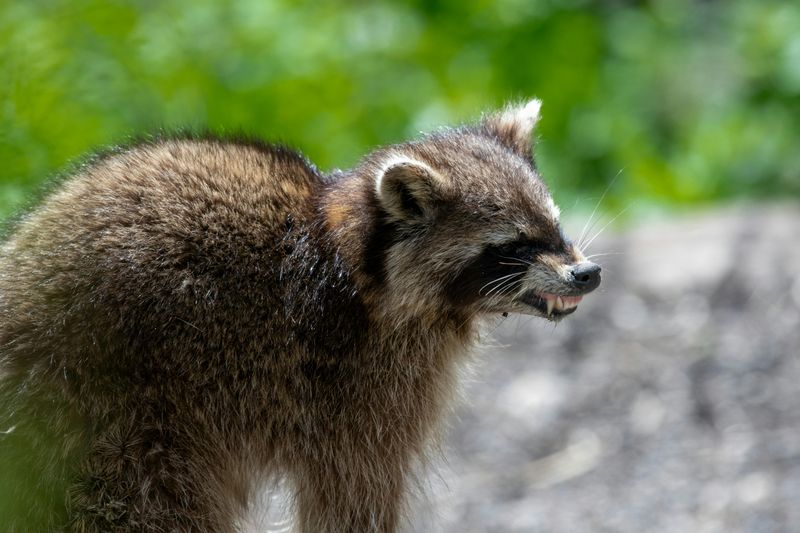
Raccoons are vocal animals, and if one has settled into your garden, you will probably hear it.
Common sounds include chattering, growling, hissing, and even purring-like noises.
Mother raccoons with babies are especially noisy, often calling to their young with high-pitched chirps and trills.
You might also hear rustling, thumping, or scratching sounds as raccoons move through bushes, climb fences, or explore structures like sheds and decks.
These sounds are most common between dusk and dawn when raccoons are most active.
Ohio residents sometimes mistake raccoon noises for cats fighting or other animals, but the variety and volume of sounds are usually distinctive.
If you hear repeated disturbances in the same area night after night, a raccoon has likely set up a den nearby.
Listen near attics, crawl spaces, chimneys, and hollow trees, as these are favorite nesting spots.
Raccoons can be surprisingly loud when they feel threatened or are communicating with each other.
Recording the sounds on your phone can help identify the source if you are unsure.
Persistent nighttime noise is a strong indicator that raccoons are not just passing through but have made your property part of their territory.
Droppings In Common Areas
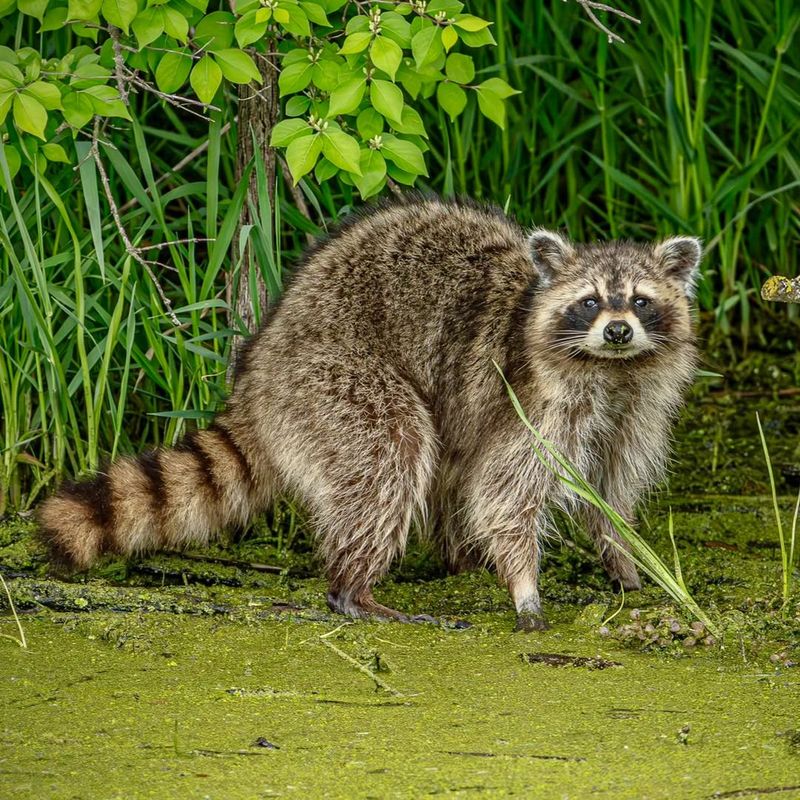
Raccoon droppings are one of the most obvious signs of their presence, though not the most pleasant to discover.
Their waste is tubular, dark, and typically two to three inches long, often containing visible seeds, berries, or insect parts.
Raccoons tend to use communal bathroom sites called latrines, so you will often find piles of droppings in the same spot.
Common latrine locations include flat surfaces like large rocks, logs, stumps, the base of trees, or even on top of sheds and decks.
Ohio homeowners should be cautious around these areas, as raccoon waste can carry harmful parasites and bacteria.
Never handle droppings directly—always wear gloves and a mask if you need to clean them up.
Fresh droppings are dark and moist, while older ones become dry and crumbly over time.
If you find a latrine site in your yard, it means a raccoon has been visiting regularly and considers your property safe territory.
Cleaning the area thoroughly with hot water and disinfectant can help discourage them from returning.
Covering the spot with gravel or moving objects they use as platforms can also help.
Repeated latrine use is a clear sign that a raccoon has settled in and feels comfortable enough to establish bathroom habits on your property.
Damaged Lawn With Rolled-Back Sod
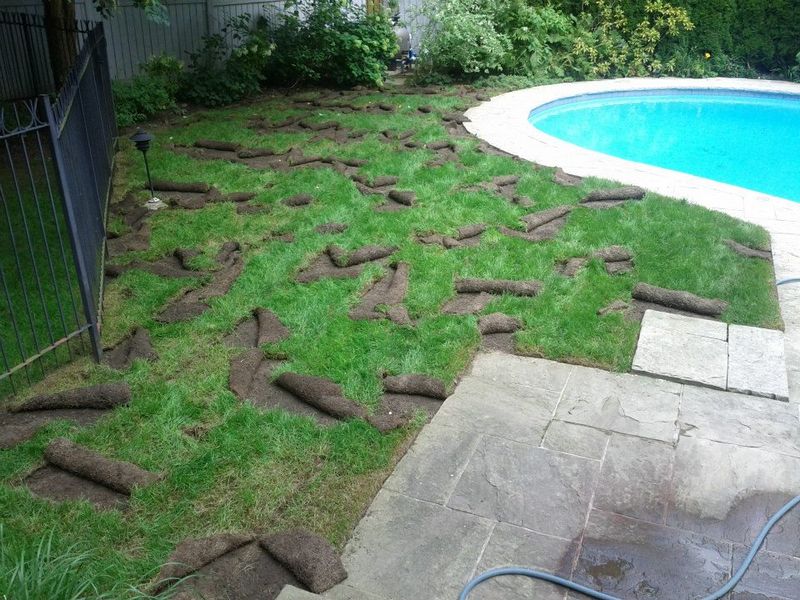
Picture waking up to find sections of your lawn peeled back like carpet rolls—this is classic raccoon behavior.
Raccoons use their powerful claws to roll back chunks of grass in search of grubs, beetles, and earthworms hiding underneath.
The damage often looks deliberate and can cover large areas in a single night.
Ohio lawns are especially vulnerable during late summer and early fall when grub populations peak and raccoons are fattening up for winter.
The rolled sod usually reveals bare soil underneath and may be accompanied by shallow holes where they dug deeper for prey.
This behavior is different from mole damage, which creates raised tunnels, or skunk damage, which leaves smaller, cone-shaped holes.
Raccoon damage is more aggressive and widespread, often affecting multiple spots across your yard.
Repairing the lawn involves pressing the sod back down, watering it well, and treating the grub problem to remove the food source.
You can use beneficial nematodes or milky spore to reduce grub populations naturally.
Installing motion-activated lights or sprinklers can also startle raccoons and discourage them from returning.
If the damage continues night after night, it confirms that a raccoon has made your lawn a regular hunting ground and feels comfortable enough to keep coming back.
Dens In Sheds, Attics, Or Crawl Spaces
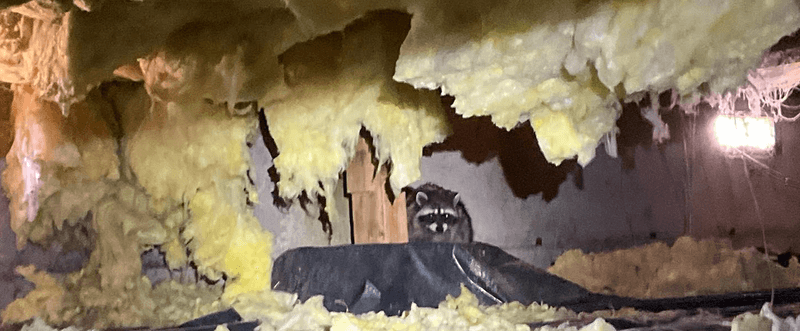
Raccoons are always on the lookout for safe, sheltered spots to rest during the day and raise their young.
Attics, sheds, crawl spaces, and areas under decks or porches are ideal den sites.
If a raccoon has moved into one of these spaces, you will likely notice signs like torn insulation, scattered nesting materials, and strong odors.
Ohio homeowners often discover raccoon dens in spring when females are preparing to give birth or in fall when they seek warm winter shelter.
You might hear scratching, thumping, or vocalizations coming from walls, ceilings, or enclosed spaces.
Entry points can be surprisingly small—raccoons can squeeze through openings as narrow as four inches.
Check for torn vents, broken soffits, loose boards, or gaps around chimneys and roof edges.
Once inside, raccoons can cause significant damage by tearing insulation, chewing wires, and leaving behind waste.
The smell from a raccoon den is often the first clue, as their urine and droppings create a distinct, musky odor.
If you suspect a den on your property, contact a wildlife professional for safe removal, especially if babies are present.
Sealing entry points after removal is critical to prevent future invasions and protect your home from further damage.
Raided Compost Bins And Pet Food Bowls

Compost bins and outdoor pet food dishes are irresistible attractions for hungry raccoons.
If you leave pet food outside overnight or have an unsecured compost pile, expect raccoons to help themselves.
They have an excellent sense of smell and can detect food from far away.
You will notice empty bowls, tipped-over containers, and scattered compost materials if raccoons are regularly raiding these areas.
They are not picky eaters and will consume everything from fruit peels to leftover kibble.
Ohio gardeners who compost often find their bins knocked over or torn open, with contents spread across the yard.
Raccoons will dig through layers of material to reach anything remotely edible, leaving a mess behind.
To prevent this, bring pet food bowls inside at night and secure compost bins with tight-fitting lids or latches.
You can also sprinkle cayenne pepper or ammonia-soaked rags around the area to deter raccoons with strong scents they dislike.
Storing compost in enclosed bins rather than open piles makes it harder for raccoons to access.
If raiding happens repeatedly, it shows that a raccoon has added your property to its nightly feeding circuit and knows exactly where to find easy meals without much effort.