9 Small Agaves That Handle Arizona Heat In Containers
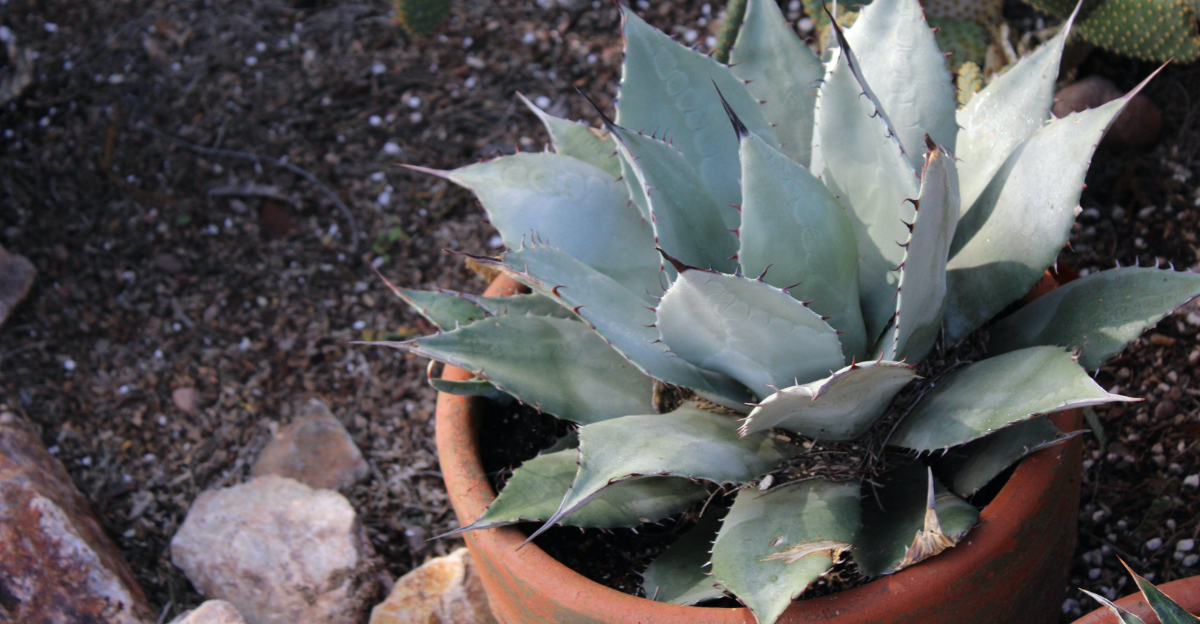
Containers in Arizona can either become a constant battle or your strongest design feature, and the difference often comes down to plant choice.
You might love the look of soft foliage, but once the sun starts reflecting off concrete and walls, only the toughest plants stay sharp.
That is exactly why small agaves deserve your attention.
They stay compact, sculpted, and steady even when the heat intensifies. Small agaves hold their shape in containers while many other plants stretch, burn, or collapse.
In Arizona conditions, that kind of reliability matters.
If you want pots that look clean, structured, and built for the climate, these small agaves can handle the pressure and still make your patio or entry feel strong and intentional.
1. Agave Parryi Compact Form Perfect For Pots
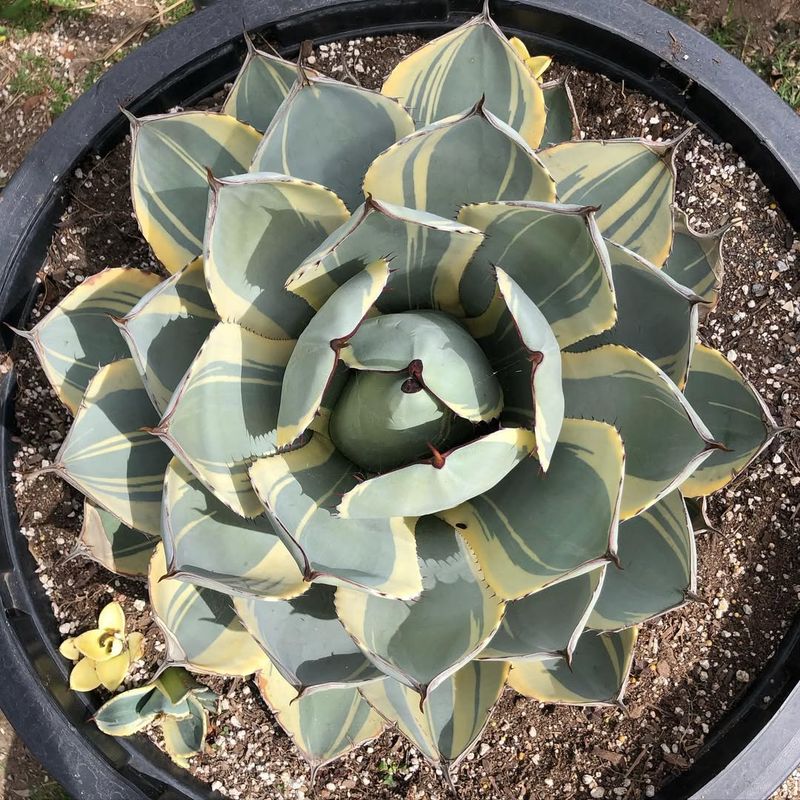
Parry’s agave grows naturally in Arizona mountains, which means it already knows how to handle temperature swings and intense sunlight.
The compact form stays under 18 inches across, creating a tight rosette that looks like someone designed it with a compass and ruler.
Blue-gray leaves end in sharp black spines that catch the light and add drama without taking up extra space. This variety doesn’t spread or produce excessive offsets, so your pot won’t become overcrowded after a few seasons.
Water drains quickly through the leaves, preventing the rot issues that plague other succulents during monsoon season.
Place it where afternoon sun hits hardest and watch it thrive while everything else looks stressed. The root system stays relatively shallow, which works perfectly in containers that are wider than they are deep.
You’ll find this agave tolerates neglect better than attention, making it ideal for Arizona gardeners who travel during summer months.
Temperature extremes don’t faze it, and the compact growth means you can group several in different sized pots for a layered desert display.
Repotting becomes necessary only every three to four years, and even then, the plant stays manageable enough to handle without heavy equipment.
2. Agave Victoriae-Reginae Striking Patterns That Withstand Sun
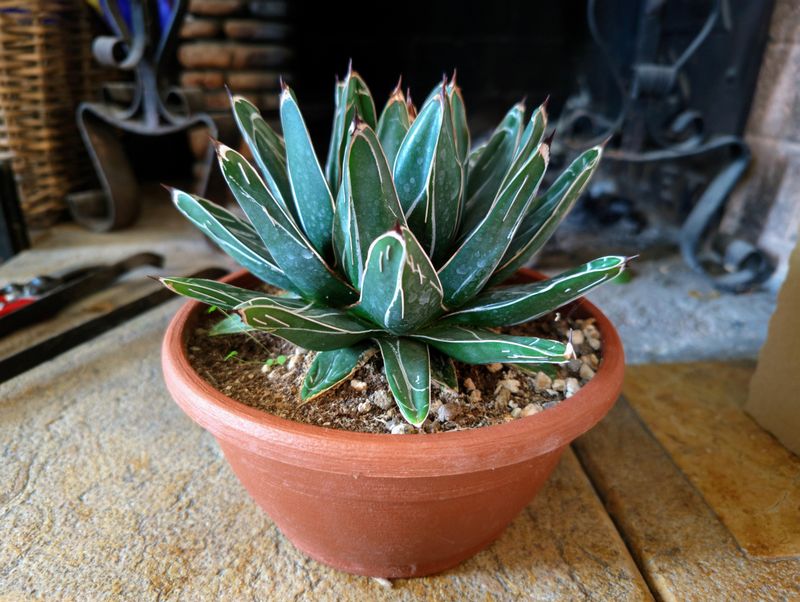
White lines painted across dark green leaves make this agave look hand-decorated, yet those markings are completely natural. Each leaf forms a perfect triangle that locks into place with its neighbors, creating geometry that seems too precise to be real.
Full Arizona sun intensifies the contrast between the white margins and green centers, making the patterns more dramatic as temperatures climb.
The plant grows slowly, reaching about 12 inches tall and wide over several years, which means your container choice today will work for a long time.
No offsets appear around the base to clutter the clean lines, keeping the focus on that single perfect rosette.
Summer heat above 115 degrees doesn’t fade the leaf patterns or cause the tips to brown like it does with so many other container plants. The thick leaves hold moisture efficiently, so you’ll water less frequently than you expect.
This agave prefers afternoon sun that would scorch most houseplants, making it perfect for west-facing patios and balconies across Phoenix and Tucson.
Root growth stays compact and controlled, never breaking through drainage holes or pushing the plant up out of the soil.
The formal appearance works equally well in modern minimalist settings or traditional Southwest landscapes, adapting to whatever style surrounds it.
3. Agave Desmettiana Small Size With Big Heat Tolerance
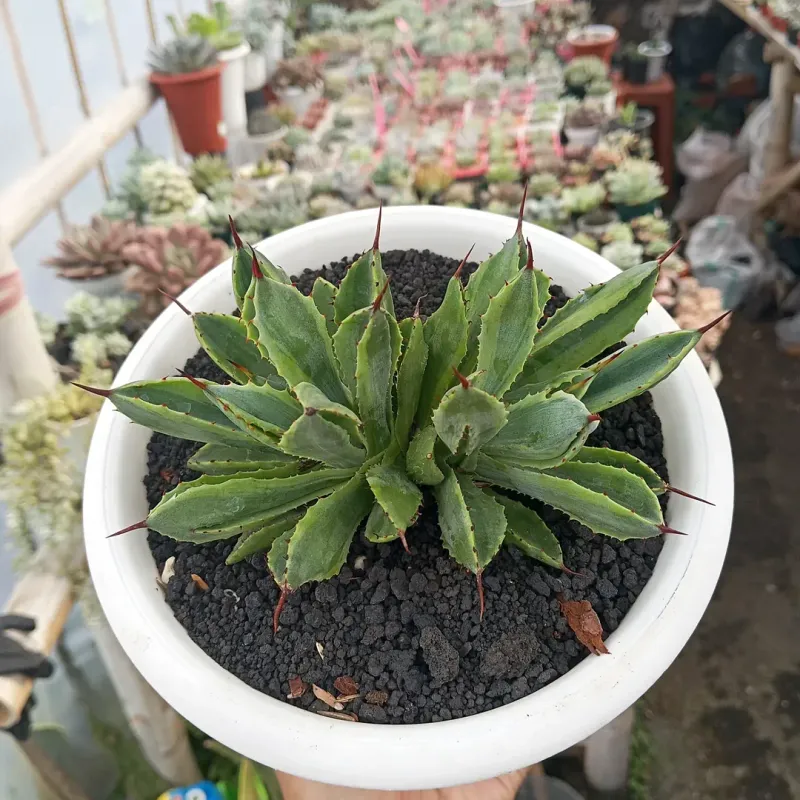
Smooth leaf edges without the threatening spines make this agave safe near walkways and seating areas where people actually move around.
The blue-green color stays consistent through Arizona’s hottest months, never fading to that tired gray-green that signals plant stress.
Growth reaches about 2 feet across in containers, filling the space without becoming unmanageable or requiring constant trimming. Leaves arch gracefully instead of standing rigid and upright, creating softer lines that work well in contemporary outdoor spaces.
Container life actually keeps this agave smaller than it would grow in the ground, which works to your advantage on patios with limited square footage.
Temperatures that send most plants into survival mode barely register with this species, which continues producing new leaves even during July and August.
The lack of sharp spines means you can position it closer to doors and furniture without worrying about torn clothing or scratched skin.
Water needs drop dramatically once the plant settles into its pot, sometimes going weeks between drinks during cooler months.
Monsoon rains don’t cause the leaf rot problems common with other succulents because water channels quickly away from the crown.
You can pair this agave with spiny varieties for textural contrast, knowing it won’t create the same hazards while still delivering that desert aesthetic Arizona gardeners want.
4. Agave Geminiflora Twisting Leaves That Thrive In Containers
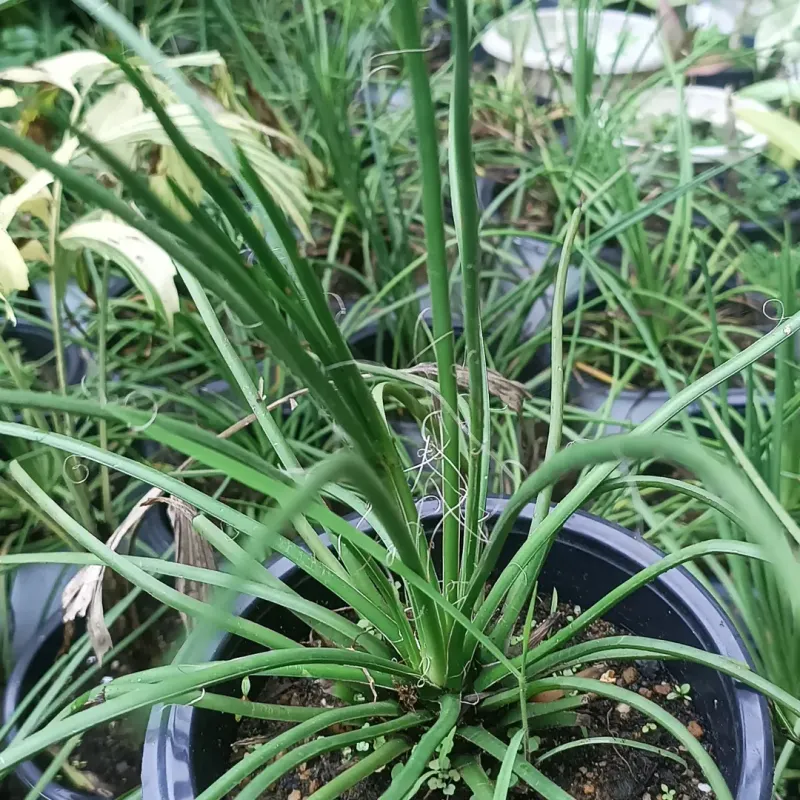
Thin leaves covered in white threads create a fountain effect that looks nothing like typical agaves. Each leaf curls and twists as it grows, building a spherical form that reaches about 18 inches in all directions.
Those thread-like fibers catch morning light and create interesting shadows throughout the day, adding movement to what could otherwise be a static container display. Arizona heat doesn’t stress this agave or cause the threads to dry up and fall off.
The unusual form works as a focal point in container arrangements, drawing attention without requiring bright flowers or constant maintenance.
Root development stays proportional to the above-ground growth, meaning you won’t need to upsize pots every season just to keep pace with expansion.
Full sun exposure brings out the best color in both the leaves and the white fibers, making partially shaded locations less ideal.
The twisting growth pattern means no two plants look exactly alike, giving each container its own personality.
Summer temperatures above 110 degrees don’t slow down new leaf production or cause the older leaves to brown at the tips.
This agave handles reflected heat from walls and pavement better than most succulents, making it perfect for urban Arizona settings where concrete and stucco amplify the sun’s intensity.
Container drainage becomes critical during monsoon season, but the plant bounces back quickly even if it sits in water briefly.
5. Agave ‘Blue Glow’ Handles Heat And Bright Light
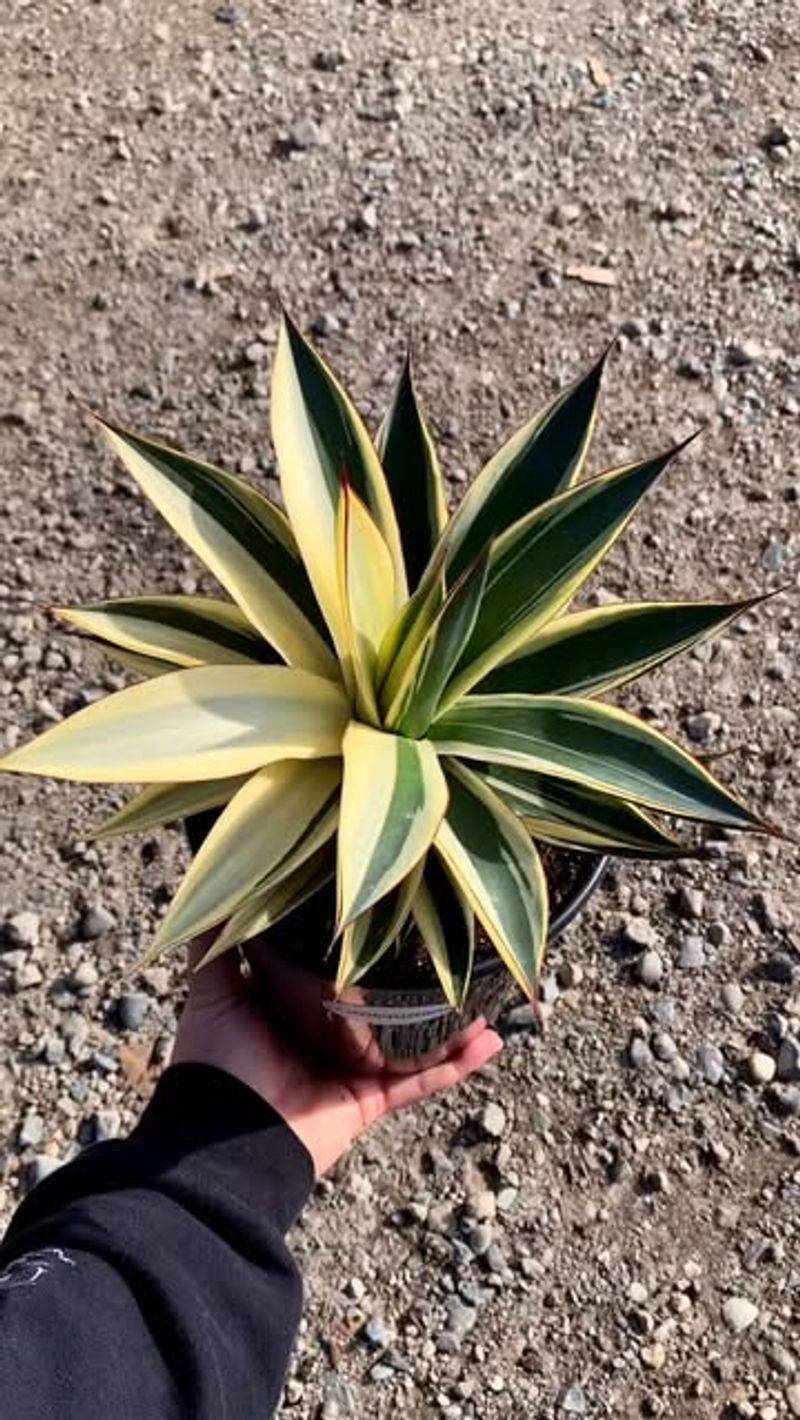
Golden yellow edges outline every blue-gray leaf, creating a glowing effect that explains the name perfectly. Red spines along the margins and at the leaf tips add another color layer, making this hybrid more decorative than most single-color agaves.
Bright Arizona sunlight intensifies all three colors instead of washing them out, so the plant looks most impressive during the harshest part of the day. Growth stays under 2 feet wide, which fits standard large containers without overwhelming smaller patio spaces.
The color combination works with both warm and cool decorating schemes, adapting to terracotta pots as easily as glazed ceramic.
Heat reflection from nearby surfaces doesn’t bother this agave, which continues producing new leaves even when pavement temperatures exceed 150 degrees.
The hybrid vigor means faster growth than pure species, filling containers more quickly without becoming invasive or unruly.
Leaf thickness provides excellent water storage, reducing irrigation frequency even during extended dry periods between monsoon storms.
Container culture keeps the plant at a manageable size indefinitely, unlike in-ground specimens that can eventually outgrow their intended space.
The red spines stay relatively soft compared to other agaves, posing less risk near foot traffic while still providing that authentic desert appearance.
You’ll notice the colors shift slightly with the seasons, becoming more vibrant during cooler months without losing their impact during summer heat.
6. Agave Pygmaea Tiny Agave That Survives Arizona Summers
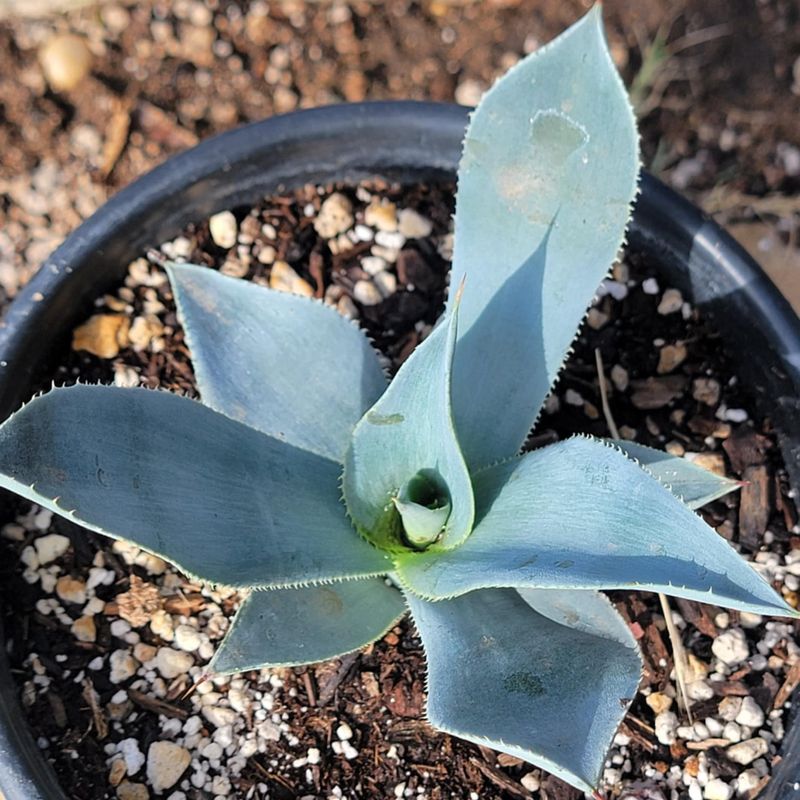
Six inches across at maturity makes this the smallest agave you can grow in Arizona containers. Narrow leaves marked with white stripes create a miniature version of larger agave species, proving that dramatic desert plants don’t always need massive scale.
The tiny size means you can cluster multiple pots together or tuck this agave into mixed succulent arrangements where larger varieties would dominate.
Arizona summer heat doesn’t overwhelm the small root system because the plant evolved to handle intense conditions despite its size.
Shallow pots work perfectly, giving you more flexibility in container choices and allowing placement on narrow ledges or small side tables.
Full sun exposure keeps the growth tight and the colors vivid, while too much shade causes the leaves to stretch and lose their compact form.
This agave produces offsets readily, which you can leave attached for a clustered look or remove to propagate new plants.
The miniature scale doesn’t mean reduced toughness because this species handles temperature extremes as well as its larger relatives.
Container culture suits this agave better than ground planting, where it might get lost among larger landscape plants or overwhelmed by aggressive neighbors.
You’ll water more frequently than with bigger agaves simply because the small root system and shallow pot dry out faster in Arizona heat.
The white leaf markings become more pronounced under stress, creating visual interest even when the plant is pushing its drought tolerance limits.
7. Agave ‘Sharkskin’ Durable Leaves In Hot Conditions
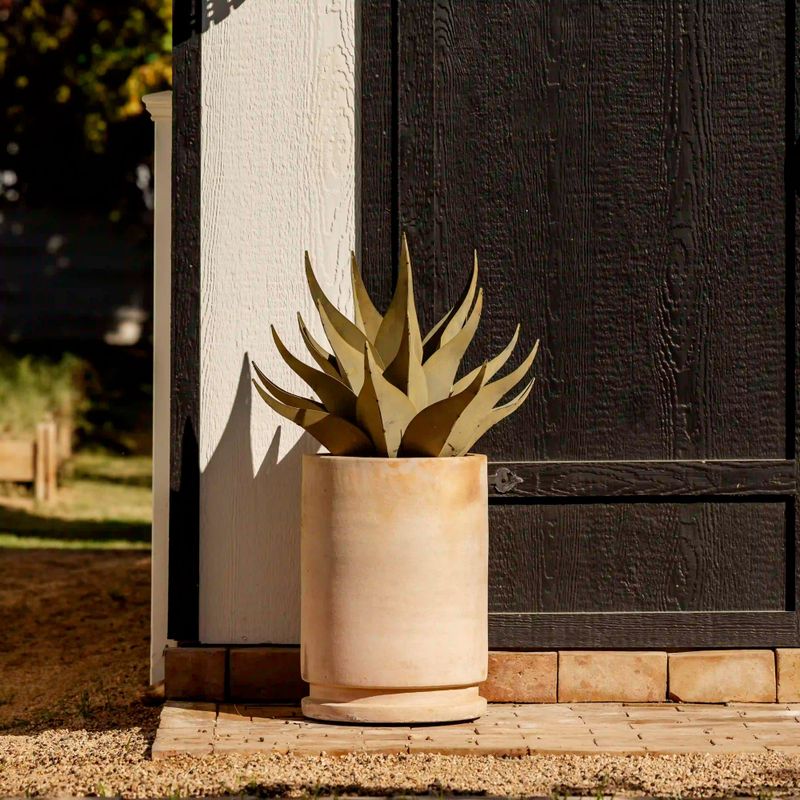
Textured leaves that look like they’ve been embossed give this hybrid its distinctive appearance. The imprinted pattern covers every leaf surface, creating shadows and highlights that change as the sun moves across your patio.
Gray-green coloring reflects Arizona sunlight rather than absorbing it, helping the plant stay cooler during triple-digit afternoons. Growth reaches about 2 feet across, filling containers without requiring the massive pots that some agaves demand.
The leaf texture isn’t just decorative because it actually increases surface area for water storage, improving drought tolerance beyond what smooth-leaved varieties achieve.
Container placement in full sun brings out the best texture definition, while shaded locations flatten the visual impact and reduce the dramatic shadowing.
This agave handles reflected heat from walls and windows better than most succulents, making it ideal for tight urban spaces where temperatures climb even higher than open desert areas.
The thick leaves resist damage from hail during monsoon storms, bouncing back quickly from impacts that would shred thinner-leaved plants.
Root growth stays proportional to the visible plant, never becoming rootbound as quickly as faster-growing succulents.
You can leave this agave in the same container for years, only repotting when you want to refresh the soil rather than because the plant has outgrown its space.
The gray-green color coordinates easily with other desert plants, creating cohesive container groupings without requiring exact color matching.
8. Agave lophantha Compact Size With Strong Heat Tolerance
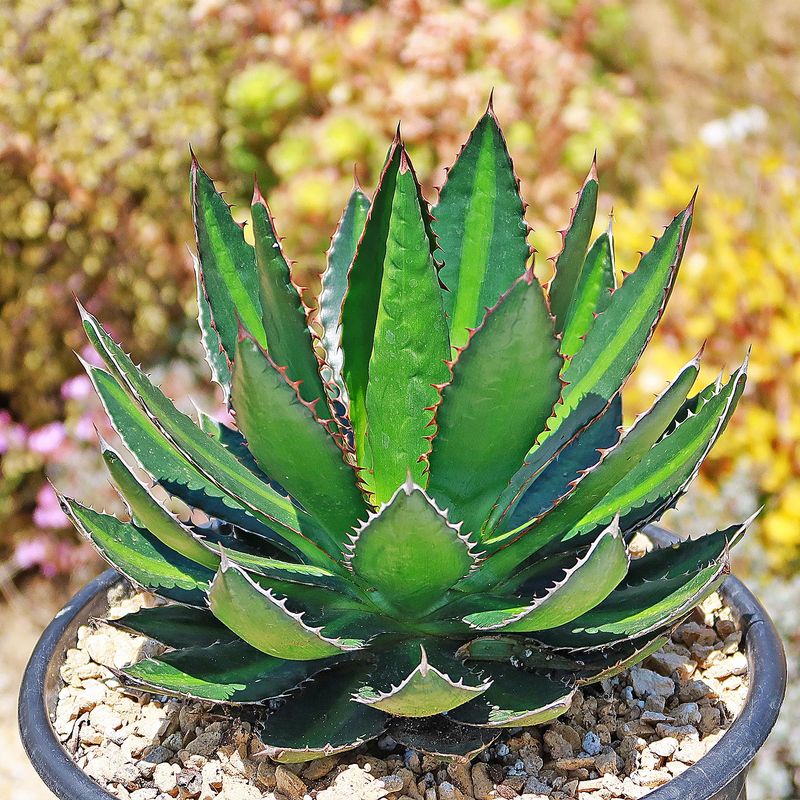
Agave lophantha brings structure to Arizona containers without demanding constant attention.
The rosette usually stays between 12 and 18 inches wide in pots, which makes it easy to place near entryways, patios, and smaller courtyard areas where oversized agaves would overwhelm the space.
Leaves grow upright with a slight arch, forming a balanced shape that looks intentional rather than wild.
Striped foliage gives this agave built-in contrast. Most forms show green leaves marked with lighter central bands, and the edges carry small teeth that add definition without creating the heavy, aggressive look of larger desert species.
In full Arizona sun, growth stays tight and compact instead of stretching. Extreme heat does not cause collapse or fading, even when temperatures push well past 110 degrees.
Container culture actually works in your favor with this plant. The restricted root zone keeps overall size controlled while still allowing steady, healthy growth.
Well-draining soil is essential, especially during monsoon season, but once established, watering needs remain low. Deep, infrequent irrigation keeps the leaves firm and structured.
Offsets may appear over time, yet they are easy to remove if you want to maintain a single clean rosette.
With strong sun tolerance, manageable proportions, and reliable performance in high heat, this agave delivers exactly what small Arizona containers require: durability without sacrificing form.
It also handles reflected heat from stucco walls, gravel beds, and paved patios without scorching, which makes placement far more flexible than many softer succulents.
The firm leaf structure resists wind damage during dust storms, keeping the rosette upright and intact even in exposed locations.
Over time, the plant develops a denser, more sculpted appearance in containers, rewarding consistent sun exposure with tighter growth and stronger color contrast.
9. Agave Mediopicta Elegant Form That Loves Full Sun
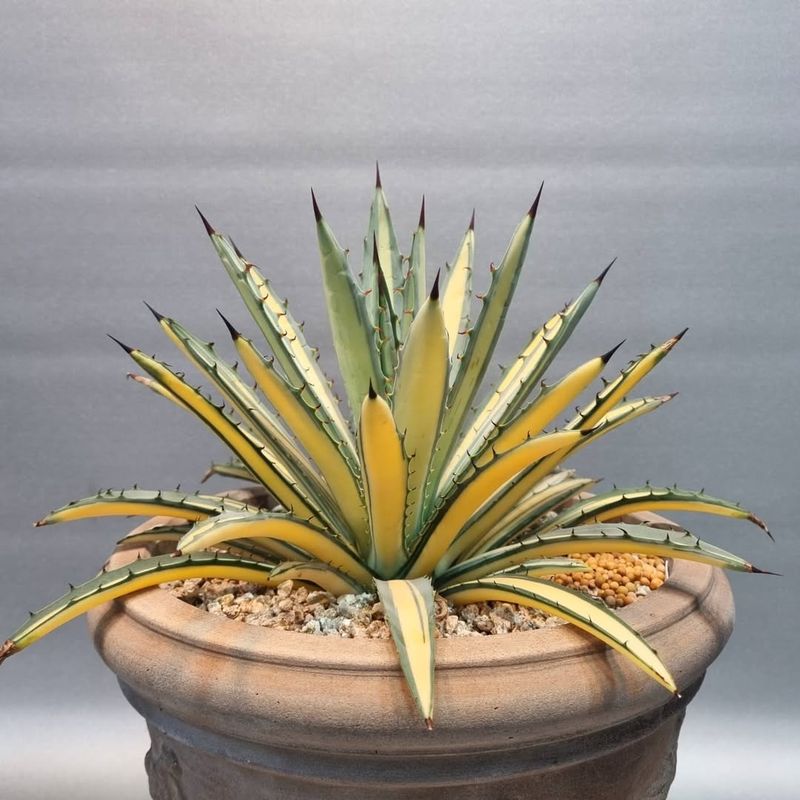
A white stripe runs down the center of each green leaf like someone painted it with a careful brush. The variegation pattern stays consistent across all the leaves, creating a formal symmetry that looks almost too perfect to be natural.
Arizona’s intense sunlight doesn’t bleach out the white centers or cause them to turn brown and crispy like it does with many variegated plants.
Growth reaches about 18 inches across, staying manageable in containers while still creating enough visual impact to work as a standalone specimen.
The contrast between white and green increases during summer heat, making the plant more dramatic exactly when other container plants start looking tired and faded.
Container placement in full sun is essential because the white tissue produces less chlorophyll and needs maximum light to support the green portions.
This agave works particularly well in monochromatic container designs where the built-in color contrast provides all the interest needed.
The formal appearance suits modern architecture and clean-lined outdoor furniture better than rustic or cottage-style settings.
Root growth stays compact relative to the leaf spread, meaning you won’t need to repot as frequently as faster-growing succulents.
Heat reflection from light-colored walls or pavement actually benefits this variety, providing the intense light conditions where the variegation looks most striking.
The white leaf centers stay surprisingly tough despite their delicate appearance, resisting sunburn and heat damage that would devastate similarly colored plants.