8 Small Native Trees That Are Perfect For North Carolina Front Yards
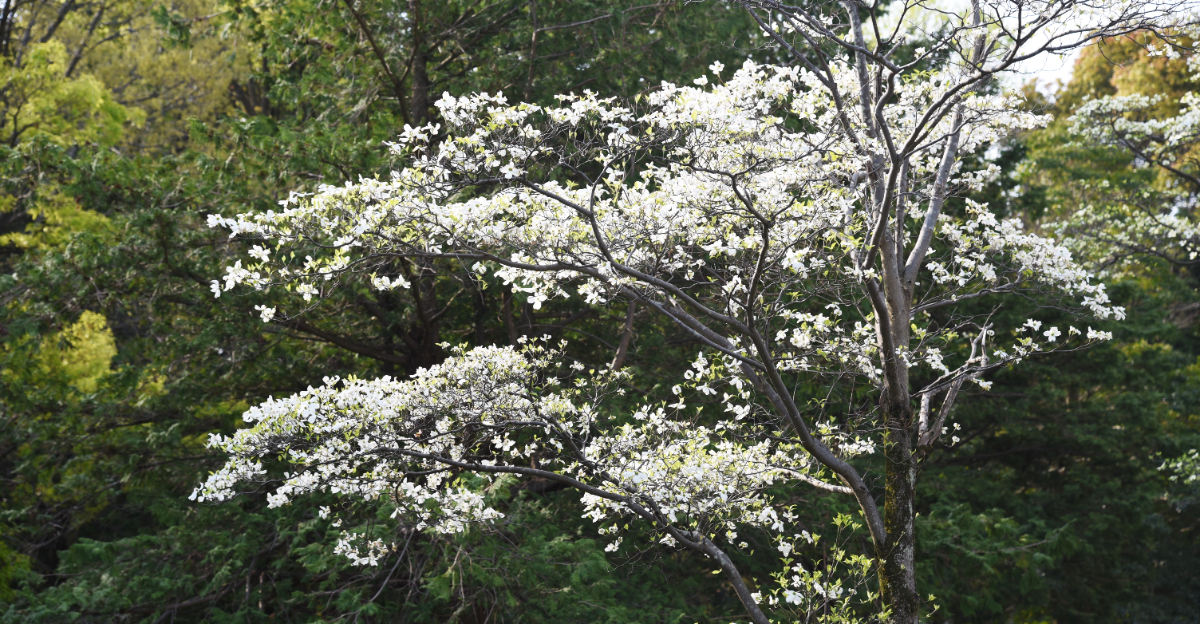
Finding the right tree for a front yard can feel like a big decision, especially when space is limited.
In many North Carolina neighborhoods, homeowners want something that adds beauty without growing too large or becoming hard to manage. That is where small native trees stand out as a smart and lasting choice.
These trees are naturally suited to the region, which means they handle the weather, soil, and seasonal changes with less effort.
They can provide shade, color, and even support local wildlife, all without overwhelming your space. From spring blooms to fall color, they offer something to enjoy throughout the year.
Choosing a native option also helps your yard feel more connected to the surrounding landscape.
Once you explore these eight small native trees, you may find the perfect fit that brings both charm and balance right to your front yard.
1. Serviceberry
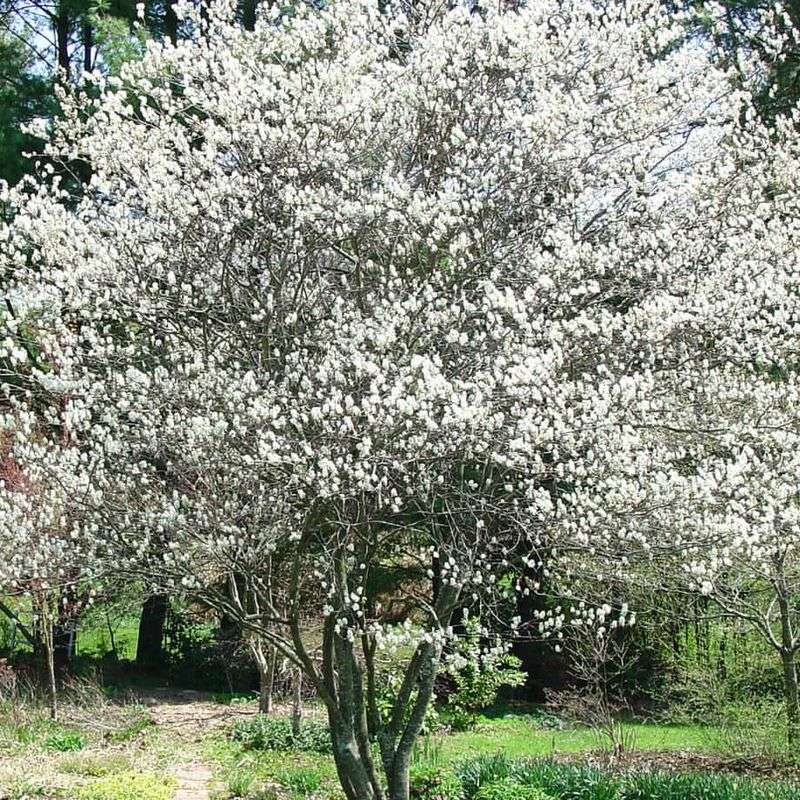
Few trees pack as much seasonal drama into such a manageable size as the serviceberry. In early spring, before most other plants even wake up, serviceberry bursts into a cloud of delicate white flowers that practically glow against the Carolina sky.
That early show alone is enough to make neighbors stop and stare. After the flowers fade, small purple berries appear by late spring and early summer.
Birds absolutely love these berries, so expect your front yard to become a lively gathering spot for cardinals, robins, and bluebirds. The berries are also edible for people and taste a bit like blueberries.
Come fall, the leaves shift into warm shades of orange, red, and yellow, giving you yet another reason to love this tree.
Serviceberry typically grows between 15 and 25 feet tall, which keeps it perfectly scaled for most front yards across North Carolina.
It adapts well to the clay-heavy soils common in the Piedmont and also thrives in the Mountains and Coastal Plain. It handles both full sun and partial shade without missing a beat.
For gardeners who want four seasons of interest from a single tree, serviceberry is honestly hard to beat.
2. Eastern Redbud
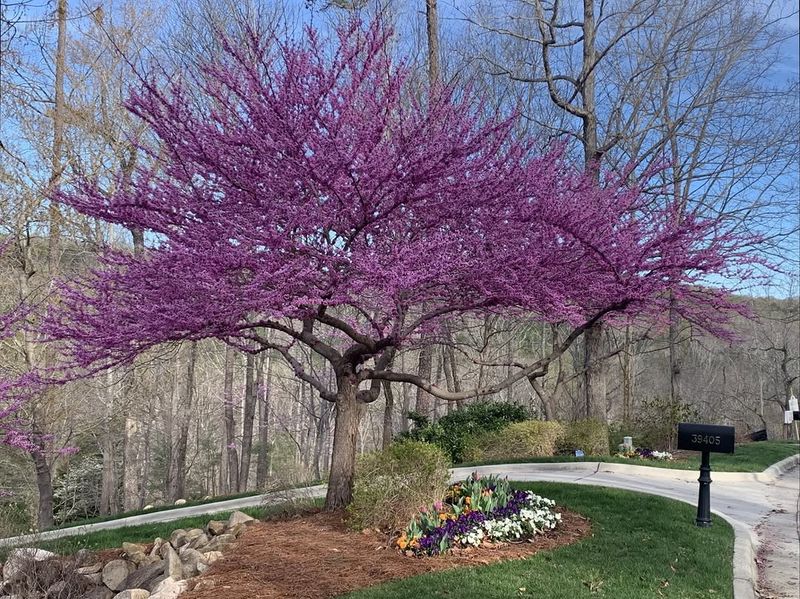
Every spring in North Carolina, the eastern redbud puts on one of the most jaw-dropping flower shows you will ever see in a front yard.
Bright magenta-pink blooms erupt directly from the bare branches before a single leaf appears, creating a bold, almost electric burst of color. It is the kind of tree that makes you want to pull over and take a photo.
Eastern redbud grows between 15 and 30 feet tall and spreads nearly as wide, giving it a graceful, rounded shape that looks stunning near a front walkway or at the corner of a home.
It performs well in full sun or partial shade, making it flexible for all kinds of front yard layouts across North Carolina.
From the Piedmont to the Foothills, this tree feels right at home. Heart-shaped leaves follow the flowers and turn a warm yellow in fall, extending the visual interest well beyond spring.
Pollinators swarm the blossoms, and birds snack on the seeds throughout the growing season.
Eastern redbud is also relatively drought-tolerant once established, which is great news for busy homeowners who do not have time for constant watering.
It grows fairly quickly for a native tree, so you will not be waiting forever to enjoy its full beauty in your North Carolina front yard.
3. Fringe Tree
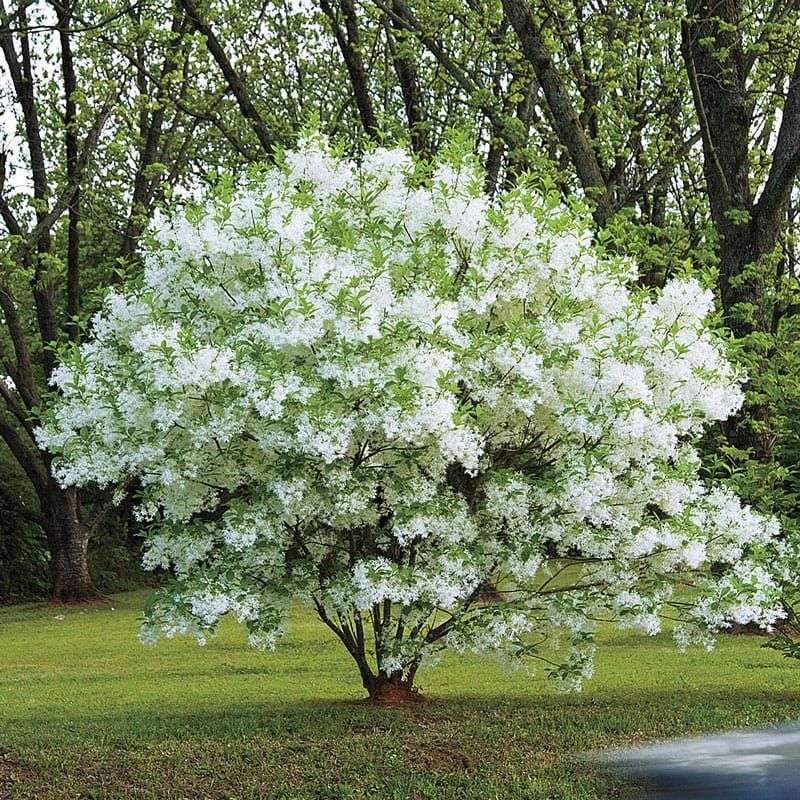
Walk past a fringe tree in full bloom and you might think someone draped it in soft white lace. The long, feathery flower clusters hang from the branches in late spring, creating a look that is both dramatic and surprisingly delicate.
It is one of the most underappreciated native trees in North Carolina, and that really needs to change.
Fringe tree, known scientifically as Chionanthus virginicus, grows 12 to 20 feet tall, making it one of the more compact options on this list.
That size is perfect for smaller front yards or spots near the house where a large tree would quickly become a problem.
It handles full sun and partial shade equally well, and it adapts to a wide range of soil types found across North Carolina, from the sandy soils of the Coastal Plain to the clay-rich ground of the Piedmont.
The blooms carry a light, sweet fragrance that carries on warm spring breezes, which is a bonus you simply cannot get from a photo.
After flowering, small blue-black fruits develop in fall and attract birds and other wildlife. Fall foliage turns a clean yellow before dropping.
Fringe tree is also notably resistant to pests and diseases, which means less worry for homeowners.
If you want something beautiful, native, and a little unexpected in your North Carolina front yard, fringe tree absolutely deserves a spot.
4. Sweetbay Magnolia
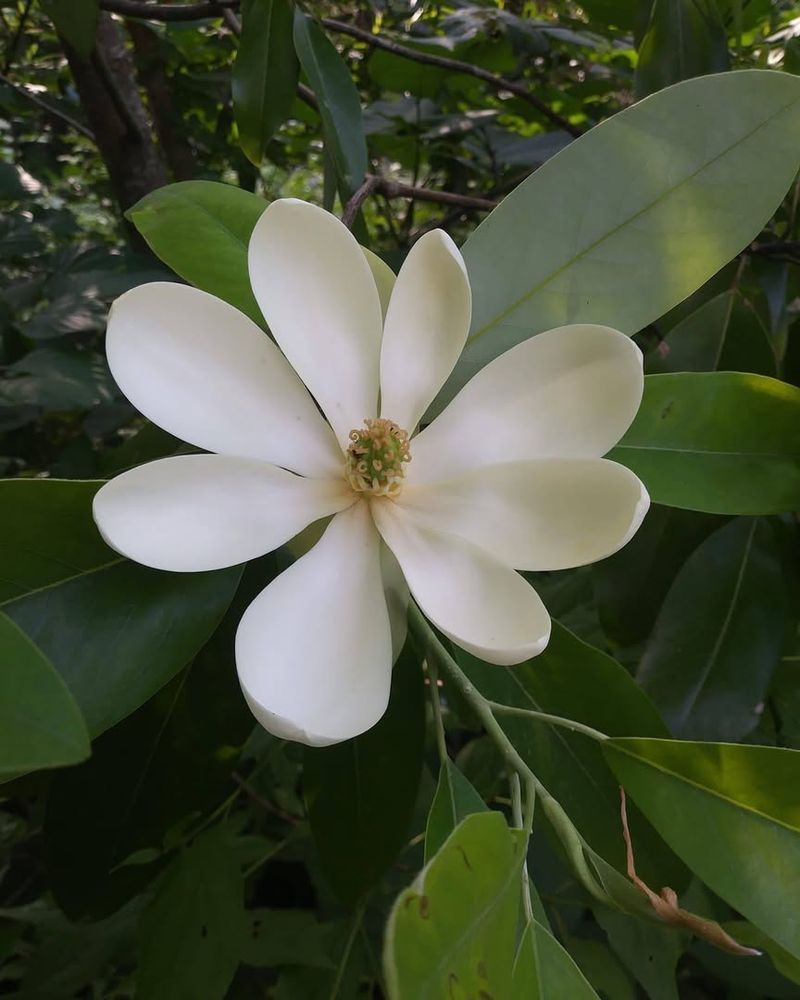
Sweetbay magnolia brings a touch of elegance to the North Carolina front yard without demanding too much attention.
Its creamy white flowers open from late spring through summer, releasing a lovely lemon-vanilla fragrance that drifts through the yard on warm evenings.
If you have ever wanted your front yard to smell as good as it looks, this tree delivers exactly that.
One of its most useful traits is its tolerance for moist soils, which makes it especially valuable in the Coastal Plain where wet, low-lying yards can make tree selection tricky.
It grows naturally along stream banks and in bottomland forests, so soggy spots that would challenge other trees are not a problem here.
In warmer parts of North Carolina, sweetbay magnolia holds onto many of its leaves through winter, giving it a semi-evergreen quality that adds year-round structure to the landscape.
Sweetbay typically grows 10 to 20 feet tall, though it can occasionally reach 30 feet in ideal conditions.
The silvery undersides of the leaves catch the breeze and create a shimmering, two-toned effect that looks really striking in afternoon light. Red seeds appear in fall and bring birds flocking to the yard.
It grows well in partial shade, which makes it versatile for many front yard situations across North Carolina. For a low-fuss tree with serious sensory appeal, sweetbay magnolia is a wonderful choice.
5. American Hornbeam
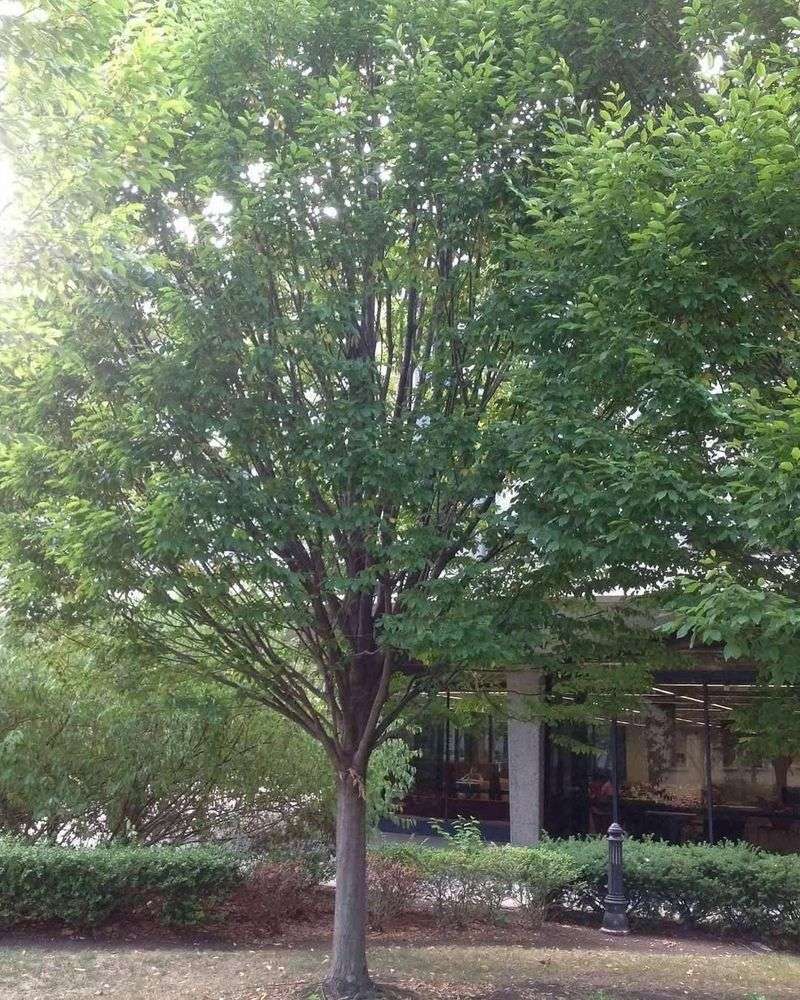
American hornbeam is the quiet overachiever of native North Carolina trees. It does not shout for attention with flashy flowers, but spend a little time with it and you will notice details that most trees simply cannot offer.
The smooth, rippled bark looks almost like flexed muscle, earning it the nickname “musclewood,” and it stays interesting through every season of the year.
This tree grows 15 to 25 feet tall with a naturally compact, rounded form that fits beautifully in front yards with limited space.
It is one of the few native trees that genuinely thrives in shaded conditions, making it a top pick for yards that sit under taller trees or face north.
American hornbeam also handles clay soils well, which is great news for homeowners across the Piedmont region of North Carolina where clay is practically unavoidable.
Fall color ranges from yellow to orange and red, adding a warm glow to the front yard just when the season starts to cool down.
Birds rely on the seeds for food, and the dense branching structure provides excellent nesting habitat.
Best of all, American hornbeam is remarkably low-maintenance once established. It does not need heavy pruning, fertilizing, or fussing over.
For busy North Carolina homeowners who want a durable, wildlife-friendly tree that looks polished without requiring constant care, American hornbeam is a genuinely smart pick.
6. Flowering Dogwood
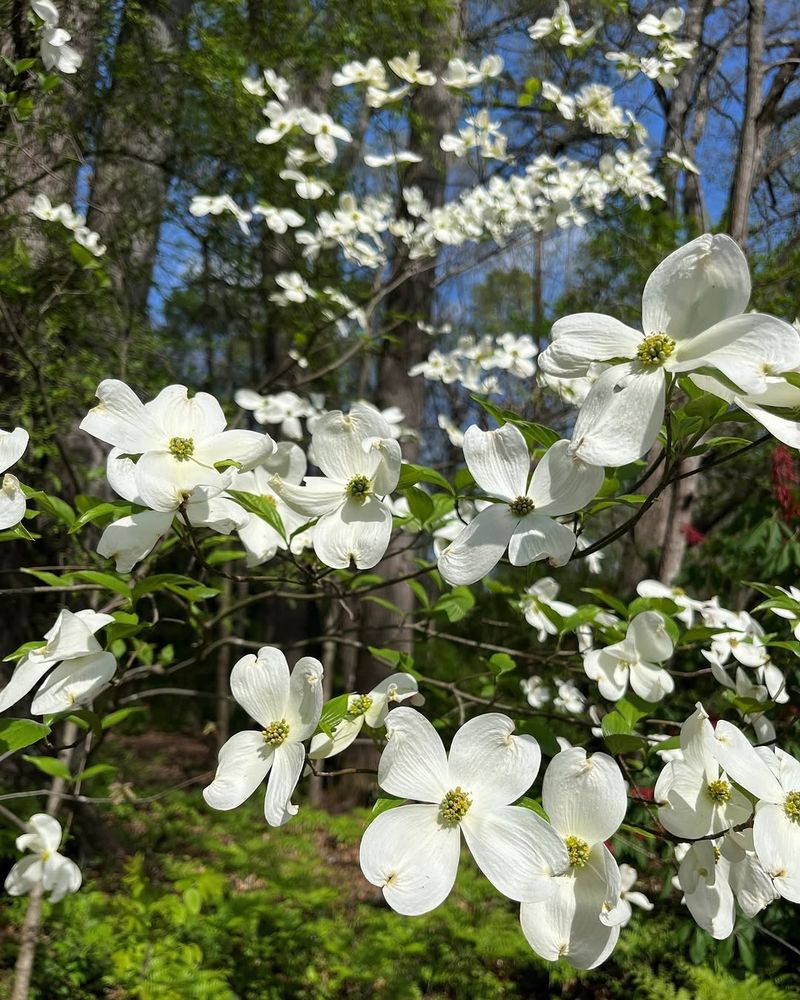
North Carolina actually named the flowering dogwood as its state flower, and it is not hard to understand why.
In spring, the large white or pink bracts spread across the tree’s layered branches like something out of a storybook.
The horizontal branching pattern gives flowering dogwood a sculptural, architectural quality that very few other small trees can match.
This tree thrives in partial shade, which makes it a fantastic choice for front yards that sit under the canopy of taller trees or receive morning sun with afternoon shade.
It prefers well-drained, slightly acidic soil, which is exactly what much of North Carolina naturally provides.
Flowering dogwood grows 15 to 25 feet tall and tends to spread nearly as wide, creating a canopy that feels generous but never overwhelming.
Fall brings another round of excitement, with leaves turning deep red and purple while clusters of bright red berries attract migrating birds.
The bark also develops an interesting texture over time, adding winter interest when the branches are bare.
Flowering dogwood does best when it has some protection from harsh afternoon sun, especially in the hotter parts of the state.
Plant it with a bit of mulch around the base to keep roots cool and moist. In a North Carolina front yard, this tree is nothing short of a classic showstopper.
7. Red Buckeye
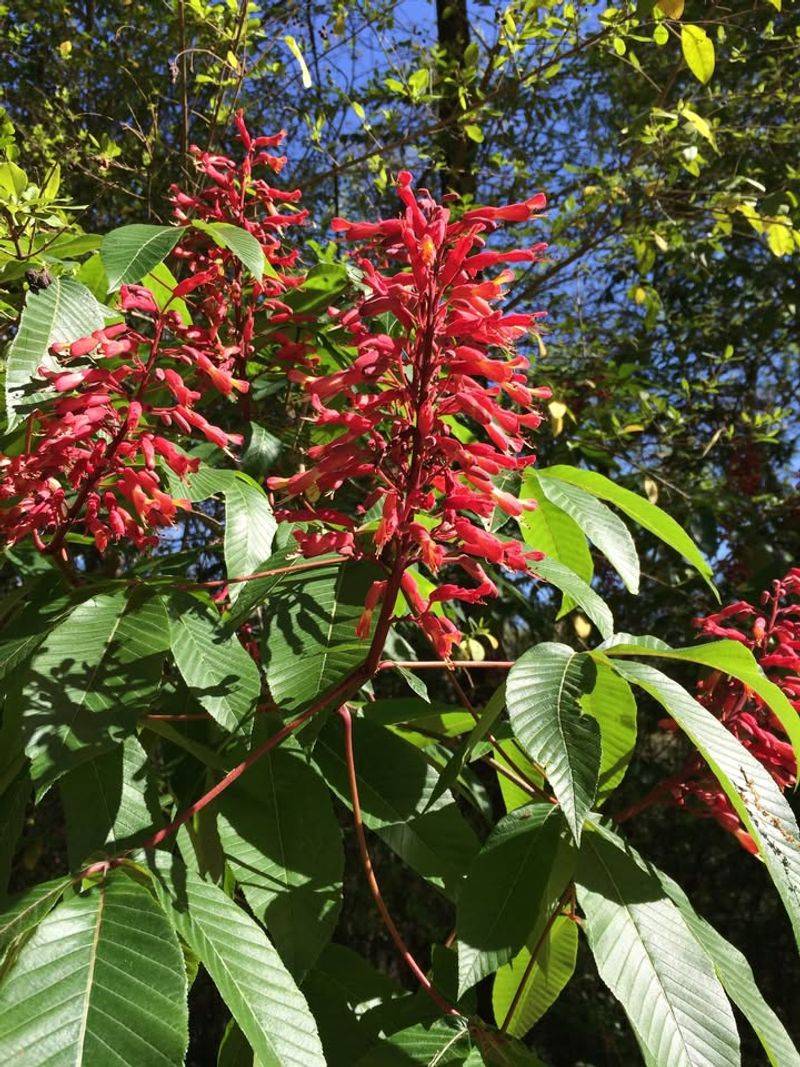
Plant a red buckeye in your North Carolina front yard and you are essentially hanging out a welcome sign for hummingbirds.
The bold, upright clusters of bright red tubular flowers appear in early spring, perfectly timed to coincide with the arrival of ruby-throated hummingbirds migrating through the state.
Watching those tiny birds dart from bloom to bloom is one of the most rewarding experiences a front yard garden can offer.
Red buckeye is a smaller tree, typically growing 10 to 15 feet tall, which makes it an ideal fit for compact front yard spaces.
It prefers partial shade and well-drained soil, so it works especially well planted near the edge of a taller tree canopy or on the north side of a house.
Across North Carolina, it performs reliably from the Mountains through the Piedmont and into the Coastal Plain, showing impressive adaptability for such a distinctive-looking tree.
The large, compound leaves create a bold, tropical-looking texture during the growing season that feels unexpected and refreshing in a North Carolina front yard.
After flowering, shiny brown seeds develop inside smooth husks that add a bit of fall interest.
The tree goes dormant early in summer, which is worth knowing when planning your landscape design. Pair it with later-blooming plants to fill the gap.
Red buckeye brings early-season drama and wildlife excitement that few other small native trees can match.
8. Witch Hazel
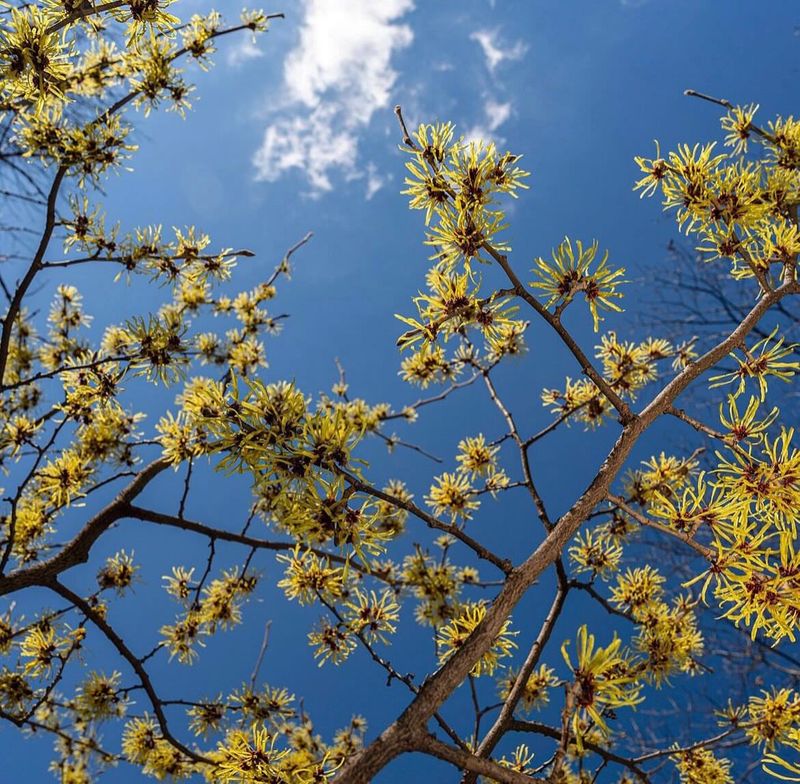
When every other tree has gone bare and the garden feels like it has run out of ideas, witch hazel steps forward and does something remarkable.
Its spidery, ribbon-like yellow flowers open in late fall and carry right through winter, sometimes blooming in January when frost is still on the ground.
No other native tree in North Carolina offers that kind of off-season magic. Native witch hazel, Hamamelis virginiana, grows 15 to 20 feet tall with a spreading, multi-stem form that looks graceful and natural in a front yard setting.
It adapts to a wide range of soil types, tolerating clay, loam, and even somewhat sandy conditions, which means it works across the diverse landscapes of North Carolina from the Piedmont to the Mountains.
Full sun or partial shade both suit it well. The fall foliage turns a warm golden yellow before the flowers appear, so you actually get two waves of visual interest in quick succession.
That combination of bright leaves followed by winter blooms makes witch hazel one of the most seasonally interesting small trees you can plant.
Its flowers also carry a faint, pleasant fragrance that surprises people who encounter it for the first time on a cool November walk. Pollinators that are active on warm winter days visit the blooms eagerly.
For a front yard that stays interesting long after the growing season winds down, witch hazel is an inspired and truly rewarding choice.