7 Small Palms Perfect For Louisiana Gardens
Louisiana’s warm, humid climate and rich, fertile soil make it one of the best places in the South to grow tropical plants, including palms.
Whether you live in New Orleans, Baton Rouge, or anywhere along the Gulf Coast, the right palm tree can turn your backyard into a lush, tropical paradise. The good news is that you do not need a huge yard or a massive tree to get that tropical look.
Small palms are a fantastic choice for gardeners who want beauty, texture, and year-round greenery without the size and maintenance headaches of larger trees.
From shady patios to sunny front yards, these compact palms fit beautifully into all kinds of landscapes. Some are native to the region, while others come from similar warm climates around the world but thrive just as well in heat and humidity.
A few of them can even handle a light frost, which is great news for gardeners in northern Louisiana where winters can get a bit chilly.
Discover ten small palms that are perfectly suited for Louisiana gardens, and find out which one might be the ideal fit for your outdoor space.
1. Dwarf Palmetto (Sabal Minor)
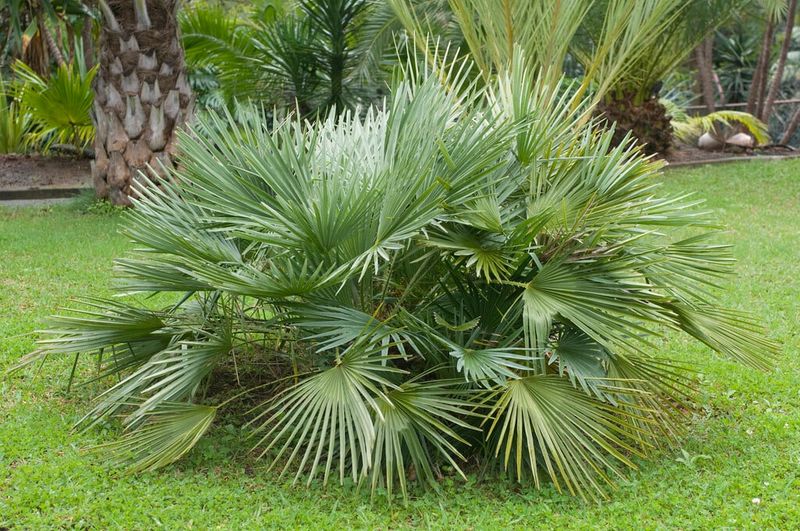
If you want a palm that feels completely at home in Louisiana, Dwarf Palmetto is hard to beat. This tough, low-growing native has been thriving in the state’s humid, swampy conditions long before gardeners ever started using it as a landscape plant.
You will find it growing naturally along bayous, in low woods, and in damp shaded areas across the region, which tells you everything you need to know about how well suited it is to the local climate.
Despite the name, it has a strong presence in the garden. Dwarf Palmetto usually stays under five feet tall, but its broad, fan-shaped leaves give it a bold tropical look that makes it feel much larger.
It works beautifully in smaller beds, shaded borders, rain gardens, and tucked beneath taller trees where many other palms would struggle.
One of the reasons gardeners love it is its flexibility. It handles wet soil with ease, but once established it can also manage surprisingly dry conditions.
That kind of adaptability is valuable in Louisiana, where some yards stay soggy after heavy rain while others dry out fast in summer heat. It is also one of the most cold-hardy palms you can grow, which makes it reliable even in the colder parts of northern Louisiana.
Maintenance is minimal. It rarely needs pruning beyond removing an occasional old frond, and it does not demand much extra water once it has settled in.
Planted alongside Louisiana iris, ferns, or other native woodland plants, it creates a lush, grounded look that feels completely natural.
For gardeners who want a low-maintenance palm with true local character, Dwarf Palmetto is one of the smartest and most dependable choices you can plant.
2. Needle Palm (Rhapidophyllum Hystrix)
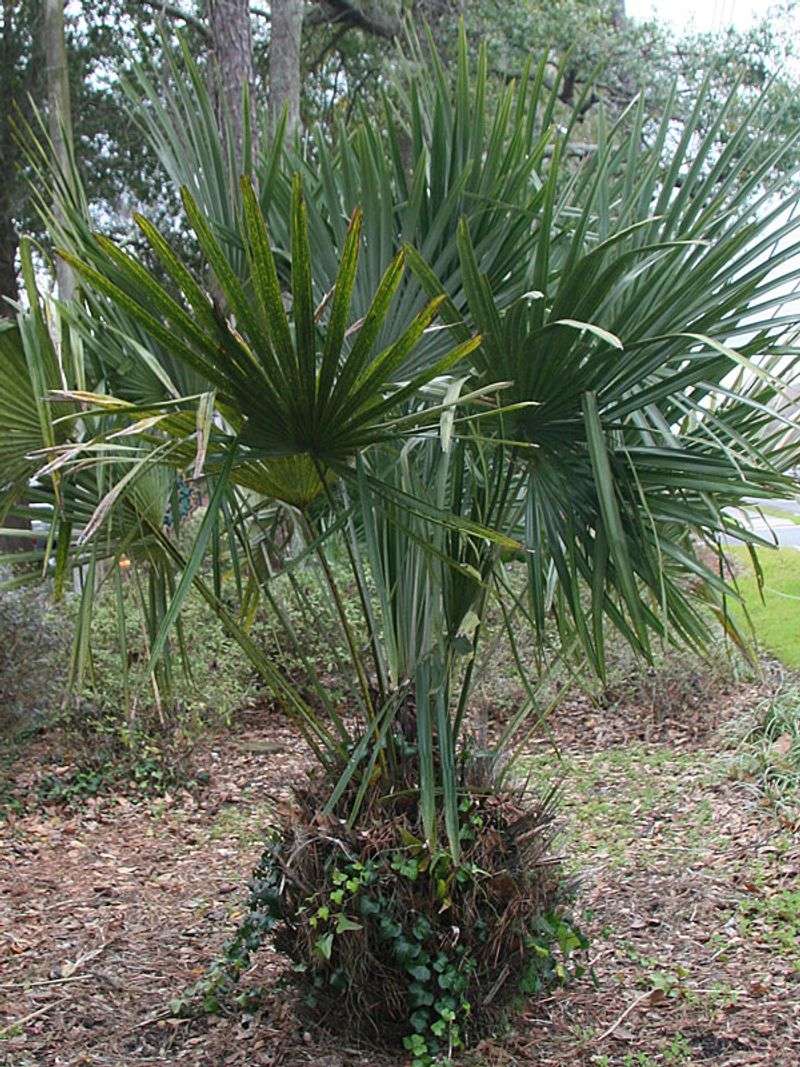
Nicknamed the world’s most cold-hardy palm, the Needle Palm is a scrappy little survivor that gardeners absolutely love.
It is often called the most cold-hardy palm available, which immediately makes it stand out for gardeners who want a tropical look without worrying every time winter temperatures dip. This is the kind of plant that looks exotic but behaves like a survivor.
Its name comes from the sharp, needle-like spines found around the base of the plant. Those spines give it a slightly fierce appearance and also make it useful as a barrier planting near fences or property lines.
Even so, the overall effect is still beautiful. Needle Palm forms a dense, shrubby clump of dark green fan-shaped fronds that feels lush, architectural, and full of texture.
In Louisiana, it performs well in both full sun and partial shade, which gives gardeners a lot of flexibility. It also handles the state’s heavy summer rain and humidity with very little fuss.
Mature plants usually stay around five to six feet tall, so they fit nicely into smaller yards, foundation plantings, sheltered patios, and entry gardens where a larger palm would overwhelm the space.
Once established, Needle Palm is remarkably low-maintenance. It needs only occasional watering during dry stretches, and a light spring feeding is usually enough to keep it looking healthy and full.
It is not fast-growing, but that slower pace often works in its favor, since it stays tidy and manageable for years.
For anyone who wants a palm that looks bold and tropical but can also handle real winter cold, Needle Palm is one of the most dependable choices you can make in Louisiana. It is sturdy, distinctive, and far tougher than it looks at first glance.
3. Mediterranean Dwarf Palm (Chamaerops Humilis Var. Cerifera)
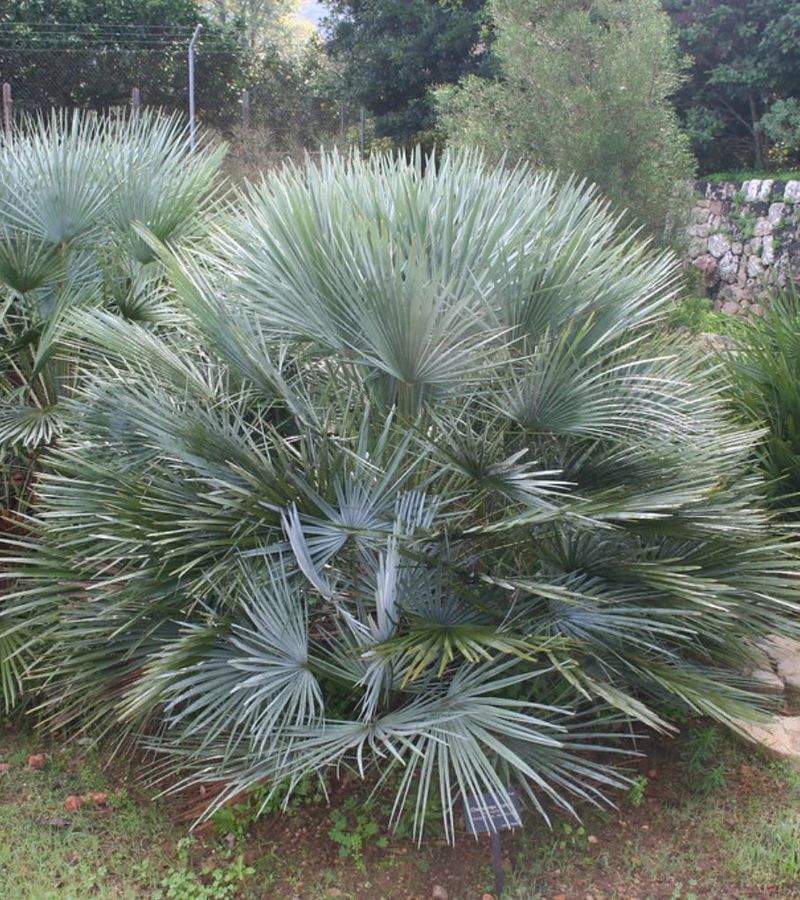
Some palms blend quietly into the background. The Mediterranean Dwarf Palm does the exact opposite.
With its striking silver-blue fronds and sculptural shape, it brings a dramatic, almost cinematic quality to the garden that is hard to ignore. In bright light, the foliage can look nearly metallic, which gives the whole plant an eye-catching presence even when nothing else around it is in bloom.
This palm is a special form of the European Fan Palm, and it stays compact enough for a wide range of Louisiana gardens. In most settings it remains under six feet tall, which makes it especially useful for patios, courtyards, raised beds, and decorative containers.
It has a naturally clumping habit, so over time it creates a layered, full look that feels lush without becoming oversized or difficult to manage.
The silver foliage is what really sets it apart. Planted next to darker green tropical plants, bold flowering perennials, or even brick and stone hardscaping, it creates contrast instantly.
That makes it a favorite for gardeners who want something unusual and memorable without relying only on flowers for impact.
It is also more resilient than its elegant appearance suggests. Mediterranean Dwarf Palm handles Louisiana heat well and tolerates occasional winter cold much better than many tropical-looking palms.
It prefers well-drained soil and grows best in full sun, though it can handle partial shade if needed. Once established, it is not especially thirsty and generally asks for very little beyond occasional cleanup of old fronds.
Because it grows slowly, it stays attractive for a long time without needing much intervention. For gardeners who want a palm that feels refined, uncommon, and full of character, this silvery beauty is a standout addition that adds structure and color in a way few plants can.
4. Sabal Minor ‘Louisiana’ (Louisiana Sabal)
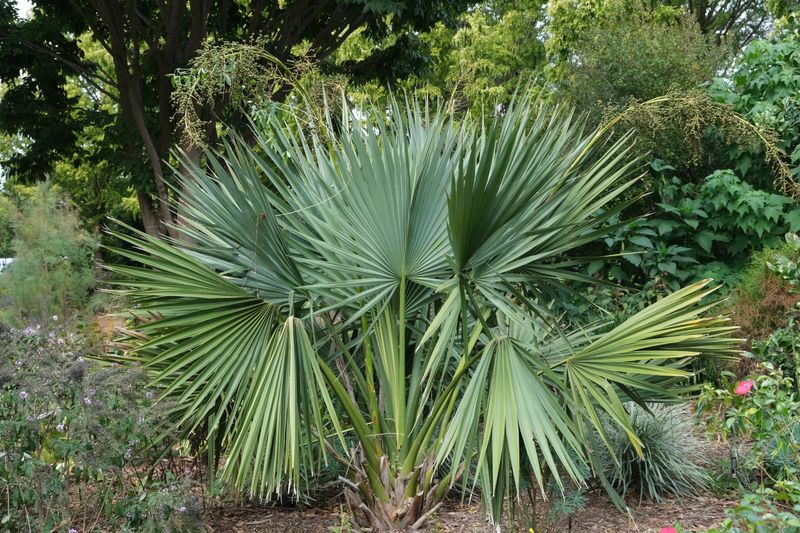
Few palms feel more rooted in the state than Sabal Minor ‘Louisiana.’ This naturally occurring selection of the native Dwarf Palmetto has a distinctly local story, and that alone gives it special appeal for gardeners who want their landscape to feel genuinely connected to place. It is prized for its larger, fuller fronds and its ability to thrive in the exact kinds of conditions that define so many Louisiana yards.
Like the standard Dwarf Palmetto, it stays relatively low to the ground, usually topping out around four to six feet. But what it lacks in height, it makes up for in presence.
Its broad fan-shaped leaves can spread several feet across, creating a dense, dramatic silhouette that makes the plant feel bold and substantial. In a naturalistic garden, a rain garden, or a woodland-style planting, it can anchor an entire area with very little effort.
This palm is especially valuable because of how well it handles difficult soil. Poor drainage, heavy clay, and damp low spots do not bother it nearly as much as they would trouble many other ornamental plants.
In fact, it is often happiest in the kinds of moist, challenging areas where gardeners struggle to find anything that looks both attractive and tropical.
Cold hardiness is another major strength. It handles Louisiana winters with ease and remains dependable from the warmer southern parishes to colder northern parts of the state.
Once established, it needs very little supplemental water or fertilizer, which makes it a low-input, high-impact choice for gardeners who want beauty without constant maintenance.
Planted in dappled shade or partial sun, Sabal Minor ‘Louisiana’ develops into a strong, graceful specimen that feels both wild and refined. It is one of those rare plants that looks right at home in a designed landscape while still carrying the unmistakable spirit of the native Louisiana environment.
5. Saw Palmetto (Serenoa Repens)
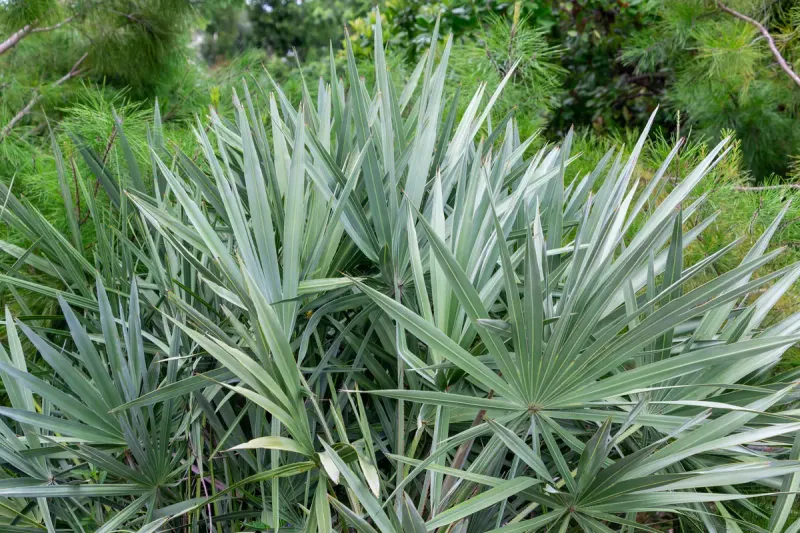
Saw Palmetto has a wilder, rougher kind of beauty than many ornamental palms, and that is exactly what makes it so appealing. This Gulf Coast native has been growing in the South for thousands of years, thriving in tough coastal conditions where many plants would quickly fail.
In Louisiana gardens, it brings that same resilience along with a low, spreading form that adds texture, structure, and a distinctly tropical character.
Its fan-shaped leaves can range from soft green to striking silver-blue, depending on the form, and that color variation gives gardeners plenty to work with. The silver selections are especially dramatic in bright light and stand out beautifully against darker foliage.
Instead of growing as a single upright trunk, Saw Palmetto tends to spread outward, forming a broad, multi-stemmed clump that feels natural and grounded.
That growth habit makes it especially useful in coastal gardens, wildlife plantings, and larger landscape beds where you want a palm presence without the height of a tree-like species. Depending on conditions, it usually grows between two and seven feet tall, though the visual impact often comes more from its width and texture than its height.
Saw Palmetto is also incredibly tough. It handles salt spray, sandy soil, occasional flooding, and dry spells with impressive ease.
Once established, it requires very little attention and is one of the most self-sufficient palms you can grow. Birds and small mammals are attracted to its berries, and its dense fronds provide shelter for wildlife, which gives it even more ecological value.
Pruning is minimal, and many gardeners simply let the older fronds fold naturally around the base. For Louisiana landscapes that need something durable, native, and full of character, Saw Palmetto is a smart choice.
It feels at home in the region because it truly is, and that authenticity shows in the way it settles so effortlessly into the landscape.
6. Pygmy Date Palm (Phoenix Roebelenii)
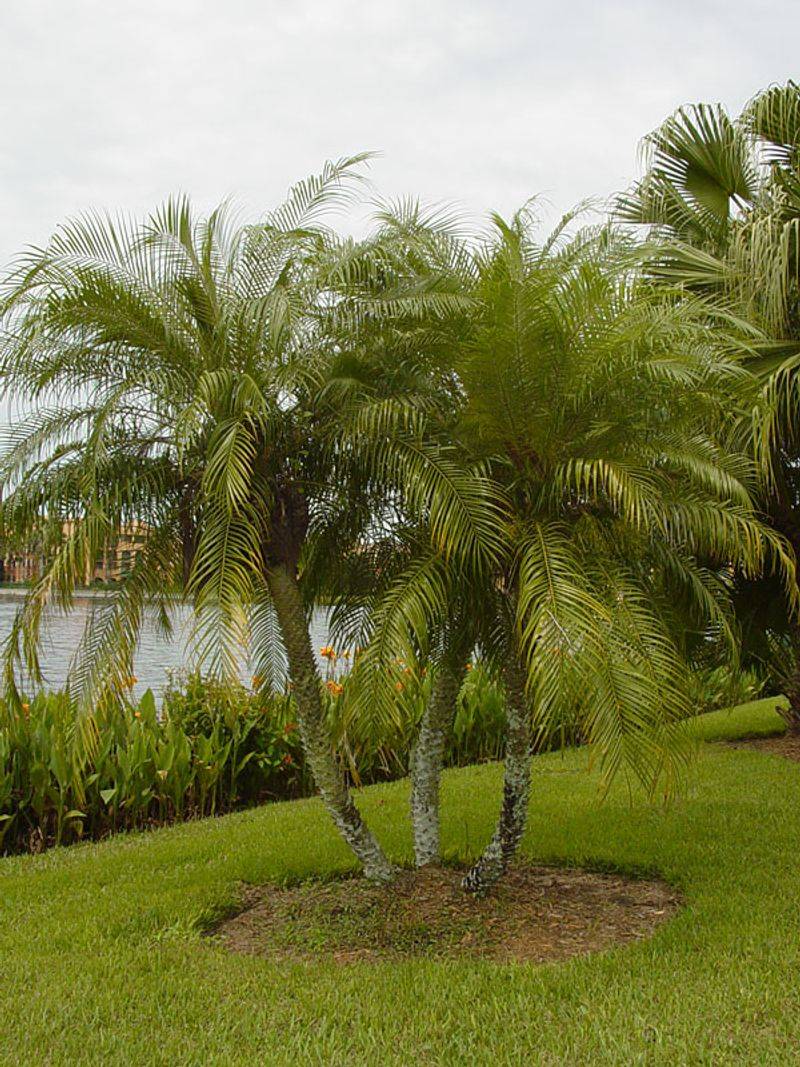
If elegance had a size limit, it would look exactly like the Pygmy Date Palm. With its feathery, arching fronds and slender textured trunk, it brings a softer, more elegant look than many of the tougher fan palms.
It is easy to see why it has become one of the most popular ornamental palms in the South. It gives gardens, patios, and pool areas that lush resort-like feeling without needing the space required for a larger palm.
In Louisiana, it performs especially well in the warmer parts of the state where long humid summers help it settle in and grow beautifully. It usually reaches about six to ten feet tall, which puts it in that ideal middle ground: tall enough to make an impression, but still manageable for courtyards, entryways, and container plantings.
It also looks particularly striking when planted in groups of two or three, where the layered trunks and overlapping fronds create a fuller, more tropical effect.
This palm does best in well-drained soil with regular moisture. It appreciates consistent watering, especially during hot weather, and responds well to a slow-release palm fertilizer during the growing season.
Full sun to partial sun both work, though a little protection from the harshest afternoon exposure can help keep the foliage looking fresher.
The main thing to keep in mind is cold tolerance. Pygmy Date Palm is less hardy than some of the other palms on this list, so gardeners in northern Louisiana need to be a bit more cautious.
In warmer southern parishes, it can stay outdoors year-round quite happily. Farther north, it is smartest in a sheltered location or in a container that can be protected during hard freezes.
For gardeners who want a palm with refined lines, graceful movement, and real decorative value, the Pygmy Date Palm remains one of the most beautiful options available.
7. Sago Palm (Cycas Revoluta)
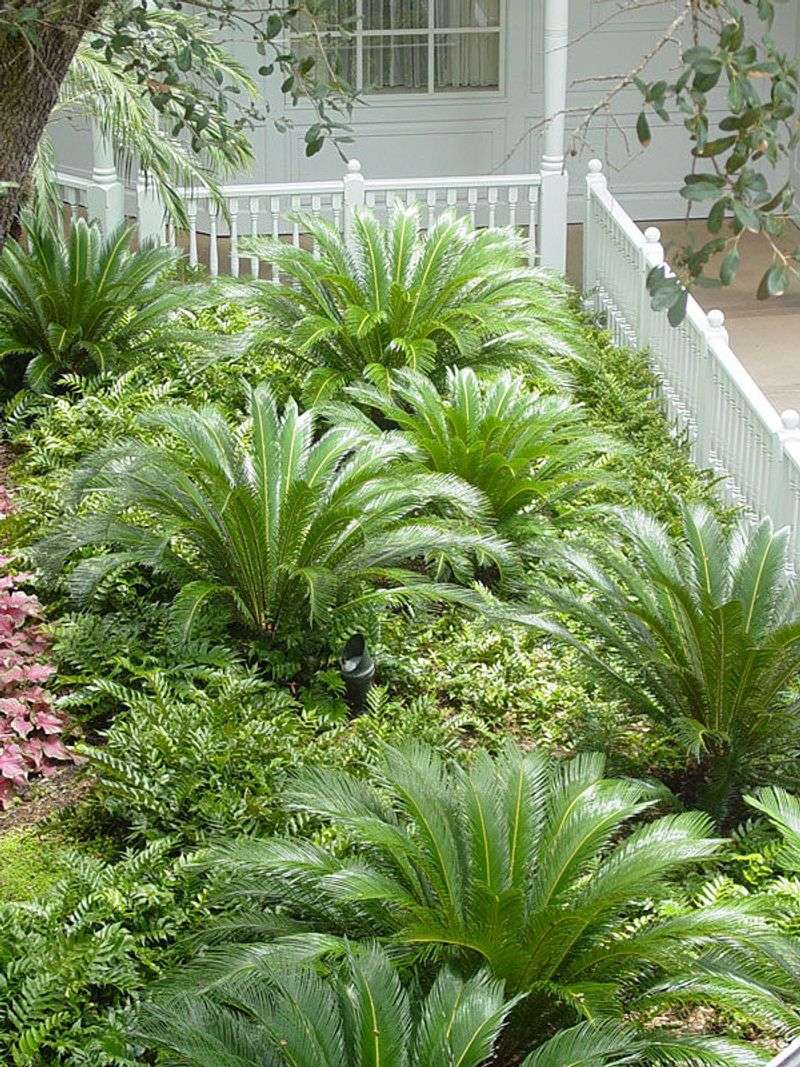
The Sago Palm looks like it belongs in another era, and that is part of its appeal. With its stiff, glossy fronds and perfectly symmetrical form, it brings a bold, almost prehistoric presence to the landscape that few plants can match.
It is not a true palm at all, but a cycad, which makes it even more interesting. These ancient plants have been around for millions of years, and the Sago Palm still carries that rugged, primeval character into modern gardens.
In Louisiana, it performs especially well because it handles heat, humidity, and even the occasional cold snap better than many people expect. Its slow growth means it never feels unruly or high-maintenance, and over time it forms a dense, sculptural mound that works beautifully as a focal point.
Tucked near a front entry, placed beside a patio, or used in a tropical-style bed, it adds structure and drama without needing constant attention.
The biggest thing to get right is drainage. Sago Palm wants well-drained soil and does not tolerate wet feet for long.
Full sun to partial sun suits it well, though in the hottest parts of Louisiana a little afternoon protection can help the fronds stay looking their best. Water moderately, then let the soil dry slightly before watering again.
Too much water is one of the fastest ways to cause problems.
Paired with softer tropical foliage or bold flowering plants, the Sago Palm creates a striking contrast that makes the whole planting feel more intentional. It is slow, sturdy, and full of character, which is exactly why gardeners keep coming back to it.