8 Smart Companion Plants For Wandering Jew In Georgia Gardens
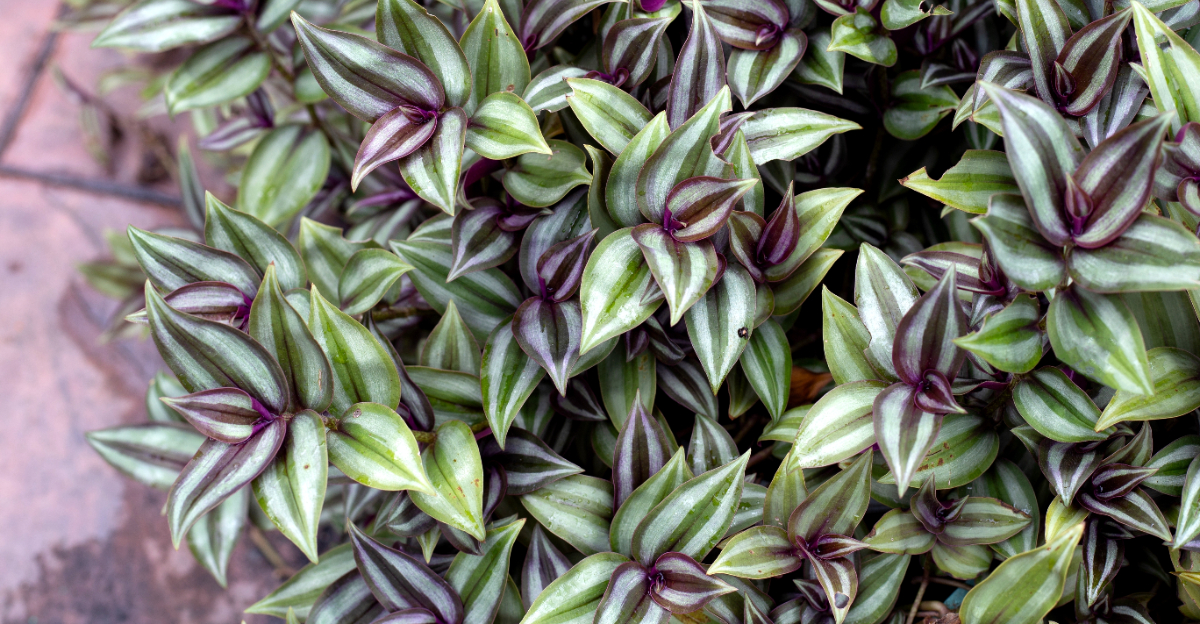
Wandering Jew may spill beautifully over the edge of a container, but the display can still feel unfinished without the right companion plants beside it.
In Georgia gardens, pairing it with smart companions creates depth, contrast, and balance that instantly makes the whole setup look intentional.
The right combination can turn one trailing plant into a layered showpiece that feels styled instead of randomly thrown together. When colors and textures support each other, your garden starts to look like it was designed with purpose.
Georgia’s long growing season gives you the chance to build combinations that stay attractive for months, not just weeks.
If you want your Wandering Jew to stand out without taking over, choosing companions that match its energy while handling Georgia’s heat is the simple move that changes everything.
1. Coleus Pairs Perfectly With Wandering Jew In Georgia’s Humid Shade
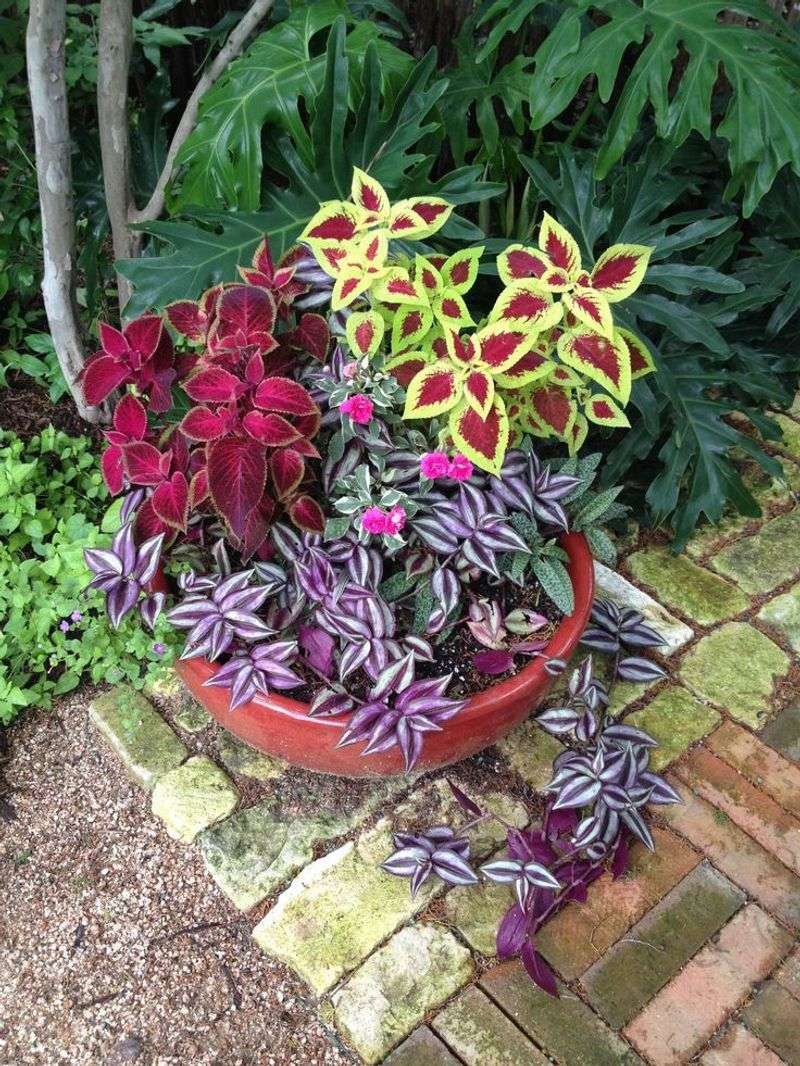
Coleus brings an explosion of leaf color that makes wandering Jew look even more spectacular in shaded Georgia garden spots.
Both plants adore the same growing conditions, thriving in partial to full shade while appreciating consistent moisture during hot Georgia summers.
The upright growth habit of coleus creates a perfect vertical accent against the trailing nature of wandering Jew.
Georgia gardeners love how coleus foliage comes in countless color combinations including lime green, burgundy, pink, orange, and nearly black shades.
This variety lets you create custom color schemes that either complement or contrast with your wandering Jew’s purple tones.
The plants work together without competing for resources since coleus grows upward while wandering Jew spreads horizontally.
Both plants handle Georgia’s humidity without developing the fungal problems that plague some shade lovers. They also share similar watering needs, making garden maintenance straightforward during our unpredictable summer weather patterns.
When temperatures climb above 90 degrees, both appreciate afternoon shade and regular moisture. Pinching back coleus regularly keeps plants bushy and full while preventing them from getting leggy or blooming too early.
2. Caladium Matches Wandering Jew’s Bold Color In Georgia Beds
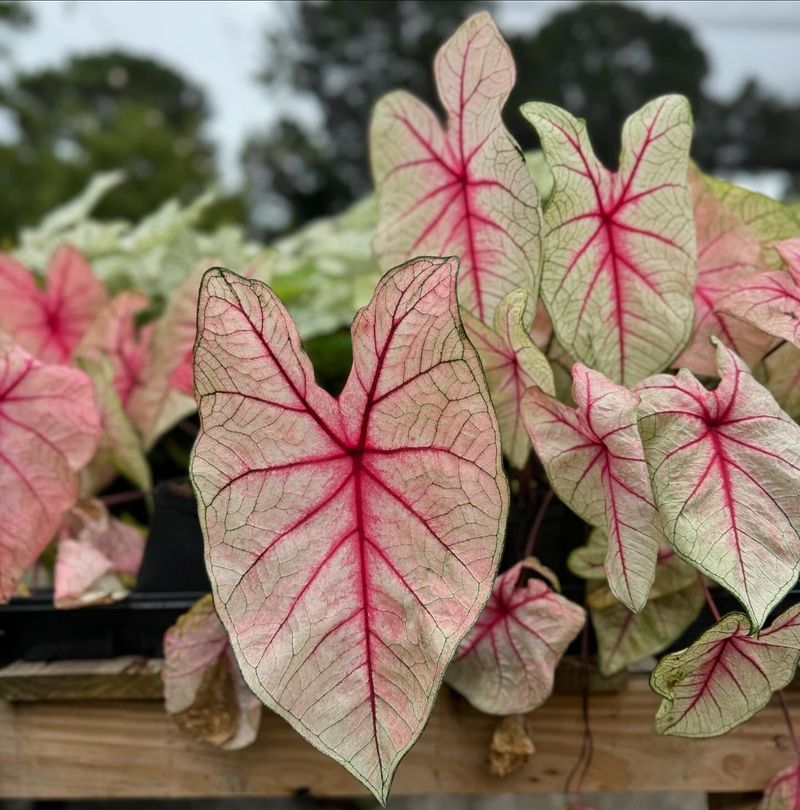
Caladiums deliver the same wow factor as wandering Jew with their dramatically colored heart-shaped leaves that look almost painted by hand.
These tuberous plants thrive in the exact same conditions across Georgia, preferring bright indirect light or dappled shade beneath trees.
Their bold leaf patterns featuring white, pink, red, and green create stunning visual interest alongside wandering Jew’s purple trailing stems.
Georgia’s warm soil temperatures trigger caladium growth perfectly, with tubers sprouting reliably once ground temps reach 70 degrees in late spring.
The plants continue producing fresh leaves throughout summer, maintaining their striking appearance even during August heat waves.
Caladiums grow 12 to 24 inches tall, providing excellent height variation above wandering Jew’s low-growing mat.
Both plants appreciate regular watering but tolerate brief dry spells better than many shade lovers, making them forgiving choices for busy Georgia gardeners. They also share a preference for rich, well-draining soil amended with compost or aged pine bark.
This similar soil preference means you can prepare one bed for both plants without special adjustments.
When fall temperatures drop below 60 degrees in Georgia, caladiums naturally go dormant while wandering Jew can continue growing if protected from frost.
Caladium tubers can be lifted and stored over winter in colder parts of Georgia, then replanted once the soil warms again in spring.
This seasonal rhythm keeps the display fresh each year while wandering Jew quickly fills in around emerging caladium leaves for a full, layered look by early summer.
3. Impatiens Fill In Around Wandering Jew Without Competing
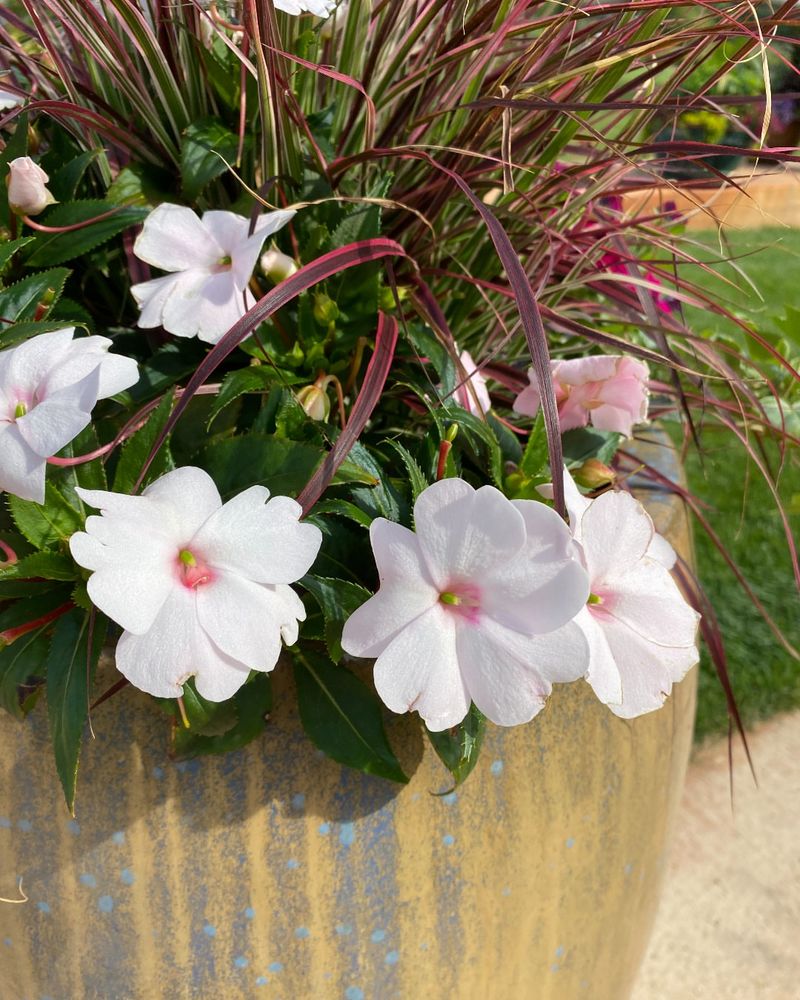
Impatiens flowers add cheerful blooms that dance above wandering Jew foliage without stealing the show or hogging resources.
These reliable annuals bloom continuously from spring through fall across Georgia, providing constant color while wandering Jew focuses on producing lush foliage.
The combination creates layers of interest with flowers floating above trailing leaves. Georgia gardeners appreciate how impatiens handle our challenging shade conditions where many flowering plants struggle or refuse to bloom.
Both impatiens and wandering Jew prefer consistent moisture, making them natural partners that simplify watering schedules during dry spells.
They also tolerate the same light levels, from bright shade to deeper woodland conditions.
New Guinea impatiens work especially well in Georgia gardens because they tolerate more sun than traditional varieties while still thriving in shade. Their larger flowers and bolder leaf colors create strong visual impact alongside wandering Jew’s purple tones.
Standard impatiens offer softer pastel shades that create gentler color harmonies.
Both plants benefit from occasional feeding with balanced fertilizer during the growing season, though neither demands heavy fertilization to perform well.
Impatiens grow 8 to 18 inches tall depending on variety, creating perfect mid-height interest between wandering Jew groundcover and taller shade plants.
Their shallow root systems never interfere with wandering Jew’s spreading growth habit.
During Georgia’s humid summers, good air circulation helps impatiens stay healthy, especially in dense shade beds.
A light trim in midsummer keeps plants compact and encourages fresh blooms while wandering Jew continues spreading beneath them.
4. Hosta Balances Wandering Jew’s Trailing Habit With Broad Foliage
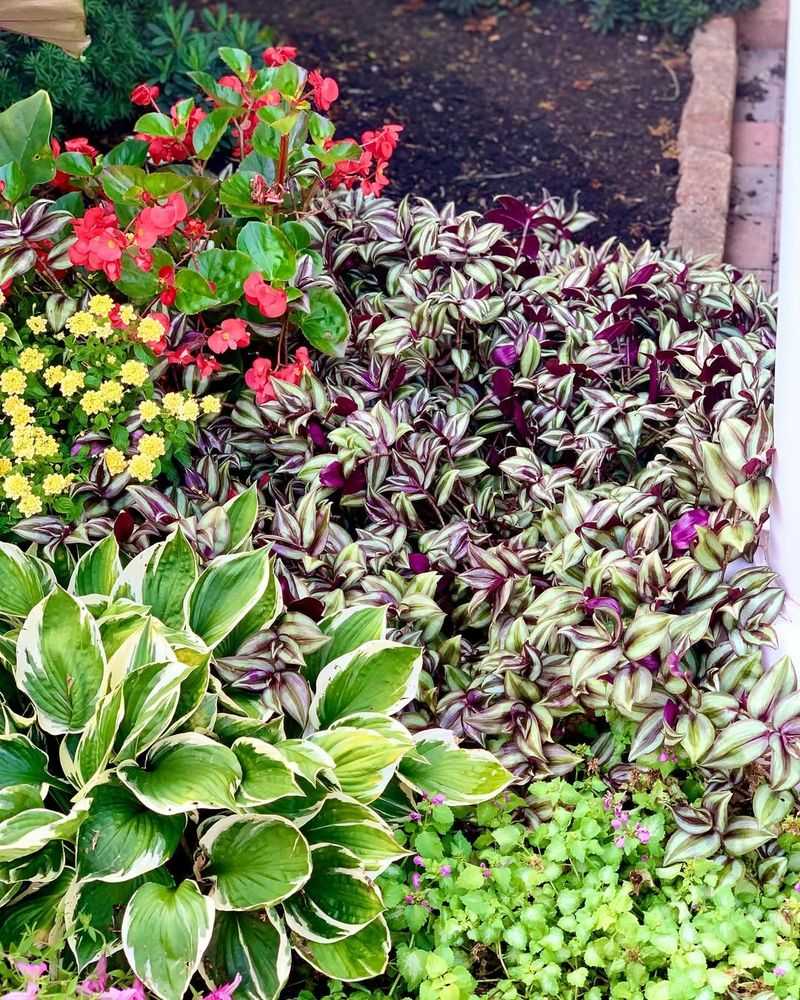
Hosta foliage provides architectural structure that anchors wandering Jew’s loose, cascading growth into cohesive garden designs.
The bold, ribbed leaves of hostas create strong focal points while wandering Jew softens edges and fills spaces between larger plants. This combination works beautifully in Georgia shade gardens where both plants flourish without direct afternoon sun.
Georgia’s climate suits many hosta varieties perfectly, though our hot summers mean choosing heat-tolerant cultivars ensures best performance.
Blue-leaved hostas offer cooling contrast against wandering Jew’s warm purple tones, while gold or chartreuse varieties create vibrant color echoes.
Variegated hostas add another layer of pattern complexity to the pairing.
Both plants prefer rich, moisture-retentive soil that drains well, making bed preparation simple when planting them together.
Hostas grow slowly compared to wandering Jew’s rapid spread, so position hostas first and fill around them with wandering Jew as living mulch.
This approach suppresses weeds while creating polished, professional-looking beds.
Hostas send up flower spikes in summer that add vertical interest and sometimes fragrance to your Georgia garden. These blooms appear well above wandering Jew foliage, ensuring both plants contribute different elements to the overall design.
The perennial nature of hostas provides permanent structure while wandering Jew can be easily refreshed or repositioned each season.
5. Boston Fern Thrives Alongside Wandering Jew In Georgia Humidity
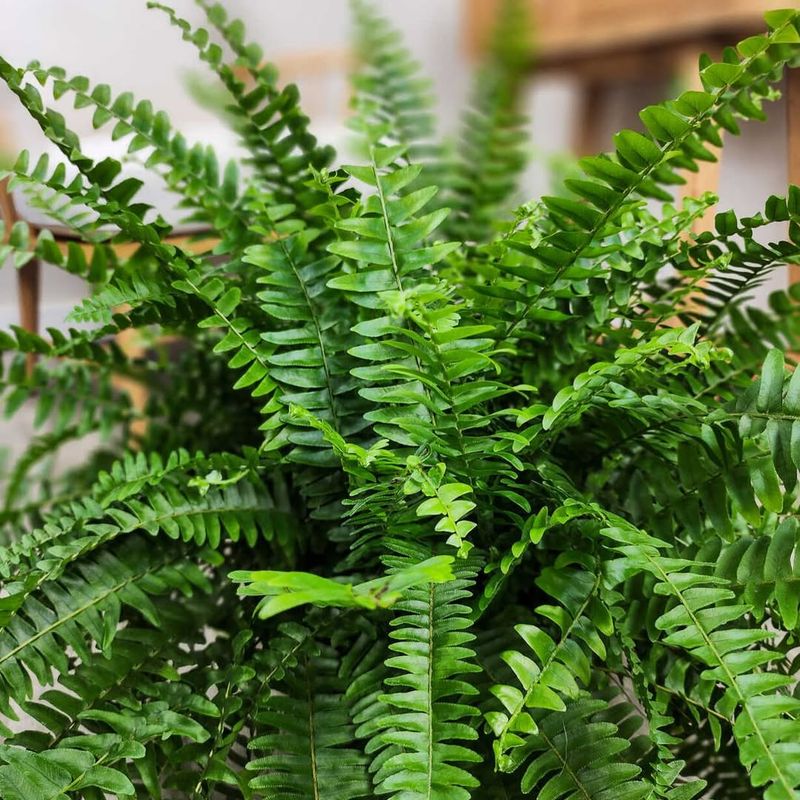
Boston ferns contribute elegant, arching fronds that create beautiful textural contrast against wandering Jew’s compact, colorful leaves.
Both plants absolutely love Georgia’s humid summers, thriving in conditions that challenge many other garden favorites.
The feathery fern foliage adds softness and movement while wandering Jew provides bold color underneath.
Georgia gardeners find these two plants incredibly easy to grow together because they share identical cultural requirements. They also appreciate the same soil conditions, preferring rich, organic matter that holds moisture without becoming waterlogged.
Ferns grow upward and outward in a fountain shape, reaching 18 to 36 inches tall and wide depending on growing conditions. This growth habit creates perfect canopy cover above wandering Jew without blocking light or dropping excessive leaf litter.
The combination works especially well in container gardens where both plants can cascade over pot edges together.
Both Boston ferns and wandering Jew benefit from regular misting during particularly hot, dry periods in Georgia, though our natural humidity usually provides adequate moisture.
They also respond well to monthly feeding with diluted liquid fertilizer during active growth.
Neither plant tolerates cold temperatures, so both need protection or indoor relocation before first frost arrives in Georgia gardens.
In Georgia landscapes, Boston ferns are often used to soften shady entryways and woodland borders where bold foliage alone can feel heavy.
Regular trimming of older fronds keeps the plant full and fresh through late summer without interrupting its natural fountain shape.
6. Begonia Keeps Color Strong Next To Wandering Jew All Season
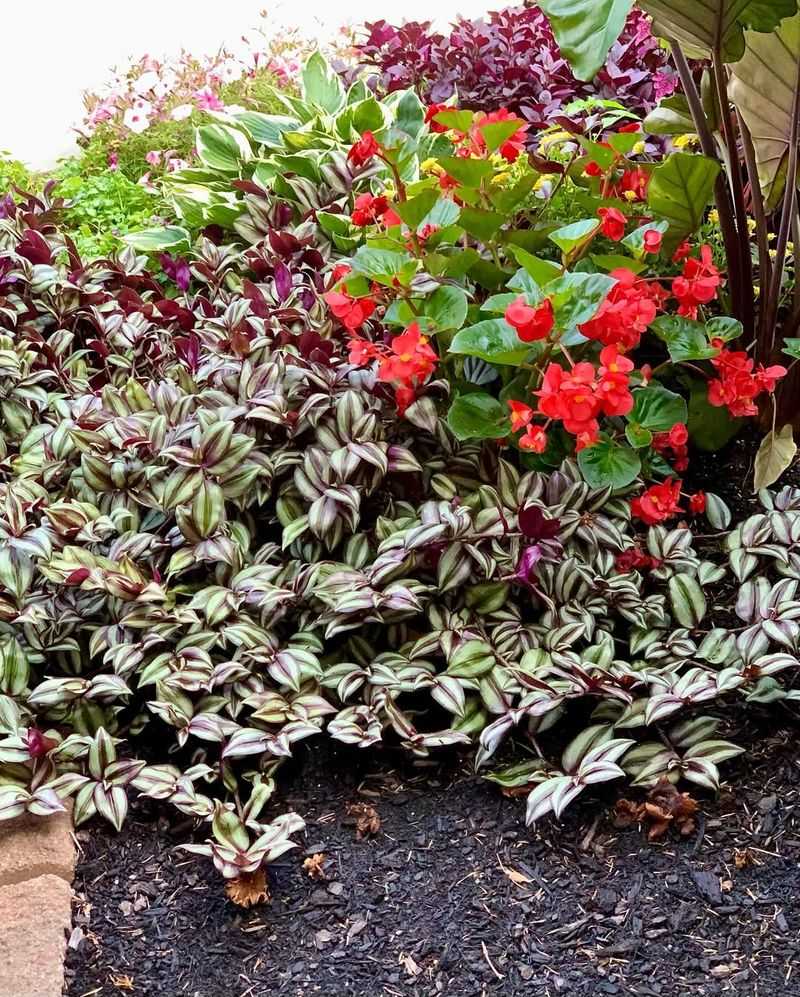
Begonias offer non-stop flowers and fancy foliage that complement wandering Jew from spring through fall across Georgia. Wax begonias provide constant blooms in red, pink, white, or coral shades that pop against purple wandering Jew leaves.
Rex begonias contribute wildly patterned foliage that rivals wandering Jew for visual drama in shade gardens.
Georgia’s warm nights and humid days create ideal conditions for begonias to flourish alongside wandering Jew throughout the growing season.
Both plants handle partial shade beautifully, though begonias tolerate slightly more sun than wandering Jew in Georgia gardens.
This flexibility allows creative placement in beds that receive varying light levels.
Tuberous begonias add another option with their large, rose-like flowers that bloom above wandering Jew groundcover. These showy varieties prefer cooler temperatures, performing best during spring and fall in Georgia rather than peak summer heat.
Mixing different begonia types with wandering Jew creates changing displays as seasons progress.
Both plants appreciate regular watering but need soil that drains quickly to prevent root problems common in Georgia’s heavy clay soils. Adding compost or pine bark fines improves drainage while providing organic matter both plants love.
Begonias grow 6 to 18 inches tall depending on type, creating varied heights above wandering Jew’s low profile that adds depth to planting designs.
7. Sweet Potato Vine Creates A Lush Combo With Wandering Jew
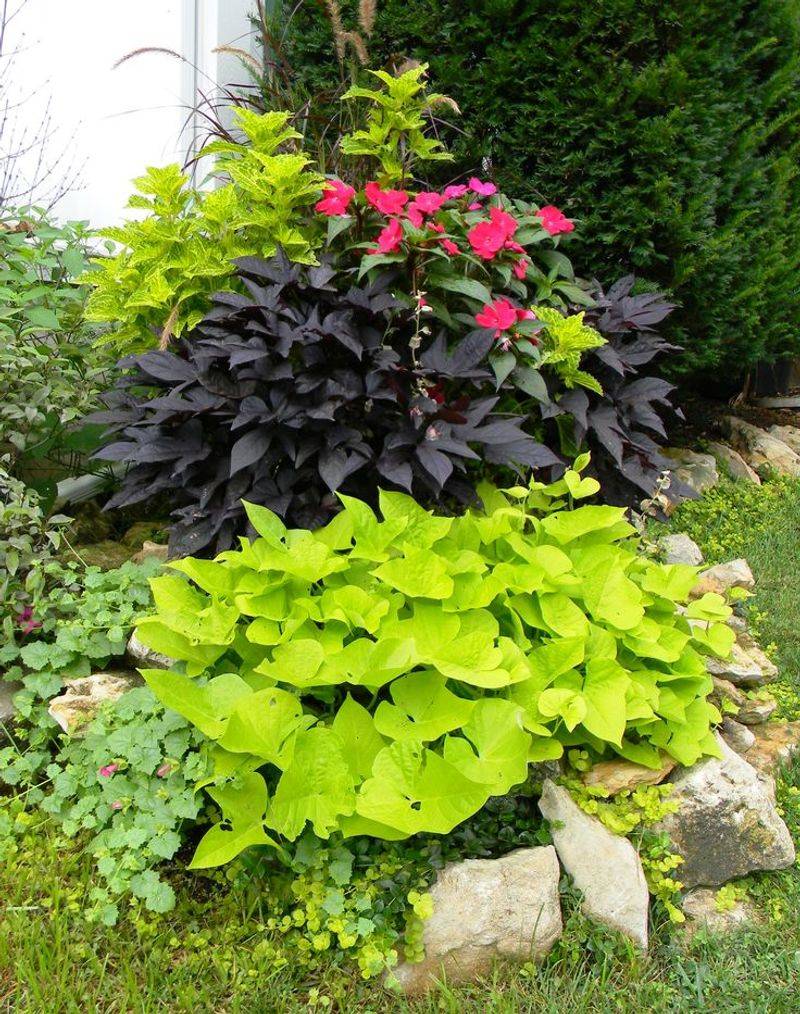
Sweet potato vine brings vigorous growth and bold leaf colors that match wandering Jew’s energetic spreading habit perfectly.
Chartreuse varieties create stunning color contrasts against purple wandering Jew, while dark purple sweet potato vine tones blend for sophisticated monochromatic schemes.
Both plants grow fast enough to fill containers and garden beds quickly across Georgia.
These two groundcovers share similar cultural needs, thriving in warm Georgia weather with regular moisture and well-draining soil.
Sweet potato vine tolerates more sun than wandering Jew, making it perfect for transition areas between shade and sun in Georgia landscapes.
Both plants also handle brief dry spells once established, though they look best with consistent watering.
The combination works spectacularly in hanging baskets and containers where both vines can cascade over edges together. Their intertwining stems create dense, colorful curtains that hide container edges completely.
In ground plantings, they form thick living mulch that suppresses weeds while looking intentionally designed rather than accidentally overgrown.
Sweet potato vine grows even faster than wandering Jew in hot Georgia summers, so occasional trimming keeps both plants balanced and prevents one from overwhelming the other.
Neither plant requires deadheading or fussy maintenance, making this pairing ideal for low-maintenance Georgia gardens.
Both plants also root easily from cuttings, allowing you to propagate favorites for next season or share with fellow gardeners.
8. Heuchera Adds Texture Contrast To Wandering Jew Plantings
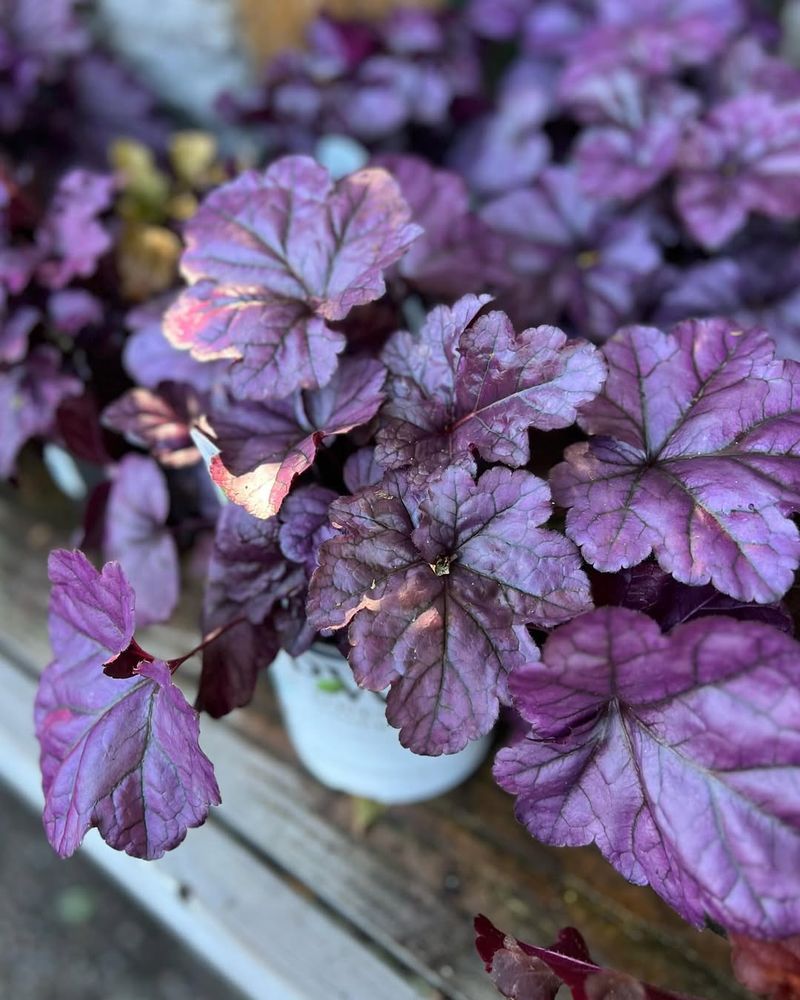
Heuchera brings incredible leaf colors and textures that elevate wandering Jew from simple groundcover to sophisticated garden feature.
Also called coral bells, heuchera produces mounds of ruffled, often metallic-looking foliage in shades ranging from lime green to deep burgundy and even peachy coral.
These colors play beautifully against wandering Jew’s purple-striped leaves in Georgia shade gardens.
Georgia gardeners find heuchera adaptable, especially newer heat-tolerant varieties for southern climates. Heuchera and wandering Jew both prefer partial shade, though heuchera handles a little more Georgia sun with enough moisture.
They share preferences for well-draining soil rich in organic matter.
Heuchera grows in compact clumps 8 to 16 inches tall and wide, creating defined accent points while wandering Jew flows around them as living mulch.
This growth habit difference prevents competition while creating professional-looking layered designs.
Heuchera also sends up delicate flower spikes in late spring that add vertical interest above both plants.
Both plants benefit from mulching with shredded leaves or pine straw to maintain soil moisture during hot Georgia summers.
Heuchera’s evergreen or semi-evergreen foliage provides winter interest in Georgia gardens after wandering Jew goes dormant.
The long season of color makes heuchera a strong choice for year-round appeal, not just summer pairings with wandering Jew. Together, they create a layered look that feels intentional instead of overgrown, even in smaller Georgia garden beds.
Heuchera’s sturdy crown holds its shape through heavy summer rains, helping anchor planting areas where wandering Jew might otherwise spread too loosely.
With occasional division every few years, heuchera stays vigorous and keeps the overall planting neat without constant maintenance.