9 Smart Container Plant Picks For Arizona Patios Before Temperatures Spike
Arizona heat does not wait for your containers to catch up. One week your patio looks full and fresh, and the next the leaves are scorched and the soil is bone dry by midday.
The right container plants make all the difference before the real heat settles in.
You might want to water more, fertilize harder, or replace everything before it gets worse. That quick reaction often creates more stress.
Some plants struggle not because you did something wrong, but because they were never built for what is coming.
Choosing wisely before temperatures spike can spare you constant rescue missions and keep your patio steady through extreme heat. A few smart picks can help you stay ahead of summer instead of scrambling to recover from it.
1. Lantana Turns Brutal Sun Into Nonstop Color
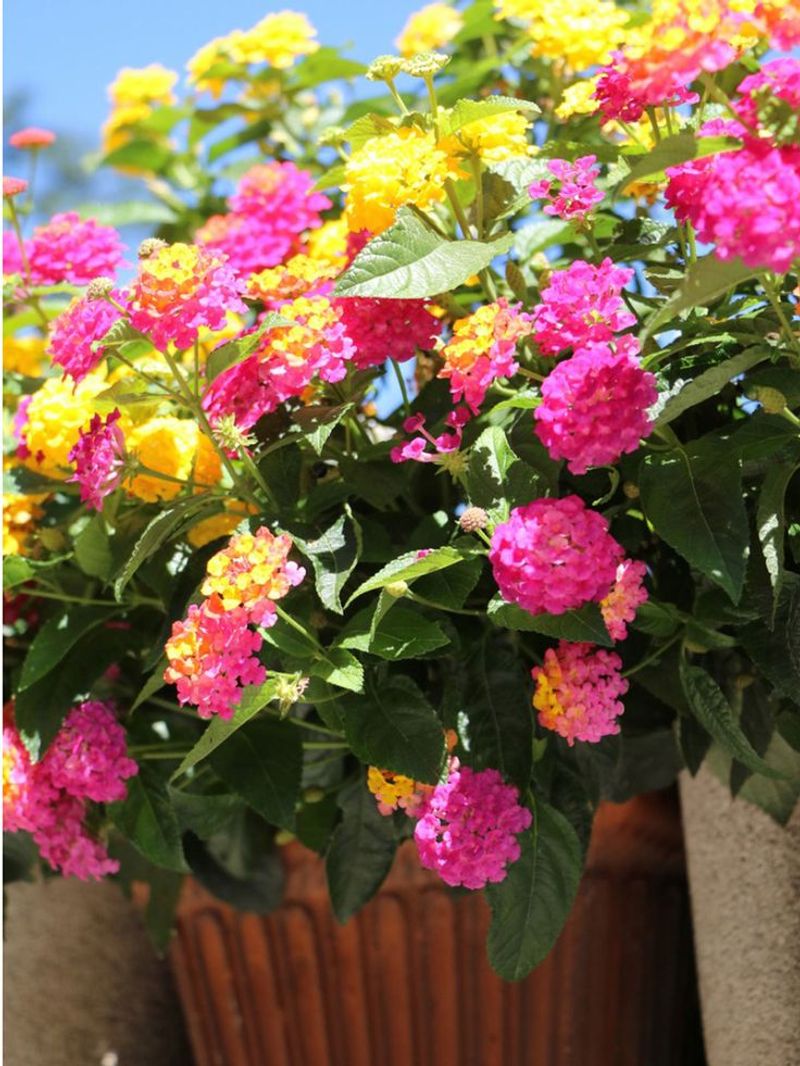
Lantana does not flinch under Arizona sun. When temperatures soar past 100 degrees and other flowers wilt, lantana keeps pumping out clusters of vibrant blooms in shades of orange, yellow, pink, red, and purple.
Butterflies and hummingbirds flock to these nectar-rich flowers, turning your patio into a lively wildlife hub.
Container culture suits lantana perfectly. Select a pot between 14 and 18 inches across with multiple drainage holes at the bottom.
Fill it with a fast-draining potting mix, not heavy garden soil. Position your container where it receives at least six hours of direct sun daily.
Watering needs are moderate once established. Soak the soil thoroughly, then let the top inch or two dry out before watering again.
During peak heat, you might water every other day. Avoid keeping the soil constantly wet, as lantana tolerates drought better than soggy roots.
Pinch back stems occasionally to encourage bushier growth and more flower production. Lantana grows quickly in Arizona’s warm climate, sometimes becoming leggy if left untrimmed.
Regular light pruning keeps plants compact and covered with blooms from spring through late fall.
Fertilize lightly during the growing season, as too much nitrogen can reduce flowering and produce excess leafy growth. Good air circulation around the container helps prevent powdery mildew during humid monsoon periods.
In frost-prone areas of Arizona, move pots to a protected spot or cover them on cold nights to prevent damage.
2. Bougainvillea Explodes With Color When Heat Rises
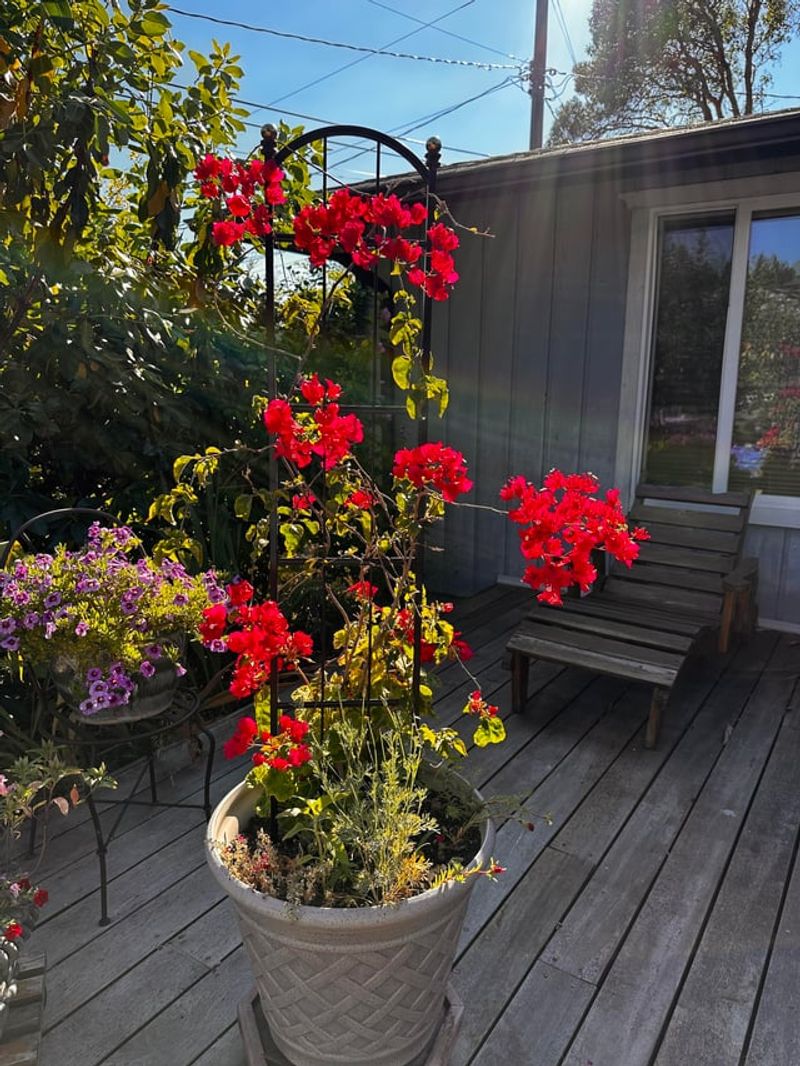
Bougainvillea delivers drama like no other patio plant. Those brilliant papery bracts in magenta, orange, red, or white create cascading walls of color that intensify as temperatures climb.
What looks like petals are actually modified leaves surrounding tiny white flowers, and they last for months under Arizona’s relentless sun.
Container size matters significantly with bougainvillea. Choose a large pot at least 18 inches in diameter because these vigorous growers develop extensive root systems.
Excellent drainage is non-negotiable. Use a quality cactus mix or add extra perlite to regular potting soil.
Full sun placement produces the most spectacular blooms. Bougainvillea actually blooms more profusely when slightly stressed by heat and limited water.
Once established, water deeply but infrequently, allowing soil to dry between waterings. Overwatering encourages leafy growth at the expense of those stunning bracts.
Expect rapid growth during Arizona’s long warm season. Bougainvillea can climb, cascade, or be pruned into a bushy form depending on your preference.
Wear gloves when handling because most varieties have sharp thorns. With minimal care, container bougainvillea transforms patios into tropical-looking retreats despite the desert climate.
3. Agave Brings Bold Desert Structure To Patio Pots
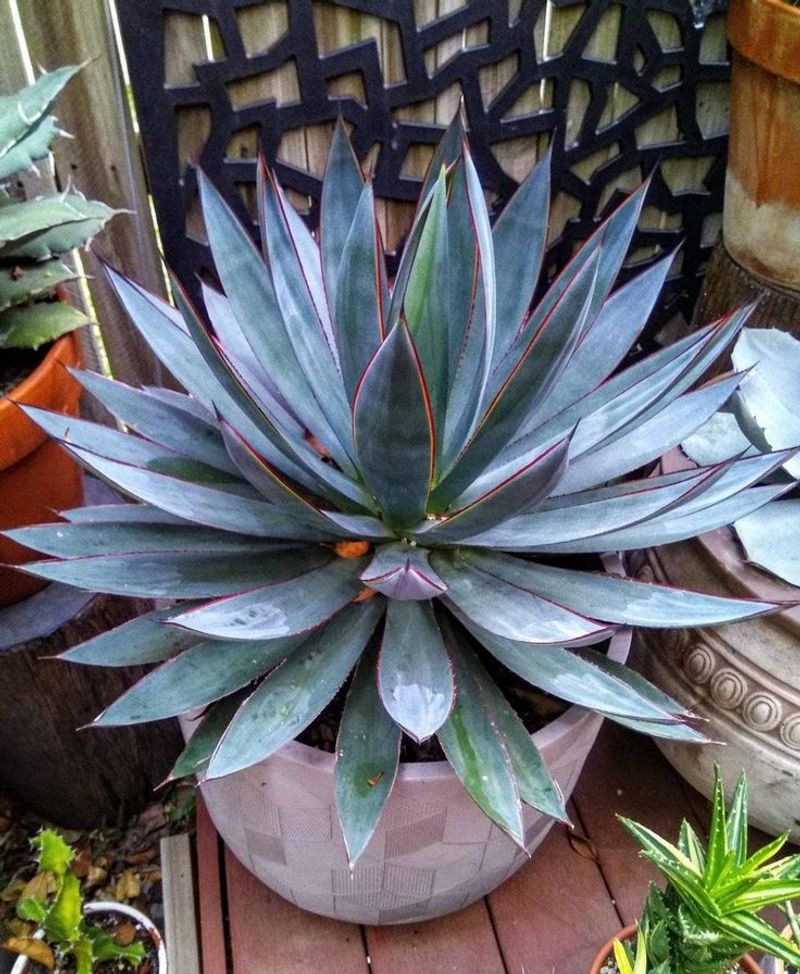
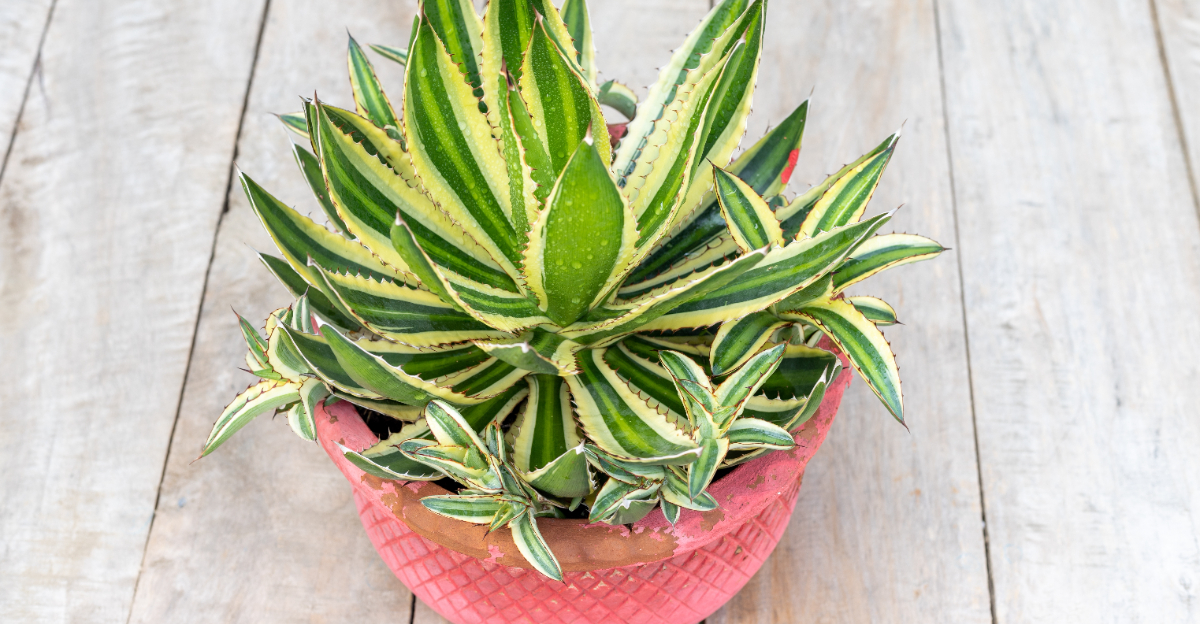
Architectural presence defines agave in container settings. These sculptural succulents feature thick, pointed leaves arranged in perfect rosettes that command attention without demanding constant care.
Blue-gray, green, or variegated varieties offer striking focal points for Arizona patios.
Pot selection requires thought with agave. Wide, shallow containers work better than tall narrow ones because agave roots spread horizontally.
Choose heavy ceramic or concrete pots that won’t tip over as the plant grows top-heavy. Fill containers with cactus mix or create your own by blending potting soil with coarse sand and perlite in equal parts.
Full sun exposure suits most agave species perfectly. These desert natives evolved to handle intense Arizona light and heat.
Place containers where they receive six to eight hours of direct sun daily. Gradual acclimation helps if moving plants from shadier locations.
Watering requirements are minimal once agave settles in. During establishment, water every week or two.
After that, monthly deep watering suffices through hot months, with even less during cooler seasons. Overwatering causes root rot far more quickly than underwatering harms these drought-adapted plants.
Agave rarely needs fertilizer and thrives on neglect, making it ideal for busy homeowners.
Ensure the container has excellent drainage holes, since standing water at the base can quickly damage roots. Wear gloves when handling agave, as many varieties have sharp terminal spines and serrated leaf edges.
In areas that experience winter freezes, position pots near a south-facing wall or under cover to reduce cold damage.
4. Aloe Handles Arizona Heat Without Drama
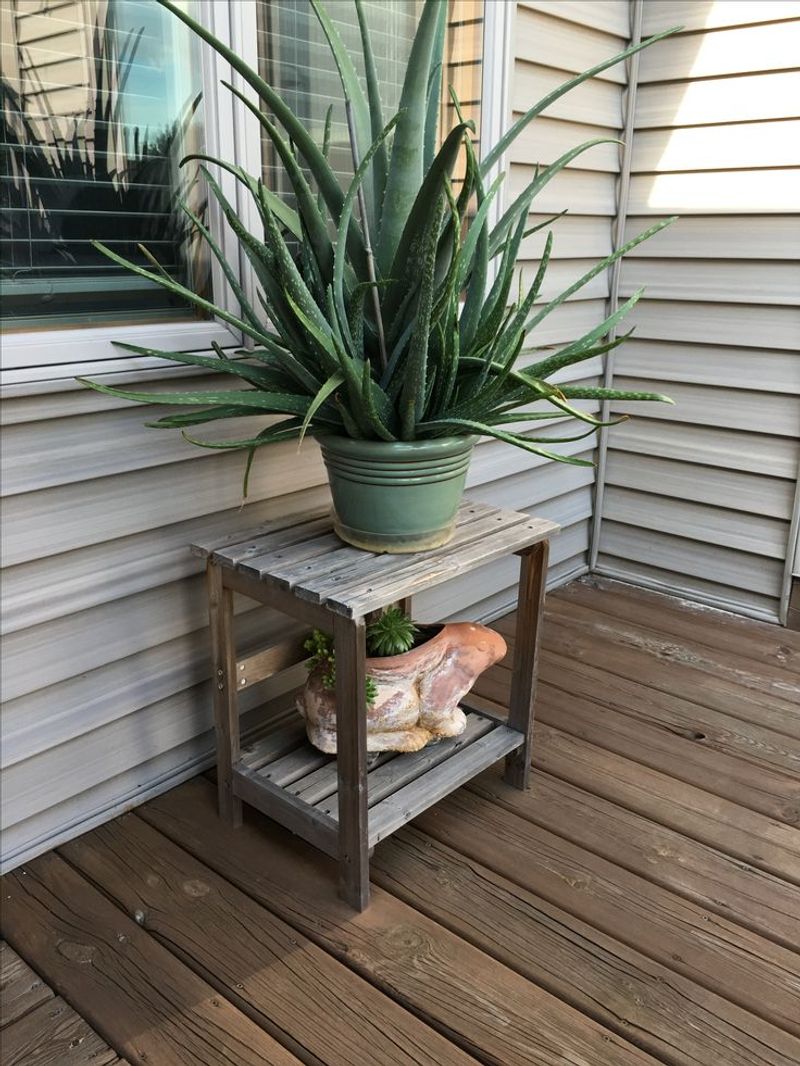
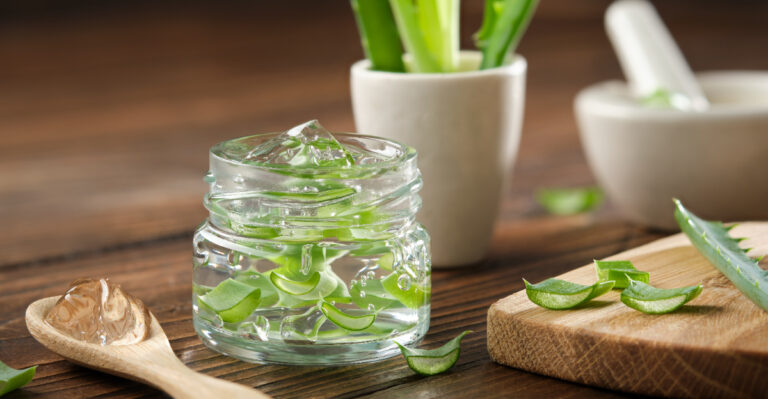
Practicality meets beauty in container-grown aloe. Beyond its medicinal gel, aloe offers sculptural form and surprising flower spikes in shades of orange, red, or yellow.
Dozens of aloe species thrive in Arizona containers, from compact varieties perfect for small spaces to larger specimens that anchor patio corners.
Soil composition directly impacts aloe success. These succulents demand gritty, fast-draining mixes.
Combine cactus soil with pumice or coarse sand to ensure water flows through quickly. Containers must have generous drainage holes because sitting in moisture causes more problems than Arizona’s dry air ever will.
Sun acclimation prevents leaf burn on newly potted aloe. Start plants in morning sun with afternoon shade, gradually increasing exposure over two to three weeks.
Established aloe tolerates full Arizona sun beautifully, though some varieties appreciate light afternoon protection during peak summer months.
Watering frequency depends on container size and temperature. During spring and early summer, water every 10 to 14 days, allowing soil to dry completely between waterings.
Reduce frequency as temperatures peak. Aloe stores water in its thick leaves, making it remarkably forgiving of occasional neglect.
Watch for plump, firm leaves as signs of proper hydration.
5. Mexican Heather Fills Containers With Soft, Steady Bloom
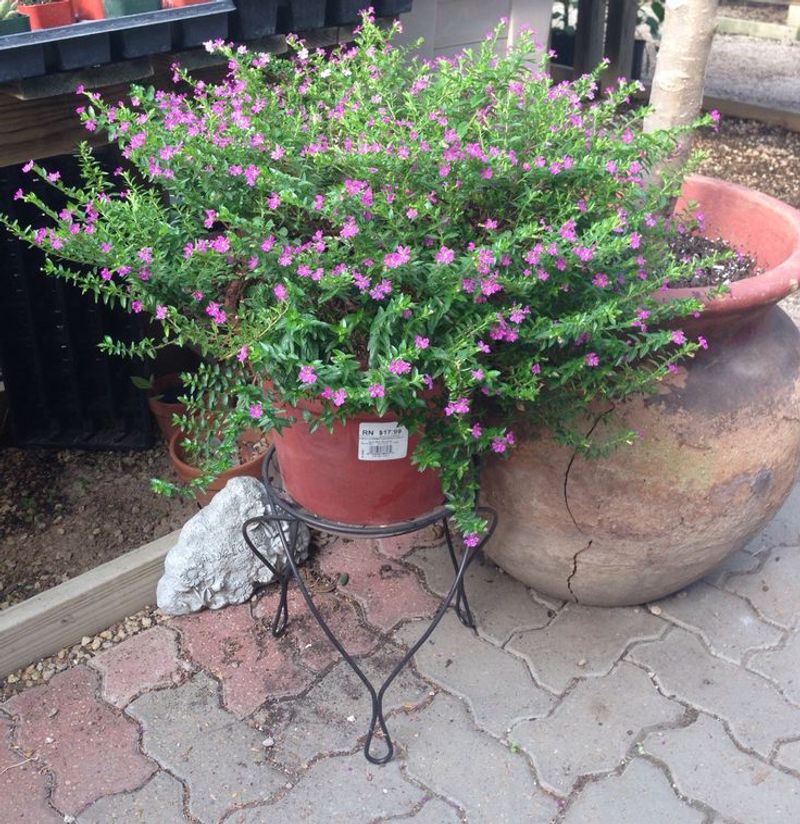
Delicate appearance masks tough constitution in Mexican heather. This low-growing perennial produces clouds of tiny purple, pink, or white flowers above fine-textured foliage.
Unlike many heat-lovers, Mexican heather offers soft, romantic appeal rather than bold drama, creating gentle contrast on Arizona patios.
Medium-sized pots between 12 and 16 inches work well for Mexican heather. Good drainage remains important, though this plant tolerates slightly more moisture than desert natives.
Use quality potting mix amended with compost for best results. Multiple plants in one large container create fuller displays.
Light requirements show flexibility. Mexican heather performs beautifully in full sun across most Arizona locations but appreciates light afternoon shade when temperatures exceed 110 degrees.
This partial shade tolerance makes it valuable for patios with varied light conditions throughout the day.
Consistent moisture keeps Mexican heather blooming reliably. Unlike succulents, this plant prefers evenly moist soil without drying out completely between waterings.
Check containers daily during hot weather, watering when the top inch feels dry. Mulching soil surfaces helps retain moisture and keeps roots cooler.
Light trimming after heavy bloom cycles encourages fresh growth and continued flowering through Arizona’s extended growing season.
6. Plumbago Adds Cooling Blue Tones To Hot Patios
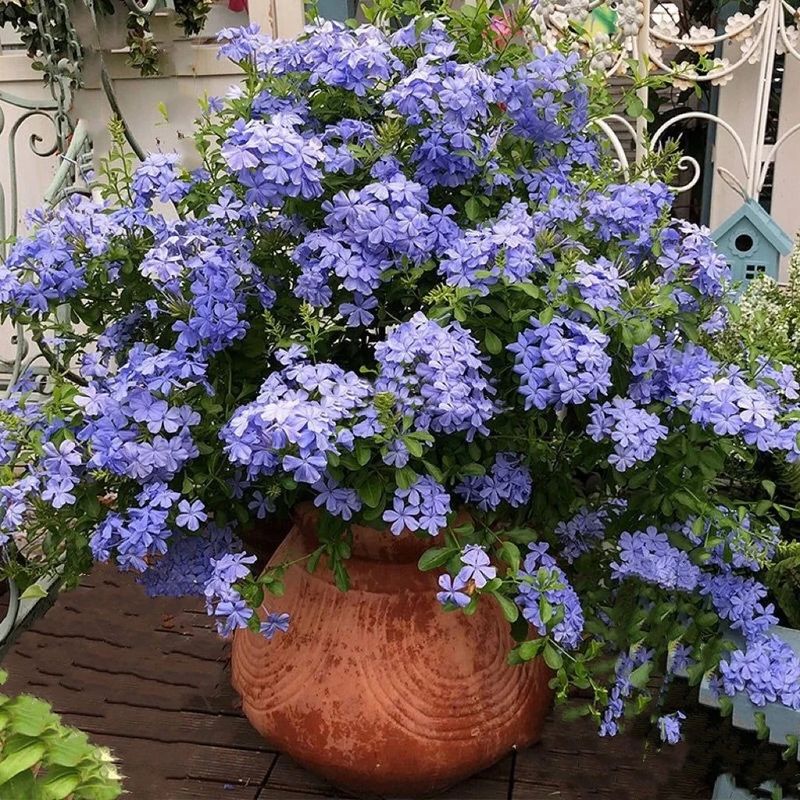
Sky-blue flowers bring visual refreshment to sun-baked Arizona patios. Plumbago produces clusters of delicate blue blooms continuously from spring through fall, creating a cooling color effect when temperatures soar.
White-flowering varieties also exist, but the classic blue cultivars remain most popular for their rare color in heat-tolerant plants.
Large containers accommodate plumbago’s vigorous growth habit. Choose pots at least 18 inches across to support mature size.
This plant can reach 3 to 4 feet tall and wide in containers, though regular pruning keeps it more compact. Ensure containers have excellent drainage and use standard potting mix enriched with compost.
Sun exposure requires balance in Arizona. Plumbago thrives in full morning sun but benefits from slight afternoon protection when temperatures climb above 105 degrees.
East-facing patio locations work perfectly, providing bright light without the most intense afternoon heat. Too much shade reduces flowering significantly.
Regular watering maintains continuous blooms. Unlike drought-tolerant natives, plumbago needs consistent moisture to perform well.
Water deeply when the top two inches of soil feel dry, which might mean daily watering during peak summer heat. Fertilize monthly during the growing season with balanced liquid fertilizer.
Prune lightly throughout summer to shape plants and remove spent flowers, encouraging fresh blooms.
7. Angelonia Keeps Blooming When Others Fade
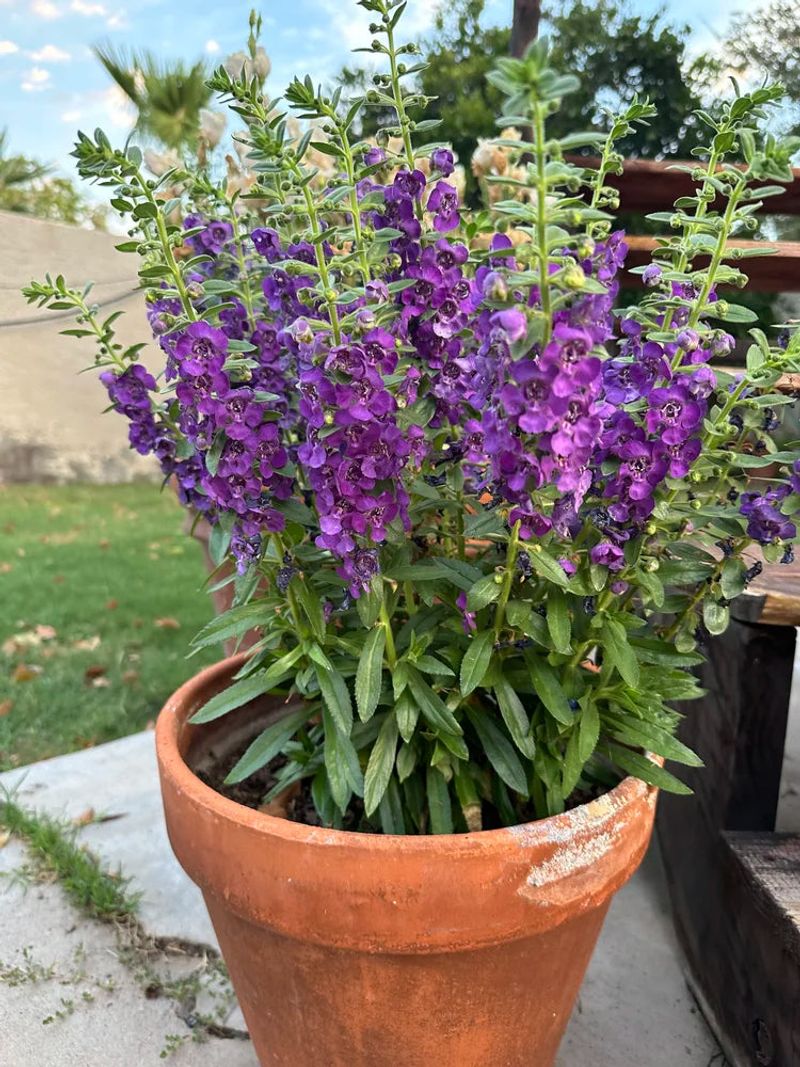
Reliability defines angelonia in Arizona container gardens. These upright plants produce spikes of orchid-like flowers in purple, pink, white, or bicolor combinations that continue blooming through conditions that shut down most annuals.
Foliage remains attractive even between flower flushes, maintaining container appeal.
Well-draining potting mix prevents root problems in angelonia containers. Use commercial potting soil straight from the bag or lighten heavy mixes with perlite.
Pots between 10 and 14 inches work well for single plants, while larger containers can hold multiple angelonia for fuller displays. Adequate drainage holes are essential.
Full sun produces the most abundant flowering. Angelonia evolved in tropical climates with intense light and handles Arizona’s bright conditions beautifully.
Position containers where plants receive at least six hours of direct sun. Morning sun with light afternoon shade works in extremely hot microclimates.
Watering needs increase during Arizona’s hottest months. Check soil daily, watering when the top inch feels dry to the touch.
Angelonia wilts noticeably when too dry but recovers quickly after watering. Deadheading spent flower spikes encourages continuous blooming, though angelonia often self-cleans.
Feed every two weeks with diluted liquid fertilizer during active growth for best performance and flower production.
8. Pentas Thrive In Warm Air And Bright Light
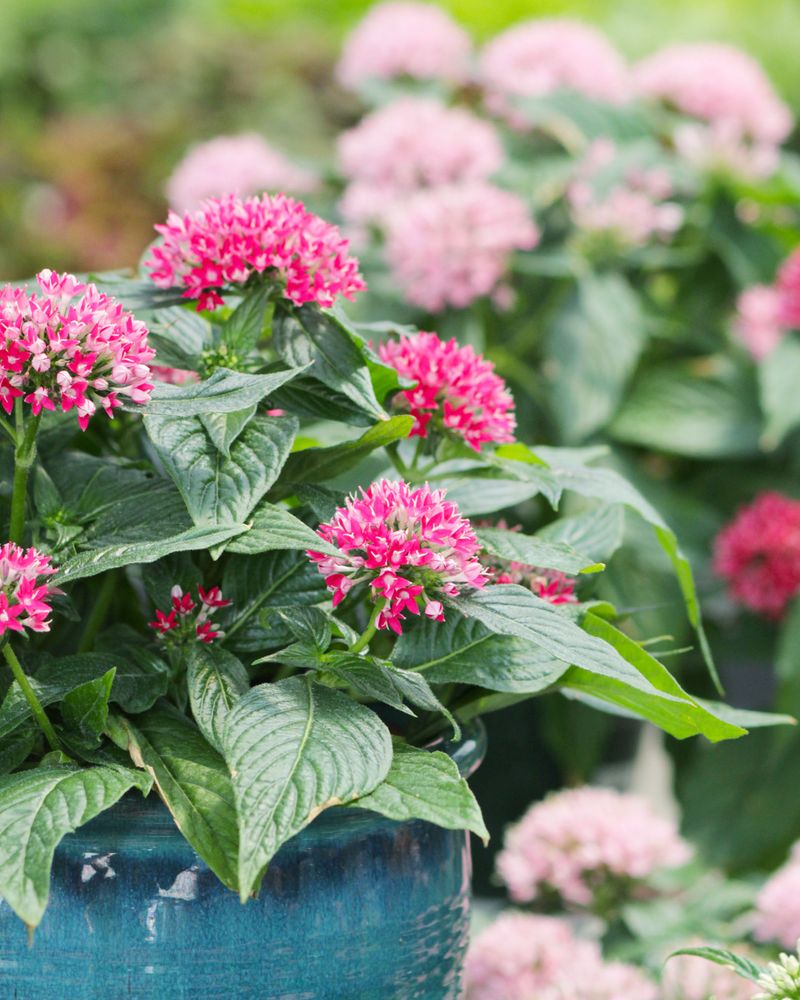
Butterfly magnets with staying power describe pentas perfectly. Star-shaped flowers cluster in rounded heads of red, pink, white, or lavender, creating constant activity as pollinators visit throughout the day.
Pentas actually prefer hot weather, making them ideal for Arizona containers when many plants struggle.
Larger containers support pentas best. These plants can grow 18 to 24 inches tall and wide in Arizona’s long growing season, requiring pots at least 14 inches across.
Use quality potting mix with good water retention but adequate drainage. Pentas tolerate slightly heavier soils better than many heat-lovers.
Light preferences lean toward full sun with flexibility. Pentas bloom most heavily with six to eight hours of direct sun daily.
In locations where afternoon temperatures regularly exceed 110 degrees, partial afternoon shade prevents stress without significantly reducing flowering. East or west-facing patio spots often provide ideal conditions.
Consistent watering keeps pentas performing through summer. These plants prefer evenly moist soil without drying out completely between waterings.
During peak heat, daily watering may be necessary. Mulch container surfaces to conserve moisture and moderate soil temperature.
Remove spent flower clusters to encourage new blooms. Monthly fertilizing with balanced formula supports continuous flower production throughout Arizona’s extended warm season.
9. Firecracker Plant Cascades Beautifully Over Pot Edges
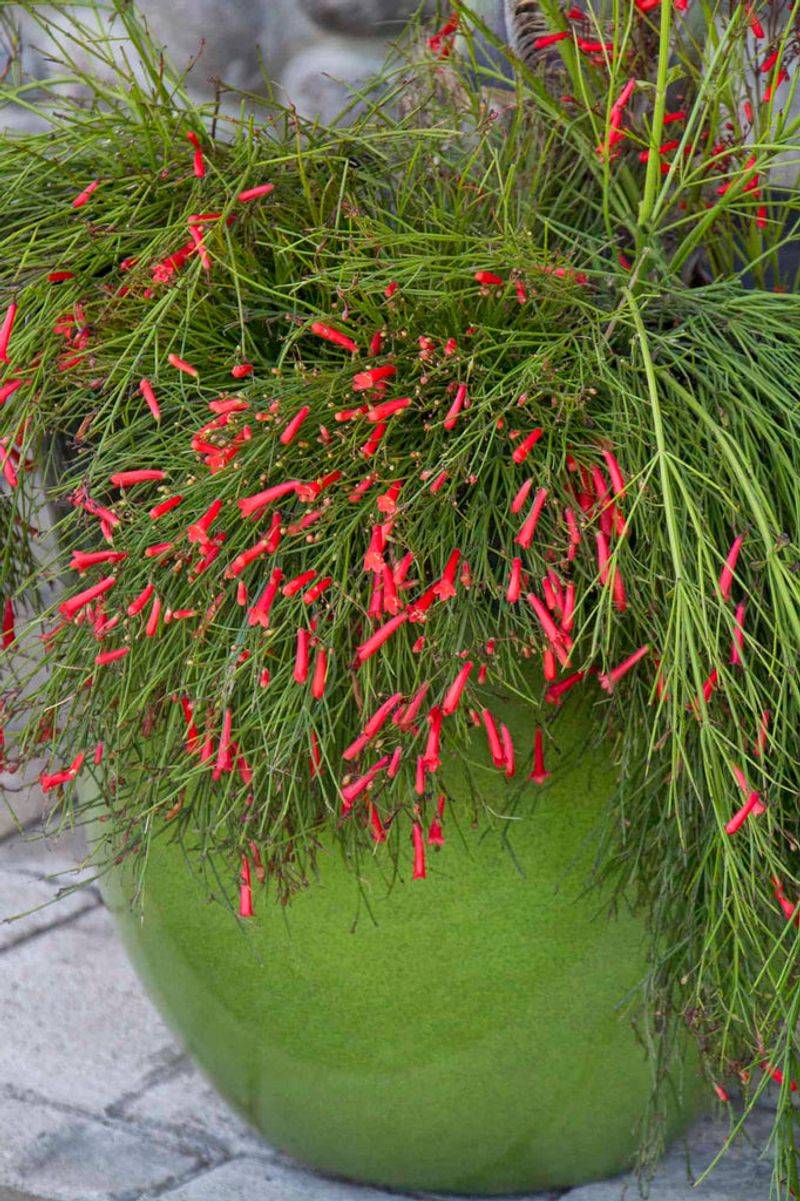
Cascading color and hummingbird appeal combine in firecracker plant. Tubular red or orange flowers line arching stems that spill gracefully over container edges, creating fountains of color from spring through fall.
This spreading growth habit makes firecracker plant perfect for adding vertical dimension to Arizona patios.
Wide, shallow containers complement firecracker plant’s spreading nature. Choose pots at least 16 inches across but not necessarily deep, as roots spread horizontally.
Excellent drainage prevents problems in Arizona’s intense sun. Standard potting mix works well, though adding extra perlite improves drainage.
Full sun placement maximizes flowering. Firecracker plant evolved in sunny climates and handles Arizona’s intense light without complaint.
Position containers where plants receive six to eight hours of direct sun. The more light they receive, the more profusely they bloom.
Watering requirements fall between succulents and moisture-lovers. Allow the top inch or two of soil to dry slightly between waterings, then soak thoroughly.
During extreme heat, this might mean watering every other day. Firecracker plant tolerates brief dry periods better than constantly wet soil.
Trim back stems occasionally to control spread and encourage bushier growth.
Hummingbirds visit firecracker plant flowers constantly, providing entertainment and helping pollinate other patio plants throughout Arizona’s long blooming season.