9 Smart Plant Choices For California’s Water-Restricted Gardens
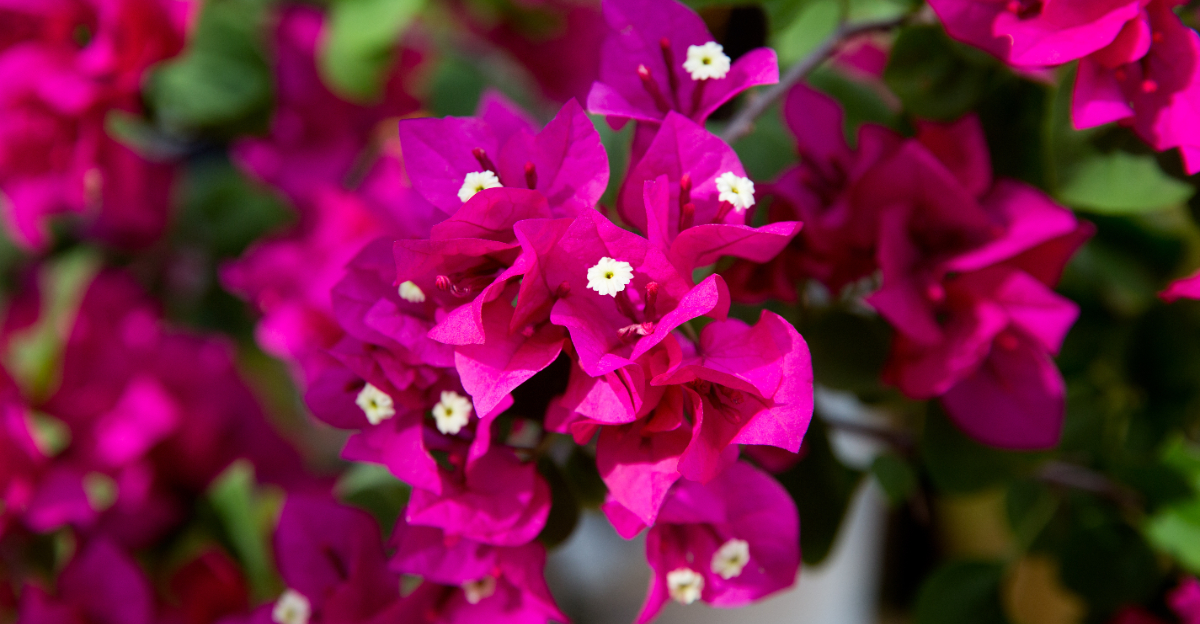
Gardening in California these days often comes with one big challenge: water. Between long dry summers and local watering restrictions, many gardeners are rethinking the kinds of plants they grow.
The days of thirsty landscapes that demand constant irrigation are quickly fading. But here’s the fun part.
A water-smart garden can actually be more interesting, colorful, and easier to care for than the old high-maintenance setups.
Many drought-tolerant plants bring bold textures, vibrant flowers, and year-round personality without constantly begging for the hose.
Think silvery foliage that shimmers in the sun, tough shrubs that bloom through heat waves, and sculptural plants that practically thrive on neglect.
Once established, many of these choices need very little extra watering, which means less work for you and a much happier water bill.
If you want a yard that looks fantastic while playing nicely with California’s water rules, these smart plant picks are ready to shine.
1. Manzanita (Arctostaphylos)
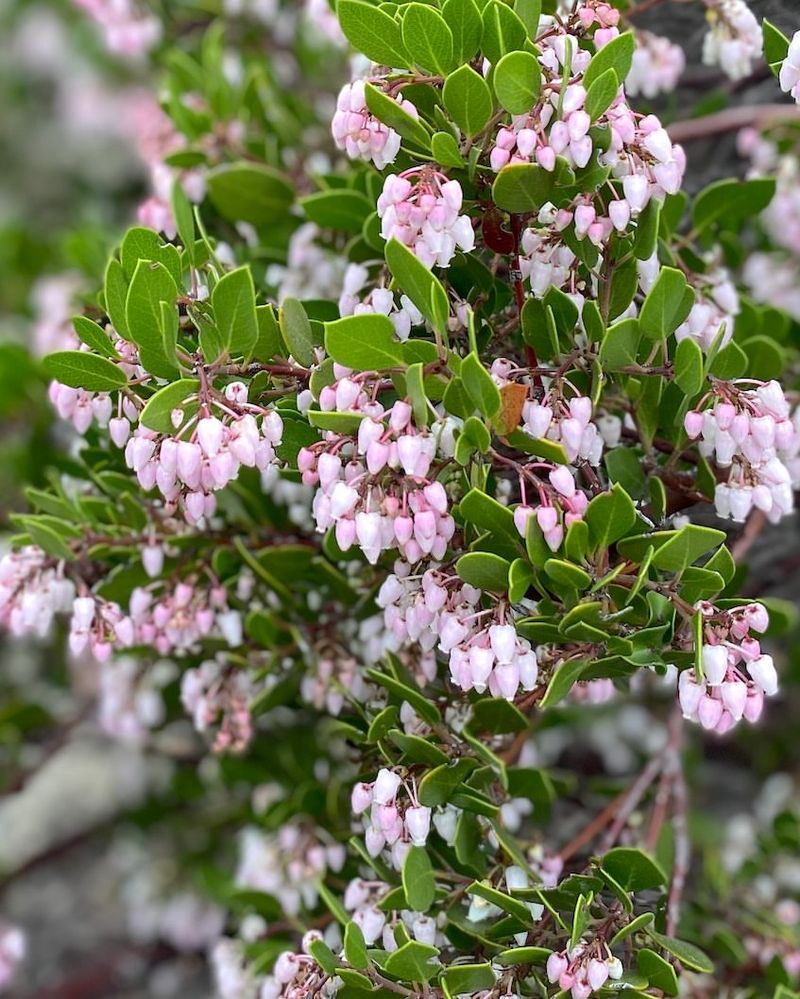
Walk through almost any wild stretch of California and you will likely spot manzanita. That smooth, reddish-brown bark is one of the most recognizable features in the California landscape.
It looks almost like polished wood, and it gives the plant a sculptural, artistic quality even when it is not in bloom.
Manzanita is a tough native shrub that handles dry summers with ease. Once the roots settle in, usually after the first year or two, this plant asks for almost nothing.
No extra watering, no heavy pruning, and no fussing. It simply grows and thrives on its own schedule, which is exactly what a water-restricted garden needs.
In late winter and early spring, small clusters of white or pink bell-shaped flowers cover the branches. Hummingbirds and native bees absolutely love them.
After flowering, small berry-like fruits develop, which birds and other wildlife enjoy. There are dozens of manzanita species and varieties available in California, ranging from low ground covers to tall shrubs over six feet.
Whether you have a small slope to stabilize or a wide open yard to fill, there is a manzanita that will fit right in and look stunning doing it.
2. California Lilac (Ceanothus)
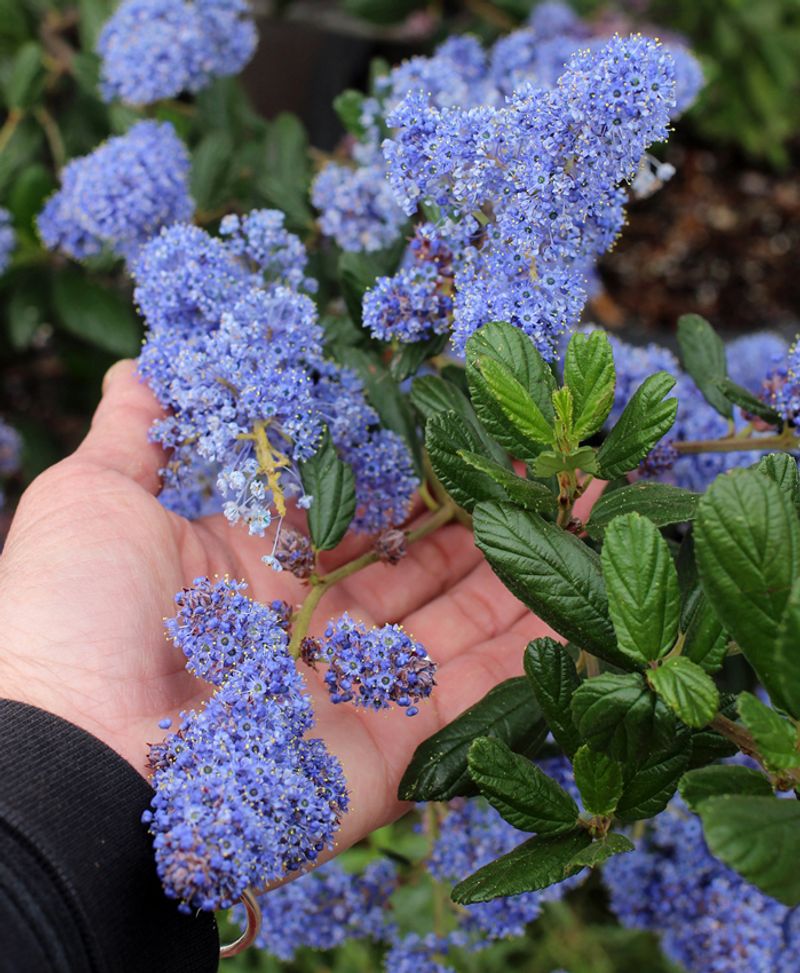
Few plants put on a show quite like California Lilac. When it bursts into bloom, those deep blue and purple flower clusters practically stop traffic.
Gardeners across California have fallen in love with this native shrub, and it is easy to understand why.
Ceanothus grows naturally throughout the state, from coastal bluffs to inland hillsides. Because it evolved here, it has learned to survive on very little water.
Once established, it rarely needs any irrigation beyond normal rainfall, making it one of the most water-smart choices you can plant in a California garden.
Most varieties grow between three and ten feet tall, so you can find one that fits almost any space. The blooms appear in early spring and attract bees and butterflies in impressive numbers.
Birds also love the seeds that follow the flowers. Plant it in full sun with well-draining soil, and avoid overwatering, especially in summer.
Too much moisture can actually cause problems for this tough shrub. Give it space, a little patience, and it will reward you with years of color and wildlife activity without asking for much in return.
3. Toyon (Heteromeles arbutifolia)
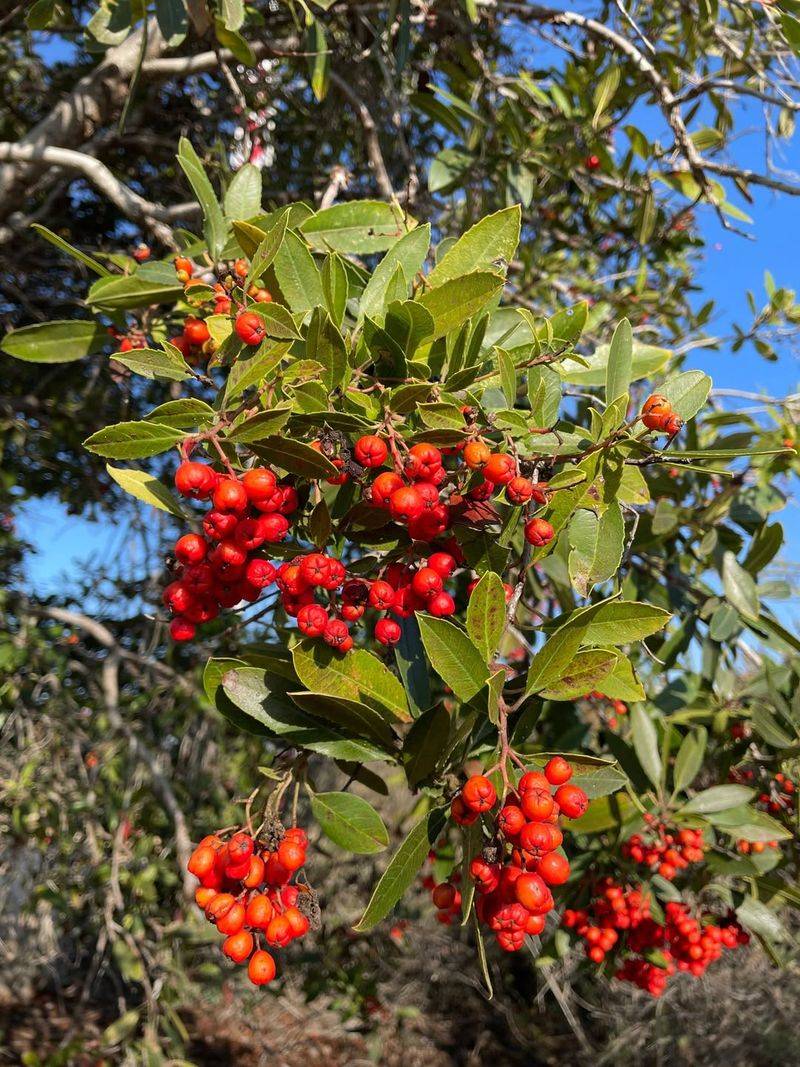
Hollywood actually got its name from toyon. Early settlers saw so many of these berry-covered shrubs on the local hillsides that they nicknamed the area after them.
That fun piece of California history makes this plant even more worth having in your yard.
Toyon is a large evergreen shrub that can grow up to fifteen feet tall, though it can be pruned to stay smaller. Its dark green, leathery leaves stay on the plant year-round, giving your garden structure and privacy even in the driest months.
In summer, flat-topped clusters of small white flowers appear, drawing in pollinators from all directions.
The real showstopper comes in winter when bright red berries ripen on the branches. Cedar waxwings, robins, and other birds flock to toyon for these berries, turning your California garden into a wildlife hotspot during the cooler months.
This plant is extremely drought tolerant once established and grows well in full sun or partial shade. It handles poor, rocky soil without complaint, making it a reliable choice for slopes, borders, or as a natural privacy screen.
Few plants offer this much beauty, wildlife value, and water efficiency all in one package.
4. Lavender (Lavandula)
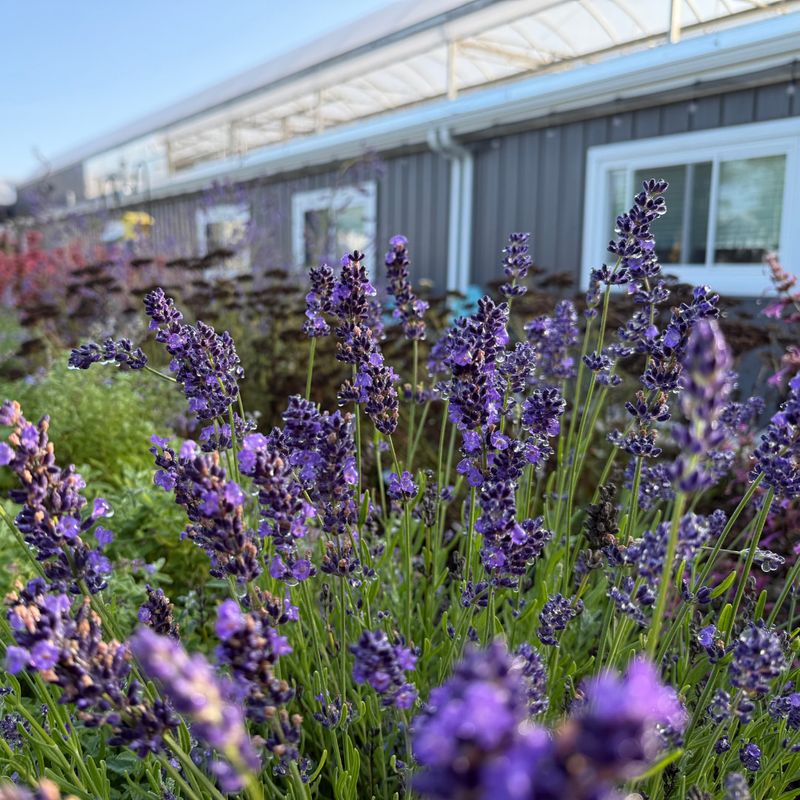
There is something almost magical about walking past a lavender plant in full bloom. That soft purple color and that unmistakable fragrance make it one of the most beloved garden plants in the world.
And here in California, lavender is right at home.
Lavender loves heat, sun, and dry conditions, which makes it perfectly suited for water-restricted California gardens.
Once it gets established, usually within the first growing season, it can handle long dry stretches without any help from a hose.
Plant it in well-drained soil, give it full sun, and avoid overwatering, because soggy roots are the one thing lavender truly cannot handle.
Beyond its beauty, lavender is a powerhouse for pollinators. Bees, butterflies, and hummingbirds visit constantly when it is in bloom.
The fragrant oils in the leaves and flowers also help repel certain garden pests naturally. There are several varieties that grow well across different California climates, from coastal areas to inland valleys.
Spanish lavender and English lavender are both popular choices. Trim the plant back lightly after each bloom cycle to keep it tidy and encourage fresh growth.
With very little effort, lavender delivers big rewards season after season.
5. Agave (Agave)
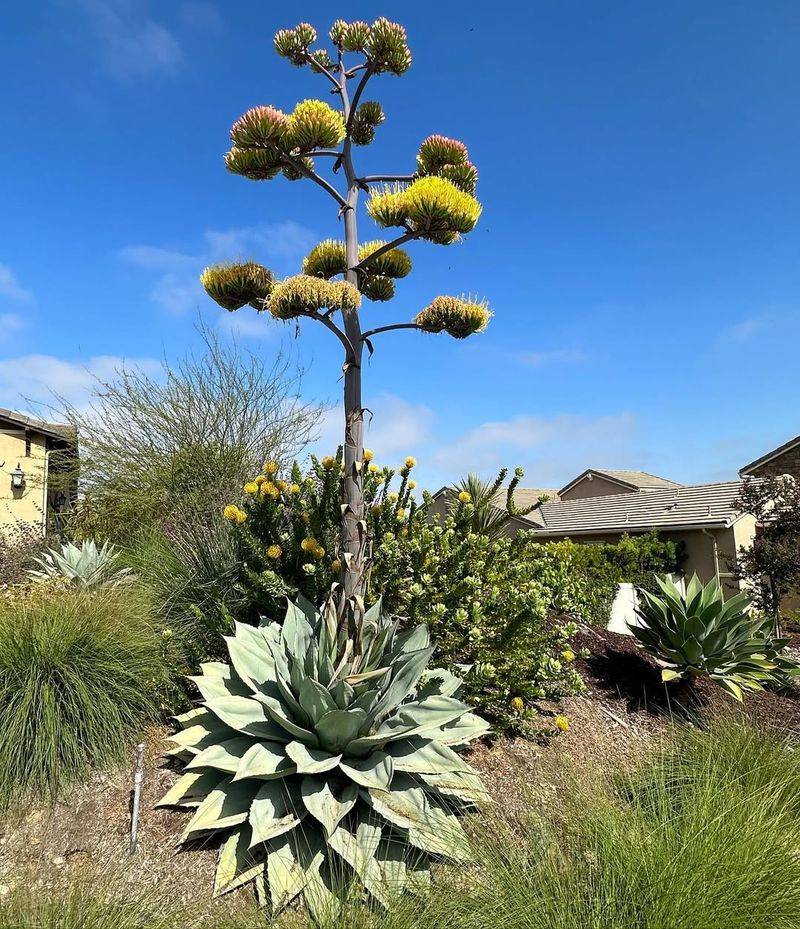
Bold, architectural, and almost impossibly tough, agave is the kind of plant that makes a statement without saying a word. Those thick, spiky rosettes come in sizes ranging from small tabletop varieties to giants that can span six feet across.
No matter the size, every agave commands attention.
What makes agave so impressive in a water-restricted California garden is its incredible ability to store water inside its thick, fleshy leaves.
During dry spells that would stress out most other plants, agave just keeps going. It pulls from its own internal reserves and barely skips a beat. Full sun and fast-draining soil are the two things it needs most.
Sandy or rocky soil works perfectly.
Agave plants are especially popular in Southern California landscapes where summers are long and hot.
They pair beautifully with gravel, boulders, and other drought-tolerant plants like yucca and ornamental grasses.
Most agave varieties are monocarpic, meaning they bloom once at the end of their life, often sending up a dramatic flower spike that can reach twenty feet tall. That bloom is a spectacular sight.
After flowering, the main plant fades but produces offsets around its base, so new plants carry on the legacy naturally.
6. Red Yucca (Hesperaloe parviflora)
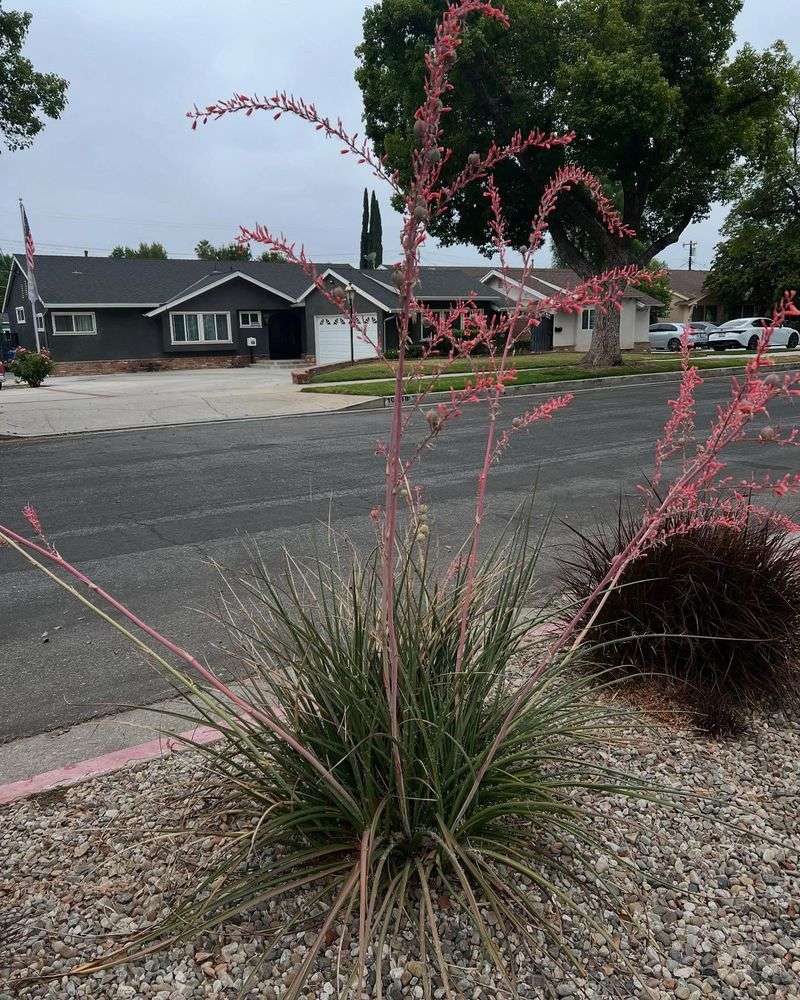
Do not let the name fool you. Red yucca is not actually a true yucca, but it looks and acts like one in all the best ways.
Long, narrow, grass-like leaves form a graceful clump at the base, and from late spring through summer, tall flower spikes rise up and show off coral-red tubular blooms that hummingbirds absolutely cannot resist.
This plant is one of the most underused gems in California landscaping. It handles heat and drought with remarkable ease, making it a smart pick for water-restricted yards across the state.
Once planted in a sunny spot with good drainage, it basically takes care of itself. You can water it occasionally during the first growing season to help it get established, and after that, rainfall usually handles things just fine.
Red yucca stays evergreen in most California climates, meaning it adds texture and interest to the garden even in winter.
The clumps grow slowly and stay relatively compact, so it works well in borders, containers, or mixed into a dry garden design.
It also layers beautifully with agave, ornamental grasses, and low-growing succulents. If you want a plant that rewards minimal effort with maximum visual impact, red yucca belongs in your California garden.
7. Kangaroo Paw (Anigozanthos)
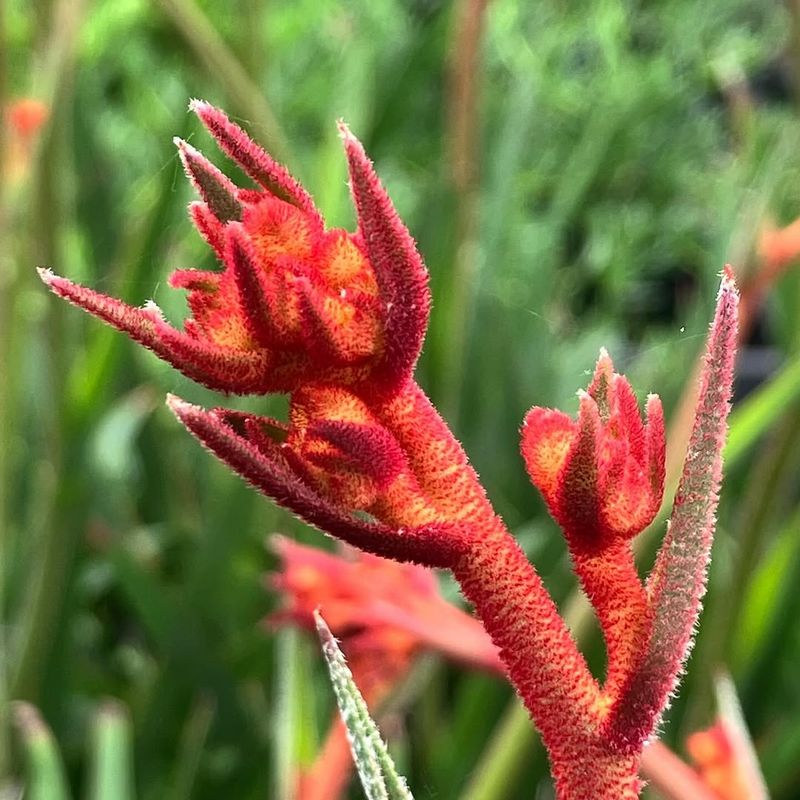
Originally from Australia, kangaroo paw has found a second home in California, and it fits right in. The flowers are unlike anything else in the garden world.
Velvety, tubular, and shaped a bit like a tiny kangaroo’s paw, they come in shades of red, orange, yellow, and pink. They are genuinely eye-catching from across the yard.
California’s Mediterranean climate mirrors Australia’s in many ways, which is exactly why kangaroo paw thrives here. It loves heat, sunshine, and dry conditions.
Once established, it needs very little water to keep producing those spectacular blooms. The flowering season runs from spring through summer, and cutting the spent flower stems encourages fresh blooms to follow.
Hummingbirds are drawn to kangaroo paw in huge numbers, especially to the red and orange varieties. The plant grows in clumps of long, strap-like leaves that stay tidy and attractive even when not in bloom.
It works well in garden beds, containers, or as a cut flower for indoor arrangements. In California gardens, it pairs nicely with lavender, agave, and ornamental grasses.
Plant it in well-drained soil, avoid overwatering, and give it plenty of sun. A little fertilizer in spring helps boost the bloom show even further.
8. Blue Fescue (Festuca glauca)
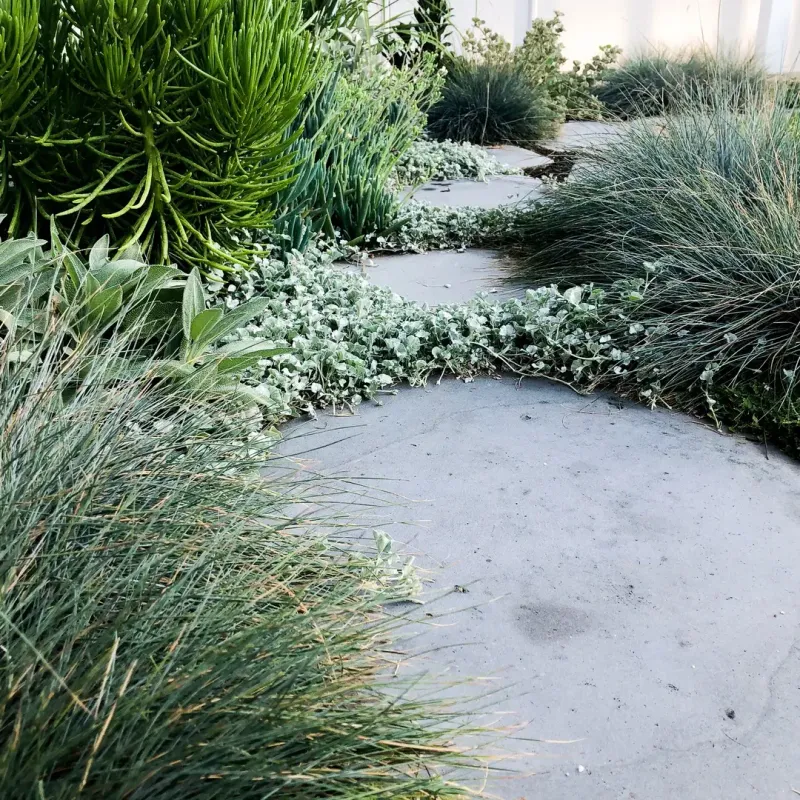
Sometimes the most practical plants are also the prettiest ones. Blue fescue is a compact ornamental grass with a soft, mounding shape and striking silvery-blue blades that catch the light beautifully.
Even on a completely ordinary Tuesday, a well-placed clump of blue fescue makes a garden look thoughtfully designed.
Across California, this little grass has become a go-to choice for water-wise landscaping. It handles drought well once established and thrives in full sun with well-draining soil.
It does not need much fertilizer, does not spread aggressively, and stays at a tidy six to twelve inches tall. That manageable size makes it easy to use along pathways, in rock gardens, or as a border plant.
Blue fescue looks especially sharp when combined with plants that have bold, contrasting textures. Think dark-leaved shrubs, bright flowering perennials, or the dramatic spikes of agave.
The cool blue tones act almost like a neutral in the garden, making every surrounding color pop a little more. In hotter inland areas of California, it may go semi-dormant in midsummer, but a light trim and a bit of water will help it bounce back quickly.
Divide clumps every two to three years to keep them looking fresh and full.
9. Bougainvillea (Bougainvillea)
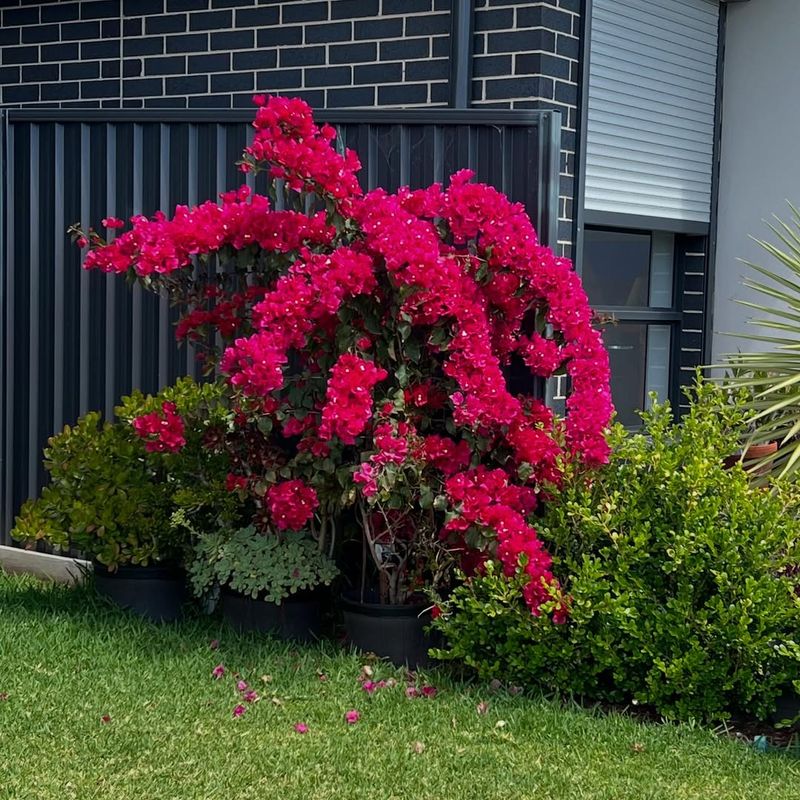
Ask anyone who has visited Southern California what plant they remember most, and bougainvillea will come up almost every time. Those blazing cascades of magenta, orange, red, and purple are impossible to forget.
They climb walls, spill over fences, and drape across trellises with a kind of effortless drama that few other plants can match.
What surprises many gardeners is how tough bougainvillea actually is. It is one of the most drought-tolerant vines you can grow in California.
In fact, slightly stressing the plant by cutting back on water often triggers a more intense bloom response.
Too much irrigation can actually push the plant to produce leaves instead of those gorgeous colorful bracts.
Once established, bougainvillea thrives on neglect in the best possible way.
Bougainvillea loves full sun and heat, which makes it a natural fit for Southern California and the Central Valley. It grows quickly and can be trained as a vine, a sprawling shrub, or even a small tree with the right pruning.
The thorns can be sharp, so wear gloves when working with it. Plant it near a wall or fence where it can climb freely, and prepare for a color display that will stop neighbors in their tracks every single spring and summer.