13 Smart Ways To Upcycle Your Garden In California
California gardeners are getting creative, turning everyday items into stylish, functional, and eco-friendly garden features.
Upcycling doesn’t just save money—it reduces waste, adds personality, and gives your outdoor space a unique flair that store-bought décor can’t match. Who knew trash could become your garden’s next treasure?
These thirteen upcycling ideas show how to transform old furniture, jars, pallets, tires, and even kitchen scraps into planters, trellises, or decorative accents.
Beyond saving money, upcycling adds charm and sustainability, making your California garden as environmentally responsible as it is beautiful.
Repurpose, recycle, and watch your garden thrive with creativity! For California gardeners, upcycling is a fun, practical way to enhance landscapes, patios, and balconies.
With a little imagination and some hands-on effort, you can create a garden that’s both budget-friendly and Instagram-worthy. Your garden can be gorgeous, sustainable, and totally unique—with just a touch of creativity.
1. Turn Wooden Pallets Into Vertical Garden Walls
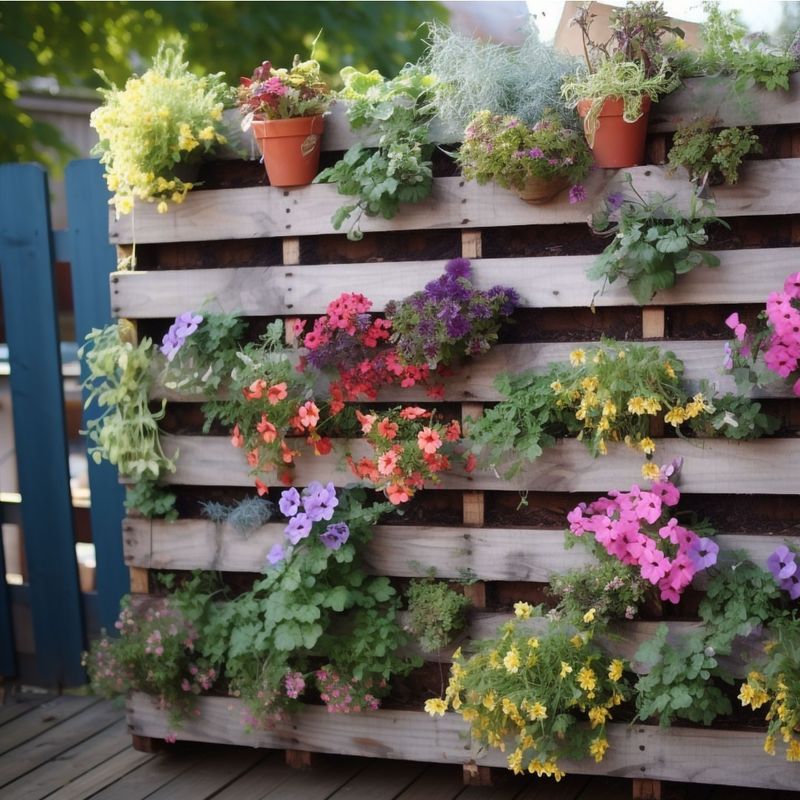
Wooden pallets offer an incredible solution for California gardeners working with limited horizontal space.
By standing a pallet upright and securing it to a fence or wall, you instantly create multiple planting pockets perfect for herbs, succulents, or cascading flowers.
The vertical design maximizes growing area while keeping plants off the ground, which helps with pest control and improves air circulation during hot summer months. Before planting, sand down any rough edges and line the back with landscape fabric to hold soil in place.
California’s dry climate means you’ll want to choose drought-tolerant plants like rosemary, thyme, or sedum varieties that thrive without constant watering.
Position your pallet garden where it receives appropriate sunlight for your chosen plants, remembering that south-facing walls can get extremely hot in inland areas. The beauty of pallet gardens lies in their flexibility and affordability.
You can paint them to match your outdoor decor, stack multiple pallets for dramatic effect, or mount them at different heights to create visual interest.
Many garden centers and home improvement stores offer free or low-cost pallets, making this an accessible project for budget-conscious gardeners.
Once established, your vertical garden becomes a living art piece that produces fresh herbs or stunning blooms while taking up minimal square footage in your California outdoor space.
2. Repurpose Old Bricks Or Concrete For Garden Paths
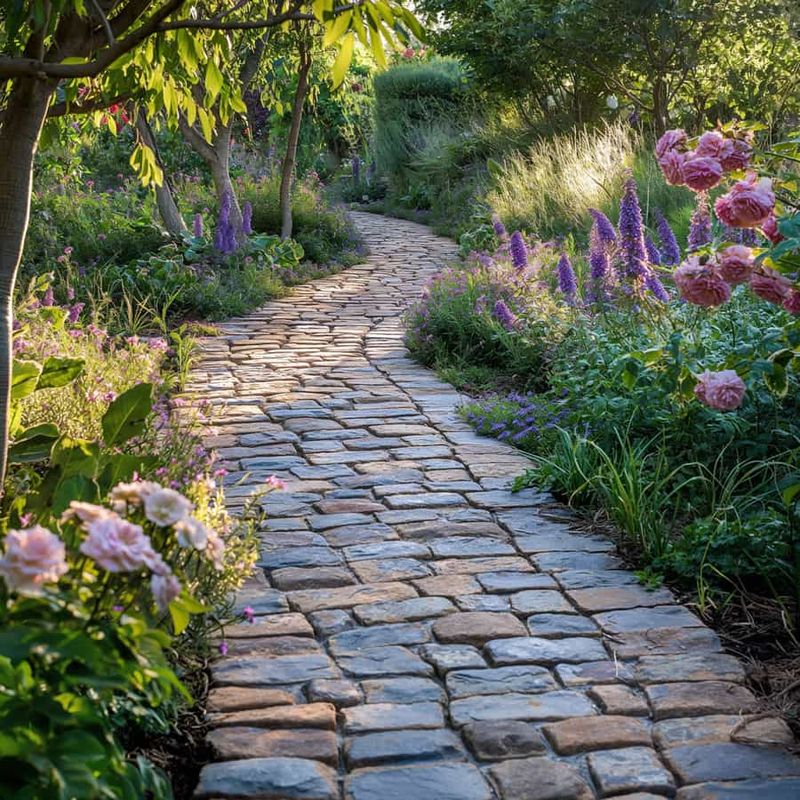
Salvaged bricks and concrete pieces create charming, functional pathways that handle California’s intense summer heat better than many modern materials.
Rather than buying new pavers, scout construction sites, demolition projects, or online marketplaces for reclaimed materials that add character and history to your garden.
The irregular shapes and weathered textures of salvaged materials often create more interesting patterns than perfectly uniform store-bought options.
Laying a permeable path allows rainwater to seep through gaps between materials, which benefits California’s drought-conscious landscape approach.
Start by marking your desired path and excavating about four inches deep, then add a layer of decomposed granite or sand as a base.
Arrange your reclaimed bricks or concrete chunks in your preferred pattern, leaving small gaps for drainage and visual appeal.
These pathways require minimal maintenance and actually improve with age as plants colonize the spaces between materials.
Low-growing herbs like creeping thyme or Dymondia margaretae can soften the edges and release pleasant scents when stepped on.
The thermal mass of brick and concrete also helps moderate temperature fluctuations in your garden beds.
During California’s occasional heavy rains, these permeable paths prevent erosion and puddling while directing water where your plants need it most, making them both beautiful and environmentally responsible additions to your landscape.
3. Convert Broken Pots Into Layered Planters
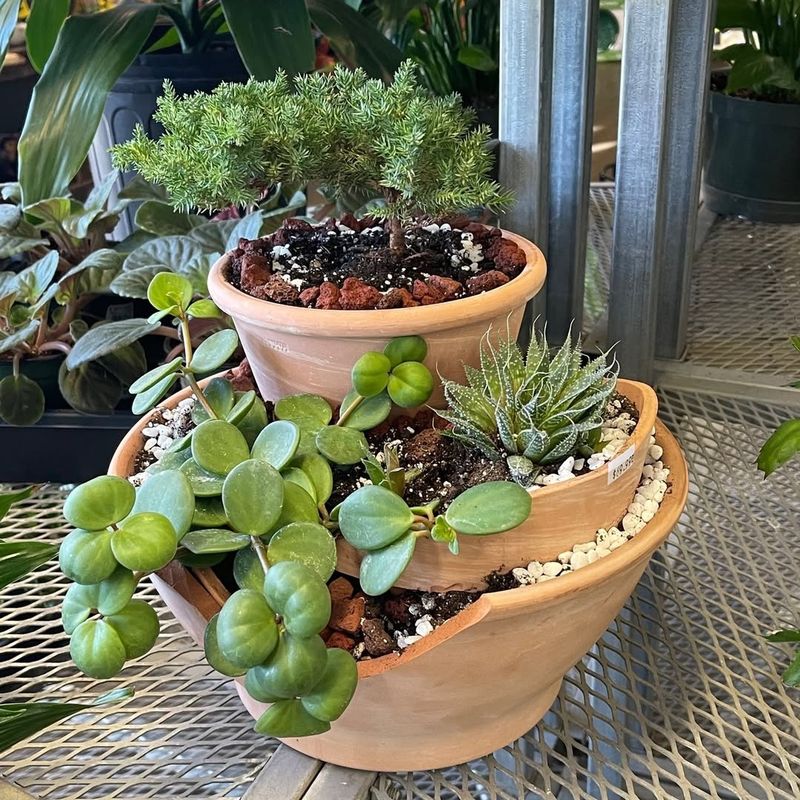
Cracked terracotta pots deserve a second life rather than a trip to the landfill.
With some creativity, damaged containers transform into eye-catching layered planters that showcase succulents, herbs, or trailing flowers in a unique cascading design.
The broken edges create natural terraces where plants can root at different levels, adding dimensional interest to patios, balconies, or garden beds throughout California. Start by selecting pots with large chips or cracks that create stable platforms when tilted.
Fill the base pot with quality potting soil, then nestle the broken pot at an angle so the damaged section creates a pocket for additional planting.
Continue layering smaller pots or fragments to build your miniature landscape, ensuring each piece sits securely before adding soil and plants.
Succulents work exceptionally well for this project because they thrive in California’s climate and require minimal watering once established.
Choose varieties with different colors, textures, and growth habits to create visual drama as they spread across your layered creation.
Hens-and-chicks, sedums, and echeverias all flourish in this arrangement while tolerating the heat reflected from terracotta surfaces.
Position your layered planter where it receives morning sun and afternoon shade in hotter inland areas, or full sun along the cooler coast.
This upcycling project costs nothing if you use pots you already own, yet delivers a stunning focal point that looks professionally designed.
4. Use Old Furniture Drawers As Raised Garden Boxes
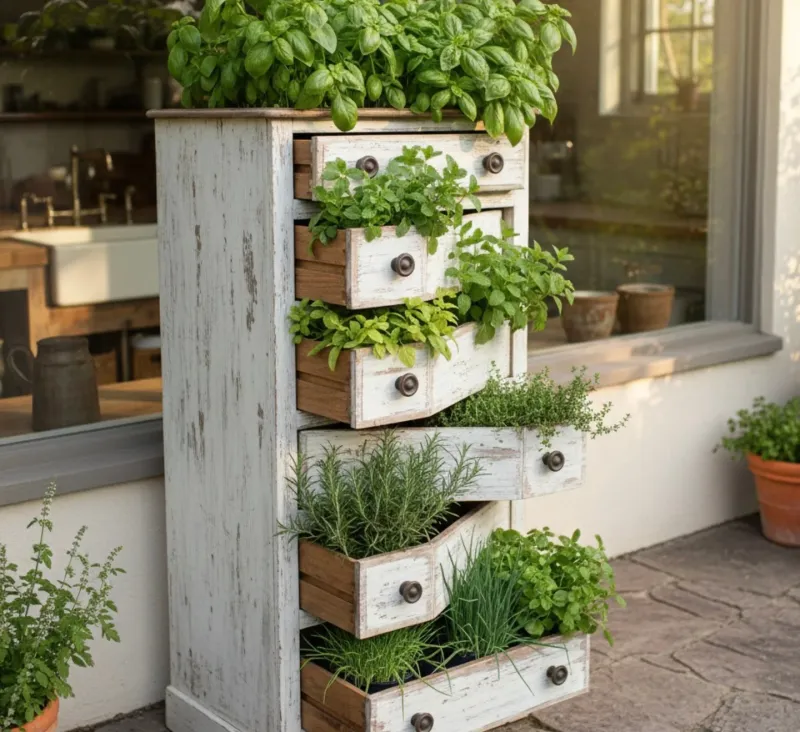
Furniture drawers waiting for disposal can become charming shallow planters that bring rustic appeal to any California garden space.
Whether from a vintage dresser or a modern desk, drawers provide the perfect depth for growing lettuce, spinach, strawberries, or shallow-rooted flowers.
Their built-in structure eliminates the need for constructing raised beds from scratch, saving both time and money.
Preparation involves drilling several drainage holes in the drawer bottom, then lining the interior with landscape fabric to prevent soil from washing through while allowing water to escape.
Apply a coat of non-toxic sealant or outdoor paint to protect the wood from California’s occasional rains and intense UV exposure. Fill with a lightweight potting mix blended with compost for nutrients and moisture retention.
The portability of drawer planters offers significant advantages for renters or gardeners who like rearranging their spaces seasonally.
Move them to follow the sun, protect tender plants from unexpected heat waves, or bring them indoors during rare cold snaps.
Decorative drawer pulls add vintage charm, while the sides provide excellent space for labeling your plants with painted or stenciled names.
Group multiple drawers of varying sizes to create an eclectic container garden that looks intentionally curated.
These elevated planters also reduce bending and kneeling, making gardening more accessible for people with mobility concerns while keeping your harvest at a convenient height for regular tending and harvesting throughout California’s extended growing season.
5. Turn Wine Crates Into Portable Garden Beds
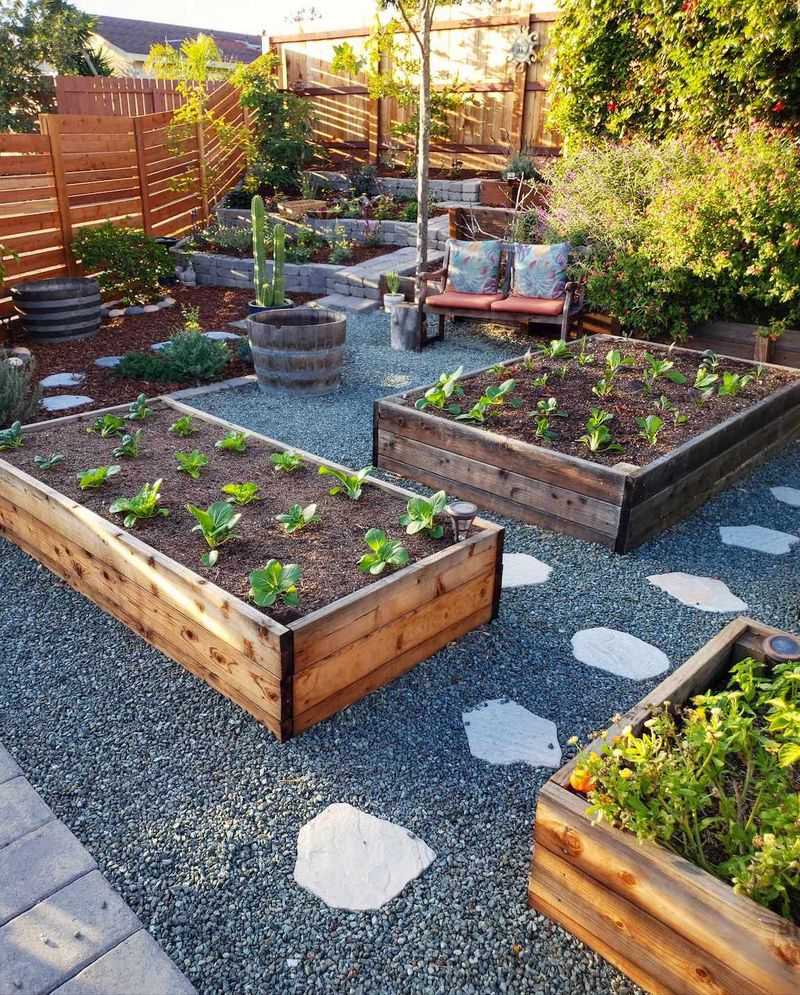
California’s wine country produces countless wooden crates that make outstanding portable planters for apartment balconies, patios, and small yards.
These sturdy boxes already feature slatted sides that provide natural drainage and air circulation, making them practically ready for planting with minimal modification.
Their compact size suits container gardening perfectly while adding a touch of wine country charm to urban spaces. Line the interior with burlap or landscape fabric to contain soil while maintaining drainage through the slats.
Fill with a quality potting mix enriched with compost, leaving about an inch of space below the rim to prevent overflow during watering.
Wine crates work beautifully for growing compact vegetables like cherry tomatoes, peppers, or bush beans, as well as cascading flowers that spill over the edges attractively.
The portability factor becomes especially valuable during California’s variable weather patterns and intense summer heat.
Shift your crates to shadier locations during heat waves, move them closer to outdoor seating areas when herbs are ready for harvest, or rearrange them to create different visual displays throughout the seasons.
Many wine shops and tasting rooms happily give away empty crates, or you can find them at farmers markets and online marketplaces.
Stack them vertically against walls to maximize space, or arrange them at ground level for a rustic container garden that requires no permanent installation—perfect for renters who want gardening flexibility without losing their security deposit.
6. Repurpose Ladders Into Vertical Flower Displays
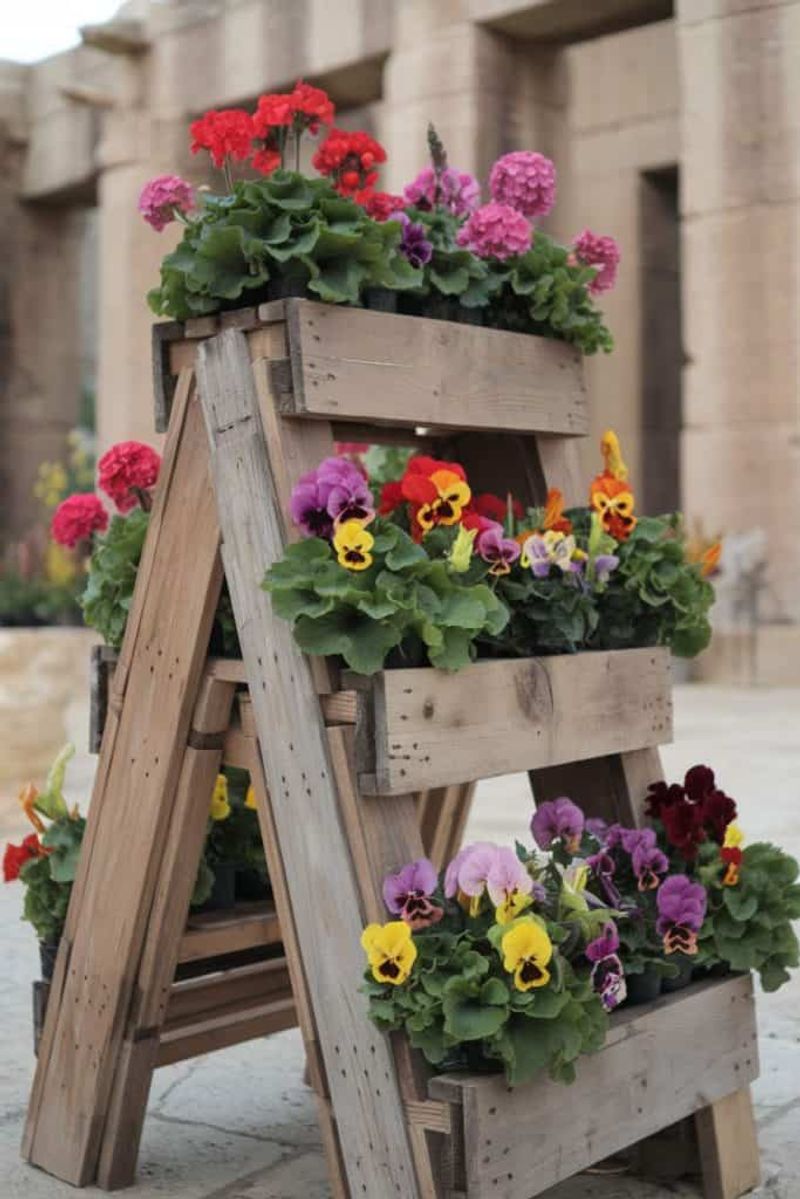
An old wooden or metal ladder gains new purpose as a vertical plant stand that adds height and architectural interest to California gardens.
Whether leaning against a wall or freestanding with proper support, ladders create multiple levels for displaying potted plants, hanging baskets, or climbing vines.
This vertical approach maximizes limited space while improving airflow around plants, which helps prevent fungal issues during humid coastal mornings or hot inland afternoons.
Wooden ladders bring rustic charm and can be painted or stained to coordinate with your outdoor decor. Metal ladders offer industrial appeal and withstand weather exposure with minimal maintenance beyond occasional rust treatment.
Position potted plants on the rungs, hang containers from the sides, or train climbing plants like jasmine or morning glories to weave through the structure naturally.
The elevated placement protects plants from ground-dwelling pests and makes watering and maintenance easier by bringing everything to a comfortable working height.
California’s strong sun can fade and dry out plants quickly, so consider the ladder’s orientation carefully—east-facing positions provide gentler morning light, while south and west exposures deliver intense afternoon heat better suited to sun-loving species.
Secure your ladder properly to prevent tipping, especially in windy areas or if using heavier pots. This upcycling project costs nothing if you have an unused ladder in storage, yet creates a stunning focal point that draws the eye upward and makes small gardens feel larger and more dynamic.
7. Use Glass Jars And Bottles For Herb Propagation
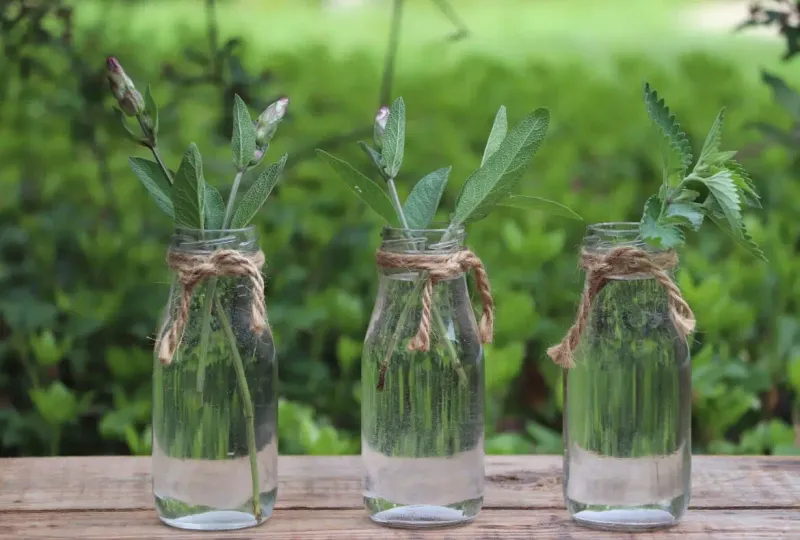
Clear glass containers become perfect propagation stations for rooting herb cuttings and growing fresh greens year-round in California’s mild climate.
Mason jars, wine bottles with the tops removed, or any transparent glass vessel allows you to monitor root development while adding decorative appeal to windowsills, countertops, or outdoor shelving.
This method works exceptionally well for herbs like basil, mint, oregano, and cilantro that root readily in water. Simply snip healthy stem sections about four to six inches long, remove lower leaves that would sit below the waterline, and place cuttings in your glass container filled with room-temperature water.
Position jars where they receive bright but indirect light—too much direct sun heats the water and encourages algae growth. Change the water every few days to keep it fresh and oxygenated.
California’s extended growing season means you can propagate herbs almost year-round, creating an endless supply of fresh flavors for cooking without repeated trips to the grocery store.
Once roots develop to about two inches long, transplant cuttings into soil or continue growing them hydroponically in water with occasional liquid fertilizer.
Group multiple jars of varying heights and shapes for an attractive display that serves both functional and aesthetic purposes. Vintage bottles add character, while uniform mason jars create a clean, organized look.
This zero-cost propagation method reduces waste by keeping herbs producing indefinitely through cuttings, and the transparent containers turn plant growth into an educational and visually appealing element of your California home or garden space.
8. Convert Old Bathtubs Into Deep Vegetable Planters
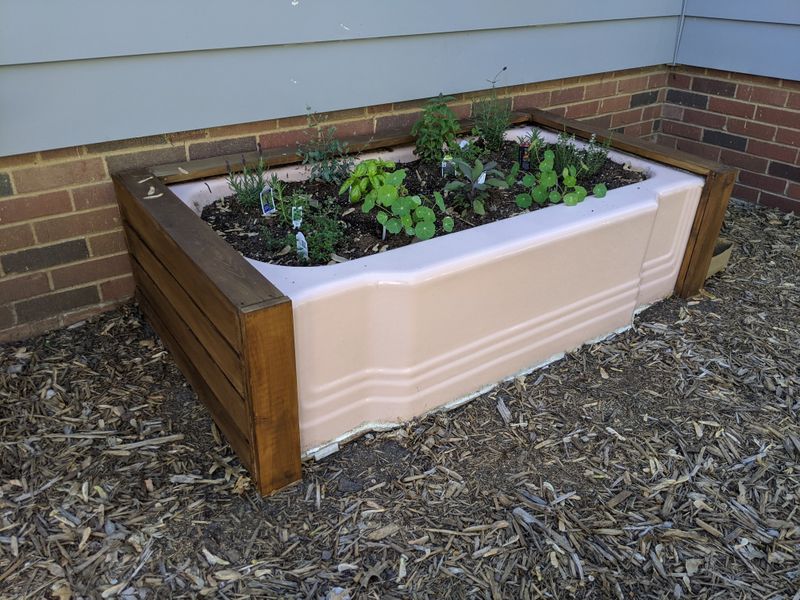
Vintage bathtubs destined for the scrap yard make surprisingly excellent planters for deep-rooted vegetables and sprawling plants.
Their size and depth accommodate crops like tomatoes, potatoes, carrots, and squash that need substantial root space to thrive.
The porcelain or metal construction withstands California’s weather extremes while the existing drain hole provides built-in drainage—a critical feature for healthy plant growth.
Position your bathtub planter in a spot that receives at least six to eight hours of sunlight daily for vegetable production. Ensure the drain remains unobstructed or drill additional holes if needed to prevent waterlogging.
Fill the bottom quarter with gravel or broken pottery shards for drainage, then add quality garden soil mixed with compost to provide nutrients throughout the growing season.
The generous volume of soil in a bathtub planter retains moisture better than smaller containers, reducing watering frequency during California’s dry summers—a significant advantage when water conservation matters.
The raised sides also deter some ground pests while making harvesting more comfortable by bringing plants to a convenient height.
Paint the exterior with outdoor paint in colors that complement your garden aesthetic, or embrace the vintage patina for shabby-chic appeal.
Clawfoot tubs create particularly striking focal points that become conversation pieces while producing abundant harvests.
This upcycling project transforms something typically considered junk into a highly productive garden feature that can yield vegetables for years with proper care and seasonal replanting suited to California’s favorable growing conditions.
9. Turn Scrap Wood Into Compost Bin Frames
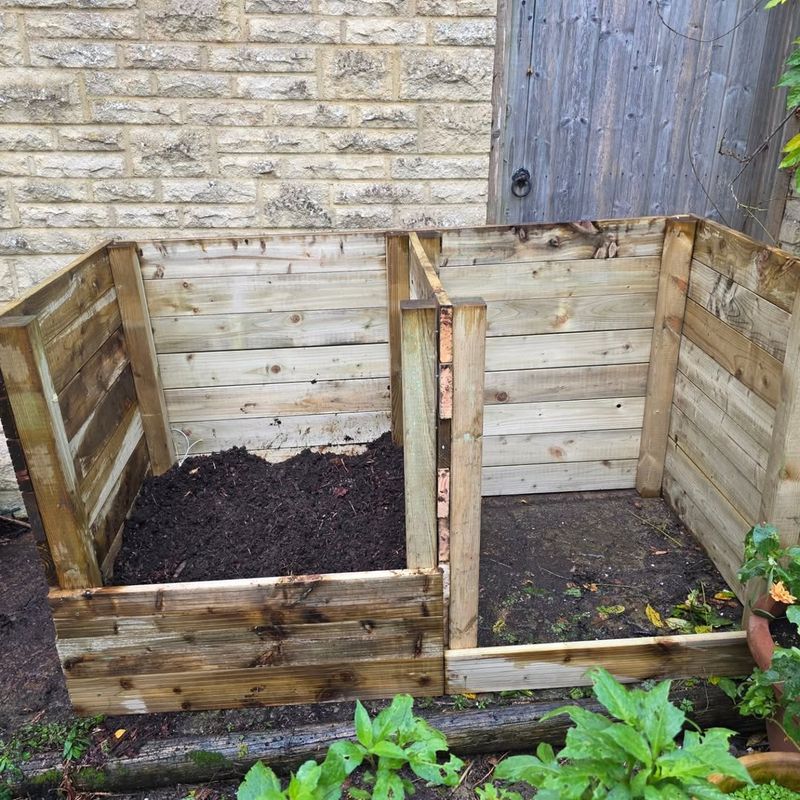
Leftover lumber from construction projects or old fencing provides all the materials needed to build a functional compost system for your California garden.
Rather than purchasing expensive tumbler bins or plastic composters, a simple three-sided wooden frame creates adequate space for turning kitchen scraps and yard waste into nutrient-rich soil amendment.
This DIY approach costs nothing if you use salvaged materials and can be customized to fit whatever space you have available.
Construct a basic bin by creating a square or rectangular frame using posts at the corners and horizontal slats for the sides, leaving gaps between boards for essential airflow.
Build the front side removable or hinged for easy access when turning compost or harvesting finished material.
Dimensions around three feet by three feet work well for most home gardens, providing enough volume to generate heat while remaining manageable for regular maintenance.
California’s warm climate accelerates decomposition compared to colder regions, meaning your compost pile transforms waste into garden gold relatively quickly with proper management.
Layer green materials like vegetable scraps and grass clippings with brown materials such as dried leaves and shredded paper, keeping the pile as moist as a wrung-out sponge.
Turn it every few weeks to introduce oxygen and distribute moisture evenly. Position your compost bin in a partially shaded area to prevent excessive drying during hot summers.
This upcycled system diverts waste from landfills while creating free fertilizer that improves soil structure, retains moisture, and feeds beneficial organisms—making it an essential component of sustainable California gardening practices.
10. Repurpose Tires As Raised Beds For Heat-Loving Plants
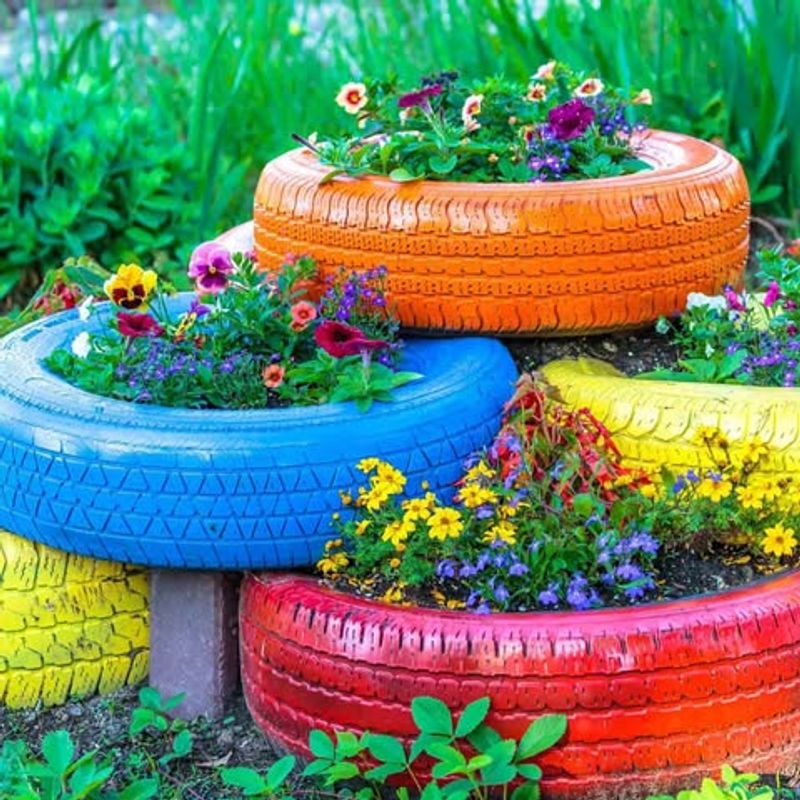
Used tires offer a controversial yet practical solution for creating raised planting beds that excel at growing heat-loving crops in California gardens.
The rubber material absorbs and retains warmth from the sun, creating an ideal microclimate for peppers, tomatoes, basil, and other plants that thrive in consistently warm soil.
While some gardeners worry about potential chemical leaching, research suggests minimal risk when growing ornamental plants or above-ground crops rather than root vegetables.
Stack two or three tires to create adequate soil depth, then paint the exterior with bright outdoor colors to reduce heat absorption and add visual appeal to your garden.
Fill the interior with quality potting soil mixed with compost, ensuring good drainage by placing the stack on level ground or adding gravel beneath.
The circular shape naturally creates a contained growing space that concentrates water and nutrients around plant roots.
California’s long, hot growing season makes tire planters especially productive for warm-season crops that benefit from the extra heat radiating from the rubber. The raised design also improves accessibility and keeps plants off the ground where slugs and other pests lurk.
Position tire planters in full sun locations where tender plants might struggle without the supplemental warmth these containers provide.
Group multiple painted tires in coordinating colors to create an attractive container garden that costs nothing but delivers impressive harvests.
This upcycling approach keeps tires out of landfills while providing functional growing space that takes advantage of California’s abundant sunshine to extend your productive season and boost yields.
11. Use Old Window Frames As Mini Cold Frames
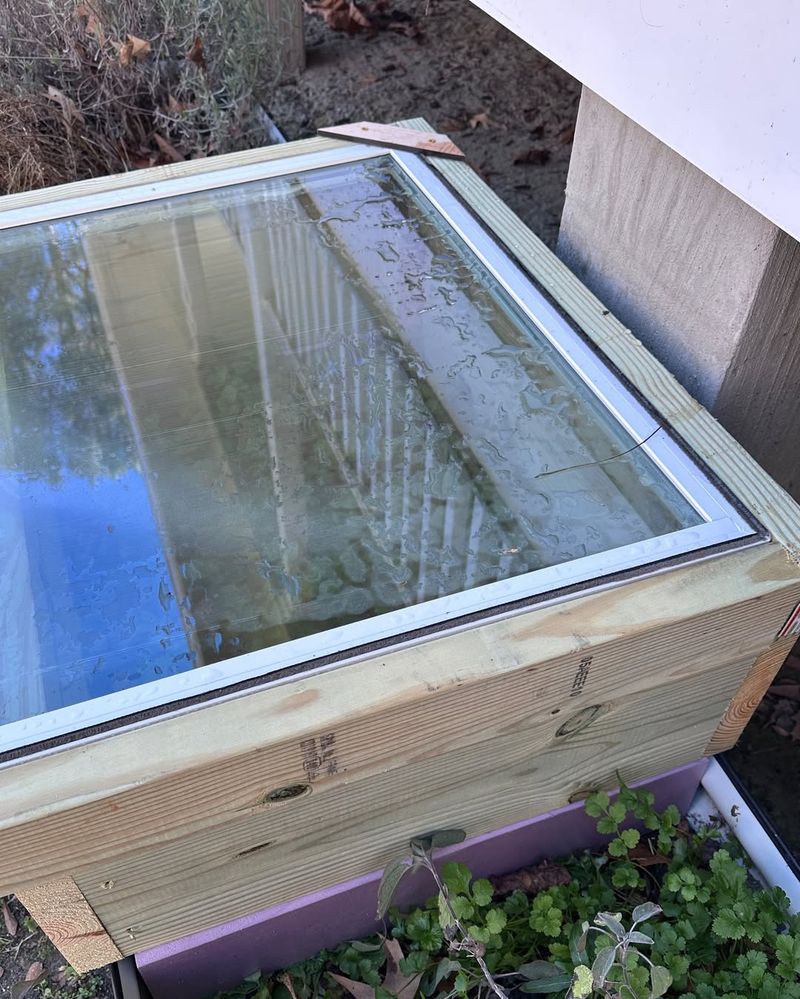
Salvaged window frames with intact glass panes become miniature greenhouses that protect seedlings and tender plants during California’s cooler coastal nights or occasional cold snaps.
These cold frames trap solar heat during the day and release it slowly overnight, creating a warmer microclimate that extends your growing season and allows earlier spring planting.
Even in California’s generally mild climate, coastal fog and unexpected temperature drops can stress young plants that benefit from this simple protection.
Build a basic frame from scrap wood to create a bottomless box, then attach your window as a hinged lid that can be propped open for ventilation on warm days.
Position the cold frame in a south-facing location where it receives maximum sunlight, and angle the window slightly to shed rain and capture more solar energy.
The enclosed space warms quickly, so monitoring temperature becomes important—prop the window open when interior temperatures exceed seventy-five degrees to prevent cooking your plants.
Cold frames work beautifully for hardening off seedlings started indoors, protecting lettuce and greens during winter months, or giving warmth-loving seedlings a head start in early spring. The transparent cover allows you to monitor plants without opening the frame and releasing accumulated heat.
California gardeners in inland valleys can use cold frames to moderate temperature swings between hot days and cool nights, while coastal gardeners benefit from protection against fog and marine layer moisture that can encourage fungal problems.
This upcycling project costs nothing if you have old windows available and delivers professional-level plant protection using simple, time-tested technology.
12. Turn Unused Buckets Into Drip-Watering Containers
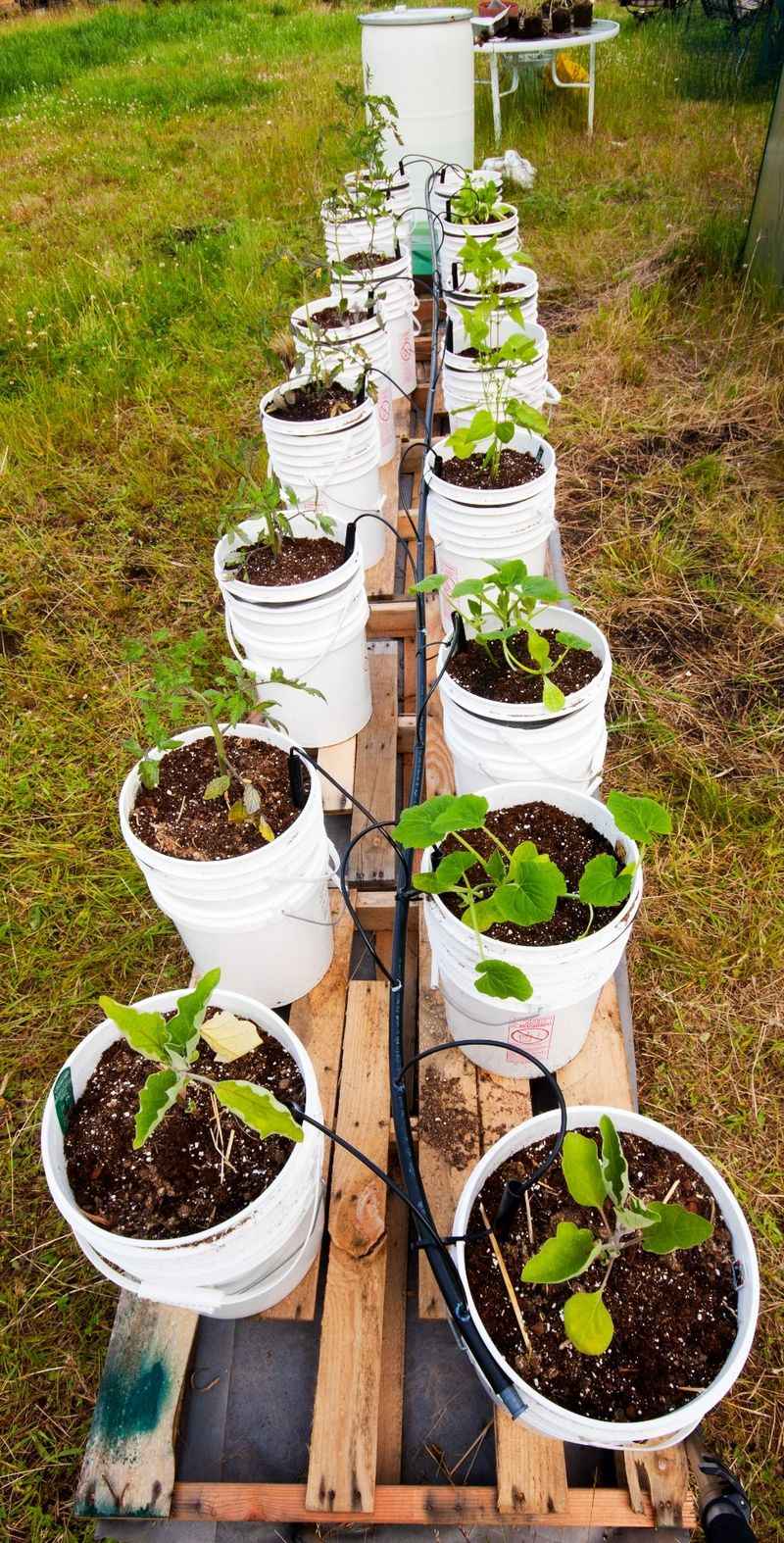
Five-gallon buckets transformed into drip irrigation systems deliver water directly to plant roots with remarkable efficiency during California’s frequent drought conditions.
This simple technology uses gravity to provide slow, steady moisture that penetrates deeply rather than running off or evaporating before plants can absorb it.
By drilling small holes in bucket bottoms and positioning them near thirsty plants, you create a low-cost irrigation solution that conserves water while ensuring consistent moisture for healthier growth.
Clean buckets thoroughly, then drill three to five small holes in the bottom using a one-eighth inch bit. Bury buckets partially in the soil near plants that need regular watering, leaving the top exposed for easy filling.
As water slowly drips through the holes, it soaks directly into the root zone where plants access it most efficiently, reducing waste from evaporation and runoff that plague traditional overhead watering methods.
This system works exceptionally well for water-hungry crops like tomatoes, squash, and melons that suffer when moisture levels fluctuate.
Fill your buckets every few days depending on plant needs and weather conditions, adding liquid fertilizer occasionally for sustained feeding.
The slow release prevents shocking plants with sudden moisture changes while encouraging deep root development that improves drought tolerance.
California’s water restrictions make efficient irrigation essential, and bucket drip systems deliver maximum benefit from every gallon used.
Paint buckets to blend with your garden aesthetic or leave them functional and utilitarian—either way, this upcycling project costs virtually nothing while dramatically improving water conservation and plant health throughout the growing season.
13. Reuse Fallen Branches For Garden Borders Or Supports
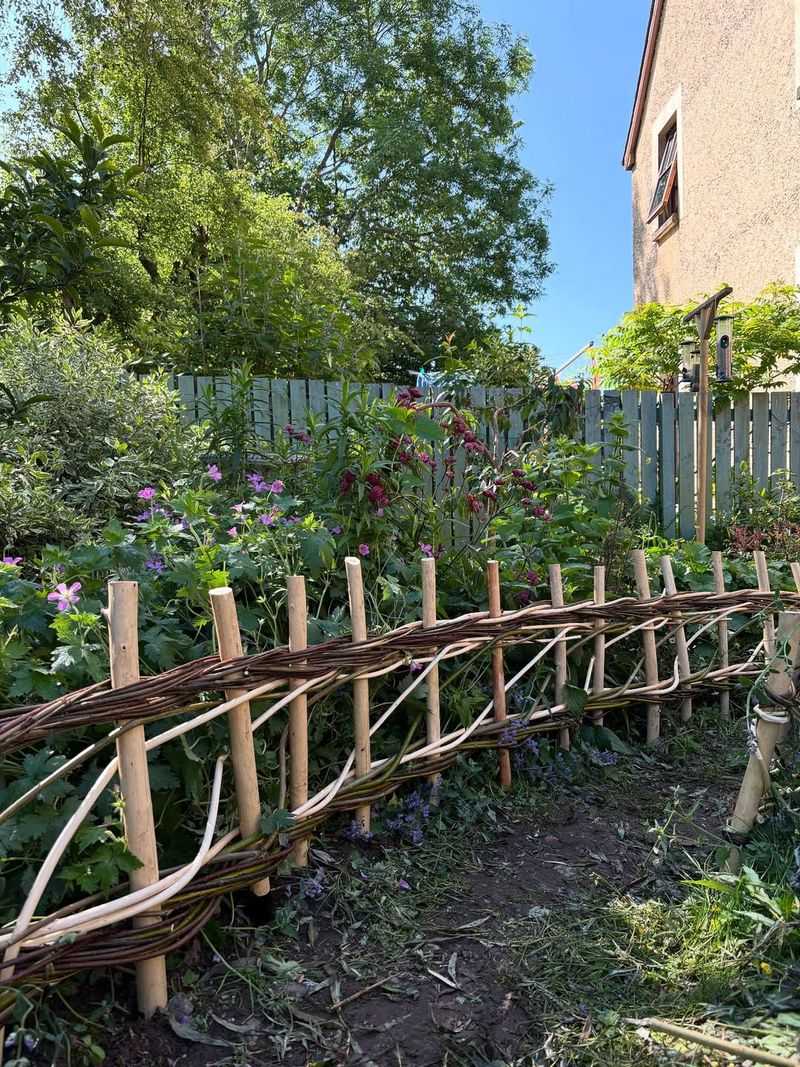
Pruned branches and fallen limbs become valuable garden resources rather than waste when repurposed as natural edging, plant supports, or decorative elements.
California’s diverse tree species provide materials ranging from straight, sturdy branches perfect for staking tomatoes to flexible willow or birch suitable for weaving into rustic borders.
This approach costs nothing, reduces yard waste, and creates an organic aesthetic that blends seamlessly with natural landscapes.
Straight branches work excellently as stakes for supporting climbing vegetables, top-heavy flowers, or young trees needing stability. Strip off smaller twigs and bark if desired, then sharpen one end for easy insertion into the soil.
Create tepee structures by lashing three or four branches together at the top for beans, peas, or decorative vines to climb.
Thicker branches can outline garden beds or pathways, holding mulch in place while defining growing areas with natural materials that eventually decompose and enrich the soil.
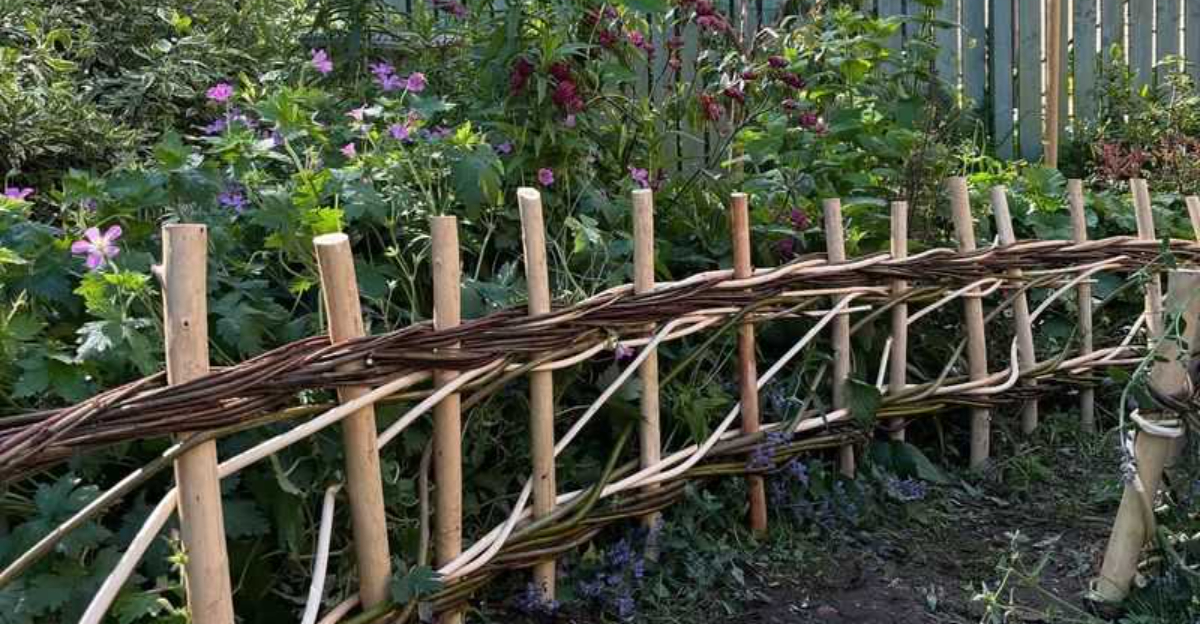
Flexible branches become woven borders or raised bed edges when woven between vertical stakes driven into the ground at regular intervals.
This traditional technique creates charming barriers that keep mulch contained and add cottage-garden appeal to California landscapes. Gather branches after seasonal pruning or storm cleanup, selecting pieces that suit your intended purpose.
Allow wood to dry slightly if you plan to create permanent structures, or use fresh, flexible branches for woven projects that require bending.
This sustainable upcycling practice eliminates disposal costs while providing functional garden features that harmonize with California’s natural environment and support your commitment to reducing waste and working with available resources.