Step Into Hawaii’s Colorful World Of Rainbow Eucalyptus Trees
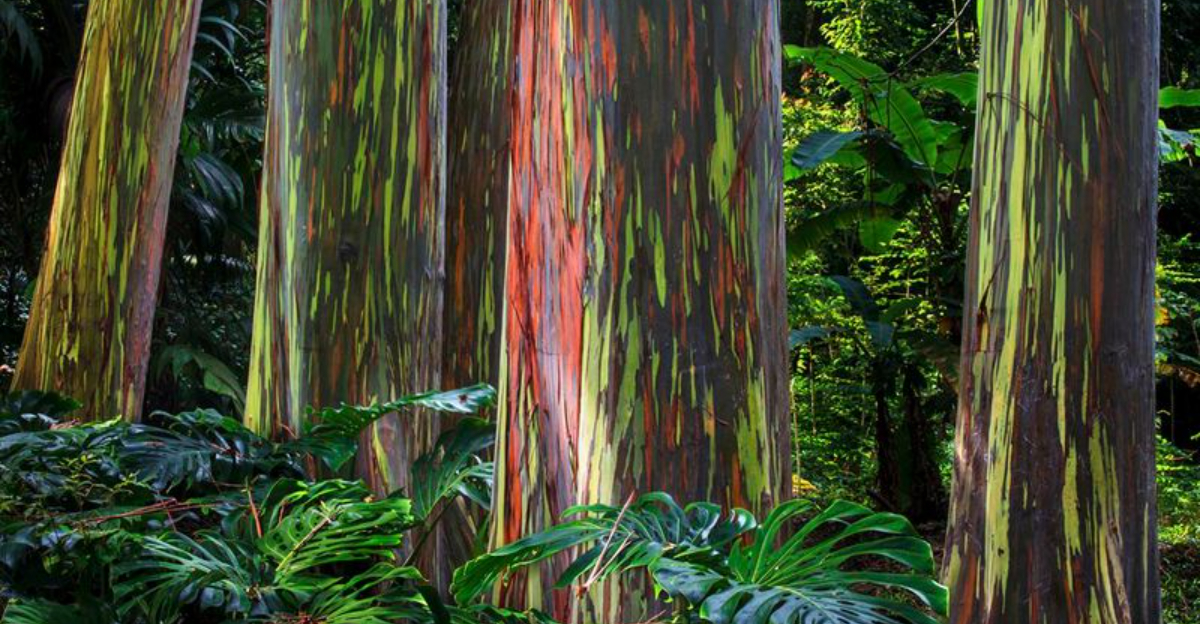
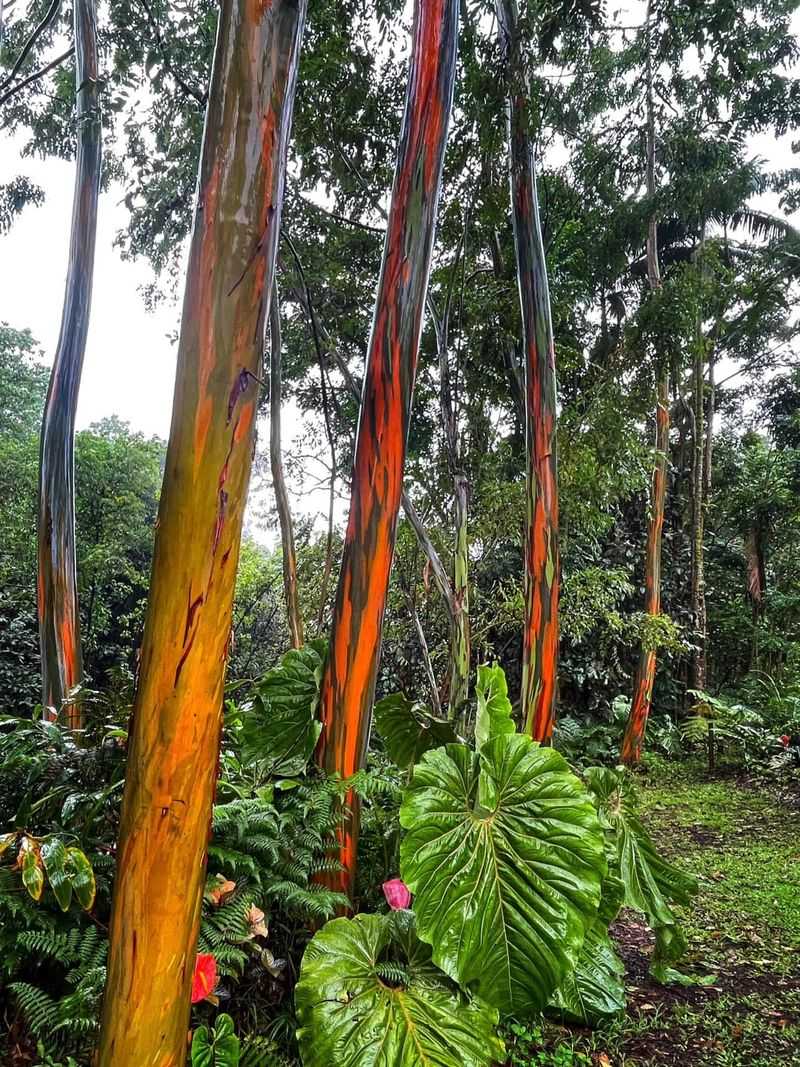
Walking among rainbow eucalyptus trees in Hawaii feels like stumbling into a living painting, where trunks glow with greens, blues, oranges, and purples that look almost unreal up close.
It’s one of those places that makes you slow down, smile a little longer, and wonder how nature managed to pull off something so playful and bold without trying at all.
1. Their Bark Creates a Natural Rainbow Effect
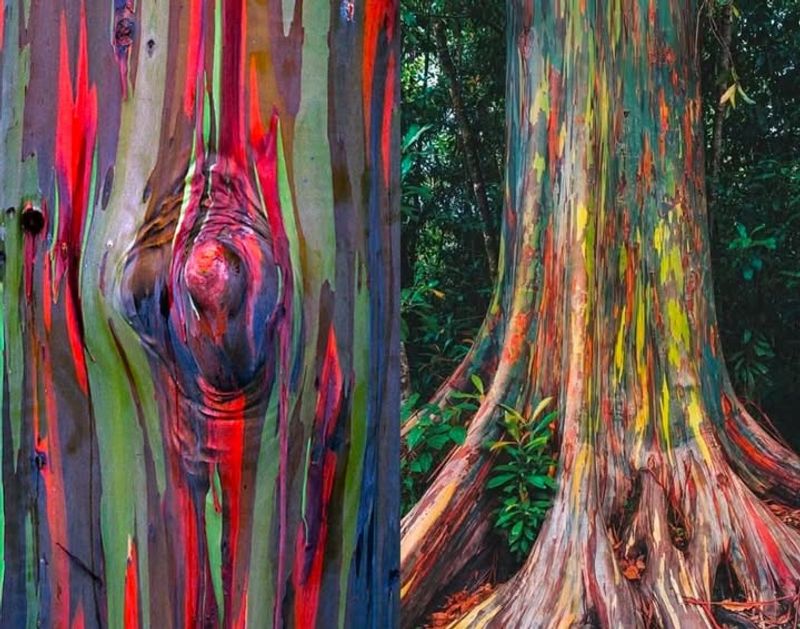
Bark on rainbow eucalyptus trees peels away in thin strips throughout the year, creating a constantly changing display of spectacular colors across the trunk.
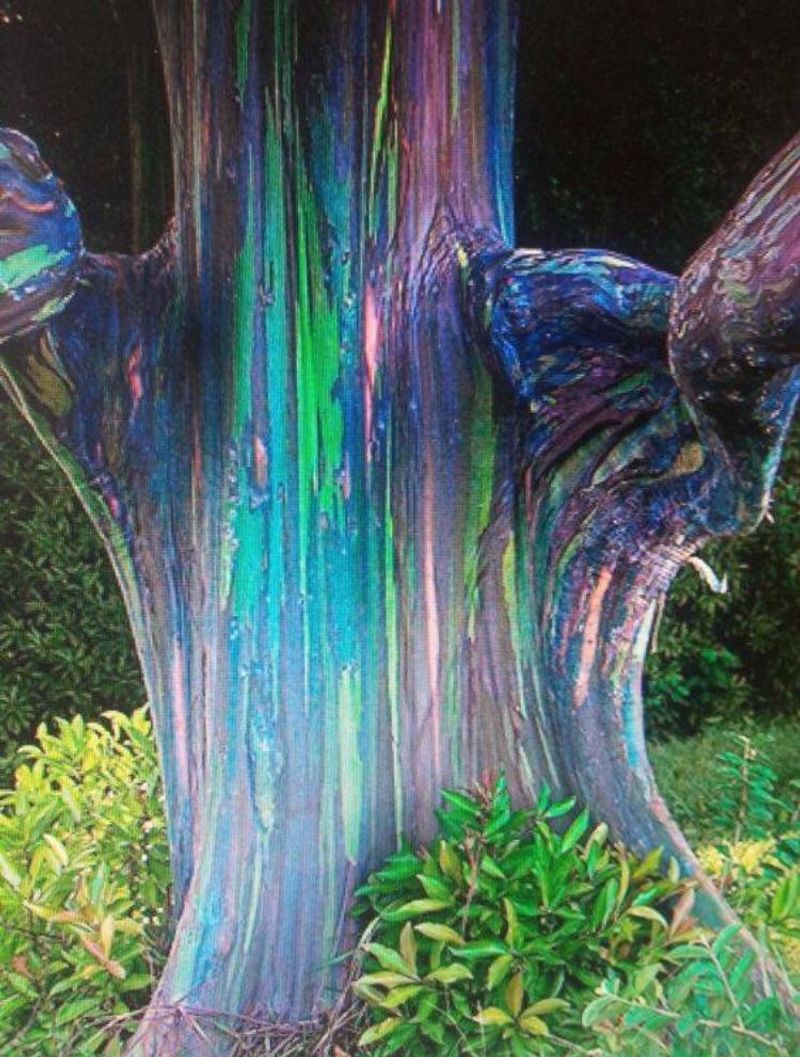
Fresh inner bark starts as bright green, then gradually transforms through blue, purple, orange, and maroon as it ages and gets exposed to air.
Multiple colors appear simultaneously because different sections peel at different times, producing the rainbow effect that makes these trees so incredibly famous worldwide.
Hawaii provides perfect growing conditions where this natural process happens year-round, unlike cooler climates where seasonal changes might slow the transformation.
Photographers travel from around the globe specifically to capture images of these colorful trunks standing tall in tropical Hawaiian forests and gardens.
The color intensity varies depending on moisture levels, sunlight exposure, and the tree’s overall health, making each specimen completely unique in appearance.
Young trees display fewer colors initially, but mature specimens in Hawaii can showcase six or seven distinct hues at once across their bark.
No two trees ever look exactly alike, and even individual trees change their color patterns from season to season throughout the year.
2. They Originally Come From the South Pacific
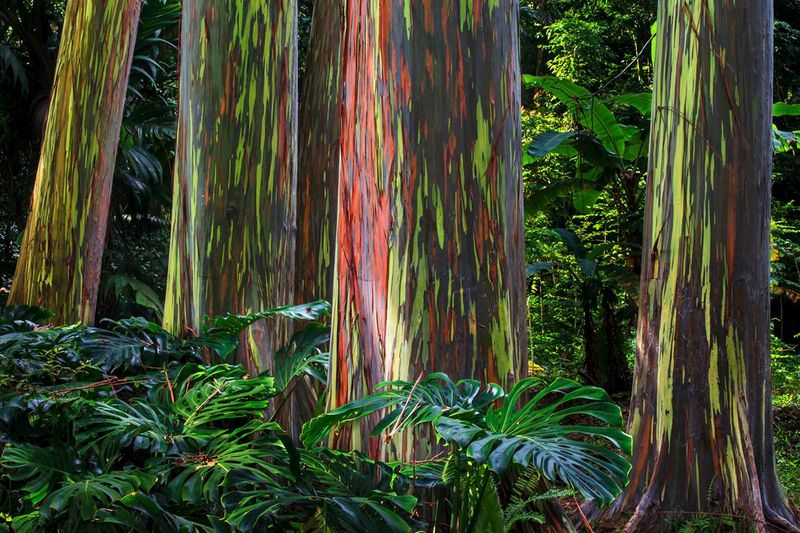
Rainbow eucalyptus trees aren’t native to Hawaii but were introduced from their original homes in countries like the Philippines, Indonesia, Papua New Guinea, and Australia.
These fast-growing giants naturally thrive in tropical rainforest environments where rainfall stays abundant and temperatures remain warm throughout every season of the year.
Foresters brought them to Hawaii during the early 1900s, hoping to establish timber plantations that could supply wood for construction and paper production.
Climate conditions across the Hawaiian islands proved nearly perfect for these transplanted trees, allowing them to grow even taller and healthier than expected.
Rainfall patterns in windward areas of Hawaii mirror their native South Pacific habitats, providing the consistent moisture these eucalyptus species absolutely need.
Today, they grow both in managed plantations and wild areas where birds and wind have spread their seeds across various island locations.
Scientists classify them as Eucalyptus deglupta, which translates to eucalyptus that sheds its skin, referring to their distinctive peeling bark characteristic feature.
Their successful adaptation to Hawaii demonstrates how tropical species can thrive when introduced to similar climates with comparable rainfall and temperature ranges worldwide.
3. These Trees Can Grow Incredibly Tall
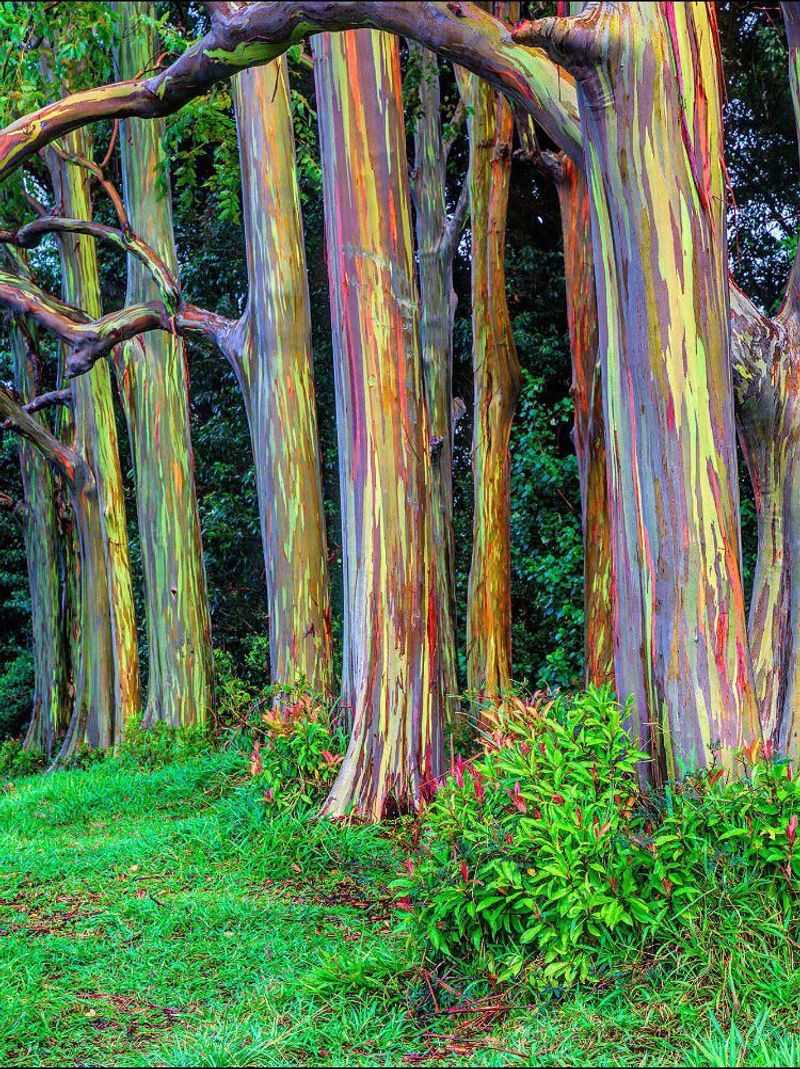
Rainbow eucalyptus trees rank among the tallest flowering plants on Earth, capable of reaching heights exceeding 250 feet in their native tropical rainforest environments.
Growth rates in Hawaii are impressively fast, with young trees adding six to ten feet of height each year when conditions provide adequate water and nutrients.
Mature specimens across Hawaiian plantations typically reach heights between 150 and 200 feet, creating towering canopies that dominate the surrounding forest landscape below.
Trunks can expand to diameters of six feet or more, requiring decades of steady growth to achieve such massive proportions in suitable locations.
Their rapid vertical growth made them attractive to foresters who needed quick timber production, though their wood quality varies depending on growing conditions.
Visitors standing beneath these giants in Hawaii often feel dwarfed by the sheer scale of the colorful trunks stretching skyward toward the clouds.
Root systems spread wide and deep, anchoring these massive trees firmly in the volcanic soil found throughout many areas of the Hawaiian Islands.
Comparing their height to familiar buildings helps people grasp the scale—imagine a tree taller than a 20-story building swaying gently in tropical breezes.
4. You Can Find Them on Multiple Hawaiian Islands
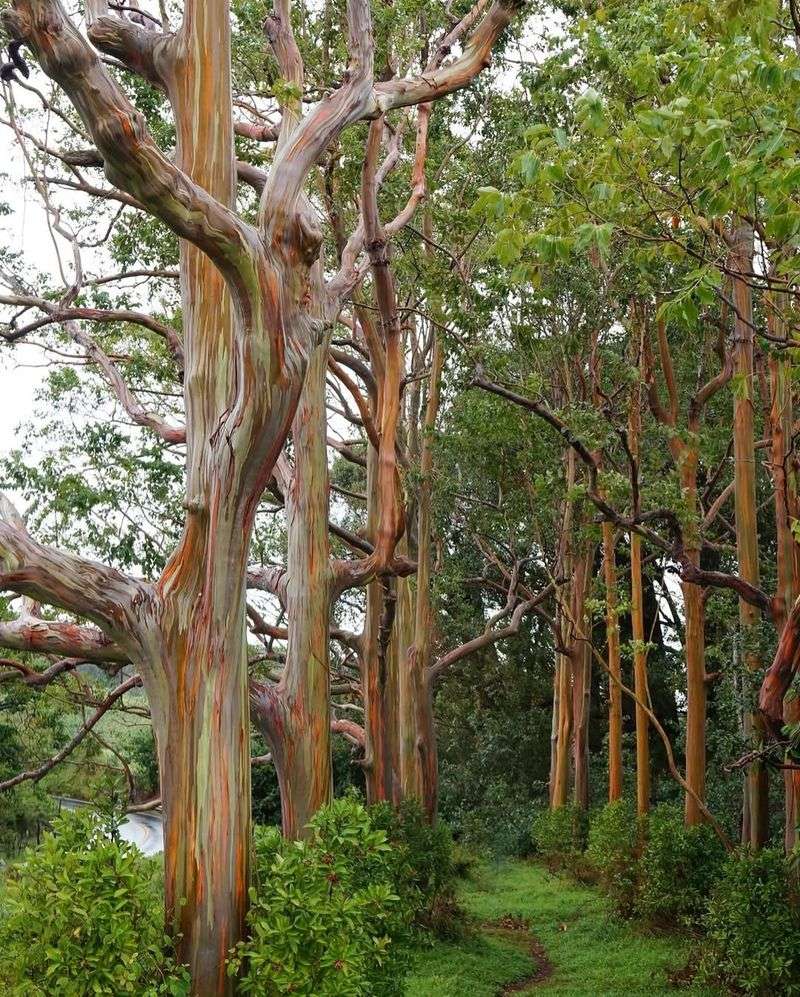
Maui hosts some of the most accessible and photographed rainbow eucalyptus groves, particularly along the famous Road to Hana where travelers stop regularly.
Oahu features plantations and scattered groves in windward areas where rainfall patterns support healthy growth of these moisture-loving tropical tree species throughout the year.
Big Island visitors can spot specimens in various locations, especially in the wetter Hamakua Coast region where conditions mirror their native rainforest habitats perfectly.
Kauai’s abundant rainfall creates ideal growing conditions, and several groves thrive in the island’s lush interior valleys and along certain coastal areas.
Each Hawaiian island offers slightly different viewing experiences depending on accessibility, grove size, and the maturity of the trees growing in those locations.
Many groves are located on private property, but some public parks and botanical gardens in Hawaii feature specimens that visitors can observe up close.
Tour companies across the islands have incorporated rainbow eucalyptus viewing into their itineraries, recognizing that tourists specifically seek out these colorful natural attractions.
Local residents often know hidden groves that casual visitors might miss, so asking for recommendations can lead to spectacular discoveries throughout Hawaii.
5. Their Wood Has Commercial and Practical Uses
Lumber mills initially valued rainbow eucalyptus for pulpwood production, using the fast-growing trees to create paper products and fiber materials for various industries.
Wood from these trees lacks the durability and rot resistance needed for outdoor construction, limiting its usefulness for building projects in humid Hawaiian climates.
Furniture makers occasionally use the wood for indoor pieces, though its tendency to warp during drying makes it challenging to work with professionally.
Plantations across Hawaii were established primarily for paper pulp, taking advantage of the species’ remarkably fast growth rates in tropical island conditions.
Environmental concerns about non-native species have reduced new commercial planting, though existing groves continue to grow and reproduce across various Hawaiian locations.
Some artisans harvest fallen branches to create decorative items, preserving the colorful bark patterns as unique souvenirs that showcase the tree’s natural beauty.
Chips and mulch from these trees find use in landscaping applications, though their allelopathic properties can inhibit growth of certain other plant species.
Economic interest has shifted from timber production to ecotourism, as visitors paying to photograph the trees now generate more revenue than harvesting them.
6. They Prefer Wet and Warm Growing Conditions
Annual rainfall exceeding 80 inches creates the ideal moisture levels these trees require, explaining why they flourish in Hawaii’s wettest windward regions consistently.
Temperatures between 70 and 85 degrees Fahrenheit throughout the year allow continuous growth without the dormant periods that colder climates would impose naturally.
Frost and freezing temperatures can severely damage or destroy rainbow eucalyptus trees, restricting their cultivation to truly tropical and subtropical locations worldwide only.
Hawaiian microclimates provide perfect combinations of warmth and moisture, particularly in valleys and coastal areas that receive consistent trade wind rainfall year-round.
Soil drainage matters tremendously because despite loving water, these trees suffer when roots sit in waterlogged conditions that prevent adequate oxygen absorption below.
Young trees establish more successfully when planted during Hawaii’s wetter months, giving them time to develop deep root systems before drier periods arrive.
Gardeners attempting to grow them in drier Hawaiian locations must provide supplemental irrigation, which can become expensive and environmentally questionable during drought conditions.
Climate change impacts on rainfall patterns across Hawaii may affect future distribution of these moisture-dependent trees throughout the islands over coming decades.
7. Photography Tips for Capturing Their Colors
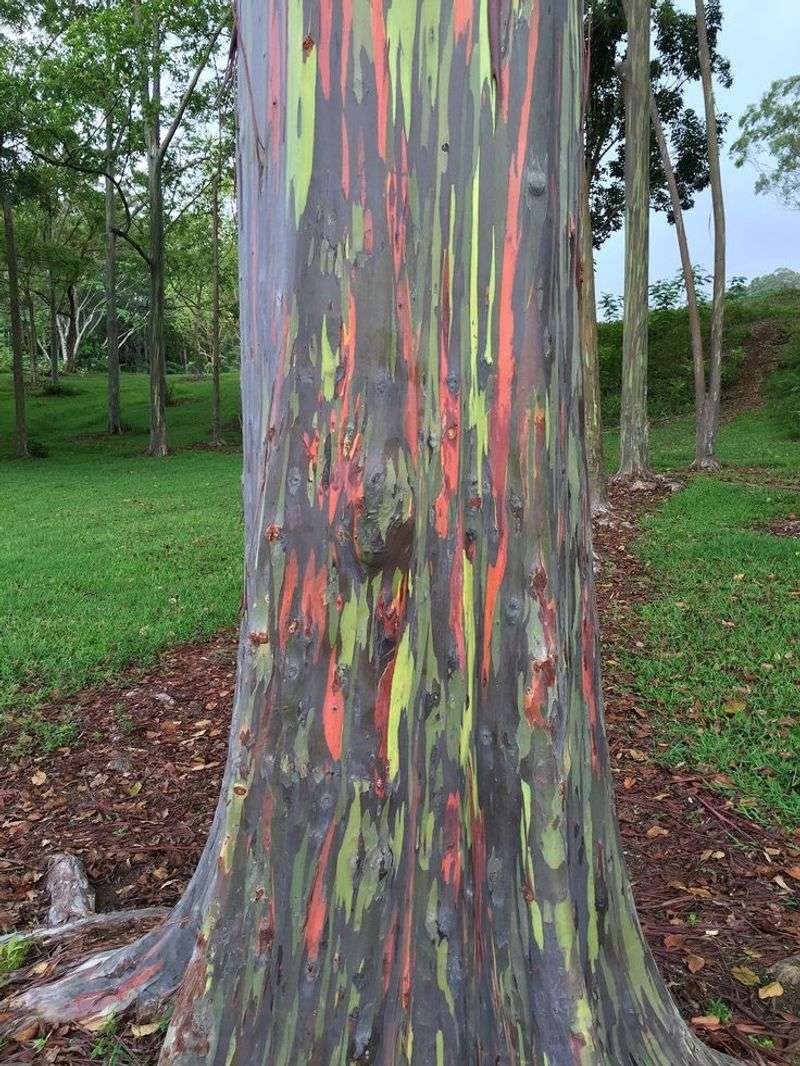
Overcast days in Hawaii actually provide better lighting for photographing rainbow eucalyptus bark because harsh sunlight creates distracting shadows and washed-out color tones.
Morning hours after rain offer ideal conditions when moisture intensifies the bark colors, making blues, greens, and oranges appear especially vibrant and saturated.
Getting close to the trunk allows photographers to capture detailed texture and color transitions that wide shots from a distance often miss completely.
Vertical compositions work well for emphasizing the tree’s height and the way colors flow upward along the trunk in distinctive striped patterns.
Polarizing filters help reduce glare and enhance color saturation, though Hawaii’s naturally vibrant hues often need minimal enhancement in post-processing editing software.
Including people in shots provides scale reference, helping viewers understand just how massive these colorful giants truly are in their natural Hawaiian settings.
Avoiding midday harsh light prevents the washed-out appearance that can make even the most colorful specimens look dull and unimpressive in final images.
Many photographers visit the same trees multiple times across different seasons, documenting how the color patterns shift and change throughout the year naturally.
8. Environmental Concerns About Non-Native Species

Conservationists worry that rainbow eucalyptus trees compete with native Hawaiian plants for water, nutrients, and growing space in limited forest ecosystems across islands.
Seeds spread easily through wind and bird droppings, allowing these trees to colonize areas far beyond their original plantation boundaries throughout various Hawaiian regions.
Allelopathic chemicals released by eucalyptus roots and fallen leaves can inhibit germination and growth of native plant species trying to establish in affected areas.
Forest managers face difficult decisions balancing the trees’ tourism value and ecological impact, especially in areas near sensitive native Hawaiian plant communities today.
Some environmental groups advocate for removing rainbow eucalyptus from certain areas, while others argue their established presence now contributes to Hawaii’s diverse landscape.
Birds and insects native to Hawaii generally don’t rely on eucalyptus trees for food or habitat, meaning they add limited ecological value.
Water consumption by these fast-growing giants can be substantial, potentially affecting watershed health in areas where water resources face increasing demand pressures.
Ongoing research in Hawaii examines long-term impacts, helping land managers develop balanced approaches that consider both conservation goals and cultural tourism economics simultaneously.