9 Steps You Should Take When An Opossum Visits Your Arizona Yard
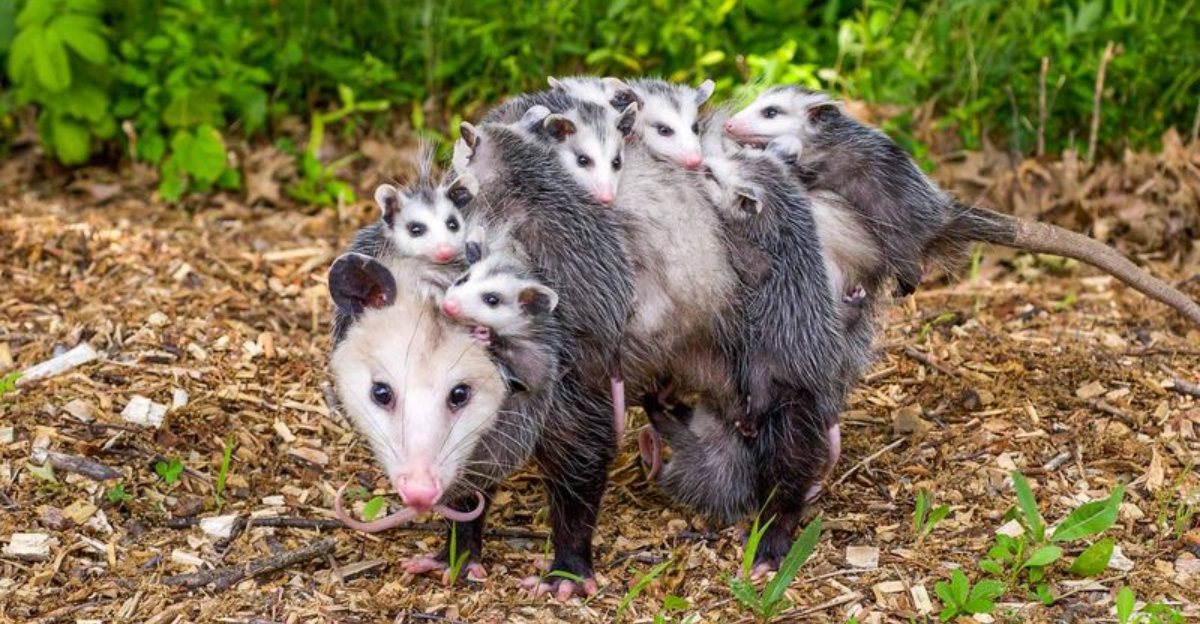
An opossum strolls into your Arizona yard, and suddenly the night feels a little wilder than usual.
One moment you admire the desert stars, and the next a critter with a poker face straight out of a tall tale stands under your mesquite tree.
Panic tries to grab the wheel, but an opossum seldom spells trouble — it simply follows its nose and minds its manners.
Still, a visit like this calls for a cool head and a plan, because a yard in the Sonoran twilight turns into a stage where quick thinking keeps the peace and sends the guest on its way without ruffling a single feather.
1. Stay Calm And Keep Your Distance
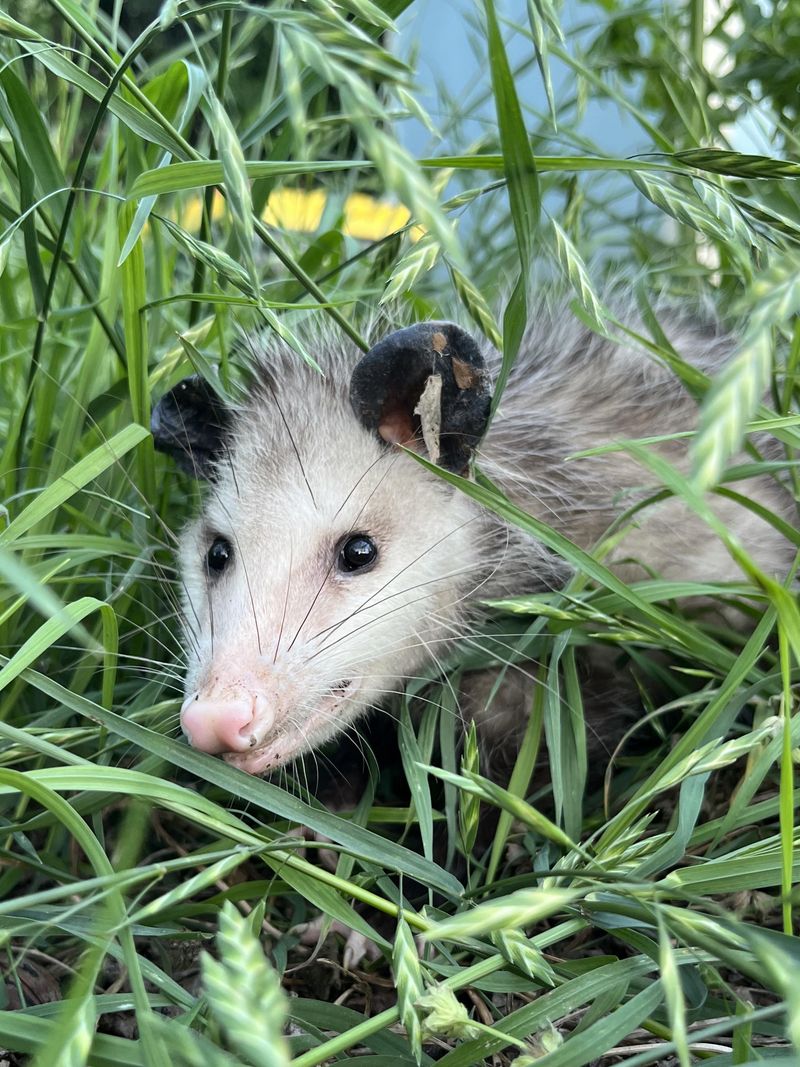
Spotting an opossum might make your heart race, but panicking won’t help anyone.
Opossums are naturally shy creatures that prefer avoiding humans whenever possible.
They’re not aggressive by nature and will usually freeze or shuffle away slowly when they sense your presence.
Keeping at least ten feet between you and the animal gives both of you breathing room.
This distance prevents the opossum from feeling cornered or threatened, which could trigger defensive behaviors.
If you have children or pets with you, calmly guide them indoors without making sudden movements or loud noises.
Rushing toward the animal or trying to touch it creates unnecessary stress for everyone involved.
Remember that opossums have poor eyesight and rely heavily on their sense of smell, so they might not even notice you right away.
Watching from a window allows you to observe the animal safely while it goes about its business.
Most opossums are just passing through your yard searching for food or water.
Patience usually solves the situation naturally as the animal moves along on its own.
Your calm approach sets the tone for a peaceful encounter that benefits both species.
2. Bring Pets Inside Immediately
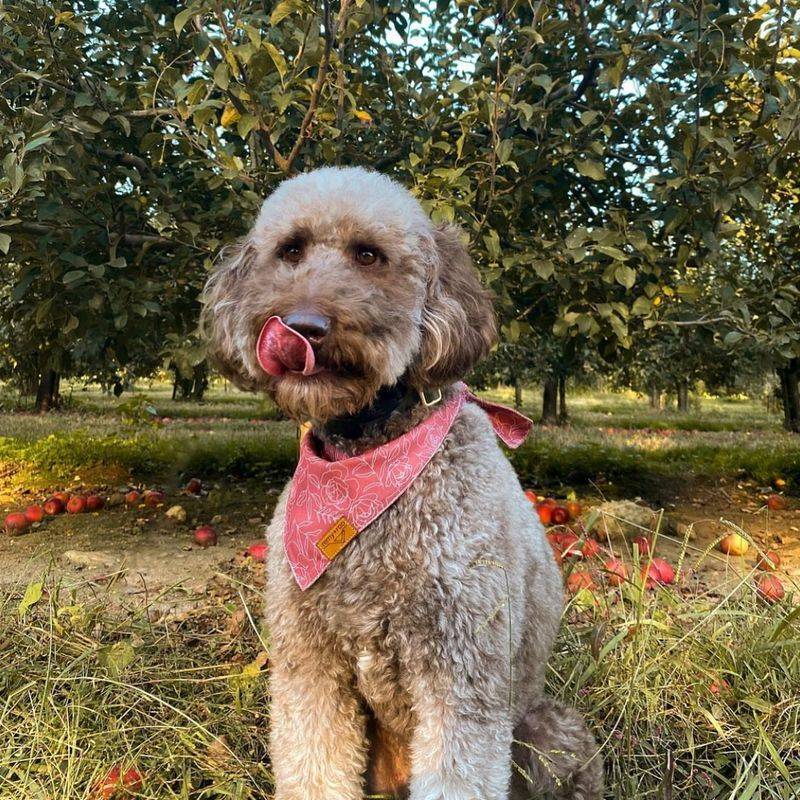
Your furry friends might view an opossum as an exciting new playmate or potential threat, neither of which leads anywhere good.
Dogs especially can become overly curious or territorial when encountering wildlife in their space.
Cats might also try to chase or confront the visitor, putting themselves at risk.
While opossums rarely initiate confrontations, they will defend themselves if cornered by barking dogs or hissing cats.
Their sharp teeth can cause painful bites, and any animal encounter carries risks of scratches or injury.
Bringing your pets indoors protects them from potential harm and prevents them from stressing out the opossum.
Call your dog or cat calmly rather than running outside in a panic, which might escalate the situation.
Once your pets are safely inside, keep them there until the opossum has left your property completely.
Checking through windows helps you monitor when the coast is clear.
Even well-trained pets can act unpredictably around wild animals due to instinct.
Preventing contact between your pets and wildlife also reduces disease transmission risks.
Taking this simple precaution ensures everyone stays healthy and unharmed during the unexpected visit.
3. Never Corner Or Trap The Animal
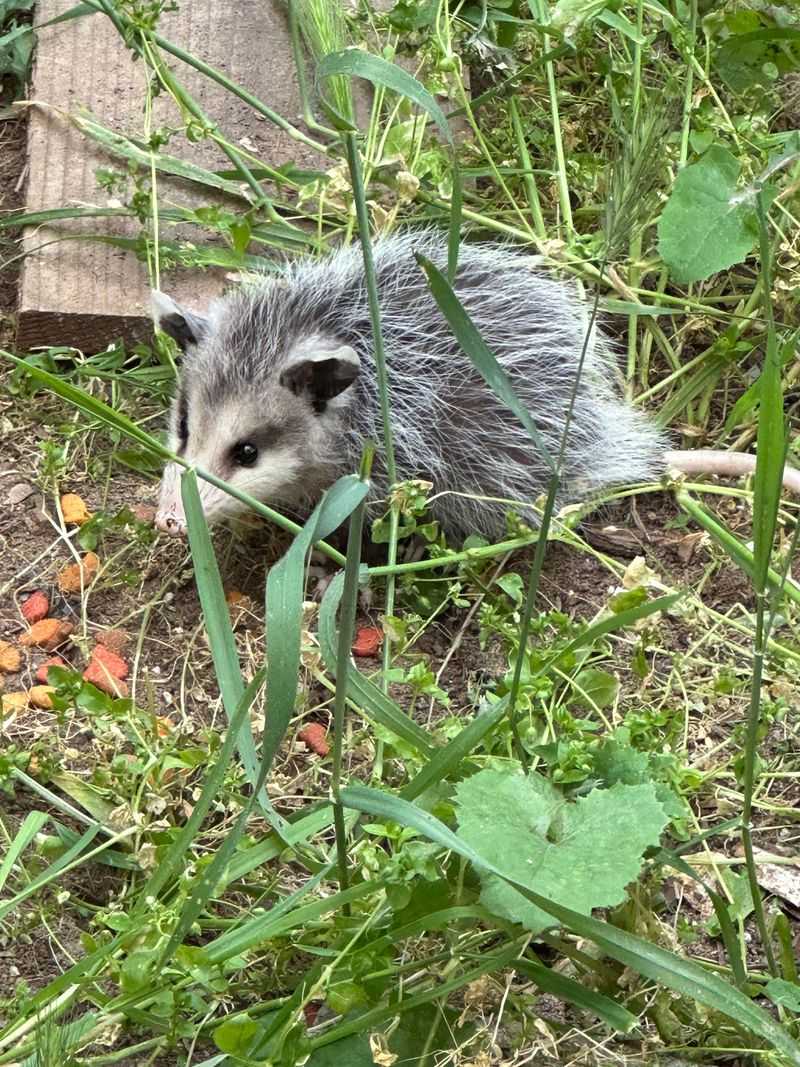
Imagine feeling trapped with no way out—that’s exactly how an opossum feels when backed into a corner.
These animals need clear escape routes to feel safe and move along peacefully.
Blocking their path with your body, garden tools, or furniture forces them into defensive mode.
When opossums feel threatened with nowhere to go, they might hiss, show their teeth, or even play possum by falling into a catatonic state.
Playing possum is an involuntary response to extreme stress, not a conscious choice.
Creating this level of fear is both unkind and unnecessary for resolving the situation.
Instead, give the animal plenty of space to leave your yard through gates, fence gaps, or other openings.
Turn off bright outdoor lights that might disorient the nocturnal creature.
If the opossum is near your house, gently encourage it toward open areas by making soft noises from a distance.
Avoid chasing or herding the animal, which only increases its panic.
Most opossums will gladly leave once they realize they have a safe exit.
Respecting their need for escape routes demonstrates compassion while effectively solving your problem.
4. Check For Babies Before Taking Action
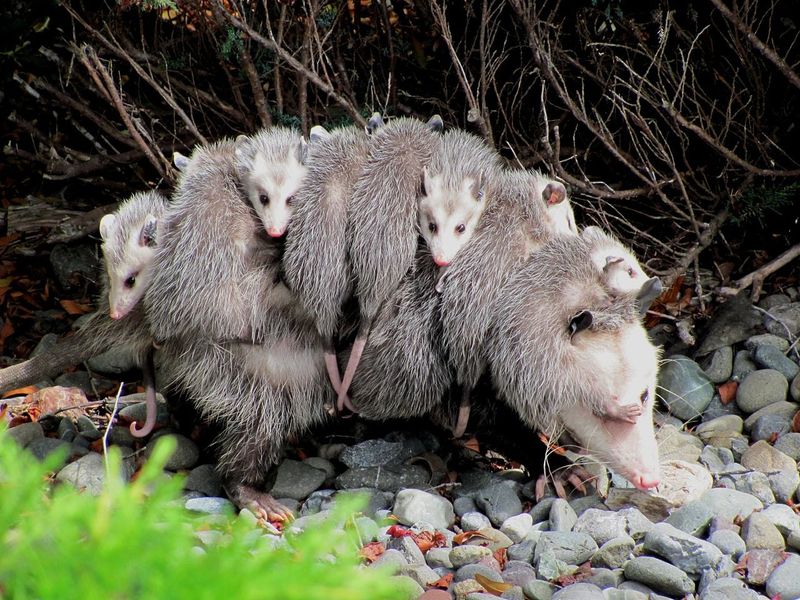
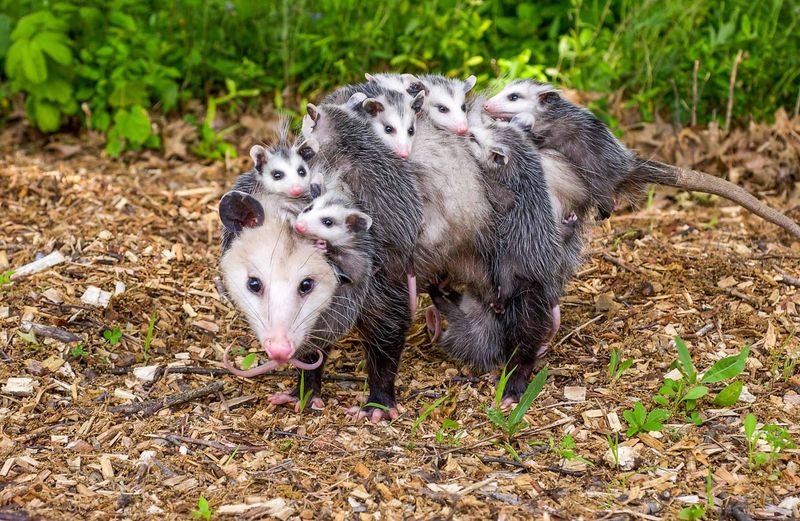
Female opossums are devoted mothers who carry their young on their backs once the babies outgrow the pouch.
Seeing one opossum might actually mean you’re hosting an entire family.
Baby opossums, called joeys, cling tightly to their mother as she searches for food and water.
If you spot multiple small creatures attached to the adult, you’re definitely looking at a mom with her offspring.
This situation requires extra patience because the mother needs time to safely relocate her entire family.
Separating mothers from babies causes tremendous stress and endangers the young ones who can’t survive alone.
Give the opossum family plenty of space and time to move through your yard together.
Mother opossums typically stay in one area only temporarily while foraging.
They’ll move their babies to a new location within a night or two.
Avoid making loud noises or sudden movements that might cause the mother to scatter or abandon her young.
If babies appear to be alone without their mother, wait several hours before assuming they’ve been abandoned.
The mother might be nearby searching for food to sustain herself and her growing family.
5. Remove Outdoor Food Sources Temporarily
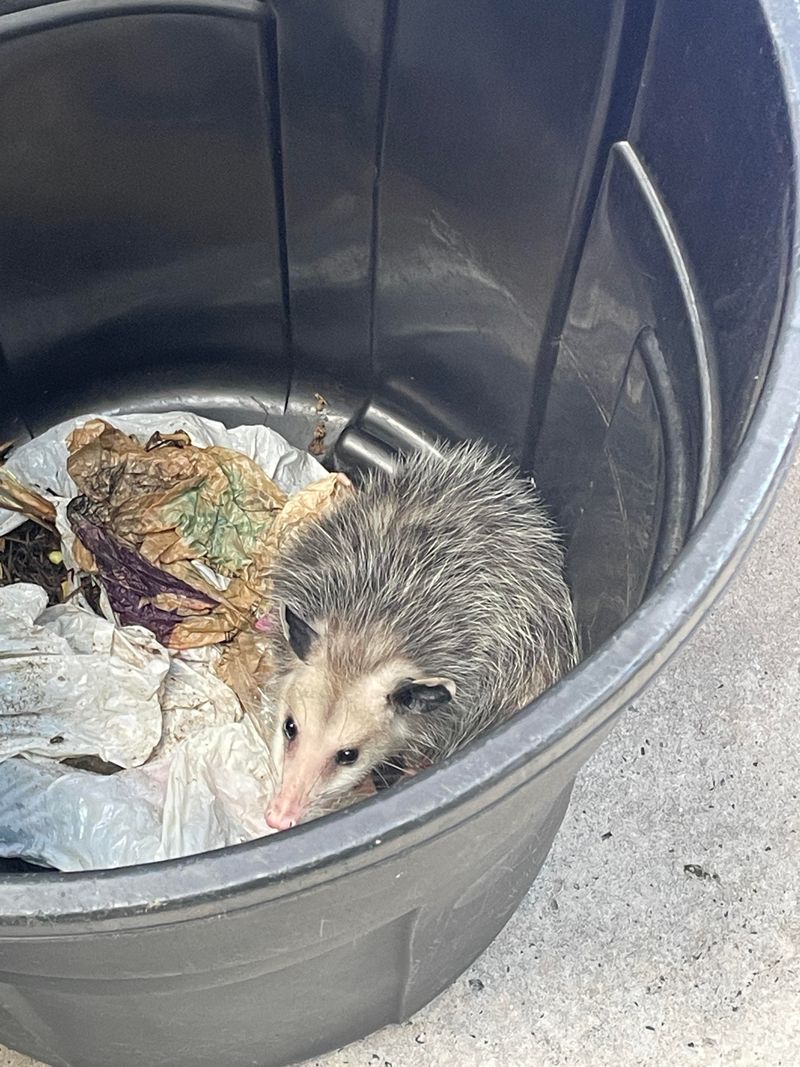
Opossums are opportunistic eaters with excellent noses for finding easy meals.
Your outdoor pet food dishes, fallen fruit, or accessible garbage cans might be exactly what attracted the visitor.
Temporarily removing these temptations encourages the opossum to search elsewhere for dinner.
Bring pet food bowls inside after your animals finish eating rather than leaving them out overnight.
Secure garbage can lids with bungee cords or invest in wildlife-proof containers.
Pick up any fallen fruit from trees and clean up birdseed scattered under feeders.
Even compost piles can attract hungry opossums looking for scraps.
Covering or relocating compost temporarily removes another potential food source.
These simple changes make your yard less appealing without harming the animal.
Opossums are smart enough to move on when food becomes scarce in one location.
Once the visitor has left, you can gradually reintroduce outdoor feeding practices with better security measures.
Preventing future visits often comes down to managing what makes your property attractive to wildlife in the first place.
6. Provide A Clear Exit Path With Gentle Encouragement
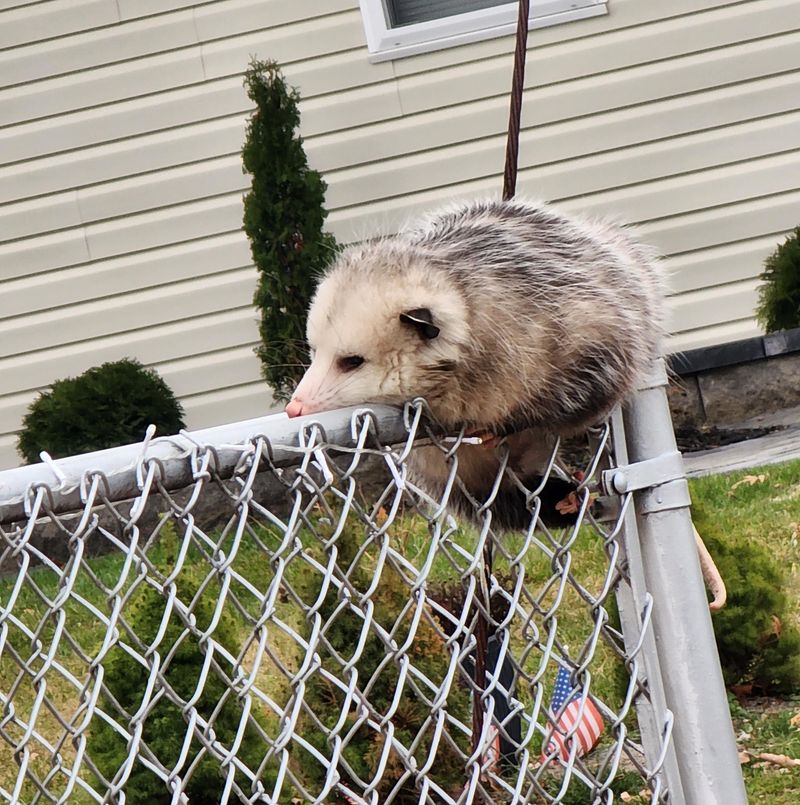
Sometimes opossums need a little guidance to find their way out of your yard.
Opening gates and removing obstacles creates obvious escape routes the animal can follow.
If your yard is fully fenced, check for any openings or gaps the opossum might use to leave.
Creating a clear path from where the animal is hiding to the nearest exit helps speed up the process.
You can gently encourage movement by making soft sounds or turning on a radio at low volume nearby.
Opossums dislike loud disturbances and will typically shuffle away from unfamiliar noises.
Avoid aggressive tactics like spraying water or throwing objects, which cause unnecessary stress.
Instead, use patient, gentle methods that respect the animal while achieving your goal.
Placing a broom on the ground (not swinging it) can create a gentle barrier that guides the opossum toward the exit.
Stay several feet away and move slowly to avoid triggering a fear response.
Most opossums will take the hint and waddle toward freedom once they understand where to go.
The entire process might take thirty minutes to an hour, but patience pays off with a peaceful resolution.
7. Avoid Direct Contact And Handling
Wild animals should always remain wild, which means keeping your hands to yourself no matter how harmless the opossum appears.
Even though these marsupials look somewhat cuddly with their fuzzy fur, they’re not domesticated pets.
Attempting to pick up or touch an opossum puts you at risk for bites, scratches, and potential disease transmission.
Opossums carry various parasites and can transmit bacteria through their saliva or waste.
While they’re less likely than other mammals to carry rabies due to their low body temperature, the risk isn’t zero.
Any bite from a wild animal requires immediate medical attention and possible treatment.
Beyond health concerns, handling wildlife causes extreme stress for the animal.
What seems like a helpful rescue to you feels like a life-threatening situation to the opossum.
If an opossum appears injured or truly unable to leave on its own, contact wildlife rehabilitation professionals instead of intervening yourself.
These experts have proper training, equipment, and facilities to handle wild animals safely.
Your local animal control or wildlife services can provide contact information for licensed rehabilitators in Arizona.
Respecting boundaries protects both human and animal welfare.
8. Seal Entry Points To Prevent Future Visits
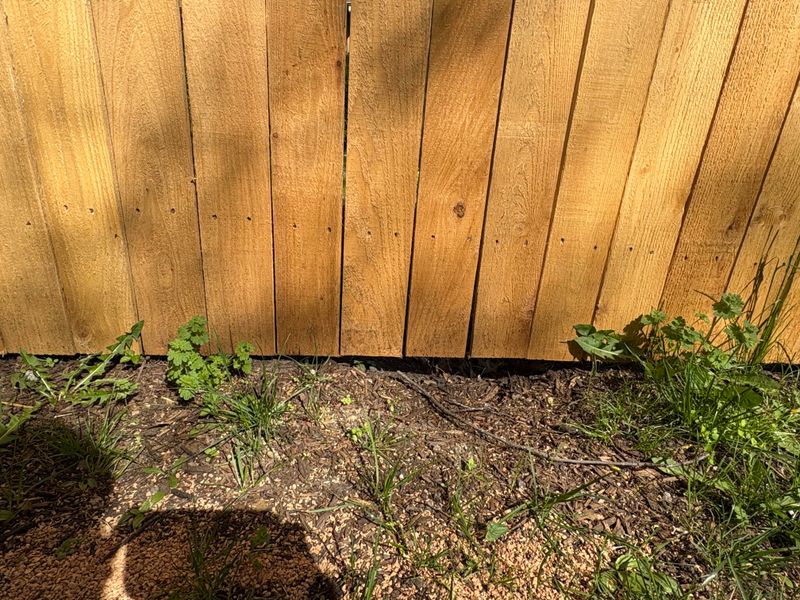
Once your opossum visitor has moved along, take time to investigate how it got into your yard.
Opossums can squeeze through surprisingly small openings, especially if they smell food or shelter nearby.
Walk your property line looking for gaps under fences, holes in walls, or openings near sheds and garages.
Common entry points include broken fence boards, spaces under gates, and damaged foundation vents.
Filling these gaps with hardware cloth, wood, or concrete prevents future uninvited guests.
Check areas around your home’s foundation where utilities enter, as these often create convenient passages.
Trim back tree branches and bushes that touch your fence, which animals use as highways into your space.
Securing crawl spaces and under-deck areas removes potential nesting spots that might attract opossums looking for shelter.
Regular property maintenance catches new vulnerabilities before they become wildlife doorways.
Remember that exclusion works better than removal since new animals will simply replace any that leave if conditions remain attractive.
Making your yard less accessible protects both your property and encourages wildlife to stay in more appropriate habitats.
Prevention requires some effort upfront but saves hassle in the long run.
9. Appreciate Their Beneficial Role In Your Ecosystem
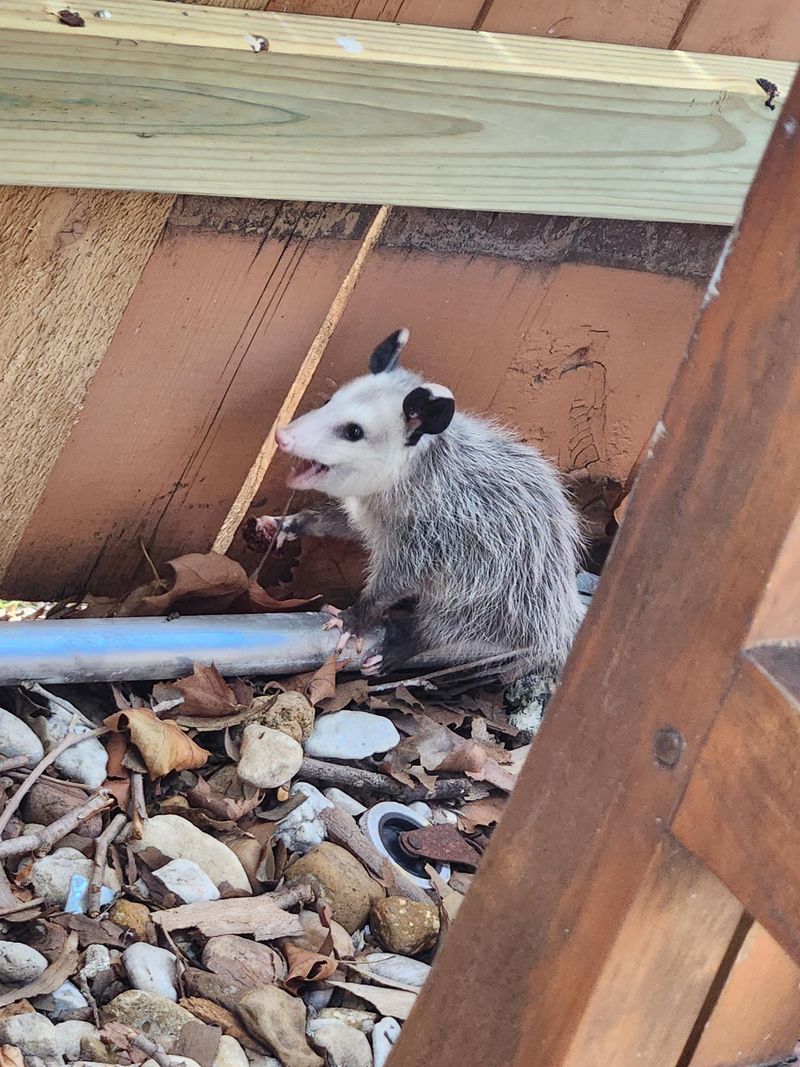
Before viewing opossums as unwanted pests, consider the valuable services they provide to Arizona homeowners.
A single opossum can consume up to 5,000 ticks in one season, significantly reducing your risk of tick-borne illnesses.
They also eat cockroaches, beetles, snails, slugs, and other garden pests that damage plants.
In Arizona’s desert environment, opossums even consume venomous creatures like scorpions and rattlesnakes without suffering harm.
Their natural immunity to many venoms makes them fearless pest controllers.
Opossums are also nature’s cleanup crew, eating carrion and rotting fruit that would otherwise attract flies and other nuisances.
Unlike rodents, they don’t chew through wires, destroy insulation, or cause structural damage to homes.
Their nomadic lifestyle means they rarely stay in one place long enough to become a persistent problem.
Understanding these benefits helps shift your perspective from annoyance to appreciation.
Coexisting peacefully with wildlife creates a healthier, more balanced environment for everyone.
The occasional opossum visit is actually a sign of a thriving ecosystem where nature’s pest control is working effectively.
Welcoming these helpful marsupials, even temporarily, benefits your yard more than you might realize.