Stone Landscaping Ideas That Keep Colorado Yards Easy To Manage
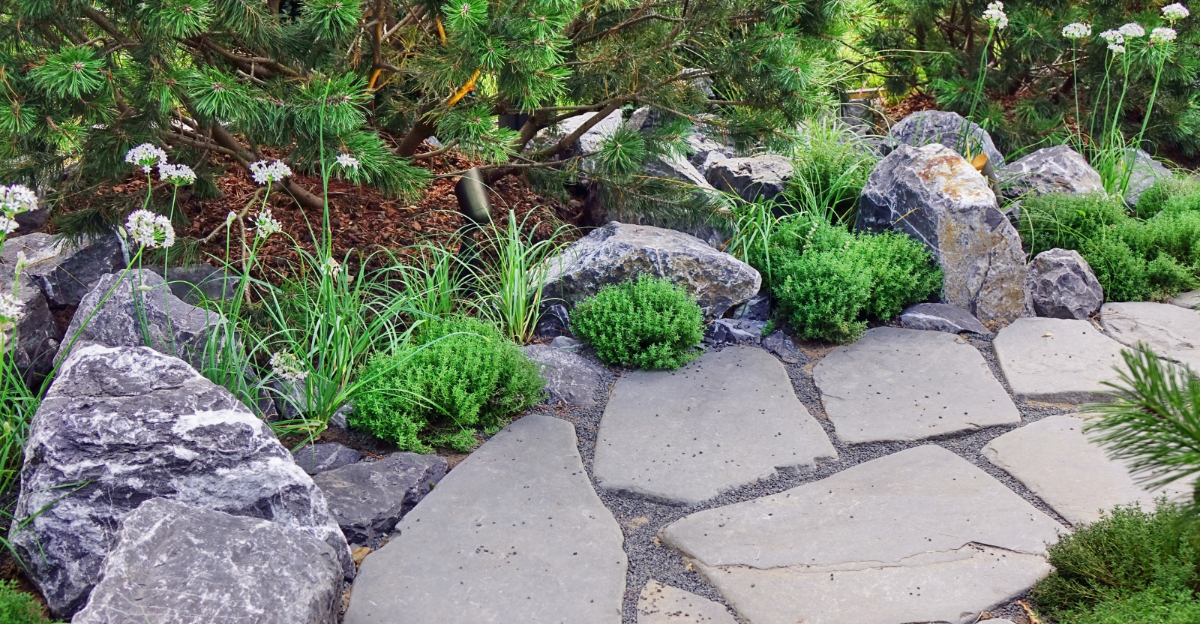
Stone has a way of calming a Colorado yard, making everything feel settled, intentional, and far easier to live with through changing seasons.
Between intense sun, sudden storms, and dry stretches, many lawns and high-maintenance plants start to feel like more work than they’re worth.
That’s where stone landscaping quietly changes the experience, replacing constant upkeep with surfaces that hold their shape and purpose.
Rock paths, gravel beds, and stone features stay put when grass struggles, offering structure that doesn’t ask for weekly attention.
Colorado’s climate rewards materials that can handle heat, wind, and temperature swings without breaking down or looking tired.
Stone also brings flexibility, working just as well in modern yards as it does in more natural, mountain-inspired landscapes.
Once stone becomes part of the design, outdoor spaces start feeling calmer and more predictable instead of demanding.
Maintenance shifts from endless chores to simple touch-ups that fit easily into everyday life.
The yard still looks cared for, just without the pressure to constantly fix or replace things.
For many Colorado homeowners, stone landscaping becomes the key to an outdoor space that finally works as smoothly as it looks.
1. River Rock Pathways
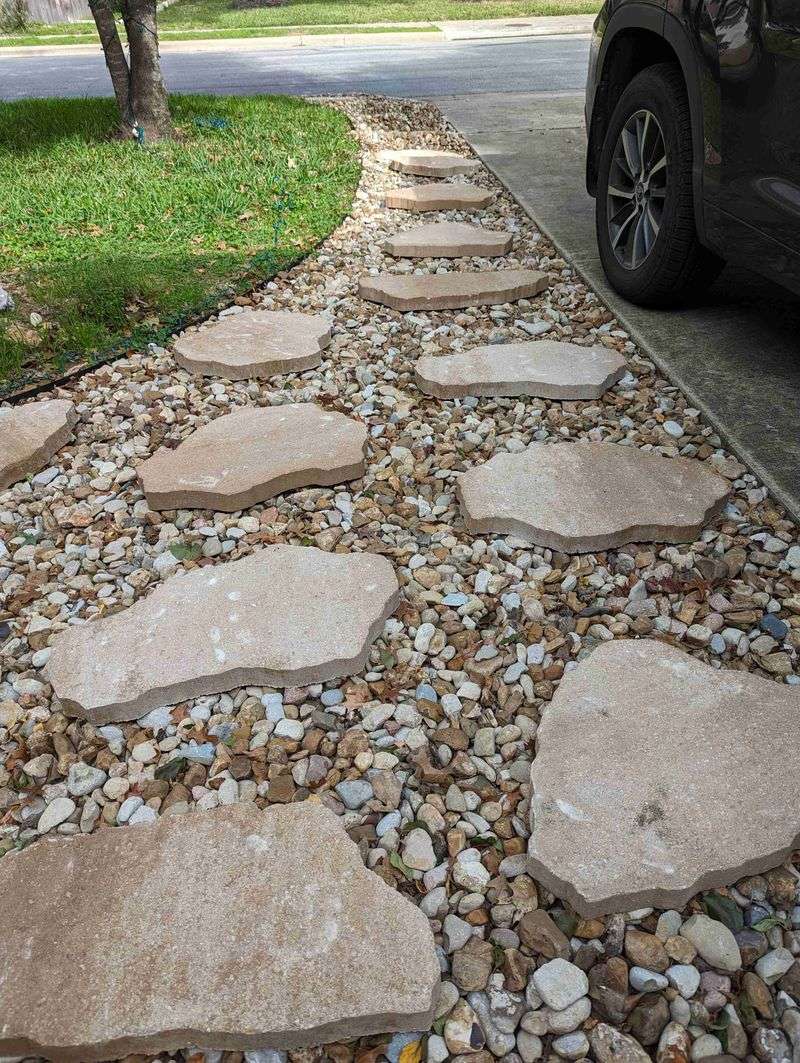
Smooth river rocks create gorgeous walking paths that guide visitors through your yard without requiring constant upkeep or expensive professional maintenance services.
Colorado landscapes benefit tremendously from these natural-looking pathways because they handle freeze-thaw cycles better than concrete or traditional paving materials do.
Your feet will appreciate the gentle texture underfoot, and the stones naturally drain water away, preventing puddles from forming during spring snowmelt season.
Installing river rock paths is surprisingly simple: dig shallow trenches, lay down landscape fabric, then spread your chosen stones evenly across the surface.
Choose rocks ranging from one to three inches in diameter for comfortable walking surfaces that won’t shift too much under regular foot traffic.
These pathways connect different garden areas beautifully while defining spaces without building walls or installing fences that block mountain views completely.
Maintenance involves occasional raking to keep stones level and adding new material every few years as rocks gradually settle into the ground.
Many Colorado garden centers stock locally sourced river rocks in various colors, from warm tan shades to cool gray tones that complement existing landscaping.
Pathway edges can be defined with larger border stones or metal edging strips to prevent rocks from migrating into surrounding grass areas.
River rock paths also suppress weeds effectively when installed over fabric, reducing the need for constant upkeep throughout the growing season.
Subtle solar path lights can be added along the edges to improve nighttime visibility while softly highlighting the natural stone texture.
2. Boulder Accent Features
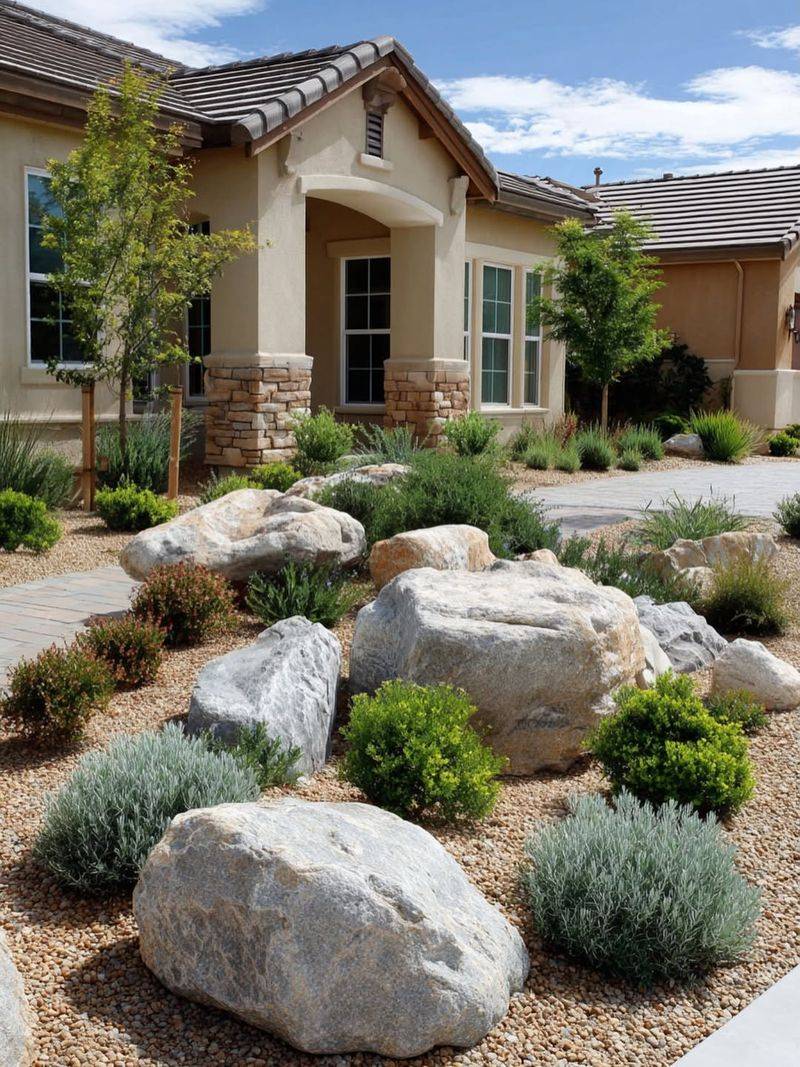
Large boulders serve as dramatic focal points that anchor your landscape design while requiring absolutely zero maintenance once they’re properly positioned in place.
Native Colorado boulders blend seamlessly with the surrounding mountain environment, creating a cohesive look that feels like a natural extension of the wilderness.
Professional landscapers often use heavy equipment to place massive boulders, but homeowners can work with smaller specimens weighing a few hundred pounds instead.
Strategic boulder placement creates visual interest at yard corners, near entryways, or alongside driveways where traditional plantings would struggle in harsh conditions.
Combining boulders with low-water plants like yucca, sedum, or ornamental grasses softens the stone’s hard edges while maintaining the low-maintenance aesthetic you desire.
Colorado’s red sandstone boulders add warm color tones, while granite specimens provide cooler gray hues that contrast beautifully with green foliage and colorful flowers.
Grouping three or five boulders together in odd-numbered clusters creates more natural-looking arrangements than evenly spaced or symmetrical placements would produce.
These permanent features never need watering, trimming, fertilizing, or replacing, making them the ultimate low-effort landscaping solution for busy Colorado homeowners everywhere.
Moss and lichen naturally colonize boulder surfaces over time, adding character and helping the stones look like they’ve been there for centuries.
3. Gravel Ground Cover
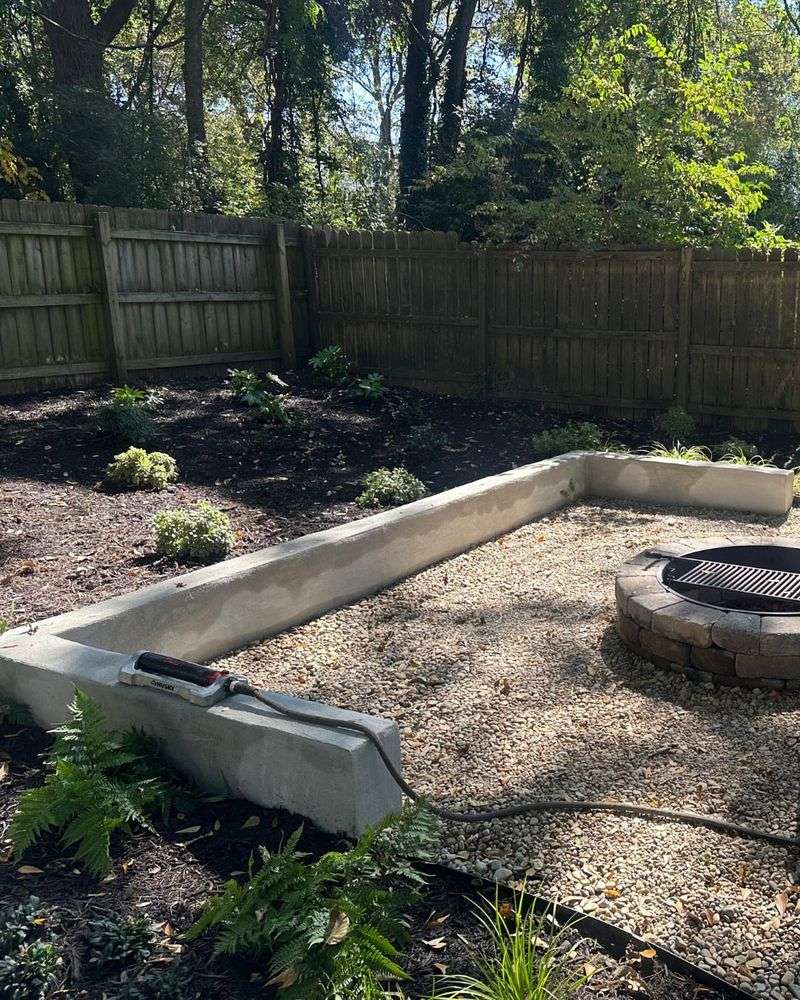
Gravel ground cover eliminates the need for grass in areas where traditional lawns struggle, saving countless hours of mowing, watering, and fertilizing efforts.
Colorado homeowners appreciate how gravel suppresses weed growth naturally while providing excellent drainage that prevents water from pooling during heavy rainstorms or snowmelt.
Installation begins with removing existing vegetation, compacting the soil, then laying commercial-grade landscape fabric before spreading gravel several inches deep across the area.
Pea gravel works wonderfully in high-traffic zones because its rounded shape is comfortable underfoot and shifts easily to accommodate movement without creating bare spots.
Crushed granite or decomposed granite compacts firmly to create more stable surfaces ideal for seating areas, dog runs, or children’s play spaces throughout.
Color options range from neutral tans and browns to dramatic black basalt or striking white marble chips that brighten shady yard sections significantly.
Annual maintenance involves raking to redistribute stones evenly and occasionally adding fresh material to maintain the desired depth as gravel gradually settles downward.
Many Colorado municipalities offer rebates for replacing water-hungry grass with xeriscaping materials like gravel, potentially offsetting your initial installation costs considerably over time.
Combining different gravel sizes and colors creates interesting patterns and textures that add visual complexity to otherwise plain yard areas needing improvement.
Gravel ground cover also helps regulate soil temperature, keeping roots cooler in summer and reducing erosion caused by sudden downpours or melting snow.
When paired with drought-tolerant plants or native shrubs, gravel areas feel intentional and polished rather than empty or unfinished.
4. Stacked Stone Walls
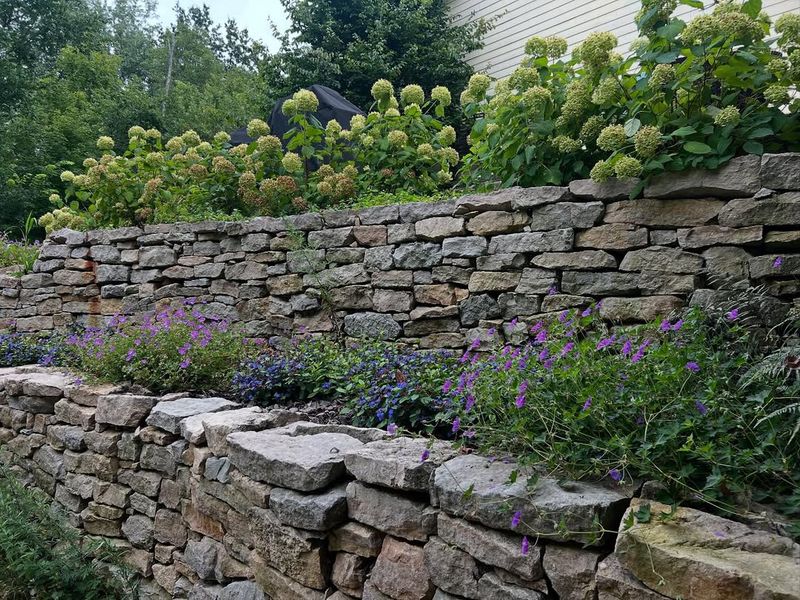
Retaining walls built from stacked stone solve erosion problems on sloped Colorado properties while creating terraced planting beds that make gardening much easier.
Dry-stack construction methods use gravity and careful placement rather than mortar, allowing walls to flex slightly during freeze-thaw cycles without cracking apart.
Flagstone, fieldstone, and quarried stone blocks all work beautifully for wall construction, with each material offering distinct textures and color variations to explore.
Shorter walls under three feet tall typically don’t require engineering permits in most Colorado jurisdictions, though checking local regulations before building is wise.
These structures provide excellent habitat for beneficial insects and small wildlife while adding vertical interest that breaks up flat, monotonous yard spaces effectively.
Building stacked walls is labor-intensive initially but delivers decades of maintenance-free service once completed, making the upfront effort worthwhile for long-term homeowners.
Backfilling behind walls with gravel ensures proper drainage, preventing water pressure from building up and potentially pushing the wall outward over winter months.
Colorado’s natural stone varieties mean you can source materials locally, reducing transportation costs and environmental impact while supporting regional quarries and stone suppliers.
Planting pockets left between stones allow alpine flowers, succulents, and creeping thyme to soften the wall’s appearance while requiring minimal water or care.
5. Flagstone Patios
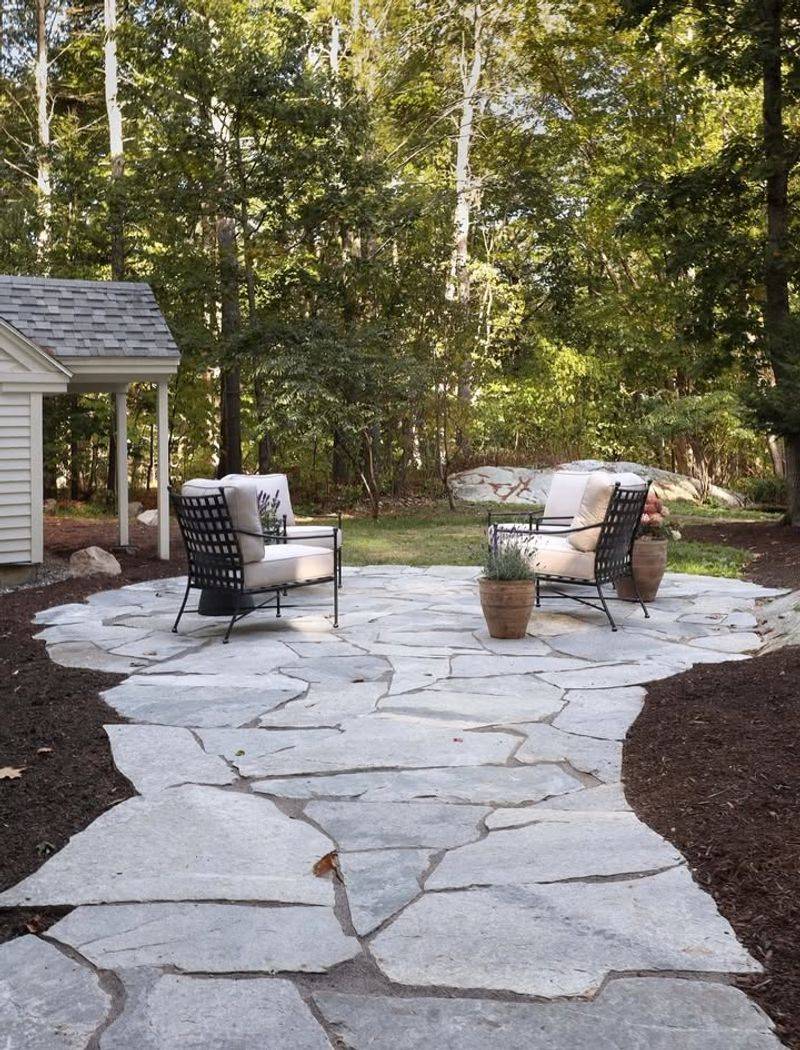
Flagstone patios create inviting outdoor living spaces where Colorado families can enjoy mountain views without worrying about maintaining traditional wooden decks or concrete slabs.
Natural stone’s irregular shapes and varied colors produce one-of-a-kind patterns that give each patio a custom appearance impossible to replicate with manufactured materials.
Installation over a gravel base allows for excellent drainage, preventing ice buildup in winter and ensuring your patio dries quickly after summer thunderstorms.
Sweeping joints with polymeric sand locks flagstones in place while discouraging weed growth, though occasional touch-ups maintain the cleanest appearance over the years.
Colorado buff, red, and gray flagstones complement virtually any home exterior color scheme, from rustic log cabins to contemporary stucco or brick constructions.
Flagstone naturally stays cooler underfoot than concrete during hot summer days, making barefoot outdoor relaxation more comfortable for kids and adults alike everywhere.
Furniture placement is flexible since flagstone surfaces are level and stable, accommodating everything from small bistro sets to large dining tables with ease.
Sealing flagstone is optional but can enhance color vibrancy and make cleaning easier, though many Colorado homeowners prefer the natural weathered look instead.
These patios age gracefully, developing character as they weather, unlike wood decks that rot or composite materials that fade under intense UV exposure.
Flagstone patios also increase property appeal by creating a durable, upscale feature that feels permanent and thoughtfully designed rather than temporary or trendy.
With minimal upkeep beyond occasional sweeping and rinsing, these patios remain attractive for decades in Colorado’s demanding climate.
6. Rock Gardens
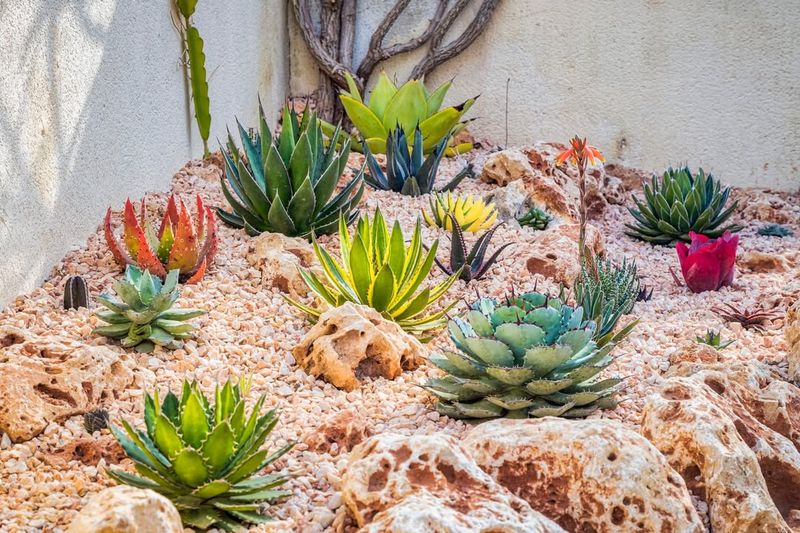
Rock gardens showcase alpine plants and succulents in naturalistic settings that mimic Colorado’s high-elevation environments where these species naturally thrive without extra help.
Arranging rocks of varying sizes creates microclimates with different sun exposures and drainage conditions, allowing diverse plant collections to flourish in compact spaces.
Sedums, hens-and-chicks, creeping phlox, and dwarf conifers all excel in rock garden settings, providing year-round color and texture with minimal watering requirements.
Building a rock garden starts with selecting a sunny location, then arranging larger anchor stones first before filling gaps with smaller rocks and soil.
Colorado’s intense sunlight and dry air create perfect conditions for these specialized gardens, which often struggle in humid climates where fungal diseases plague plants.
Maintenance involves occasional weeding, dividing overgrown perennials every few years, and refreshing mulch between stones to maintain a tidy, polished appearance throughout.
Rock gardens work beautifully on slopes where traditional gardening is difficult, turning challenging terrain into attractive features that prevent erosion problems effectively over time.
Incorporating native Colorado plants like penstemon, columbine, and blanket flower attracts pollinators while ensuring plants are perfectly adapted to local climate conditions already.
These gardens look intentional and designed rather than neglected, providing curb appeal that impresses neighbors without demanding the constant attention traditional flower beds require.
7. Dry Creek Beds
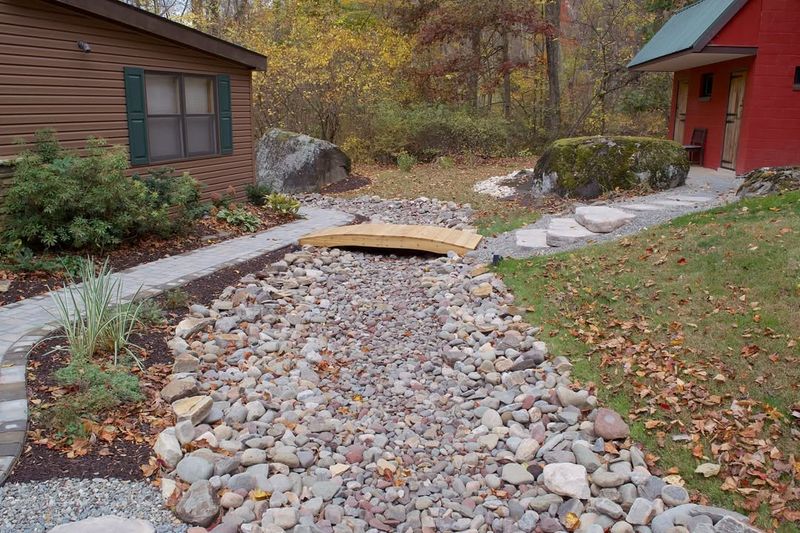
Decorative dry creek beds channel runoff water during storms while adding natural-looking features that appear intentional rather than like drainage ditches or problem areas.
Colorado properties often face water management challenges during spring snowmelt, and dry creek beds direct flow away from foundations, preventing basement flooding or erosion.
Constructing these features involves digging shallow channels, lining them with landscape fabric, then filling with rocks ranging from fist-sized to basketball-sized specimens.
Placing larger boulders strategically along the creek bed’s course creates visual anchors and helps slow water movement during heavy flows, reducing erosive forces.
Edges planted with ornamental grasses, iris, or daylilies soften the transition between creek bed and surrounding lawn or garden areas beautifully throughout seasons.
Dry creek beds can meander naturally through your Colorado yard, mimicking the organic curves found in mountain streams rather than following straight lines.
When not channeling water, these features serve as attractive landscape elements that add dimension and interest to otherwise flat or boring yard sections needing improvement.
Maintenance is minimal, typically involving occasional rock repositioning after major storms and removing leaves or debris that accumulate in the creek bed annually.
Homeowners often add wooden bridges or stepping stones across dry creek beds, creating functional crossings that also serve as charming decorative focal points.
8. Stone Mulch Beds
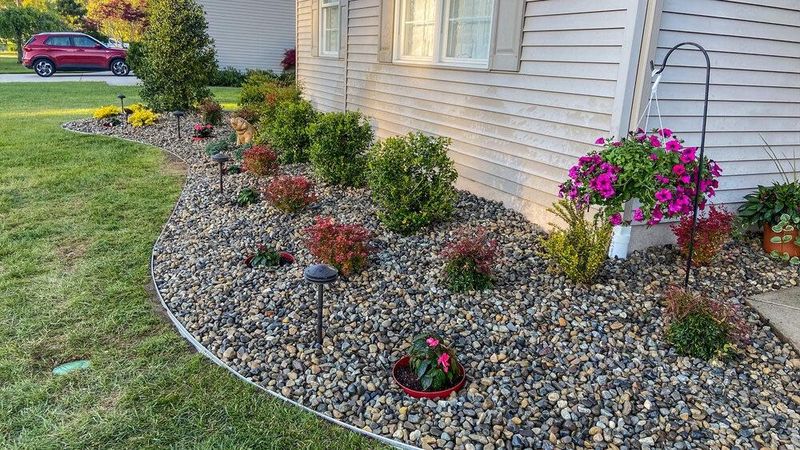
Replacing organic mulch with decorative stone around trees, shrubs, and perennial beds eliminates the need for annual mulch replacement while maintaining a clean appearance.
Colorado’s dry climate causes wood mulch to decompose slowly and blow away in strong winds, making stone mulch a more practical long-term solution here.
River rock, lava rock, or crushed stone options provide different textures and colors that complement various landscaping styles from contemporary to traditional mountain designs.
Stone mulch regulates soil temperature effectively, keeping roots cooler in summer and providing some insulation during Colorado’s frigid winter months when temperatures plummet.
Installation requires removing old mulch, edging bed perimeters clearly, laying landscape fabric, then spreading stones two to three inches deep across the surface.
Unlike wood mulch, stone doesn’t attract termites, harbor fungal diseases, or decompose into soil, meaning it maintains its appearance indefinitely without breaking down.
Weeding is easier with stone mulch since unwanted plants are visible immediately and can be pulled before establishing deep root systems in beds.
Dark lava rock absorbs heat, making it ideal around heat-loving plants, while lighter-colored stones reflect sunlight, keeping soil cooler for shade-preferring specimens instead.
Many Colorado homeowners combine stone mulch with drip irrigation systems, allowing efficient watering that delivers moisture directly to plant roots without waste or evaporation.
9. Gabion Walls
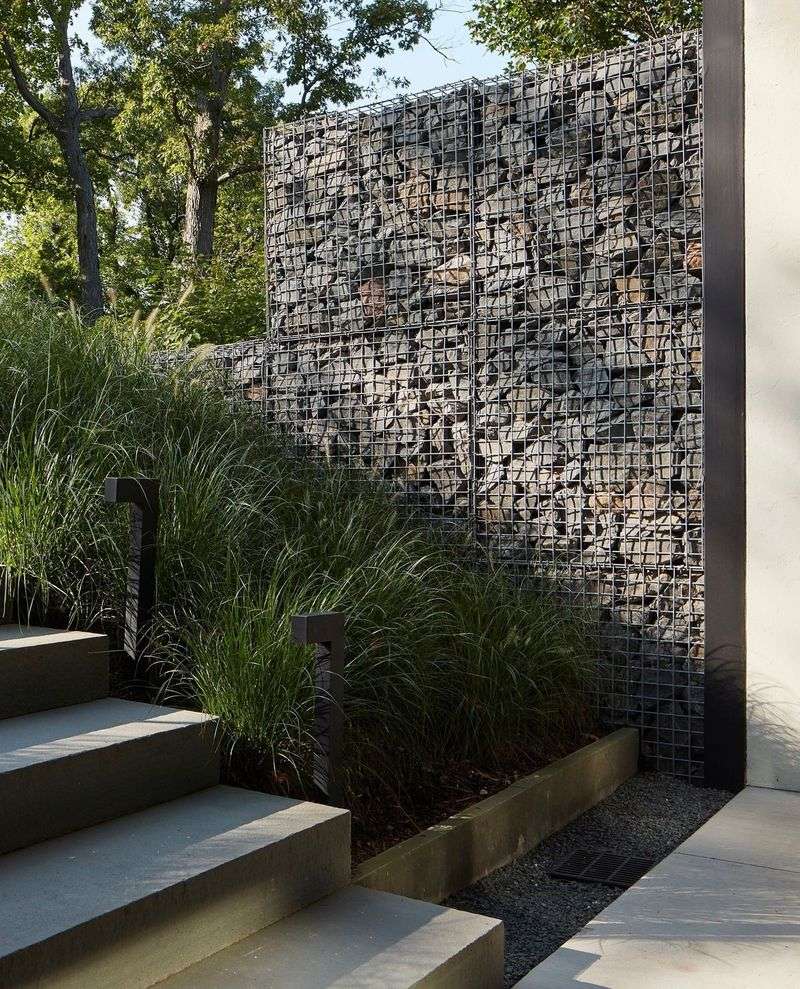
Gabion walls use wire cages filled with rocks to create modern, industrial-looking structures that function as retaining walls, fences, or decorative screens.
These versatile features handle Colorado’s freeze-thaw cycles exceptionally well since the flexible wire construction allows slight movement without structural failure or cracking issues.
Filling gabion cages is a DIY-friendly project that doesn’t require mortar, specialized tools, or professional masonry skills, making installation accessible for homeowners.
Rocks visible through the wire mesh create interesting textural patterns, and homeowners can mix stone colors or sizes to achieve custom appearances matching preferences.
Gabion walls provide excellent sound dampening, reducing traffic noise from nearby roads or creating privacy barriers that block views without feeling oppressively solid.
Plants can grow through gabion wall openings over time, allowing living walls that combine stone’s permanence with vegetation’s softness in unique hybrid features.
Colorado’s abundant local stone makes filling gabion cages affordable since you can often source materials from your own property or nearby quarries inexpensively.
These structures require virtually no maintenance once installed, with the wire mesh lasting decades and the stone fill never needing replacement or repair work.
Gabion walls work beautifully in contemporary landscape designs, providing bold architectural elements that contrast nicely with Colorado’s natural mountain surroundings and traditional building styles.
They also allow excellent water drainage, preventing pressure buildup behind retaining sections during heavy rains or spring snowmelt periods.
At night, subtle landscape lighting can be integrated around or behind gabion walls to highlight textures and create dramatic visual depth.