9 Strange-Looking Succulents You Should Try Growing In Arizona
Arizona landscapes are full of familiar shapes like agave, barrel cactus, and aloe, but the world of succulents goes far beyond those classic plants.
Some grow in twisting forms, others develop chunky, sculptural stems, and a few look so unusual that they barely resemble plants at all.
These strange-looking succulents can bring a completely different kind of character to a garden or container display.
Arizona’s dry climate actually gives many of these unusual plants a natural advantage. With plenty of sun, fast-draining soil, and careful watering, they can grow steadily and show off their distinctive shapes throughout the year.
Adding a few of these eye-catching succulents instantly changes the feel of a planting. Instead of blending into the background, they create curiosity and texture, turning an ordinary container or garden corner into something far more memorable.
1. Stapelia Gigantea Grows Huge Starfish-Shaped Flowers
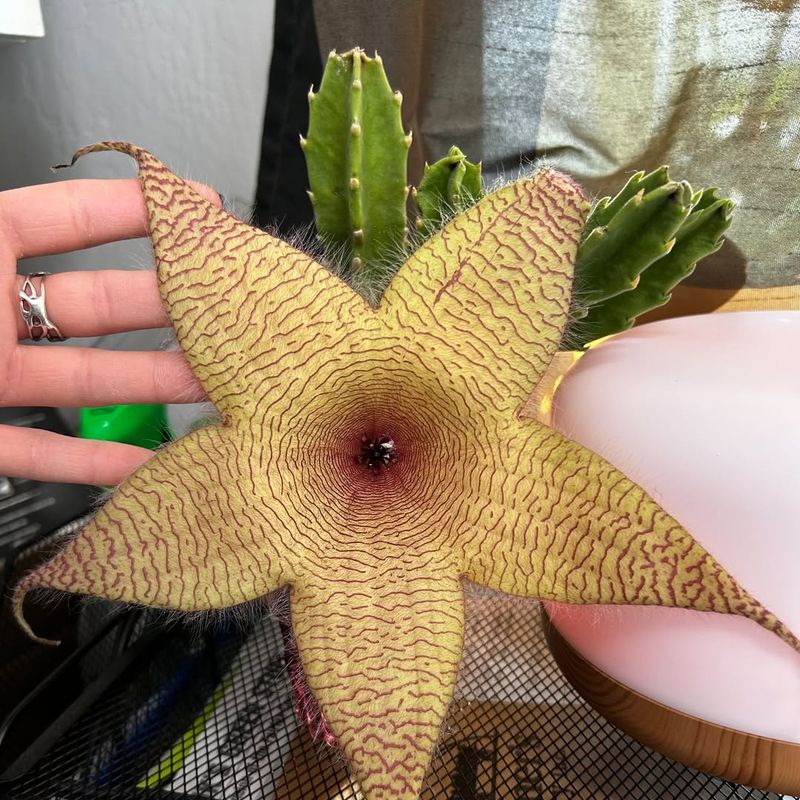
Few plants stop people in their tracks quite like Stapelia gigantea when it blooms. Those flowers can stretch up to 12 inches across, shaped like a five-pointed star with wrinkled, hairy petals striped in cream and rust red.
Visitors to your Arizona yard will not believe it is real.
Originally from southern Africa, this succulent grows in clumping stems that look almost like a cactus without spines. It prefers gritty, fast-draining soil and a sunny or partly shaded spot.
In Arizona, the intense summer sun can scorch it a bit, so a little afternoon shade helps during July and August.
Watering should be minimal. Give it a good soak every couple of weeks during the growing season, then back off almost completely in winter.
One honest warning though: the flower smells like rotting meat to attract flies for pollination. Place it somewhere you will admire the look but not linger too close.
Despite the smell, it is one of the most dramatic bloomers you can grow in the Sonoran Desert region, and once it starts flowering, it tends to do so every year without much fuss.
Large clumps can produce several of those star-shaped blooms at once, turning the plant into a real conversation piece.
2. Huernia Zebrina Produces Striking Lifesaver Blooms
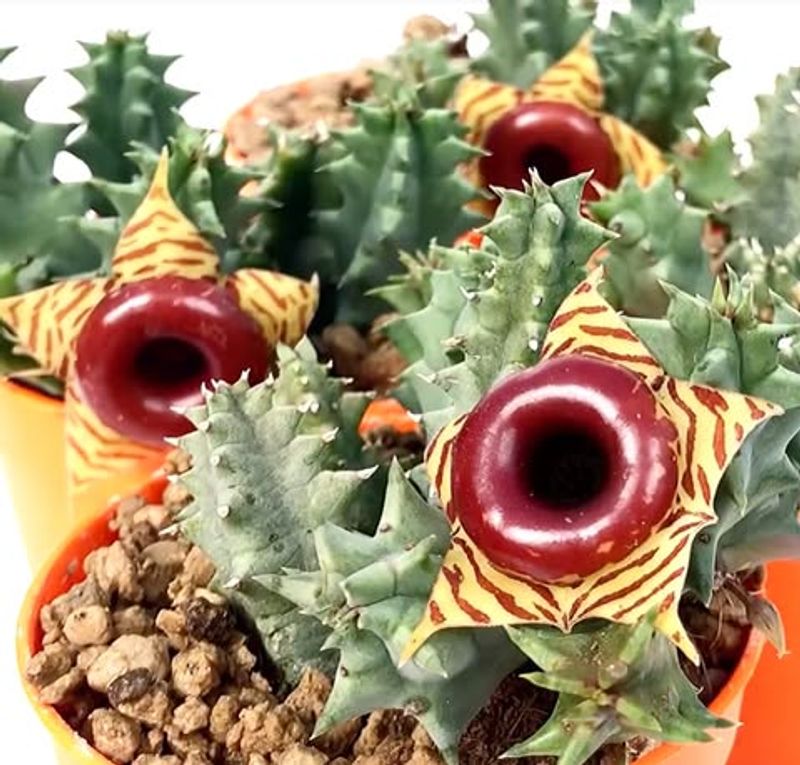
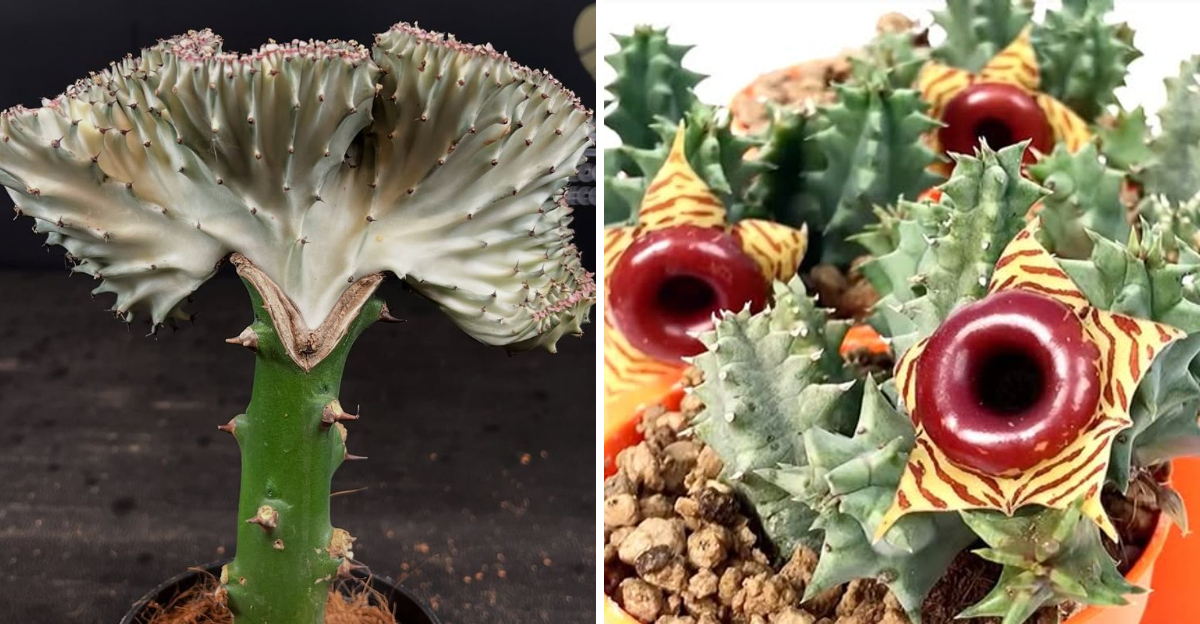
A flower that looks like a tiny lifesaver candy sounds made up, but Huernia zebrina is completely real and absolutely worth growing in Arizona. Each bloom has a bold, rubbery ring in the center with dramatic zebra-like stripes of red and yellow.
Up close, it looks almost artificial.
The plant itself stays compact, usually under six inches tall, with angled stems that have small, soft teeth along the edges. It is a great candidate for a small pot on a covered patio or a sunny windowsill.
Arizona summers work in its favor since it loves warmth, but it does appreciate some protection from direct midday sun during peak heat months.
Drainage is everything with this one. A cactus mix combined with extra perlite keeps the roots happy.
Overwatering is the most common mistake people make, and soggy soil will cause the stems to turn mushy fast. Water thoroughly, then wait until the soil is completely dry before watering again.
Blooms appear in late summer through fall, and a single plant can produce several flowers at once. For a small succulent, it delivers a surprisingly big visual punch in any Arizona container garden.
3. Orbea Variegata Shows Off Speckled Star Flowers
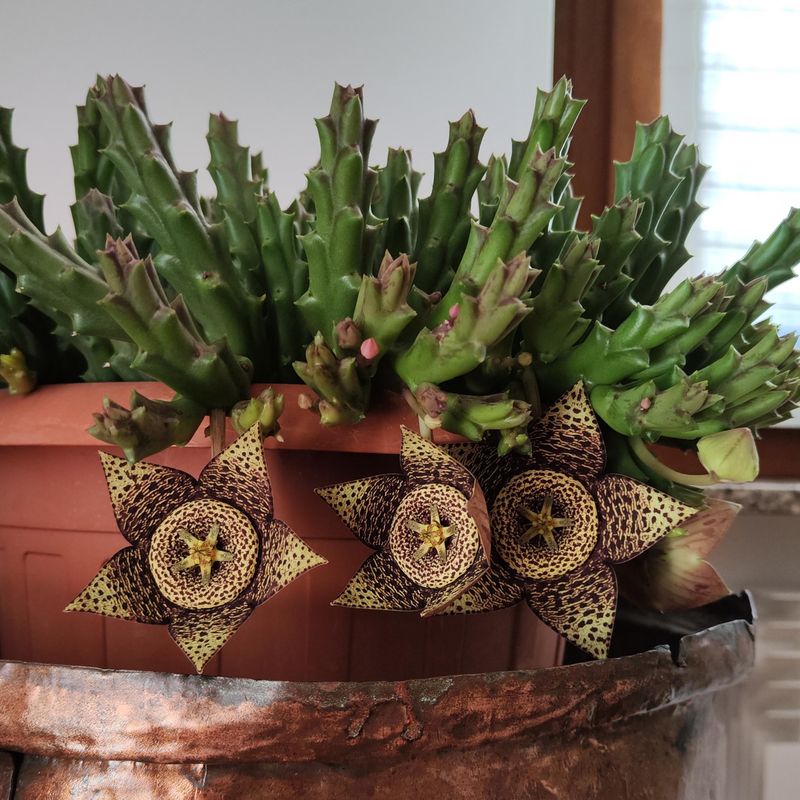
Spotting an Orbea variegata flower for the first time feels like finding something from another planet. Each bloom is flat, star-shaped, and covered in irregular cream and brown speckles that look hand-painted.
No two flowers ever seem to have exactly the same pattern.
Known sometimes as the starfish plant or carrion flower, it shares a family connection with Stapelia and Huernia. Like its relatives, the flowers have a mild unpleasant odor to attract pollinators, but honestly it is much less intense than Stapelia gigantea.
You can keep this one on a porch without it becoming a problem.
In Arizona, Orbea variegata handles heat well and can even tolerate brief cold snaps in winter, making it a solid year-round container plant in most parts of the state.
Stems stay low and spreading, rarely getting taller than four inches, so it works nicely in shallow, wide pots.
Sandy soil with excellent drainage is non-negotiable. Skip fertilizing heavily since too many nutrients push leafy stem growth at the expense of flowers.
Give it a lean diet, plenty of warmth, and bright light, and those speckled blooms will show up reliably each season.
4. Euphorbia Obesa Forms A Perfect Round Ball
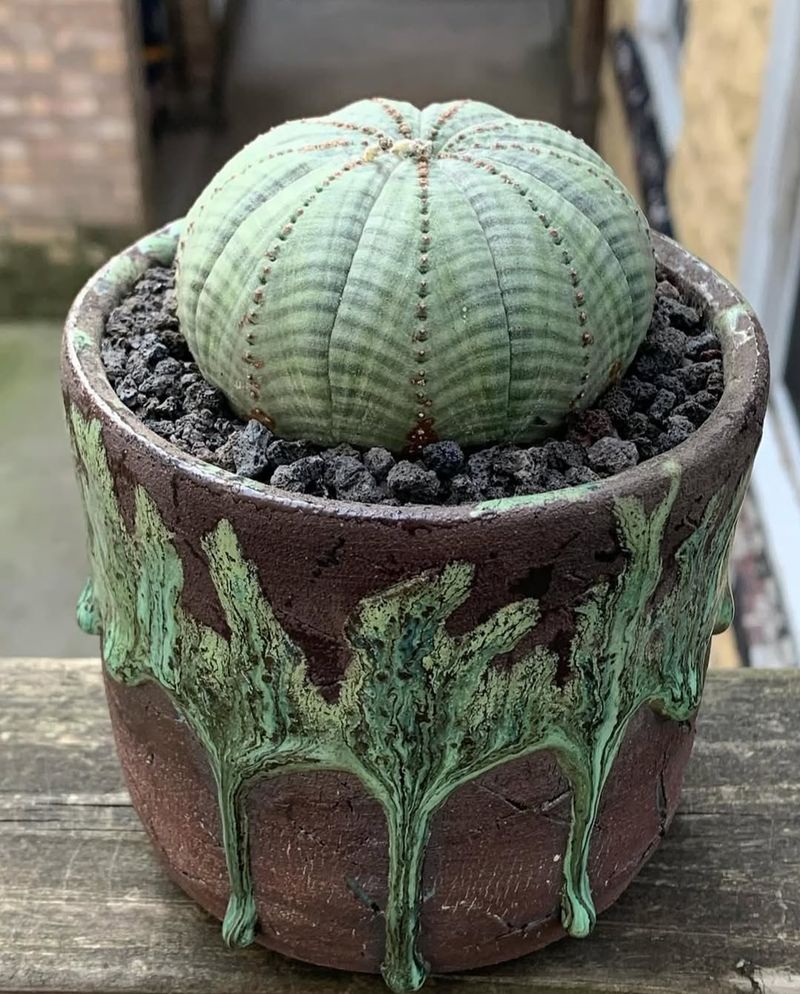
Euphorbia obesa looks like someone placed a green baseball in a pot and forgot about it. No leaves, no spines, just a smooth, almost perfectly spherical body with subtle stripes running from top to bottom.
It is one of the most minimalist-looking succulents you can own.
Originally from South Africa, this plant is critically protected in the wild because of overcollection, so always buy from reputable nurseries that propagate ethically.
In Arizona, it does well as a container plant placed in a bright window or on a sunny patio with some afternoon shade.
Full desert sun all day can cause sunburn on the upper surface.
Growth is slow, which is part of what makes it so satisfying to own. A plant that fits in the palm of your hand today might take several years to double in size.
Watering should be infrequent, maybe twice a month during summer and barely at all through winter. Use a well-draining cactus mix and never let water pool at the base.
One thing to know before handling: like all euphorbias, it produces a milky white sap that is a skin and eye irritant, so gloves are a smart habit around this one.
5. Euphorbia Lactea Cristata Creates Coral-Like Growth
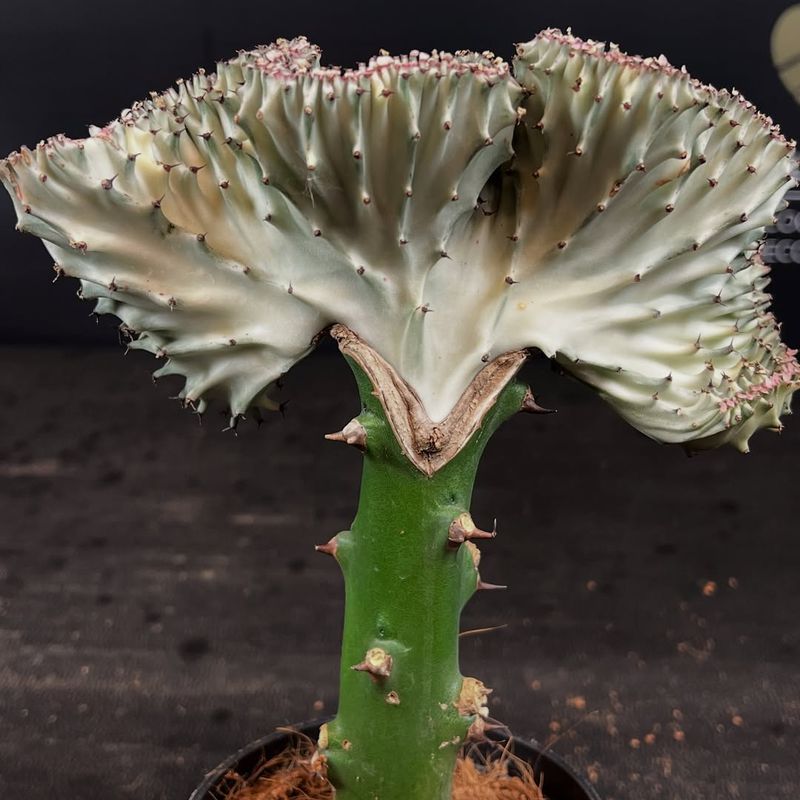
Crested euphorbia looks less like a plant and more like a piece of living coral washed ashore in the desert. Euphorbia lactea cristata forms wide, wavy, fan-shaped growth in shades of green, silver, and sometimes pink or purple, depending on light exposure.
Nothing else in the succulent world quite matches it.
What you usually see for sale is actually a graft, where the crested top is joined to a more vigorous rootstock cactus at the base.
That grafted form is what makes it stable enough to grow in containers, and Arizona nurseries often carry them in a range of sizes.
Keep it in bright, indirect light rather than blasting it with full afternoon desert sun, which can bleach out the color.
Watering follows the same rules as most euphorbias: soak it, then wait for the soil to fully dry out before watering again. During Arizona winters, pull back significantly.
Because it is a grafted plant, watch the junction point between the crest and the rootstock for any signs of rot or separation. It is not a plant you just stick in the ground and forget.
But given a little attention, it becomes a genuine showpiece that guests will ask about every single time they visit your home.
6. Kalanchoe Beharensis Stands Out With Velvety Leaves
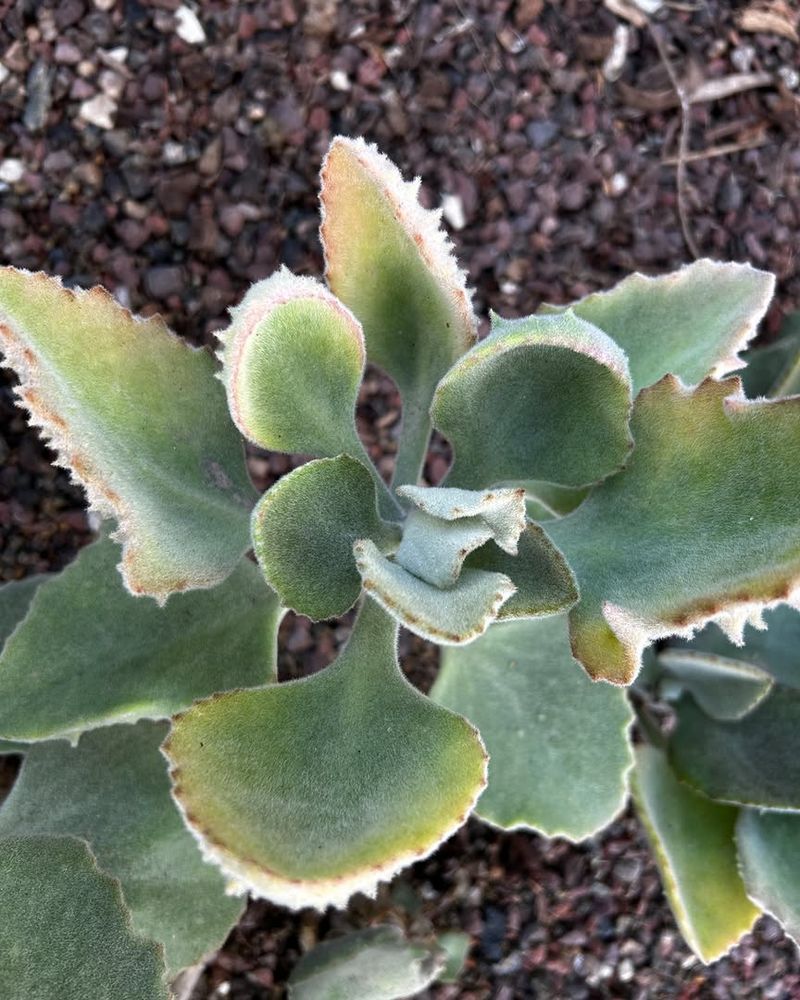
Run your finger along a Kalanchoe beharensis leaf and it feels like touching velvet. Large, triangular, and covered in dense bronze or silver fuzz, the leaves on this plant are unlike anything else in the succulent family.
It earns the nickname “felt bush” without any argument.
In warmer parts of Arizona, especially the Phoenix metro and Tucson areas, this plant can grow into a small shrub or even a tree-like form reaching several feet tall over many years.
In cooler parts of the state, it does better in a large container that can be moved inside during frost.
Either way, it needs full sun to develop its best leaf texture and color.
Watering is straightforward: deeply and infrequently, letting the soil dry between sessions. The fuzzy leaf coating helps it handle dry air and heat, which makes Arizona an ideal home for it.
Avoid wetting the leaves directly when you water since moisture trapped in the fuzz can lead to fungal issues. New leaves unfurl slowly and have an almost architectural quality, especially on a mature plant.
If you want a succulent that doubles as a bold focal point in an outdoor bed or a large patio pot, Kalanchoe beharensis delivers that drama consistently.
7. Crassula Umbella Forms Unusual Cup-Shaped Leaves
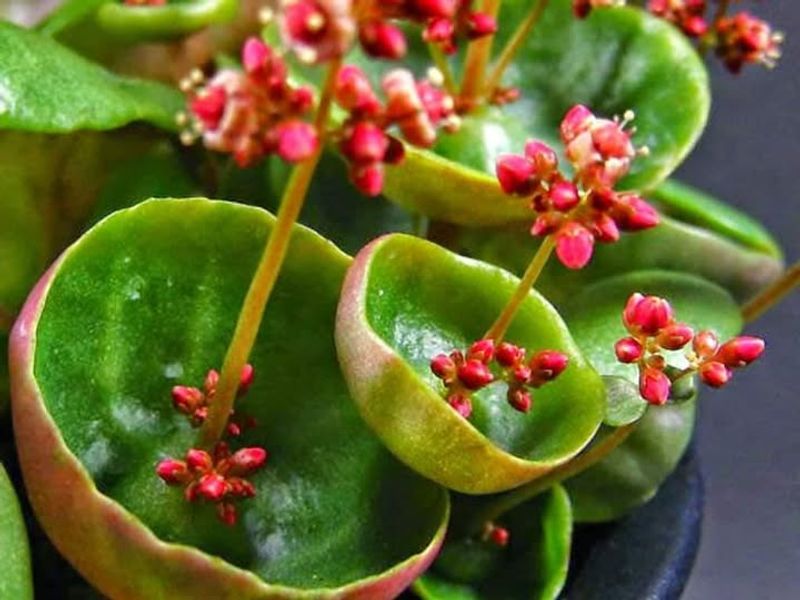
Crassula umbella is one of those plants that makes you do a double take. Each leaf forms a near-perfect cup or saucer shape around the stem, like someone stacked tiny green bowls along a stick.
When the small pink flowers emerge from the center of those cups, the whole thing looks almost cartoonish.
Also called the wine cup plant, it stays relatively small, usually topping out around six to eight inches, which makes it ideal for windowsills, small pots, or grouped container arrangements on an Arizona patio.
It grows best with bright light but appreciates a break from direct afternoon sun during the hottest months of summer in the desert.
Soil should drain fast since the roots are sensitive to sitting in moisture. A standard cactus mix works fine, and watering every ten to fourteen days during the growing season is usually enough.
In winter, cut back to once a month or less. One thing that sets this plant apart from other crassulas is how slowly and precisely it grows, each new leaf forming that same perfect cup shape.
Finding it at local Arizona nurseries takes some searching, but specialty succulent shops and online growers usually have it available in small starter sizes worth picking up.
8. Faucaria Tigrina Displays Tiger-Like Tooth Edges
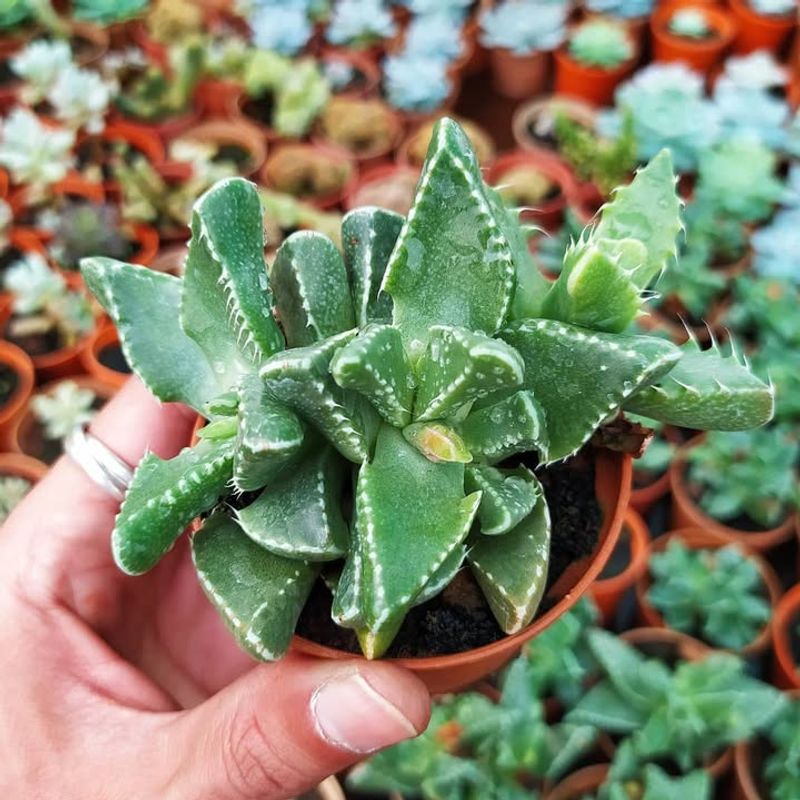
Faucaria tigrina looks like a cluster of tiny open mouths lined with soft white teeth.
Each pair of thick, triangular leaves has curved, tooth-like projections along the edges that give the plant an almost menacing appearance, even though the teeth are completely harmless to touch.
It is one of the quirkiest-looking succulents available.
Common names include tiger jaw and shark jaw, both of which fit. Despite the fierce look, it is a surprisingly easygoing plant to grow in Arizona.
Bright light is important, and a south or east-facing windowsill works well for indoor plants. Outdoors, a spot with morning sun and afternoon shade keeps it comfortable through the brutal summer months.
Fall is when things get exciting: Faucaria tigrina pushes out large, daisy-like yellow flowers that are almost comically oversized compared to the compact plant body. Each flower can be wider than the leaf cluster itself.
Watering should be moderate during the growing season and minimal through winter. Because it stays small, usually under four inches tall, it fits easily in shallow bowls or dish gardens alongside other small succulents.
Arizona gardeners who enjoy unusual container arrangements tend to love pairing tiger jaw with smooth, rounded plants to create an interesting visual contrast on a patio table.
9. Adromischus Cooperi Has Thick Spotted Leaves
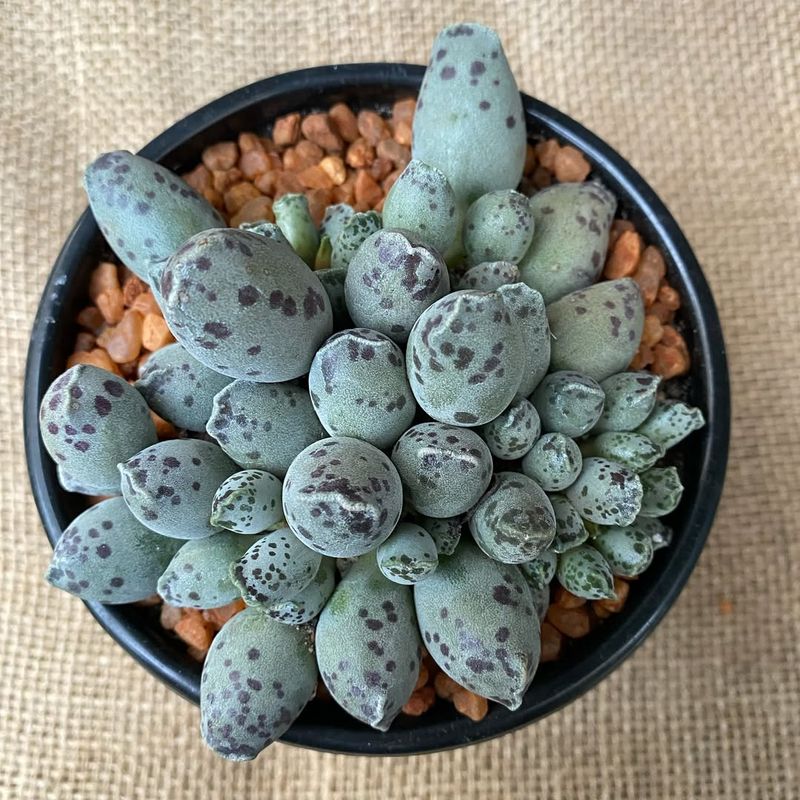
Adromischus cooperi looks like it belongs in a terrarium from a science fiction movie. Each leaf is thick, club-shaped, and covered in irregular purple-brown spots against a grayish-green background.
The wavy, slightly crimped edges add another layer of texture that makes the whole plant look designed rather than grown.
Common names include plover eggs plant and chocolate drops, both referencing those distinctive markings. It stays very compact, rarely growing taller than a few inches, which makes it perfect for small pots, windowsills, or tucked into mixed succulent arrangements.
In Arizona, it handles the dry indoor air well and actually seems to thrive in low-humidity environments that would stress other plants.
Bright, indirect light is the sweet spot for this one. Too much harsh direct sun in an Arizona summer can cause the leaves to bleach or develop brown patches on the tips.
Watering should be done carefully and sparingly since the roots are prone to rot if left wet. A fast-draining cactus mix in a pot with a drainage hole is essential.
Propagation is easy and rewarding: a single leaf laid on dry soil will eventually sprout new growth from the base. For anyone building a collection of strange-looking succulents in Arizona, Adromischus cooperi is a must-have addition.