Strange Yet Fascinating Plants Still Growing In California Landscapes
California landscapes are full of surprises, and some of the most unforgettable stars are the wonderfully weird plants that refuse to blend in.
Twisted shapes, dramatic spikes, unusual colors, and textures that look almost otherworldly bring curiosity and adventure to everyday outdoor spaces.
These fascinating growers spark conversation, attract pollinators, and prove that beauty does not always follow the rules. Picture sculptural forms rising above layered plantings, quirky blooms stealing the spotlight, and bold silhouettes glowing in warm evening light.
Many of these unusual plants are tougher than they look, thriving in bright sun, dry soil, and shifting conditions with confidence. Adding a few striking oddities instantly gives your landscape personality and a touch of wild charm.
Step into the strange side of California landscaping and discover plants that feel mysterious, captivating, and impossible to ignore every time you see them.
1. Cobra Lily (Darlingtonia californica)
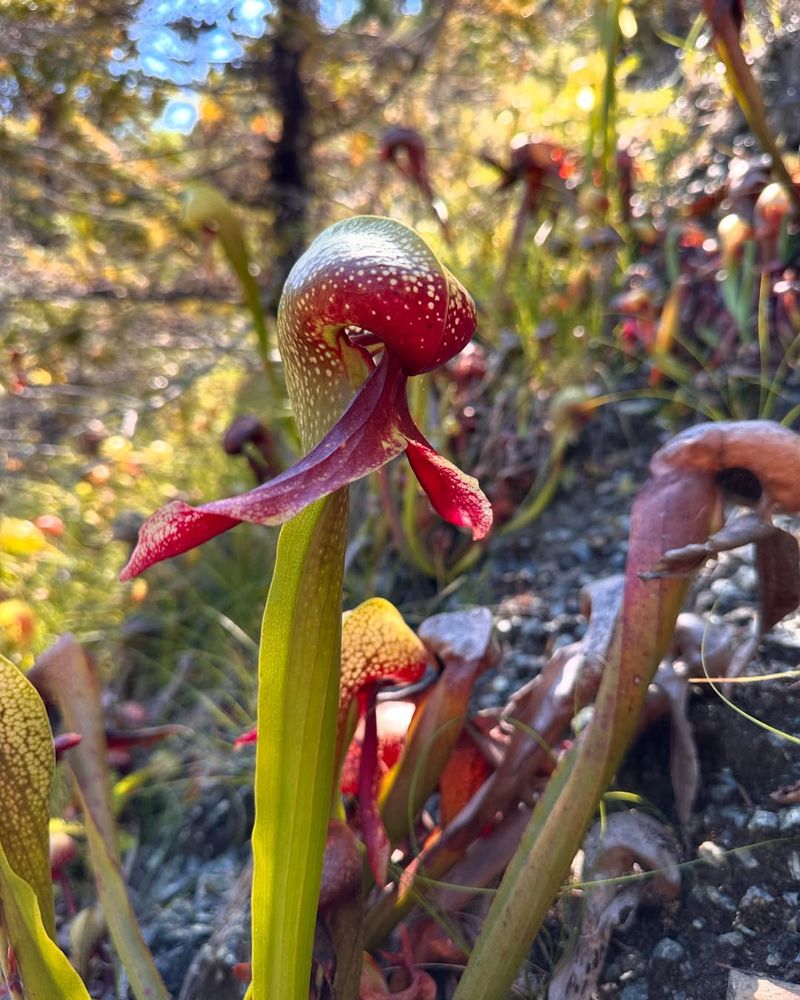
Picture a plant that looks exactly like a cobra ready to strike. The Cobra Lily grows in cold mountain streams and boggy areas throughout Northern California and southern Oregon.
Its leaves twist upward into tubes topped with hood-like structures that really do resemble snake heads, complete with what looks like fangs hanging down.
This carnivorous beauty doesn’t actually bite anything. Instead, bugs crawl inside the tube looking for a way out through the translucent spots that look like windows.
They get confused, tire themselves out, and eventually fall into a pool of digestive juices at the bottom. The plant then absorbs nutrients from the trapped insects, which helps it survive in nutrient-poor soil.
You can find Cobra Lilies in places like the Sierra Nevada mountains and along the California-Oregon border. They need extremely cold, clean water flowing constantly around their roots.
These plants grow slowly and can live for many years in the right conditions. Some protected populations exist in state parks where visitors can observe them without disturbing their delicate habitat.
California gardeners rarely succeed growing these at home because they require such specific conditions. The plants need temperatures that stay cool year-round, which makes them challenging outside their natural mountain homes.
2. Snow Plant (Sarcodes sanguinea)
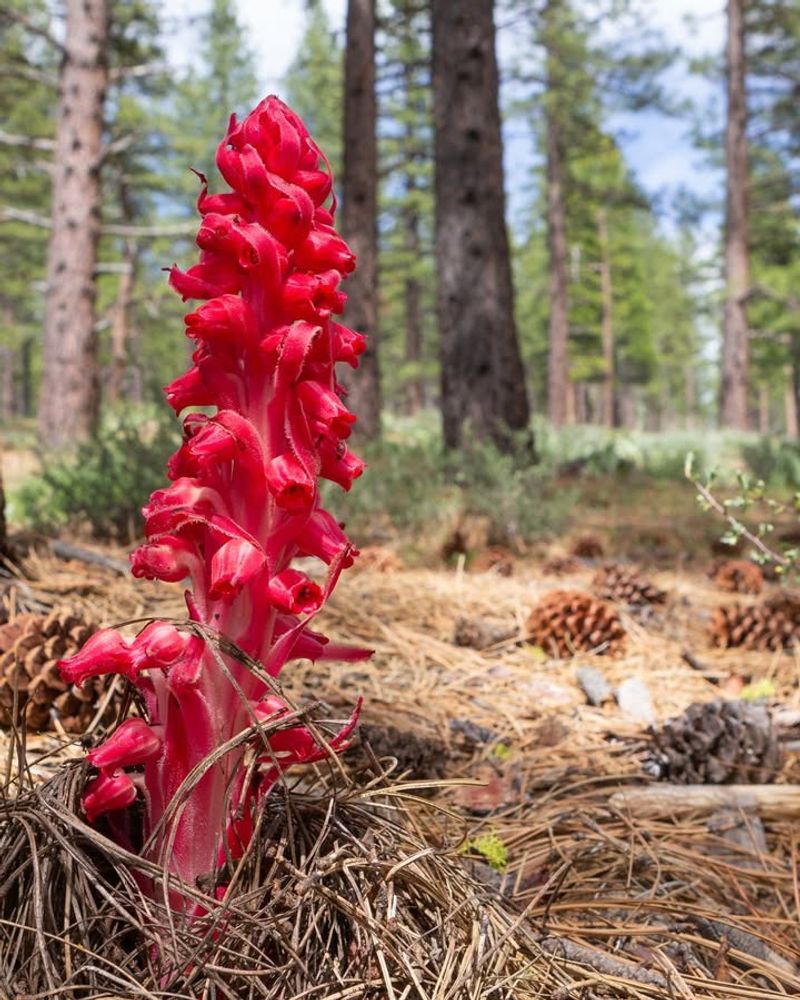
Imagine pushing through melting snow in a California mountain forest and spotting something that looks like a bright red asparagus stalk. That’s the Snow Plant, one of the most striking sights in the Sierra Nevada.
This brilliant scarlet plant appears in late spring, often poking right up through patches of remaining snow.
Here’s what makes it truly weird: it has zero green parts. Most plants need chlorophyll to make food from sunlight, but not this one.
The Snow Plant gets all its nutrients by connecting with fungi underground, which in turn connect to tree roots. It’s basically stealing food that trees make, but doing it through a fungal middleman.
These plants grow in conifer forests between 4,000 and 8,000 feet elevation throughout the Sierra Nevada and other California mountain ranges. They emerge from the forest floor looking waxy and almost artificial because of their intense red color.
Each stalk can grow up to a foot tall and lasts only a few weeks before withering away.
California law protects Snow Plants, making it illegal to pick or disturb them. They’re impossible to transplant because they depend completely on established fungal networks.
Hikers love photographing them since they create such dramatic contrast against brown forest floors and green trees.
3. Ghost Plant (Monotropa uniflora)
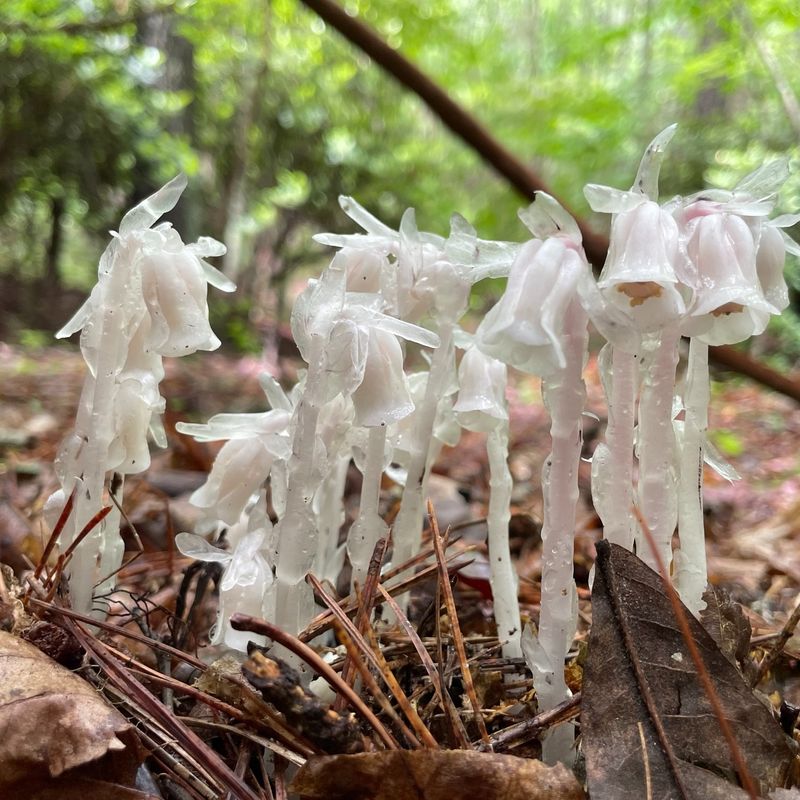
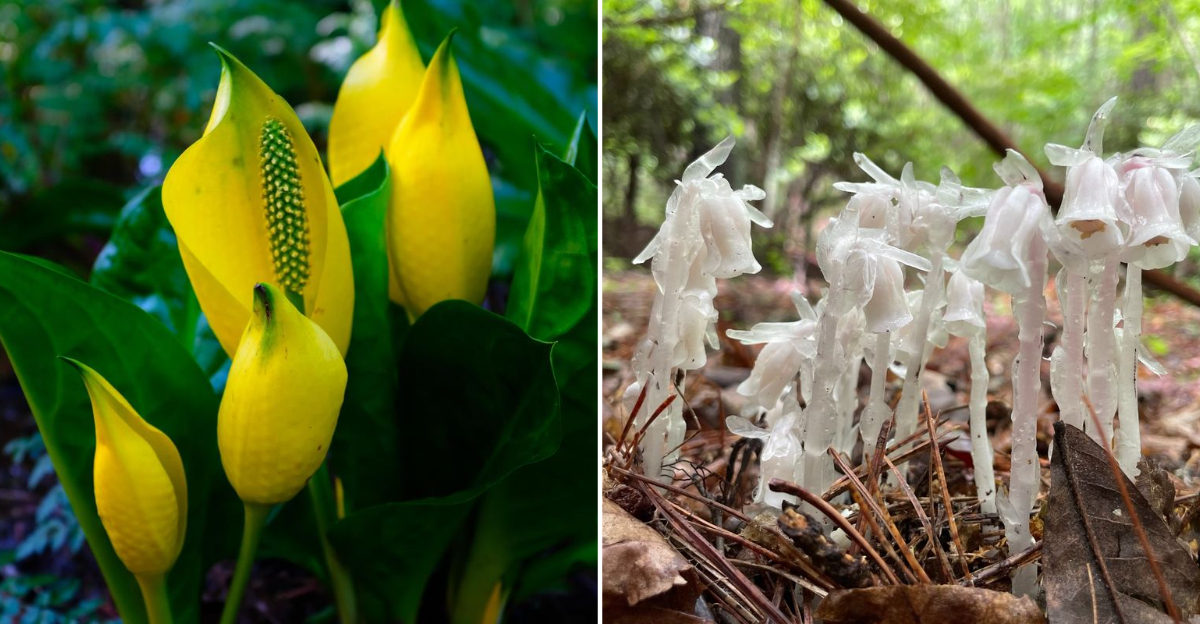
Walking through shaded California forests, you might spot what looks like small white pipes sticking out of the ground. Ghost Plant earns its spooky name by appearing completely white or pale pink, almost translucent.
Some people call it Indian Pipe because each stem bends over at the top like a smoking pipe.
Like the Snow Plant, this oddball contains no chlorophyll whatsoever. It survives by tapping into underground fungal networks connected to tree roots.
The fungi break down dead plant material and share nutrients with tree roots, and the Ghost Plant intercepts some of those nutrients for itself. Pretty sneaky!
These ghostly flowers appear in California’s coastal forests and mountain woodlands during summer and fall. They grow in deep shade where most flowering plants would struggle.
Each plant stands just a few inches tall and turns black after completing its brief life cycle. Groups of them often cluster together, creating an eerie effect on the dark forest floor.
You’ll find Ghost Plants throughout California wherever there are mature forests with rich soil. They’re more common in Northern California’s redwood forests and mountain areas.
The plants feel waxy and fragile to touch, though it’s better to just observe them. Once picked, they quickly turn black and disintegrate within hours, making them impossible to keep as cut flowers.
4. California Dodder (Cuscuta californica)
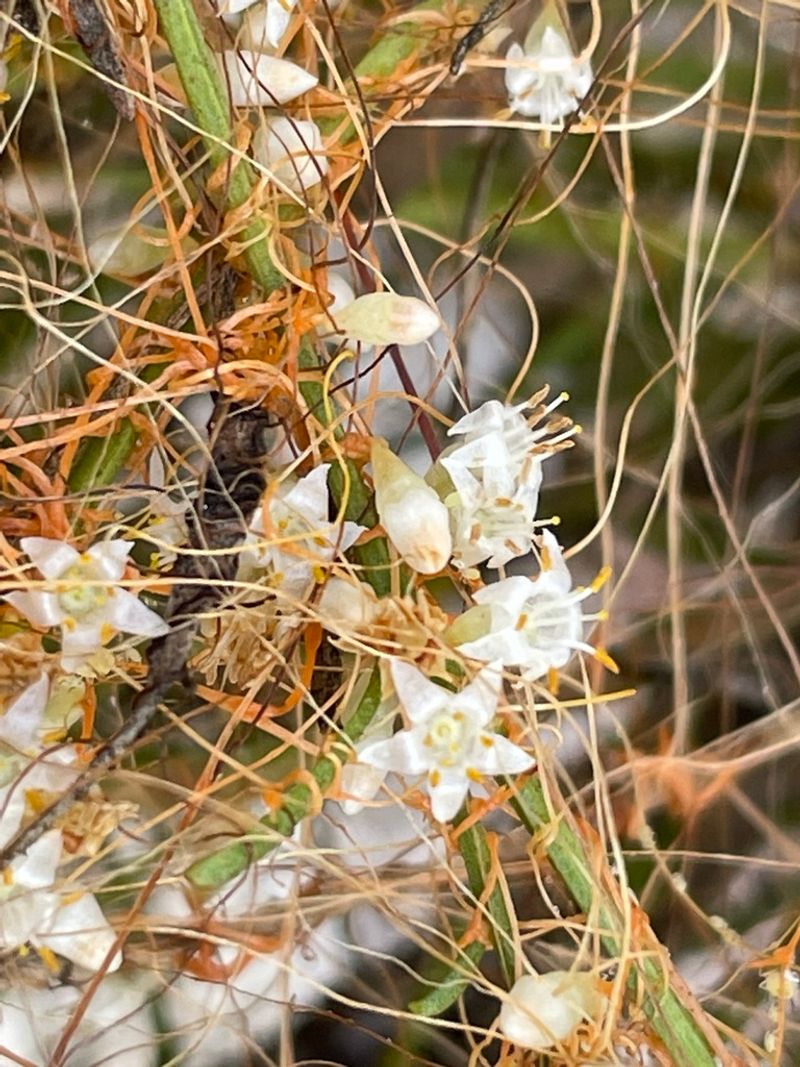
The Dodder looks like someone threw orange spaghetti all over bushes and shrubs. This parasitic plant produces thin, thread-like stems that wrap around other plants and steal their nutrients.
It spreads across California’s coastal areas and inland valleys, draping itself over native shrubs like a tangled orange net.
What makes Dodder especially strange is that it starts life with tiny leaves and roots, but quickly abandons them. Once a Dodder seedling finds a host plant, it inserts special structures called haustoria into the host’s stem.
These work like tiny straws, sucking out water and nutrients. After establishing this connection, the Dodder lets its own roots shrivel up since it doesn’t need them anymore.
The plant produces small white or cream-colored flowers in clusters during summer. These eventually form seeds that drop to the ground and wait for the right conditions to sprout.
California Dodder isn’t picky about its victims and will attach to many different plant species throughout the state. Some people consider it a pest because it can weaken or damage garden plants and agricultural crops.
Despite its vampiric lifestyle, Dodder plays a role in California ecosystems by keeping certain plant populations in check. Native American groups traditionally used it for medicinal purposes, though modern herbalists generally avoid it due to potential toxicity concerns.
5. Joshua Tree (Yucca brevifolia)
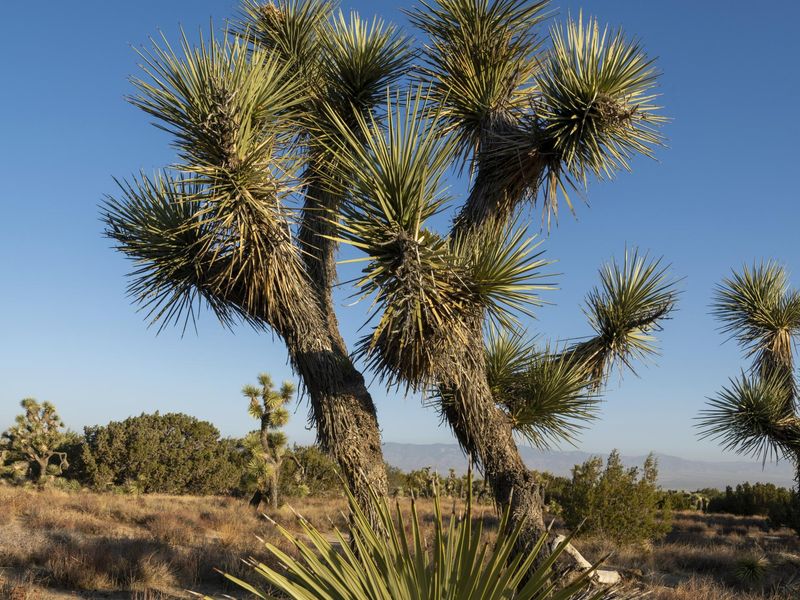
These trees look like something from a Dr. Seuss book. These bizarre plants grow only in the Mojave Desert, including parts of Southern California, where they create landscapes that seem almost alien.
Early Mormon settlers supposedly named them after the Biblical figure Joshua because the trees’ upstretched branches reminded them of Joshua raising his arms in prayer.
Technically these aren’t even trees but rather giant members of the yucca family. They grow extremely slowly, adding just a couple inches per year.
Some of the largest Joshua Trees in California might be several hundred years old. Their twisted branches and spiky leaves create unique silhouettes against desert sunsets that photographers absolutely love.
These plants depend entirely on a tiny moth called the yucca moth for reproduction. The female moth collects pollen from one Joshua Tree flower and carries it to another, deliberately pollinating it while laying her eggs inside.
The developing moth larvae eat some seeds, but enough survive to create new trees. Without this moth, Joshua Trees couldn’t reproduce, and without Joshua Trees, the moth would go extinct.
Climate change threatens California’s Joshua Tree populations because rising temperatures are pushing their ideal growing zone northward and to higher elevations. Young trees struggle to establish themselves in areas getting too hot and dry.
Joshua Tree National Park protects many of these iconic plants, though their long-term future remains uncertain.
6. Monkeyface Orchid (Dracula simia)
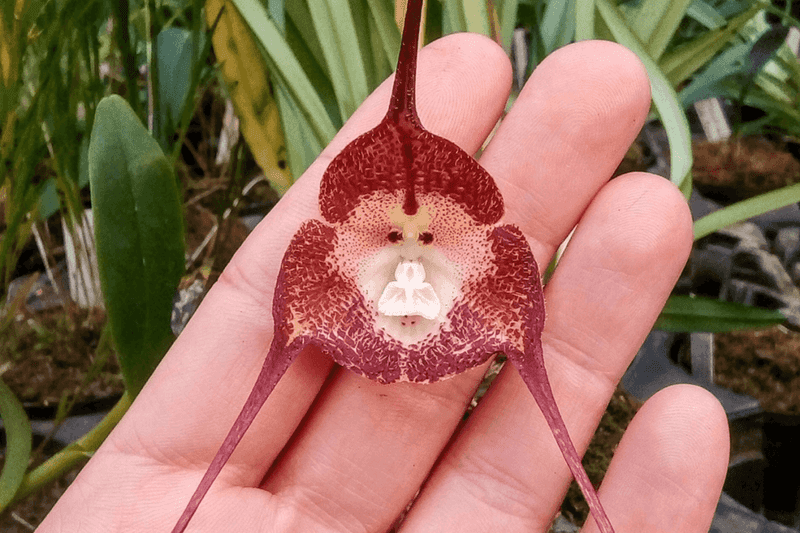
California orchid enthusiasts grow one of the world’s weirdest flowers: an orchid whose blooms look startlingly like tiny monkey faces. The Monkeyface Orchid isn’t native to California but thrives in the state’s specialized greenhouses and botanical gardens.
Each flower really does have two eyes, a nose, and a mouth-like structure that creates an uncanny resemblance to a primate’s face.
Native to the cloud forests of Ecuador and Peru, these orchids need cool temperatures and high humidity to flourish. California’s coastal areas provide climates where dedicated growers can successfully cultivate them.
The flowers also smell faintly like ripe oranges, adding another unusual characteristic. They can bloom any time of year, producing flowers on long stems that dangle downward.
Growing these orchids requires patience and specific conditions that mimic their mountain home environment. California collectors prize them highly, though they remain relatively rare in cultivation.
The plants need constant moisture, cool nights, and protection from direct sunlight. Temperatures between 50 and 70 degrees work best, which makes California’s coastal fog belt ideal.
Several California botanical gardens feature these orchids in their collections, allowing visitors to see the monkey-faced blooms up close. The flowers last several weeks once they open.
While you won’t find these growing wild anywhere in California, they represent the state’s thriving orchid-growing community and the unusual plants dedicated hobbyists successfully cultivate here.
7. Skunk Cabbage (Lysichiton americanus)
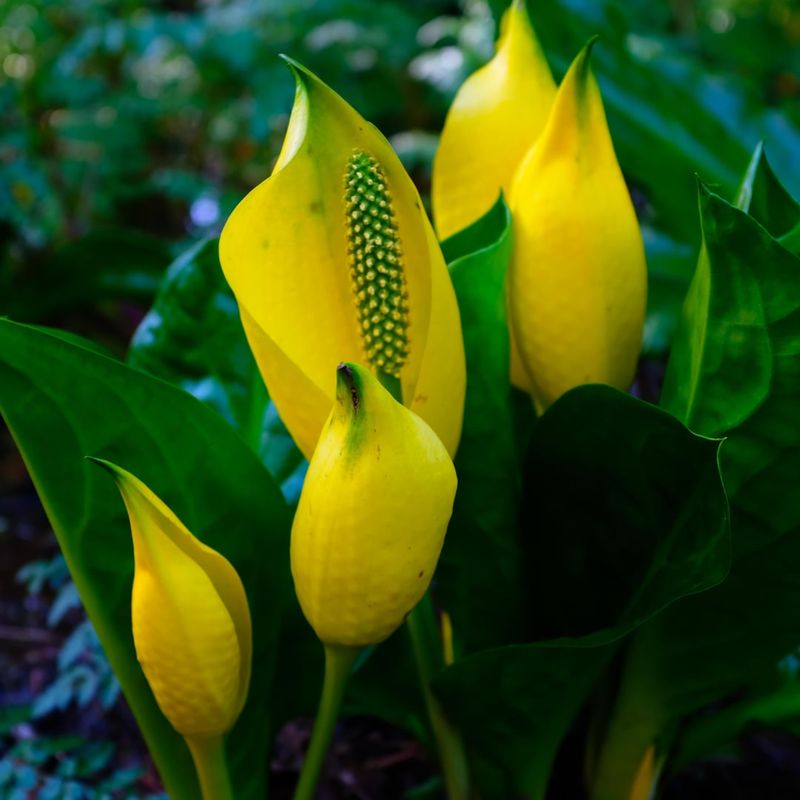
Before you even see Skunk Cabbage, you’ll probably smell it. This plant releases an odor like rotting meat or skunk spray, especially when its leaves get bruised or broken.
It grows in wet areas throughout Northern California, particularly along stream banks and in marshy spots. The smell attracts flies and beetles that pollinate its flowers, though humans find the scent pretty unpleasant.
In early spring, Skunk Cabbage produces a bright yellow hood-like structure called a spathe that surrounds a thick flower spike. This yellow hood can appear while snow still covers the ground in mountain areas.
Large, cabbage-like leaves emerge later, growing up to three feet long. These leaves gave the plant its common name, though it’s not related to actual cabbage at all.
Here’s something remarkable: Skunk Cabbage generates its own heat. The flower spike can actually warm itself up to 35 degrees above the surrounding air temperature.
This heat helps melt snow around the plant and spreads the stinky smell farther to attract more pollinators. Scientists call this ability thermogenesis, and very few plants can do it.
Native American tribes in California traditionally used Skunk Cabbage for various medicinal purposes, though the plant contains calcium oxalate crystals that make raw parts toxic. You’ll find these plants in places like wetlands in Del Norte and Humboldt counties.
They prefer spots with cold, clean water and rich soil.
8. California Pipevine (Aristolochia californica)
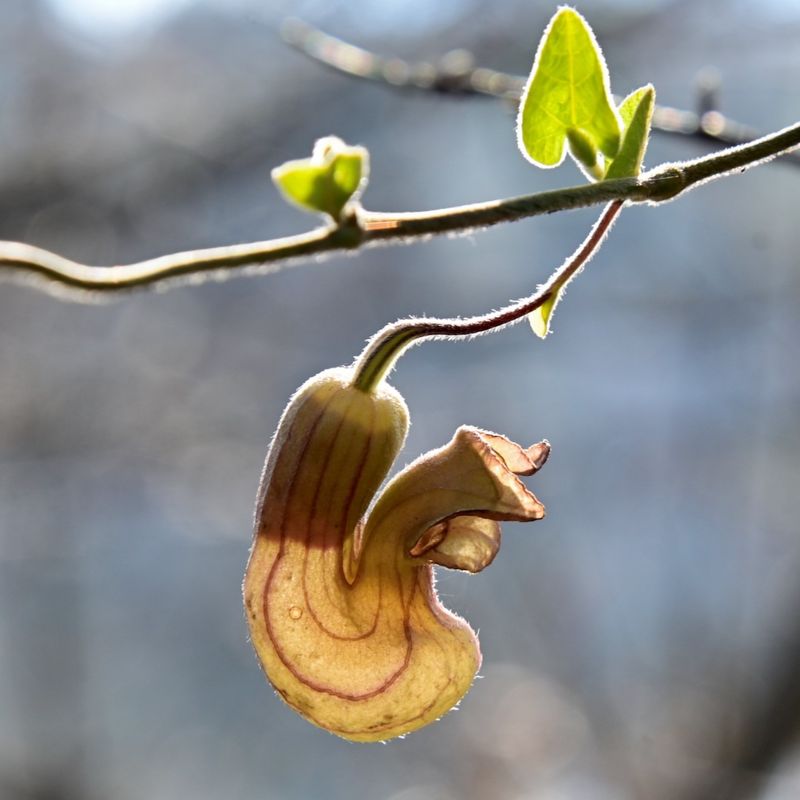
This strange vine produces some of the most fascinating flowers you’ll encounter in the Golden State. Each bloom curves into a shape like a tiny tobacco pipe, complete with a bulbous bowl and a curved stem.
The flowers are usually purplish-brown with white or yellow stripes, and they smell faintly like rotting fruit to attract fly pollinators.
This woody vine climbs over other plants in foothill and canyon areas throughout California. It grows especially well in riparian zones where seasonal streams provide moisture.
The plant loses its leaves during summer drought, going dormant until winter rains return. New growth appears with the first good rains, and flowers bloom in late winter or early spring before the leaves fully develop.
California Pipevine plays a crucial role for the beautiful Pipevine Swallowtail butterfly. Female butterflies lay eggs only on this plant, and the caterpillars feed exclusively on its leaves.
The plant contains toxic compounds that don’t harm the caterpillars but make them poisonous to predators. Birds learn to avoid the distinctive black and orange butterflies after tasting one.
California gardeners increasingly plant Pipevine to support native butterfly populations. The vine needs little water once established, making it perfect for drought-tolerant landscapes.
It grows throughout the Coast Ranges, Sierra Nevada foothills, and parts of Southern California. The unusual flowers make great conversation starters, and watching Pipevine Swallowtail butterflies visit adds another layer of interest to California gardens.
9. Giant Coreopsis / Tree Sunflower (Coreopsis gigantea)
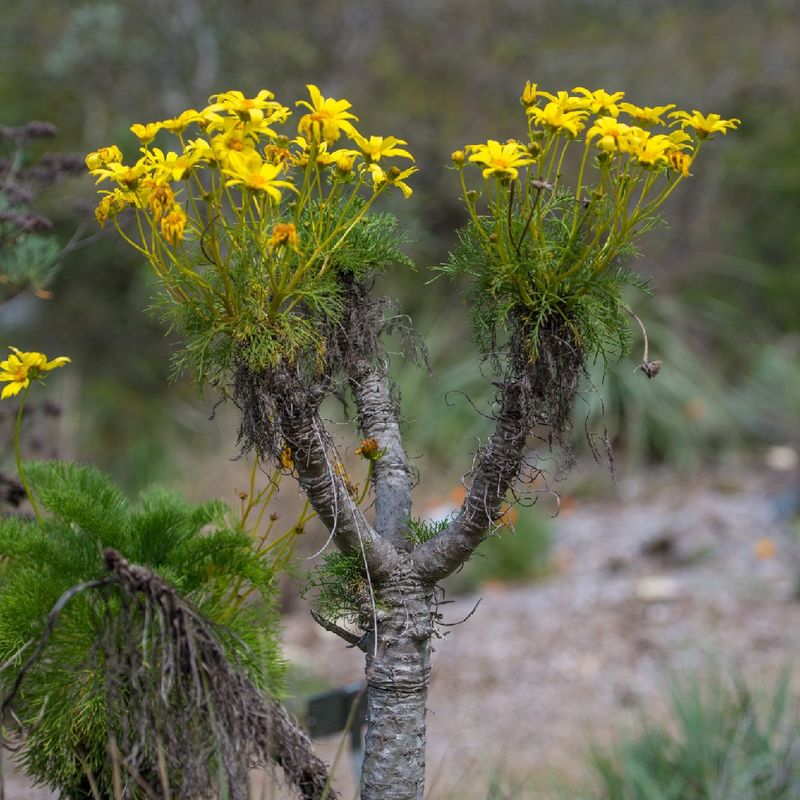
Most sunflowers are annuals that grow, bloom, and fade away in a single season. Giant Coreopsis breaks that rule by developing a thick, succulent trunk that can reach eight feet tall.
These remarkable plants grow along California’s coast and on the Channel Islands, creating spectacular displays when covered with bright yellow flowers.
The trunk stores water like a cactus, helping the plant survive long dry periods along California’s coast. During winter and spring, the plant produces ferny green leaves at the top of its trunk.
Come late winter through spring, clusters of cheerful yellow daisy-like flowers appear, sometimes covering the entire top of the plant. After flowering and setting seed, the leaves often drop off, leaving just the thick trunk standing through summer and fall.
California’s Channel Islands host impressive populations of Giant Coreopsis, particularly on Anacapa and Santa Barbara Islands. Mainland coastal bluffs from Santa Barbara to San Diego also support these unusual plants.
They thrive in sandy or rocky soil with excellent drainage and full sun exposure. Salt spray doesn’t bother them at all, making them perfect for seaside locations.
Gardeners in coastal California successfully grow Giant Coreopsis as an unusual landscaping plant. The plants need very little water once established and tolerate poor soil.
They make striking focal points in drought-tolerant gardens. The flowers attract bees, butterflies, and other pollinators, supporting California’s native insect populations.
10. Dudleya / Liveforever Succulents (Dudleya spp.)
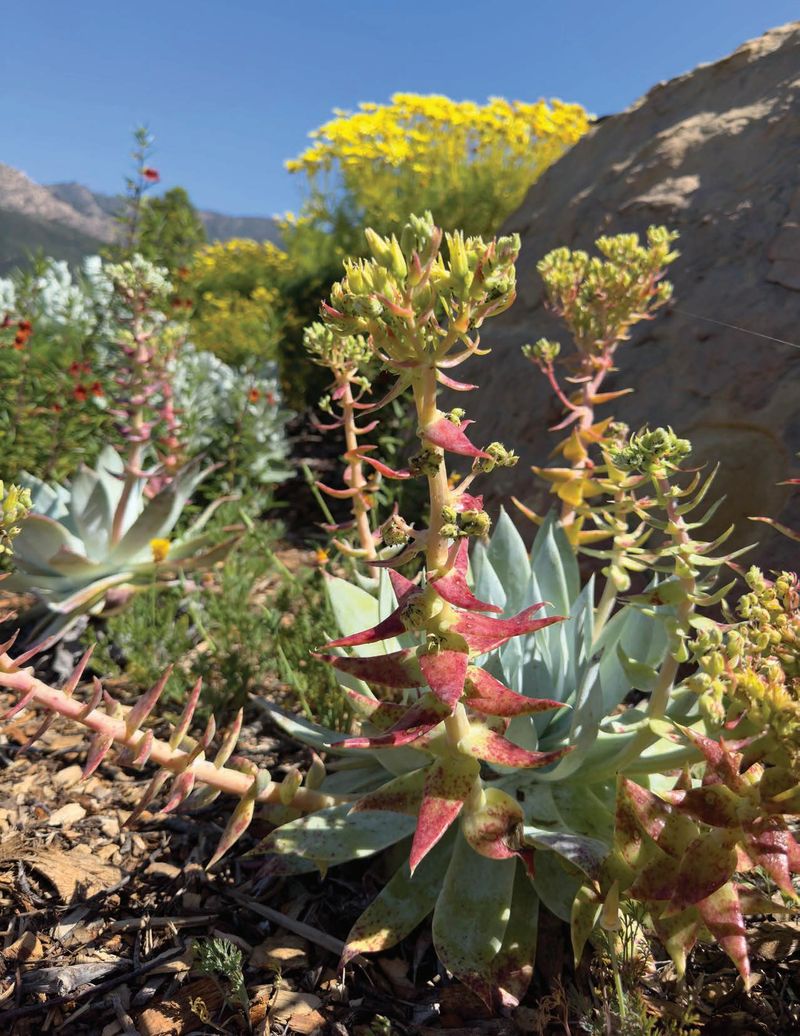
These succulents earn their nickname “Liveforever” by surviving in places where almost nothing else can grow. These California native succulents cling to vertical cliff faces, rocky outcrops, and even grow upside down on overhangs.
Their rosettes of fleshy leaves often have a powdery white coating that protects them from intense sun and helps them reflect heat.
California hosts more Dudleya species than anywhere else on Earth, with different types scattered from the coast to inland mountains. Some species grow only on specific rock types or in tiny geographic areas.
The chalk dudleya, for example, lives only on certain cliffs in the Santa Monica Mountains and a few other locations. This makes many Dudleya species rare and protected by law.
These plants have become targets for poachers who dig them up illegally to sell overseas, particularly in Asia where collectors pay high prices. California authorities have prosecuted several smuggling rings for stealing thousands of Dudleyas from protected areas.
The plants grow extremely slowly, taking years or decades to reach mature size, making poaching especially damaging.
In spring, Dudleyas send up tall flower stalks covered with small star-shaped blooms in colors ranging from white to yellow, orange, or red. Hummingbirds visit the flowers for nectar.
California gardeners can legally purchase nursery-propagated Dudleyas for their gardens. These tough succulents need almost no water once established and look beautiful tucked into rock gardens or growing in containers with excellent drainage.