8 Succulents That Keep Container Gardening Simple In Arizona
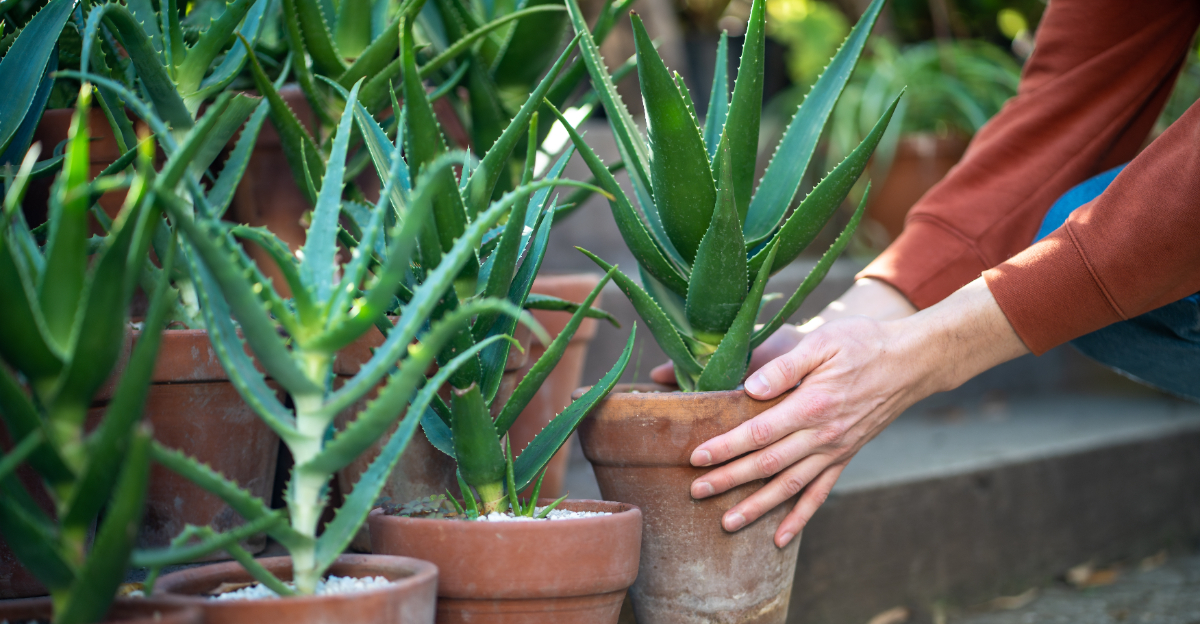
Container gardening can feel easy when the right plants are in place. In Arizona, that difference shows up fast once conditions start getting tougher.
Some plants need constant attention, while others stay steady without much effort. Succulents are often the ones that make everything feel simpler.
They hold their shape, keep a clean look, and continue growing without needing constant changes. That kind of consistency makes a big difference in containers, where conditions shift quickly.
When the right choices are used, everything stays more manageable and looks put together for longer. Over time, it becomes clear which plants actually make container gardening easier and which ones create more work than expected.
1. Agave Stays Tough In Full Sun With Minimal Water
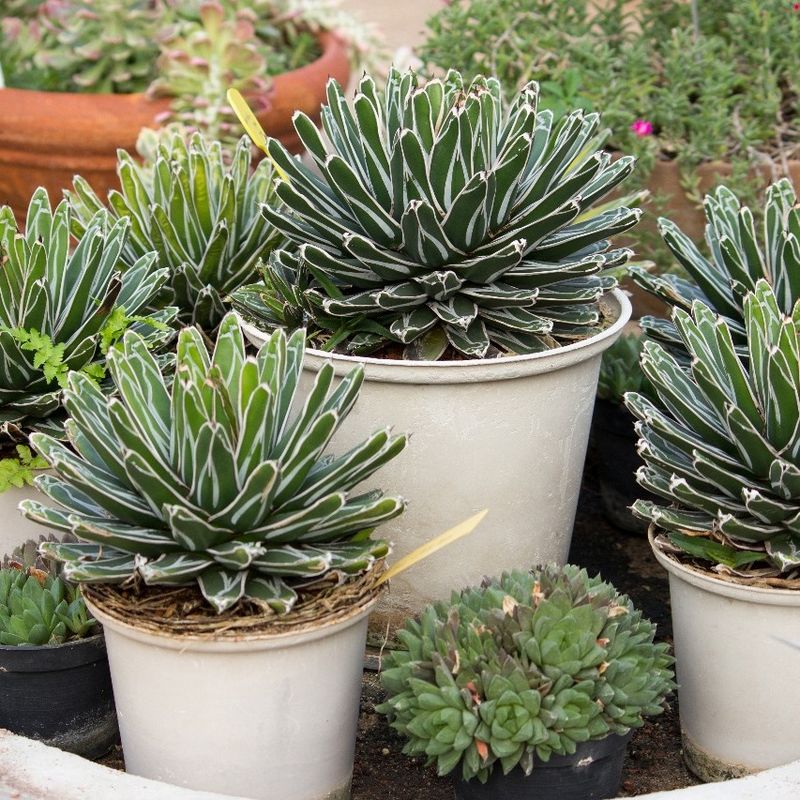
Agave does not ask for much, and that is exactly why it works so well in Arizona containers. Plunk one into a pot with well-draining cactus mix, set it somewhere it gets full sun, and step back.
Watering once every two to three weeks during summer is usually plenty, and in winter you can stretch that out even further.
Compact varieties like Agave parryi or Agave victoriae-reginae fit nicely in medium to large pots without taking over your whole patio. Keep in mind the sharp leaf tips when placing these near walkways or spots where kids and pets hang out.
A little strategic placement goes a long way.
One thing that trips people up is overwatering. Agave roots sitting in soggy soil will rot fast, especially when Arizona summer heat cranks up.
Always use a pot with drainage holes, and check that the soil is completely dry before watering again.
Agave actually looks better when it is slightly stressed from dry conditions. The color deepens and the form tightens up in a way that makes it look intentional and sculptural.
It is a genuinely impressive container plant that handles Arizona’s brutal summers without complaint. If you want something bold that holds its shape all year, agave belongs on your patio.
Agave keeps its structure and color without needing constant care, which makes it one of the easiest choices for Arizona containers.
2. Aloe Vera Stores Water And Thrives In Dry Conditions
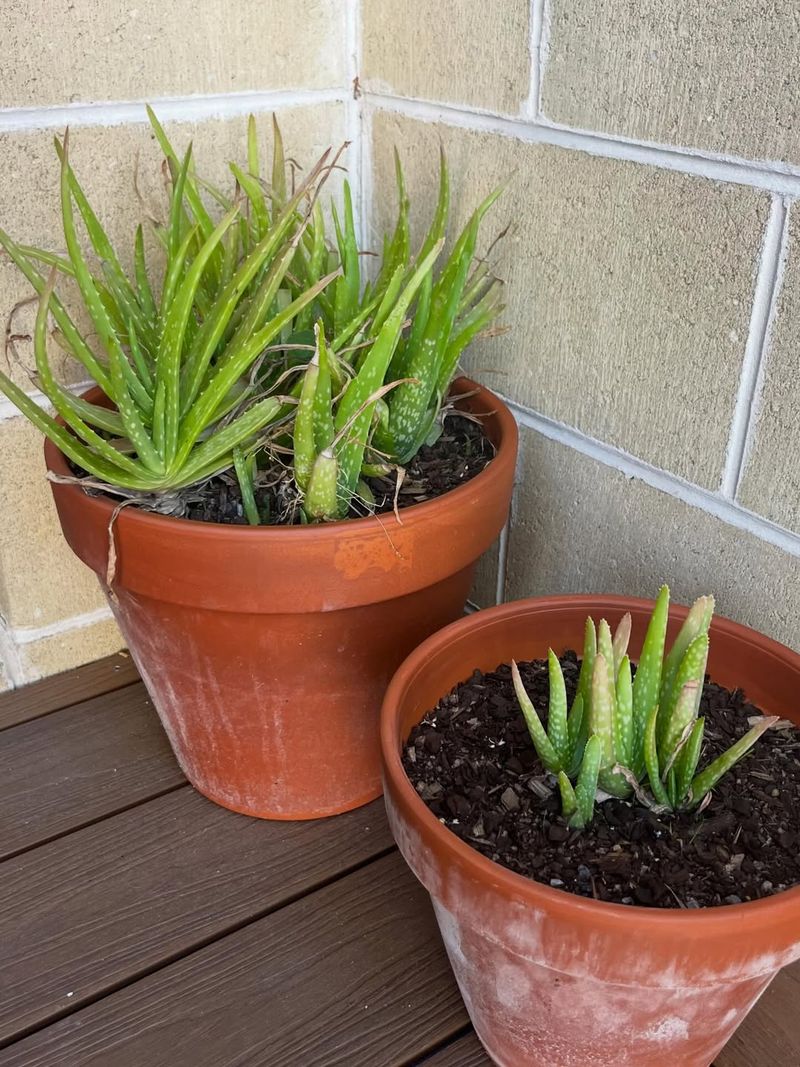
Aloe vera is one of those plants that practically thrives on neglect in Arizona. Forget to water it for two weeks?
No problem. It has already stored enough moisture in those thick, fleshy leaves to carry itself through dry stretches without skipping a beat.
In Phoenix or Tucson, aloe does well in containers placed in spots with morning sun and some afternoon shade. Full afternoon sun in Arizona can be intense enough to bleach the leaves, so partial shade during the hottest hours keeps the plant looking green and healthy.
A south-facing wall with some overhang is often ideal.
Use a fast-draining cactus or succulent soil mix and a pot with at least one drainage hole. Watering every ten to fourteen days during the warmer months is enough.
Cut back to once a month or less when temperatures drop in winter.
Beyond being easy to grow, aloe vera has a practical side. Break off a leaf and you have a natural gel that soothes sunburns, minor cuts, and skin irritation.
For anyone spending time outdoors in Arizona’s intense heat, having a healthy aloe plant nearby is genuinely useful. It is both a functional and attractive addition to any container setup across the state.
That kind of plant makes container gardening feel a lot less demanding in Arizona conditions. You get something that looks good and serves a purpose without needing constant attention.
3. Echeveria Rosettes Handle Heat And Stay Compact
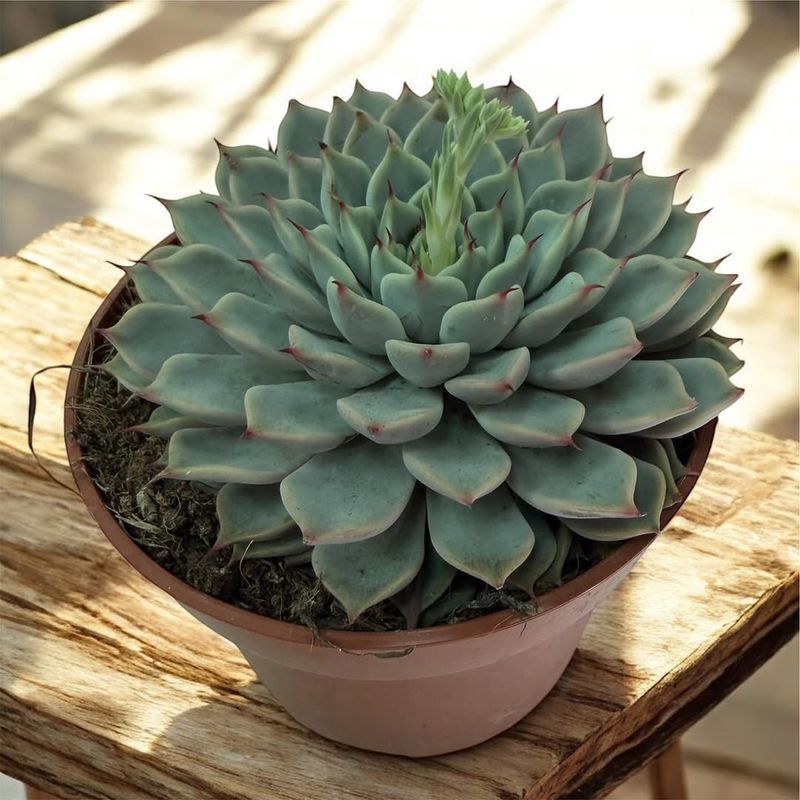
Compact, colorful, and surprisingly tough, echeveria is one of the best succulents you can grow in Arizona containers. Each plant forms a tight rosette that stays small enough to fit several in a single pot, which makes them great for decorative arrangements on a porch or windowsill.
Echeveria handles Arizona heat well as long as it gets protection from the most brutal afternoon sun. Morning light is perfect.
Set your pots somewhere east-facing if you can, and they will soak up gentle morning rays without getting scorched when temperatures peak in the afternoon.
Watering echeveria correctly is the main thing to get right. Water deeply but infrequently, letting the soil dry out completely between sessions.
During monsoon season in Arizona, you may not need to water at all if your containers are exposed to rainfall. Just watch that the soil does not stay wet for more than a day or two.
One of the coolest things about echeveria is how it changes color under stress from heat or bright light. Some varieties shift from green to deep pink or purple at the leaf edges, which makes them look almost painted.
Growing a few different varieties together in one wide, shallow container creates a display that genuinely turns heads. They stay tidy, stay small, and reward minimal effort with a lot of visual payoff.
4. Sedum Spreads Easily And Requires Little Care
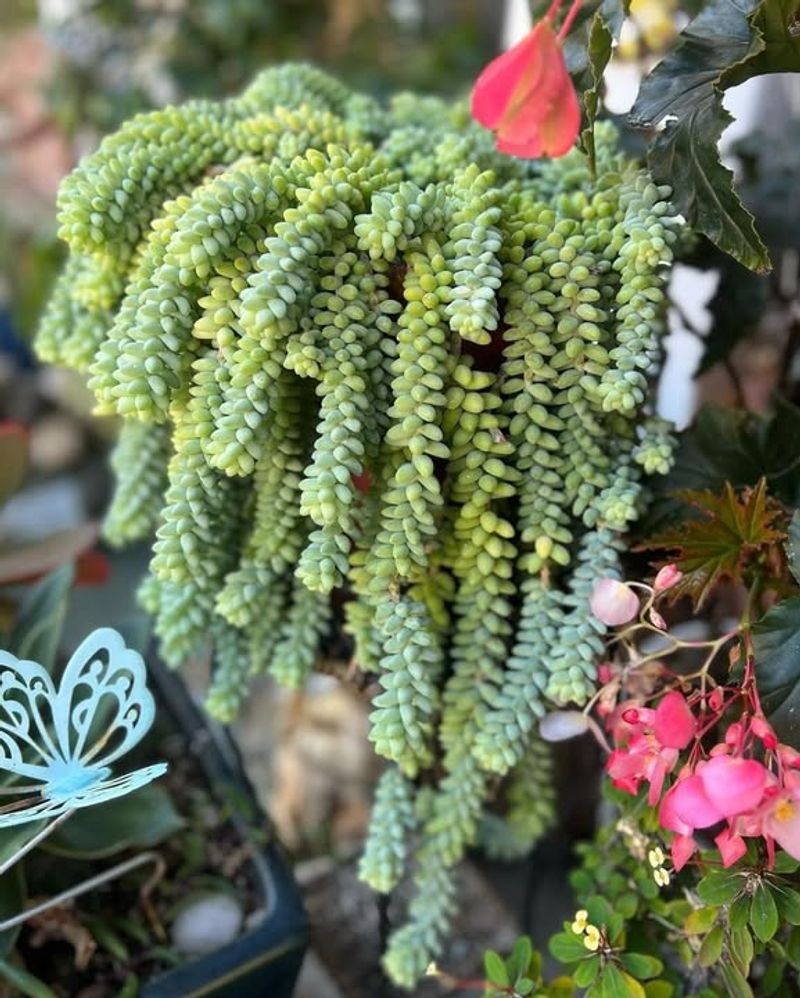
Sedum is the kind of plant you put in a pot and mostly forget about. It spreads on its own, fills in gaps between other plants, and handles the dry heat of Arizona without needing much from you at all.
Burro’s tail sedum, with its trailing stems of plump bluish-green leaves, looks especially good spilling over the edge of a hanging basket or tall container.
Bright light suits sedum well. Place containers in a spot that gets at least six hours of sun daily, and the plants will stay dense and full.
Too much shade causes the stems to stretch out and get leggy, which makes the plant look sparse instead of lush.
Water deeply about once every two weeks during Arizona’s hot season, and let the soil dry out fully in between. Sedum is more forgiving about occasional overwatering than some succulents, but consistent soggy soil will still cause root problems over time.
Good drainage is non-negotiable.
Propagating sedum is almost effortless. A single fallen leaf or a short stem cutting placed on top of moist soil will root within a few weeks.
Starting new plants this way costs nothing and keeps your containers looking fresh and full season after season. If you want a low-fuss succulent that rewards you with texture and trailing beauty, sedum is worth every bit of the small effort it takes to get it started.
5. Jade Plant Grows Well In Pots With Occasional Watering
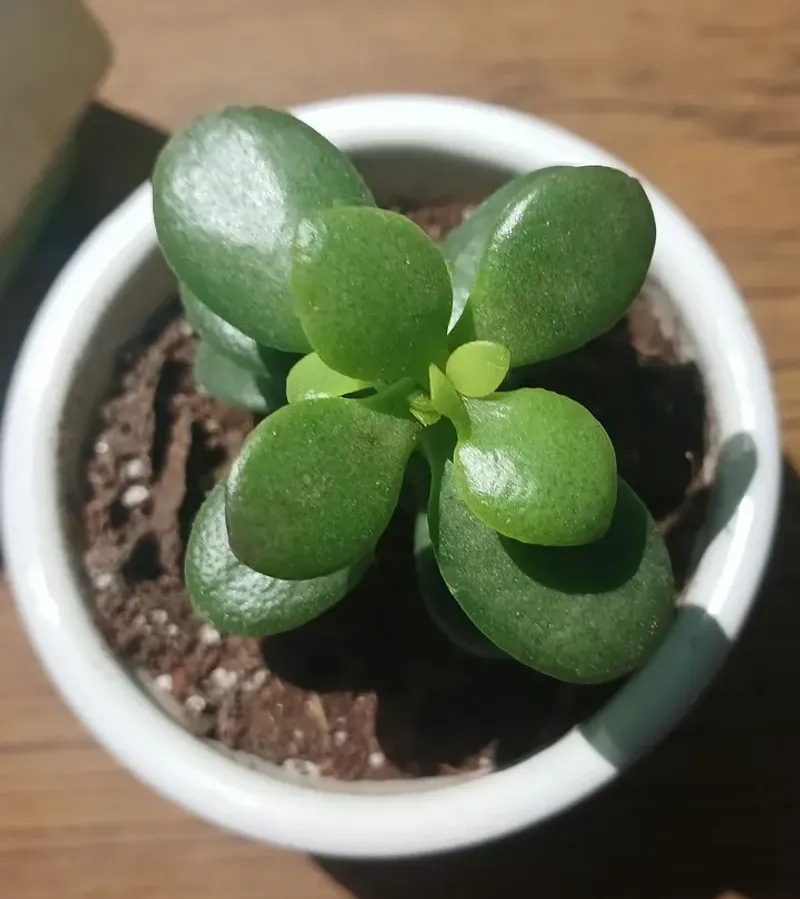
Jade plants have a reputation for being nearly impossible to mess up, and in Arizona that reputation holds up. Glossy, oval leaves sit on woody stems that thicken over time, giving older jade plants a small tree-like look that adds real character to a patio or entryway.
Containers with good drainage are essential. Jade plants store water in their leaves, so they do not need frequent watering.
During summer in Arizona, watering once every ten days to two weeks is enough. In winter, stretch that to once a month or even less if the plant is in a sheltered spot.
Full sun works well for jade plants, but watch them during peak Arizona summer heat. Intense afternoon sun above 100 degrees can stress the leaves and cause reddish tips or slight shriveling.
Moving containers to a spot with afternoon shade during the hottest months helps keep the plant looking its best without sacrificing growth.
Jade plants respond well to occasional pruning, which actually encourages a fuller, more branched shape. Snip back long, leggy stems in spring to promote bushier growth.
Cuttings root easily in dry soil, so you can start new plants from what you trim off. Over several years, a jade plant in a container develops into something genuinely striking that looks like it took serious effort, even though it mostly took care of itself.
6. Elephant Bush Handles Arizona Heat And Stays Easy In Containers
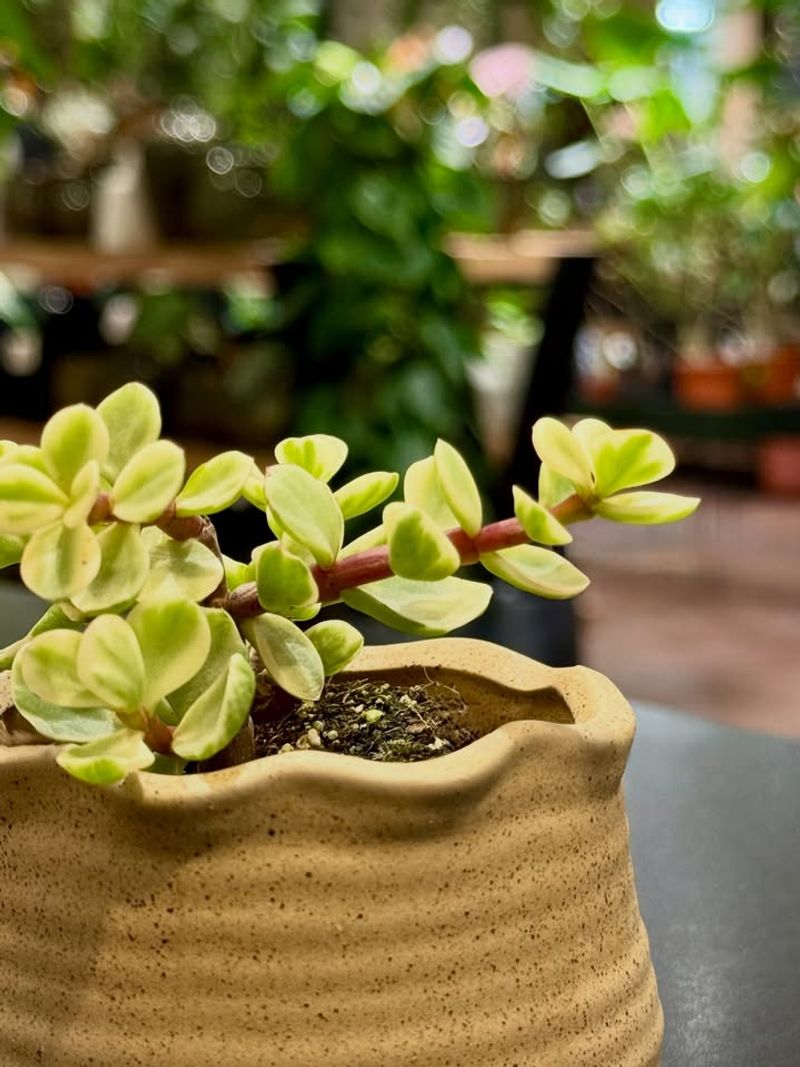
Elephant bush is one of those plants that quietly handles Arizona conditions without asking for much in return. Thick, small green leaves sit along soft stems that gradually take on a woody structure, giving the plant a fuller look over time without needing constant pruning or attention.
In Phoenix or Tucson, elephant bush does well in containers placed in bright light with some protection from the harshest afternoon sun. It can handle full sun once established, but younger plants tend to look better with a bit of filtered light during peak heat.
An east-facing patio or a spot with light shade in the afternoon usually keeps it looking balanced and healthy.
Use a fast-draining cactus or succulent mix and always choose a container with drainage holes. Water deeply, then let the soil dry out completely before watering again.
During Arizona summers, watering every ten to fourteen days is usually enough, while in cooler months it can stretch even longer.
One of the easiest ways to keep elephant bush looking full is simple pruning. Trim back longer stems in spring, and the plant responds by branching out, creating a denser, more compact shape.
It also roots easily from cuttings, so any trimmed pieces can be placed back into soil to start new plants. Over time, elephant bush builds a strong, structured presence in containers, making it one of the most reliable low-effort choices for Arizona patios.
7. Kalanchoe Produces Colorful Blooms With Minimal Effort
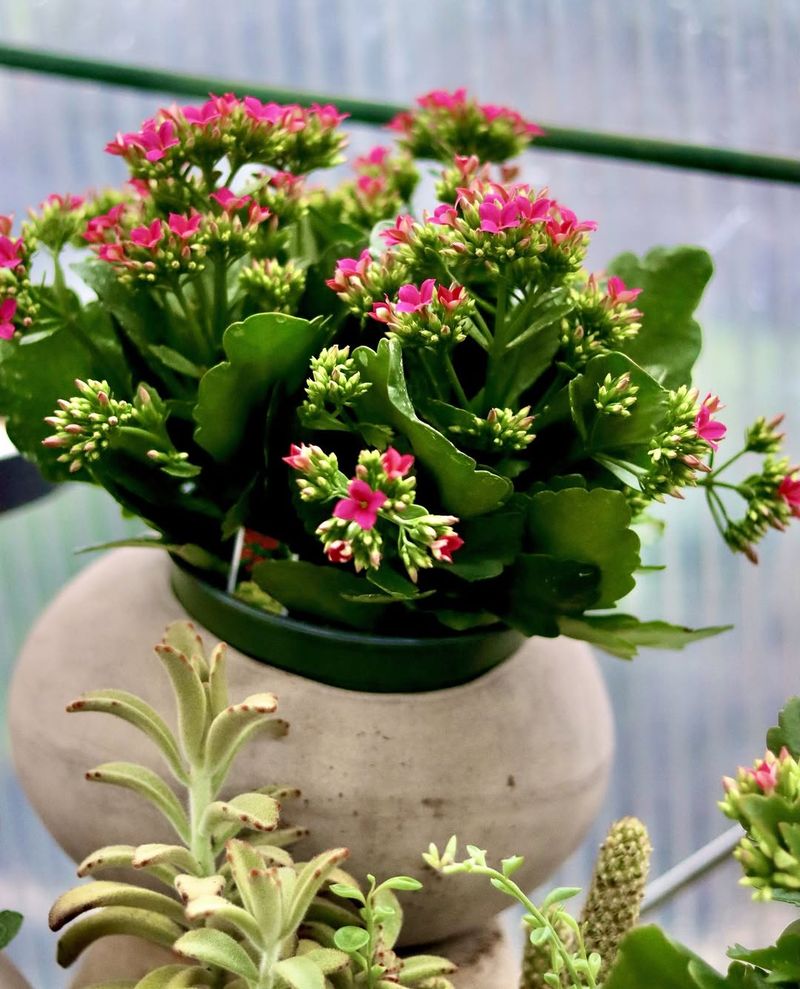
Kalanchoe brings something most succulents skip entirely: actual flowers. Clusters of small, vivid blooms in red, orange, yellow, and pink sit above the foliage for weeks at a time, making it one of the most cheerful plants you can keep in an Arizona container garden.
Indoors near a bright window or outside in a spot with filtered light, kalanchoe performs well across Arizona. Avoid placing it in direct intense afternoon sun during summer, which can bleach the blooms and stress the leaves.
A covered patio or east-facing spot with morning light is ideal for keeping both the plant and its flowers in good shape.
Watering kalanchoe follows the same basic rule as most succulents: let the soil dry out before watering again. Every one to two weeks during warm months works well.
During bloom cycles, keep an eye on the soil a bit more closely since flowering plants tend to use slightly more water than dormant ones.
Getting kalanchoe to rebloom is possible with a simple trick. Give the plant about six weeks of longer dark periods, roughly fourteen hours of darkness per day, and it will set new flower buds.
In Arizona, fall and early winter naturally provide those shorter daylight hours outdoors. Kalanchoe does not need much to stay happy, and when it blooms, it adds a burst of color to any patio or container arrangement that succulents alone rarely deliver.
8. Haworthia Tolerates Part-Sun Containers And Dry Air
Not every corner of an Arizona patio gets blasted with full sun, and that is exactly where haworthia earns its place.
Bright indirect light suits this small succulent perfectly, making it one of the few options that genuinely works in shadier container spots where other succulents would struggle to stay healthy.
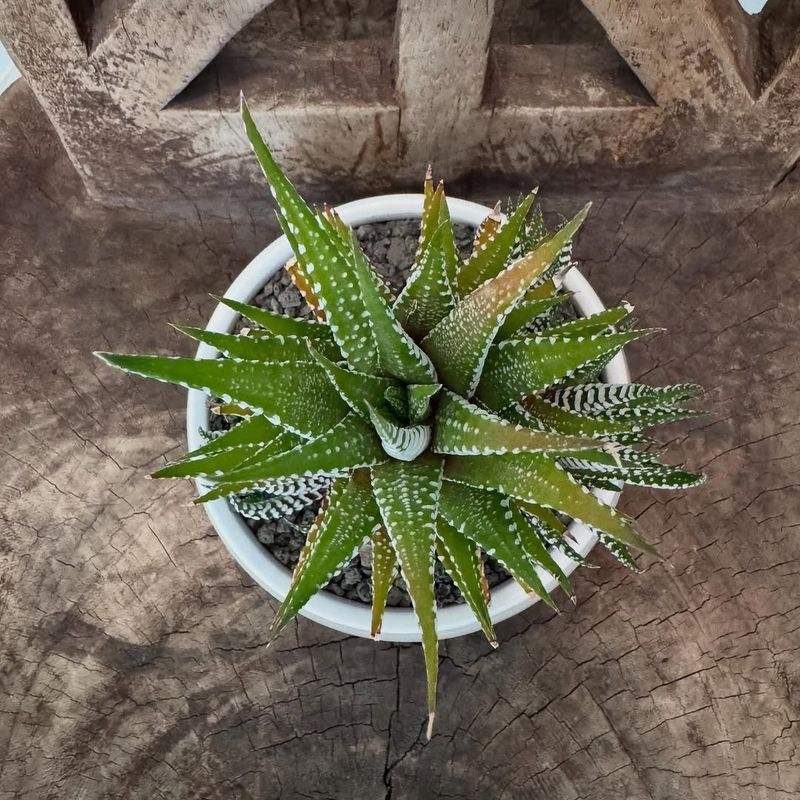
Haworthia stays compact, usually only a few inches wide, which means it fits in small pots without outgrowing them for years. Its dark green leaves with white raised markings give it a distinctive look that stands out in any arrangement.
Group a few different haworthia varieties together in a shallow dish for a low-effort display that looks like it took real planning.
Dry indoor or outdoor air in Arizona does not bother haworthia at all. It handles low humidity without showing stress, which is a genuine advantage in a climate where most non-succulent houseplants suffer.
Water every two to three weeks in summer, and stretch that to once a month or less in winter when growth slows down considerably.
Root rot is the main thing to watch for with haworthia. Soggy soil is its real weakness, not heat or dry air.
Always use well-draining soil, and never let water pool in the saucer under the pot. Get that drainage right, and haworthia will sit quietly in its container for years, staying tidy and looking sharp with almost no upkeep required across Arizona’s varied climate zones.