Take Immediate Action If You Spot This Plant In Your Pennsylvania Garden
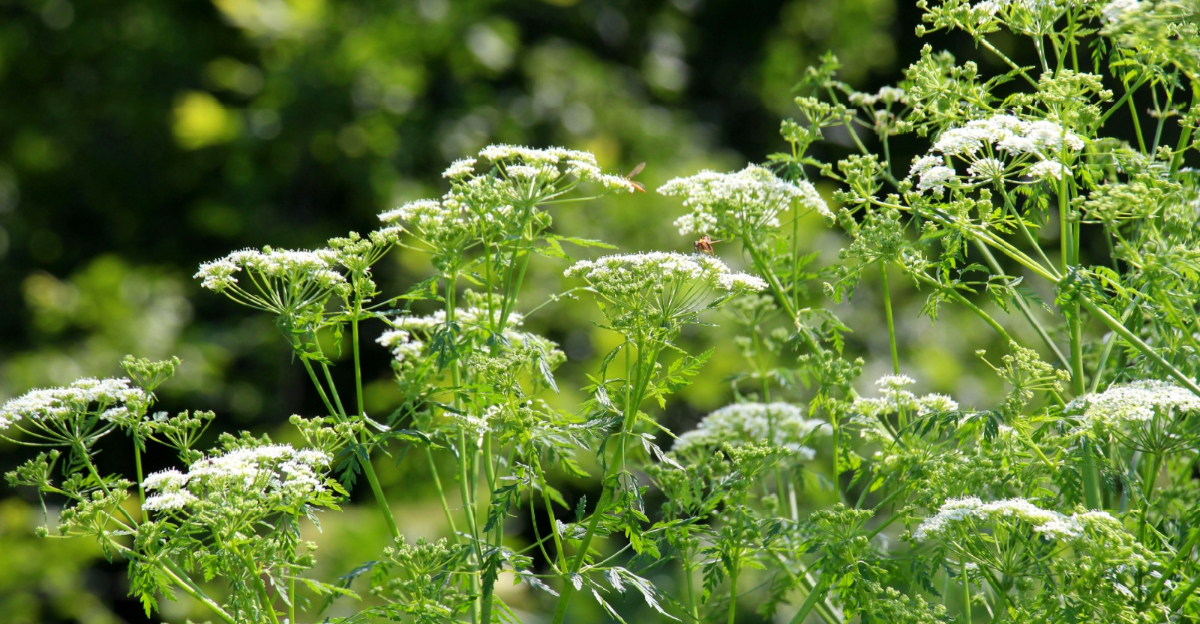
That tall, ferny plant popping up in your Pennsylvania garden might look harmless at first glance, but it can be something you do not want sticking around.
Each season, certain plants quietly move into yards, spread quickly, and go unnoticed until they become a real concern.
One of the most serious examples across Pennsylvania is Poison Hemlock, a highly toxic plant that often blends in with more familiar greenery.
Learning how to recognize it early, understand the risks, and handle it carefully can make a meaningful difference for your garden, your pets, and the people who spend time outdoors.
1. How To Identify Poison Hemlock In Pennsylvania Gardens
Many Pennsylvania gardeners have pulled a mystery plant from their yard without realizing it was something far more dangerous than a weed.
Poison Hemlock, known scientifically as Conium maculatum, is a biennial plant that grows in two stages across two years.
During its first year, it stays low to the ground as a rosette of feathery, fern-like leaves. In its second year, it shoots upward dramatically, sometimes reaching six to eight feet tall.
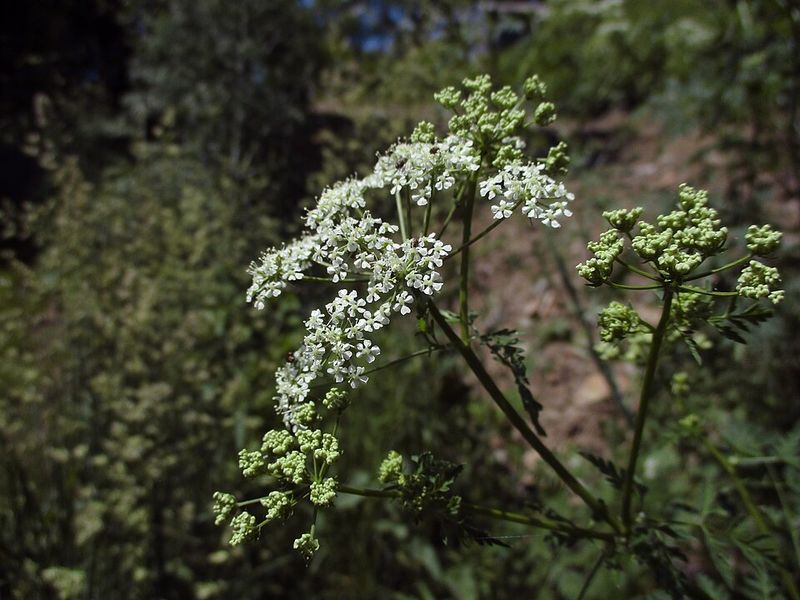
The leaves are finely divided and look somewhat like carrot tops or parsley, which makes it easy to confuse with edible plants. One of the most reliable identification clues is the smell.
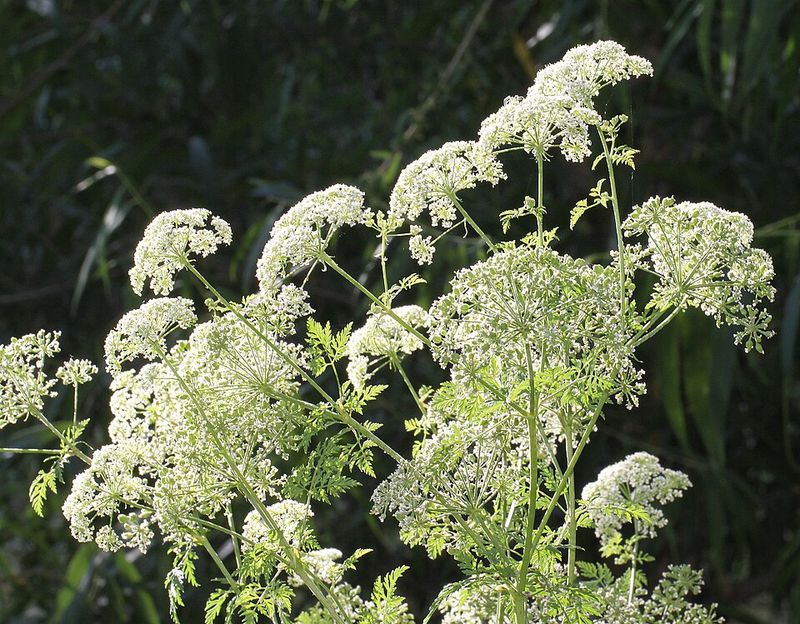
When the leaves are crushed, they release a musty, unpleasant odor that most people find off-putting. The flowers are small, white, and arranged in flat-topped clusters called umbels, similar to Queen Anne’s Lace.
Spotting it early in Pennsylvania is key because the plant spreads rapidly through seed production.
The more you know about its appearance during each growth stage, the better equipped you will be to catch it before it takes over a corner of your garden or spreads to a neighboring property.
2. The Purple-Spotted Stems That Set It Apart
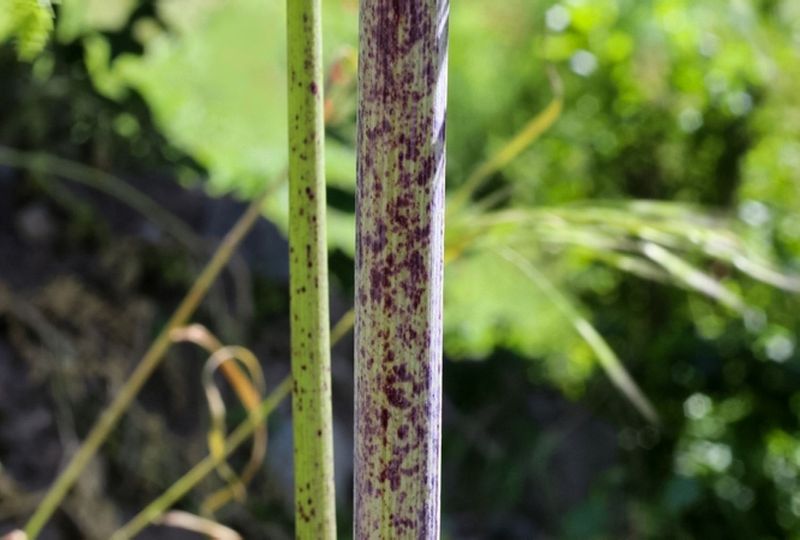
Walk up close to a suspected Poison Hemlock plant and look straight at the stem.
You will notice something that truly sets this plant apart from most lookalikes: irregular purple or reddish-purple blotches and spots scattered across a hollow, smooth green stem.
These markings are not faint or subtle. They look almost like ink splatters and are one of the clearest visual clues that what you are looking at is Poison Hemlock.
The stems are also notably hairless and have a slightly waxy or powdery coating. This is different from plants like Wild Parsnip or Queen Anne’s Lace, which tend to have hairy stems.
Breaking open the stem reveals that it is hollow inside, another useful detail when trying to confirm your identification.
Across Pennsylvania, gardeners who learn to recognize these purple-spotted stems report feeling much more confident when walking through their yards during the growing season.
The markings appear on mature stems, so they are most visible when the plant is in its second year of growth.
If you see a tall, hollow-stemmed plant with those distinctive purple spots growing near your garden beds or fence line, treat it with caution and avoid direct skin contact until you can confirm what it is.
3. Why Poison Hemlock Can Be Dangerous To People And Pets
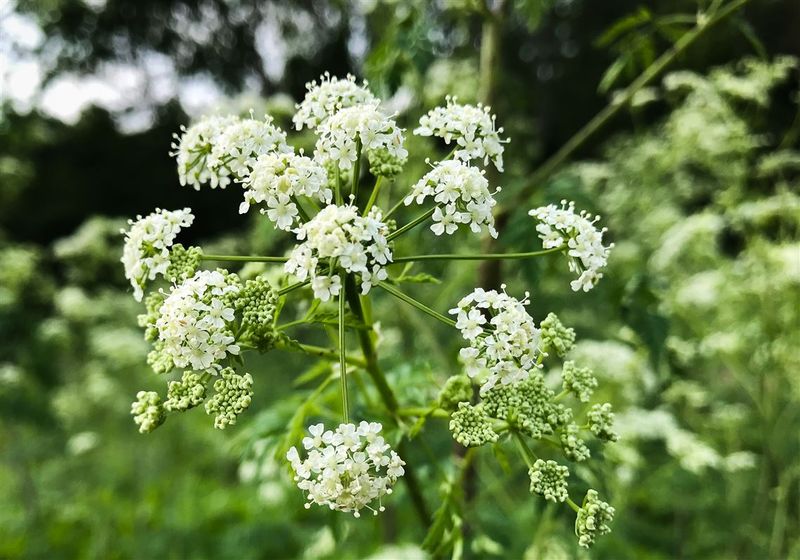
Few plants found growing wild in Pennsylvania carry as serious a health risk as Poison Hemlock. Every single part of the plant is toxic, including the roots, leaves, stems, seeds, and flowers.
The plant contains a group of alkaloids, the most well-known being coniine, which affects the nervous system. Even small amounts, if ingested, can cause serious harm or be fatal to humans and animals.
Children are especially at risk because the hollow stems can look like fun tools for blowing through, similar to a straw or whistle. This innocent curiosity has led to serious poisoning incidents.
Pets, including dogs and cats that graze on unfamiliar plants, face similar dangers. Livestock in rural Pennsylvania areas have also been affected when the plant grows near pastures.
Skin contact with the sap does not typically cause the severe burns associated with Giant Hogweed, but it can still cause irritation in some individuals, especially if exposed to sunlight afterward.
Handling the plant and then touching your eyes or mouth without washing your hands first increases the risk significantly.
Taking the threat seriously and keeping children and pets away from any suspected Hemlock growth is the most responsible first step any Pennsylvania homeowner can take.
4. Where This Plant Commonly Shows Up In Pennsylvania
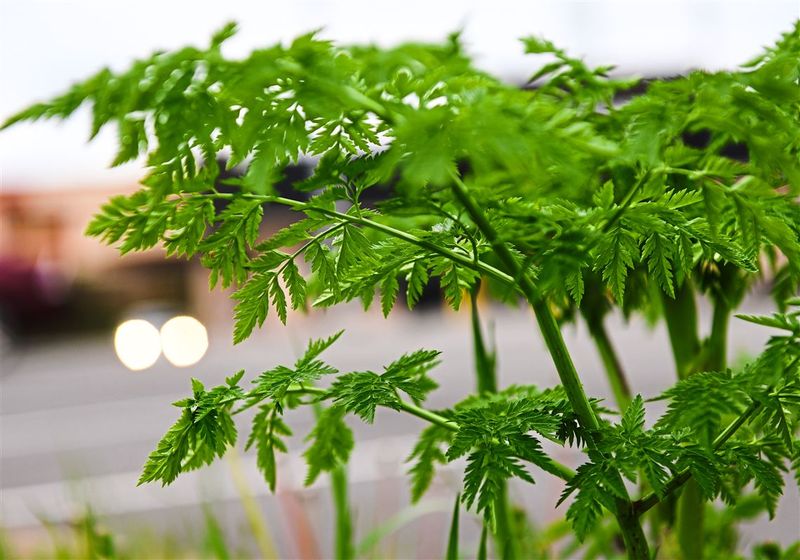
Across Pennsylvania, Poison Hemlock tends to favor disturbed, moist ground where it can establish itself without much competition. You are likely to find it growing along roadsides, drainage ditches, stream banks, and the edges of fields.
It also shows up near fences, in vacant lots, and along the borders of gardens that back up to open land or wooded areas.
Urban and suburban neighborhoods in Pennsylvania are not immune. The plant has been spotted in community garden plots, along walking trails, and near public parks.
Its seeds are lightweight and can travel easily by wind or water, which means it can appear in locations far from the original plant. Once it finds moist, nutrient-rich soil, it settles in quickly.
Areas of Pennsylvania that experience regular flooding or seasonal runoff tend to see higher concentrations of Poison Hemlock because the conditions suit its growth preferences.
If your property borders a creek, storm drain, or low-lying wet area, it is worth checking those zones regularly during the spring and early summer months.
Early detection along these common entry points gives you a much better chance of controlling the plant before it becomes a larger problem in your yard or garden.
5. How It Spreads Quickly Without Being Noticed
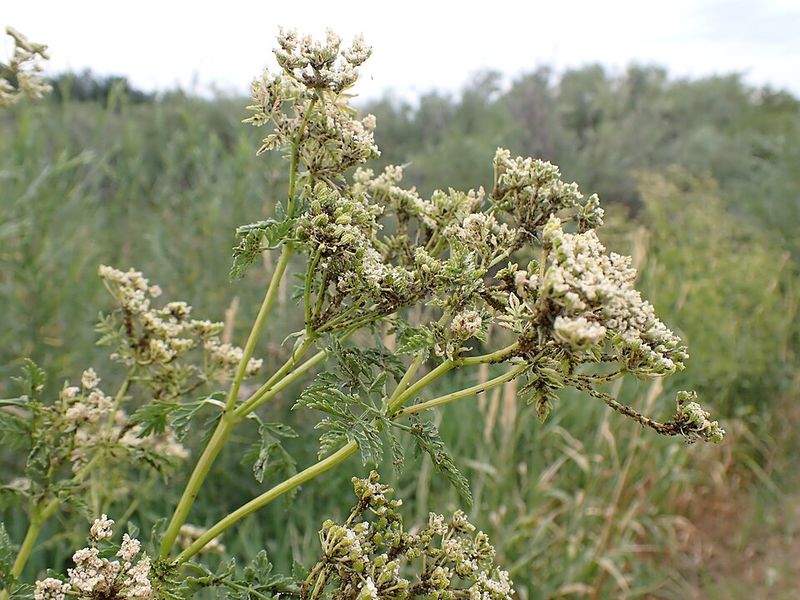
One of the most unsettling things about Poison Hemlock is how quietly it can multiply before a homeowner realizes something is wrong. A single mature plant can produce thousands of seeds during one growing season.
Those seeds are small, ribbed, and built to survive a range of conditions, which means they can sit in the soil for extended periods before germinating when the timing is right.
The seeds spread through several pathways. Wind carries them into neighboring yards.
Water runoff moves them along drainage channels and into new areas of your property. Birds and small animals that pass through the garden can transport seeds on their feathers or fur.
Even your own garden tools, boots, or clothing can unknowingly carry seeds from one part of the yard to another.
In Pennsylvania’s climate, the plant tends to germinate in late summer or fall, spending the winter as a low rosette before surging upward in spring.
Because the first-year rosette looks so unremarkable and similar to other common plants, it often escapes notice until the second year when the tall, flowering stalks make it unmistakable.
By that point, seeds may already be forming. Checking your garden regularly and pulling unfamiliar rosettes early is one of the most effective ways to interrupt this cycle.
6. What Makes It Different From Similar Looking Plants
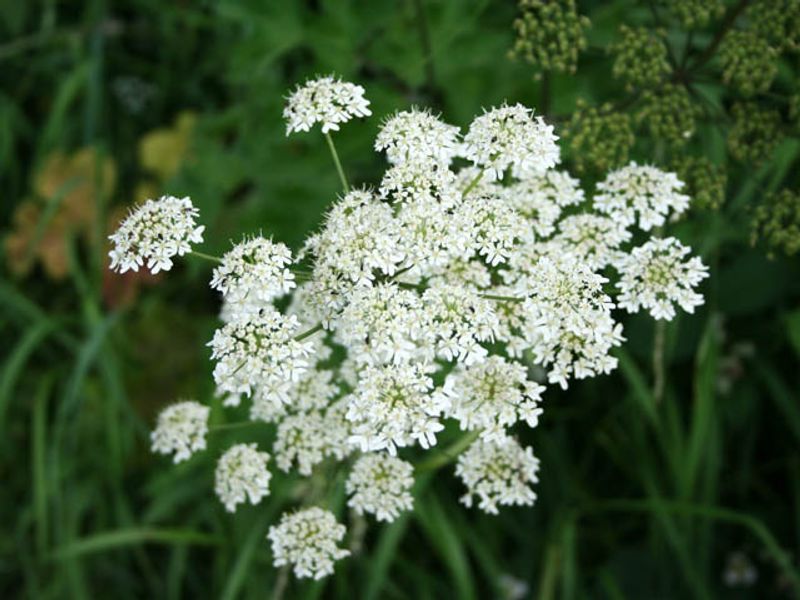
Misidentifying Poison Hemlock is surprisingly common, and the confusion is understandable.
Several plants that grow across Pennsylvania share similar features, including white umbrella-shaped flower clusters and feathery, divided leaves.
Queen Anne’s Lace is probably the most frequent lookalike, but there are important differences that make them easy to tell apart once you know what to check.
Queen Anne’s Lace typically has hairy stems, while Poison Hemlock stems are smooth and hairless. Queen Anne’s Lace also has a single small purple or red flower at the center of its flower cluster, which Hemlock lacks entirely.
The purple-spotted markings on Hemlock stems are another feature that Queen Anne’s Lace does not share.
Wild Parsnip and Water Hemlock are two other plants that sometimes get confused with Poison Hemlock, though each has its own distinct traits.
Water Hemlock, for instance, has a chambered root structure and tends to grow in wetter conditions. Wild Parsnip has yellow flowers rather than white ones and causes severe skin burns from sap exposure.
Elderberry, when young, can also look vaguely similar from a distance.
Taking a close look at stem texture, spot patterns, flower color, and leaf shape together gives you the most reliable picture for accurate identification in a Pennsylvania garden setting.
7. When Poison Hemlock Is Most Noticeable In The Garden
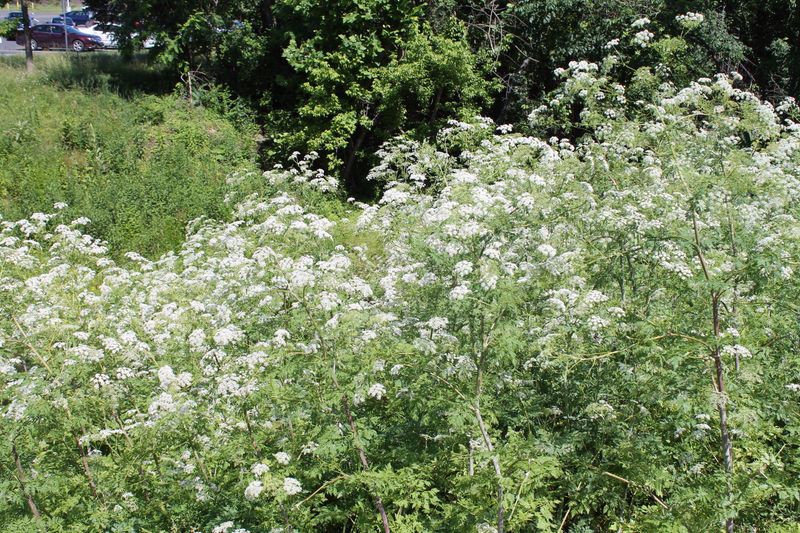
Late spring through early summer is when Poison Hemlock becomes most visible and hardest to ignore in Pennsylvania gardens.
During this window, second-year plants send up tall flowering stalks that can tower over nearby vegetation.
The clusters of small white flowers bloom from roughly May through July, depending on local conditions and elevation across the state.
Before flowering, the plant is much easier to miss. First-year rosettes that emerge in late summer or fall look modest and low-growing, often blending in with other ground-level greenery.
Many Pennsylvania gardeners walk past them without a second thought during the fall season. It is only when those same plants reappear the following spring and start growing rapidly that they catch the eye.
The flowering stage is also when the plant poses the most risk in terms of seed production. Each flower cluster can develop into dozens of seeds that are ready to disperse by midsummer.
Watching your garden closely during May and June in Pennsylvania gives you the best opportunity to catch the plant before it completes its seed cycle.
If you spot tall, white-flowering plants with hollow, spotted stems during this period, do not wait.
Addressing the plant promptly during the bloom stage can significantly reduce how many seeds it releases into your yard.
8. Safe Ways To Remove Poison Hemlock From Your Yard
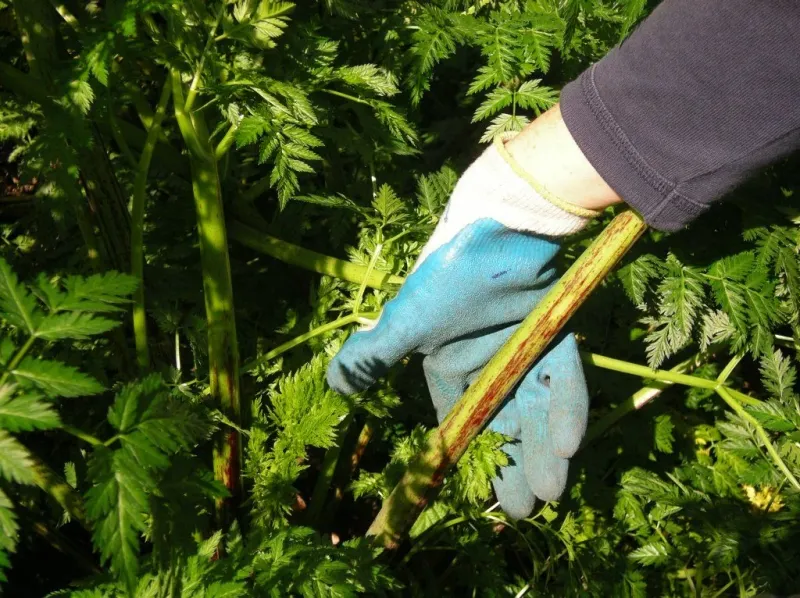
Removing Poison Hemlock from your Pennsylvania yard requires a careful, deliberate approach. Because all parts of the plant are toxic, rushing the job without proper preparation can put you at risk.
Before you touch anything, gather your protective gear and choose the right tools for the job. A long-handled spade or garden fork works well for digging out the root system, which needs to be removed as completely as possible to prevent regrowth.
The most effective time to remove Poison Hemlock is during its first year of growth, before it develops a flowering stalk and produces seeds.
If you are dealing with second-year plants that are already blooming, be extra cautious to avoid disturbing the seed heads.
Placing a bag over the flower cluster before cutting the stem can help contain seeds and reduce the chance of spreading them during removal.
Once removed, the plant should never go into a compost pile. The toxins in the plant do not break down reliably through home composting, and seeds can survive the process.
Instead, seal the plant material in heavy-duty plastic bags and dispose of it according to your local municipality’s guidelines for yard waste or invasive plants.
In Pennsylvania, contacting your county extension office can provide specific disposal recommendations for your area.
9. Why Protective Gear Matters When Handling This Plant
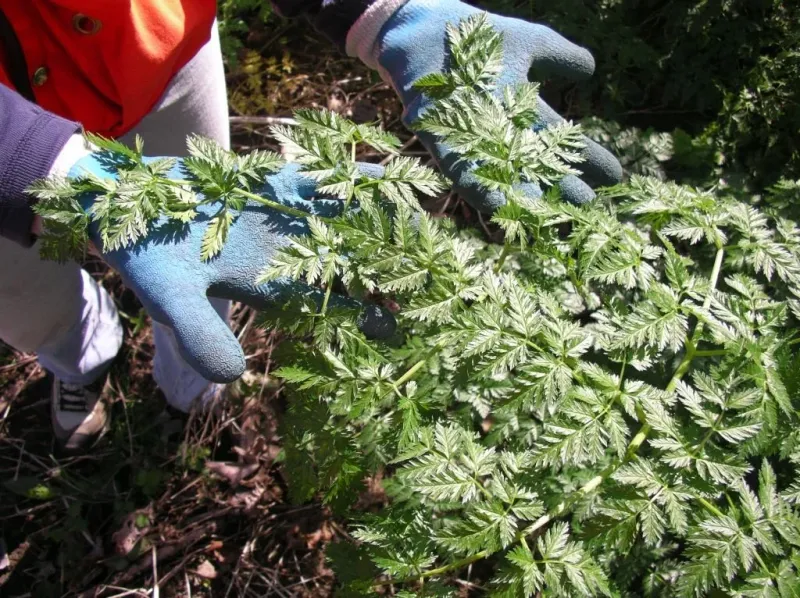
Handling Poison Hemlock without proper protection is a risk that no Pennsylvania gardener should take lightly.
While the plant is most dangerous when ingested, the sap and plant material can cause skin irritation in some people, particularly those with sensitive skin.
More importantly, getting plant residue on your hands and then accidentally touching your face, mouth, or eyes can create a pathway for the toxins to enter your body.
At minimum, wear thick, waterproof gloves that cover your wrists and cannot be easily penetrated by stems or sap.
Long sleeves and long pants help protect exposed skin, and closed-toe shoes or boots are recommended when working around the plant.
Some people also choose to wear safety goggles and a dust mask or respirator, especially when cutting or disturbing dried plant material that could release particles into the air.
After you finish working, remove your gloves carefully by peeling them off without touching the outer surface. Wash your hands thoroughly with soap and water, and launder your clothing separately before wearing it again.
Tools that came into contact with the plant should be cleaned with soapy water as well. Taking these precautions seriously is not an overreaction.
Poison Hemlock is one of the few plants in Pennsylvania that genuinely warrants this level of care during handling.
10. How To Prevent It From Coming Back Next Season
Getting rid of Poison Hemlock once is an achievement, but keeping it from returning takes ongoing effort.
Seeds from nearby plants can drift into your yard each season, meaning that even a thorough removal job does not guarantee you will never see it again.
Building a prevention strategy into your regular garden routine is the most reliable way to stay ahead of it.
One of the most effective long-term strategies is to fill empty or disturbed soil with desirable plants. Poison Hemlock, like many invasive species, tends to colonize bare ground where there is little competition.
Planting native groundcovers, shrubs, or perennials in those open spaces gives the Hemlock less opportunity to establish. Keeping a thick layer of mulch over garden beds also makes it harder for seeds to germinate successfully.
Monitoring your yard during late summer and fall, when first-year rosettes emerge, is just as important as watching for the tall flowering plants in spring.
Pulling small rosettes early requires far less effort than managing a large, established plant the following year.
In Pennsylvania, staying connected with local gardening groups or your county extension office can help you stay informed about Hemlock activity in your region, so you know when to be especially watchful in your own yard.