The Best Blooming Native Perennials For Michigan Yards
Michigan gardeners have a powerful secret hiding in plain sight. Native perennials are perfectly suited to local soil, weather, and changing seasons, which means they thrive with far less effort than many non native plants.
Once established, these dependable bloomers return year after year, growing fuller and more vibrant with time.
Instead of constant replanting and upkeep, you get a garden that becomes easier and more rewarding each season.
As native flowers bloom, they do more than add color. They provide essential nectar and shelter for butterflies, bees, and hummingbirds, turning your yard into a lively, balanced habitat.
The result is a space filled with movement, color, and natural beauty from spring through fall. With the right native perennials, your Michigan garden can feel richer, more resilient, and far more alive while requiring less work and giving back more every year.
1. Black-Eyed Susan (Rudbeckia Hirta)
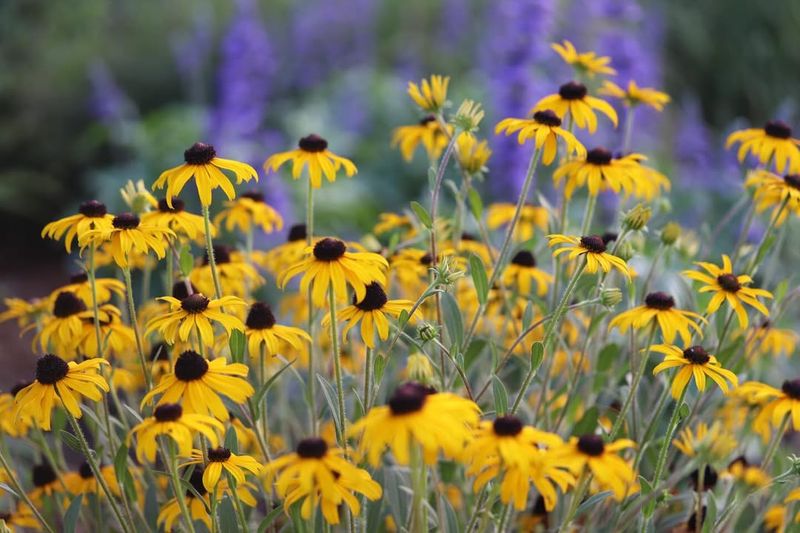
Cheerful golden petals surrounding chocolate-brown centers make this wildflower impossible to miss.
Black-Eyed Susans light up gardens from July through September with their sunny disposition. These tough plants handle Michigan’s unpredictable weather like champions.
Full sun brings out their best performance, though they tolerate partial shade gracefully. Almost any soil type works fine for these adaptable bloomers. Clay, sand, or loam won’t stop them from putting on a show.
Height reaches about two to three feet at maturity. Their upright stems rarely need staking even during summer storms. Clumps expand slowly over time, creating fuller displays each season.
Butterflies and bees visit constantly throughout blooming season. Goldfinches love snacking on seedheads during fall and winter months. Leaving spent flowers standing provides food for wildlife while adding winter interest.
Drought tolerance makes watering optional once established. These perennials bounce back quickly even after dry spells. Their carefree nature suits beginner gardeners perfectly.
Pair them with ornamental grasses for prairie-style plantings. Purple coneflowers make excellent companions, creating stunning color combinations. Mass plantings create bold statements along sunny borders or meadow gardens.
Dividing clumps every three years keeps plants vigorous. Simply dig up clumps in spring and separate into sections. Replant divisions immediately for best results and share extras with neighbors.
2. Purple Coneflower (Echinacea Purpurea)
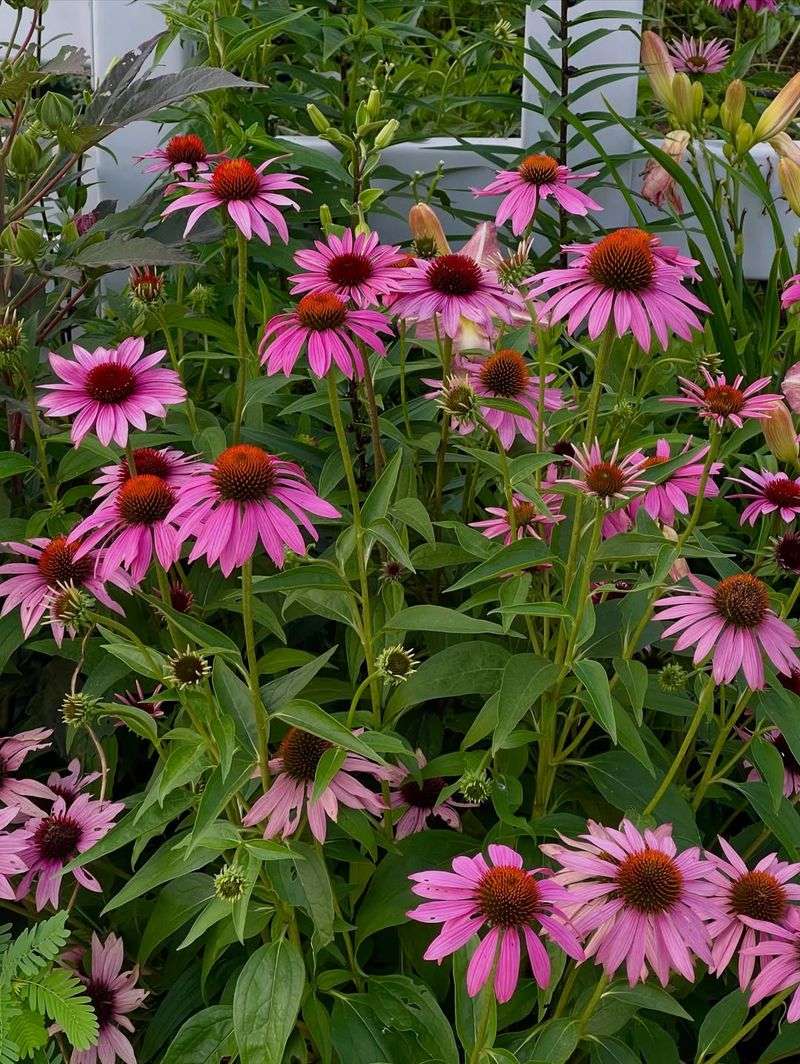
Majestic blooms stand tall on sturdy stems reaching three to four feet high. Purple coneflowers command attention with their distinctive spiky orange centers. Pink-purple petals droop elegantly, creating a shuttlecock shape that looks architectural in borders.
These hardy perennials laugh at summer heat and drought conditions. Once roots establish, rainfall usually provides enough moisture. Their deep taproots search for water far below the surface.
Butterflies, especially swallowtails, hover around flowers throughout summer months. Bees work the blooms constantly, gathering pollen and nectar. Hummingbirds occasionally visit for quick sips between other favorite stops.
Blooming starts in June and continues through August with proper care. Removing spent flowers encourages additional blooms to form. Alternatively, leave seedheads standing for winter bird feeding stations.
Goldfinches perform acrobatic shows while extracting seeds from dried cones. Cardinals and chickadees also appreciate this natural food source. Winter silhouettes dusted with snow create beautiful garden sculptures.
Full sun locations produce the most flowers and sturdiest stems. Partial shade works but reduces bloom quantity noticeably. Well-drained soil prevents root problems during Michigan’s wet spring seasons.
Space plants about two feet apart for good air circulation. This prevents powdery mildew issues during humid summers. Mature clumps rarely need division but tolerate it well if necessary for propagation purposes.
3. Wild Bergamot (Monarda Fistulosa)
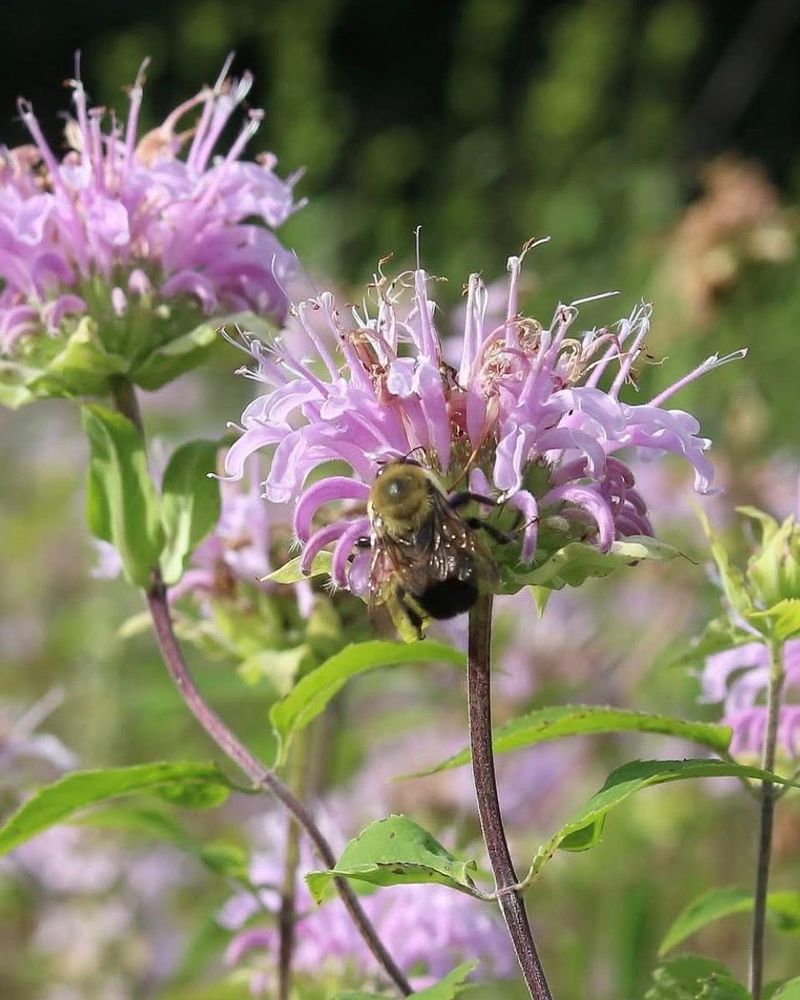
Shaggy lavender-pink flowers look like tiny fireworks exploding atop square stems. Wild bergamot blooms from late June through August with unique beauty. Each flower cluster measures about two inches across, creating eye-catching focal points.
Hummingbirds zoom straight to these nectar-rich blooms with impressive speed. Bees cover flowers so completely that plants seem to hum. Butterflies join the party, making gardens feel alive with activity.
Minty fragrance wafts through gardens on warm summer evenings. Brushing against foliage releases aromatic oils that smell refreshing. This scent naturally deters deer and rabbits from browsing.
Height ranges from two to four feet depending on growing conditions. Full sun produces shorter, sturdier plants with more flowers. Partial shade creates taller specimens that may need support.
Well-drained soil prevents problems but average garden conditions work fine. These perennials tolerate clay better than many natives. Once established, they handle dry spells remarkably well.
Plants spread gradually through underground rhizomes, forming attractive colonies. This spreading habit fills spaces nicely without becoming invasive. Dividing clumps every few years controls size and rejuvenates older plantings.
Pair wild bergamot with black-eyed susans for complementary colors. Purple coneflowers and blazing star create stunning combinations. These partnerships mirror natural prairie plant communities beautifully.
Cutting flowers back after blooming sometimes encourages second flush. Fresh foliage emerges quickly, looking tidy through fall. This extended season of interest makes them valuable garden residents.
4. Butterfly Weed (Asclepias Tuberosa)
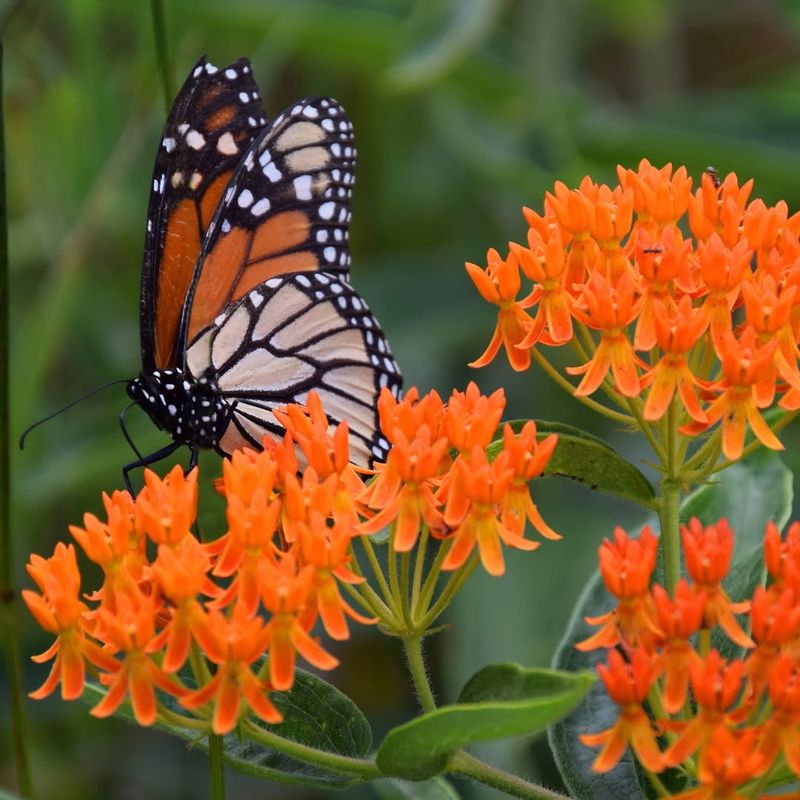
Brilliant orange flower clusters practically glow in sunlight like tiny flames. Butterfly weed earns its name by attracting scores of winged visitors. Monarch butterflies depend on this plant for laying eggs and feeding caterpillars.
Blooming peaks during July and August when gardens need color most. Flat-topped flower clusters measure three to five inches across. Individual flowers are small but grouped together create impressive displays.
This milkweed species differs from common milkweed by staying compact. Height reaches only one to two feet, fitting smaller spaces perfectly. Plants grow slowly but become more floriferous with age.
Deep taproots make transplanting mature specimens nearly impossible. Starting plants in permanent locations saves frustration later. Young container-grown plants establish much easier than older ones.
Full sun and excellent drainage are absolutely essential for success. Sandy or gravelly soils suit butterfly weed better than heavy clay. Adding gravel to planting holes improves drainage in problem areas.
Drought tolerance ranks extremely high once roots establish deeply. These perennials actually prefer drier conditions over constant moisture. Overwatering causes more problems than underwatering ever will.
Seedpods split open in fall, releasing silky-tailed seeds. These pods add interesting texture to autumn gardens. Collecting seeds before they scatter allows controlled propagation.
Pairing butterfly weed with purple coneflowers creates stunning contrasts. Little bluestem grass makes an excellent textural companion. These combinations mimic natural prairie plant communities that once covered Michigan.
5. New England Aster (Symphyotrichum Novae-Angliae)
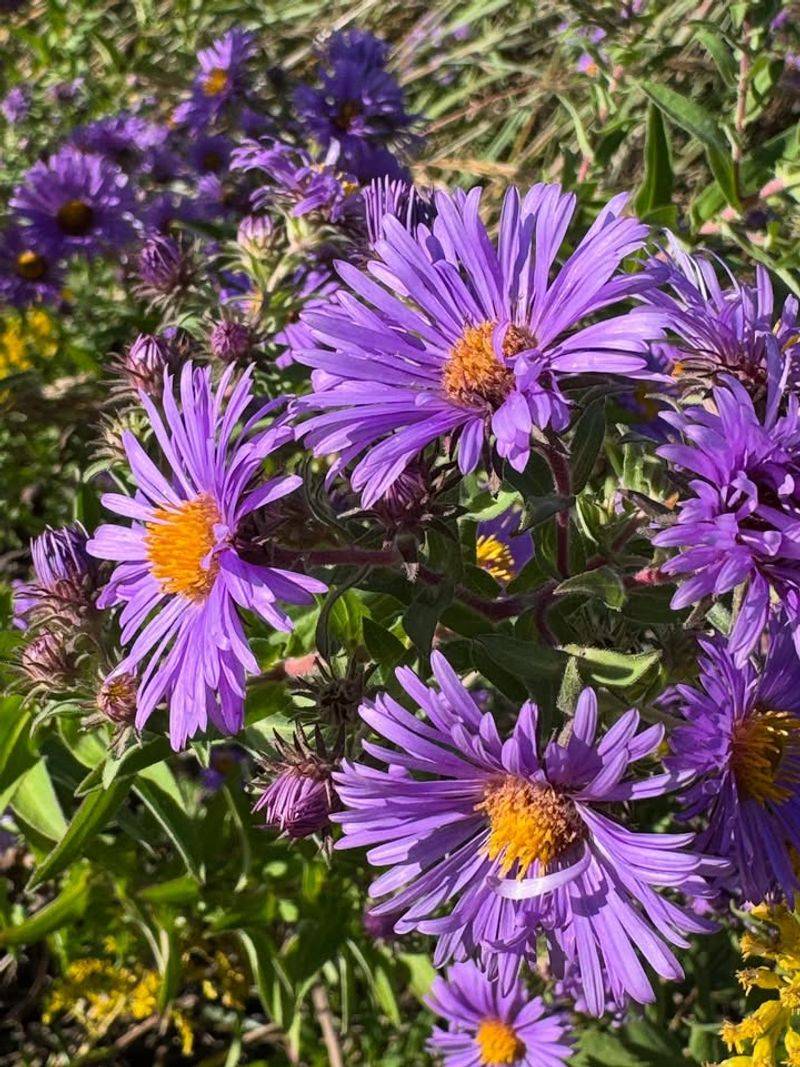
Late summer brings explosions of purple-pink blooms when other flowers fade. New England asters save their best show for September and October. Each plant produces hundreds of small daisy-like flowers with yellow centers.
Height reaches an impressive three to six feet in good conditions. These tall perennials create wonderful backdrops for shorter plants. Their upright form adds vertical interest to flat garden spaces.
Butterflies swarm these blooms during fall migration periods. Bees gather final nectar supplies before winter arrives. This late-season food source proves crucial for pollinator survival.
Full sun produces the most flowers and prevents legginess. Plants growing in shade stretch toward light and flop over. Staking becomes necessary when sunlight proves insufficient.
Cutting stems back by half in early June reduces final height. This pinching technique creates bushier plants with more flowers. The blooming period may delay slightly but results justify the effort.
Average to moist soil suits New England asters perfectly. They tolerate clay soils better than many natives. Consistent moisture produces healthier foliage and more abundant blooms.
Powdery mildew sometimes affects lower leaves during humid weather. This cosmetic issue rarely harms plant health significantly. Good air circulation and avoiding overhead watering minimize problems.
Dividing clumps every three years maintains vigor and flower production. Spring division works better than fall in Michigan’s climate. Replant divisions immediately and water thoroughly until established.
6. Wild Columbine (Aquilegia Canadensis)
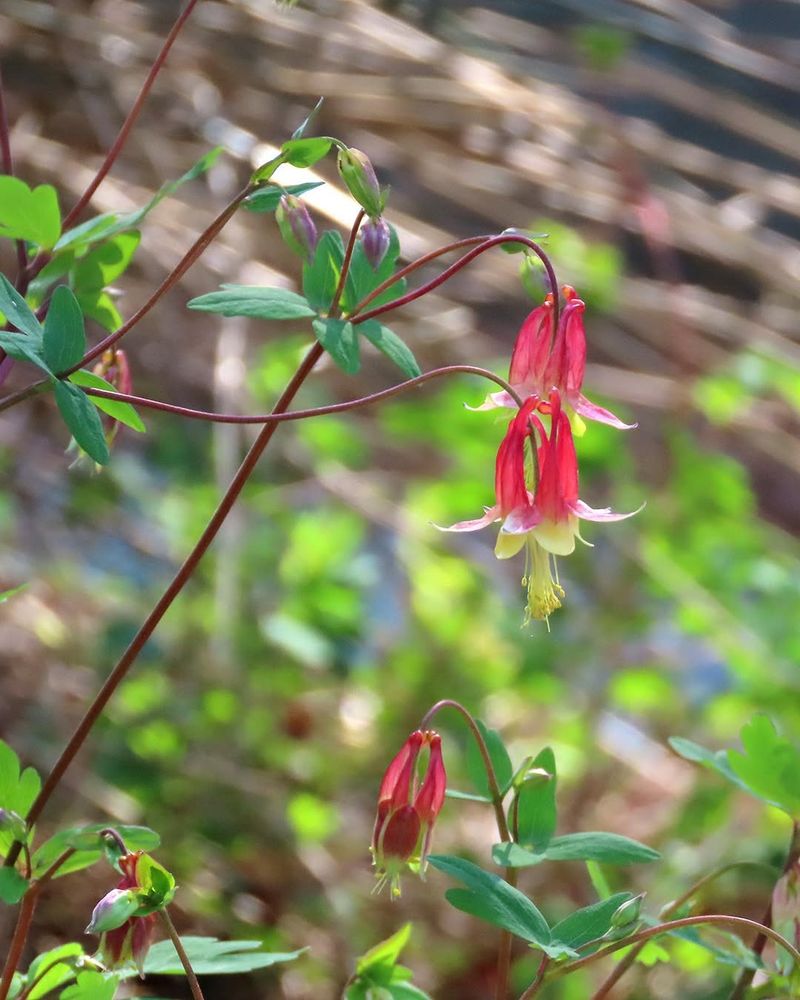
Delicate red and yellow flowers dangle like tiny lanterns from wiry stems. Wild columbine blooms in late April through June with distinctive spurred petals. These graceful perennials bring woodland charm to shaded garden spots.
Hummingbirds arrive in spring just as flowers open perfectly. The tubular spurs hold nectar specifically designed for long beaks. Watching hummingbirds hover and feed provides endless entertainment.
Ferny blue-green foliage looks attractive even after blooming finishes. Leaves remain presentable through summer in adequate shade. This extended ornamental value makes columbine worth growing beyond flowers alone.
Partial to full shade suits wild columbine best in gardens. Morning sun with afternoon shade creates ideal conditions. Too much direct sunlight causes foliage to scorch and decline.
Rich, moist soil produces the healthiest plants with most flowers. Adding compost improves clay soils and increases moisture retention. Well-drained conditions prevent root rot during wet springs.
Height reaches only one to two feet, fitting under taller perennials nicely. The airy form allows light to reach plants below. This layering creates naturalistic woodland garden effects.
Self-seeding produces new plants in unexpected locations throughout gardens. Seedlings appear readily in favorable conditions without becoming weedy. Transplanting volunteers while small works well for filling gaps.
Pairing wild columbine with ferns creates classic woodland combinations. Foamflower and wild ginger make excellent groundcover companions. These partnerships mirror natural forest floor plant communities beautifully.
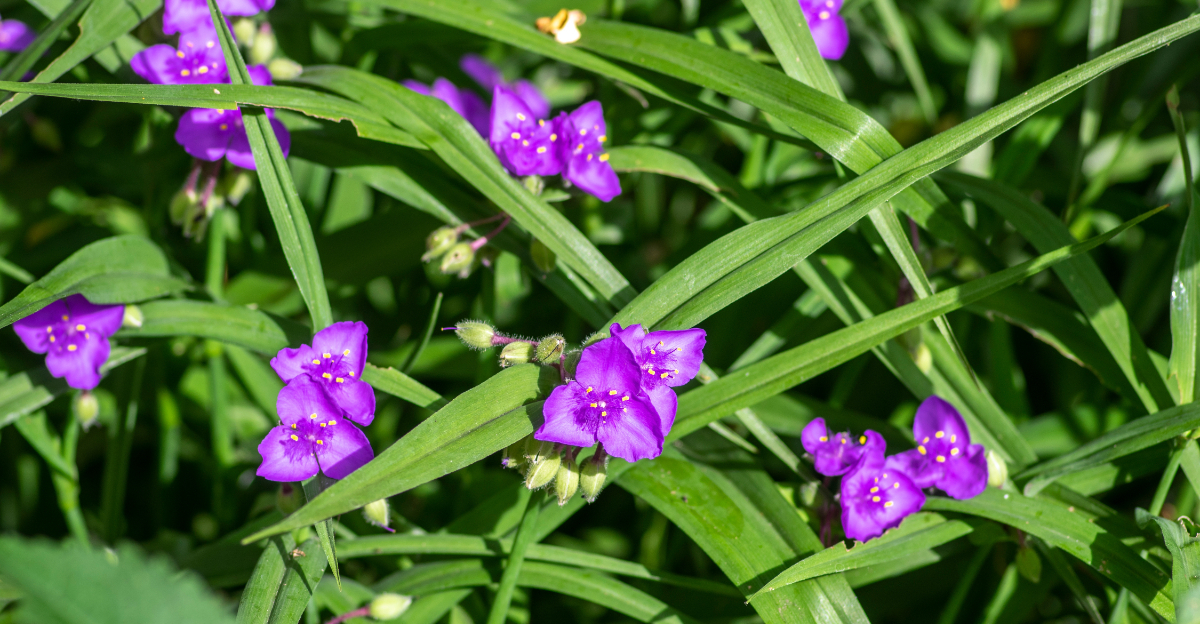
7. Spiderwort (Tradescantia Ohiensis)
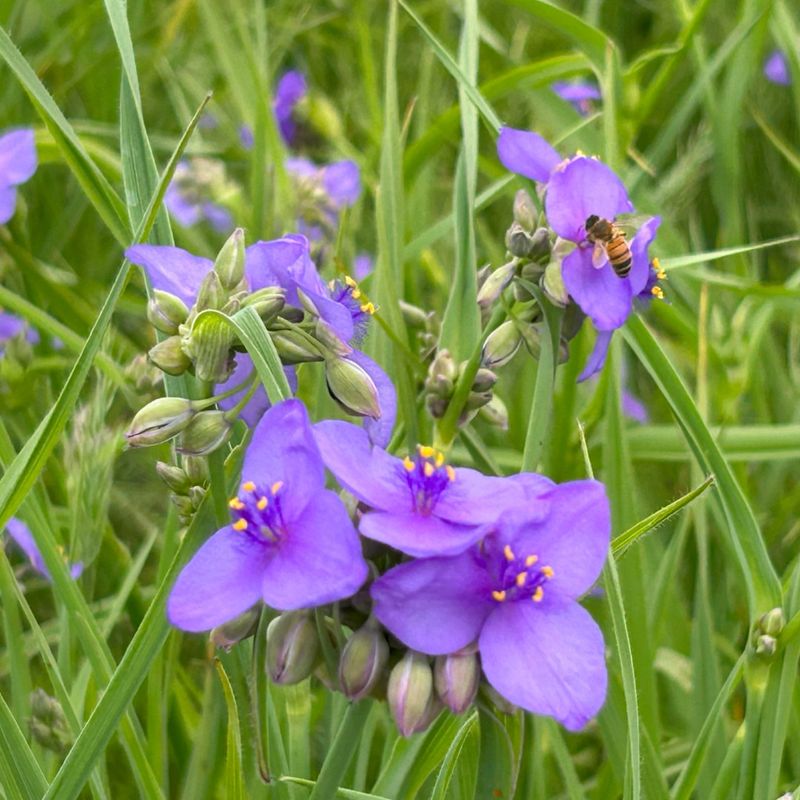
Three-petaled blue-purple flowers open fresh each morning during late spring. Spiderwort blooms individually last only one day before fading. However, new buds open continuously for weeks, maintaining colorful displays.
Each flower measures about one inch across with prominent yellow stamens. The contrast between purple petals and golden centers catches eyes immediately. Flowers close by afternoon, especially on hot days.
Grass-like foliage forms attractive clumps reaching two feet tall. Leaves arch gracefully, creating fountain-like shapes in borders. This form provides textural contrast against broader-leaved perennials.
Adaptability ranks extremely high for various light and soil conditions. Full sun to partial shade all produce acceptable results. Clay, loam, or sandy soils work equally well.
Plants spread gradually through rhizomes, forming expanding colonies over time. This spreading habit fills spaces nicely without aggressive takeover. Dividing clumps controls size and rejuvenates older plantings.
Foliage sometimes looks tired and ratty after blooming finishes. Cutting plants back to ground level encourages fresh growth. New leaves emerge quickly, looking tidy through fall.
Drought tolerance improves significantly once roots establish deeply. However, consistent moisture produces healthier foliage and more flowers. Mulching helps maintain even soil moisture levels.
Pairing spiderwort with ferns creates interesting textural contrasts. Wild columbine and foamflower make excellent shade-garden companions. These combinations work beautifully in woodland or border plantings.
Self-seeding occurs occasionally but rarely becomes problematic. Seedlings appear sporadically in favorable locations. Transplanting volunteers while small works well for expanding plantings.
8. Great Blue Lobelia (Lobelia Siphilitica)
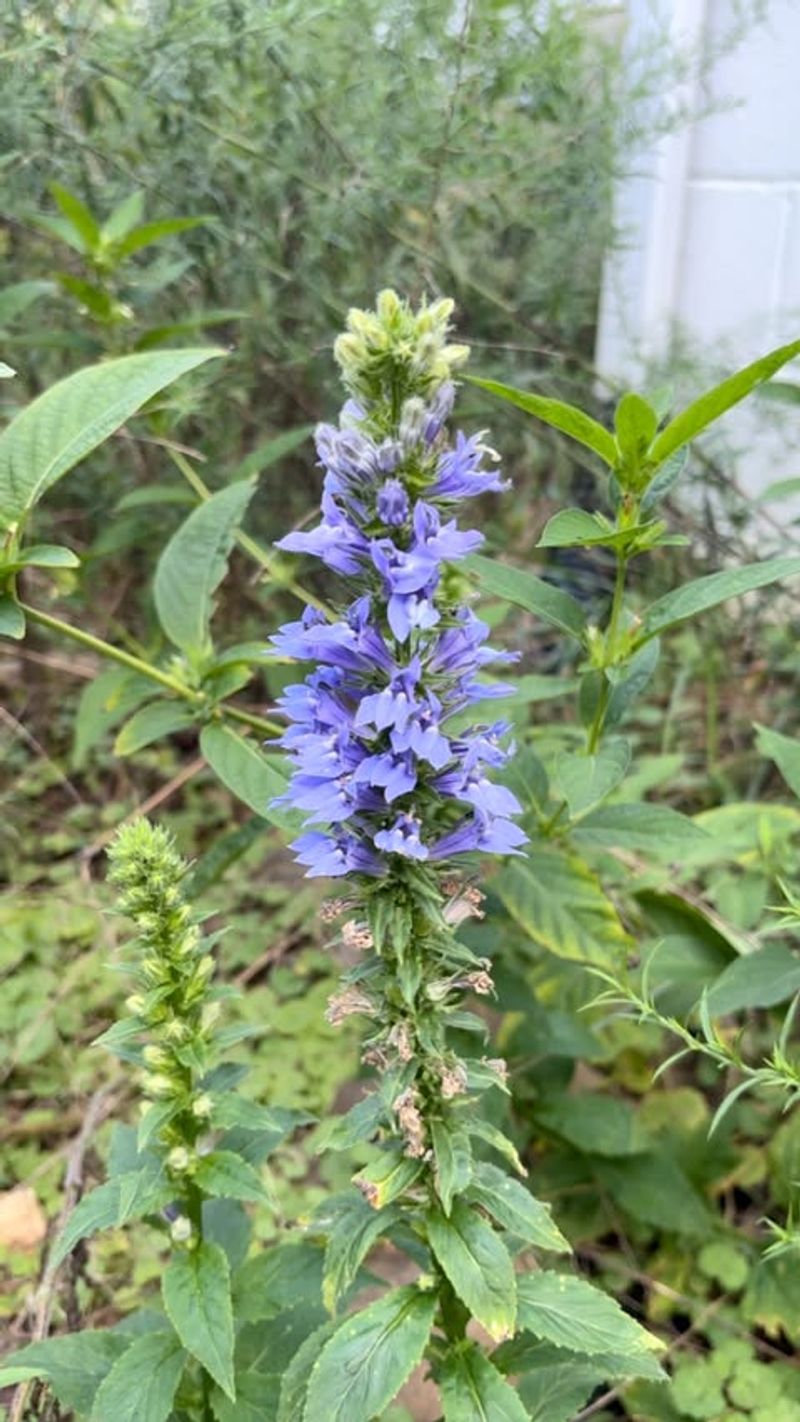
Spikes of brilliant blue flowers rise like exclamation points during late summer. Great blue lobelia blooms from August through September when gardens need color. Each tubular flower measures about one inch long, arranged densely on stems.
Hummingbirds visit frequently, hovering to sip nectar from tubular blooms. Bees work flowers methodically from bottom to top. This pollinator activity adds movement and life to garden spaces.
Height reaches two to four feet depending on growing conditions. Plants form upright clumps that rarely need staking. Multiple flower spikes emerge from each clump for impressive displays.
Moist to wet soil conditions suit great blue lobelia perfectly. Rain gardens, pond edges, or naturally damp spots work wonderfully. These perennials tolerate standing water better than most natives.
Partial shade to full sun both produce good results. More sun requires consistent moisture for best performance. Afternoon shade helps in drier garden locations.
Short-lived perennial nature means plants may last only three years. However, self-seeding usually produces replacement plants nearby. Allowing some seedheads to mature ensures continued presence.
Dividing clumps in spring extends individual plant longevity. Separating into smaller sections rejuvenates older specimens. Replant divisions immediately and water thoroughly until established.
Pairing great blue lobelia with cardinal flower creates stunning contrasts. Joe-pye weed and swamp milkweed make excellent moisture-loving companions. These combinations work beautifully in rain gardens or wet areas.
Foliage remains attractive throughout the growing season. Leaves stay green and healthy without special care. This extended ornamental value makes them worthy garden additions.
9. Foamflower (Tiarella Cordifolia)
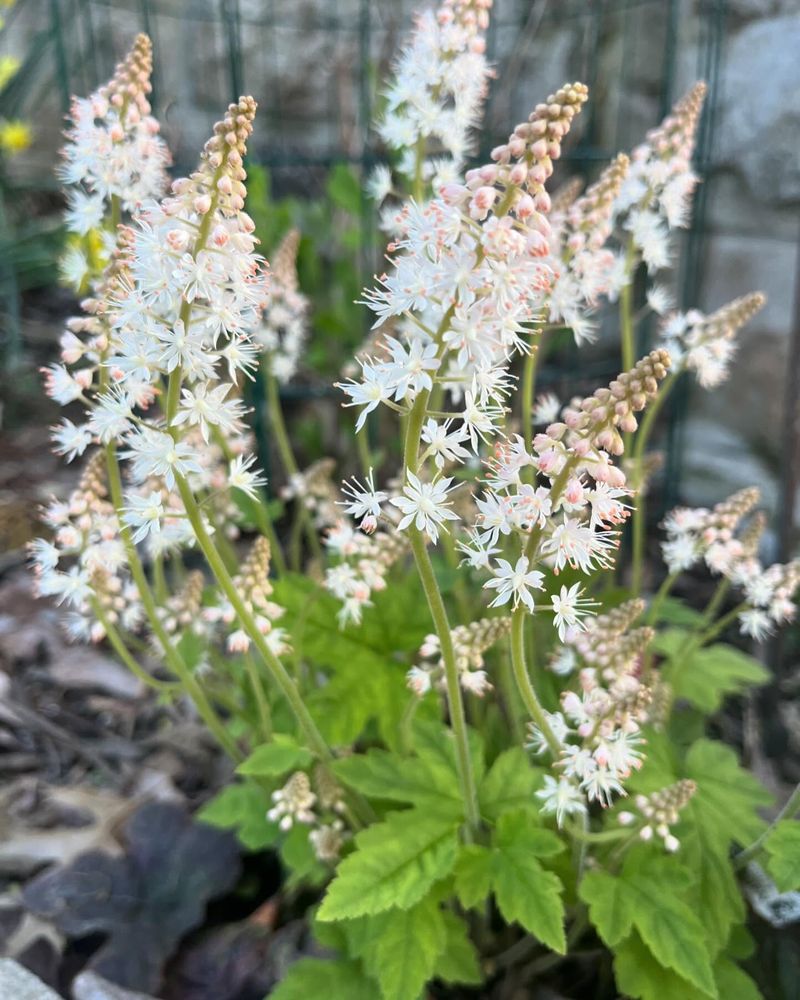
Fuzzy white flower spikes seem to float above heart-shaped leaves like foam. Foamflower blooms in late April through May with delicate beauty. Each spike reaches six to twelve inches tall, creating ethereal effects.
Shade-loving nature makes foamflower perfect for woodland gardens. Deep shade under trees rarely stops these tough perennials. They thrive where many other flowering plants struggle.
Groundcover habit spreads slowly through runners, forming attractive carpets. This spreading creates weed-suppressing mats under trees and shrubs. Plants fill spaces without aggressive takeover tendencies.
Heart-shaped leaves provide ornamental interest beyond blooming season. Some varieties develop burgundy markings during cool weather. This foliage remains attractive from spring through fall.
Moist, rich soil produces the healthiest plants with most flowers. Adding compost improves clay soils and increases moisture retention. Well-drained conditions prevent crown rot during wet periods.
Height reaches only six to ten inches, fitting under taller perennials perfectly. The low form creates naturalistic layering effects. This growth habit mirrors forest floor plant communities.
Deer and rabbits usually leave foamflower alone, preferring other plants. This resistance makes them reliable in areas with wildlife pressure. Gardens stay beautiful without constant protection efforts.
Pairing foamflower with wild columbine creates classic combinations. Ferns and wild ginger make excellent textural companions. These partnerships work beautifully in shaded borders or woodland settings.
Dividing clumps every few years controls spread and rejuvenates plantings. Spring division works best in Michigan’s climate. Replant divisions immediately and water thoroughly until roots establish.
10. Cardinal Flower (Lobelia Cardinalis)
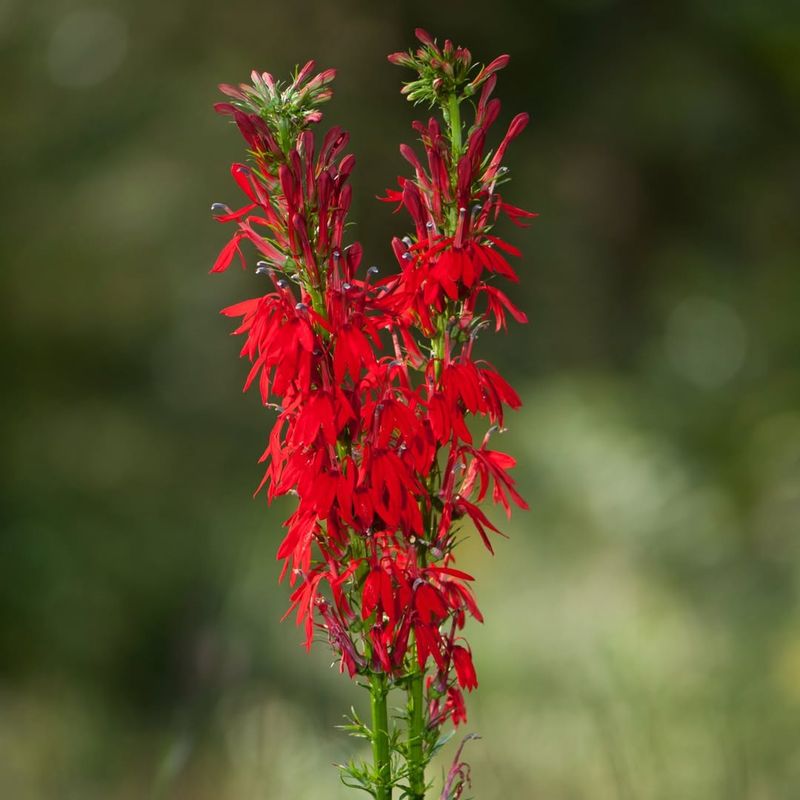
Scarlet flower spikes blaze like flames during mid to late summer. Cardinal flower blooms from July through September with unmatched intensity. The brilliant red color stops visitors in their tracks.
Hummingbirds prefer cardinal flower over almost any other plant. They visit constantly throughout the day, defending favorite plants aggressively. Watching territorial displays provides amazing entertainment.
Each tubular flower measures about one and a half inches long. Flowers arrange themselves densely along tall spikes. Multiple spikes emerge from each plant for spectacular shows.
Moist to wet soil conditions are absolutely essential for success. Pond edges, stream banks, or rain gardens work perfectly. These perennials suffer quickly in dry soil conditions.
Partial shade to full sun both produce good results. More sun requires constant moisture for healthy growth. Morning sun with afternoon shade creates ideal conditions.
Height reaches two to four feet in favorable conditions. Plants form upright clumps that rarely need staking. The vertical form adds architectural interest to garden designs.
Short-lived nature means individual plants may last only three years. Self-seeding usually produces replacement plants in favorable locations. Allowing some seedheads to mature ensures continued presence.
Pairing cardinal flower with great blue lobelia creates stunning combinations. Joe-pye weed and swamp milkweed make excellent moisture-loving companions. These partnerships work beautifully in wet garden areas.
Dividing clumps in spring extends plant longevity significantly. Separating into smaller sections rejuvenates older specimens. Replant divisions immediately and maintain consistent moisture until established.
11. Eastern Blazing Star (Liatris Spicata)
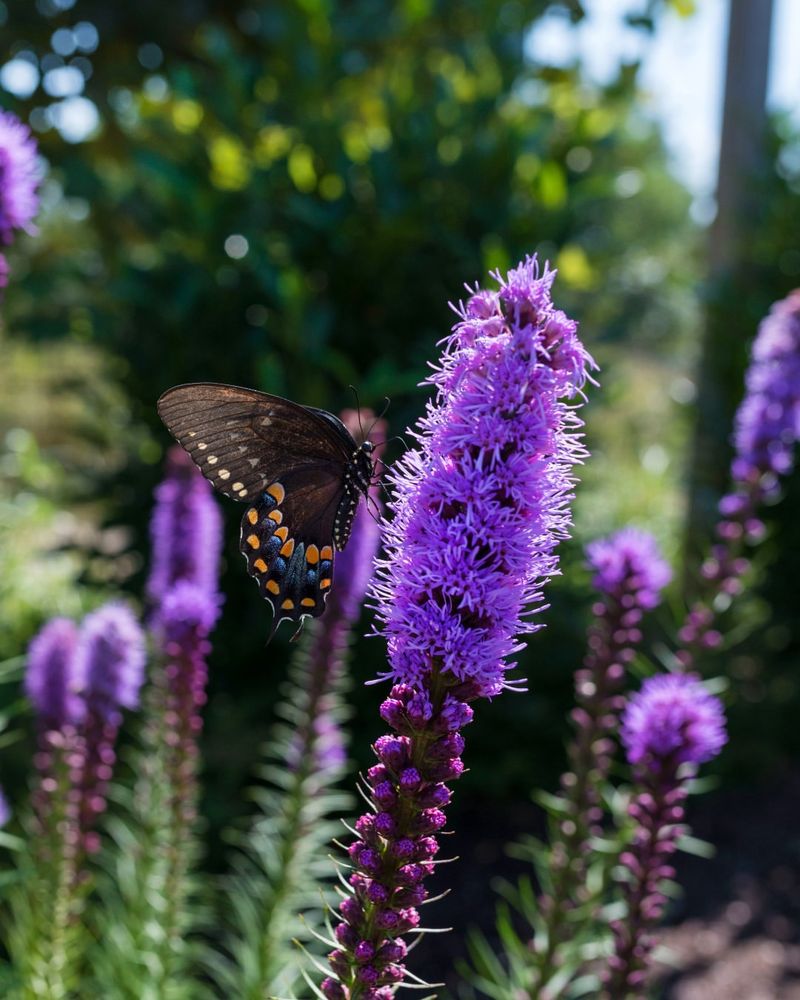
Purple bottlebrush flower spikes stand at attention during mid to late summer. Eastern blazing star blooms from July through September with unique beauty. Flowers open from top to bottom, unlike most spike-forming perennials.
Butterflies swarm these blooms throughout the flowering period. Bees work flowers constantly, gathering abundant nectar and pollen. This pollinator magnet quality makes gardens feel alive with activity.
Height reaches two to four feet depending on variety. Upright stems rarely need staking even during storms. The vertical form creates wonderful exclamation points in borders.
Full sun and well-drained soil produce the best results. Clay soils work fine if drainage improves with amendments. Sandy or loamy soils suit blazing star perfectly.
Drought tolerance ranks high once deep roots establish. These perennials handle dry spells better than many natives. Occasional deep watering during extended droughts helps maintain vigor.
Grass-like foliage forms attractive clumps at plant bases. Leaves remain tidy throughout the growing season. This neat habit makes blazing star easy to incorporate into formal or informal designs.
Corms multiply slowly underground, forming fuller clumps over time. Dividing every four to five years maintains vigor. Spring division works better than fall in Michigan’s climate.
Pairing blazing star with black-eyed susans creates stunning contrasts. Purple coneflowers and ornamental grasses make excellent companions. These combinations mirror natural prairie plant communities beautifully.
Cut flowers last well in arrangements, adding vertical interest. Harvest when bottom flowers just begin opening. Fresh water and flower food extend vase life considerably.
12. Virginia Bluebells (Mertensia Virginica)
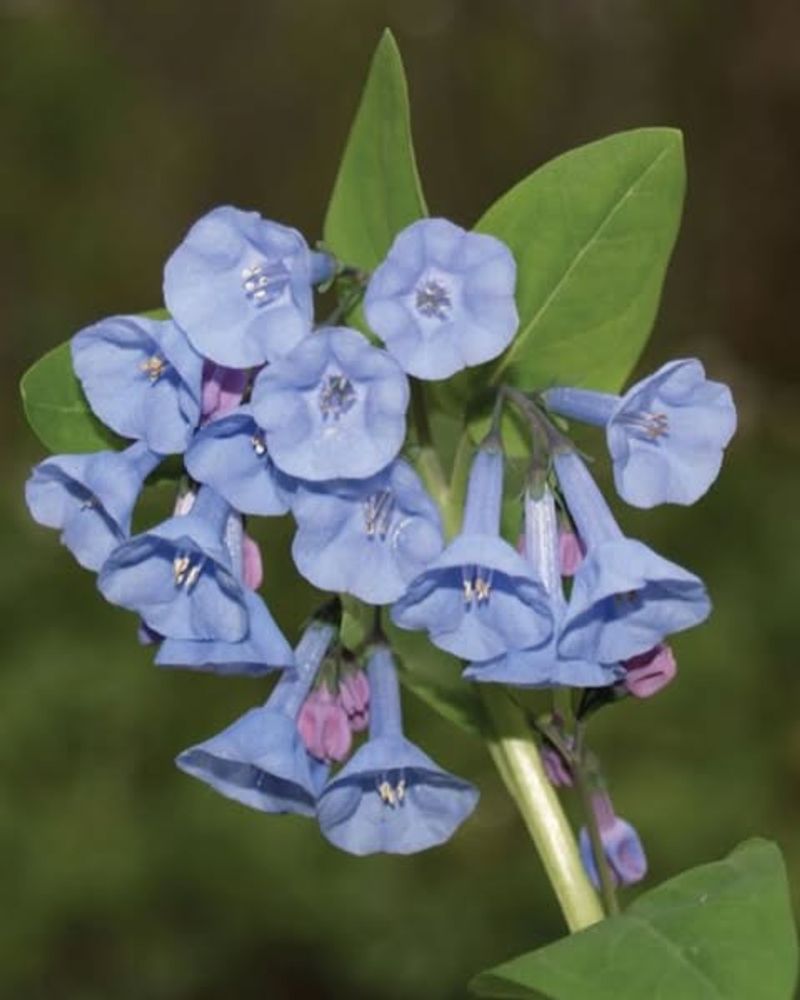
Pink buds unfurl into sky-blue bells during early spring magic. Virginia bluebells bloom from April through May before trees leaf out. Each flower measures about one inch long, dangling in graceful clusters.
Ephemeral nature means foliage disappears completely by midsummer. Plants go dormant after setting seed, leaving no trace above ground. This disappearing act allows interplanting with later-emerging perennials.
Shade-loving character makes Virginia bluebells perfect for woodland gardens. They naturalize beautifully under deciduous trees. Spring sunlight reaches them before tree canopies fill in.
Moist, rich soil produces the healthiest colonies with most flowers. Adding compost improves clay soils and increases organic matter. Well-drained conditions prevent bulb rot during dormancy.
Height reaches only one to two feet during active growth. The mounding form creates soft, informal effects. Plants look best in groups rather than solitary specimens.
Self-seeding produces expanding colonies in favorable conditions. Seedlings take several years to reach blooming size. Patience rewards gardeners with ever-larger spring displays.
Marking plant locations prevents accidental digging during dormancy. Small stakes or labels remind gardeners where bluebells sleep. This simple step prevents disturbing underground parts.
Pairing Virginia bluebells with ferns creates perfect partnerships. Hostas emerge just as bluebells fade, filling spaces seamlessly. Wild ginger and foamflower make excellent groundcover companions.
Dividing clumps proves difficult due to fragile roots. Plants resent disturbance and may take years recovering. Allowing natural self-seeding works better than forced propagation.