The 9 Best California Shrubs To Plant Before Spring Heat Arrives
Late winter in California is a golden window for planting shrubs. The soil is cool, seasonal rains help roots settle in, and plants get a head start before intense spring heat arrives.
Choose the right shrubs now, and they establish faster, need less water later, and stay stronger through the dry months ahead.
The best picks are not just tough, they also bring structure, color, fragrance, and life to your garden year round.
Some attract pollinators, some handle drought with ease, and others simply make your landscape look fuller and more balanced.
Planting before temperatures climb gives your shrubs the smoothest transition into the growing season and sets them up for long term success.
1. Red Flowering Currant (Ribes sanguineum)
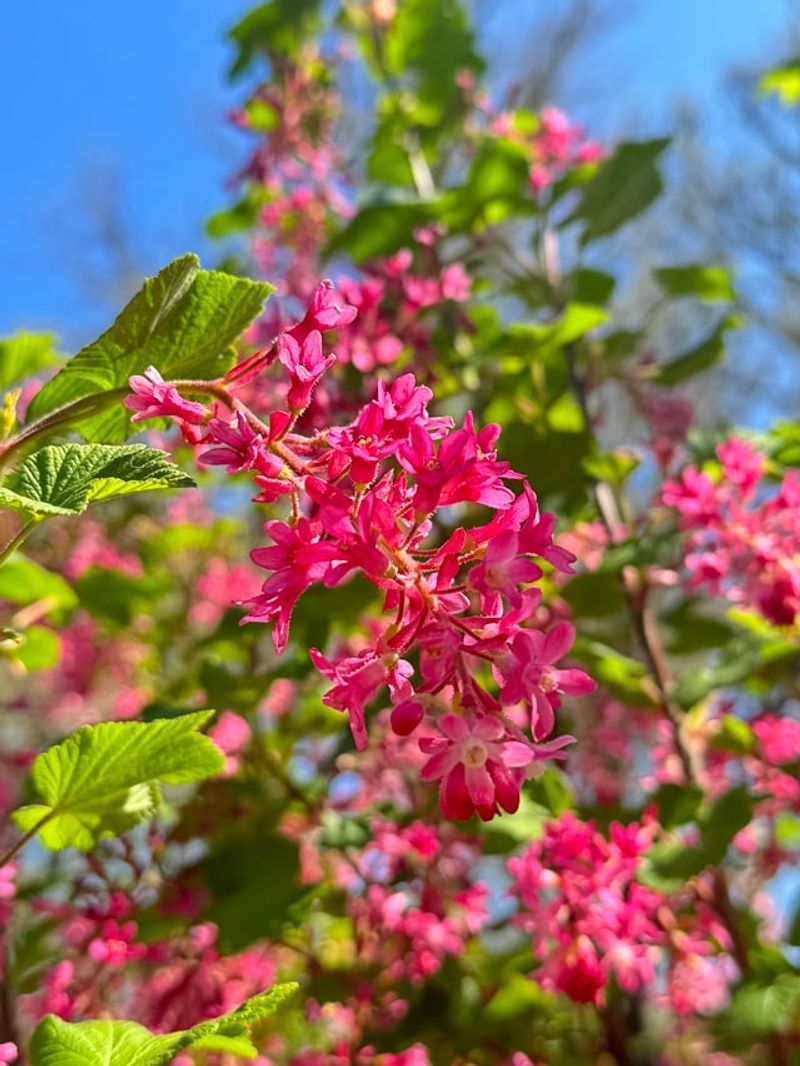
Late winter planting gives this Pacific Northwest native a head start before California’s dry season kicks in.
Red flowering currant bursts into bloom with dangling clusters of rose-pink flowers that hummingbirds can’t resist, often appearing before many other shrubs wake up for the season.
Plant it in partial shade to full sun, though coastal gardeners will see the best performance with morning sun and afternoon protection. Inland yards benefit from dappled shade during the hottest part of the day.
Well-draining soil is essential, as this shrub won’t tolerate soggy roots even during establishment.
Water deeply twice a week for the first two months, then taper to weekly as roots spread. By summer, you’ll only need occasional deep watering.
The shrub grows four to eight feet tall with an equally wide spread, creating a natural privacy screen or backdrop for smaller perennials.
Maintenance stays minimal once established. Prune lightly after flowering to shape if needed, but this currant naturally forms an attractive rounded shape.
Blue-black berries follow the flowers, attracting songbirds throughout late spring and early summer. Deer usually leave it alone, making it ideal for foothill properties where browsing pressure runs high.
2. Sticky Monkey Flower (Diplacus aurantiacus)
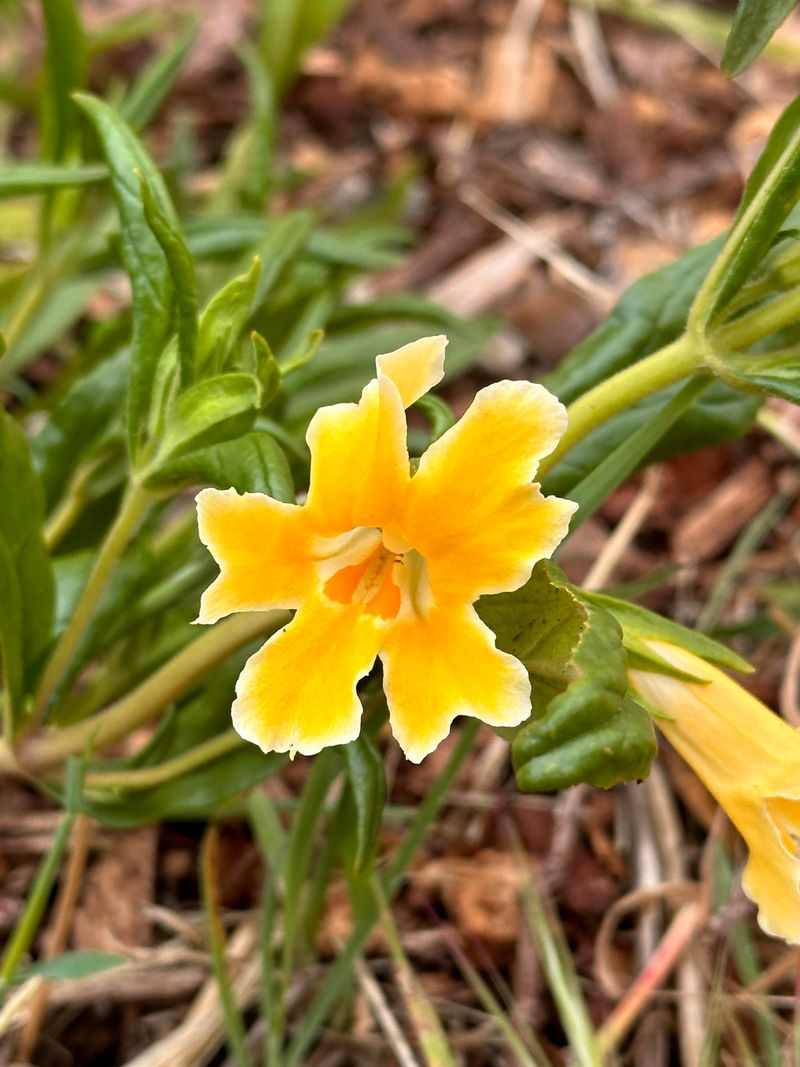
If your yard bakes in full sun and you’re tired of watching thirsty plants struggle, this California native offers a heat-loving solution.
Sticky monkey flower thrives in conditions that stress out most shrubs, producing cheerful orange blooms from spring through fall once it settles in.
Planting before spring heat allows roots to establish while moisture lingers in the soil. This shrub adapts to coastal and inland climates equally well, handling clay, sand, or rocky ground without complaint.
It naturally grows two to four feet tall and wide, perfect for slopes, hellstrips, or any spot where irrigation stays limited.
Water twice weekly for the first six weeks, then cut back to once weekly until summer arrives. After that first year, rainfall alone usually sustains it in most California regions.
The sticky, resinous leaves give off a pleasant scent when brushed and discourage deer from nibbling.
Hummingbirds visit constantly during bloom periods, making this shrub a wildlife magnet. Spent flowers don’t need deadheading, though you can shear lightly in late fall to maintain compact shape.
Avoid overwatering or rich soil, which causes leggy growth and reduces flower production. This tough performer rewards neglect better than attention.
3. Baja Fairy Duster (Calliandra californica)
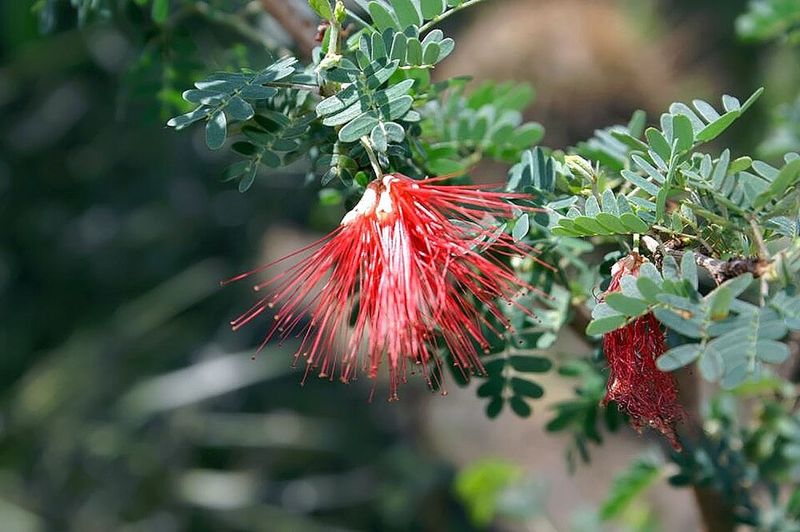
Desert-adapted shrubs often surprise California gardeners with their ability to handle both coastal and inland conditions.
Baja fairy duster brings an exotic look to drought-tolerant landscapes, with red powder-puff flowers that seem to float above delicate, fern-like foliage throughout the warm months.
Early planting before heat arrives gives this shrub time to develop the deep root system it needs for summer resilience. It performs best in full sun with fast-draining soil, making it ideal for sandy or decomposed granite gardens.
Expect three to five feet in height and width, with an informal, slightly sprawling habit that softens hardscape edges beautifully.
Water deeply every five days for the first two months, gradually extending to every ten days as roots establish. By the second year, monthly deep watering sustains it through summer, with no supplemental water needed during winter.
The fine-textured leaves create interesting contrast against bold architectural plants.
Hummingbirds and butterflies visit regularly, drawn by the nectar-rich blooms that appear in waves from late spring through October. Frost can damage tender growth, but established plants rebound quickly from their woody base.
Prune lightly in early spring to remove any frost-damaged tips and encourage bushy growth. This shrub rarely suffers from pests or diseases.
4. Sugar Bush (Rhus ovata)
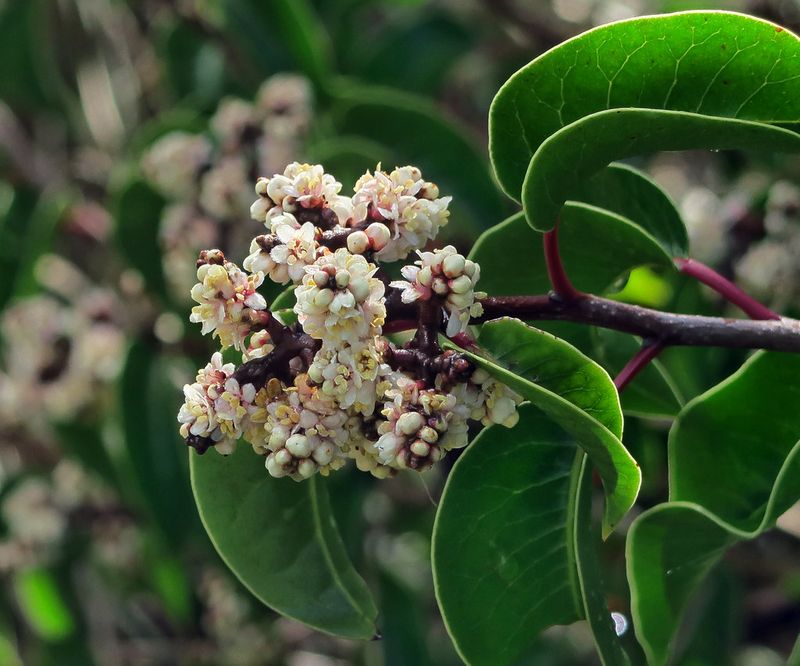
Homeowners looking for substantial screening without constant maintenance often overlook this California workhorse.
Sugar bush grows into a dense, evergreen shrub that can reach eight to fifteen feet tall, offering year-round privacy while handling drought, poor soil, and neglect with remarkable grace.
Planting before spring heat allows this slow-to-moderate grower to establish a strong foundation before summer stress arrives. It adapts to coastal and inland climates, tolerating clay or rocky soil that frustrates other plants.
Full sun to partial shade works equally well, though inland gardens benefit from afternoon shade during the establishment period.
Water twice weekly for the first three months, then reduce to weekly through the first summer.
By the second year, monthly deep watering during dry months keeps it looking good, though established plants survive on rainfall alone in many California regions.
The leathery, oval leaves remain attractive year-round, turning slightly bronzy in cold weather.
Clusters of small white-pink flowers appear in spring, followed by sticky red fruits that birds eagerly consume. Bees visit the flowers enthusiastically, making this shrub valuable for pollinator support.
Deer avoid it, and pests rarely cause problems. Prune only to shape or control size, as this shrub naturally forms an attractive rounded silhouette that improves with age.
5. Chaparral Currant (Ribes malvaceum)
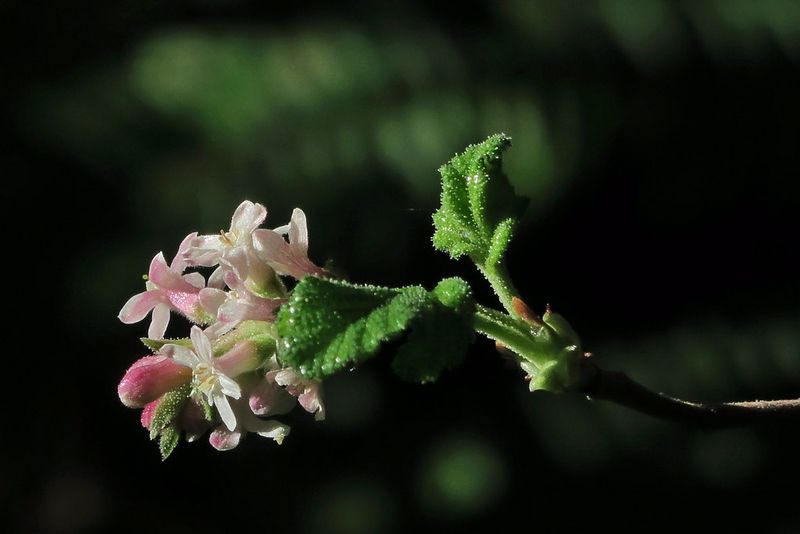
Winter-blooming shrubs offer something special to California gardens, providing color when most plants rest dormant.
Chaparral currant breaks the winter silence with hanging clusters of pink flowers that appear from December through March, depending on your microclimate and the year’s weather patterns.
Early planting ensures roots establish before the shrub puts energy into its next bloom cycle. This California native prefers partial shade, especially in inland areas where afternoon sun can stress it during summer.
Coastal gardens can provide more sun exposure without problems. It grows four to six feet tall and wide, fitting nicely under oak canopies or in woodland garden settings.
Water twice weekly for the first eight weeks, then transition to weekly watering through the first dry season. Established plants need only occasional summer water in most regions, thriving on natural rainfall during winter months.
The foliage has a pleasant fragrance when brushed, and the rounded leaves create a soft texture in the landscape.
Hummingbirds depend on these early blooms when few other nectar sources exist, making this shrub ecologically valuable beyond its ornamental appeal. Small purple berries follow flowers, attracting songbirds.
Deer typically avoid it, and maintenance stays minimal. Prune lightly after flowering if needed to control size, but avoid heavy cutting that removes next season’s flower buds.
6. Golden Currant (Ribes aureum)
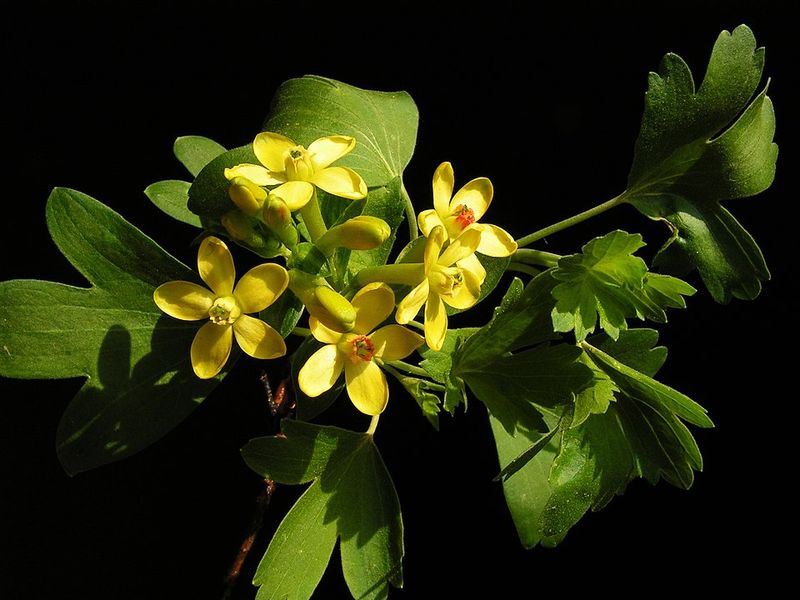
Fragrance often gets overlooked when selecting shrubs, but this native brings powerfully sweet scent to spring gardens.
Golden currant produces bright yellow flowers with a spicy-sweet fragrance that carries across the yard, attracting both human admirers and pollinating insects throughout its bloom period.
Planting before heat allows this adaptable shrub to establish in various California climates, from coastal to inland valleys and even foothill regions. It handles full sun to partial shade, though inland gardeners see better performance with some afternoon protection.
Expect four to six feet in height with a similar spread, creating an informal hedge or mixed border component.
Water deeply twice weekly for the first two months, then reduce to weekly watering as roots spread. By the second year, established plants need only monthly deep watering during summer, with no supplemental irrigation required during winter.
The green foliage often develops attractive red and orange tones in fall before dropping.
Black berries appear after flowering, and while edible for humans, birds usually claim them first. Hummingbirds visit the flowers, and the deciduous nature means winter cleanup stays minimal.
This shrub tolerates heavier soil better than many natives, making it useful in clay-based yards. Prune in late winter before new growth emerges to maintain shape and encourage vigorous flowering.
7. Western Serviceberry (Amelanchier alnifolia)
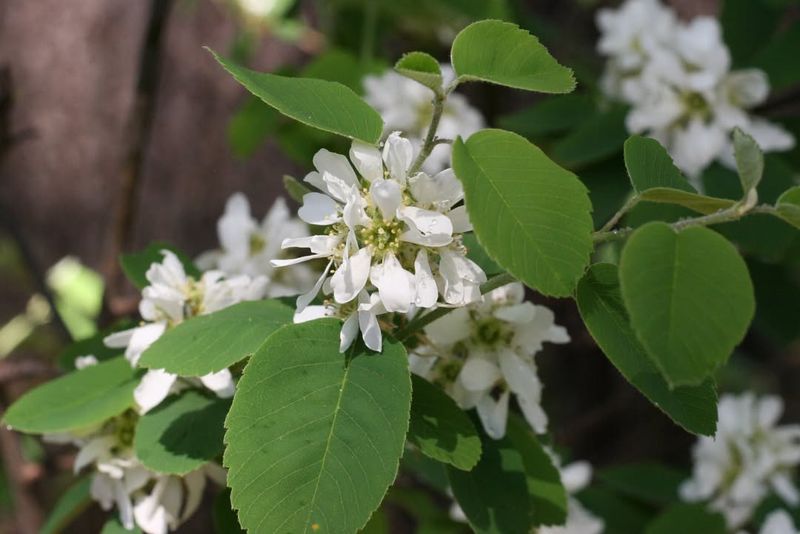
Four-season interest rarely comes from a single shrub, but western serviceberry delivers changing beauty throughout the year.
White flowers blanket the branches in early spring, followed by edible purple berries in summer, then stunning fall color before winter’s bare branches reveal attractive bark structure.
Planting before spring heat gives this shrub time to establish before producing its first significant berry crop. It adapts to various California climates, though it performs best in areas with some winter chill.
Coastal and foothill gardens see excellent results. Partial shade to full sun works well, with inland locations benefiting from afternoon shade.
Expect six to twelve feet in height with a multi-stemmed, upright form.
Water twice weekly for the first three months, then transition to weekly deep watering through the first summer.
Established plants appreciate regular moisture more than many California natives, so monthly deep watering during dry periods keeps them looking their best.
The berries taste sweet when fully ripe, resembling blueberries with an almond-like undertone.
Birds compete with humans for the fruit harvest, and pollinators visit flowers enthusiastically. Fall foliage ranges from yellow to orange-red, depending on growing conditions.
This shrub rarely suffers from serious pests or diseases. Light pruning in late winter maintains shape and removes older canes, promoting vigorous new growth and better flowering.
8. California Fuchsia (Epilobium canum)
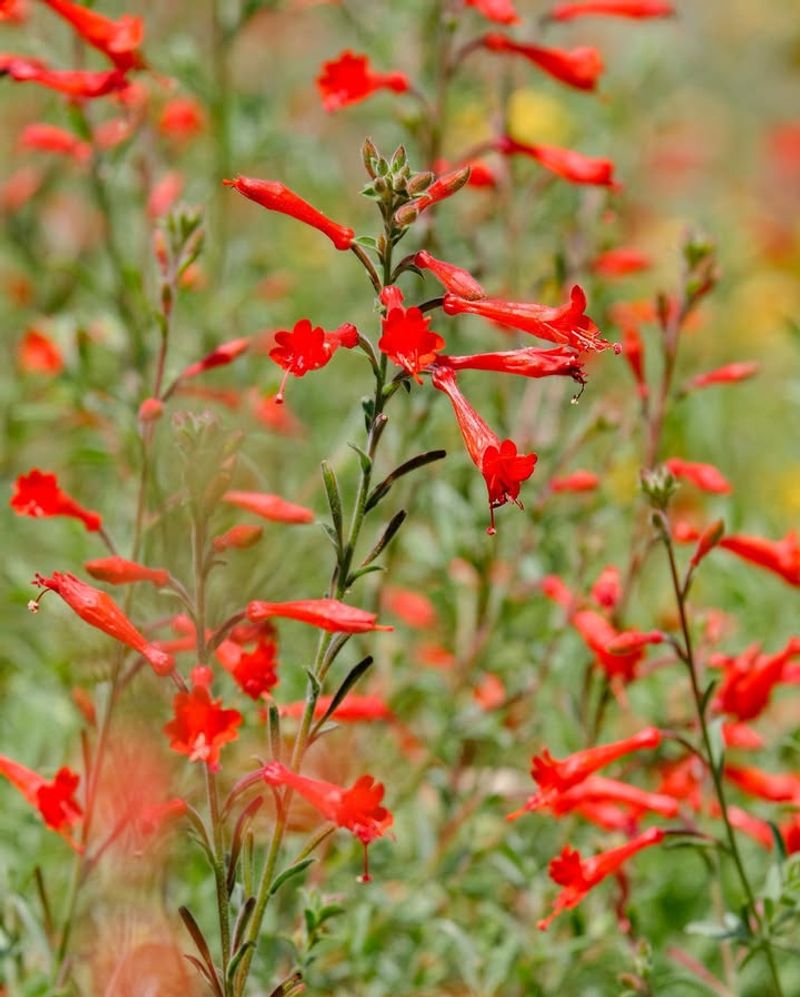
Late summer often leaves California gardens looking tired and colorless, but advance planning changes that outcome.
California fuchsia explodes with brilliant red-orange blooms from August through October, creating a hummingbird feeding station when most other flowers have faded.
Planting before spring heat allows this low-growing shrub to establish roots and spread gradually through its first season. It thrives in full sun with excellent drainage, handling coastal and inland conditions equally well.
Height stays low, usually one to three feet, but it spreads three to four feet wide, making it perfect for slopes, rock gardens, or front-of-border positions.
Water weekly for the first six weeks, then transition to every ten days through the first summer. Once established, this shrub needs minimal supplemental water, often surviving on rainfall alone in many California regions.
The narrow, gray-green leaves stay semi-evergreen in mild winters, going dormant only in colder areas.
Hummingbirds visit constantly during bloom time, and the show continues until frost arrives. This plant spreads by underground rhizomes, so give it room to naturalize or plant it where spreading won’t cause problems.
Shear back by half in late winter to encourage compact growth and abundant flowering. Avoid rich soil and overwatering, which cause leggy growth and reduced blooms.
9. Silk Tassel (Garrya elliptica)
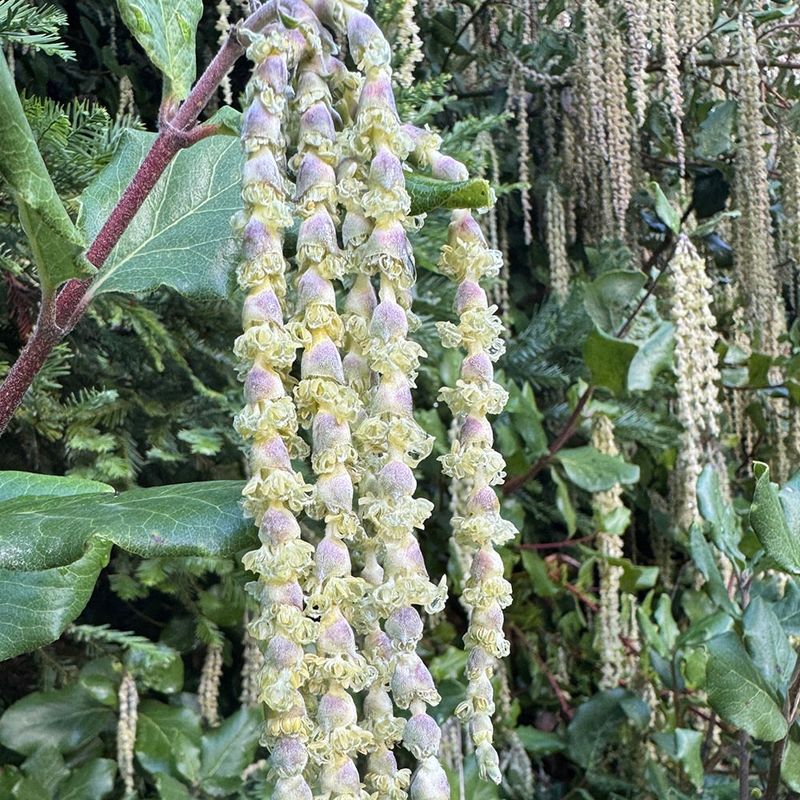
Dramatic winter interest transforms ordinary gardens into conversation pieces, and few shrubs deliver like silk tassel.
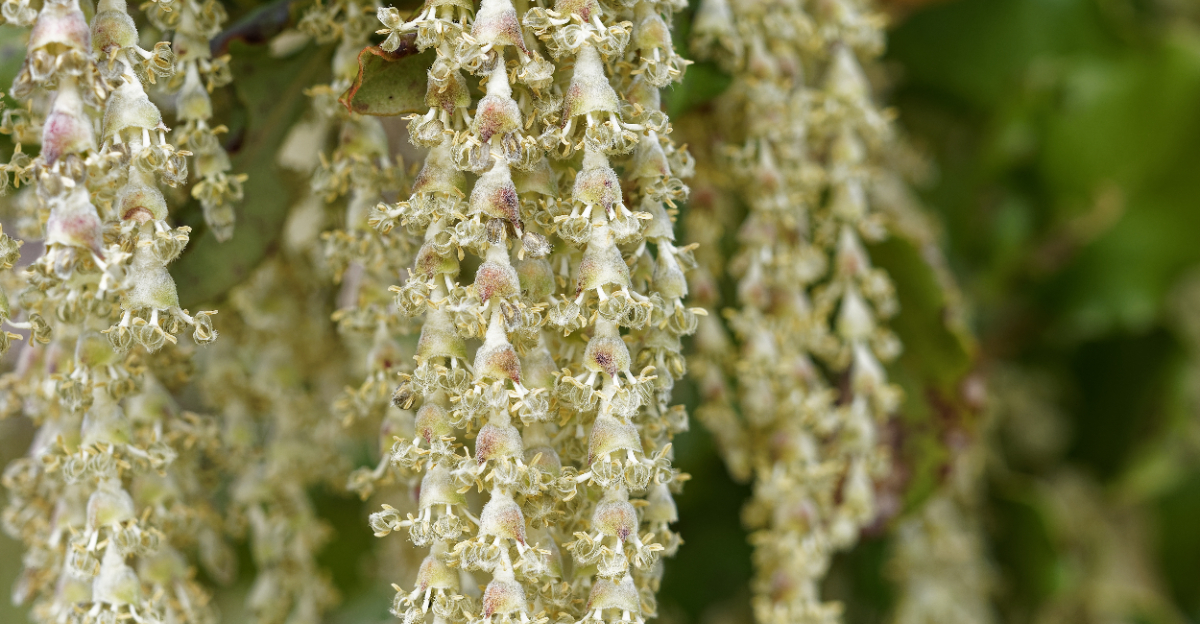
Long, silvery-green catkins dangle from branches throughout winter, creating a unique display that catches attention from across the yard and provides valuable early-season pollen for native bees.
Planting before spring heat gives this substantial evergreen shrub time to establish before putting energy into its next catkin display. It performs best in coastal and near-coastal climates, where cool, moist air keeps foliage looking fresh year-round.
Inland gardens can succeed with afternoon shade and occasional summer water. Expect eight to twelve feet tall and equally wide at maturity, making it suitable for screening or backdrop use.
Water twice weekly for the first three months, then reduce to weekly through the first summer. Established plants need only occasional deep watering during extended dry periods in most coastal areas, though inland gardens benefit from monthly irrigation.
The leathery, wavy-edged leaves remain attractive year-round, with silvery undersides that shimmer in the breeze.
Male plants produce the longest, most dramatic catkins, sometimes reaching eight to ten inches. Female plants produce shorter catkins followed by purple fruits that birds enjoy.
Deer usually avoid it, and pests rarely cause problems. Prune only to shape or control size, as heavy pruning removes next season’s catkin display.