The Best Companion Plants For Tomatoes In California Gardens
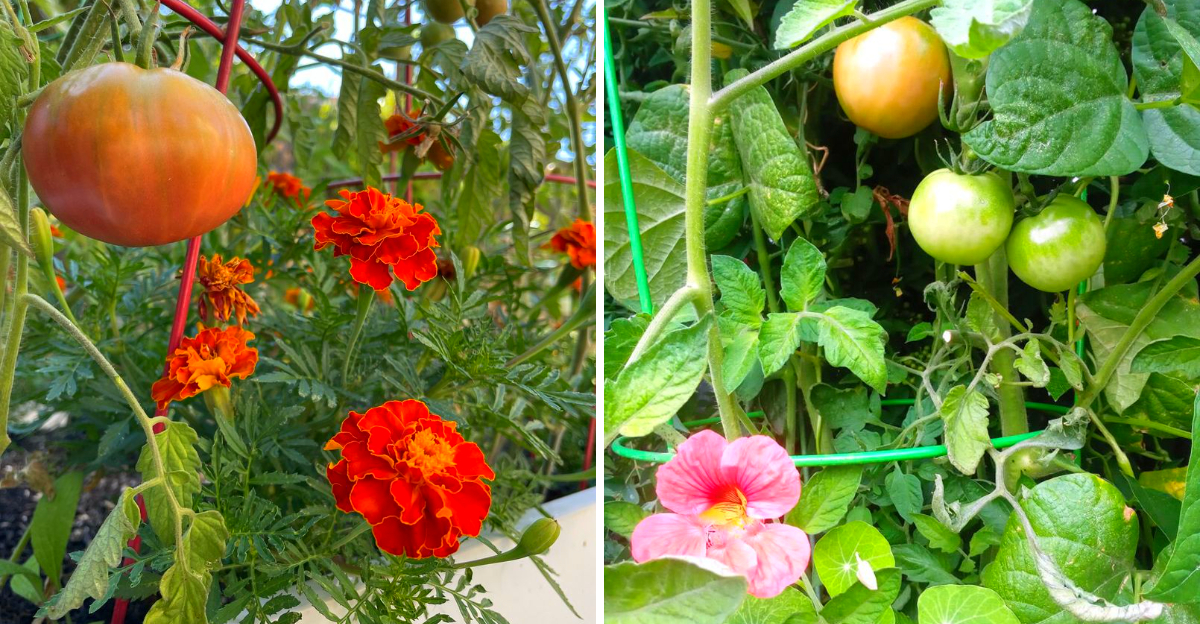
Tomatoes can thrive in California, yet some gardens seem to produce effortlessly while others struggle to keep up. That difference often comes down to what is planted nearby.
With long, sunny summers and an extended growing season, California offers ideal conditions, but heat, shifting moisture, and pest pressure can still challenge even healthy plants.
Companion planting helps balance those factors.
By choosing the right neighbors, gardeners can support pollinators, bring in beneficial insects, and use space more efficiently.
A few thoughtful pairings can make tomato plants feel more supported and productive throughout the season.
1. Basil Attracts Pollinators And Grows Well With Tomatoes
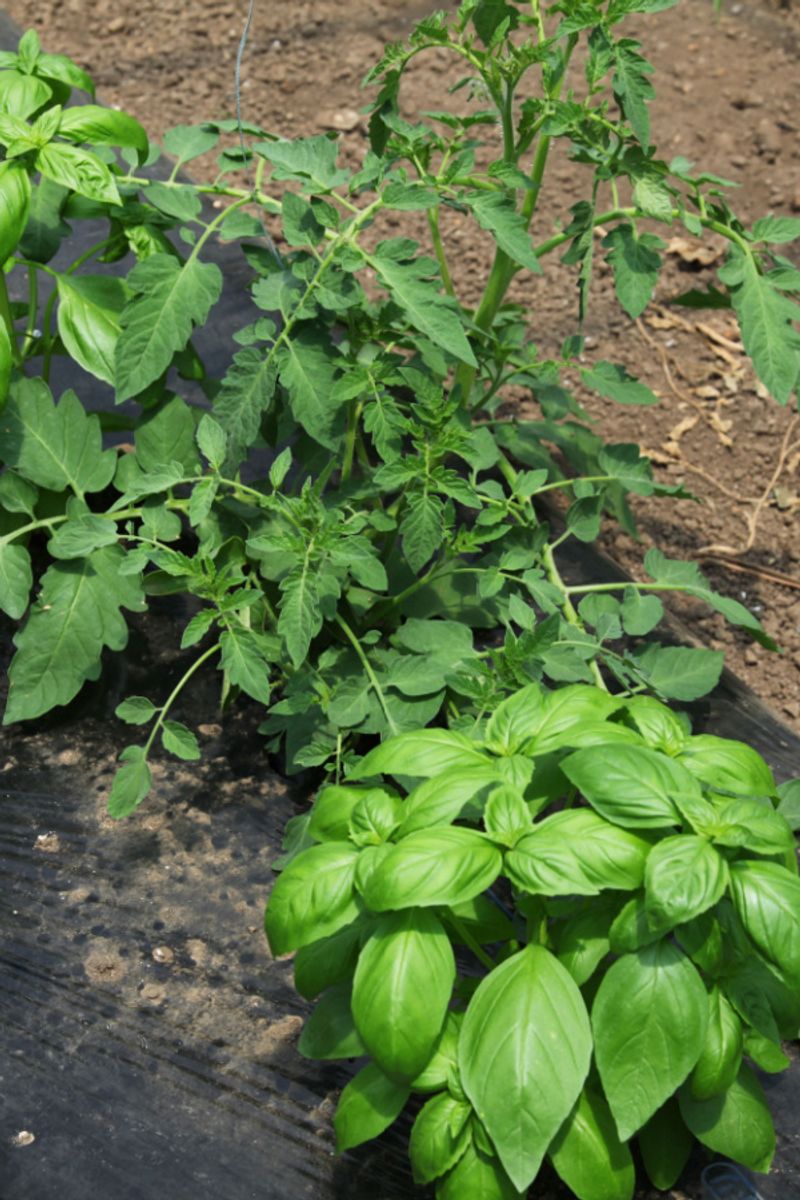
Few plants feel more at home in a California summer garden than basil, and its relationship with tomatoes goes beyond just sharing a raised bed.
Basil produces a strong, aromatic scent that many gardeners believe helps confuse or discourage pests like aphids, whiteflies, and tomato hornworms.
While the science on flavor enhancement is still debated, the practical benefits of growing basil nearby are hard to ignore.
In California’s warm inland valleys, basil thrives in the same full-sun conditions that tomatoes love. Both plants prefer well-drained soil and regular watering, making them easy to manage side by side.
Spacing basil about 12 to 18 inches from tomato plants gives each enough room to grow without crowding.
Coastal California gardeners sometimes find that basil grows a bit slower in cooler, foggy conditions, but it still performs well once summer temperatures settle in.
When basil flowers, it draws in bees and other pollinators that also visit tomato blossoms, which can support fruit set.
Pinching back flower heads regularly keeps basil producing fresh leaves while maintaining its pest-deterring oils.
For California gardeners looking for a low-effort companion that earns its space in the garden, basil is a reliable and aromatic choice worth planting every season.
2. Marigolds Support Beneficial Insects In Tomato Beds
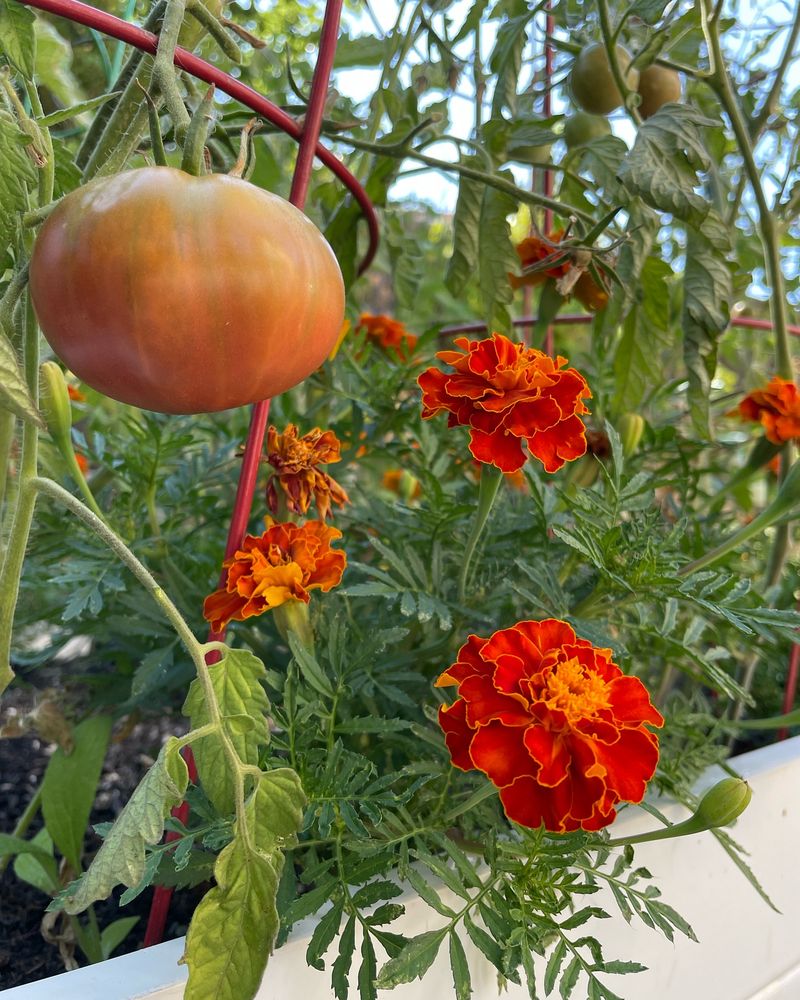
Walk through almost any productive California vegetable garden in summer and you are likely to spot a row of marigolds tucked in near the tomatoes. That is not just a visual choice.
Marigolds release compounds from their roots that can reduce populations of root-knot nematodes, which are microscopic soil pests that cause real problems for tomato plants in California’s sandy and loamy soils.
French marigolds, in particular, have been studied for their nematode-suppressing properties and are a practical option for California gardeners dealing with persistent soil pest issues.
Beyond the soil, marigolds also attract hoverflies, parasitic wasps, and other beneficial insects that help manage soft-bodied pests around tomatoes.
Their bright blooms remain open for long periods through California’s extended warm season, giving beneficial insects a reliable food source.
Planting marigolds at the edges of tomato beds or in between plants works well in most California garden layouts.
They do not require much extra water beyond what tomatoes already receive, which makes them easy to incorporate into drip irrigation setups common in California’s drier regions.
Deadheading spent blooms encourages continuous flowering through the season. For gardens in hotter inland areas, choosing heat-tolerant varieties helps marigolds stay productive even during the warmest stretches of summer.
Your California Garden Changes Every Week. Your Plan Should Too.
Gardening in California changes quickly throughout the season. Every Friday you’ll receive a simple weekly plan showing exactly what to plant, prune, fertilize, harvest, and protect so you never miss the right timing.
3. Sweet Alyssum Draws Aphid Eating Hoverflies
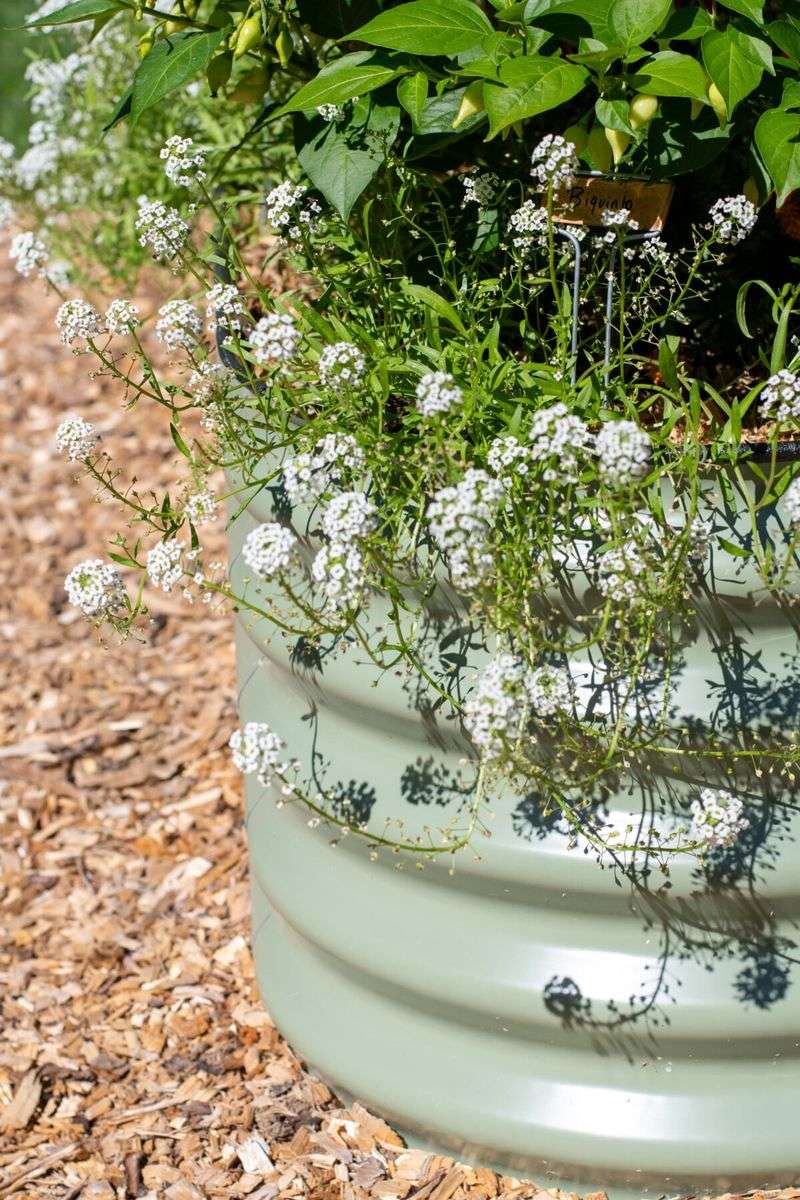
Aphid pressure in California tomato gardens tends to spike during warm, dry spells, and sweet alyssum is one of the most effective low-growing plants for drawing in the insects that naturally keep aphid numbers in check.
Hoverflies, whose larvae feed heavily on aphids, are strongly attracted to the small, nectar-rich flowers that sweet alyssum produces throughout the growing season.
Sweet alyssum grows close to the ground, which makes it a smart choice for filling the space beneath tomato plants without competing for light or root space.
Its dense, spreading habit also helps shade the soil, which can slow moisture evaporation during California’s dry summer months.
In regions like the Central Valley where temperatures climb fast, keeping soil moisture more stable around tomato roots is genuinely useful.
This plant is easy to start from seed and can be scattered around tomato beds in early spring before transplants go in.
It tolerates both coastal and inland California conditions reasonably well, though it may slow down during peak summer heat and then bounce back as temperatures ease in late summer.
Sweet alyssum also reseeds itself in many California gardens, meaning it may return on its own the following year with little effort.
Its honey-scented blooms add a pleasant sensory layer to the garden while doing real work attracting beneficial insects.
4. Lettuce Shades Soil And Fills Space
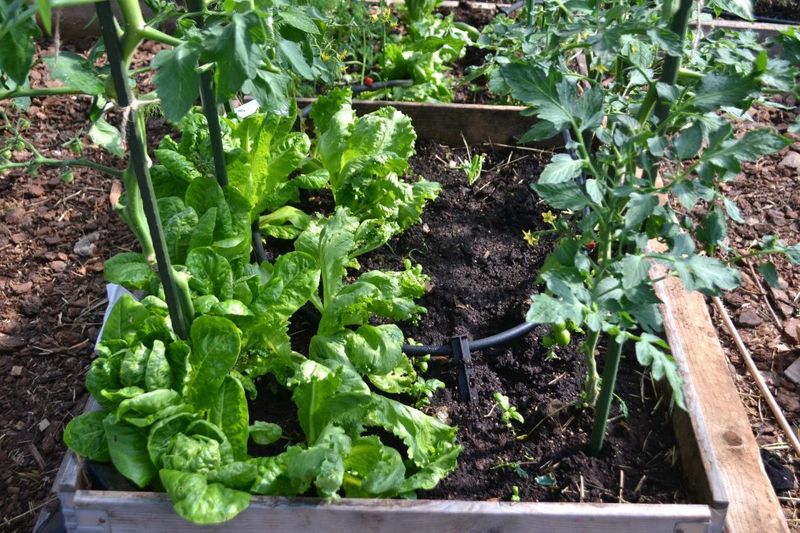
Space in a California backyard garden can feel limited, especially when tomato plants start spreading out and leaving bare soil exposed between rows.
Lettuce fits neatly into those gaps, using the partial shade cast by tomato foliage to stay cooler and last longer into the warm season than it would in an open, fully exposed bed.
Lettuce has shallow roots that do not compete heavily with deeper-rooted tomato plants, which makes the pairing practical from a soil resource standpoint.
As a ground-level plant, lettuce also helps reduce soil splash during irrigation, which can limit the spread of some soil-borne fungal issues that occasionally affect tomatoes in wetter parts of California.
Keeping the soil surface covered also helps hold in moisture between waterings.
In coastal California, where summer temperatures stay mild, lettuce can grow alongside tomatoes for much of the season without bolting quickly.
Inland gardeners may find that lettuce needs more shade protection once temperatures push into the high 80s, and positioning it on the north or east side of tomato plants can help extend its productive period.
Loose-leaf varieties tend to hold up better in warm conditions than heading types. Harvesting outer leaves regularly keeps plants producing longer and prevents overcrowding near the base of tomato plants.
5. Chives Help Reduce Minor Pest Pressure
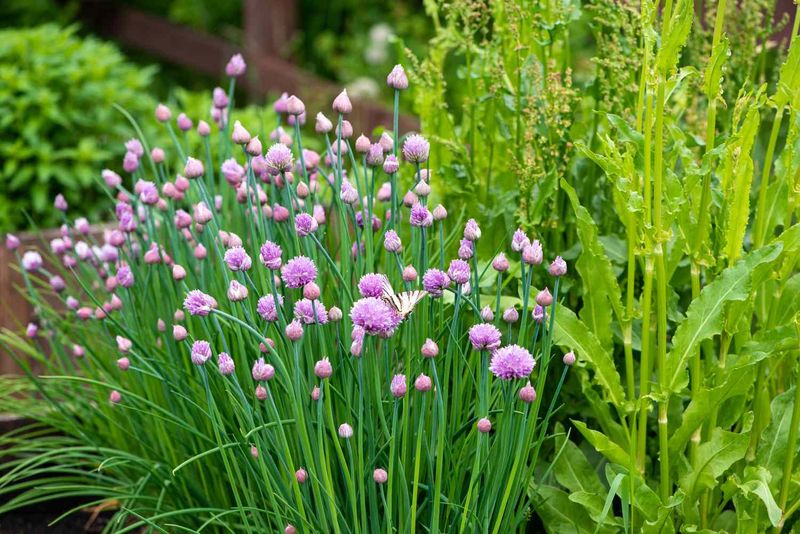
Chives belong to the allium family, and like their relatives garlic and onions, they produce sulfur-based compounds that many gardeners find useful for discouraging soft-bodied pests around tomatoes.
Aphids and spider mites, both of which can show up in California gardens during hot, dry stretches, seem less drawn to areas where chives are growing nearby.
One practical advantage of chives is how little space and attention they require. Once established in a California garden bed, chives come back reliably each year and spread slowly into tidy clumps that can be divided and replanted.
They work well tucked along the edges of tomato beds or planted in clusters near the base of tomato cages, where they stay out of the way without being neglected.
When chives flower, their round purple blooms attract bees and other pollinators that also visit tomato flowers, adding another layer of benefit to the pairing.
The flowering period in California typically falls in late spring to early summer, which lines up well with early tomato bloom times.
Cutting back the flower stalks after blooming encourages fresh foliage growth and keeps plants looking tidy.
Chive leaves are also edible and useful in the kitchen, so gardeners get a practical harvest alongside the pest-management support these compact plants offer through the season.
6. Garlic Adds A Strong Scent To Tomato Beds
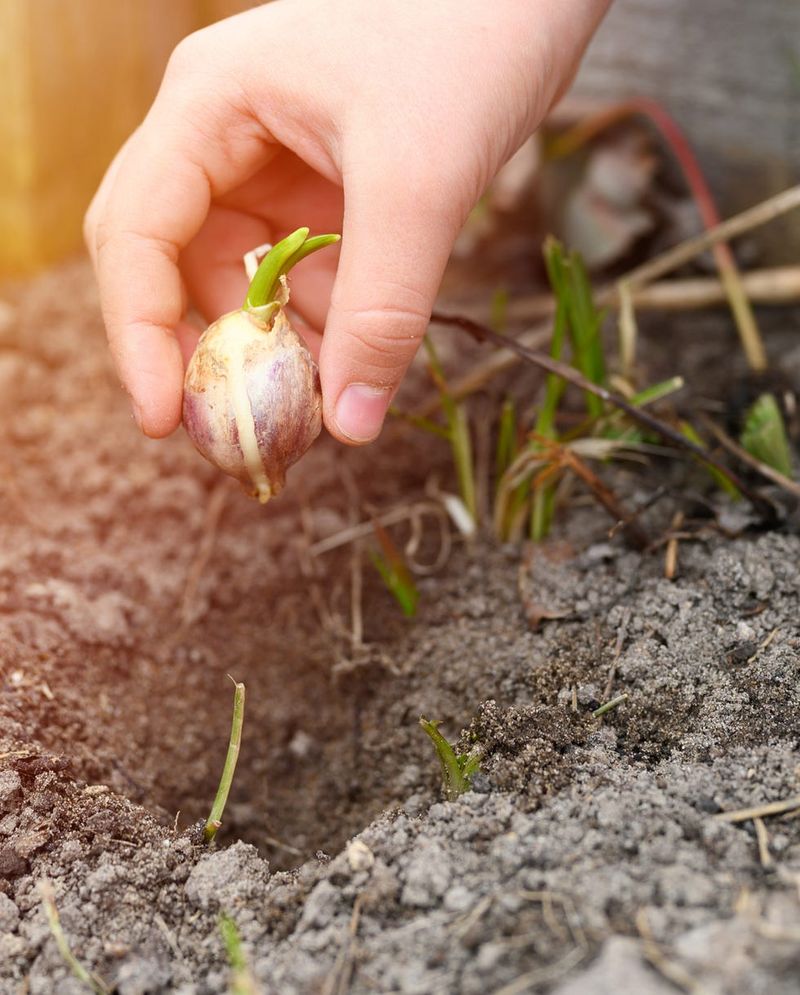
Garlic has been planted alongside vegetables for generations, and in California gardens, it earns its spot near tomatoes through a combination of scent, soil chemistry, and timing.
The sulfur compounds garlic releases into the surrounding air and soil are believed to discourage pests like aphids and spider mites, both of which can become problematic during California’s warm, dry summers.
Beyond pest deterrence, garlic has antifungal properties that may offer some protection against soil-borne issues that occasionally affect tomato roots.
California’s Mediterranean-style climate, with dry summers and mild winters, can create conditions where certain fungal problems persist in garden soil.
Garlic planted nearby may contribute to a slightly less hospitable environment for some of these issues, though it works best as part of a broader soil health strategy.
Garlic is typically planted in California during fall or early winter, which means it is already growing and establishing by the time tomato transplants go into the ground in spring.
This timing works naturally for companion planting, as garlic does not need to be replanted specifically around tomatoes.
Hardneck and softneck varieties both perform well in California, with coastal gardeners often favoring softneck types.
Garlic does not take up much horizontal space, so it fits comfortably between tomato plants without crowding, and the harvest comes in late spring or early summer before tomatoes hit peak production.
7. Onions Fit Easily Around Tomato Plants
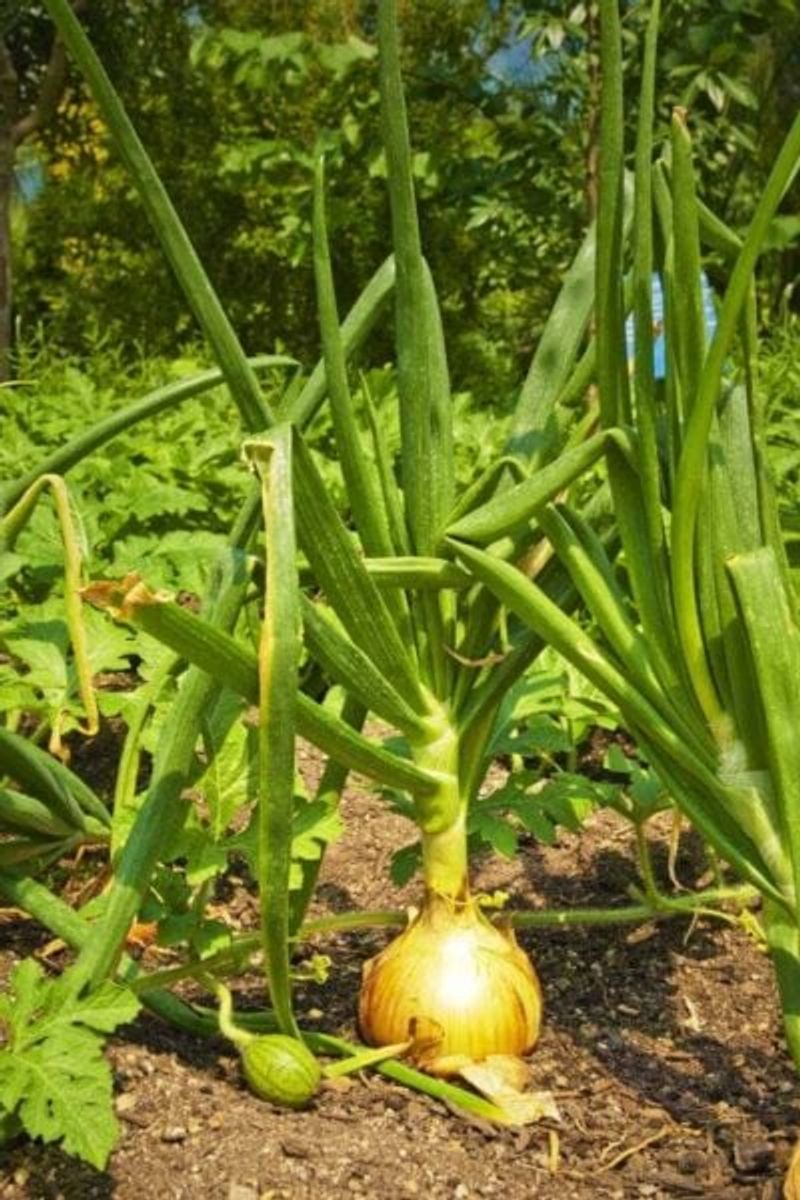
Onions are one of the most adaptable vegetables grown in California, and their compact growth habit makes them a natural fit for slipping into the spaces between tomato plants.
Like other alliums, onions produce sulfur compounds that are thought to discourage certain pests from settling in around tomatoes, including aphids and some species of thrips that occasionally show up in California summer gardens.
Green onions and bunching onion varieties are especially well-suited for companion planting because they stay narrow and upright, taking up very little horizontal space.
They can be planted in a ring around individual tomato plants or in short rows between larger tomato plants in a raised bed.
Their shallow root systems do not interfere with the deeper roots that tomatoes develop as the season progresses.
California gardeners in warmer inland regions may find that onions planted in spring can be harvested as green onions well before the summer heat peaks, clearing space just as tomatoes start spreading out.
In milder coastal areas, onions can remain in the ground longer without bolting, extending their presence as a companion through more of the tomato season.
Watering needs for onions and tomatoes are similar enough that managing both on the same drip irrigation schedule is practical. Onions also require minimal fertilization, which keeps them from drawing nutrients away from nearby tomato plants.
8. Nasturtiums Trap Common Garden Pests
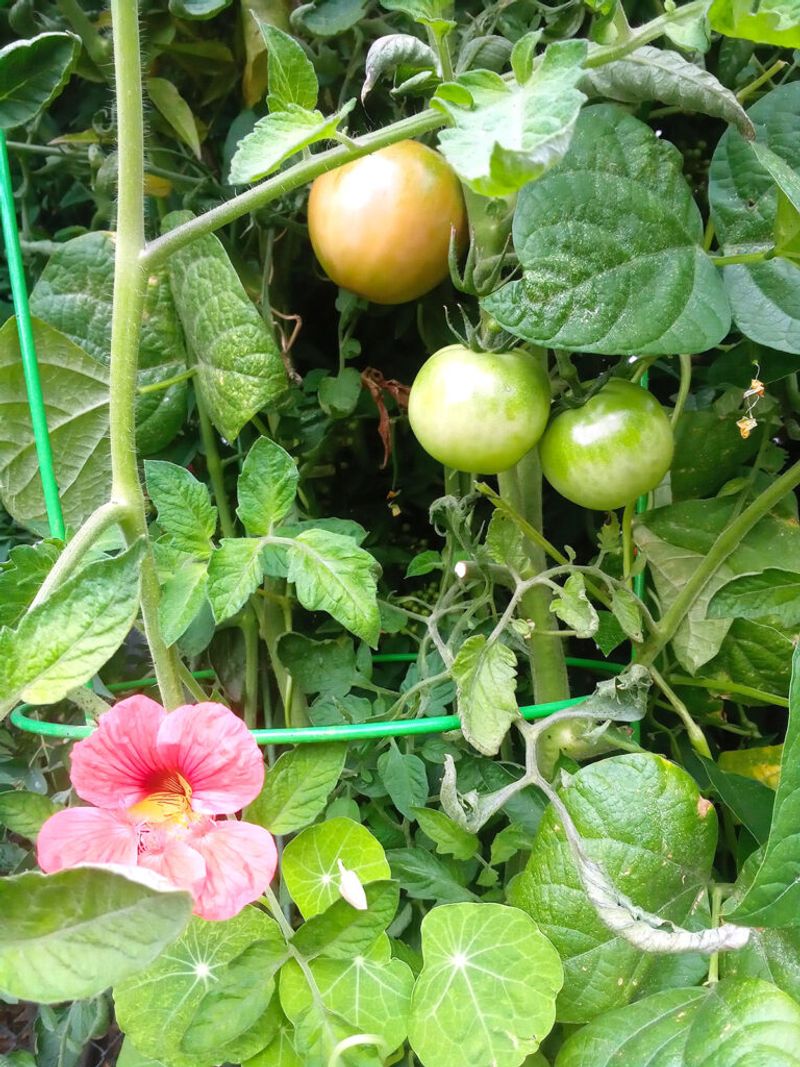
Aphids have a way of finding tomato plants in California gardens, especially during the warm, dry months when populations can build up fast.
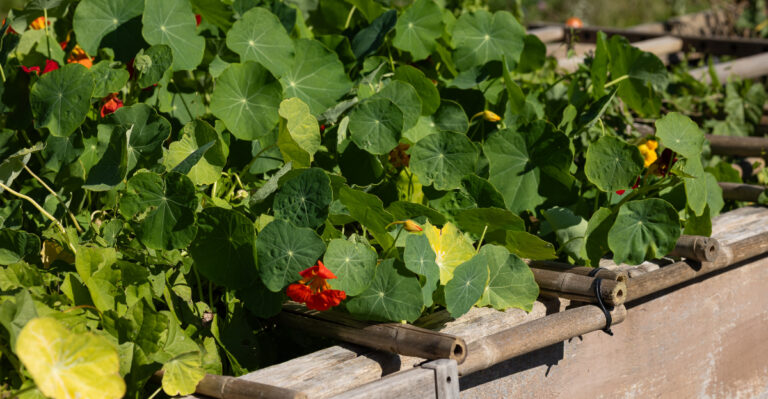
Nasturtiums are well known among experienced gardeners as a trap crop, meaning they tend to attract aphids so strongly that the pests cluster on nasturtium leaves and stems instead of moving onto nearby tomatoes.
Planting nasturtiums at the edges of tomato beds takes advantage of this behavior in a practical way.
Nasturtiums are easy to grow from seed, and California’s long warm season gives them plenty of time to establish and flower before summer pest pressure peaks.
They prefer full sun and do not need rich soil, which makes them low-maintenance additions to most California garden setups.
In fact, overly fertile soil tends to push nasturtiums toward more leafy growth and fewer flowers, so they do best in average garden conditions.
The flowers and leaves of nasturtiums are also edible, adding a peppery bite to salads, which gives gardeners an extra reason to grow them beyond pest management.
In warmer inland parts of California, nasturtiums may slow down during the hottest weeks of summer and then rebound in early fall.
Coastal California gardeners often find nasturtiums easier to maintain through the full season due to milder temperatures. Letting a few plants reseed naturally can keep them returning year after year with minimal effort.