The Best Container Plants For California Patios Before Hot Weather Arrives
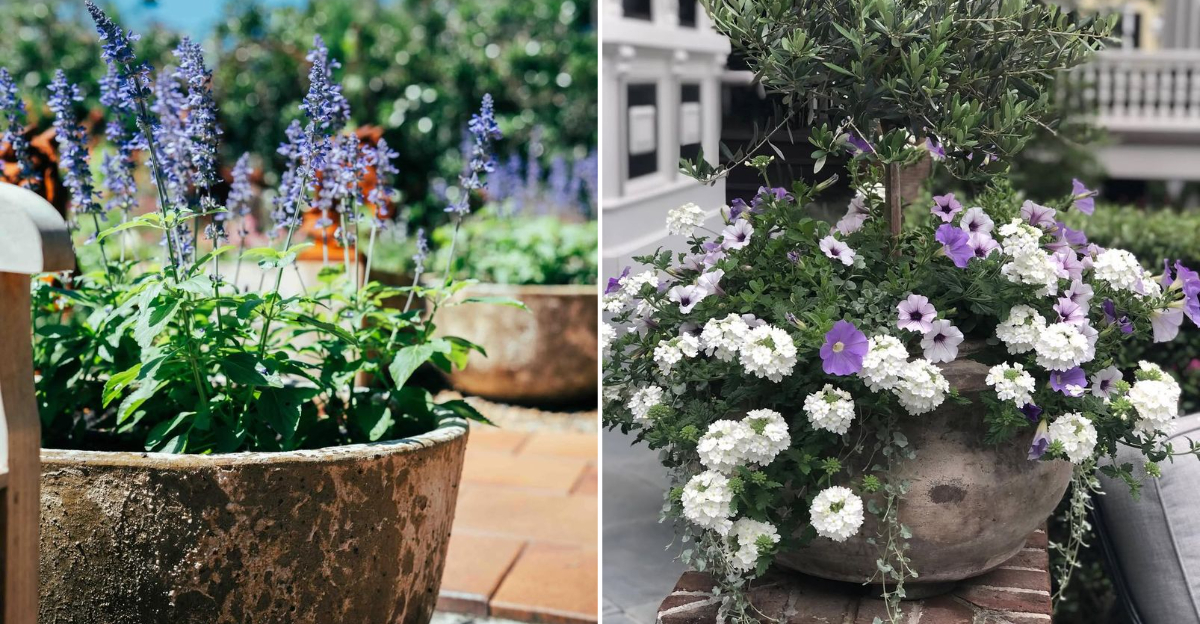
A California patio can go from pleasantly sunny to full-on roasting faster than anyone would like, which is exactly why plant choices matter so much before hot weather shows up.
The best container plants are not just pretty for a few weeks, then dramatically collapse the second summer gets serious.
They need to handle heat, bright light, and the quicker drying that comes with life in a pot, all while still making your patio look inviting and full of color. Luckily, plenty of plants are more than up for the job.
Some bring bold blooms, some add lush texture, and some keep looking polished with surprisingly little fuss.
Getting them planted before the hottest stretch gives roots time to settle in and helps everything start strong.
A few smart picks now can turn a plain patio into a colorful, relaxing outdoor spot that still looks good when the forecast starts feeling a little aggressive.
1. Geranium (Pelargonium)
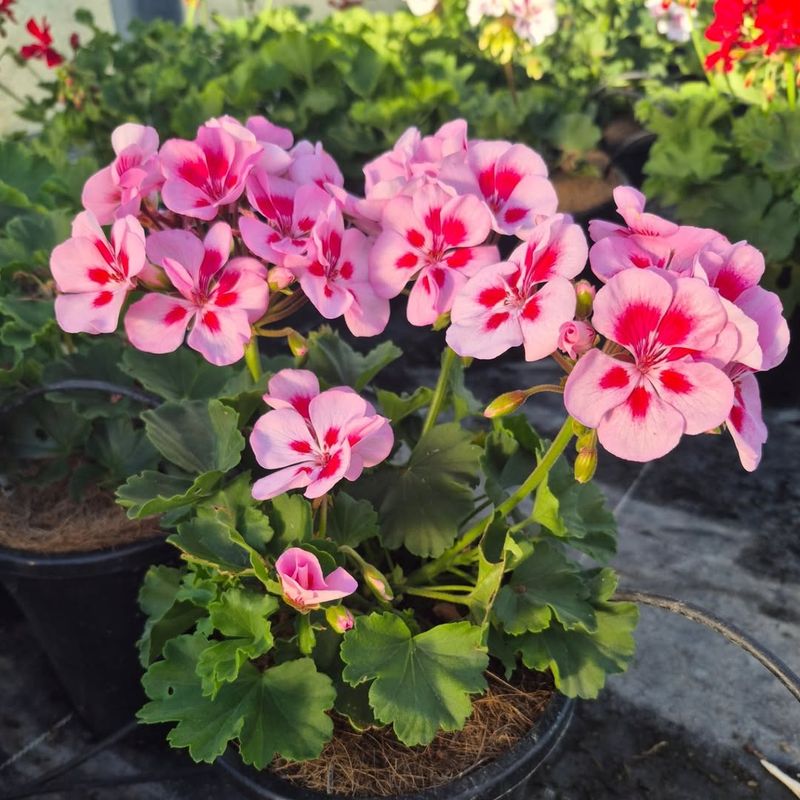
Few plants make a patio pop quite like a geranium. With their bold, round clusters of flowers in shades of red, pink, coral, and white, these plants are hard to miss.
They’re one of the most popular container choices across California, and for good reason.
Geraniums love full sun and handle the heat surprisingly well. They do best in well-draining soil and need regular watering, but they won’t throw a fit if you occasionally forget.
Just avoid letting them sit in soggy soil, which can cause root problems.
One thing many gardeners appreciate is how long geraniums bloom. You can enjoy flowers from spring all the way through fall with minimal effort.
Deadheading spent blooms keeps them looking tidy and encourages fresh flowers to open. They also come in trailing varieties that look stunning in hanging baskets.
If you’re setting up a patio in Southern California or the Sacramento area, geraniums are a fantastic starting point for a colorful container garden.
2. Petunia
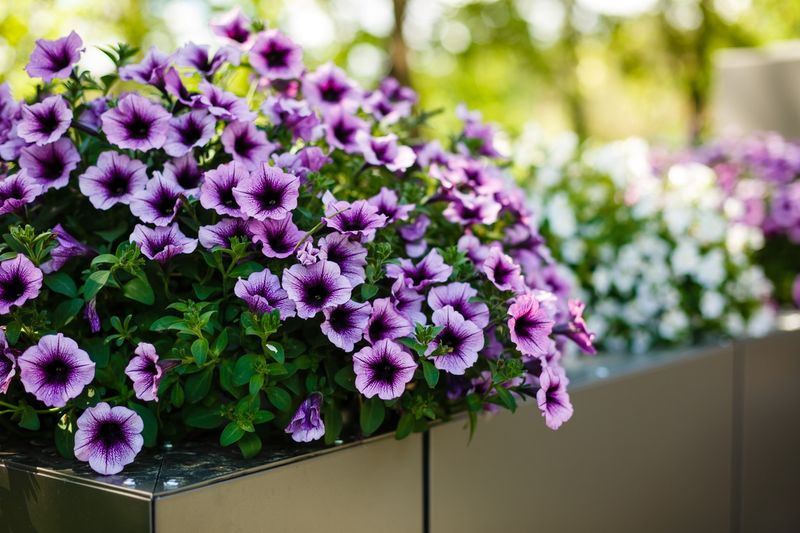
Walk through any California garden center in spring and you’ll see petunias everywhere. They’re cheerful, affordable, and absolutely loaded with blooms.
These plants come in nearly every color imaginable, from deep purple to bright yellow, and they grow beautifully in containers of all sizes.
Petunias thrive in full sun and warm weather, making them a natural fit for California patios. They do appreciate regular watering, especially once temperatures start rising.
A slow-release fertilizer added to the potting mix at planting time helps keep the blooms coming strong throughout the season.
Wave and Supertunia varieties are especially popular because they spread and trail over the edges of pots, creating a lush, full look without much effort. Pinching back leggy stems every few weeks encourages bushier growth and more flowers.
One fun fact: petunias are actually related to tomatoes and peppers, both part of the nightshade family. Whether you’re in a coastal town or an inland California city, petunias are one of the easiest ways to bring serious color to your patio containers before the hot months arrive.
3. Calibrachoa (Million Bells)
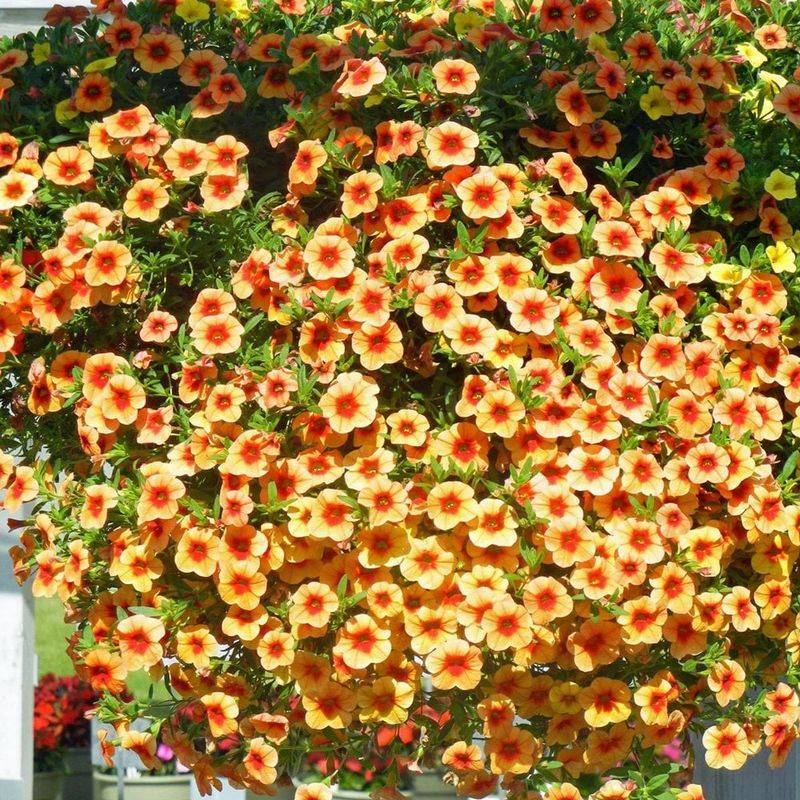
Imagine tiny petunia-like flowers covering an entire plant from top to bottom. That’s calibrachoa, also known as Million Bells, and it earns that nickname every single season.
Each plant produces hundreds of small, bell-shaped blooms that just keep coming without much fuss.
Million Bells are perfect for hanging baskets and window boxes on California patios. They trail beautifully and fill in fast, so your containers look full and lush within weeks of planting.
They love full sun but can handle a bit of afternoon shade in hotter inland areas like Fresno or Riverside.
One important tip: calibrachoa is a heavy feeder. Use a liquid fertilizer every week or two to keep the blooms bright and plentiful.
They also prefer slightly acidic soil, so choosing a quality potting mix designed for flowering annuals makes a real difference. Unlike petunias, they’re self-cleaning, meaning you don’t need to remove old flowers.
The plant does that work on its own. For California gardeners who want maximum color with minimal upkeep, Million Bells delivers a truly impressive show from spring straight through the warm season.
4. Lantana
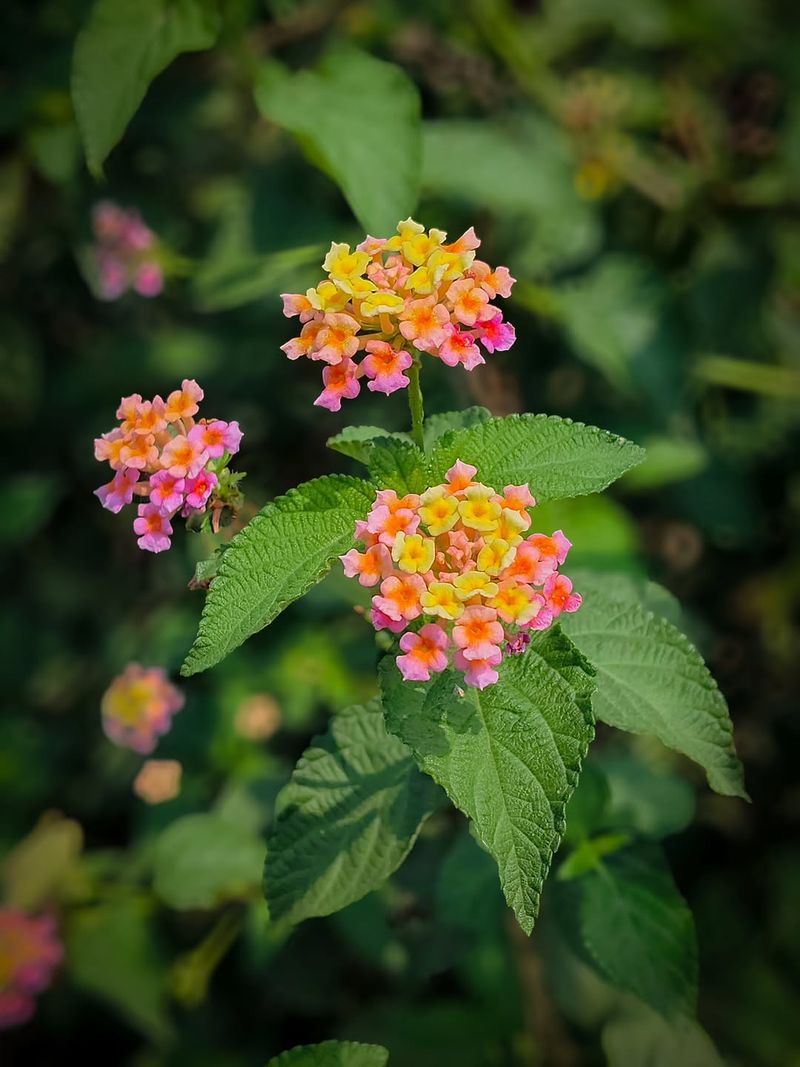
If butterflies could vote for their favorite plant, lantana would win by a landslide. This tough, cheerful shrub produces clusters of tiny flowers in mixed shades of yellow, orange, red, and pink, often all on the same plant.
It’s one of the most heat-tolerant options you can grow in a California container garden.
Lantana thrives in full sun and actually performs better when the weather gets hot. It’s drought-tolerant once established, which makes it a smart pick for gardeners in drier parts of California like the Inland Empire or Central Valley.
Just plant it in a well-draining pot and give it regular water at first while it settles in.
Compact varieties like ‘Bandana’ or ‘Landmark’ are ideal for containers because they stay a manageable size without aggressive pruning. Lantana also attracts hummingbirds, which is always a bonus on a patio.
Keep in mind that the berries are toxic, so it’s good to be aware if you have curious pets or small children around. Overall, lantana is one of the most rewarding, low-maintenance choices for California patios heading into the warm months.
5. Verbena
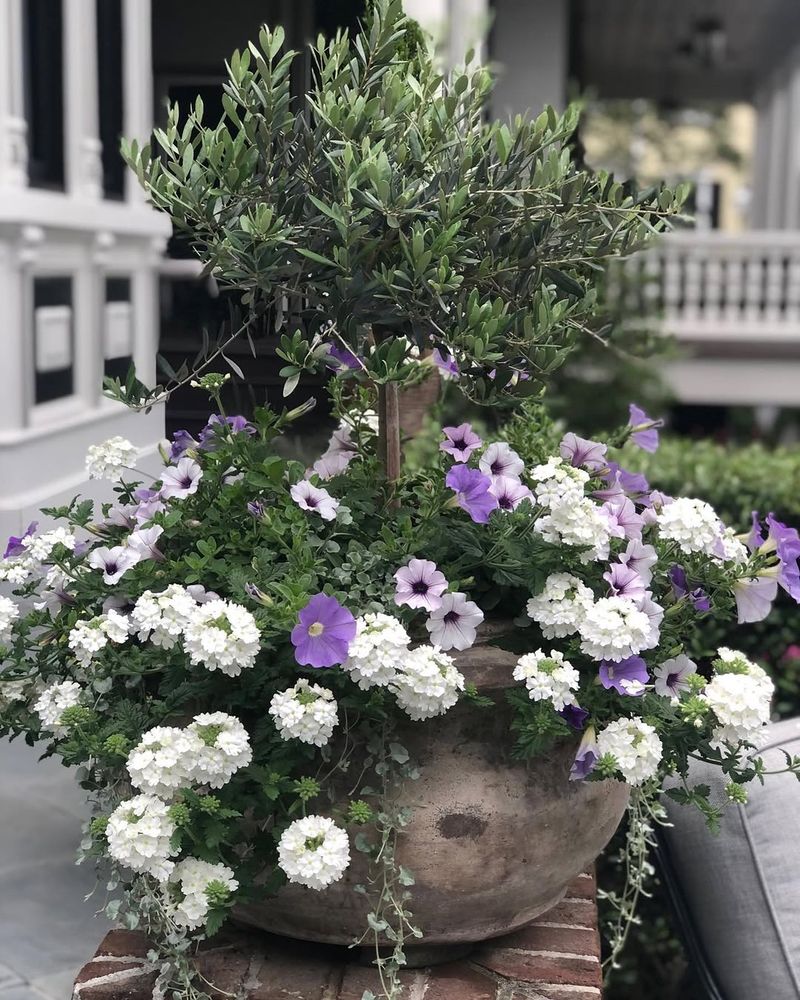
Verbena has a way of making containers look effortlessly beautiful. Its clusters of small, bright flowers spread and trail in a way that softens the edges of pots and planters.
Colors range from deep purple and lavender to hot pink and red, giving you plenty of options to match your patio style.
For California gardeners, verbena is a reliable warm-season performer. It loves full sun and handles heat well, especially the trailing varieties bred for container growing.
Water it regularly but let the soil dry out slightly between waterings. Overwatering is actually one of the most common mistakes people make with verbena.
One thing that sets verbena apart is its long bloom period. With proper care, it flowers from spring all the way through the first cool nights of fall.
It also pairs beautifully with other container plants like calibrachoa or petunias for a layered, mixed planting look. Some varieties even attract pollinators, bringing life and movement to your outdoor space.
Whether you’re on a coastal California patio or a sunny inland balcony, verbena brings color and charm without demanding too much of your time or attention.
6. Begonia (Wax Or Dragon Wing)
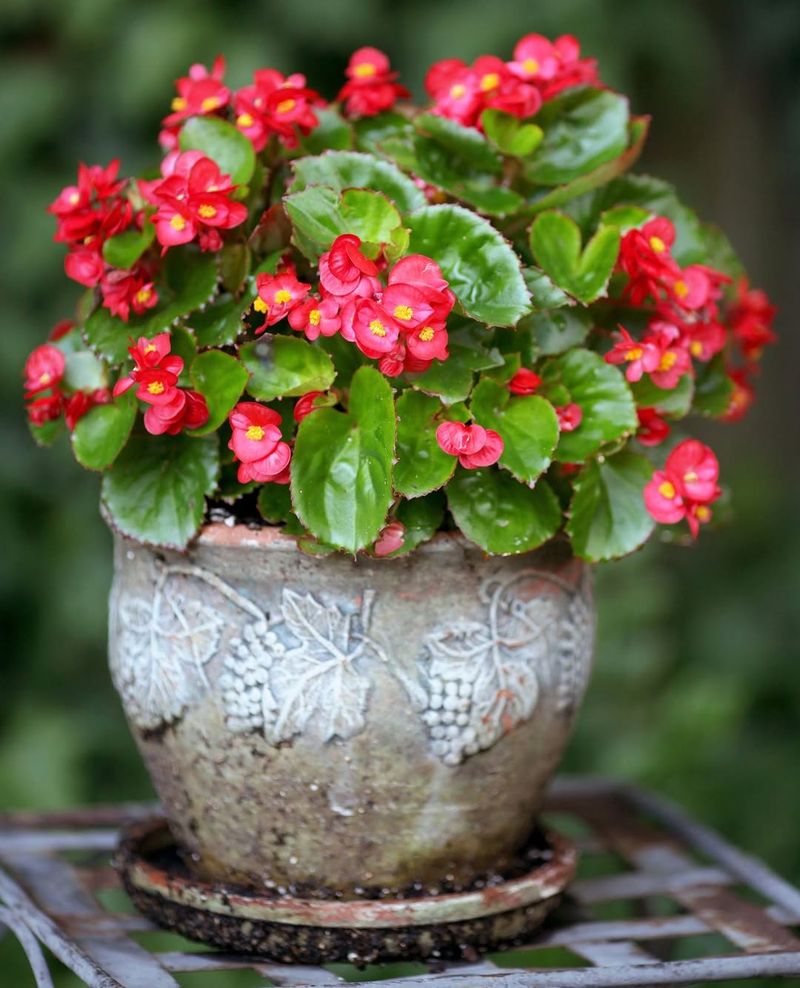
Not every California patio gets full sun all day. Some spots are shaded by pergolas, fences, or nearby buildings, and that’s exactly where begonias come in.
Wax begonias and Dragon Wing begonias are two of the best options for containers in lower-light situations, and they deliver serious color even without direct sunshine.
Wax begonias are compact, tidy, and covered in small blooms all season long. Dragon Wing begonias grow a bit larger with arching stems and bigger flowers that dangle like little jewels.
Both types handle California’s warm temperatures well and only need moderate watering. Let the top inch of soil dry out before watering again.
These begonias also work well in mixed containers. Pair them with coleus or impatiens for a lush, layered shade planting that looks intentional and polished.
They’re available in red, pink, white, and salmon shades, so there’s something for every color scheme. One practical note: begonias don’t like soggy roots, so always use pots with drainage holes.
For California homeowners with covered patios or tree-shaded corners, begonias are one of the most dependable and rewarding container plants you can choose.
7. Impatiens (For Shade)
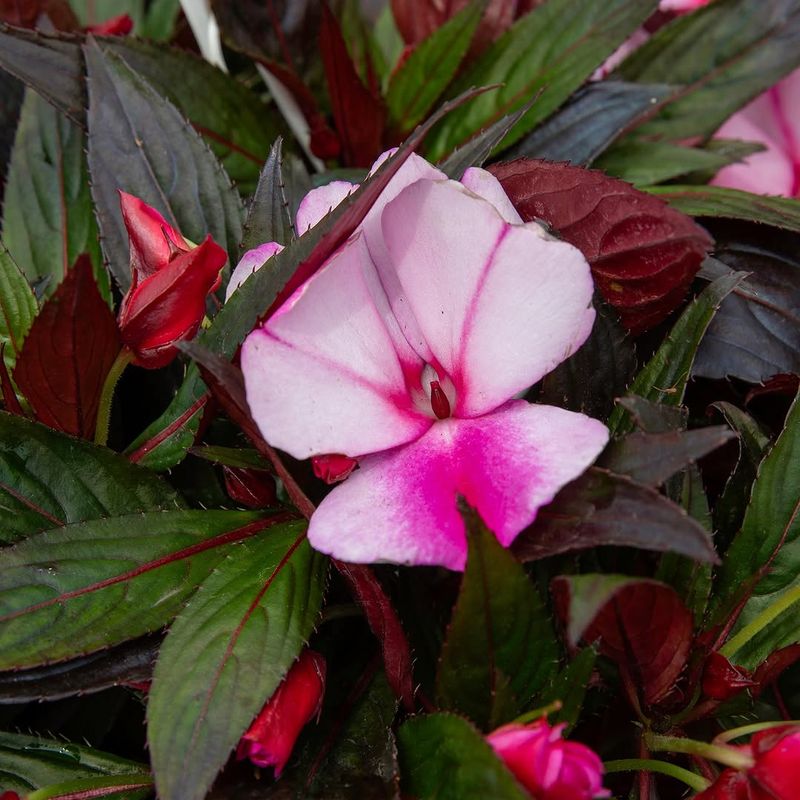
Shade-loving plants don’t always get the spotlight they deserve, but impatiens are genuinely one of the hardest-working flowers in a container garden. They bloom nonstop from planting until the weather turns cool, filling shady spots with cheerful color that most sun-loving plants simply can’t provide.
Classic impatiens prefer indirect light or partial shade, making them ideal for California patios that are sheltered from the afternoon sun. They like consistent moisture, so check the soil regularly and water whenever the top layer feels dry.
Using a pot with good drainage helps prevent the soggy conditions they dislike.
New Guinea impatiens are a slightly different variety worth knowing about. They’re larger, more heat-tolerant, and can handle more sun than classic types.
Both varieties come in an amazing range of colors including orange, red, lavender, coral, and white. They also look great in window boxes, hanging baskets, and large mixed containers.
If your California home has a north-facing patio or a covered outdoor dining area, impatiens are the go-to solution for bringing vibrant color to spots that other plants struggle in. They’re forgiving, fast-growing, and genuinely fun to watch fill out.
8. Coleus
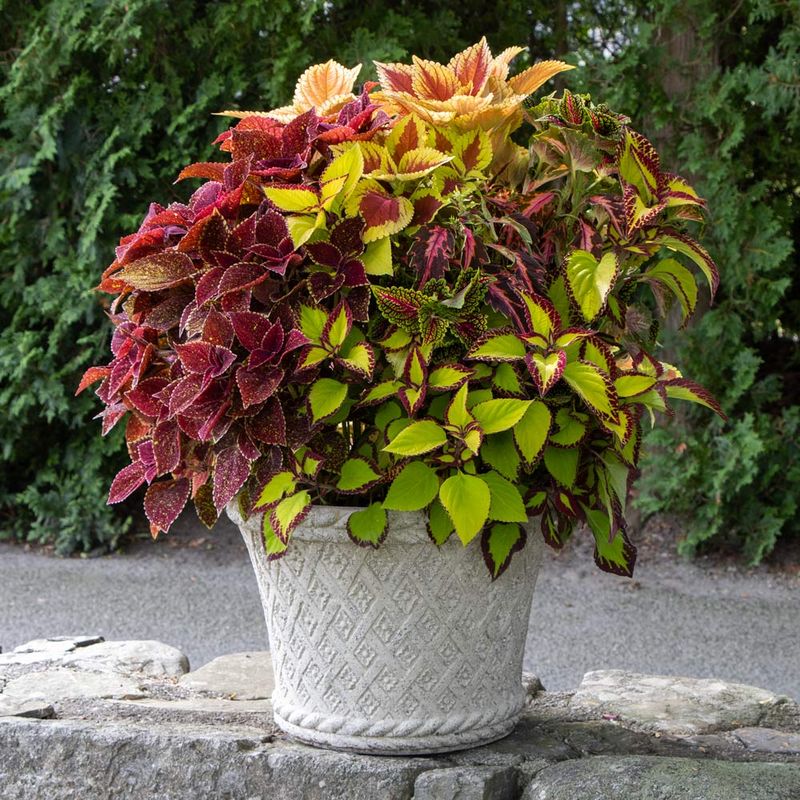
Color doesn’t always have to come from flowers. Coleus proves that foliage can be just as exciting, sometimes even more so.
The leaves come in wild combinations of red, lime green, deep purple, orange, and cream, often all swirled together on a single leaf. It’s one of the most visually striking container plants available.
Coleus grows beautifully in partial shade, which makes it a great companion for impatiens or begonias on California patios with limited direct sun. Newer sun-tolerant varieties have also been developed, so you can find types that work in brighter spots too.
Either way, it’s a flexible and forgiving plant that adapts to many conditions.
Keep the soil consistently moist and feed coleus with a balanced fertilizer every few weeks to keep the colors vivid and the growth lush. Pinch off any flower spikes that appear, since blooming can cause the plant to lose some of its leaf color intensity.
Coleus grows quickly and fills containers fast, which is especially satisfying when you’re trying to create an instant impact on your patio. For California gardeners who want texture and drama without waiting for blooms, coleus is a truly rewarding choice.
9. Lavender
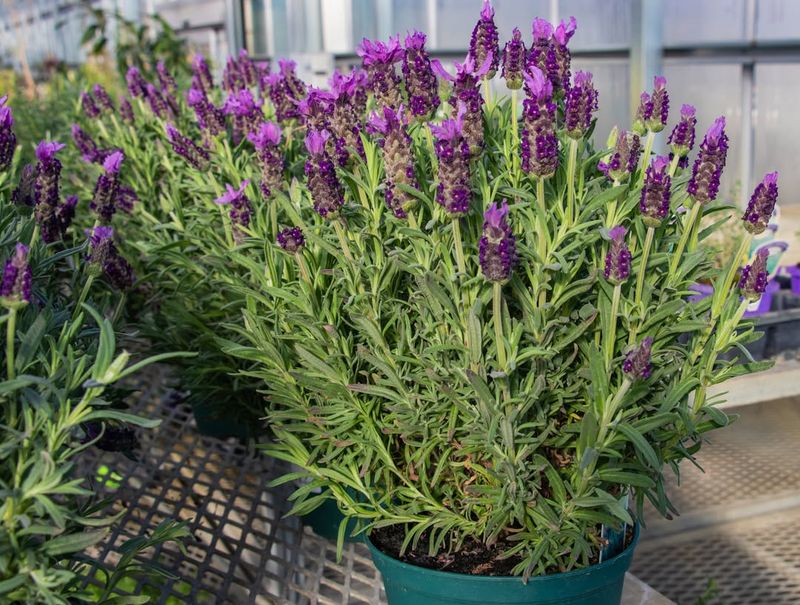
There’s something almost magical about stepping onto a patio and catching the scent of lavender in the warm air. This fragrant, silvery-leafed plant is a natural fit for California’s Mediterranean-style climate.
It loves heat, tolerates drought, and looks absolutely beautiful in containers with its tall purple flower spikes.
Lavender does best in full sun and well-draining soil. In containers, this means choosing a pot with good drainage holes and a gritty, fast-draining potting mix.
Avoid heavy soils that hold moisture, since lavender roots prefer to stay on the drier side. Once established, it needs very little water, which is a big plus in drought-conscious California.
English lavender varieties like ‘Hidcote’ and ‘Munstead’ are well-suited to containers because they stay compact. Spanish lavender is another popular choice in California, blooming earlier and handling the heat a bit more aggressively.
Beyond its beauty, lavender is also a natural pollinator magnet, attracting bees and butterflies to your patio. Harvest the flower spikes for sachets or dried arrangements, or simply enjoy them where they grow.
For a low-maintenance, high-reward container plant before summer heat arrives, lavender is hard to beat.
10. Salvia
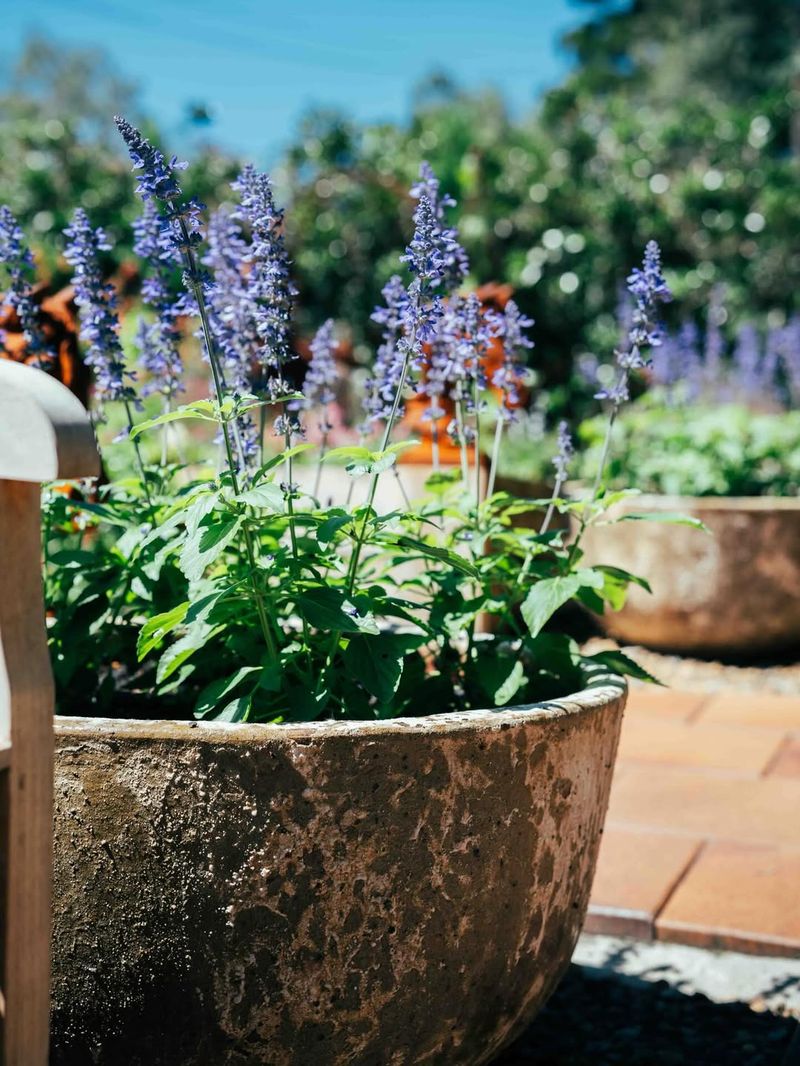
Hummingbirds absolutely love salvia, and once you see one hovering over a bright red flower spike in your own backyard, you’ll understand why this plant has such a devoted following. Salvia is bold, colorful, and built for warm weather, making it one of the best container choices for California patios heading into summer.
There are dozens of salvia varieties to choose from. Salvia splendens, the classic red bedding type, grows well in containers and blooms all season long.
Salvia guaranitica, with its deep blue flowers, is another showstopper. Many California gardeners also love ‘Hot Lips’ salvia, which features two-toned red and white blooms on a compact plant.
Salvia thrives in full sun and handles heat with ease. It prefers well-draining soil and moderate watering.
Let the soil dry out slightly between waterings to keep the roots healthy. Most varieties also benefit from light pruning after the first flush of blooms fades, which encourages a fresh round of flowers.
Whether you’re in the San Francisco Bay Area or the sun-baked streets of Los Angeles, salvia brings color, wildlife activity, and easy-care beauty to container gardens throughout the warm California season.
11. Succulents (Echeveria, Sedum)
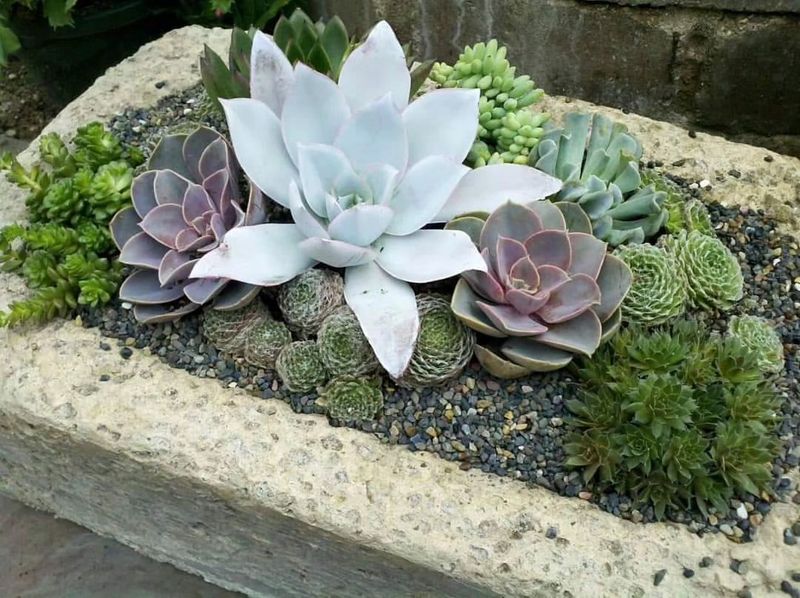
Succulents are practically made for California. Their thick, water-storing leaves allow them to shrug off heat and dry spells that would stress most other plants.
Echeveria and sedum are two of the most popular varieties for containers, and they look stunning when grouped together in a single planter or displayed individually in small pots.
Echeveria forms gorgeous rosettes in shades of blue-green, purple, pink, and silver. Sedum comes in a wider range of forms, from low ground-hugging types to upright varieties with star-shaped flowers.
Both thrive in full sun and need very little water, especially once established. The biggest mistake people make with succulents is overwatering, so less is definitely more here.
Use a cactus or succulent-specific potting mix and always choose pots with drainage holes. Terracotta pots work especially well because they allow moisture to evaporate naturally through the sides.
Succulents also propagate easily from leaves or cuttings, so one plant can turn into many over time. For California gardeners who want a low-maintenance, visually interesting container garden that practically takes care of itself through the hot months, echeveria and sedum are absolute must-haves on any sunny patio.
12. Dwarf Citrus (Lemon, Lime)
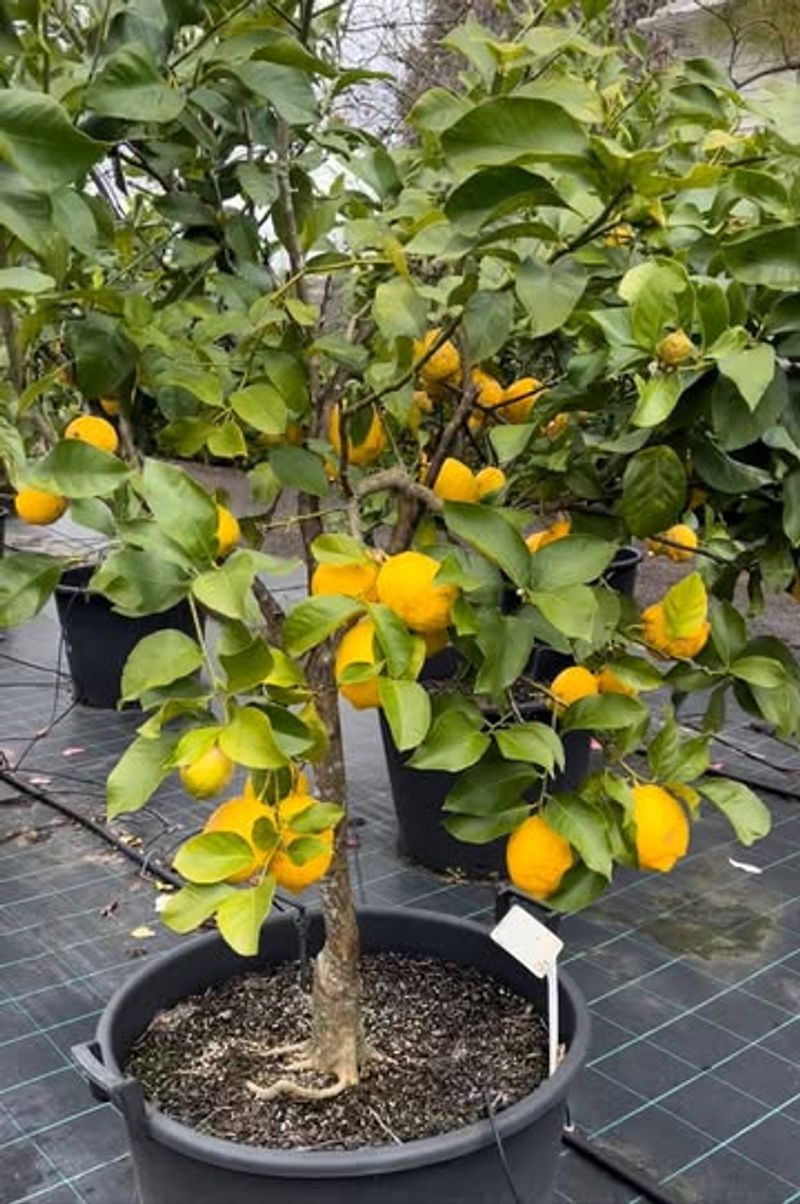
Growing your own lemons or limes on a California patio is one of those simple pleasures that never gets old. Dwarf citrus trees are perfectly sized for large containers, and they reward you with fragrant blossoms, glossy foliage, and actual edible fruit.
It’s both beautiful and practical, which is a hard combination to beat.
Meyer lemon is one of the most popular dwarf citrus choices in California because it’s compact, productive, and slightly sweeter than standard lemons. Dwarf Persian lime is another excellent option that grows well in containers and produces full-sized fruit.
Both varieties need full sun, at least six hours daily, and consistent watering throughout the growing season.
Feed dwarf citrus with a citrus-specific fertilizer according to the package directions, usually every four to six weeks during the growing season. Use a large pot, at least 15 to 20 gallons, to give the roots enough room to develop properly.
Good drainage is essential to prevent root issues. In cooler coastal parts of California, placing the container in a south-facing spot maximizes sun exposure.
Few things feel more satisfying than picking a lemon from your own patio tree and using it in the kitchen the same day.
13. Bougainvillea (Compact Varieties)
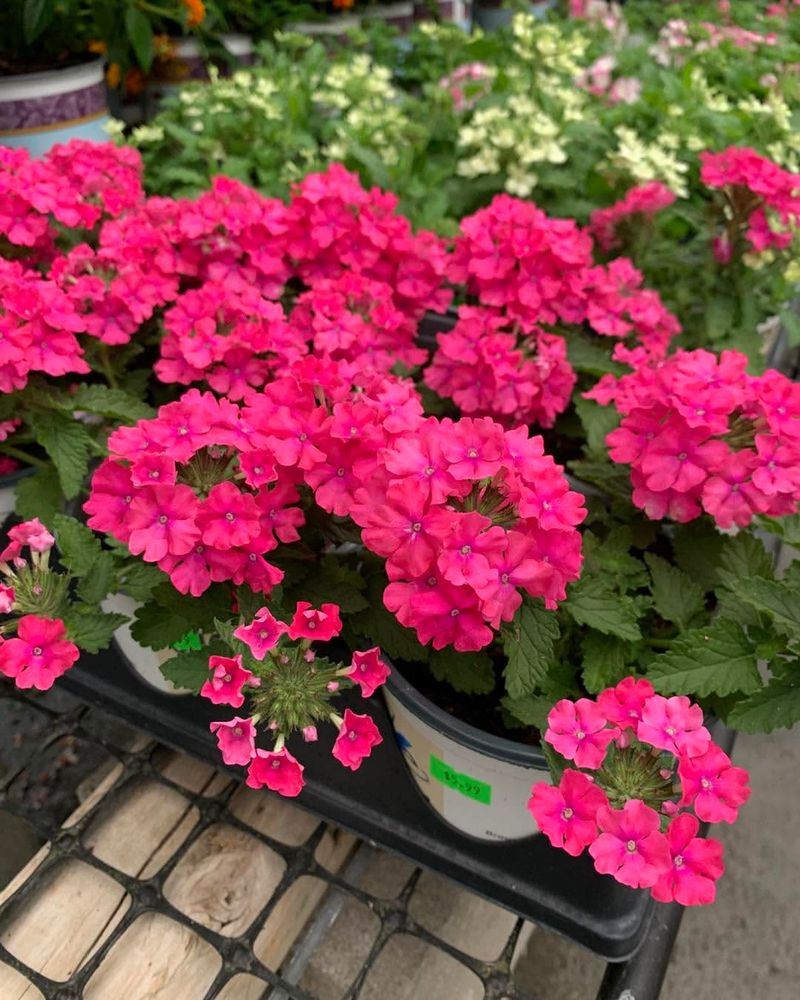
Few plants capture the spirit of a California summer quite like bougainvillea. Those vivid, papery bracts in shades of magenta, orange, red, and white are iconic in neighborhoods from San Diego to Santa Barbara.
The great news is that compact varieties like ‘Bambino’ and ‘Torch Glow’ grow beautifully in large containers without taking over your entire patio.
Bougainvillea is a sun lover through and through. It needs at least six hours of direct sunlight daily and actually blooms more abundantly when it’s slightly stressed for water.
Once established, cut back on watering to encourage the most dramatic flowering. Overwatering or too much nitrogen fertilizer can cause lush green growth at the expense of those stunning bracts.
Use a large, heavy pot to anchor this plant since it can get top-heavy as it grows. A well-draining potting mix is essential, as bougainvillea absolutely cannot tolerate waterlogged roots.
Be mindful of the thorns when positioning or pruning, and wear gloves for protection. In the hottest parts of California, bougainvillea in containers can be moved to take advantage of the best sun exposure throughout the season.
It’s a bold, showstopping plant that rewards a little patience with truly spectacular results.